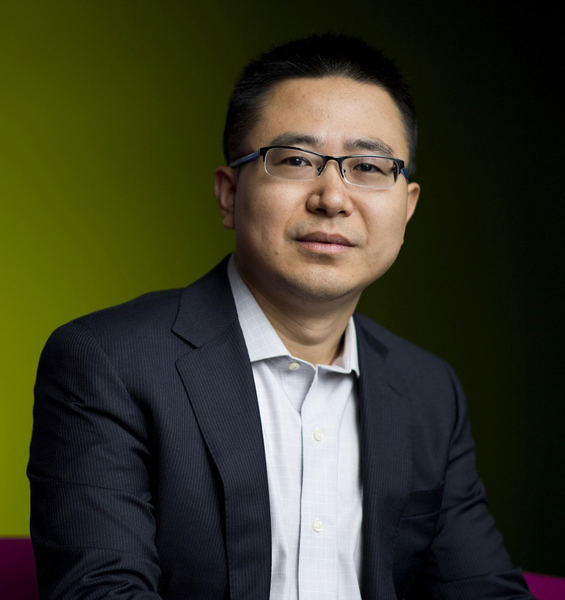
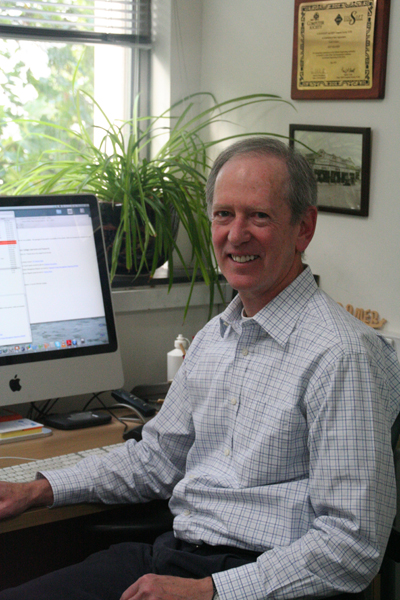
Philipp Haindl is a lecturer at the Department of Computer Science and Security at St. Poelten University of Applied Sciences. His work focuses on software engineering, cybersecurity, and AI integration in education and manufacturing. Software Engineering Cybersecurity Artificial Intelligence DevOps Quality Assurance Research Interests: Dr. Haindl explores software metrics, inter-service security in microservices, and AI tools like ChatGPT in programming education. He investigates quality models and non-functional requirements in DevOps environments. Publications: Recent work includes studies on ChatGPT's impact in software engineering education, systematic reviews of microservice security, and frameworks for human-AI teaming in manufacturing.
Richard English is currently Professor of Politics at Queen’s University Belfast (QUB) and serves as Director of the Senator George Mitchell Institute. He held leadership roles including Pro Vice-Chancellor for Internationalisation and Engagement (2016–2021) and Wardlaw Professor of Politics at the University of St Andrews (2011–2016). His research focuses on radicalism, political violence, nationalism, and Irish/British politics. A Fellow of the British Academy and recipient of the Royal Irish Academy Gold Medal (2019), he has authored influential works such as Armed Struggle: The History of the IRA and Irish Freedom: The History of Nationalism in Ireland . Research Trends: His recent publications (2022–2025) address energy systems, building simulations, and sustainable urban infrastructure, with keywords spanning Building Simulation , Sustainable Energy , and Smart Grids . Subfields include District Heating , Thermal Modeling , and Machine Learning in Energy Management . Honors: CBE (2018) Gold Medal, Royal Irish Academy (2019) Fellow, British Academy (2009) Ewart-Biggs Memorial Prize (2007)
Klaus Prettner is a Professor of Macroeconomics and Digitalization at the Vienna University of Economics and Business (WU), affiliated with the Department of Economics. His research focuses on automation's macroeconomic consequences, demographic changes, health and education impacts on growth, and inequality dynamics. He has authored influential textbooks, such as Automation and Its Macroeconomic Consequences , and contributes to policy debates on automation, aging populations, and sustainable growth. His work spans peer-reviewed journals like Journal of Monetary Economics , Economic Journal , and Lancet Global Health , with over 125 publications. He actively engages in policy discussions, advising on topics like AI's economic effects and pandemic management. Teaching roles include macroeconomics at WU and other institutions, with lecture materials available online. Key research themes include automation's labor market impacts, health-augmented macroeconomic models, and the interplay between demographic trends and technological innovation. Recent projects analyze AI's skill premium effects, climate change implications of automation, and China's 'Common Prosperity' initiatives. His grants and awards include collaborative projects with global health institutions and fellowships from prestigious organizations. Prettner leads the Department of Economics at WU and contributes to editorial boards, fostering interdisciplinary research at the intersection of technology and economics.
Torsten Hoefler is a Full Professor of Computer Science at ETH Zurich, Switzerland, with an adjunct appointment in Electrical Engineering. He previously held roles at the National Center for Supercomputing Applications (University of Illinois at Urbana-Champaign) and Indiana University. Full Professor of Computer Science, ETH Zurich (2020–present) Adjunct Professor of Electrical Engineering, ETH Zurich (2020–present) Member at Large, ACM SIGHPC Executive Committee (2013–present) Leadership roles in the MPI Forum and Blue Waters project His research focuses on performance-centric system design , with emphasis on scalable networking, parallel programming models, and performance modeling. Key contributions include the Slim Fly network topology, Data-Centric Python framework, and innovations in parallel graph computations and RDMA-based systems. Recent publications span topics like LLM training networks , quantization geometry , chiplet interconnects , and AI-driven climate modeling , reflecting his interdisciplinary approach combining HPC, AI, and hardware-software co-design. ACM Gordon Bell Prize (2019) ERC Consolidator Grant (2020) IEEE TCSC Award for Excellence (2019) SIAM SIAG/SC Junior Scientist Prize (2012) Latsis Prize of ETH Zurich (2015) He has received multiple best paper awards at top conferences (SC10, SC13, SC14, SC19, IPDPS'15, HPDC'15, OOPSLA'16) and contributed to MPI-3 standardization.
Manuel Wimmer is a Full Professor and Head of the Department of Business Informatics – Software Engineering at Johannes Kepler University Linz, Austria. He also serves as the Program Director for the Business Informatics master's program since 2019. His academic leadership extends to representing JKU Linz in the AutomationML society and leading significant research initiatives. Dr. Wimmer received his Ph.D. and Habilitation from TU Wien. His academic journey includes: Research associate at the University of Malaga, Spain Visiting professor at the University of Marburg, Germany Visiting professor at TU Munich, Germany Assistant professor at the Business Informatics Group (BIG), TU Wien, Austria Professor Wimmer's research focuses on Model-Driven Software Engineering and its applications, particularly in the emerging field of Digital Twins . His work bridges theoretical foundations with practical industrial applications, with special emphasis on model transformations, runtime modeling, and the integration of artificial intelligence techniques into model-driven approaches. More recently, he has been exploring the intersection of model-driven engineering with quantum computing, investigating how modeling principles can be applied to quantum software development. His recent publications reveal a strong trend toward Digital Twin engineering, with approximately 40% of his 2023-2025 publications focusing on various aspects of Digital Twin technology. Another significant strand of his work involves the application of AI and machine learning techniques to enhance model-driven engineering processes. The emergence of quantum software engineering as a research direction is also notable in his most recent publications, demonstrating his ability to identify and explore cutting-edge research frontiers. From 2017-2023, Professor Wimmer led the Christian Doppler Laboratory on Model-Integrated Smart Production (CDL-MINT), where he developed engineering approaches for digital twins. He is also the co-author of the influential book "Model-driven Software Engineering in Practice" (2nd edition, 2017). Professor Wimmer is actively involved in the organization of major scientific events including the IEEE International Conference on Quantum Software (QSW) and the International Conference on Engineering Digital Twins (EDTconf), demonstrating his leadership in these emerging research communities. His research has practical applications across various domains including smart cities, industrial automation, tunneling/construction, and quantum computing. The MATISSE project represents a significant multi-partner effort to develop a framework for federated digital twins of industrial systems.
Stefan Rass is a Professor at the Institute of Networks and Security within the Faculty of Engineering & Natural Sciences at Johannes Kepler University Linz (JKU), where he leads the LIT Secure and Correct Systems Lab. As Principal Investigator for FFG-funded projects including reSilienz (digital supply chain resilience, 2023–2025) and ITPUK (AI signature verification, 2022–2024), he bridges theoretical game theory with practical cybersecurity solutions for critical infrastructures and robotics systems. His research spans game-theoretic security models (patrolling games, defense-in-depth strategies), quantum cryptography (QKD network architectures), and cyber deception frameworks like Honeyquest for measuring honeypot effectiveness. Recent work addresses robotics security benchmarking (RobotPerf), cryptographic instruction chaining for control flow protection, and risk assessment methodologies for interdependent infrastructures. His mathematical decision-making approach integrates bounded rationality and stochastic modeling to solve real-world security challenges. Professor Rass actively shapes the field through program committee roles (ARES 2023), peer reviews, and invited talks on security transparency. His current projects focus on cost-benefit-aware monitoring for cyber-physical systems and quantum key distribution standardization, reflecting Austria’s strategic priorities in digital resilience. The LIT Secure and Correct Systems Lab under his direction develops foundational theories while deploying tools for industrial applications, particularly in critical infrastructure protection and secure robotics workflows.
Martin Steinberger is an Associate Professor at the Institute of Control and Automation (IRT) at Graz University of Technology (TU Graz). His work focuses on advanced control systems, networked control, model predictive control (MPC), and automation in manufacturing and autonomous systems. He leads research into real-time optimization, fault diagnosis, and safety-critical applications in industries like pharmaceuticals and automotive. Research interests include: Networked Control Systems Model-Based Control Autonomous Vehicle Trajectory Planning Process Automation Robotics and Industrial Automation His work bridges theoretical control engineering with practical applications in manufacturing lines, chemical processes, and autonomous driving. Recent studies emphasize digital real-time release testing for pharmaceuticals, universal control concepts for manufacturing systems, and safety-aware trajectory optimization for automated vehicles. His publications frequently address challenges in time-varying delays, packet loss mitigation, and robust observer design for nonlinear systems. Steinberger collaborates on EU-funded projects and regularly contributes to conferences like the International Workshop on Variable Structure Systems. His research often involves experimental validation, as seen in work with compact pharmaceutical manufacturing setups and small-scale autonomous vehicle testing platforms.
Dragi Kimovski is a Habilitated Assistant Professor in Distributed Systems at Klagenfurt University, Austria, focusing on Edge Computing and AI. He previously held roles at the University of Innsbruck and the University of Information Science and Technology in Macedonia. His research spans Edge/Fog/Cloud computing, multi-objective optimization, and high-performance computing. He has coordinated major projects like 6GContinuum and KärtnerFog, and led initiatives such as DataCloud and ASPIDE. His teaching includes courses on Distributed Computing, Cloud Computing, and IoT. He is the co-creator of the Carinthian Computing Continuum and maintains a blog on Edge AI World. His work emphasizes sustainable and efficient computing solutions for emerging technologies. Education: Not explicitly listed in the provided text. Research Interests: Edge Computing, Fog Computing, Cloud Computing, Multi-objective Optimization, High-Performance Computing, AI in Distributed Systems. His work addresses challenges in resource management, latency reduction, and scalability across heterogeneous environments, with applications in healthcare, IoT, and 6G networks. Projects: 6GContinuum (Coordinator): Focuses on AI services over 6G networks. KärtnerFog (Scientific Coordinator): Develops adaptive Fog infrastructures over 5G. DataCloud (WP5 Leader): Manages Big Data pipelines on the Computing Continuum. ASPIDE (Scientific Coordinator): Advances exascale programming models for data processing. Teaching: Klagenfurt University: Courses include Distributed Computing, IoT, Cloud Computing, and Advanced Programming. University of Innsbruck: Taught Advanced Parallel and Distributed Systems. University of Information Science and Technology: Courses in High-Performance Computing and Network Architectures. Labs/Teams: Co-created the Carinthian Computing Continuum, an automated SDN testbed for Edge computing research. Active in interdisciplinary teams addressing extreme data processing and sustainable computing.
Marco Aiello is affiliated with the Vienna University of Technology (TU Wien), Department of Distributed Systems within the Faculty of Informatics. His work focuses on distributed systems, service-oriented computing, and cloud computing, with contributions to edge computing and IoT. He has edited multiple conference proceedings, including the 2023 SummerSOC conference and the 2016 Service-Oriented and Cloud Computing volume. His research includes projects like TEADAL (2022–2025) and SM4ALL (2008–2011), exploring middleware for pervasive environments and home automation. Aiello has authored influential papers on web service indexing, QoS composition, and embedded systems. He received the 2006 Web Service Challenge award for his indexing work. Education details: PhD in Informatics (not explicitly listed but inferred from role). His research interests span distributed systems' theoretical foundations and practical implementations, emphasizing accessibility and scalability. Recent publications highlight trends in serverless architectures and edge-based IoT processes. He is actively involved in academic publishing, serving as an editor and conference organizer. Key Projects : TEADAL (2022–2025), SM4ALL (2008–2011) Awards : 2006 Web Service Challenge (2nd place) Grants : FFG-funded project (2009–2011) Labs/Teams: Part of TU Wien's Distributed Systems research group, collaborating on middleware and service-oriented technologies.
Christian Dustmann is a Professor of Economics at University College London (UCL) and Founding Director of the Centre for Research and Analysis of Migration (CReAM). He has held visiting roles at institutions like the European University Institute, Australian National University, and the University of Amsterdam. His work focuses on migration, labour economics, and related policy implications. Education: Habilitation in Economics and Econometrics, University of Bielefeld (1997) Ph.D. in Economics, European University Institute, Florence (1992) Diploma (MA) in Business, University of Bielefeld (1988) MA in Economics, University of Georgia, Athens (1985) Vordiplom (BA) in Business Economics, University of Bielefeld (1983) Dustmann's research spans migration economics, labour market dynamics, education outcomes, and crime economics. His recent studies explore minimum wage impacts, refugee integration, and migration's influence on household risk diversification. He has received numerous accolades, including the Carl-Friedrich-von-Weizsäcker Prize (2020), ERC Advanced Grant (2013), and membership in the German National Academy of Science (Leopoldina) since 2013. Dustmann also mentors early-career researchers and contributes to public policy discourse.
Yun Fu is a tenured Professor in the Department of Electrical and Computer Engineering at Northeastern University, with a joint appointment in the Khoury College of Computer Science. He has established himself as a leading researcher in Artificial Intelligence, with over 500 publications in top-tier venues including IEEE/ACM transactions and major AI conferences. His work spans both theoretical foundations and practical applications, with significant impact in computer vision and machine learning. Professor Fu earned his Ph.D. in Electrical and Computer Engineering from the University of Illinois at Urbana-Champaign. His academic career progressed from Assistant Professor at SUNY Buffalo to his current position as tenured Professor at Northeastern University, where he has held appointments since 2012. His educational background includes a Beckman Graduate Fellowship at UIUC (2007-2008). His research focuses on advancing Artificial Intelligence with particular emphasis on Computer Vision, Pattern Recognition, and Machine Learning. His seminal work includes the "Residual Dense Network for Image Super-Resolution" presented at CVPR 2018, which was ranked among the Top 10 Most Influential CVPR papers. His research interests span image processing, anomaly detection, multimodal learning, and trajectory prediction, with applications ranging from healthcare to consumer technology. Analysis of his recent publications reveals a strong trend toward developing efficient and robust AI systems that bridge computer vision with language understanding. His work increasingly focuses on multimodal learning, trajectory prediction for multi-agent systems, anomaly detection in complex environments, and model validation techniques for black-box systems, while maintaining practical applications in real-world scenarios. Professor Fu's extensive recognition includes: Fellow of IEEE (2018), OSA (2019), SPIE (2018), IAPR (2016), AAIA (2021), and AAAI (2025) Member of Academia Europaea (2022) and European Academy of Sciences and Arts (2023) Fellow of National Academy of Inventors (2023) Multiple Young Investigator Awards from NAE, ONR, ARO, IEEE, ACM, and INNS 12 Best Paper Awards from major conferences Industrial Research Awards from Google, Amazon, Samsung, JPMorgan, and others Professor Fu has successfully mentored numerous Ph.D. students who now hold prominent positions in academia and industry at institutions including Amazon, Microsoft, Meta, Adobe, and major universities. His entrepreneurial ventures include founding Giaran (acquired by Shiseido in 2017) and co-founding TVision Insights, demonstrating his commitment to translating research into real-world impact. He has secured significant research funding from both government agencies and industry partners. As the PI and Founding Director of the SmiLe Lab at Northeastern University, Professor Fu leads a dynamic research group focused on advancing the state-of-the-art in AI and Computer Vision. The lab fosters interdisciplinary collaboration across computer science, electrical engineering, and applied mathematics, with ongoing projects in efficient deep learning, multimodal understanding, and practical AI applications.
Thorsten Jarz-Sand is a Professor at the Pädagogische Hochschule Steiermark (Styrian College of Teacher Education), specializing in Secondary Vocational Teacher Education. His work focuses on integrating advanced IT systems into educational environments, emphasizing practical technical guidance for schools and organizations. He holds a Magister degree and teaches courses on network infrastructure, system administration, and programming. His research interests include Windows operating systems, server management, and educational technology applications. Key areas of expertise include Active Directory, Hyper-V virtualization, network security, and programming languages like C# and VB.NET. Dr. Jarz-Sand has authored over a dozen technical manuals, including guides for Windows Server 2022, Windows 11, and foundational network technologies. His books emphasize hands-on learning through exercises and real-world case studies, making complex IT concepts accessible for educators and IT professionals. He maintains an active presence in academic and professional circles through his publications and contributions to didactic IT education. Contact him via email or visit his website for resources.
Patrick Hirsch is an Associate Professor at the Institute of Production and Logistics , part of the Department of Economics and Social Sciences at the University of Natural Resources and Life Sciences, Vienna . He serves as Head of the Institute of Production and Logistics since 2025 and has coordinated doctoral programs in Social and Economic Sciences since 2017. His research focuses on Sustainable Logistics, Operations Research, and Disaster Management , with specializations in Health Care Logistics Humanitarian Supply Chains Urban Mobility Food Security Cybersecurity in Logistics Green Logistics Recent publications highlight his work in 2025-2023 on: Cloud Resource Optimization Disaster Response Logistics Container Terminal Storage Cyberattack Resilience Home Health Care Scheduling His team also explores deep learning for cargo inspection and hybrid simulation modeling for pandemic and climate-related disruptions. Scientific awards include: BOKU Best Paper Award (2024) ITOR runner-up Best Paper (2023) Raiffeisen Science Award (2014) Multiple Early-Career Prizes Dr. Hirsch leads 13 active research projects funded by the Austrian Research Promotion Agency and Oesterreichische Nationalbank , including initiatives on food supply resilience , internet outage cascading effects , and blockchain in logistics security . He supervises collaborative theses and contributes to policy development through institutions like the ITA - Institut für Technikfolgen-Abschätzung .
Professor Jeffrey Kramer is a distinguished academic at Imperial College London, where he currently serves as Professor in Distributed Computing within the Department of Computing, Faculty of Engineering. With a career spanning over four decades at Imperial College, he has held numerous leadership positions including Senior Dean (2009-2012), Dean of the Faculty of Engineering (2006-2009), and Head of the Department of Computing (1999-2004). Professor Kramer's research focuses on software engineering, particularly in distributed computing, requirements engineering, software architecture, and self-managing adaptive systems. His work on the Darwin Software Architecture led to commercial implementation by Philips in consumer television products. He has been a principal investigator in research projects developing the CONIC and DARWIN environments for distributed programming. His publication portfolio includes over 200 refereed journal and conference papers along with two influential books: 'Distributed Systems and Computer Networks' (1986) and 'Concurrency: State Models & Java Programs' (1999, 2nd ed. 2006). His most cited works address software architecture, dynamic reconfiguration, and adaptive systems, demonstrating a consistent research trajectory focused on foundational aspects of distributed software systems. FREng Fellow of the Royal Academy of Engineering (2008) ACM SIGSOFT Outstanding Research Award (2005, joint with Prof. Magee) ACM SIGSOFT Distinguished Service Award (2011) Editor-in-Chief of IEEE Transactions on Software Engineering (2006-2009) Most Influential Paper Award at ICSE 2003 IEE Informatics Premium prize (1998/99) Professor Kramer has served on over 50 international conference committees in the last decade and has delivered numerous keynote addresses globally. His industrial collaborations include work with BP, BT, NATS, Fujitsu, Barclays Capital, QinetiQ, Kodak, Microsoft, and Philips. He has also served as an expert witness for major law firms and has been involved in numerous research collaborations and consulting engagements.
Stefan Rass is a full Professor at Alpen-Adria-Universität Klagenfurt (AAU), with additional affiliation at Johannes Kepler University Linz (JKU). He holds the academic title Univ.-Prof. (Universitätsprofessor) and possesses advanced degrees including PD (Privatdozent), Dipl.-Ing. (Diplom-Ingenieur), and Dr. (Doctor). His research spans multiple institutions and projects, with a focus on security and risk management through game theory applications. Professor Rass's research interests center around Security and Risk Management, Decision and Game Theory for Security, Security Infrastructures (including Key Distribution and Management, PKI, and Authentication), Unconditional and network security, Applied Quantum Cryptography, and Complexity Theory and Statistics in Security. His work bridges theoretical computer science with practical security applications, particularly in quantum networks and critical infrastructure protection. His recent publications demonstrate a strong trend toward interdisciplinary security research, combining game theory with quantum cryptography, robotics security, and AI-powered penetration testing. The articles reveal increasing focus on practical applications of theoretical security concepts, with notable work in quantum networks, deniable encryption techniques, robotics security benchmarking, and AI-assisted security testing. His research shows consistent evolution from theoretical foundations toward real-world implementation challenges. Professor Rass leads multiple ongoing research projects including Machine Learning for Risk Management, Safe and Secure Robotic Systems Engineering (SEEROSE), Simulation and analysis of critical network infrastructures in cities (ODYSSEUS), and security for cyber-physical value networks Exploiting smaRt Grid systems (synERGY). These projects, primarily funded by FFG (Austrian Research Promotion Agency), demonstrate his leadership in securing critical infrastructure and developing next-generation security frameworks.