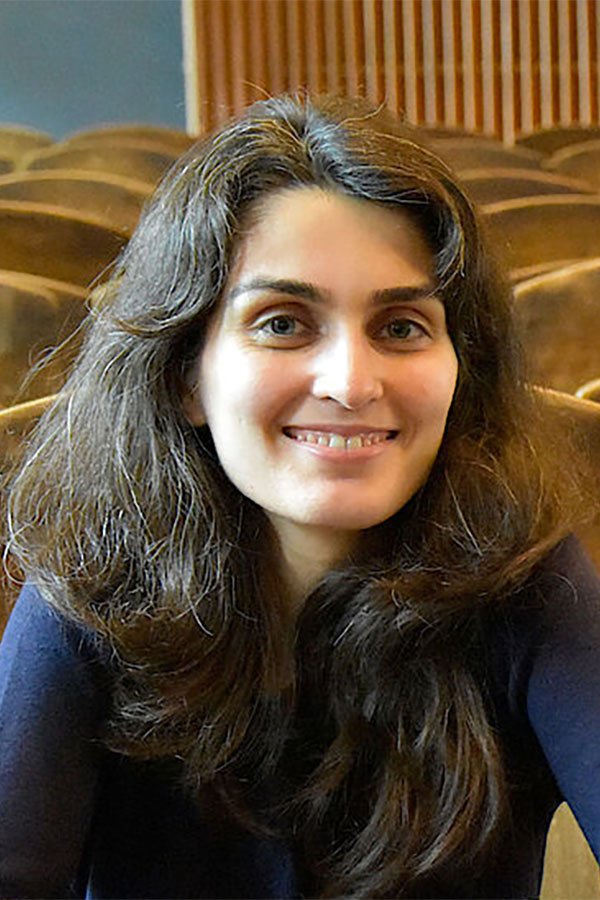

Tobias Meuser is a Researcher at the Multimedia Communications Lab of Technische Universität Darmstadt, leading the "Adaptive Communication Systems" group since 2020. He holds a PhD (2019) focused on vehicular network data management and has been a central figure in the third phase of the Collaborative Research Center (CRC) MAKI as a principal investigator in subproject B1. His work emphasizes resilient 5G networks, edge AI, and distributed systems. Education: B.Sc. Business Informatics (Fernuniversität Hagen) M.Sc. Informatics (TU Darmstadt) Research Interests: Resilience in 5G and beyond Edge AI and distributed machine learning Information assessment in vehicular networks Collaborative perception systems Hardware acceleration for network functions Key Projects: Principal Investigator in CRC MAKI's B1 (Monitoring and Analysis) Collaborations with Opel (cooperative maneuvering) and Deutsche Bahn (5G resilience) Labs/Teams: Head of Adaptive Communication Systems group at Multimedia Communications Lab Member of Distributed Sensing Systems group (2016–2020)
Ermeson Carneiro de Andrade is a Professor at the Department of Systems and Computer Engineering within the Center of Informatics at the Federal University of Pernambuco (UFPE) in Brazil. His research focuses on dependability engineering, performability analysis, and fault tolerance in distributed and embedded systems. Over his career spanning more than 15 years, he has established himself as a prominent researcher in the field of system reliability through numerous publications in top-tier journals and conferences. Dr. Andrade's research interests primarily center on the analysis and modeling of system dependability, with particular expertise in UAV-based monitoring systems, cloud computing environments, and IoT architectures. His work bridges theoretical modeling with practical applications, particularly in environmental monitoring, disaster recovery solutions, and mission-critical systems. He has made significant contributions to understanding software aging phenomena in various computing environments and developing performability-aware solutions for real-time systems. The analysis of his recent publications reveals a strong focus on UAV systems for environmental monitoring, particularly deforestation detection, with increasing attention to weather impacts and vehicle density-aware traffic monitoring. His research demonstrates a consistent pattern of applying stochastic modeling techniques to solve practical problems in distributed systems, with recent work expanding into NoSQL database performance, satellite constellation dependability, and the performance-interpretability trade-offs in machine learning models. This evolution shows his ability to adapt to emerging technologies while maintaining core expertise in system reliability. Dr. Andrade has been actively involved in mentoring students and collaborating with researchers across Brazil and internationally. His work often involves interdisciplinary teams addressing complex system challenges. While specific awards aren't detailed in the available publication records, his consistent output in high-impact venues demonstrates recognition within the dependability engineering community. His laboratory work appears to focus on system modeling and analysis, with particular emphasis on experimental validation through simulation and real-world testing. Current projects suggest involvement in UAV-based monitoring systems for environmental applications, with strong connections to public sector institutions in Pernambuco state.
Dr. Yulin Hu serves as a Visiting Professor at RWTH Aachen University, holding the Chair of Information Theory and Data Analytics. His research program bridges theoretical foundations with practical implementations in next-generation wireless systems, with particular emphasis on UAV-aided networks and information-theoretic approaches to communication challenges. His core research interests span multiple interconnected domains: Wireless Communications (especially finite blocklength regimes) Information Theory applications in network design UAV trajectory optimization and network integration Wireless power transfer with nonlinear energy harvesting Edge computing and distributed learning systems Data analytics for network performance optimization Analysis of Dr. Hu's 2025 publication record reveals a concentrated research thrust on UAV trajectory design, where he develops joint optimization frameworks addressing energy efficiency, security, and reliability constraints. His work consistently integrates information-theoretic principles—particularly finite blocklength analysis—to solve practical challenges in ultra-reliable low-latency communications (URLLC) and wireless power transfer. A distinctive feature of his approach is the fusion of deep reinforcement learning with traditional optimization methods for dynamic network scenarios, including no-fly zone constraints and covert operations. While no specific scientific awards are documented in the available materials, his prolific output across top-tier venues demonstrates significant scholarly impact. Details regarding graduate student mentoring and research funding mechanisms remain unspecified in the current documentation. The Chair of Information Theory and Data Analytics, which Dr. Hu leads, functions as a specialized research unit focused on theoretical rigor and algorithmic innovation for wireless systems, though specific laboratory infrastructure or team composition details are not provided.
Bo Wang is an active academic researcher primarily affiliated with multiple Chinese institutions, with strong connections to Tsinghua University, Beijing Jiaotong University, and other leading Chinese universities. His research spans artificial intelligence, machine learning, computer vision, medical image analysis, and intelligent control systems, demonstrating significant interdisciplinary work across computer science, engineering, and biomedical applications. Primary institutional affiliation: School of Computer Science and Technology at multiple Chinese universities Active research areas: AI/ML applications in healthcare, computer vision, federated learning, and intelligent control systems Extensive publication record across top-tier venues in multiple disciplines Wang's research interests focus on the intersection of artificial intelligence and practical applications. His work demonstrates strong expertise in developing novel machine learning architectures for medical image analysis, including applications in CT imaging, MRI, and sperm tracking. He has made significant contributions to federated learning approaches for large language models, sliding mode control systems, and molecular optimization frameworks. His research consistently bridges theoretical advances with practical implementations across healthcare, manufacturing, and environmental monitoring domains. Analysis of Wang's recent publications reveals a strong trend toward interdisciplinary AI applications, particularly in medical imaging and bioinformatics. His work on VAE-GANMDA for microbe-drug association prediction, ACE-QSM for accelerating MRI acquisition, and text-guided molecular optimization demonstrates innovative approaches at the intersection of AI and life sciences. Wang also maintains active research in industrial applications including digital twin technology for energy systems and robust scheduling approaches for multi-factory production. Notable research contributions include: FLFT: A Large-Scale Pre-Training Model Distributed Fine-Tuning Method with Federated Learning VAE-GANMDA: Microbe-drug association prediction model ACE-QSM: Accelerating quantitative susceptibility mapping using diffusion models Digital twin-empowered power consumption prediction systems Wang actively collaborates with researchers across China and internationally, with publications spanning computer science, engineering, medical imaging, and environmental science journals. His work demonstrates strong technical depth across multiple AI methodologies while maintaining focus on practical applications that address real-world challenges in healthcare, manufacturing, and environmental monitoring.
Oliver Hinz is a prominent researcher in the field of information systems and digital technologies, focusing on areas such as artificial intelligence ethics, blockchain applications, cybersecurity, and digital responsibility. His work bridges technical innovation with societal impact, addressing challenges in corporate governance, healthcare informatics, and user-centric technology design. Research interests: AI governance, blockchain tokenization, digital democracy, and ethical technology adoption Co-authored over 160 publications in leading journals like Information Systems Research and MIS Quarterly Key collaborations with institutions like TU Munich and Tilburg University Recent work emphasizes explainable AI frameworks, disaster management through social media analytics, and the socio-economic implications of digital platforms.
Hans-Arno Jacobsen is a Professor at Technische Universität München (Faculty of Computer Science, Germany) and the University of Toronto (Department of Electrical and Computer Engineering, Canada). His research spans distributed systems, blockchain technology, and machine learning for energy systems. Research Interests : Blockchain consensus algorithms, federated learning, graph neural networks, quantum computing applications, and energy-efficient distributed systems. Publication Trends : Recent work focuses on decentralized consensus in blockchains, energy-aware language model inferencing, quantum chemistry simulations, and graph neural network scalability. Collaborations : Regularly works with Ruben Mayer, Shashank Motepalli, and Gengrui Zhang on blockchain and machine learning projects.
Dr. Setareh Maghsudi is a Professor in the Learning Technical Systems group at the Faculty of Electrical Engineering and Information Technology at Ruhr-University Bochum. She joined Ruhr-University Bochum in August 2023 after serving as an Assistant Professor at the University of Tübingen (2020-2023) and at the Technical University of Berlin (2017-2020). Her academic journey began with an M.Sc. from Kiel University (2008-2010), followed by her Ph.D. and postdoctoral work at Technical University of Berlin (2011-2015), Yale University (2016-2017), University of Manitoba (2015-2016), and Kyushu University (2019). Dr. Maghsudi's research focuses on the application of machine learning to communication networks and distributed systems, with particular emphasis on bandit algorithms, federated learning, and resource allocation in dynamic environments. Her work bridges theoretical machine learning with practical networking challenges, developing algorithms that can adapt to non-stationary environments with partial information. She has made significant contributions to multi-armed bandit frameworks for wireless communications, edge computing, and network optimization. Her recent publications (2023-2025) demonstrate a strong trend toward addressing challenges in integrated sensing and communication (ISAC), federated learning for edge networks, and non-stationary decision-making problems. The publications show expertise spanning theoretical machine learning foundations, wireless communications engineering, and practical implementation for real-world networked systems. Her work increasingly incorporates causal reasoning and robustness considerations into learning frameworks for communication systems. Dr. Maghsudi leads the Learning Technical Systems research group at Ruhr-University Bochum, where she supervises PhD students and postdoctoral researchers working at the intersection of machine learning and communication systems. Her research is supported by various grants focusing on AI for future communication networks. Current projects include developing AI-driven solutions for next-generation communication systems with emphasis on robustness, efficiency, and adaptability in dynamic environments.
Jörn Altmann is a Professor in the Department of Computer Science and Engineering at Seoul National University's College of Engineering. With a publication history spanning over three decades from 1994 to 2025, he has established himself as a leading researcher in the economics of computing services, particularly focusing on cloud computing economics, software service platforms, and IT service ecosystems. He has served as editor for the GECON (Economics of Grids, Clouds, Systems, and Services) conference proceedings for multiple years, demonstrating his leadership in the field. Altmann's research interests center on the economic aspects of computing infrastructure, with particular expertise in cloud federation models, resource allocation mechanisms, and the business dynamics of software service ecosystems. His work bridges technical computing concepts with economic theory, examining how market mechanisms can be applied to computing resource allocation. Recent research has expanded into cybersecurity economics, AI adoption frameworks, and knowledge management in distributed systems environments. His publications consistently explore the intersection of technology adoption patterns and economic incentives within computing ecosystems. Analysis of his recent publications reveals a strong focus on cloud federation architectures, trust mechanisms in cybersecurity information sharing, and the economic modeling of value creation in distributed computing environments. His work demonstrates a methodological diversity, employing game theory, agent-based modeling, systematic literature reviews, and empirical analysis of industry dynamics, particularly in the Korean technology sector. Altmann has collaborated extensively with researchers worldwide, with notable long-term collaborations with José Ángel Bañares, Omer F. Rana, Kurt Vanmechelen, and Korean researchers including Kibae Kim. His work has appeared in prestigious venues including Future Generation Computer Systems, IEEE Transactions on Engineering Management, and the GECON conference series which he has helped shape through editorial leadership. His research has practical implications for cloud service providers, enterprise IT strategy, and policy development in digital infrastructure. The consistent publication record and editorial leadership suggest active supervision of graduate students and research teams, though specific students are not documented in the provided publication records.
Abdul Hakmeh is a Researcher at the University of Hildesheim, affiliated with the Faculty of Mathematics, Natural Sciences, Economics and Computer Science. He works within the Institute for Business Administration and Information Systems, specifically in both the Department of Business Administration and Operations Research and the Department of Information Systems and Enterprise Modeling. His research focuses on the intersection of operations research, information systems, and data analytics, with particular expertise in time series analysis and machine learning applications. His work bridges theoretical foundations with practical business solutions, contributing to both academic knowledge and real-world business applications. Dr. Hakmeh's recent research has centered on developing interpretable machine learning frameworks for time series classification, with applications in various business contexts. His publications demonstrate cutting-edge research at the intersection of operations research and artificial intelligence, particularly in graph-based approaches to multivariate time series analysis. As an active member of the academic community, Dr. Hakmeh contributes to the educational mission of the university through teaching and supervision activities within the business informatics programs. The University of Hildesheim emphasizes practical application of theoretical knowledge, with strong industry connections through initiatives like the IT Arbeitskreis comprising approximately 40 regional companies.
Dr. Shashikant Ilager is an Assistant Professor at the Informatics Institute (IVI) , University of Amsterdam. His research focuses on distributed systems , energy efficiency , and machine learning , with a specific emphasis on sustainable large-scale AI platforms. Current affiliation: University of Amsterdam (Oct 2024–present) Previous roles: Postdoctoral Researcher at TU Wien; Visiting Research Scientist at IBM PhD: CLOUDS Lab, University of Melbourne Research Focus Dr. Ilager develops data-driven approaches to optimize cloud/edge platforms for environmental and economic sustainability , particularly in AI workloads. His work bridges system characterization with learn-centric optimization techniques. Recent Publications 2025: ACM e-Energy (LLM carbon amortization), TAAS (self-adaptive edge monitoring), CCGRID (code generation efficiency). 2024: ICSOC (edge time series classification), EdgeSys (federated learning with GANs). Awards Best Paper Award @ ACM/IEEE UCC 2023 Community Engagement Organizer of the GreenSys workshop (2025) at EuroSys. Member of HPDC 2025 Technical Program Committee.
Yu Chen is a researcher affiliated with Binghamton University (College of Engineering and Applied Sciences, Department of Computer Science) and University of Southern California , with additional ties to institutions like Chinese Academy of Sciences and Tsinghua University. Their work spans cybersecurity, blockchain technology, edge computing, and IoT systems , focusing on decentralized architectures for public safety, privacy-preserving surveillance, and defense against deepfake attacks. Primary Affiliation: Binghamton University, NY, USA Previous Affiliation: University of Southern California, CA, USA Yu Chen’s research explores blockchain-enabled security frameworks for IoT networks, UAV systems, and smart cities. Recent projects include the Microverse metaverse model and ELOCESS smart grid management. They specialize in real-time data authentication using Electrical Network Frequency (ENF) signals and edge-based privacy solutions for video surveillance and personal drones. Their 15 most recent publications address digital twin security , decentralized data marketplaces, and lightweight protocols for IoT devices. Key areas include UAV network resilience , smart city surveillance , and metaverse classroom models . Yu Chen collaborates with researchers such as Erik Blasch , Ronghua Xu , and Genshe Chen . No student names or specific awards are listed in the provided data.
Prof. Tim Landgraf is a Professor of Computer Science at Freie Universität Berlin, affiliated with the Dahlem Center for Machine Learning and Robotics. He specializes in artificial intelligence, robotics, and biohybrid systems, focusing on collective behavior, machine learning, and animal-robot interactions. His work bridges computational methods with biological systems, as seen in studies of honeybee communication and fish behavior. Key research interests include self-supervised learning algorithms, robotic swarm dynamics, and applications of AI in education and healthcare. Prof. Landgraf has led projects like the Biorobotics Lab and contributed to initiatives such as the H2020-funded HIVEOPOLIS. He has been honored with the 'Hochschullehrer des Jahres' (Professor of the Year) award in 2020. Recent publications emphasize biohybrid systems, explainable AI, and counterfactual explanations, reflecting his commitment to interdisciplinary innovation. His courses, such as 'Self-Supervised Learning,' highlight theoretical and practical aspects of cutting-edge machine learning techniques.
Nitinder Mohan is a computer science researcher specializing in distributed systems and edge computing, currently affiliated with Delft University of Technology. Previously, he held positions at Technical University of Munich and completed his PhD at the University of Helsinki. His research focuses on optimizing edge computing platforms, cloud-edge architectures, and network protocols for next-generation distributed systems. Recent work investigates performance aspects of satellite networks (Starlink), virtualization orchestration, and multipath transport for aerial vehicles.
Nitinder Mohan is an Assistant Professor in the Faculty of Electrical Engineering, Mathematics, and Computer Science (EEMCS) at Delft University of Technology (TU Delft), where he leads the Systems and Protocols for Edge-Enabled Internet (SPEAR) Lab. His research focuses on edge computing, next-generation network protocols, and Internet-wide measurements. Previously, he was a senior researcher at Technical University of Munich and holds a PhD from University of Helsinki (awarded IEEE TCSC Outstanding Dissertation Award). Research interests span: Edge computing infrastructure and orchestration Next-generation network protocols (MPTCP, QUIC) Internet-wide measurements and performance analysis Satellite networking (Starlink/LEO networks) Distributed machine learning at edge His publications demonstrate strong focus on practical systems research in edge computing (container orchestration, Oakestra framework), network protocol innovation (segment routing, MPTCP), and empirical Internet measurements (Starlink/CDN analysis). Recent work shows growing emphasis on satellite networking and edge AI. Awards & Honors: IETF/IRTF Applied Networking Research Prize (2025) ACM EdgeSys Best Paper Award (2025) RIPE Academic Cooperation Fellowship (2025) ACM EuroSys Best Poster Award (2025) IEEE Future Networks Best Paper (2023) IEEE TCSC Outstanding PhD Dissertation (2020) Advises multiple PhD and master's students on edge computing, networking, and distributed systems. Secured significant funding including EU Horizon 2020 grant (€5.4M for EDGELESS project). Founded Oakestra - an open-source edge orchestration framework. Leads the SPEAR Lab at TU Delft focusing on edge-enabled Internet systems. Organizes conferences (TMA 2026) and workshops (LEO-NET). Active in IETF/IRTF standards community and industry collaborations with Microsoft Research, Airbus, and Siemens.
Xinwei Wang is a Professor at Nanjing University of Aeronautics and Astronautics with an extensive publication record spanning over two decades. Their research primarily focuses on autonomous systems, UAV trajectory planning, medical imaging, and computer vision applications. Wang has established significant collaborative networks with researchers including Yan Zhou, Liang Sun, Xichao Su, and Lei Wang across multiple Chinese institutions. Wang's research interests center on the intersection of robotics, artificial intelligence, and practical engineering applications. Their work demonstrates particular expertise in UAV coordination systems, medical diagnostic technologies, and underwater imaging solutions. Recent publications reveal a growing emphasis on explainable AI systems for medical applications and safety-critical trajectory planning for autonomous vehicles. The publication trends show a consistent output of high-impact research, with recent work increasingly focusing on practical implementations of AI systems in medical diagnostics, autonomous vehicle navigation, and aerospace applications. Wang's research bridges theoretical control systems with real-world engineering challenges, particularly in safety-critical domains requiring precise motion planning and reliable decision-making. Wang has contributed significantly to both theoretical frameworks in optimal control and practical implementations in medical imaging and autonomous systems. Their work on UAV cooperative task assignment and flight deck operations demonstrates strong connections to aerospace engineering applications, while medical imaging research shows interdisciplinary collaboration with healthcare professionals.