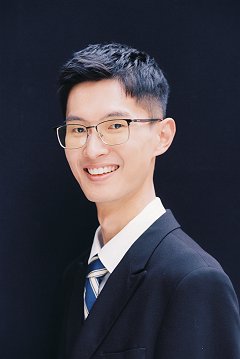
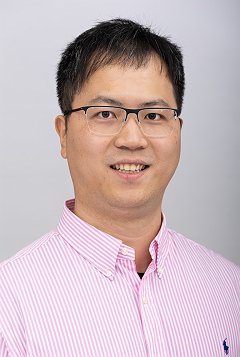
Prof. Dr.-Ing. Ulrich Rückert is a Professor at the Faculty of Engineering of the University of Bielefeld , where he leads the Cognitronics & Sensor Technology Group and participates in CITEC (Center for Cognitive Interaction Technology). He serves as Vice Rector for Digitalization and Data Infrastructure , driving university-level digital transformation initiatives. Research Focus : Neuromorphic computing, spiking neural networks (SNNs), embedded systems, robotics, UWB localization, and reconfigurable hardware. Projects : Leading federal and EU-funded initiatives like eProcessor (RISC-V multi-core systems), VEDLIoT (efficient deep learning in IoT), and Al4DG (AI in distribution grid control). Teaching & Leadership : Academic advisor for the Master in Biomechatronics , chairs examination boards, and leads the Library Commission . His work integrates neuromorphic hardware with edge computing and real-time systems , supported by grants from the European Union and German Federal Government . Recent publications analyze FPGA-based SNNs , UWB localization , and resource-efficient embedded architectures . Scientific Contributions : Over 200 publications in robotics, neural networks, and hardware-software co-design. Notable collaborations with institutions in Germany, Switzerland, and Italy.
Lukasz Wisniewski is a Professor at Ostwestfalen-Lippe University of Applied Sciences (TH OWL), where he serves as Deputy Director of the Institute Industrial IT (inIT) since 2024. He leads the research area 'Technologies of Digital Transformation' and established the bachelor's program 'Digital Management Solutions' (DiMS) in Herford starting 2022. Research Focus: Internet of Things (IoT), industrial communication technologies, digital business models, heterogeneous networks, and AI-driven automation systems. Leadership: Research group manager at inIT (2014–2022), active in IEEE committees, and organizer of major conferences like IEEE ETFA and WFCS. His recent work emphasizes AI integration for wireless network reliability, asset administration shells (AAS), OPC UA PubSub/TSN convergence, and 5G network slicing in industrial contexts. He has published extensively on these topics, with a focus on zero-touch management and cybersecurity. Scientific recognition includes Best Paper Awards at IEEE ETFA 2012 and IEEE WFCS 2017. He contributes as Guest Editor to IEEE Access and Transactions on Industrial Informatics.
Dr. Ilai Bistritz is an Assistant Professor at the School of Industrial and Intelligent Systems Engineering and School of Electrical and Computer Engineering , Tel Aviv University , with a PhD in Electrical Engineering (2023) from Stanford University under Nicholas Bambos . His research bridges Game Theory , Distributed Control , and Multiagent Learning , focusing on decentralized decision-making in networked systems like autonomous vehicles , smart grids , and epidemic modeling . His work addresses challenges in Distributed Optimization where agents operate with limited communication and feedback, such as in multiplayer bandits and delayed adversarial environments . He has developed algorithms for max-min fairness , non-myopic informational cascades , and delay-robust regret minimization , achieving theoretical breakthroughs in Networked Artificial Intelligence . Scientific awards include the Best Student Paper Award at IEEE WCNC 2018 and Best Student Paper Finalist at WODES 2020 . His research emphasizes privacy-preserving protocols, scalable architectures, and applications in health monitoring , energy systems , and wireless networks .
Robin Dietrich is a Researcher at the Department of Informatics 6 - Chair of Robotics, Artificial Intelligence and Real-time Systems at the Technical University of Munich . His work bridges computational neuroscience and robotics, focusing on translating neural mechanisms from mammalian brains into algorithms for mobile robot navigation. B.Sc. and M.Sc. in Computer Science Research on hippocampal temporal dynamics for neuromorphic SLAM Specializes in spiking neural networks for navigation and radar processing Research Interests : Robin's research explores the intersection of robotics, artificial intelligence, and computational neuroscience . His work specifically investigates spiking neural networks, FMCW radar data processing, and neuromorphic algorithms for autonomous systems. Recent projects focus on uncertainty quantification, evolutionary optimization, and multi-robot exploration using biologically inspired models. Publication Trends : Robin's publications (2019-2025) demonstrate a consistent focus on neuromorphic computing for robotic perception , with increasing specialization in spiking neural networks for radar processing and biologically inspired navigation algorithms . Key collaborations include contributions to multi-robot exploration metrics and hardware acceleration frameworks. Teaching Contributions : Robin has taught Digital Signal Processing and Real-Time Systems lectures since 2019, co-led seminars on Bio-inspired Data Processing , and supervised practical courses on Intelligent Mobile Robots using ROS.
Rajendra Akerkar is a Professor and coordinator of the Big Data and Emerging Technologies subgroup at the Western Norway Research Institute. With over 30 years in academia across Asia, Europe, and North America, he specializes in combining theoretical AI research with practical applications for societal benefit. Research Focus: Artificial Intelligence for crisis management (resilient communities, situational awareness) Social cybersecurity (hate speech prevention, misinformation) Urban transport systems optimization Energy analytics through data-driven approaches Semantic technologies and intelligent information systems Scientific Awards: DAAD Exchange Fellowship BOYSCASTS Young Scientist Award Leadership & Publications: Associate Editor for International Journal of Metadata, Semantics and Ontologies and Editor for Web Intelligence . Published 16 monographs, 154 scientific articles, and coordinated international networks like ISO15926 Semantic Web Technologies Network.
Professor Dirk J. Lehmann is a Professor of Data Science in IoT at Ostfalia University of Applied Sciences, Faculty of Computer Science, where he has been employed since May 2022. He holds significant leadership roles including Deputy Head of the Institute for Information Engineering (since 2024), Research Officer of the Faculty of Computer Science (since 2023), and membership in multiple committees including the Admissions Committee for Digital Technologies and the Digital Technologies Examination Board. Professor Lehmann's extensive academic journey includes: Part-time professorship in Data Science in IoT at Ostfalia University (2020-2022) Senior Specialist for Digitalization, AI, and Visual Analysis at IAV GmbH (2018-2023) Assistant Professor of Visual Data Analysis at Nazarbayev University, Kazakhstan (2017) Visiting professorships at TU Graz, Austria and Universidad Rey Juan Carlos, Spain (2016-2017) Researcher at Otto-von-Guericke University Magdeburg (2009-2017) His research expertise centers on Visual Analytics and Data Science, with particular emphasis on high-dimensional data visualization, categorical data analysis, and IoT applications. Professor Lehmann leads the Data Science in IoT working group, conducting research across three main areas: visual data analysis, distributed data analysis using AI methods, and applied data analysis in geology, climate data, medicine, and industrial processes. His methodological contributions include innovative visualization techniques for complex datasets across multiple domains. Analysis of Professor Lehmann's 15 most recent publications (2017-2025) reveals a consistent focus on advancing visualization techniques for complex data analysis. His work spans categorical data visualization (CatNetVis), biological data analysis (D. Melanogaster research), optimization of star coordinate systems, and interactive exploration methods for large datasets. These publications appear in top venues including IEEE Transactions on Visualization and Computer Graphics and EuroVis, demonstrating both theoretical rigor and practical application across diverse domains from healthcare to environmental science. As an educator, Professor Lehmann teaches a comprehensive range of courses from foundational mathematics to advanced machine learning and visualization techniques. He actively supervises student projects and theses, emphasizing clear project definitions with measurable acceptance criteria. His international collaborations span institutions in Israel, Saudi Arabia, China, Austria, and Spain, reflecting a global research perspective that bridges academic theory with industry applications, particularly through his previous role at IAV GmbH, a Volkswagen subsidiary.
Victor Klockmann is a Junior Professor of Microeconomics, specifically focusing on the Economics of Digitization at the University of Würzburg's Faculty of Management and Economics, Department of Economics. He also serves as an Associate Research Scientist at the Center for Humans and Machines, Max Planck Institute for Human Development in Berlin, and is an Affiliated Researcher at the Frankfurt Laboratory for Experimental Economic Research (FLEX) at Goethe University Frankfurt. His academic career spans multiple prestigious institutions with a focus on the intersection of economics, artificial intelligence, and human behavior. PhD in Economics (Dr.rer.pol), Goethe University Frankfurt, 2021 (Summa cum laude) M.Sc. Quantitative Economics, Goethe University Frankfurt, 2018 M.Sc. Mathematics, Goethe University Frankfurt, 2016 B.Sc. Mathematics, Goethe University Frankfurt, 2014 Professor Klockmann's research focuses on the economic and ethical implications of artificial intelligence, behavioral and experimental economics, game theory, and organizational economics. His work examines how new technologies impact organizations and human behavior, the interaction and cooperation between humans and non-human agents, and the future of work in times of technological change. His experimental approach combines theoretical economics with laboratory experiments to understand the nuanced dynamics of human-AI interactions. Analysis of his publications reveals a strong emphasis on ethical considerations in AI deployment, particularly regarding distributional fairness, social preferences toward machines, and intergenerational responsibility. His work spans multiple disciplines, bridging economics, computer science, psychology, and ethics, with a consistent focus on experimental methodologies to generate empirical evidence about human behavior in technological contexts. Scientific Awards and Recognition: External Funding from DFG for Strategic Interactions in Organizational Decision-Making (2024) Funding from Hessian Center for AI for Cooperation with Machines (2023) PhD Paper Award at IAREP/SABE Conference (2019) Prize for Best Master in Quantitative Economics (2019) Professor Klockmann actively supervises bachelor's and master's theses in Business Management, Economics, Business Informatics, and related fields. His research has attracted significant external funding from the German Research Foundation (DFG), the Hessian Center for Artificial Intelligence, and the Leibniz Institute for Financial Research SAFE. His current projects explore strategic interactions with generative AI, cooperation in human-algorithm settings, and the organizational implications of new technologies. He is affiliated with the Man and Machine research team at the Max Planck Institute, where he investigates human-AI interaction dynamics, and contributes to the Frankfurt Laboratory for Experimental Economic Research (FLEX), which specializes in experimental approaches to economic questions. His research environment combines cutting-edge experimental facilities with theoretical economic analysis to address pressing questions about technology's role in society.
Christoph Reich is a Professor at Furtwangen University (HFU), Germany, actively engaged in research and teaching within network technologies, IT security, and cloud computing systems. His academic profile reflects strong industry-relevant expertise in cyber-physical systems and industrial digitalization. Research interests include: Middleware Network Technologies IT Security Cloud Computing Quality of Service Ambient Assisted Living Distributed Software Architectures IT Management Recent publications (2020-2023) demonstrate concentrated focus on machine learning and blockchain applications in Industry 4.0 contexts. Key thematic clusters include distributed decision trees with corruption resistance, verifiable ML models via blockchain, real-time anomaly detection in industrial networks, and secure ML pipelines for manufacturing. Work consistently addresses security vulnerabilities, robustness requirements, and quality-of-service metrics in cyber-physical production systems. Scientific awards: None listed in available documentation. No information provided regarding student advising, research grants, laboratory affiliations, or collaborative teams. Office hours are conducted by appointment at Campus Furtwangen, Room C 2.08.
Osbert Bastani serves as an Associate Professor in the Department of Computer and Information Science at the University of Pennsylvania. He leads the trustml@Penn research group and holds affiliations with the ASSET, PRECISE, and PRiML research centers, as well as PLClub. His academic work centers on developing reliable and interpretable artificial intelligence systems through interdisciplinary approaches combining programming languages, formal methods, and machine learning. He earned his Ph.D. in Computer Science from Stanford University under the guidance of Alex Aiken, followed by a postdoctoral position at MIT working with Armando Solar-Lezama. This foundation in both theoretical computer science and practical systems has shaped his research trajectory. Bastani's primary research areas include Trustworthy Machine Learning (focusing on robustness against adversarial attacks, fairness in algorithmic decision-making, and explainable AI), program synthesis, and formal verification. His recent publications address critical challenges in large language models, such as defending against jailbreaking attacks and ensuring trustworthy retrieval-augmented generation. He also develops methods for conformal prediction under distribution shifts and neurosymbolic program synthesis for complex tasks like web question answering. His teaching portfolio features advanced courses including CIS 7000: Trustworthy Machine Learning and CIS 4190/5190: Applied Machine Learning, where he integrates cutting-edge research into the curriculum. Through his research group, he mentors graduate students on projects spanning neurosymbolic programming, uncertainty quantification, and fairness in sequential decision-making. As an active member of Penn's research ecosystem, Bastani contributes to the ASSET center's mission of building secure systems, PRECISE's work on cyber-physical systems, and PRiML's machine learning initiatives, while collaborating with PLClub on programming language innovations.
Xiang Gao is a Pre-tenure Associate Professor in the School of Software at Beihang University, China. His research focuses on applying program analysis, test generation, and formal methods to improve software quality through automated bug fixing and program synthesis. He has established significant collaborations with Fujitsu Laboratories of America, Microsoft Research, and other leading institutions in the software engineering field, demonstrating strong industry-academia connections. Dr. Gao received his Bachelor's degree in Computer Science (Elite Class) from Shandong University in 2016, followed by a Ph.D. from the School of Computing at the National University of Singapore, where he also served as a Postdoctoral Fellow until December 2021. His educational background spans both Chinese and Singaporean academic institutions, providing him with a global perspective on software engineering research. His primary research interests span multiple cutting-edge areas of software engineering: Program Analysis techniques for detecting and fixing software bugs with formal methods Software Security vulnerabilities with focus on automated repair methods Automated Program Repair systems that generate high-quality patches without overfitting Program Synthesis for creating transformation rules from examples Software Engineering for Artificial Intelligence (SE4AI) to improve AI model reliability and security Mobile Software Engineering with particular attention to UI testing and automation Deep Learning Security including model protection and obfuscation techniques Dr. Gao's recent publication trajectory shows a strategic evolution toward integrating large language models with traditional software engineering approaches, particularly in test generation and program repair. His work on DNN modularization (NeMo, CNNSpliter, SeaM) represents an innovative approach to enhancing model reusability and security in resource-constrained mobile environments, addressing critical challenges in deploying AI on edge devices. His scientific contributions have been recognized with multiple prestigious awards: ACM SIGSOFT Distinguished Paper Award for "ProveNFix: Temporal Property guided Program Repair" at FSE'24 IEEE TCSE Distinguished Paper Award for "Investigating and Detecting Silent Bugs in PyTorch Programs" at SANER'24 ACM SIGSOFT Distinguished Paper Award for "Modularizing while Training: A New Paradigm for Modularizing DNN Models" at ICSE'24 Distinguished Artifact Award for "Automated Patch Backporting in Linux (Experience Paper)" at ISSTA'21 Dr. Gao actively mentors students at various levels, seeking "self-motivated Ph.D, master, undergraduate students and interns with strong programming skills" for his research projects. He serves on numerous program committees for top software engineering conferences including ICSE, ASE, ISSTA, and FSE, demonstrating his growing influence in the academic community. His research has been supported through collaborations with industry partners including Microsoft Research and Fujitsu Laboratories of America, translating theoretical advances into practical applications. His laboratory focuses on several key research projects including Automated Software Vulnerability Repair (with techniques like Fix2Fit, VulnFix, and ExtractFix that address the overfitting problem in program repair), Program Synthesis for Program Transformation (including Semi-supervised synthesis and FixMorph for automated patch backporting in Linux), and Software Engineering for Artificial Intelligence (with projects like CNNSpliter, SeaM, and Sensei that apply software engineering principles to improve AI model usability and robustness). These projects represent cutting-edge work at the intersection of traditional software engineering and modern AI techniques, addressing critical challenges in software reliability and security.
Mohammad Hamdaqa is an Associate Professor at the Department of Computer Engineering and Software Engineering at Polytechnique Montréal (Canada), where he leads the Software and Emerging Technologies Lab. He received his PhD in Software Engineering from the University of Waterloo in Canada in 2016 and holds multiple advanced degrees including a Master of Applied Science in Software Engineering and an MBA with a minor in Management Information Systems. His educational background includes: Ph.D. in Electrical and Computer Engineering, University of Waterloo, Canada Master in Electrical and Computer Engineering, Concordia University, Canada Master in Business Administration, New York Institute of Technology, USA Bachelor in Computer Engineering, Jordan University of Science and Technology, Jordan Dr. Hamdaqa's research focuses on the intersection of software engineering and emerging technologies. His work explores how software engineering approaches can be tailored to address the complexities of architecting, building, and deploying applications for new platforms like Cloud Computing and Blockchain. He is particularly interested in how emerging technologies can advance software creation, evolution, and management practices. His research spans model-driven software engineering, cloud computing, blockchain, and the application of AI in software development processes. His recent publications demonstrate a strong focus on smart contract security, infrastructure as code, model-driven engineering, and the application of large language models in software engineering tasks. His work bridges theoretical software engineering concepts with practical applications in cutting-edge technology domains, with particular emphasis on addressing security, sustainability, and maintainability challenges in next-generation software systems. Dr. Hamdaqa has received recognition through service on program committees for major software engineering conferences including ASE, ICSE, MODELS, and SANER. He serves on the editorial board of Service Transactions on Internet of Things and is a Member of the IEEE Computer Society and the Association for Computing Machinery. He has supervised multiple Master's students to completion, with recent theses focusing on OCL generation, smart contract auditing, epidemiological modeling, and infrastructure as code security. His current research group continues to explore innovative approaches at the intersection of software engineering and emerging technologies. Dr. Hamdaqa leads the Software and Emerging Technologies Lab at Polytechnique Montréal, which brings together researchers and students to investigate cutting-edge challenges in software engineering for new technology platforms. The lab focuses on practical solutions that balance theoretical rigor with real-world applicability.
Prof. Dr. Alfred Höß is a Professor of Electrical Engineering at the Amberg-Weiden University of Applied Sciences, where he has served since 1995. He chairs the examination committee for multiple engineering programs including Electrical and Information Technology, Software Systems Technology, and Industrial IT. His academic leadership extends through over a decade of service on the university senate and various planning committees. Dr. Höß completed his electrical engineering studies at Friedrich-Alexander-Universität Erlangen-Nürnberg (1983-1987), earning his diploma with distinction in 1988. He earned his PhD from Ruhr-Universität Bochum in 1991 with distinction, followed by industry experience at Siemens AG in both medical and automotive divisions before joining academia. Friedrich-Alexander-Universität Erlangen-Nürnberg: Electrical Engineering (1983-1987) Ruhr-Universität Bochum: PhD in High-Frequency Technology (1988-1991) His research spans cutting-edge automotive technologies with particular focus on autonomous driving systems, electric mobility solutions, and wireless communication architectures. Dr. Höß leads multiple EU-funded research projects including Archimedes, AI4CSM, AUTBUS, and Powerized, with emphasis on practical implementations for real-world transportation challenges. His work integrates artificial intelligence with edge computing to solve complex problems in vehicle communication, battery management, and autonomous navigation systems. His publication portfolio demonstrates strong emphasis on practical applications of machine learning in automotive contexts, particularly in range prediction for electric vehicles, federated learning for battery management, and communication systems for autonomous vehicles operating in challenging environments. His research shows consistent progression from fundamental electrical engineering principles to advanced AI integration in transportation systems. Dr. Höß has received notable academic recognition including the Diplompreis Elektrotechnik in 1988 and the Gebrüder-Eickhoff-Preis in 1992 for his doctoral work. Diplompreis Elektrotechnik (1988) Gebrüder-Eickhoff-Preis (1992) He actively mentors numerous graduate students across multiple research projects, supervising master's theses and research assistantships. His laboratory for electrical measurement technology serves as the foundation for hands-on student research. Dr. Höß secures substantial research funding through EU projects and industry collaborations, focusing on practical implementations of advanced automotive technologies. His administrative leadership includes chairing examination committees for multiple engineering programs, demonstrating his commitment to academic excellence and curriculum development. Dr. Höß directs the Electrical Measurement Technology Laboratory at Amberg-Weiden UAS, which serves as the primary research facility for his automotive electronics work. His research teams collaborate across multiple EU-funded projects including ADACORSA for drone communications, PRYSTINE for programmable automotive intelligence systems, and AUTBUS for rural autonomous transportation solutions. These interdisciplinary teams combine expertise in electrical engineering, computer science, and applied mathematics to tackle complex challenges in modern mobility systems.
Professor Herbert Zech serves as Director at the Weizenbaum Institute Berlin and holds the Chair of Civil Law, Technology Law and IT Law at the Faculty of Law, Humboldt University of Berlin. His dual appointments position him at the forefront of research on the intersection of law and digital technologies, with a particular focus on how legal frameworks can adapt to the challenges posed by artificial intelligence, data governance, and emerging technologies. Professor Zech's research interests span Technology Law, IT Law, Data Regulation, Intellectual Property, Patent Law, AI Regulation, Civil Law, and Life Sciences Law. His work consistently addresses the tension between innovation and regulation, examining how legal systems can foster technological advancement while protecting fundamental rights and societal values. He has made significant contributions to understanding data as a legal construct, the implications of AI for traditional legal concepts, and the protection of intellectual property in digital environments. His recent publications reveal a strong focus on contemporary challenges in digital regulation, particularly the legal aspects of AI systems, data governance frameworks, and platform regulation. Professor Zech's scholarship demonstrates both theoretical depth and practical relevance, often informing policy discussions at the European level. His collaborative work with researchers across multiple institutions highlights his engagement with the broader academic community on pressing issues of digital governance. Among his notable achievements are significant contributions to understanding the legal frameworks for data economies, the implications of AI for intellectual property systems, and the regulation of digital platforms. His work has influenced both academic discourse and policy development in these critical areas. Professor Zech maintains an active research agenda with numerous recent publications addressing cutting-edge issues in technology law. His supervision likely offers students opportunities to engage with pressing legal questions at the intersection of law and technology, particularly in areas related to AI governance, data regulation, and intellectual property in digital environments.
Shangwen Wang is an Assistant Professor in the School of Computer Science at National University of Defense Technology (NUDT) in Changsha, China. He earned his Bachelor's degree in June 2017, Master's degree in December 2019, and Ph.D. in December 2023, all from NUDT. During his graduate studies, he was supervised by Professor Xiaoguang Mao. From May 2022 to July 2023, he was a visiting student at Southern University of Science and Technology under Professor Yepang Liu. His educational background includes: Ph.D. in Software Engineering, NUDT (2020.3-2023.12), supervised by Prof. Xiaoguang Mao Visiting Scholar, SUSTech (2022.5-2023.7), supervised by Prof. Yepang Liu M.A. in Software Engineering, NUDT (2017.9-2019.12), supervised by Prof. Xiaoguang Mao B.A. in Software Engineering, NUDT (2013.9-2017.6) Wang's research focuses on program repair, program comprehension, mining software repositories, software maintenance and evolution, software testing, and AI for Software Engineering. His work bridges traditional software engineering techniques with modern AI approaches, particularly leveraging large language models for various software engineering tasks. He has made significant contributions to automated program repair, fault localization, vulnerability detection, and code generation. His research demonstrates a strong emphasis on empirical validation and practical applicability to real-world software development challenges. His recent publications show a clear trend toward integrating large language models with traditional software engineering tasks. The 15 most recent articles reveal a focus on applying LLMs to program repair, fault localization, vulnerability detection, and code generation, while maintaining strong empirical foundations. His work spans both theoretical advancements and practical tool development, with applications in software security, testing, and maintenance. His notable achievements include: CCF Outstanding Doctoral Dissertation (CCF优博) 2024 Outstanding Doctoral Graduates, NUDT, 2023 Multiple distinguished paper awards including ACM SIGSOFT Distinguished Paper Award (ISSTA'24) and IEEE TCSE Distinguished Paper Awards (ICSME'22, SANER'22) Prestigious scholarships from NUDT throughout his academic career As an active member of the software engineering community, Wang serves on numerous program committees for top conferences including ICSE, ASE, ESEC/FSE, and ISSTA. He has also contributed to teaching as a teaching assistant for courses such as Compiler, Python Programming, Discrete Mathematics, and C++ Programming. His research group appears to be actively mentoring students, as evidenced by his role as corresponding author on multiple student-led publications. Wang maintains an active research presence with collaborations across multiple institutions in China. His work demonstrates a clear trajectory from traditional program analysis techniques toward integrating cutting-edge AI approaches, particularly large language models, into software engineering practices.
Dr. Huaming Chen is a Senior Lecturer in the School of Electrical and Computer Engineering at The University of Sydney, Australia. His work focuses on trustworthy machine learning systems, software engineering, and software security. With numerous publications in top-tier conferences and journals, Dr. Chen has established himself as a significant contributor to the fields of AI security and software engineering. Dr. Chen's primary research interests lie at the intersection of software engineering and artificial intelligence, with a strong emphasis on trustworthy AI systems. His work spans several key areas including: Software Security for AI-enabled systems Trustworthy and Responsible AI development Computational biology applications Industrial 4.0 implementations Federated learning and privacy-preserving techniques Large language model verification and uncertainty analysis His research addresses critical challenges in ensuring AI systems are secure, reliable, and ethically sound. Dr. Chen's recent publications demonstrate a strong trend toward addressing security and trustworthiness challenges in AI systems. His work spans multiple domains including software security (particularly for AI systems), trustworthy AI development, and applications in computational biology. A significant portion of his recent work focuses on large language models, examining their vulnerabilities, verification methods, and uncertainty analysis. He also maintains active research in federated learning, adversarial machine learning, and software security techniques. Dr. Chen has received several notable awards and recognitions: 2020 IEEE CIS Student Grant for IEEE WORLD CONGRESS ON COMPUTATIONAL INTELLIGENCE (WCCI) 2017 Student and Early Career Travel Fellowship for The 16th International Conference on Bioinformatics (InCoB 2017) 2017 Student Travel Award for 2017 IEEE World Congress on Services Dr. Chen actively supervises multiple research students working on cutting-edge projects related to trustworthy AI and software security. His current students are exploring topics ranging from blockchain-based governance frameworks to open-source AI security and digital twin platforms. He also serves in numerous committee roles at top conferences including area chair for ACM MM, and PC member for ACM CCS, IJCAI, KDD, and many others. His service as a Guest Editor for journals like Computers & Security and as a Grant Reviewer for UKRI demonstrates his standing in the research community. Dr. Chen organizes workshops focused on Trustworthy and Responsible AI, reflecting his commitment to advancing the field. His research group appears to focus on practical applications of AI security techniques, with projects spanning multiple domains including healthcare, finance, and industrial systems. He maintains active collaborations with researchers across multiple institutions, as evidenced by his co-authorship on diverse publications.