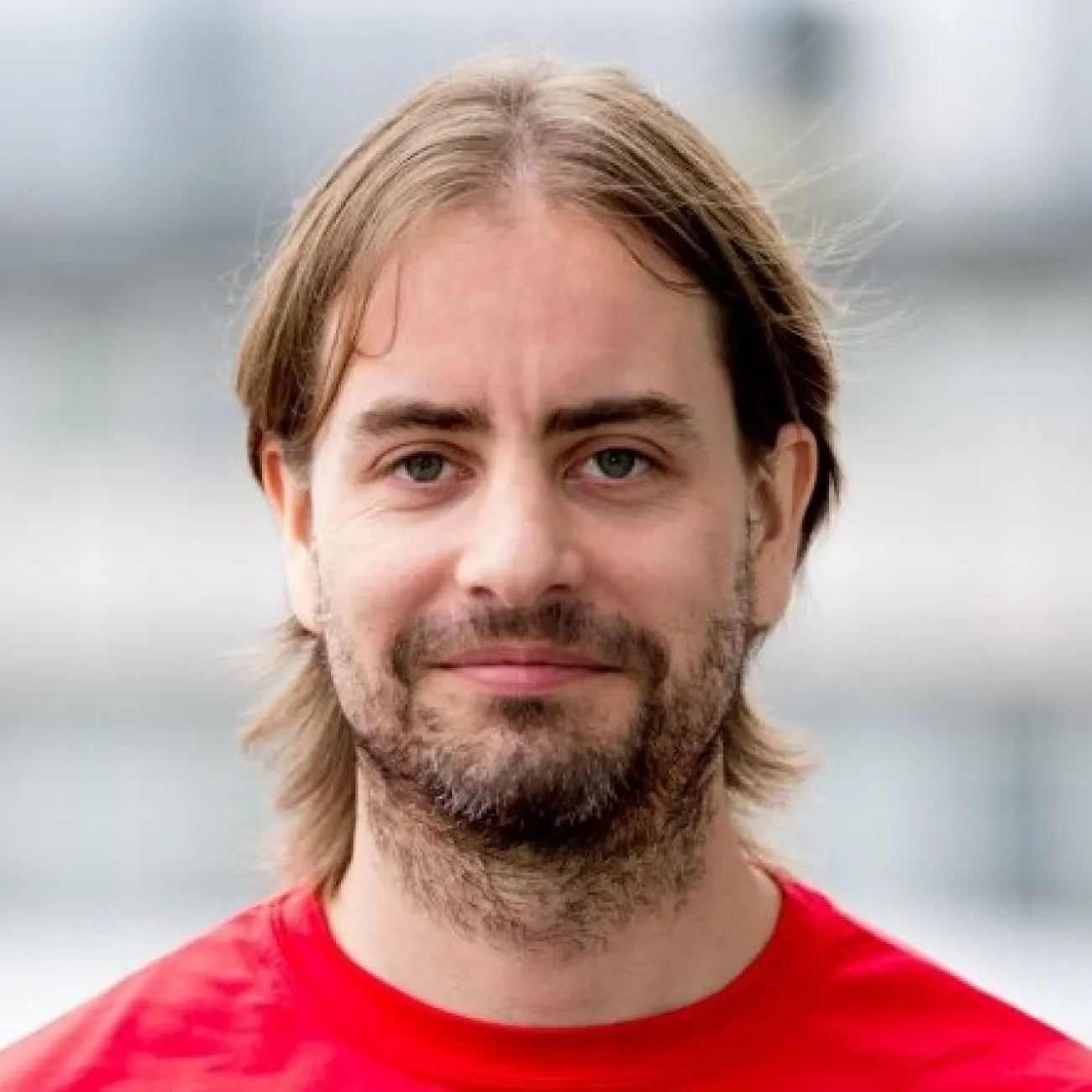
Iain Murray is Professor of Machine Learning and Inference at the School of Informatics, University of Edinburgh. His research focuses on developing flexible probabilistic models applicable across diverse domains including cosmology, neuroscience, perception, speech, sports, and text. Program Chair for ICLR (2018) Publications Chair for ICML (2017, 2018) Area Chair for AISTATS, ICLR, ICML, NeurIPS, and UAI Amazon Scholar (2018-2024), first appointed in Europe Murray's research interests center on probabilistic reasoning using machine learning, with specific expertise in density estimation and Markov chain Monte Carlo methods. His work spans theoretical foundations and practical applications, with significant contributions to neural autoregressive distribution estimation (NADE), real-valued NADE (RNADE), and pseudo-marginal slice sampling techniques. His research has enabled advances in flexible probabilistic modeling across multiple domains. His publications show consistent focus on advancing probabilistic modeling techniques, with recent work emphasizing neural autoregressive models, density estimation methods, and efficient sampling algorithms. The research trajectory demonstrates progression from foundational work on NADE to increasingly sophisticated deep learning approaches for density estimation and inference. Notable Paper Award for NADE work Amazon Scholar (2018-2024) Murray has supervised numerous PhD students who have gone on to prominent positions at Google DeepMind, NYU, stability.ai, and other leading institutions. His teaching responsibilities include the Machine Learning and Pattern Recognition course and project supervision. His research group focuses on developing tractable probabilistic models with applications across multiple scientific domains.
Dr. Alasdair King serves as Reader in Film at Queen Mary University of London , where he leads the Centre for Film and Ethics and contributes to the Finance Aesthetics research cluster. His work bridges film philosophy , critical political economy , and German cinema studies , with particular focus on financialization's impact on moving image aesthetics. DAAD Visiting Research Fellow (2015) Co-founder of CAPITAL FORMS (2020) graduate program in Economic Humanities PhD examiner at institutions including University of Warwick, University of Manchester, and University of Edinburgh He supervises doctoral projects on cinematic economics , AI media , and posthuman aesthetics , currently co-guiding two AHRC and LAHP-funded students. His 2023 monograph The Financial Image establishes frameworks for analyzing film's relationship to finance capital through works by Hito Steyerl , Harun Farocki , and Isaac Julien . A second monograph Hans Magnus Enzensberger: Writing, Media, Democracy (2007) remains foundational for understanding Frankfurt School media theory in West German context.
Dr. Yar Muhammad is a Principal Lecturer in Computer Science at the University of Hertfordshire's School of Physics, Engineering & Computer Science. His research develops Brain-Computer Interface applications using AI/ML techniques for healthcare. He holds a PhD in ICT (Tallinn University of Technology) and dual master's degrees. Research Leadership: Supervised PhD students: Nimra Memon (fault-tolerance in web services), Dmytro Zabolotnii (agent behavior prediction), Mahir Gulzar (context-aware modeling) Accepts self-funded PhD candidates in BCI/AI applications Awards: Young Investigator Award (Springer/IFMBE, 2014) Best Paper Award Runner-up (26th ISSC 2015) Professional Recognition: Fellow of Higher Education Academy IEEE Senior Member Editorial board member for multiple journals
Mustafa A. Mustafa is a Senior Lecturer (Associate Professor) in the Department of Computer Science at The University of Manchester, where he leads the Trusted Digital Systems Cluster as part of the university-wide Centre for Digital Trust and Society. His academic journey spans prestigious institutions including The University of Manchester, where he completed his PhD, and KU Leuven in Belgium, where he served as a post-doctoral research fellow. Dr. Mustafa earned his educational qualifications through an impressive academic path: a B.Sc. in communications from the Technical University of Varna, Bulgaria (2007), an M.Sc. in communications and signal processing from Newcastle University, UK (2010), and a Ph.D. in computer science from The University of Manchester, UK (2015). His doctoral research focused on "Smart Grid Security: Protecting Users' Privacy in Smart Grid Applications," laying the foundation for his subsequent research career. Dr. Mustafa's research expertise centers on information security, data privacy, and applied cryptography with particular focus on smart grid systems, smart city applications, e-health, and IoT. His work addresses critical challenges in securing peer-to-peer electricity trading markets, smart metering infrastructure, electric vehicle charging systems, and health data management. He has developed innovative solutions for keyless car sharing systems, frictionless authentication mechanisms, and privacy-preserving protocols for data collection and distribution. His scholarly contributions demonstrate a consistent trajectory toward increasingly sophisticated privacy-preserving techniques applied across multiple domains. Recent work shows a growing integration of artificial intelligence and machine learning approaches with traditional cryptographic methods, particularly in federated learning systems and large language model verification. His research bridges theoretical cryptography with practical implementations in energy systems and healthcare applications. Dr. Mustafa's scientific achievements have been recognized with several prestigious awards: Winner of the Student Video Competition at IEEE SmartGridComm 2017 for "Secure and Privacy-friendly Local Electricity Trading" Best Paper Award at SECURWARE 2017 Distinguished Achievement Award as Postgraduate Research Student of the Year nominee by the School of Computer Science of The University of Manchester (2015) Dame Kathleen Ollerenshaw Research Fellowship (2018-2023) As an academic supervisor, Dr. Mustafa has mentored numerous graduate students through their PhD and Master's research, with a particular focus on privacy and security challenges in emerging technologies. His current supervision portfolio includes research on privacy-friendly multi-agent systems for smart grids, security for IoT in e-health, vulnerability detection in IoT cryptography, and bot detection systems. He has secured significant research funding through multiple competitive grants including EnnCore: End-to-End Conceptual Guarding of Neural Architectures (EPSRC, 2020-2024), SCorCH: Secure Code for Capability Hardware (EPSRC, 2019-2023), and SNIPPET: Secure and Privacy-friendly Peer-to-peer Electricity Trading (FWO-SBO project, 2019-2023). Dr. Mustafa leads the Trusted Digital Systems Cluster within the Centre for Digital Trust and Society at The University of Manchester. His research group comprises PhD students, postdoctoral researchers, and collaborators working on cutting-edge security and privacy solutions. The team maintains strong international collaborations, particularly with KU Leuven in Belgium, and contributes to standards development as evidenced by Dr. Mustafa's role as an expert in the IEC/SYC/WG 3 "IEC Smart Energy Roadmap."
Professor Bing Chu is an academic at the University of Southampton, actively contributing to research in control systems, robotics, and machine learning. They are a member of the Vision, Learning and Control Centre for Internet of Things and Pervasive Systems and the Centre for Robotics, focusing on interdisciplinary approaches that combine control theory with data-driven methodologies. Current research interests include: Iterative learning control Human-robot interaction Wind farm power optimization Robot behavior modeling Control system architectures Collaborative learning systems Recent publications highlight trends in data-driven control systems, human-robot interaction datasets, and optimization techniques for both continuous-time systems and wind energy applications. Professor Chu supervises multiple PhD students across robotics and electronic engineering, including Balint Gucsi, Haonan Shen, and Aleksander Wolski, while leading projects funded by Zhengzhou University and the Royal Society.
Dr Andrew Coles is a Reader in Artificial Intelligence at the Department of Informatics, King's College London, within the Faculty of Natural, Mathematical & Engineering Sciences. His research focuses on temporal and numeric planning, explainable planning, and human-robot collaboration. He leads and co-investigates multiple research projects funded by EPSRC, the Royal Academy of Engineering, and the European Commission. His research interests include Artificial Intelligence, Temporal and Numeric Planning, Planning with Rich Domain Models, Explainable Planning, Human-Robot Interaction, Autonomous Systems, Heuristic Search, and Decision-Making. He has published extensively in top-tier AI and robotics conferences such as ICAPS, IROS, HRI, AAAI, and IJCAI. His recent publications demonstrate a strong trend toward explainable AI in human-robot collaboration, with a focus on multimodal sensing (e.g., eye tracking), user needs for explanation, and adaptive planning. His work integrates planning algorithms with human-centered evaluation and real-world applications in robotics. Scientific Awards: International award for PhD thesis on assistive robots (2020) Advising and Grants: Dr Coles has supervised multiple students, including Lara Wachowiak, Guillem Canal, and Petra Tisnikar. He has led or co-investigated several major research projects, including: COHERENT (EPSRC): Collaborative Hierarchical Robotic Explanations Plan and Goal Reasoning for Explainable Autonomous Robots (Royal Academy of Engineering) ADE (European Commission): Autonomous Decision Making in Very Long Traverses ERGO (European Commission): European Robotic Goal-Oriented autonomous controller Labs and Teams: He is affiliated with the Reasoning and Planning research group and the Trusted Autonomous Systems Hub at King's College London, focusing on developing trustable autonomous systems through robust planning and human-centered AI.
Joshua Ignatius is a Professor of Business Analytics at the Aston Business School, part of the College of Business and Social Sciences at Aston University. He focuses on research areas including supply chain analytics, prescriptive analytics, electronic commerce, and operations management. His work often addresses challenges such as information asymmetry in supply chains, user recommender systems, and logistics optimization. He is currently accepting PhD students in topics like Information Asymmetry in Supply Chains, User Recommender Systems, and Supply Chain Analytics. His research interests are centered on leveraging data-driven approaches to improve decision-making in supply chain and operational contexts. This includes studying disruption risk management, dynamic data modeling, and the integration of AI in cloud services. He also explores strategic decisions in e-commerce logistics, customer segmentation strategies, and environmental sustainability. Recent publications highlight his contributions to supply chain resilience, optimal security in cloud computing, and sustainable manufacturing processes. For instance, his 2025 work on supply chain network viability addresses disruption risks through dynamic data strategies. Another key area is the analysis of customer behavior in product upgrades, utilizing online review data to inform quality differentiation strategies. Dr. Ignatius has collaborated on projects involving platform information sharing, manufacturer encroachment, and logistics sourcing for e-commerce firms. His research often bridges theoretical frameworks with real-world applications, emphasizing practical solutions for operational challenges. He holds a strong record of supervising PhD students and guiding projects that combine academic rigor with industry relevance. His work frequently appears in leading journals such as the European Journal of Operational Research and Journal of Operations Management.
Professor David Thomas holds the position of Professor in Computer Engineering at the University of Southampton's Electronics and Computer Science Department. His research focuses on the intersection of software and hardware, particularly leveraging FPGAs for novel digital architectures and event-driven computing. He has a notable academic trajectory, having previously served as a Lecturer and Senior Lecturer at Imperial College London before joining Southampton in 2021. Dr. Thomas is actively involved in supervising PhD students and contributes to interdisciplinary research projects funded by the EPSRC, such as the SONNETS initiative exploring scalable event-triggered systems. Education: BSc in Computer Science (Imperial College London), PhD in Digital Architectures (Imperial College London). Postdoctoral roles included Research Associate and Research Fellow at Imperial's Department of Computing. Research Interests: Event-driven computing, FPGA-based systems, high-level synthesis, and high-performance computing. His work emphasizes practical implementations of theoretical models, such as custom processors and application-specific accelerators. Current projects include optimizing random number generation for FPGAs and exploring meta-programming techniques for hardware design. Advising and Grants: Supervises multiple PhD students in areas like neuromorphic computing and algorithm optimization. Active in securing funding for distributed system architectures and FPGA-based solutions. Labs/Teams: Member of the Cyber Physical Systems research group. Collaborates with interdisciplinary teams on projects like POETS (Partially Ordered Event-Triggered Systems) for large-scale parallel computing.
Banu Lokman is a Professor of Operational Research (OR) at the University of Portsmouth, serving as Associate Head (Research and Innovation) in the School of Organisations, Systems and People within the Faculty of Business & Law. She leads the Centre for Innovative and Sustainable Finance and contributes to the Centre for Operational Research & Logistics. Her expertise spans multi-criteria decision-making, optimization, and their applications in healthcare and sustainability. She holds editorial roles at OMEGA and the IMA Journal of Management Mathematics and organizes the NATCOR MCDM courses. Previously, she served as Deputy Director of CORL (2011–2024), Secretary of the International MCDM Society, and Board Member of INFORMS MCDM Section. She currently chairs the INFORMS MCDM Section as President-elect/Vice-President. Education: BSc, MSc, and PhD in Industrial Engineering from Middle East Technical University (METU, Turkey), followed by postdoctoral research at Aalto University (Finland). She taught at METU (2014–2019) and held visiting roles at Aalto University. Research Interests: Focuses on developing optimization methods for multi-criteria decision problems, particularly in healthcare (e.g., optimizing prostate biopsy decisions with Portsmouth NHS Trust) and sustainability. Her work emphasizes algorithms for nondominated set representation, robust efficiency analysis, and cluster ensemble methods. Key Awards: Bernard Roy Award (2022) for outstanding contributions to Multiple Criteria Decision Aiding, and Young Researcher Award (2015). Advising & Grants: Leads a healthcare-related PhD project and contributes to projects like the Social Investment Fund collaboration with Waltham Forest Council. She actively supervises students and participates in research initiatives on supply networks and data control systems. Labs & Teams: Engaged with interdisciplinary teams in operational research and logistics, particularly in applying OR to real-world challenges such as energy market optimization and MRO supply networks.
Dr. Cheng Ouyang is a Departmental Lecturer at the University of Oxford's Institute of Biomedical Engineering, part of the Department of Engineering Science. Affiliated with St. Peter's College, his research focuses on developing data-efficient, robust machine learning approaches for medical imaging and signal analysis. Key interests include domain generalization, few-/zero-shot learning, uncertainty modeling, and multimodal learning applied to medical data such as ultrasound and MRI. Prior to Oxford, he conducted postdoctoral research in cardiac imaging at Imperial College London, where he also earned his PhD in Computing. His work emphasizes practical medical applications, such as accelerating MRI reconstruction and enhancing ECG classification through multimodal techniques. Recent contributions include the CMRxRecon2024 dataset for cardiac MRI and federated learning approaches for low-dose CT denoising. His methods address challenges in generalizability, stability, and user interaction in clinical AI systems. Awards and recognitions are pending explicit mentions in the text. Dr. Ouyang's research spans foundational machine learning theory and applied biomedical engineering, with a focus on bridging gaps between algorithmic innovation and clinical utility. His lab collaborates across disciplines to advance medical imaging analysis and decision support systems.
Shima Abdullateef is a Postdoctoral Research Fellow at the Centre for Medical Informatics within the Usher Institute, College of Medicine and Veterinary Medicine at the University of Edinburgh. Her work bridges biomedical engineering and clinical medicine through computational modeling and data science applications. Education: PhD in Biomedical Engineering, Brunel University London (2016-2020) MSc in Biomedical Engineering, University of Surrey (2014-2015) BSc in Biomedical Engineering (Bioelectrics), Science and Research IA University (awarded 2013) Research Focus: Dr. Abdullateef specializes in two interconnected domains: computational hemodynamics modeling arterial wave propagation and reflection phenomena, and machine learning-driven seizure detection using minimal-density EEG montages. Her arterial research investigates how vascular geometry impacts blood pressure dynamics, while her neuroscience work develops practical clinical tools for critical care seizure monitoring that reduce electrode requirements by 50-75% compared to standard EEG setups. Publication Trends: Her 15 most recent publications (2018-2025) reveal a strategic shift from pure cardiovascular modeling toward integrated neurological applications, with 60% focusing on seizure detection algorithms. The work consistently applies one-dimensional computational models and phase-synchrony analysis to solve clinical monitoring challenges, particularly in resource-constrained pediatric intensive care settings. Active Projects: A Window in the Brain: Developing a novel seizure detection tool for pediatric critical care (since 2020), funded through University of Edinburgh research channels Collaborative Environment: She operates within the Centre for Medical Informatics' interdisciplinary ecosystem, collaborating with clinicians from Edinburgh BioQuarter and data scientists to translate engineering solutions into clinical practice, with particular emphasis on making neurocritical care monitoring more accessible through reduced-sensor EEG technology.
Professor Steven J. Murdoch is a leading figure in cybersecurity and privacy-enhancing technologies at the Department of Computer Science , University College London . His work bridges computer science and law, focusing on payment system security, electronic evidence reliability, and dispute resolution mechanisms. Head of Information Security Research Group at UCL (2022–present) Director at Open Rights Group (2022–present) Research spans payment security , privacy protocols , and legal implications of computer evidence . Key contributions include analyzing EMV protocol flaws, designing secure authentication mechanisms, and improving Tor's anonymity. Publications cover privacy-preserving federated learning , time-lock puzzles , and malware ecosystem analysis Awards include Fellowships from the Institution of Engineering & Technology and British Computer Society , and a Royal Society University Research Fellowship . Teaches COMP0055 Computer Security II and COMP0061 Privacy Enhancing Technologies at UCL
Professor Barry Porter is a faculty member at Lancaster University in the School of Computing and Communications . His research focuses on emergent software platforms that address software complexity through component models , meta-software platforms , and machine learning . Key areas include distributed systems, cloud integration with sensor nodes, green computing, and real-time visualization. Research Interests : Runtime adaptation in complex systems Self-assembling software architectures Machine learning for code optimization Distributed emergent systems at scale Green computing for multi-core environments Edge-cloud continuum integration Recent Publication Trends : His 2025 work explores genetic improvement for software using speciation algorithms , program geometry projection , and multi-agent decision frameworks . Earlier studies (2022-2024) investigate edge-cloud systems , neural transfer learning , and ecosystem curation in emergent software. Supervision & Projects : He supervises PhD student Ben Craine and leads projects like B-EGI (Bio-Enhanced Genetic Improvement) and BBC Prosperity Partnership for media delivery. Collaborations span environmental IoT, multi-agent learning, and fog computing. Labs & Groups : Affiliated with the Lancaster Intelligent, Robotic and Autonomous Systems Centre , Centre of Excellence in Environmental Data Science , and the Distributed Systems group.
Dr. Andrew Blake is a Lecturer in Experimental Neutrino Physics at the Department of Physics, Lancaster University. His research focuses on experimental neutrino physics, particularly neutrino event reconstruction and oscillation analysis using Liquid Argon Time Projection Chamber (LAr-TPC) technology. He collaborates on major international experiments including MINOS, MicroBooNE, SBND, and the future DUNE project at Fermilab. His primary research interests include: Precision measurements of neutrino oscillations Development of LAr-TPC detection technology Search for new physics beyond the Standard Model Neutrino interaction cross-section measurements CP symmetry violation in the neutrino sector Blake's recent publications (2025) demonstrate strong focus on: Advanced neutrino interaction measurements using MicroBooNE data Development of reconstruction algorithms for LAr-TPCs DUNE experiment capabilities for supernova detection and CP violation studies Validation methods for neutrino-nucleus interaction models He currently advises three PhD students: Krittika Adhikari (Experimental Particle Physics) Rachel Coackley (Experimental Particle Physics) Bethany McCusker (Experimental Particle Physics)
Steven D. Levitt is a Professor at the University of Chicago 's Booth School of Business and director of the Becker Center on Chicago Price Theory . His work spans economics, criminology, education, and behavioral science, with a focus on empirical analysis of real-world issues. Education: BA from Harvard (1989), PhD from MIT (1994) Key Research Areas: Crime economics, educational incentives, behavioral economics, and market dynamics Scientific Awards: 2004 John Bates Clark Medal, Time Magazine's 100 Most Influential People (2006) Levitt's article portfolio includes groundbreaking studies on topics like early childhood education (CogX program), abortion's impact on crime , cheating detection algorithms , and behavioral economics in education . His work often challenges conventional wisdom through unconventional data analysis. Prior research collaborations with Roland Fryer , John List , and Chad Syverson have produced influential papers on racial disparities , real estate markets , and juvenile crime . His NBER working papers demonstrate consistent methodological rigor and innovation.