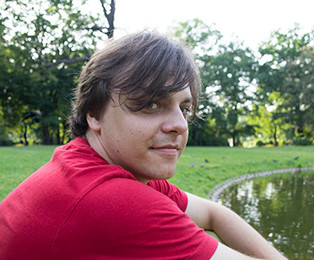
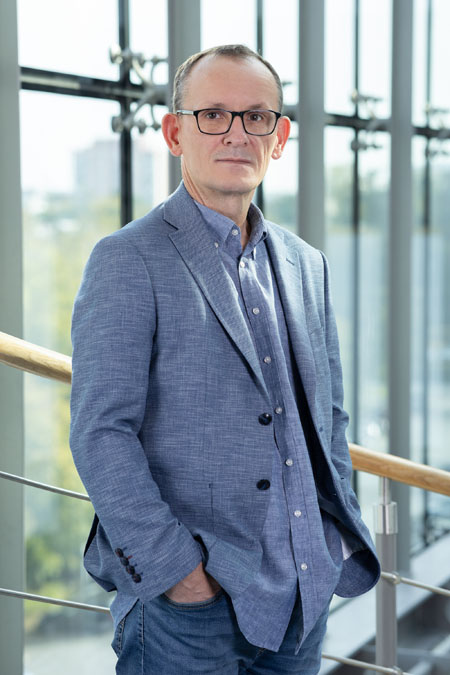
Filip Turoboś is an Assistant Professor at the Division of Insurance and Capital Markets , Lodz University of Technology . His academic profile indicates active research engagement without mention of part-time status, retirement, or former institutional affiliations. Research Focus: Dr. Turoboś demonstrates interdisciplinary expertise spanning: Mathematical Analysis : Including semimetric spaces, fixed-point theorems, and topological extensions Automotive Safety Engineering : Specializing in precrash velocity modeling using machine learning and optimization techniques Urban Mobility & Transport : Analyzing behavioral patterns during crises (e.g., pandemics) and regulatory impacts Emerging Technologies : Blockchain applications in security and ontological ecosystems Publication Trends (2020-2024): Recent works cluster into three dominant themes: Mathematical foundations of generalized metric spaces and functional analysis (30% of publications) Data-driven transportation studies focusing on pandemic-related behavioral shifts and urban policy effects (40%) Automotive crash reconstruction using AI/statistical methods and blockchain cryptography (30%)
Dr. hab. Grzegorz Tylec is a Professor at the Department of Language, Rhetoric and Media Law within the Institute of Journalism and Management at John Paul II Catholic University of Lublin's Faculty of Social Sciences. His research focuses extensively on legal frameworks governing media, intellectual property, and digital communication. Research Interests: His expertise spans copyright law, media regulation, freedom of expression protections, privacy rights in digital environments, legal aspects of artificial intelligence, and EU digital market regulations. Recent work examines tensions between emerging technologies and established legal principles. Publication Focus: His scholarly output demonstrates consistent focus on media law evolution, particularly regarding digital transformation. Recent articles analyze AI-copyright conflicts, disinformation liability, and platform regulation, while earlier works establish foundations in personal rights protection and copyright limitations. Scientific Awards 2023: Second-degree awards for textbook authorship and science popularization 2022: First-degree organizational award and best publication prize 2017: Third-degree Rector's Award Academic Leadership: He directs doctoral theses across media law topics, leads research projects including 'Legal Aspects of Judiciary-Society Communication,' and serves as Editor-in-Chief of KUL Scientific Journals. Regularly participates in legislative consultations and EU policy discussions regarding digital market regulation.
Prof. Sławomir Zator holds the position of University Professor at the Department of Safety Engineering and Technical Systems under the Faculty of Production Engineering and Logistics at Opole University of Technology. His research focuses on advanced diagnostics techniques using laser Doppler anemometry, thermography, and vision-based methods for infrastructure and energy systems. He also explores energy management strategies in buildings, emphasizing smart home integration with renewable energy sources like photovoltaics and heat pumps. His work bridges theoretical advancements with practical applications in power line safety, industrial equipment monitoring, and sustainable energy solutions. Research interests include: Laser-based flow measurement innovations Non-destructive evaluation of boiler tubes and power line components Machine vision applications for structural diagnostics Optimization of building energy systems Recent publications highlight trends in smart grid energy scheduling, icing risk mitigation for power infrastructure, and hybrid energy storage integration. His work often features cross-disciplinary approaches combining thermal imaging, computational modeling, and automation technologies. Prof. Zator maintains an active research profile through collaborations with international institutions and contributes to technical education via course development in safety engineering and metrology.
Maciej Banach is an Assistant Professor at the Institute of Civil Engineering, part of the Faculty of Civil Engineering, Mechanics and Petrochemistry at Warsaw University of Technology. His research focuses on civil engineering, construction processes, transportation systems, and material science, particularly in concrete and structural analysis. He has authored 19 publications, supervised 14 promoted theses, and contributed to 3 research projects. With a PhD awarded in 2019, his work emphasizes sustainable construction practices, advanced materials, and optimization of construction workflows. Education: PhD in Civil Engineering (2019). Research interests include construction assembly optimization, crane and equipment selection, cost estimation methodologies, and thermal analysis of structures. His studies on concrete with recycled materials and cubature construction techniques demonstrate a focus on innovation and practical application in civil engineering. Publications reflect a trend toward interdisciplinary solutions, blending computational tools with traditional construction challenges. His work has addressed topics like crane optimization, transportation logistics, and sustainable building materials. Achievements: 1 notable achievement recorded in institutional records, though specifics are not detailed. He has contributed to 3 research projects, though their nature is unspecified. Advising: Supervised 14 promoted theses, indicating significant contribution to academic mentorship. Grants and funding details are not explicitly provided.
Dr. Kateryna Czerniachowska is a Lecturer at the Department of Process Management, Wrocław University of Economics. She specializes in logistics optimization, heuristic algorithms, and supply chain management. Her work focuses on solving complex problems such as order-picking efficiency, shelf space allocation, and inventory distribution in retail and warehouse systems. She is fluent in English, Polish, Russian, and Ukrainian. Her research emphasizes mathematical modeling for retail networks and warehouse layouts, incorporating innovative heuristics like Flower Cutting and Mushroom Picking algorithms. Recent studies address sequence-dependent constraints in conveyor systems and multi-axial product categorization. She actively collaborates with industry to apply these methods in practical settings. Her publications span optimization frameworks for space allocation, scheduling TV advertisements via genetic algorithms, and predicting public transportation delays using machine learning. She maintains active profiles on ResearchGate and ORCID. Consultations are available via Microsoft Teams upon prior arrangement via email. She contributes to pedagogical activities focused on operational research and logistics systems design.
Dr. hab. Piotr Dniestrzański, professor at Wrocław University of Economics, specializes in mathematical and political science approaches to fair division problems, particularly in the context of degressively proportional allocation systems. He holds an academic position in the Department of Mathematics and Cybernetics. His research focuses on optimizing seat distributions in institutions like the European Parliament, addressing paradoxes in proportional representation, and applying mathematical models to political and economic challenges. Key research areas include: Apportionment methods and divisor-based allocation systems EU parliamentary configuration dynamics Optimization theory for fair resource distribution Statistical measures of inequality and disproportionality Recent work analyzes Brexit's impact on European Parliament structure, critiques the Cambridge Compromise framework, and explores entropy-based allocation strategies. His methodologies bridge mathematical rigor with practical governance applications. Consultation hours in 2024/2025: Thursdays 12:45-13:15 via Microsoft Teams (code rs9b0dy).
Paweł Jarosz serves as an Assistant Professor in the Department of Computer Science at the Faculty of Computer Science and Telecommunications , Cracow University of Technology. His work bridges computational intelligence with engineering applications. Academic Rank: Assistant Professor Department: Computer Science Faculty: Computer Science and Telecommunications University: Cracow University of Technology Research focuses on game theory, evolutionary algorithms, and multi-objective optimization, particularly in: Development of immune-inspired game-theoretic optimization methods Multi-criteria decision-making systems MEMS design optimization Biologically-inspired algorithmic frameworks Sustainable transportation modeling Distributed computing environments His publications (2010-2024) demonstrate sustained research in combining game theory with artificial immune systems for complex optimization challenges across various domains including microactuator design and spatial data analysis.
Dr. Bartosz Pieterek is an Assistant Professor at Adam Mickiewicz University specializing in planetary geology with a focus on Martian volcanology and sulfide geochemistry. As Principal Investigator of the PRELUDIUM 16 project, he combines satellite imagery , digital terrain models , and spectral data to study Martian volcanic processes and metal distribution in terrestrial lithosphere. Venue: Room 214 Contact: b.pieterek@amu.edu.pl | bpieterek94@gmail.com His research spans two interconnected domains: (1) Reconstructing Martian volcanic history through analysis of small-scale volcanic structures in young regions, and (2) Investigating sulfide dynamics at crust-mantle boundaries with implications for metallogeny and planetary exploration. This dual focus enables cross-disciplinary insights between terrestrial and extraterrestrial magmatic systems. Peer-reviewed publications (2017-2025) demonstrate consistent output across volcanology , geochemistry , and planetary exploration domains. Key trends include: Systematic analysis of Martian fissure eruptions and volcanic ramparts Quantitative studies of sulfide behavior in both terrestrial and Martian contexts Development of specialized instruments like MIRORES for ore detection Integration of thermal inertia mapping with structural geology Comparative studies of oceanic and continental crust-mantle transitions Time-resolved analysis of Martian magmatic activity periods Technically, Pieterek combines remote sensing with petrological modeling to address fundamental questions about planetary evolution and resource distribution.
Jacek Boroń, PhD, is a researcher at the Department of Building Engineering within the Faculty of Civil Engineering at Wrocław University of Science and Technology. His work bridges theoretical and applied aspects of structural and multidisciplinary optimization in civil engineering. His research interests include structural optimization , building envelope protection against mold growth , mathematical programming in construction management , and induced seismicity in mining areas . He applies optimization techniques to industrial construction problems such as stacks, cooling towers, and machine foundations. The recent publications reflect a strong focus on engineering optimization , thermal performance of buildings , and modernization of civil engineering education . His work often combines computational methods with practical applications in construction and mining environments. Scientific Awards: No awards listed in the provided text. Advising and Grants: No information available on students or grants. However, he has collaborated with researchers such as Paweł Bartyla, Maciej Minch, and Aleksander Trochanowski on various projects related to optimization and building technology. Labs and Teams: Affiliated with the Department of Building Engineering, Faculty of Civil Engineering. Specific lab or research team names are not mentioned, but his work suggests involvement in structural optimization and building physics research groups.
Krzysztof Walkowiak is a Professor at the Faculty of Computer Science and Telecommunications, Wrocław University of Science and Technology (PWr), where he also serves as the Dean of the Doctoral School. He leads the Computer Networks Team (ZSK) and is actively involved in multiple research projects, including Dark-Box Optimization and evolutionary methods for multi-criteria network design. A Senior Member of IEEE and IEEE ComSoc, he contributes to academic governance as a member of the Polish Academy of Sciences’ Committee on Electronics and Telecommunications. PhD in Computer Science (2000, with distinction) Habilitation in Computer Science (2008) Professor of Technical Sciences (2017) Dean of the Doctoral School, PWr (since 2020) Senior Member, IEEE and IEEE Communications Society Member, Committee on Electronics and Telecommunications, Polish Academy of Sciences His research spans computer network optimization, machine learning in networks, evolutionary algorithms, survivable optical networks, and intelligent computational techniques . He has pioneered the integration of AI methods in teleinformatics and leads initiatives in intent-based and cognitive networking. His work emphasizes multi-layer, application-aware network design and distributed processing systems. The 15 most recent publications reflect a strong trend in optimization under uncertainty, AI-driven networking, and metaheuristic algorithm development . There is a clear focus on survivability, scalability, and automation in modern network architectures, with increasing attention to edge intelligence via TinyML and cognitive systems. His recent work also addresses internationalization and pedagogical innovation in doctoral education. Fabio Neri Best Paper Award 2014 (Elsevier Journal of Optical Switching and Networking) Best Paper Award, DRCN2009 (Washington, USA) Best Paper Award, RNDM2015 (Munich, Germany) Medal of the National Education Commission (2011) Scientific Scholarship, Wrocław University of Science and Technology (2017) Star of Internationalization 2024 – Teaching Star Professor Walkowiak has supervised 10 completed PhD theses and currently mentors 5 doctoral students. He has led or managed 13 research projects funded by NCN (including 4 OPUS grants), EU, NAWA, and national agencies. His grant leadership includes the NAWA InterDocSchool project (2021–2023) and the Unite! Doctoral School curriculum development. He has reviewed over 300 journal submissions and served as session chair at 22 international conferences. He leads several research teams: Computer Networks Team (ZSK), Machine Learning Team, Advanced Data Analysis Methods Team, Metaheuristics Team, and Teaching Team . He has developed innovative educational programs such as the Research Skills course and Recent Research Trends , promoting international collaboration and doctoral training. He championed the transition to English-language instruction in the Doctoral School and promotes internationalization as a 'team sport' across institutional levels.
Dr. Eng. Tomasz Babczyński is a researcher at Wrocław University of Science and Technology, affiliated with the Faculty of Computer Science and Telecommunications and the Department of Technical Computer Science. Software Engineering (specializing in Software Performance Engineering) Geographic Information Systems (GIS) software Image processing and pattern recognition (focusing on handwritten document analysis) His research spans interdisciplinary applications of computer science, including: Railway systems dependability analysis (ERTMS/ETCS protocols) Historical landscape modeling using GIS Multiagent system performance evaluation for power systems Advanced techniques for line segmentation in handwritten documents Recent publications (2020-2024) demonstrate expertise in tensor voting algorithms, data heterogeneity challenges, and safety-critical system analysis. His work combines theoretical computer science with practical applications in transportation, energy, and historical information systems. Contact: tomasz.babczynski@pwr.edu.pl
Maciej Woźniak serves as a university professor at the Institute of Computer Science within the Faculty of Computer Science at AGH University of Science and Technology in Kraków, actively contributing to research and teaching staff while participating in the Computer Science Discipline Council and College of the Faculty. His office is located at D-17, ul. Kawiory 21, III, 4.58, with primary contact via macwozni@agh.edu.pl. His research spans computational mathematics and high-performance computing, specializing in parallel algorithms for numerical simulations including isogeometric analysis, finite element methods, and multi-frontal solvers. Key applications address environmental challenges like hail suppression and urban smog reduction, alongside biomedical modeling of tumor growth and airborne pathogen dispersion. Methodological innovations focus on GPU acceleration, shared-memory architectures, and efficient integration techniques for partial differential equations. Analysis of his 2019-2024 publications reveals consistent advancement in parallel computational frameworks for environmental and biomedical applications, demonstrating interdisciplinary impact through experimental validation of hail cannons, smog reduction technologies, and pathogen dispersion modeling during the COVID-19 pandemic. His work bridges theoretical algorithm development with real-world problem solving across physics, engineering, and life sciences. Scientific Awards: No specific awards were documented in the provided sources. Student advising, research grants, laboratory affiliations, and educational background details beyond his PhD, DSc, and Eng. titles remain unspecified in the available materials, though his extensive publication record suggests active mentorship and collaborative research leadership.
Ryszard Sroka serves as Professor and Head of the Department of Metrology and Electronics at AGH University of Science and Technology's Faculty of Electrical Engineering, Automatics, Computer Science and Biomedical Engineering in Kraków, Poland. His leadership extends to university committees including the Discipline Council for Automation, Electronics, Electrical Engineering and Space Technologies and the Rector's Finance Committee. His research spans transportation metrology and biomedical sensor systems, with primary expertise in weigh-in-motion (WIM) technology for vehicle mass enforcement. Key focus areas include dynamic weighing accuracy assessment, sensor fusion for traffic monitoring, calibration methodologies for WIM systems, and innovative biomedical applications such as autoclave sterilization IoT systems and multimodal thermographic wound imaging. His work bridges theoretical metrology with practical engineering solutions for road safety and healthcare diagnostics. Analysis of his 15 most recent publications (2021-2025) reveals a strategic evolution from traditional WIM system optimization toward interdisciplinary applications. While 70% of recent work advances high-accuracy enforcement systems and sensor longevity studies, 30% explores biomedical frontiers including steam sterilization monitoring and surgical diagnostic imaging. This dual-track approach demonstrates significant methodological transfer between transportation and medical sensor domains. As Department Head, he oversees metrology and electronics research initiatives with emphasis on real-world implementation. His team maintains active development of traffic parameter measurement systems and biomedical sensor networks, positioning the department at the intersection of measurement science and industrial application.
Ryszard Klempka, PhD, DSc, Eng., is a Professor at AGH University of Science and Technology in Kraków, affiliated with the Faculty of Electrical Engineering, Automatics, Computer Science and Biomedical Engineering, and the Department of Power Electronics and Automation of Energy Conversion Systems. He serves as Head of the Department and leads research in power electronics, energy conversion systems, optimization algorithms, and mining technology. Position: University Professor Headquarters: Room 104 (main), Room 117 (department head) Contact: keiaspe@agh.edu.pl , klempka@agh.edu.pl Research Interests His research focuses on power quality improvement, passive and active filter design, mining automation, and optimization techniques like genetic algorithms and firefly algorithms. Key areas include voltage disturbance analysis, harmonic filtering, energy-efficient systems for mining, and computer-aided design of electromechanical components. Publications Trends Recent works emphasize mining transport load analysis, stability optimization for manipulators, and application of AI-based algorithms to power systems. Historical research includes Bronze Age casting technology and neural networks for industrial load forecasting. Leadership As Head of the Department, he oversees academic programs in power electronics and energy conversion systems, contributing to strategic development in automation and biomedical engineering disciplines.
Piotr Burnos serves as a Professor at the Department of Metrology and Electronics within the Faculty of Electrical Engineering, Automatics, Computer Science and Biomedical Engineering at AGH University of Science and Technology in Kraków, Poland. His office is located in room 211 of building B-1 (second floor), with contact details including telephone +48 12 617 28 27 and email burnos@agh.edu.pl. Burnos specializes in Weigh-in-Motion (WIM) technology for vehicle enforcement, focusing on sensor accuracy under real-world conditions including temperature fluctuations and pavement mechanics. His research addresses critical challenges in dynamic vehicle weighing systems, particularly for administrative enforcement applications where measurement precision directly impacts road infrastructure protection and legal compliance. Key contributions include thermal error compensation, multi-sensor fusion, and Polish implementation frameworks. Analysis of his 15 most recent publications (2015-2018) reveals consistent advancement in WIM system reliability through temperature modeling, pavement interaction studies, and administrative integration. His work bridges metrological precision with practical enforcement needs, emphasizing Polish regulatory contexts while contributing to broader transportation engineering knowledge. No scientific awards were documented in the source materials. While specific student advisement or grant information isn't provided in available sources, Burnos' research demonstrates sustained focus on applied transportation engineering problems with direct societal impact through infrastructure protection and regulatory enforcement.