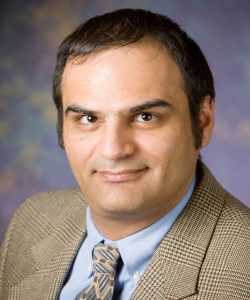
Christoforos Hadjicostis is Professor of Electrical and Computer Engineering at the University of Cyprus. He previously served as Chair of the department from 2008-2010 and held positions at the University of Illinois at Urbana-Champaign. He holds S.B. degrees in Electrical Engineering, Computer Science, and Mathematics, an M.Eng. in Electrical Engineering and Computer Science (1995), and a Ph.D. in Electrical Engineering and Computer Science (1999) from MIT. His research focuses on fault diagnosis and tolerance in distributed dynamic systems, error control coding, monitoring and control of discrete event systems, with applications in network security, anomaly detection, energy distribution, medical diagnosis, biosequencing, and genetic regulatory models. His publications primarily explore formal methods for system verification, distributed algorithms for multi-agent coordination, and privacy-preserving mechanisms in discrete event systems. Recent work emphasizes detectability, observability, and opacity enforcement in networked and cyber-physical systems.
Eleni Tekki is a Research Engineer II at the University of Cyprus, affiliated with the KIOS Research and Innovation Center of Excellence. She holds a BSc in Mechanical Engineering (2018) and an MSc in Mechatronics and Automation (2020). Education: BSc in Mechanical Engineering, University of Cyprus (2018) MSc in Mechatronics and Automation, Strathclyde University (2020) Research Interests: Eleni focuses on advanced research in power systems, particularly smart grids, multifunctional inverters for renewable energy systems, and cybersecurity in power substations. Her work involves designing software tools for innovative solutions and participating in projects addressing grid protection, virtual synchronous generators, and cyber threats. Recent Publications: Her articles analyze cybersecurity in power systems, prioritization of ancillary services in renewable energy inverters, and sandboxing methodologies for grid control. These works span topics in electrical engineering, grid stability, and cyber-physical threat modeling. Projects: Eleni is engaged in projects related to cyber attacks on active distribution grids, microgrids, and coordinated overcurrent protection schemes. Her contributions include software tool development and simulation of security threats.
Sina Hashemi is a Research Fellow at the Department of Electrical and Computer Engineering, University of Cyprus, with additional affiliation at the KIOS Research and Innovation Center of Excellence. He holds a PhD (2022) from the University of Tehran, specializing in power system stability and control. His work bridges academic research and practical solutions for modern power grids. Research Focus: Dr. Hashemi's expertise centers on enhancing power system resilience, stability, and reliability. Key areas include: Mitigation of cascading failures and cyberattack impacts Hybrid AC/DC grid planning and operation Voltage stability assessment and control optimization Reactive power management and blackout prevention His methodologies integrate machine learning, multi-objective optimization, and real-time monitoring frameworks. Publication Trends: Recent articles (2022–2024) emphasize cyber-physical security and resilience-oriented planning for modern grids, using optimization and AI-driven approaches. Earlier work (2010–2019) focused on voltage stability indices, neural network applications, and capacitor/UPFC placement. Affiliations: He contributes to the KIOS Research Center, which focuses on intelligent systems for critical infrastructure.
Dr. Antonia Lemonari – Sophocleous is an Assistant Professor in the Department of Architecture at the University of Cyprus, affiliated with the School of Humanities and Social Sciences. She holds a Civil Engineering degree from the National Technical University of Athens and a Ph.D. in 'Adaptable Dual Control Systems' from the National University. Her professional qualifications include memberships in CSTC, CyACE, and CCEAA. Dr. Sophocleous has been actively involved in research since 1994, focusing on structural analysis, earthquake-resistant design, and adaptable systems. She coordinates master's programs and integrates research-based teaching methods with technology tools. Her research interests span structural engineering, seismic design, parametric analysis, and architectural adaptability. Notable contributions include studies on cable bracing systems, dual control frameworks, and kinetic structures. She has presented at over 15 international conferences and published in refereed journals across Europe and Asia. Her work bridges academic research with professional practice as a structural consultant. Dr. Sophocleous' publications emphasize earthquake-resistant innovations, such as damper systems in MR frames and adaptive dual control mechanisms. Her recent work (2022–2024) explores cutting-edge applications like the Sydney Opera House case study and salt lake ecosystem management. She advocates for urban sustainability through structural systems integration and participatory design approaches. Her professional service includes roles as a consultant for organizations and a coordinator for academic programs. While no specific grants or labs are detailed, her contributions highlight interdisciplinary collaboration between architecture, engineering, and urban planning.
Prof. Irene Polycarpou serves as Rector of UCLan Cyprus and holds the academic title of Professor of Technology and Innovation in Education. She leads the School of Sciences while maintaining a prolific academic career spanning over 15 years in computer science education and research. Her qualifications include a PhD in Computer Science from Florida International University (2008), complemented by certifications such as the PECB CDPO and Higher Education Academy Fellowship. Education Background PhD in Computer Science, Florida International University, USA (2008) MSc Computer Science, Florida International University, USA (2004) BSc Computer Science, Florida International University, USA (2002) Associate of Computer Science, Higher Technical Institute, Cyprus (2000) Research Focus Her work centers on educational technologies, including interactive multimedia, e-learning systems, and STEM education. She explores how pedagogical strategies can enhance learning outcomes in computing education, particularly for K-12 students and underrepresented groups in STEM. Recent projects include designing coding workshops for high school students and analyzing virality factors in brand videos. Publications Trends Her publications span educational technology, computer science pedagogy, and interdisciplinary studies like cybersecurity curriculum development and music's role in advertising virality. Over 80% of her work post-2015 focuses on innovative teaching methodologies and their impact on student engagement and industry collaboration. Awards & Grants Member of €2.9M EU H2020 project SLICES-DS (2020–2022) Recipient of €299K for i-Sci Multi-Centre for Science and Technology (2016) Lead supervisor for 3 PhD/MSc students focusing on pedagogy and technology integration Leadership & Outreach As InSPIRE Center co-founder, she promotes interdisciplinary research and innovation. She advises Cyprus' Ministry of Education on digital technologies in education and serves on EU funding review panels. Her outreach includes organizing national coding competitions and mentoring women in computing through ACM-W Cyprus. Labs & Teams Leads the InSPIRE Center, focusing on interdisciplinary science promotion, and oversees research clusters in educational technology and STEM pedagogy at UCLan Cyprus.
Anna Philippou is a Professor in the Department of Computer Science at the University of Cyprus. Her research focuses on Concurrency Theory, Formal Methods, Algorithmic Game Theory, and Privacy-Preserving Systems. She holds a PhD in Computer Science from the University of Warwick, UK (1996), and has held academic positions at the University of Pennsylvania (1997–1998). Her work emphasizes formal verification of concurrent systems, GDPR compliance frameworks, and reversible computing models using Petri Nets. Education: B.A. in Mathematics and Computation (University of Oxford, 1992), M.Sc. in Parallel Computers and Computation (University of Warwick, 1993), PhD in Computer Science (University of Warwick, 1996). Research Interests: Her studies address specification and verification of concurrent systems, formal methods for safety-critical systems, and applications of Petri Nets in reversible computing. Recent work explores GDPR compliance in software design and fault-tolerant networking protocols. Advising/Grants: No explicit student or grant details provided in text. Active in organizing conferences like FORTE and DisCoTec, and has contributed to tool development for formal verification (e.g., Diálogop). Labs/Teams: Not explicitly mentioned, but her research aligns with formal methods and distributed systems groups at the University of Cyprus.
Assistant Professor Amr Abdelbari is affiliated with the Data Analytics Engineering Department at Near East University. His research focuses on wireless communication systems, signal processing, and machine learning applications in telecommunications. Academic Rank: Assistant Professor University: Near East University Department: Data Analytics Engineering Research interests include: Massive MIMO and 5G network optimization Direction-of-Arrival (DOA) estimation techniques Machine learning for wireless communication IoT applications in civil engineering Probabilistic and fuzzy logic-based signal processing Recent publications (2020-2025) demonstrate expertise in wideband signal processing, NOMA systems, and error probability modeling. Key trends in his work include integrating fuzzy logic for network optimization, improving DOA estimation for 5G systems, and applying neural networks to renewable energy modeling. Contact: amr.abdelbari@neu.edu.tr
George Papadopoulos is a Professor of Informatics at the University of Cyprus. He holds a Ph.D. from the University of East Anglia (1989) and has held academic and research roles at institutions including NCSR Demokritos, Aristotle University of Thessaloniki, and the University of East Anglia. His research focuses on Component-Based Systems, Parallel/Distributed Systems, and Cooperative Information Systems. He leads the Software Engineering and Internet Technologies (SEIT) Laboratory and has contributed to EU-funded projects like SciChallenge and AsTeRICS. Key contributions include development of adaptive middleware architectures, context-aware systems, and educational platforms such as the DIGICOMPASS training course. His work spans academic-service integration, assistive technologies for accessibility, and AI applications in healthcare and dementia care. Over 150 peer-reviewed publications reflect his expertise in software engineering, ubiquitous computing, and e-learning systems. Current roles include editorial board memberships for journals like Computing and IEEE Transactions on Education . Active in professional service through EU projects, he emphasizes interdisciplinary collaboration across computing, education, and healthcare domains.
Petros Aristidou is an Assistant Professor in Sustainable Power Systems at the Cyprus University of Technology (CUT), where he directs the Sustainable Power Systems Lab. His academic journey includes a PhD in Engineering Sciences from the University of Liège (2015) and a Diploma in Electrical & Computer Engineering from the National Technical University of Athens (2010). Previously, he held positions as Lecturer at the University of Leeds and Postdoctoral Researcher at ETH Zurich. His research focuses on three primary areas: power and energy system informatics, control of hybrid dynamical systems, and modeling/simulation of large-scale power systems. He specializes in addressing challenges related to low-inertia power systems, renewable integration, and grid stability. Award trends show consistent recognition from IEEE societies, with honors spanning best paper awards (TPWRS, ISGT-Europe), technical report awards, and scholarships. His publications demonstrate a progression from fundamental simulation methods toward applied solutions for renewable integration and grid resilience. TPWRS Best Paper Award (2021) IEEE PES ISGT-Europe Best Paper (2021) IEEE PES PowerTech High Quality Paper (2021) IEEE SEST Best Paper (2020) IEEE Outstanding Technical Report (2018) He leads multiple grants including the Horizon Europe MSCA ITN project Dependable Energy Systems (PI) and industrial collaborations on power system simulation methods. As lab director, he oversees research on power system dynamics and control, participating in international working groups addressing low-inertia system challenges.
Demetris Zeinalipour is a Professor of Computer Science at the University of Cyprus, where he founded and directs the Data Management Systems Laboratory (DMSL). He holds a Ph.D. (2005) and M.Sc. (2003) in Computer Science and Engineering from the University of California - Riverside, CA, USA and a B.Sc. in Computer Science from the University of Cyprus (2000). His career includes research positions at Akamai Technologies, University of Athens (as a Marie-Curie Fellow), University of Pittsburgh, and the Max Planck Institute for Informatics (as a Humboldt Fellow). He is an ACM Distinguished Speaker (2017-2020), a Senior Member of ACM and IEEE, and serves on the editorial boards of ACM Transactions on Spatial Algorithms and Systems and Distributed and Parallel Databases. His primary research spans Data Management in Computer Systems and Networks, with expertise in Mobile, Sensor and Spatio-Temporal Data Management; Big Data Management in Parallel and Distributed Architectures; Network, Blockchain and Telco Data Management; Crowd, Web 2.0 and Indoor Data Management; Data Privacy Management; Data Management for Sustainability; and AI and Data Management. His work bridges theoretical foundations with practical applications, resulting in numerous systems including Anyplace Indoor Information Service, ChatUCY, GreenCap, EcoCharge, and Triabase. His research has evolved from early work in sensor networks to current focus on sustainable computing applications addressing climate change challenges. Professor Zeinalipour's publication record shows a strong trajectory toward sustainability-focused data management, with recent work on energy management for smart homes, electric vehicle charging, and solar self-consumption. His research integrates multiple disciplines including spatial databases, mobile computing, IoT systems, and blockchain technologies, with increasing emphasis on addressing real-world environmental challenges through computing solutions. Scientific Recognition IEEE ICDE'24 Outstanding Reviewer Award IEEE MDM'21 Best App Paper Award IEEE MDM'18 Best of MDM Award and Best Demo Award Humboldt Fellow (2016) ACM Distinguished Speaker (2017-2020) ACM and IEEE Senior Member status He has advised numerous PhD students and postdocs, many of whom have established successful careers in both academia and industry. His laboratory maintains strong industry connections and contributes to open-source development. Professor Zeinalipour is deeply committed to addressing real-world challenges through computing research, with recent work focusing on climate change mitigation and sustainable energy management solutions.
Chryssis Georgiou is a Professor and Chair of the Department of Computer Science at the University of Cyprus , where he leads the Research Laboratory for Foundations of Computing Systems and Theoretical Computer Science . He holds a Ph.D. and M.Sc. in Computer Science from the University of Connecticut and a B.Sc. in Mathematics from the University of Cyprus. Ph.D. in Computer Science (2003), University of Connecticut M.Sc. in Computer Science (2002), University of Connecticut B.Sc. in Mathematics (1998), University of Cyprus His research focuses on the Theory and Practice of Fault-Tolerant Distributed and Parallel Computing , with emphasis on algorithms, complexity, and blockchain systems. He has published over 115 refereed articles and co-authored two books on distributed computing. Recent work includes Byzantine-tolerant consensus, dynamic storage for large objects, and blockchain resilience frameworks. His 15 most recent publications span topics in Byzantine Fault Tolerance , Atomic Shared Memory , WSN Optimization , and Distributed Ledger Formalization , with applications in IoT networks, cryptocurrency systems, and GPU-inspired shared memory models. Advising and Projects include coordination of the MA(R)S project (Cyprus Research Foundation), e4Pain (machine learning for pain coping), ESS-BFT (self-stabilizing blockchain infrastructure), and participation in the CoronaSurveys system for pandemic data collection. He has served as project coordinator for the ONISILIOS-funded ESS-BFT and as academic supervisor for industry-linked PhD programs. Labs and Teams include the Research Laboratory for Foundations of Computing Systems at the University of Cyprus, with collaborations across Europe and North America. He chairs the 2026 SIROCCO conference and contributes to editorial boards and program committees for top-tier distributed computing venues.
Professor Philippos Pouyioutas is a faculty member at the University of Nicosia, affiliated with the School of Sciences and Engineering and the Department of Computer Science. He serves as the Rector of the university and has held various leadership roles, including Director of Academic Affairs and Chairperson of the Research Committee at Intercollege (1996-2007). His research focuses on 5G Networks, Relational and Object-Oriented Databases, and Quality Assurance in Higher Education and E-Learning. PhD in Object-Oriented Databases (University of London, 1996) CertEd in Teaching/Learning in Higher Education (University of North London, 1993) His recent work involves projects like LIFE TWO, SHIFT, UN4DRR, EGEA, and SPHERA, funded by ERASMUS+ and other international initiatives. Key collaborations include the TESLA Adaptive Trust-based e-assessment System and evaluations for Piraeus University of Applied Sciences. Scientific contributions span over 100 publications, with a focus on Network Optimization, Educational Technology, and Database Systems. Awards include PhD scholarships from the University of London, ORS, and the Leventis Foundation. Coordinated applications for the Diploma Supplement Label and ECTS Label Supervised PhD students in Database Systems and E-Learning Quality Assurance
Vicky Papadopoulou Lesta is an Associate Professor in the Department of Computer Science and Engineering at the European University Cyprus, where she holds a full-time position. Previously, she served as a Post-Doctorate Researcher at the University of Cyprus (2004-2008) and as a Visiting Lecturer at both the University of Patras (2003-2004) and the University of Cyprus (2007-2008). Her educational background includes a PhD (2003), Master's degree (2001), and Bachelor Diploma (1998), all in Computer Engineering and Informatics from the University of Patras, Greece. Dr. Papadopoulou Lesta's research spans the Theory of Algorithms and Complexity with focus on Computational Complexity, Graph Theory, Algorithms, Approximation and Combinatorial Algorithms, Parallel Algorithms, Algorithmic Game Theory, and Distributed Systems. Her work has significant applications in Facility Allocation problems, Topological Network Control, Frequency Assignment, and Wireless Sensor Networks. Her publications appear in prestigious journals including Algorithmica, Theoretical Computer Science, and Computer Networks. Her research has been supported by European Union and Cypriot state-funded projects. Chair of Organizing Committee for 2nd International Symposium on Algorithmic Game Theory (2009) Co-editor of Springer LNCS proceedings for SAGT 2009 Scientific Program Committee member for ICALP 2015 Regular reviewer for Theoretical Computer Science journal She has contributed significantly to network security validation, nonfunctional requirements validation, and cooperative user network interactions, applying game theoretic approaches to solve complex computational problems in wireless networks and security systems.
Kypros Milidonis is an Assistant Professor in the Energy Department of the Energy, Environment, and Water Research Center (EEWRC) at the Cyprus Institute (CYI). His expertise spans renewable energy technologies, with a focus on solar energy systems, advanced energy conversion, and computational engineering. He holds an integrated Master’s Degree (2008) and a doctorate (2014) in Mechanical Engineering and Aeronautics from the University of Patras. Prior to joining CYI, he worked as a Research Associate at the University of Cambridge (2015-2018), focusing on energy conversion systems. Dr. Milidonis leads research projects spanning theoretical development (TRL 1-4) to pre-industrial applications (TRL 5-7), emphasizing solar energy innovation. His work includes optimizing heliostat fields, anti-soiling strategies, UAV-assisted monitoring, and AI-driven design. He actively collaborates with industry and manages international projects, such as SolarPACES Task III. His research integrates interdisciplinary approaches, combining mechanical engineering, computational modeling, and material science. Key contributions include advancements in heliostat field optimization, solar receiver design, and the application of unmanned aerial vehicles (UAVs) in solar plant maintenance. His publications span solar thermal systems, computational tools like SunPATH and fluxtracer, and historical engineering reconstructions (e.g., ancient Greek artifacts). He is a Principal Investigator and coordinator, emphasizing translational research bridging academia and industry.
Konstantinos Fokianos is a Professor of Statistics at the University of Cyprus. He completed undergraduate studies in Mathematics at the University of Ioannina and earned his M.A. (1993) and Ph.D. (1996) in Statistics from the University of Maryland, USA. His academic career includes positions at Ohio State University (Visiting Assistant Professor), Lancaster University (2018-2020), and the University of Cyprus where he advanced from Lecturer to full Professor. Professor Fokianos specializes in time series analysis with focus areas including integer-valued time series models, high-dimensional time series, spectral analysis, semiparametric modeling, and isotonic estimation. His methodological research encompasses network autoregression, multivariate count time series, causal inference for health questionnaires, and clustering techniques. Applied work includes epidemiological network analysis, medical prognostics for leukemia, and tourism competition modeling. He has held visiting positions at Ludwig Maximilians University, National Institutes of Health, EPFL, and other institutions. Elected member of the International Statistical Institute since 2005, he serves on editorial boards of Journal of Time Series Analysis and Statistical Modeling, and edits Springer's 'Frontiers in Probability and Statistical Sciences' series.