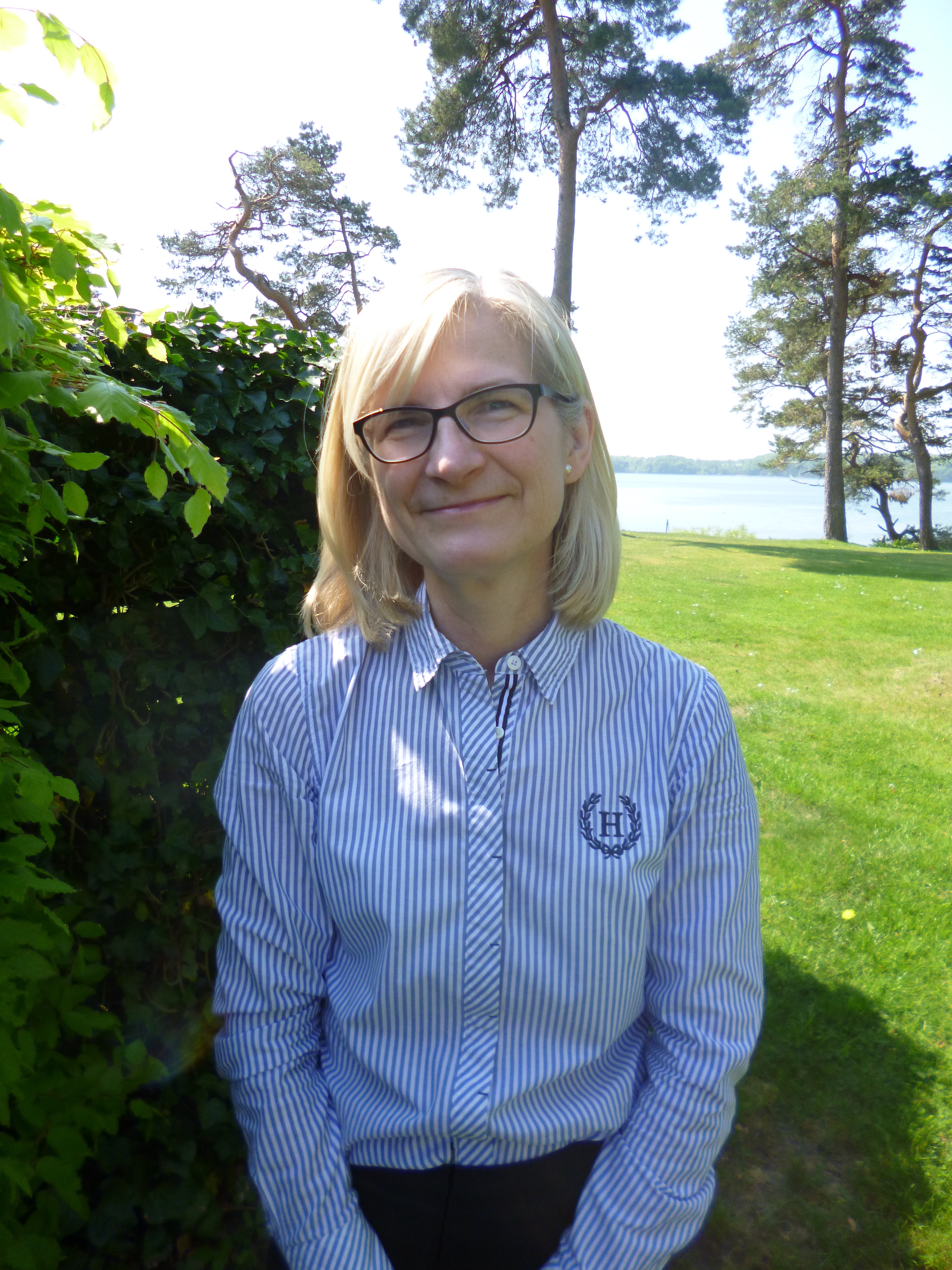
Anne Elisabeth Haxthausen is an Associate Professor at the Software Systems Engineering section within DTU Compute , Technical University of Denmark . Her work focuses on formal methods, railway control systems, and safety-critical software engineering. Founder and leader of the DTU Railway Verification Group Member of European Technical Working Group on Formal Methods in Railway Control Editorial board member for Springer Formal Aspects of Computing Journal Active in the Overture Language Board Her research emphasizes formal verification of railway interlocking systems, particularly through compositional approaches and automated tools. She has contributed to projects like RobustRailS, Overture, and RAISE, focusing on model-based development and verification. She serves as a tutor for bachelor students and contributes to the advisory committee for DTU's Computer Science and Engineering MSc program. Her recent publications explore challenges in verifying autonomous and AI-driven railway technologies.
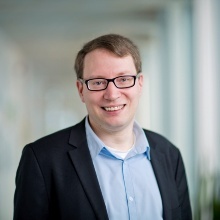
Sohag Kabir is an Associate Professor in the School of Computer Science, Artificial Intelligence, and Electronics at the University of Bradford. He leads the MSc Big Data Science and Technology, MSc Artificial Intelligence and Machine Learning, and MSc Applied Computer Science and Artificial Intelligence programs. He holds a Ph.D. in Computer Science from the University of Hull (2016), an M.Sc. in Embedded Systems, and a B.Sc. in Computer Science and Engineering. Dr. Kabir's research focuses on safety, reliability, and security assurance of cyber-physical autonomous systems. His work includes model-based safety analysis, probabilistic risk assessment, dynamic reliability analysis, and stochastic modeling. Current projects address IoT security, machine learning certification for automotive systems, and dependability frameworks for complex systems. His publications demonstrate consistent focus on developing integrated frameworks for system dependability, with recent work emphasizing IoT security, autonomous vehicle safety, and AI certification challenges. Dr. Kabir has contributed to multiple EU-funded projects including DEIS (Dependability Engineering Innovation for Cyber-Physical Systems) and MAENAD (Model-based Analysis & Engineering of Novel Architectures for Dependable Electric Vehicles).
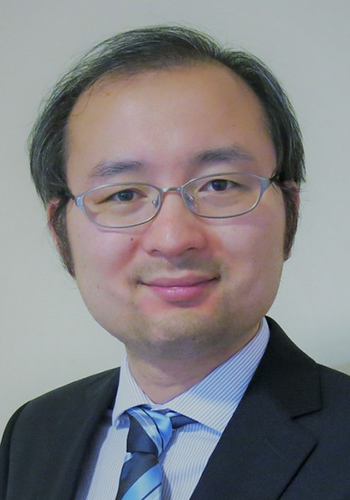
Hamed Badihi is an Assistant Professor in Automation Technology and Dependable Systems at Tampere University , part of the Faculty of Engineering and Natural Sciences. He leads the Dependability and Automation Research in Cyber-Physical Systems (DARES) Group within the Dependable Systems Cyber Laboratories . His research focuses on critical aspects of condition monitoring, fault-tolerant control, and attack-resilient control to advance sustainable, dependable cyber-physical systems. Research Interests include: Cybersecurity for industrial control systems Fault-tolerant control mechanisms Resilient control strategies for renewable energy systems Condition monitoring of wind turbines and microgrids Recent Contributions emphasize hybrid approaches combining machine learning and control theory for cyber-attack detection and system resilience in wind farms and microgrids. His work addresses challenges like real-time fault diagnosis and adaptive control under adversarial or environmental perturbations. Awards & Roles : Senior Member of IEEE, editor for International Transactions on Electrical Energy Systems , Advances in Fuzzy Systems , and Processes journals. Active in EU projects like StreamSTEP . Labs & Teams : Directs the DARES Group, collaborating on initiatives like the Dependable Systems Cyber Laboratories to pioneer innovations in cyber-physical system dependability.
Dr. Gabor Karsai is a Distinguished Professor of Computer Science and Professor of Electrical and Computer Engineering at Vanderbilt University's School of Engineering. He also serves as Senior Research Scientist at the Institute for Software-Integrated Systems (ISIS), where he contributes to the Executive Council. With over 30 years in software engineering, his research focuses on embedded systems, model-driven development, resilient software platforms, and AI-driven autonomous systems assurance. He holds a PhD from Vanderbilt and degrees from the Technical University of Budapest. Education: Ph.D. in Electrical and Computer Engineering, Vanderbilt University Dr.Tech. in Computer Engineering, Technical University of Budapest M.S. and B.S. in Electrical Engineering, Technical University of Budapest Affiliations: Co-Associate Chair for Computer Engineering External Member of the Hungarian Academy of Sciences His research interests span model-integrated computing , autonomous systems assurance , and radiation-hardened systems . Recent work emphasizes AI integration into engineered systems and radiation effects mitigation for space applications. He has led major projects on distributed control for smart grids and resilient CPS architectures. Over 200 peer-reviewed publications and four patents reflect his contributions to software engineering and systems integration. Awards & Recognition: External Membership in Hungarian Academy of Sciences Leadership roles in ISIS and Vanderbilt's academic governance Advisees & Grants: While no student list is provided, his projects involve collaborative teams across academia and industry. Major sponsors include NSF, NASA, and DARPA. Current work includes the ALC (Assurance-based Learning-enabled CPS) and MIDAS (Model-based Intent-Driven Adaptive Software) initiatives. Labs & Platforms: Co-developer of the RIAPS distributed CPS platform and the SEAM assurance modeling framework. His labs focus on cyber-physical system design, radiation effects analysis, and autonomous system reliability.
Zhe Hou is a Senior Lecturer at the School of Information and Communication Technology , Griffith University, Australia. His academic journey includes a PhD in automated reasoning for separation logic from the Australian National University (2015) and prior research roles at Nanyang Technological University, Singapore (2015-2017). He joined Griffith University in 2017 and became permanent faculty in late 2019. Research Interests : Formal methods for software verification Automated reasoning with logical frameworks Blockchain technology and security Quantum computing verification Integration of LLMs with rigorous reasoning Sports analytics via model checking Recent Publications demonstrate expertise in neural-symbolic reasoning, blockchain security, quantum SAT solvers, and runtime verification frameworks. His work combines formal logic with machine learning for applications in cybersecurity and AI trustworthiness. Scientific Awards : ACM SIGSOFT Distinguished Paper Award (2025) Supervision Roles : Principal/Associate Supervisor for 6+ doctoral projects in blockchain security, AI verification, and network security. Professional Activities : Editor for Springer-Nature and Formal Aspects of Computing special issues, conference chair for ICFEM, ICECCS, and ISACE symposia.
Dr. Hafizul Asad serves as a Lecturer in Dependability at City St George's, University of London, leveraging his PhD in Electrical Engineering (City University of London, 2016) and MS in Aerospace Engineering (University of Belgrade, 2008) to advance cybersecurity and formal verification research. His expertise bridges critical infrastructure protection and cyber-physical systems security, with significant contributions to IoT/IIoT security frameworks. His educational journey includes: PhD in Electrical Engineering, City, University of London (2012-2016) MS in Aerospace Engineering, University of Belgrade, Serbia (2007-2008) BSc in Electrical and Electronics Engineering, University of Engineering and Technology Peshawar, Pakistan (1999-2003) Asad's research centers on formal verification of hybrid systems and verifiable intrusion detection mechanisms for interconnected environments. He pioneers provably robust security architectures for IoT/IIoT systems, emphasizing mathematical verification to ensure system resilience against cyber threats. His work integrates diversity principles to create defense-in-depth strategies for critical infrastructure, with recent focus on wind turbine cyber-safety and industrial control system protection. Analysis of his 15 most recent publications (2014-2025) reveals an evolution from aerospace applications and analog circuit verification toward cutting-edge cybersecurity for cyber-physical systems. His 2023-2025 work demonstrates increasing specialization in IoT security and formal methods, while maintaining foundational contributions to diversity-based security architectures established in his 2015-2018 research. No scientific awards or prizes are documented in the provided materials, though he maintains professional standing as a British Computer Society member and Higher Education Academy Associate Fellow. Details regarding doctoral student supervision or specific research grants are not disclosed in the source text. His professional trajectory indicates significant project involvement, including the D3S security project at City University of London (2015-2018) and Rolls-Royce-funded Future Systems Simulator development at Cranfield University (2018-2019), though current laboratory affiliations remain unspecified.
Dr Zhiyuan (Thomas) Tan is an Associate Professor at Edinburgh Napier University’s School of Computing, Engineering and the Built Environment . He is internationally recognised for his cybersecurity research and has been listed among Stanford University’s Top 2% Scientists for 2021–2023. Education BEng (2005) with high distinction – North-eastern University, China MEng (2008) – Beijing University of Technology, China PhD in Computer Systems (2014) – University of Technology Sydney, Australia Research Interests Dr Tan’s research integrates cybersecurity with machine learning and data analytics. His core areas include: Intrusion detection and defence of critical service systems Adversarial machine learning for malware and anomaly detection Virtualisation security through non-parametric behaviour modelling IoT and vehicular network security—cloud/edge/cloudlet frameworks Privacy-preserving AI and federated machine unlearning Smart-city digital forensics and cyber-physical system resilience Research Output Trends His recent articles (2020–2025) reveal a strong focus on federated learning, edge & mobile computing, UAV coordination, and AI-driven security. Topics span advanced steganography, metamorphic malware, graph injection attacks, and trustworthiness in vehicular platoons, all anchored in real-world IoT and transportation applications. Awards & Distinctions Stanford University Top 2% Scientists List (2021, 2022, 2023) National Research Award 2017 – Research Council of the Sultanate of Oman Best Paper Awards (three instances) Kaspersky Lab Student Cyber Security Conference – Finalist Award SICSA Supervisor of the Year 2019 – Honourable Mention Grants & Leadership Dr Tan has attracted over £200k in external funding including: Carnegie Trust (£73,564) – Federated Machine Unlearning ENU Development Trust (£29,998) – Machine Unlearning Royal Society (£12,000) – VANET Security & Privacy SICSA & other awards for MemoryCrypt, AI Secrets, behaviour biometrics, and visiting-fellow schemes. Supervision & Mentoring Since 2013 he has supervised or co-supervised 16 doctoral candidates and several master’s students; six PhDs have successfully graduated. Roles range from Director of Studies to additional supervisor across diverse topics from malware evolution to VR olfactory interfaces. Research Groups & Collaboration He is affiliated with the Centre for Artificial Intelligence and Robotics , the Centre for Distributed Computing, Networking and Security , and the Centre for Cybersecurity, IoT and Cyber-physical Systems at ENU, fostering interdisciplinary collaboration with national and international partners.
Amirhosein Taherkordi is a Professor in the Networks and Distributed Systems group at the Department of Informatics, University of Oslo, Norway. His research focuses on resource-efficiency, scalability, adaptability, dependability, mobility and data-intensiveness of distributed systems for emerging computing technologies including Internet of Things (IoT), Fog/Edge/Cloud Computing, and Cyber-Physical Systems (CPS). Dr. Taherkordi received his Ph.D. from the Informatics Department at the University of Oslo under the supervision of Prof. Frank Eliassen, with his thesis titled "Programming Wireless Sensor Networks: From Static to Adaptive Models." He holds an M.Sc. in Information Technology Engineering (Software Engineering) from University of Science and Technology and a B.Sc. in Computer Engineering from Sharif University of Technology. His research spans multiple domains of distributed systems with emphasis on practical applications. He investigates energy efficiency in wireless sensor networks, communication optimization in IoT systems, and adaptive resource allocation in edge computing environments. His work addresses critical challenges in network traffic classification, federated learning for vehicular networks, and data processing across heterogeneous platforms. Analysis of his recent publications reveals a strong trajectory toward communication-efficient federated learning techniques for vehicular networks, energy-aware protocols for IoT data collection, and advanced machine learning approaches for network traffic analysis. His research consistently focuses on optimizing resource usage while maintaining system performance and privacy in distributed architectures. Dr. Taherkordi actively contributes to several research initiatives including the CPS Lab at UiO for Cyber Physical Systems, DILUTE: Fluid Service Abstraction for Large-Scale Cloud IoT Systems, and the Gemini Centre on IoT at UiO. His work bridges theoretical advances with practical implementations in transportation systems, environmental monitoring, and industrial automation.
Steffen Becker is a Professor at the University of Stuttgart's Faculty of Computer Science, Electrical Engineering and Information Technology, affiliated with the Institute for Software Engineering's Software Quality and Architecture group. His work focuses on software engineering, cloud systems, model-driven engineering, and cybersecurity. He leads research in architectural modeling tools like Slingshot, GUI testing frameworks (ViMoTest), and hardware security analysis. Recent studies explore AI integration in testing, education, and automotive systems (CARISMA). Research interests include elasticity modeling, self-adaptive systems, and educational technology. His 2025 publications address issues like end-user hardware comprehension, FPGA security, and LLM-driven test generation. Notable tools developed include the Slingshot Simulator for cloud-native systems and Gropius for cross-component issue management. Becker contributes to both theoretical advancements and practical implementations in software quality, security, and cloud infrastructure. Key Areas: Software Architecture, Cyber-Physical Systems, Testing, Reverse Engineering Tool Developments: ViMoTest, Slingshot, Gropius Education Focus: Online programming pedagogy and curriculum innovation His work bridges foundational research with industry applications, addressing challenges in automotive computing, cloud elasticity, and human-centric security awareness. Recent efforts emphasize explainable hardware (XHW) and AI's role in qualitative analysis automation.
Prof. Dr. Mario Trapp is a Full Professor and Chairholder of Engineering Resilient Cognitive Systems at the Technical University of Munich (TUM), within the TUM School of Computation, Information and Technology. He is also the Executive Director of the Fraunhofer Institute for Cognitive Systems IKS in Munich, leading a major research institute focused on the safe integration of artificial intelligence into critical systems. Education: PhD in Computer Science, TU Kaiserslautern, 2005 (with distinction) Habilitation in Computer Science, TU Kaiserslautern, 2016 Studied Technoinformatics / Computer Science, TU Kaiserslautern His research centers on resilient cognitive systems , where he combines expertise in model-based safety engineering with self-adaptive software systems. He advocates for safe intelligence , emphasizing that AI must be engineered to be both intelligent and safe, particularly in domains like autonomous driving and medical technology. His work addresses the challenge of ensuring dependability in open, adaptive systems where traditional safety methods fall short. The available publications reflect a consistent focus on dynamic safety assurance, adaptive certification, and runtime risk management for complex, open systems. His research trajectory shows a deep commitment to foundational methods that enable systems to maintain safety despite uncertainty and change. Scientific Affiliations and Recognition: Member, Bavarian State Government’s Council on AI (Bayerischer KI-Rat) Member, Bavarian State Ministry’s AI – Data Science Expert Panel Former Adjunct Professor, Department of Computer Science, TU Kaiserslautern Prof. Trapp is actively involved in technology transfer, advising numerous industrial partners on safety-critical software and AI assurance. He is a frequent speaker and author on the topics of AI safety, software engineering, and resilience. He leads a research team at Fraunhofer IKS focused on developing architectures and methods for dependable cognitive systems.
Prof. Dr. Andreas Herkersdorf is a Full Professor and Chair of Integrated Systems at the Technical University of Munich (TUM) School of Computation, Information and Technology. His research focuses on application-specific multicore processors (MPSoC), FPGA-based prototyping, fault-tolerant systems, and energy-efficient architectures, with applications in IP packet processing, automotive systems, and visual computing. He has received multiple IBM innovation awards and serves on editorial boards including the DFG Review Board for computer architecture. Education: Dipl.-Ing. Electrical Engineering (TUM, 1987), Dr. techn. Electrical Engineering (ETH Zurich, 1991) Research: MPSoC architectures, autonomic computing, NoC resilience, FPGA acceleration, and self-optimizing systems. Awards: IBM Master Inventor (1998), IBM Outstanding Technical Achievement Award (2001), multiple IBM Innovation Achievement Awards (1996-2003) His recent publications emphasize hardware/software co-design, machine learning integration for runtime optimization, and network-on-chip innovations. He collaborates on projects involving 6G systems, smartNICs, and automotive communication protocols.
Ulrich Schmid is a Full Professor and Head of the Research Unit for Embedded Computing Systems at TU Wien. He holds a position in the Faculty of Informatics and leads the department of Embedded Computing Systems (E191-02). His roles include Curriculum Coordinator for the Bachelor and Master programs in Computer Engineering, as well as the Excellence Program Bachelor with Honors. He is also the Chair of the Curriculum Commission for Computer Engineering and a Substitute Member of the Informatics Commission. His research focuses on fault-tolerant distributed algorithms, digital integrated circuits, and topology-based approaches to distributed systems. He coordinates major projects such as the FWF-funded DMAC (2019–2024) and ByzDEL (2020–2025), which integrate topological semantics and hybrid delay models for robust hardware design and distributed system analysis. Schmid has contributed to groundbreaking work in Byzantine fault tolerance, epistemic logic for system recovery, and real-time scheduling through collaborations with researchers like Chatterjee, Függer, and Rajsbaum. Notable awards include the 2018 Edsger W. Dijkstra Prize and the 2021 Principles of Distributed Computing Doctoral Dissertation Award. His research also bridges formal verification techniques with physical hardware implementations, exemplified by projects like HEX (a Byzantine-tolerant clock distribution system) and the Involution tool for timing analysis. Schmid actively contributes to academic governance, advancing rigorous education and research standards in computer engineering. His advising and grant work involve mentoring on fault-tolerant architectures and securing funding from agencies like FWF and the European Commission. Labs and teams under his leadership include the Embedded Computing Systems group, specializing in hardware-software co-design for dependable systems-on-chip, and collaborations with institutions like GSI Helmholtzzentrum and the University of Amsterdam.
Dr. Bin Hu is an Assistant Professor in the Department of Engineering Technology at the University of Houston (2022–present) and previously held the same position at Old Dominion University (2019–2022). He earned a Ph.D. in Electrical Engineering from the University of Notre Dame (2016), an M.S. in Control Science from Zhejiang University (2010), and a B.S. in Electrical Engineering from Hefei University of Technology (2007). His research focuses on resilient Cyber-Physical Systems (CPS), AI-human collaboration safety, machine learning-driven control, and vehicular networks. Key projects include NASA-funded work on adaptive human-autonomy responsibility allocation (2023–2026) and NSF-supported AI-human collaboration in autonomous vehicles (2020–2023). He has secured over $1.2 million in grants, including a $700k NASA grant (pending) and an ONR Rapid Solutions grant ($42k). Dr. Hu’s work bridges control theory, machine learning, and human factors. Recent contributions include safer leader-follower robotic systems, fault-tolerant UAV control, and studies on driver trust in AI-driven vehicles. His research has been recognized through awards like the 2024–2025 APeX Excellence Speaker Series. Teaching experience includes courses on C++ programming and electrical engineering fundamentals at both the University of Houston and Old Dominion University. He advises multiple undergraduate and graduate students in projects ranging from LiDAR systems to cyber-physical security. Key Labs/Teams : NAIL Lab (Networked Autonomous Intelligence & Learning), part of the University of Houston’s Cybersecurity and Robotics initiatives. Grants : NASA TTT Grant ($700k), NSF CHS Grant ($500k), ONR RSLP Project ($42k).
Elena Troubitsyna is a Professor of Computer Science with specialization in Software Engineering at KTH Royal Institute of Technology. Her research focuses on developing dependable, autonomous systems that ensure safety and reliability, particularly in complex environments like self-driving cars and drones. She employs rigorous mathematical modeling and verification techniques to address system complexity and real-time adaptability challenges. Her work emphasizes the co-engineering of safety and security in cyber-physical systems, integrating formal methods such as Event-B modeling with AI-driven solutions. Key research areas include cybersecurity for embedded systems, formal analysis of safety-security interactions, and resilient multi-agent systems. Elena has contributed to advancing methods for autonomous system navigation, fault tolerance, and privacy-preserving microservices architectures. Elena has organized international workshops like SENSEI (Safety-Security Interaction) and published extensively on topics such as model-driven engineering, formal verification of critical systems, and optimizing scheduling for distributed computing. Her research bridges theoretical foundations with practical applications, aiming to enhance societal trust in autonomous technologies.
Oum El Kheir Aktouf is a Professor in Computer Science at Grenoble Institute of Technology (Esisar Engineering School) and a member of the LCIS laboratory, France. She previously served as a Visiting Professor at San José State University, USA, during a sabbatical leave. Education : Master and PhD in Computer Science from Grenoble Institute of Technology Her research focuses on dependability, safety, and security of embedded and interconnected systems, including sensor-based applications and multi-agent architectures. She employs runtime testing, diagnosis, and monitoring approaches. Her work spans mobile application testing, fault diagnosis in RFID and wireless sensor networks, and security frameworks for autonomous systems. Recent publications highlight trends in Android security benchmarking , decentralized cryptography , and multi-agent resilience . She has participated in 12 funded national and international research projects and supervised courses in operating systems, real-time systems, distributed computing, and system dependability.