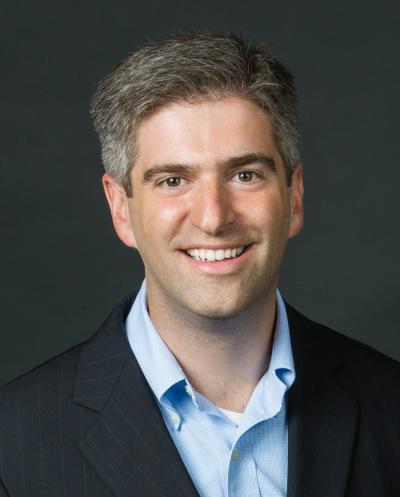
Benjamin J. Keys is a Research Associate at the University of Pennsylvania's Wharton School within the Public Economics program. His work focuses on public economics, environmental economics, and financial risk management with particular emphasis on housing markets and climate change impacts. University of Pennsylvania - The Wharton School Public Economics Department His research explores: Climate risk capitalization in housing markets Mortgage insurance moral hazard Consumer credit card payment behaviors Emergency credit systems Regional economic redistribution through mortgages Email: benkeys@wharton.upenn.edu Scientific awards include: Fellowships on Consumer Financial Management
Asaf Bernstein is an Associate Professor of Finance at the University of Colorado Boulder’s Leeds School of Business, a Faculty Scholar, Co-Director of the Center for Research on Consumer Financial Decision Making, and a Research Associate at the National Bureau of Economic Research. He earned his Ph.D. in Financial Economics from MIT in 2016 and served as Senior Academic Advisor on Climate Issues to the U.S. Securities and Exchange Commission during 2021-22. Education: Ph.D. Financial Economics, Massachusetts Institute of Technology, 2016 B.S. Economics & Mathematics, Harvey Mudd College Research Focus: Bernstein’s work lies at the intersection of policy and finance, using plausibly identified empirical designs to study financial regulation, climate risk, household balance-sheet dynamics, and the real effects of credit markets. His current agenda spans macro-prudential policy, public-pension wealth transmission, historical introduction of credit ratings, and partisan sorting under climate change. Publication Trends: Across more than a dozen forthcoming or published papers, Bernstein consistently exploits natural experiments—regulatory shocks, historical clearinghouses, Dutch amortization reform, Great-Depression bank distress, SLR exposure—to quantify how financial frictions affect prices, allocations, and innovation. The corpus maps broadly onto household finance, corporate finance, and climate-finance fields, with frequent overlap in real-estate and financial-history contexts. Honors & Awards: 2019 AQR Insight Distinguished Paper Award 2016 AQR Top Finance Graduate Award (global top-six PhD honor) 2022 Brattle Group Distinguished Paper Prize, Journal of Finance 2018 Northern Finance Association Best Paper in Risk Management Kahle Family Research Award Grants & Advising: While specific grant amounts are not disclosed, his projects have been supported by data access from Dutch administrative panels, U.S. credit-bureau micro-data, and historical securities archives. He advises PhD students in empirical finance and climate-economics and collaborates extensively across Leeds, NBER, MIT, and Stanford networks. Centers & Labs: Bernstein co-leads the Center for Research on Consumer Financial Decision Making at Leeds, an interdisciplinary lab linking finance, real-estate, and public-policy scholars to external regulatory partners including the SEC, Federal Reserve, and FINRA.
Douglas Abbey is a Lecturer in Finance at the Stanford Graduate School of Business since 2005, specializing in real estate investment and urban development. He co-founded IHP Capital Partners, AMB Property Corporation (now Prologis), and Swift Real Estate Partners, contributing to industrial real estate and affordable housing sectors. Abbey holds an MCP from UC Berkeley and a BA from Amherst College. His research and teaching focus on real estate investment strategies, land use policies, and their socio-economic impacts. He emphasizes how market forces, demographics, and regulations shape housing affordability and urban integration. Abbey has authored multiple case studies analyzing real estate projects and development challenges. Education: MCP, UC Berkeley, 1979 BA, Amherst College, 1971 Abbey has served on boards of prominent organizations, including the Urban Land Institute (past Global Board member, Chairman of the ULI Foundation), Bridge Housing Corporation (emeritus after 20 years), and the Nantucket Yacht Club. He supports the Abbey Master in Real Estate Development + Design at UC Berkeley. His academic service includes teaching GSBGEN 306: Real Estate Investment and advising students on career paths in real estate. His case studies explore diverse topics like hotel development, distressed asset management, and industrial REIT strategies.
Juliet M. Moringiello is Professor of Law and Associate Dean for Academic Affairs at Widener University - Commonwealth Law School, where she has established herself as a leading scholar in property law, electronic contracting, and blockchain technology. Her work bridges traditional legal doctrines with emerging digital economies, particularly in the areas of NFTs, crypto assets, and secured transactions. Position: Professor of Law, Associate Dean for Academic Affairs Institution: Widener University - Commonwealth Law School, Harrisburg, PA Her research interests focus on the evolving landscape of digital property, including the legal treatment of tokens, virtual assets, and blockchain-based real estate. She critically examines the Uniform Commercial Code (UCC), particularly Articles 9 and 12, in the context of technological innovation. Moringiello also explores municipal bankruptcy, consumer contracts, and the implications of automated enforcement mechanisms like smart contracts. The trends in her recent publications reflect a growing scholarly engagement with decentralized technologies. Her work analyzes how traditional legal frameworks—such as property rights, title registration, and contract formation—apply (or fail) in digital environments. She frequently collaborates with legal scholars like Christopher K. Odinet and William L. Reynolds, contributing to foundational debates on electronic assent, consumer protection, and financial regulation. Moringiello’s scholarship has been widely disseminated through major law reviews and research platforms. Her publications appear in journals such as Florida Law Review , William & Mary Law Review , Rutgers Law Review , and Yale Journal on Regulation . She has also contributed to book chapters with Cambridge University Press. She has been involved in public policy discussions, notably co-authoring commentaries on the Federal Trade Commission’s proposed ban on non-compete clauses. Her academic leadership is evident in her editorial and collaborative roles across legal academia. Moringiello has advised on issues related to data security, domain name enforcement, and the legal infrastructure of subprime mortgages. Her work on municipal receiverships and bankruptcy highlights the intersection of public trust, governance, and financial distress. Although no formal advising or grant information is listed, her extensive collaborative research suggests active engagement in scholarly networks and policy initiatives.
Edward R. Morrison is the Charles Evans Gerber Professor of Law at Columbia University's Columbia Law School, where he has been a full-time faculty member since 2003. His academic rank is Professor, specializing in corporate finance, bankruptcy law, and law and economics. He holds a Ph.D. in economics (University of Chicago, 2003), J.D. (University of Chicago Law School, 2000), M.A. in economics (University of Chicago, 1997), and B.S. (University of Utah, 1994). Morrison’s research focuses on corporate reorganization, consumer bankruptcy, and systemic market risk regulation. Notable work includes studies on racial disparities in Chapter 13 filings, valuation disputes in bankruptcies, and the link between financial distress and mortality. He co-edits the Journal of Legal Studies and directs Columbia’s Executive LL.M. Program. His teaching portfolio includes Contracts, Bankruptcy Law, and Corporate Finance. He co-directs the Richard Paul Richman Center for Business, Law, and Public Policy. Awards include the Willis L.M. Reese Prize (2018) for teaching excellence and the John Wesley Steen Law Review Writing Prize (2012). Morrison’s work is supported by the National Science Foundation and Pew Charitable Trusts. He previously served as Paul H. and Theo Leffmann Professor of Commercial Law at the University of Chicago (2013–2014) and has held roles on the Supreme Court’s Advisory Committee on Bankruptcy Rules and as associate editor of the American Law & Economics Review .
Alan M. Taylor is a prominent Research Fellow at National Bureau of Economic Research (NBER) and Centre for Economic Policy Research (CEPR) . He holds a permanent affiliation with Columbia University in the United States, where he contributes to economics research. His research spans financial history , macroeconomic policy , international trade , and capital market dynamics . Key themes include credit cycles , monetary policy , economic crises , and historical financial systems . He has extensively analyzed the trilemma of exchange rates, monetary policy, and capital mobility, and pioneered work on long-term rate of return data across capital assets. His recent publications focus on financial stability , credit booms , and macroeconomic consequences of pandemics . Collaborative works with economists like Òscar Jordà, Moritz Schularick, and Kevin H. O'Rourke demonstrate interdisciplinary engagement. His empirical methodology emphasizes local projections , historical econometrics , and long-run equilibrium modeling in international finance.
Arpit Gupta is an Associate Professor of Finance at the Leonard N. Stern School of Business, New York University, where he has been a faculty member since 2016. His research lies at the intersection of real estate, household finance, and urban economics, with a strong empirical focus on using large datasets to analyze financial behavior and market dynamics. Ph.D. in Finance and Economics, Columbia Business School B.S. in Mathematics and Economics, University of Chicago His research interests include household finance, real estate markets, mortgage default, bankruptcies, urban economics, and the financial impacts of health shocks and pandemics. He explores how financial constraints affect minority borrowers, how remote work reshapes urban real estate, and how public infrastructure influences property values. His recent publications span top journals such as the Journal of Finance , American Economic Review , Journal of Financial Economics , and PNAS . Themes across his work include the economic consequences of the COVID-19 pandemic, the valuation of private equity, and the spillover effects of foreclosures. His research often combines innovative data sources with rigorous econometric methods. Notable scientific awards include the Brattle Prize First Place (2019) and the 2016 Top Finance Graduate Award from Copenhagen Business School. He has advised on policy-relevant topics such as office-to-residential conversions, housing equity, and bail reform, and has received media attention for his insights on urban development and real estate trends. Professor Gupta collaborates with a wide network of researchers and maintains active engagement through a Substack newsletter and public data repositories. He advises students and contributes to academic discourse through conference presentations and policy discussions. He is affiliated with research labs and teams focused on urban economics and financial innovation, often collaborating with scholars at Columbia, NYU, and other institutions. His ongoing projects continue to explore the evolving dynamics of housing, finance, and urban resilience in the post-pandemic era.
Scott Nelson is an Associate Professor of Finance at the University of Chicago Booth School of Business. His research bridges consumer credit markets, regulatory frameworks, and behavioral economics, with a focus on how information asymmetries and algorithmic decision-making shape market outcomes. He has contributed to understanding the impacts of the 2009 CARD Act, eviction protections in housing markets, and fairness in credit scoring systems. PhD in Economics, Massachusetts Institute of Technology BA (summa cum laude) in Economics and Mathematics, Yale College Nelson's work employs diverse data sources, including credit reports, court filings, and tax records, combined with structural models to analyze consumer and firm behavior. Key themes include regulatory efficiency, validity disparities in predictive models, and the welfare implications of policy interventions. His articles reveal trends in algorithmic regulation (2025), eviction dynamics (2025), credit scoring disparities (2024), and public finance impacts on Chinese real estate (2023). These publications highlight interdisciplinary methodologies integrating economics, law, and data science. Scientific awards include the AQR Top Finance Graduate Award (2018) and National Science Foundation Graduate Research Fellowship. He has held postdoctoral roles at the Consumer Financial Protection Bureau/Princeton University and visiting research positions at the Federal Reserve Bank of Boston.
Marko Terviö is Professor of Economics at Aalto University School of Business, where he teaches intermediate microeconomics and labor economics. He is affiliated with Helsinki GSE (Helsinki Graduate School of Economics), a collaboration between Aalto University, University of Helsinki, and Hanken School of Economics. His research focuses on labor market dynamics, economic inequality, housing economics, and institutional design. Professor Terviö employs theoretical models combined with empirical analysis to address questions about talent markets, wage determination, housing policy, and political economics. His work demonstrates particular expertise in assignment models applied to housing and labor markets, with significant contributions to understanding cognitive ability and earnings, superstar phenomena in labor markets, and housing policy impacts. His publication record spans top economics journals including Review of Economic Studies , American Economic Review , Journal of Political Economy , and Economic Journal . Recent work (2022-2025) shows continued high-impact research in labor economics and housing markets, with publications in European Sociological Review and Economic Journal . His research demonstrates consistent methodological rigor combining theoretical modeling with empirical validation. Professor Terviö has contributed significantly to Finnish economic policy discussions, notably as lead author of the influential 2018 report 'On the transfer of residential plots in Helsinki' for the Aalto Economic Institute. This work provided economic analysis of land allocation practices in Helsinki, examining how residential plots should be priced and allocated to maximize economic efficiency while considering urban development goals.
Prof. HU Jianfeng is an Associate Professor of Finance at the Lee Kong Chian School of Business, Singapore Management University. He holds a Ph.D. in Finance from Baruch College, CUNY. His research focuses on asset pricing, capital markets, financial innovation, fintech, and quantitative finance. Notable contributions include studies on option trading's informational role, macro-news embargoes, and order flow volatility's impact on equity costs. Selected awards include the Lee Kong Chian Fellowship (2016-2017) and multiple best paper awards. He has secured research grants totaling over S$140k, including MOE Tier 1 funding for projects on order flow volatility and fiduciary duties. His work has appeared in top journals like the Journal of Financial Economics and Management Science. As a researcher and educator, HU advises students such as ZHONG Yiqiang. His research interests span strategic priorities like digital transformation and growth in Asia, reflecting Singapore's financial hub dynamics.
Dr. Haruhiko Goto is a Professor at Waseda University's School of Creative Science and Engineering, Department of Architecture. With a career spanning over four decades, he has served in multiple leadership roles including Executive Vice President and Vice President at Waseda University, and as President of The City Planning Institute of Japan. His work focuses on Urban Design , Regional Development , and Community Engagement through architectural and planning lenses. Education: PhD, MA, and BA in Architecture from Waseda University His research systematically examines environmental cognition and subjective well-being in urban contexts, analyzing how spatial experiences affect social dynamics. Recent studies investigate defensive architecture in public spaces, urban redevelopment of shrines , and post-disaster community reconstruction . His publications demonstrate strong integration between urban environmental psychology and place-based social systems . With over 14 refereed publications and 11 citations, his work addresses contemporary urban challenges including social isolation , work-life design , and cultural landscape preservation . As a leader in his field, he has received multiple planning design awards and contributed to national urban policy discussions. Scientific Awards: City Planning Institute of Japan's 60th Anniversary Commemorative Project Awards (2011) Minister of Land Infrastructure's Land Use Model Award (2010) Good Design Award (2010) Japan Institute of Architects Award (2005) As an academic leader, he has chaired numerous professional organizations including The World Society for Ekistics and The Japan Society of Lifology , and contributed to policy development through committee memberships in Japan Academic Council and Urban Planning Institute of Japan .
Gimede Gigante is an associate professor in Financial Intermediaries' Economics at Bocconi University, serving as the Director of ICE - Innovation and Corporate Entrepreneurship at SDA Bocconi and the director of the European Fs Tech Hub in Milan. He holds a tenured core faculty position in the Department of Finance and is the program director for the International Management-China MiM degree. Additionally, he is Vice-director of the Bachelor Degree Programme in 'Economia e Finanza' at Bocconi and a Contract Professor there. He teaches as a Professor of Investment Banking at SDA Bocconi in Mumbai and Professor of Corporate Finance at Fudan University in Shanghai. His professional roles include independent board director of a listed Italian bank and advisory positions, such as membership on the national board of AssoFintech and the Harvard Business Review Advisory Council since 2020. He has held visiting positions at Columbia Business School and NYU’s Salomon Center. Education: Gimede Gigante graduated in Business Administration from Bocconi University, earned a Ph.D. in Banking and Finance from the University of Rome, and holds an ITP qualification from SDA Bocconi. His post-doctoral research was conducted at NYU’s Salomon Center and Columbia Business School’s Faculty of Economics. Research Interests: His studies focus on banking systems, corporate finance, investment banking, and private equity. He explores topics such as public-private partnerships, real estate financing, and financial management of football clubs. His work also delves into capital markets efficiency, sovereign funds comparisons (e.g., CDP, KfW, CDC), and the impact of intellectual capital on banking performance. Recent analyses include the potential of Italian capital markets to drive economic growth and cross-border policy benchmarks for financial systems. Advising and Grants: Gigante served as an Economic Advisor to the Italian Parliament’s Finance Committee from 2016 to 2018, contributing to policies on banking and financial intermediaries. His grants and research collaborations are tied to his involvement in Baffi Carefin’s Research Unit on Investment Banking & Structured Finance. He emphasizes active learning in teaching, using group exercises, multimedia tools, and MOOCs through Coursera partnerships since 2014. Labs and Teams: He is affiliated with Baffi Carefin’s Research Unit on Investment Banking & Structured Finance at Bocconi University. He also contributes to editorial boards of journals like the International Journal of Economics and Finance and Accounting and Finance Research, enhancing academic discourse and regulatory practices.
Ziwen Bu is an Associate Professor in Finance at the Department of Finance, Birmingham Business School, University of Birmingham. His academic work bridges asset pricing with corporate finance and financial markets, contributing significantly to empirical finance literature. Education PhD in Finance MSc in Finance BSc (Hons) in Economics His research interests center on asset pricing, with specialized focus on market illiquidity, R&D investment, earnings management, financial inclusion, and factor models. His work integrates corporate finance dynamics with broader financial market behaviors, often employing rigorous econometric methods to explore anomalies and risk-return relationships. His recent publications reflect a strong trend in empirical asset pricing and corporate finance, particularly examining how macro-level factors like political freedom and micro-level firm decisions such as R&D and compensation policies influence stock returns and financial risk. His research is published in top-tier journals including the Journal of Financial and Quantitative Analysis and Review of Asset Pricing Studies . Dr. Bu teaches courses in Financial Econometrics and Numeracy, Statistical Analysis & Financial Literacy, indicating a strong commitment to quantitative methods in finance education.
Dr. Zilong Wang is a Senior Research Associate at the Department of Land Economy, University of Cambridge . His academic work focuses on the intersection of corporate finance, asset pricing, and real estate finance. Key Research Areas: Corporate Finance, Asset Pricing, REITs, Real Estate Valuation, Real Estate Fund Performance Funding Bodies: EPRA, IPF, INREV, ANREV His research explores sustainability in institutional investment practices, housing wealth effects on financial behavior, sovereign debt dynamics, and environmental justice. Current projects analyze green credit policies, pension fund strategies, and CSR in post-pollution recovery. Notable publication trends include: 2025: Sustainable finance, housing market constraints 2024: IMF programs, sovereign debt rescheduling 2023: Distress risk anomalies, REIT expansion strategies 2020-2022: Cryptocurrency portfolios, Asian real estate funds He teaches RM02 - Further topics in quantitative methods and maintains affiliations with the Cambridge Real Estate Research Centre .
Adam Nowak is an Associate Professor in the Department of Economics at West Virginia University. His research focuses on housing markets, financial economics, and behavioral economics, with a particular emphasis on price dynamics, tax policy, and market inefficiencies. Ph.D. in Economics from Arizona State University B.S. in Mathematics and Economics from Indiana University - Bloomington Degree in Near-East Languages and Cultures from Indiana University - Bloomington Nowak’s expertise spans multiple domains: Housing and real estate market dynamics Corporate tax avoidance and policy implications Behavioral economics in sports betting and hospitality Historical economic analysis of crises and recovery His recent articles (2025-2022) explore housing price bubbles, hotel industry trends, insurance market asymmetries, and behavioral patterns in cultural economics. Nowak’s work often integrates econometric models, game theory, and empirical analysis of policy impacts.