
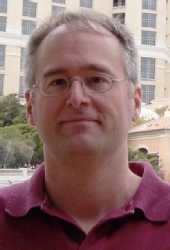
Dr. Eric Ruthruff is a Professor and Area Head for Cognition, Brain & Behavior in the Department of Psychology at the University of New Mexico. His research explores attention capture, cognitive control, dual-task performance, cognitive aging, and neural correlates using EEG and modeling approaches. He mentors graduate students and leads investigations into automaticity and attention mechanisms. His work examines how the mind controls spatial attention, task switching, and response selection, with applications in cognitive training and aging. Recent publications focus on distractor suppression and attentional capture paradigms. Ruthruff teaches courses including Cognitive Psychology, Psychology of False Beliefs, and specialized seminars on attention.
جستوجوی استاد و پژوهشگر
استاد راهنما، استاد دانشگاه یا پژوهشگر مناسب برای مسیر پژوهشیتان را پیدا کنید و با او ارتباط بگیرید.
نمایش ۴۶-۵۲ از ۵۲ استاد راهنما
اطلاعات این پروفایلها از صفحات عمومی دانشگاهها جمعآوری شده و ممکن است بهروز نباشد.
- Cognitive Neuroscience
- Neuroimaging
- Working Memory
- +۳ مورد دیگر
Dr. Fiona McNab is a Lecturer in the Department of Psychology at the University of York. Her research focuses on cognitive neuroscience, particularly working memory, distraction, and healthy aging, utilizing neuroimaging techniques such as fMRI and MEG. She previously held a Wellcome Trust Career Development Fellowship (2010-2017) and led projects like the Great Brain Experiment, exploring cognitive interventions across the lifespan. Her work investigates neural mechanisms underlying attention and memory, with a focus on dopamine systems and basal ganglia involvement. Key collaborations include Prof. Ana Vivas (CITY College, York) and Dr. Ted Zanto (UCSF). Education: BSc (Hons) in Psychology & Physics from Keele University (1997-2000), PhD in Psychology from the Open University/Aston University (2000-2004). Postdoctoral work at Exeter University (2004-2005), Karolinska Institute (2005-2010), and UCL (2010-2017). Current roles include Chair of YNiC Ethics Committee and Strand Leader for Perception and Cognition. Research interests include the neural basis of working memory capacity, age-related cognitive decline, and the impact of distraction. Her recent studies highlight cortical activity patterns during distraction and the role of video games in memory training. Grants include ESRC funding for cognitive intervention research. Teaching spans undergraduate Perception/Cognition modules and postgraduate supervision in Cognitive Neuroscience. She actively publishes in journals like *Cerebral Cortex*, *Scientific Reports*, and *Proceedings of the National Academy of Sciences*.
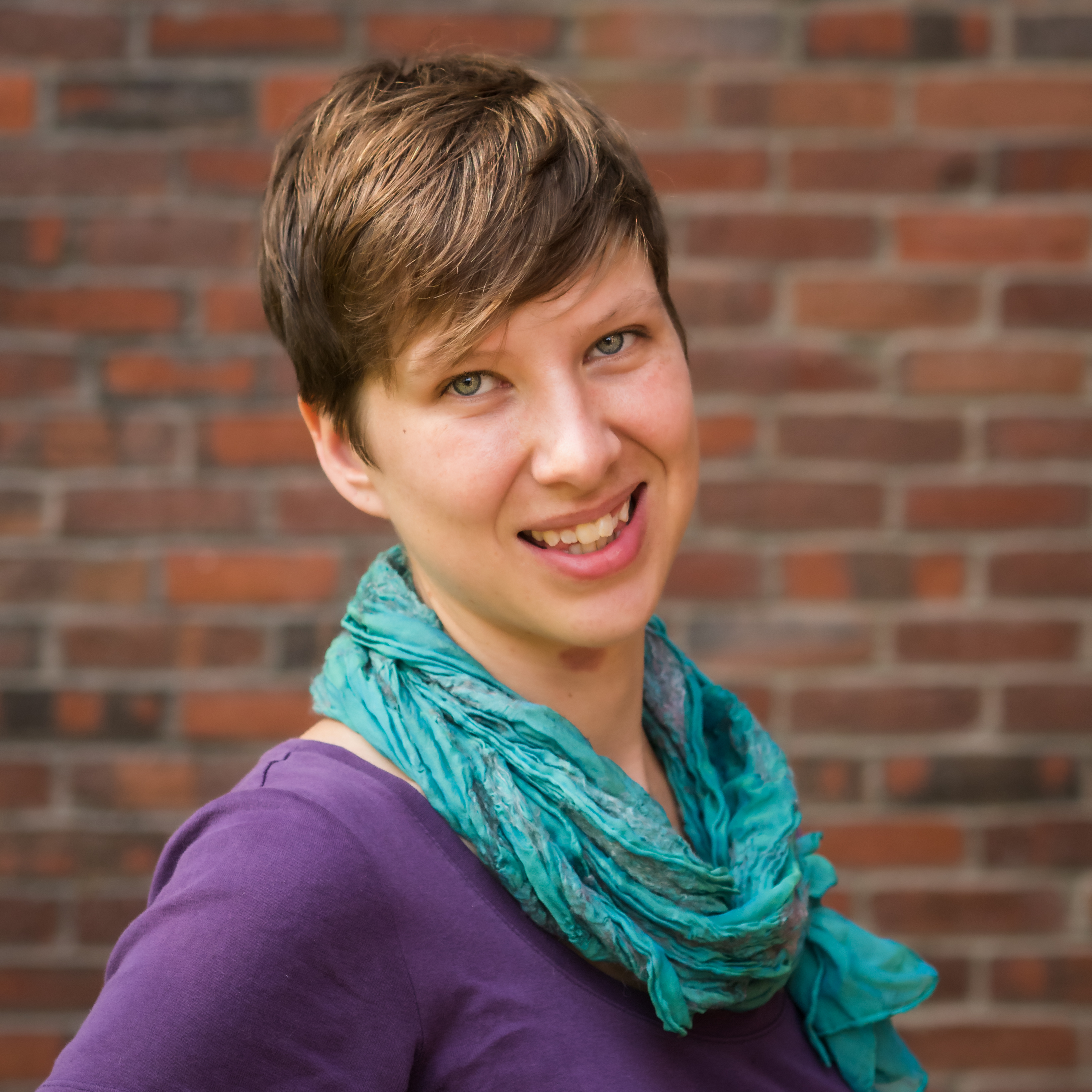
Abigail Noyceمشاهده پروفایل
پژوهشگر
Abigail Noyce is an assistant research professor at the Carnegie Mellon Neuroscience Institute , affiliated with the Department of Psychology . She investigates cognitive mechanisms underlying perception, attention, and memory using EEG and fMRI neuroimaging techniques, focusing on how the brain exploits predictability and sensory specialization. Her research spans auditory and visual cognition , examining dual-task interference, working memory organization, and multisensory integration. Current work explores how task demands interact with sensory processing limitations and individual neural architectures. Recent publications emphasize auditory attention (2024), functional cortical mapping (2023), and predictive coding (2022). Her 2025 study on spatial selection dynamics reveals novel mechanisms in attentional control systems. Dr. Noyce's methodological expertise includes EEG signal decoding, fMRI connectivity analysis, and connectome fingerprinting techniques for individual prediction models. Contact: abigail.noyce@cmu.edu

Jennifer Mcbrideمشاهده پروفایل
مدرس ارشد
Jennifer Mcbride is a Senior Lecturer in Psychology at the University of Manchester , affiliated with the Division of Psychology Communication and Human Neuroscience. She serves as Associate Dean (TLS) in the Humanities Dean's Office. Her research focuses on vision, attention, action, and inhibitory control, examining how these processes change across the healthy lifespan and in neurological diseases like Parkinson’s disease.

Prof. Dr. Dirk Wentura is a faculty member in the Department of Psychology at the University of Saarland, where he leads the research group Cognition and Emotion. His work bridges cognitive, social, and personality psychology, focusing on the mechanisms of attention, memory, and emotional regulation. His research interests include: Cognitive psychology, particularly activation and inhibition in information processing Attentional capture by valenced stimuli Indirect measures of attitudes and self-concept Interindividual differences in affective processes Non-conscious emotional information processing Self-prioritization and social relevance effects The recent publications (2023–2025) reveal a strong trend in experimental studies using paradigms such as evaluative priming, dot-probe tasks, and masked priming. Key themes include attentional biases toward emotional faces, the influence of group membership on emotional evaluation, self-relevance effects, bilingual language processing, and the role of awareness in affective processing. Methodologically, the work combines behavioral measures (reaction times, accuracy) with psychophysiological indicators and advanced statistical analysis. While no formal awards are listed, his extensive publication record in high-impact journals such as Journal of Experimental Psychology , Emotion , and Cognition & Emotion underscores his scholarly impact. Prof. Wentura supervises several researchers and students, including M. Rohr, T. Folyi, B. E. Wirth, and A. Paulus, with whom he frequently co-authors. He also contributes to academic training through textbooks such as Kognitive Psychologie and Multivariate Datenanalyse mit R . His research group actively investigates how humans adapt cognitively and emotionally to complex environments, using a paradigm-oriented approach grounded in rigorous experimental design.
Esther De Loofمشاهده پروفایل
پژوهشگر
Esther De Loof is a postdoctoral researcher at Ghent University's Faculty of Engineering and Architecture, Department of Electronics and Information Systems (EA06). Her work spans cognitive neuroscience, focusing on declarative learning , reward prediction errors , and neural oscillations using EEG and computational modeling. Key Research Areas: Cognitive control, visual awareness, attentional inhibition, neural synchrony, and predictive processing Collaborators: Tom Verguts, Kate Ergo, Clio Janssens, Filip Van Opstal Publications reveal a focus on theta and alpha band dynamics in cognitive control (2016-2022), reward processing mechanisms, and the interplay between attention and memory systems. She has contributed to Nature Human Behaviour , Journal of Neuroscience , and Psychophysiology . Her methodological approach combines EEG , intracranial recordings , and computational models to investigate how the brain implements adaptive control strategies through neural oscillations and prediction error signaling.
Elizabeth Wiemersمشاهده پروفایل
استادیار
Elizabeth Wiemers is an Assistant Professor in the Psychology Department at Bradley University's College of Liberal Arts & Sciences. Her research focuses on cognitive psychology with a particular emphasis on working memory, attentional control, and executive function. Her recent publications demonstrate expertise in areas like: Cognitive training mechanisms and transfer effects Proactive and reactive cognitive control dynamics Individual differences in attentional capacity Mind wandering and task engagement Neuropsychological assessment in clinical populations Cognitive load management in multitasking Contact: ewiemers@bradley.edu