
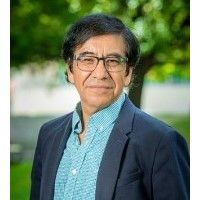
Antonio Flores-Tlacuahuac is a Professor in the Chemical Engineering Department at Tecnológico de Monterrey's Campus Monterrey, affiliated with the Institute of Advanced Materials for Sustainable Manufacturing. His research spans sustainable process systems engineering with emphasis on optimization, machine learning applications, and resource nexus modeling. Chemical Engineering Degree, Universidad Autónoma de Puebla Ph.D. in Philosophy, University of London His research interests focus on developing advanced computational frameworks for sustainable engineering systems. Key areas include Bayesian optimization for chemical processes, machine learning applications in polymerization and separation systems, and integrated modeling of water-energy-carbon systems. His work bridges fundamental process engineering with sustainability challenges, particularly in renewable energy integration and CO 2 capture technologies. Analysis of his 2024-2025 publications reveals a strong trend toward hybrid AI-optimization methodologies, with 60% of recent work incorporating Bayesian approaches. The research spans from molecular-scale catalyst design to community-scale energy systems, demonstrating exceptional breadth while maintaining technical depth in process systems engineering. Mexican Researcher Certification - Level 3 Flores-Tlacuahuac mentors doctoral students through courses including Automation and Control of Chemical Processes and Doctoral Research series. His research portfolio includes significant contributions to the Centro Mexicano de captura, uso y almacenamiento de CO 2 , with funding evidenced by extensive publication output in high-impact journals. Current projects focus on quantum-classical hybrid algorithms for bioprocess optimization and machine learning frameworks for pandemic surveillance. He leads research within the Institute of Advanced Materials for Sustainable Manufacturing, with strong emphasis on UN Sustainable Development Goals including Affordable and Clean Energy, Climate Action, and Sustainable Cities. His work integrates multiple stakeholder perspectives in sustainable system design, particularly for rural energy solutions and circular economy implementations.
جستوجوی استاد و پژوهشگر
استاد راهنما، استاد دانشگاه یا پژوهشگر مناسب برای مسیر پژوهشیتان را پیدا کنید و با او ارتباط بگیرید.
نمایش ۲۴۱-۲۴۱ از ۲۴۱ استاد راهنما
اطلاعات این پروفایلها از صفحات عمومی دانشگاهها جمعآوری شده و ممکن است بهروز نباشد.
Monterrey Institute of TechnologyMexico