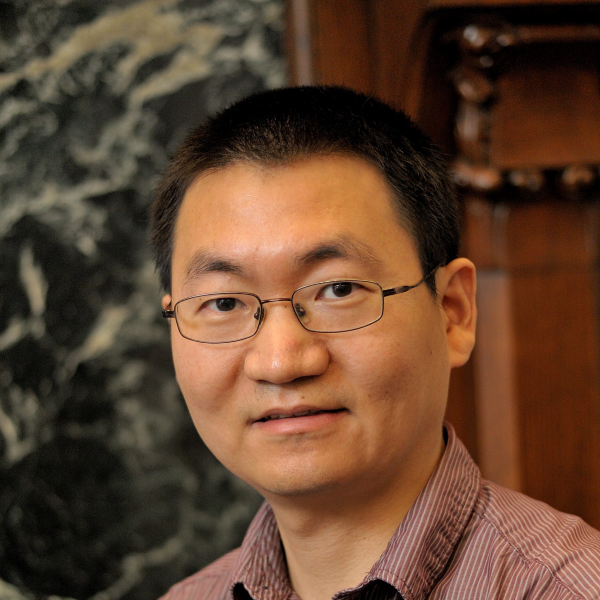
Xiaofeng Shao is a Professor of Statistics & Data Science at Washington University in St. Louis, with a joint appointment in the Department of Economics. He holds a PhD from the University of Chicago and previously served at the University of Illinois at Urbana-Champaign for 18 years. He is a Fellow of the Institute of Mathematical Statistics and the American Statistical Association. His research focuses on econometrics, time series analysis, change-point detection, high-dimensional statistics, nonparametric methods, and functional data analysis. Recent work emphasizes object-valued time series modeling and machine learning applications in high-dimensional and imaging data. Notable contributions include the dependent wild bootstrap method and self-normalization techniques for time series inference. Key awards include Fellowships from leading statistical societies. His publications span over 20 years, addressing topics like change-point detection in climate projections, statistical methods for COVID-19 infection trends, and high-dimensional dependence testing.
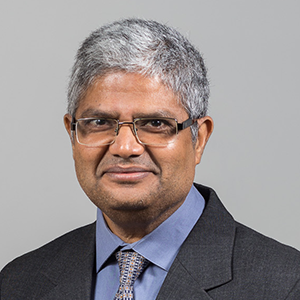
Sanjay Jain is a Provost's Chair Professor in the Department of Computer Science at the School of Computing, National University of Singapore (NUS). His research focuses on theoretical computer science with particular emphasis on inductive inference, recursion theory, complexity theory, and computational learning theory. Education: B.Tech. in Computer Science from Indian Institute of Technology Kharagpur, India (1986) M.S. in Computer Science from University of Rochester, USA (1988) Ph.D. in Computer Science from University of Rochester, USA (1990) Professor Jain's research spans multiple areas of theoretical computer science. His primary contributions are in computational learning theory, where he has made significant advances in understanding the intrinsic complexity of language identification and the limits of inductive inference. His work on recursion theory explores fundamental questions about computability and complexity, while his research in complexity theory addresses structural aspects of computational problems. A notable achievement was his work on "Deciding Parity Games in Quasipolynomial Time," which won the prestigious STOC 2017 best paper award and later the EATCS-IPEC Nerode Prize. Professor Jain's publication record shows a consistent focus on theoretical foundations of computer science, particularly in learning theory and computational complexity. His recent work has expanded into automatic structures, semiautomatic models, and connections between computational learning and algebraic structures. There is a clear progression from foundational work on language identification to more complex models involving automatic functions, transducers, and connections to mathematical logic. Scientific Awards: STOC 2017 Best Paper Award for "Deciding Parity Games in Quasipolynomial Time" EATCS-IPEC Nerode Prize (2021) Professor Jain has served on the editorial board of Information and Computation and has been actively involved in the academic community through program committee memberships for major conferences including COLT, ALT, LATA, TAMC, and PRICAI. He has held leadership roles as program co-chair for ALT 2000 and ALT 2013, and conference chair for ALT 2005. His work has been supported by various research grants, though specific details are not provided in the available materials. Professor Jain leads research in theoretical computer science at NUS, where he has built a strong research group focused on computational learning theory and related areas. His work often involves collaborations with researchers from around the world, particularly with Frank Stephan, with whom he has co-authored numerous papers. His research group has made significant contributions to understanding the fundamental limits and possibilities of computational learning models.
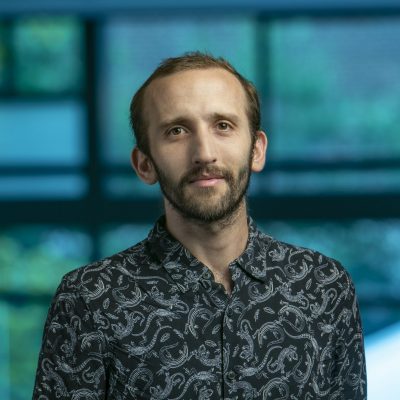
Tamás Budavári is an Associate Professor in the Department of Applied Mathematics and Statistics at Johns Hopkins University (JHU), with joint appointments in Physics and Astronomy and a secondary appointment in Computer Science. He is affiliated with the Whiting School of Engineering and the Institute for Data-Intensive Engineering and Science (IDIES). His research focuses on computational and statistical methods for big data in astronomy and interdisciplinary applications such as urban blight analysis. Education: PhD in Astrophysics (2001), Eötvös Loránd University, Budapest Master’s in Theoretical Physics (1997), Eötvös Loránd University Research Interests: Budavári develops algorithms for handling large astronomical datasets, including Bayesian inference, streaming algorithms, and GPU-accelerated processing. His work includes SkyQuery (an online astronomy data tool), photometric redshift estimation, and cross-matching catalogs. He also applies computational methods to urban planning, such as optimizing strategies to address vacant housing in Baltimore City. Publications & Tools: Budavári’s recent work spans topics like deep learning for astronomical image restoration, combinatorial optimization for urban policy, and probabilistic catalog matching. His tools, such as CUDAHM and NWAY, enable scalable analysis of multi-epoch survey data and N-way catalog cross-identification. Awards & Grants: Recipient of the Gordon and Betty Moore Fellowship and SAMSI Research Fellowship Funded by NSF, STScI, NIH, and others Leadership & Outreach: He serves on the Steering Committee of the 21st Centuries Cities Initiative and is a founding editor of the Journal of Astronomy and Computing. His interdisciplinary work bridges astrophysics, data science, and urban systems.
Valter Moretti is a Full Professor in the Department of Mathematics at the University of Trento. His academic career spans roles from Research Fellow to Full Professor, focusing on Mathematical Physics and Quantum Field Theory (QFT) in curved spacetime. He earned an MSc in Physics from Genova University and a PhD in Theoretical Physics from Trento University. Research Interests : Algebraic QFT, General Relativity, Quantum Mechanics, Operator Algebras, and Spectral Theory. His work bridges mathematical rigor with physical applications, particularly in quantum localization, entanglement, and curved spacetime phenomena. Publications : Authored 15+ recent papers on topics like quantum particle localization, entanglement certification, and QFT on curved backgrounds. Collaborated on a 2022 patent for generating entangled photon states. Awards : Holds a patent for a quantum-certified random number generator (2022). Supervision : Advised 8 PhD students, including N. Pinamonti, L. Franceschini, and C. van de Ven. Coordinated national and international research projects (e.g., H2020-MSCA-COFUND-2015). Labs & Collaborations : Affiliated with INFN, TIFPA-INFN, and Q@TN (Quantum@Trento). Organized conferences like Quantum Physics and Geometry (2014) and Quantum Machine Learning (2023). Teaching : Lectures on Analytical Mechanics, Quantum Relativistic Theories, and Special Relativity. Authored textbooks on Spectral Theory and Quantum Mechanics.
Erik Waingarten is an assistant professor at the University of Pennsylvania in the Computer and Information Science department. His research focuses on algorithms for massive datasets, including similarity search, streaming/sketching, property testing, and distribution testing. Former postdoctoral researcher at Stanford's CS Department under Moses Charikar PhD from Columbia University advised by Xi Chen and Rocco Servedio Key research areas: High-dimensional geometry Streaming algorithms Property testing Sketching techniques Clustering and metric optimization Recent article trends show expertise in: 2025 publications on monotonicity testing and metric property analysis 2024 work on Earth Mover's Distance and kernel evaluations 2023 papers on clustering, optimal transport, and MST algorithms 2022-2020 foundations in sublinear algorithms and entropy estimation Scientific recognition: NSF CAREER Award (2023) CCC Best Paper Award (2017) Invited to Journal of the ACM (2017) Academic advising includes PhD students: Ashwin Padaki Tian Zhang Nicolas Menand Krish Singal Junkai Song
Mohammad T. Alhawary is Professor of Arabic Linguistics and Second Language Acquisition at the University of Michigan's Middle East Studies department within the College of Literature, Science, and the Arts. He serves as Director of both the MA Program in Arabic for Professional Purposes (APP) and the MA Program in Teaching Arabic as a Foreign Language (TAFL). His educational background includes a Ph.D. from Georgetown University (1999). Prior to joining the University of Michigan, he contributed to developing Arabic and Middle Eastern Studies programs at various US institutions. Professor Alhawary's research spans both theoretical and applied Arabic linguistics, with particular focus on second language acquisition processes. His work examines how factors like age, input quality, output practice, and first language transfer affect Arabic language learning. He has made significant contributions to understanding Arabic language pedagogy, curriculum design, proficiency testing, and the application of technology in language learning. His research also extends to bilingualism, multilingualism, language impairment, and Arabic medieval grammatical traditions. His publications reflect a strong trajectory in Arabic linguistics research, with recent works focusing on practical language teaching applications, reading comprehension mechanisms, code-switching patterns in digital communication, and multilingual acquisition processes. The 2023 publication 'Teaching Arabic as a Foreign Language' represents his latest contribution to language pedagogy methodology. 2019 AATA Book Award for 'Arabic Second Language Learning and Effects of Input, Transfer, and Typology' As an academic leader, Professor Alhawary serves as Executive Director of the American Association of Teachers of Arabic and edits both the Journal of Arabic Linguistics Tradition and Al-'Arabiyya journal. He continues to develop empirical research on Arabic second language acquisition to inform teaching practices both in America and globally.
Alis Oancea is Professor of Philosophy of Education and Research Policy at the University of Oxford's Department of Education, part of the Social Sciences Division. She holds additional roles including ESRC Centre for Global Higher Education Deputy Director and Social Sciences Division Advocate for Responsible Engagement. With dual doctoral degrees (DPhil from Oxford and PhD from Bucharest), she also received a Doctor Honoris Causa from University of the West Timisoara. Her research focuses on meta-research, research policy, and higher education governance. Key areas include research assessment frameworks, impact measurement, ethics, open knowledge practices, and teacher education. She co-edited the 2024 Handbook of Meta-Research and leads international studies on research cultures and policies. Education: DPhil (Oxford), PhD (Buc), DipLATHE (Oxford), Dhc (UWT) Roles: Director of Research (2016-20), REF2021 Coordinator, ESRC CGHE Deputy Director Leadership: Over 30 funded projects including the RKEEI initiative and BERA Observatory Her 150+ publications span research policy, impact evaluation, and education systems. Awards include FAcSS Fellowship and numerous international advisory roles across Europe and Norway. Advises on global education reforms and chairs panels for EU, UK, and Nordic research councils. Current doctoral supervision focuses on research policy, higher education systems, and teacher education innovations. Active in editorial roles for Oxford Review of Education and Review of Education .
Nicoline Frølich is Professor and Director of the Centre for Learning and Education (LINK) at the University of Oslo, Norway. She also holds part-time Professor II appointments at the Department of Government, University of Bergen and at NIFU – Nordic Institute for Studies in Innovation, Research and Education. Education 2002 – PhD in Comparative Politics, University of Bergen 1994 – Master in Comparative Politics, University of Bergen 1992 – Pedagogy, Norwegian School of Economics (NHH) 1989 – Master in Economics and Business Administration, Norwegian School of Economics (NHH) Research Interests Frølich’s research focuses on governance, management and organisation of higher education systems, institutional reforms, knowledge policies, and public administration. She employs institutional theory to examine how universities and colleges respond to policy pressures, merger processes, quality assurance mechanisms, and leadership communication during change. Recent Publication Trends Between 2018 and 2025 her work has concentrated on three interconnected themes: leadership and communication within university mergers, gendered career trajectories in academia, and the tension between quality assurance systems and institutional autonomy. Empirically, her studies draw on Nordic and European cases, combining survey data with qualitative analyses of policy enactment. Scientific & Professional Appointments 2023–present – Academic Chair, Circle U alliance 2023–present – Member, SIKT advisory board (Norway) 2021–present – Editorial board member, TEAM – Tertiary Education and Management 2021–2022 – Chair, EAIR – The European Higher Education Society 2019–present – Advisory Board member, UKÄ (Swedish Higher Education Authority) 2019–2021 – Co-Editor-in-Chief, TEAM – Tertiary Education and Management Research Groups & Projects Frølich leads the research group Knowledge, Learning and Governance: Studies in higher education and work (HEDWORK) and participates in the Policy, Bureaucracy, and Organization (PBO) group. She is currently directing the project Re-Structure , which investigates the effects of structural reforms on Norwegian higher education institutions.
Dr. İsmail ÖZTEL serves as an Assistant Professor in the Department of Computer Engineering at Sakarya University's Faculty of Computer and Information Sciences. He has been a faculty member since 2019, following his tenure as a Research Assistant from 2012-2019 at the same institution. His educational background includes: Doctorate in Computer and Information Engineering (2014-2018) from Sakarya University with thesis on "Facial expression detection on partial and full face images using machine learning methods" Master's Degree in Computer and Information Engineering (2012-2014) from Sakarya University with thesis on "Driver simulator for educational purposes" Bachelor's Degree in Computer Engineering (2007-2011) from Sakarya University Dr. ÖZTEL's research focuses on artificial intelligence, deep learning, and computer vision with significant applications in healthcare, mobile technology, and public safety. His work has evolved from foundational facial expression recognition to sophisticated medical applications including skin disease classification using smartphones, monkeypox detection from skin lesions, and pandemic response systems for face mask detection. His research demonstrates strong interdisciplinary connections between computer science and healthcare. An analysis of his publication trends reveals a clear progression toward increasingly complex deep learning architectures applied to real-world problems, with recent work emphasizing medical applications using mobile technology and public health safety systems. His 2023-2025 publications show particular focus on skin disease classification, intelligent vehicle systems, and hybrid feature extraction methods for pandemic response. Dr. ÖZTEL has served as a reviewer for numerous prestigious journals including Expert Systems With Applications (multiple years), World Wide Web, Multimedia Tools and Applications, and Journal of King Saud University - Computer and Information Sciences, demonstrating his recognition in the academic community across multiple domains. His research projects include work on facial expression detection in open scientific databases (2020), performance evaluation of transfer learning approaches (2019), and current projects on brain tumor classification systems and earthquake safety education for individuals with developmental disabilities. His international research experience includes collaboration with Filiz Bunyak in 2017, indicating global engagement in his field.
Gautham Narayan is an Associate Professor in the Department of Astronomy at the University of Illinois at Urbana-Champaign (UIUC), with affiliations in Physics and the National Center for Supercomputing Applications (NCSA). He holds roles as Deputy Director for Astrophysics Research at the NSF-Simons SkAI Institute and Deputy Director of the Center for AstroPhysical Surveys. His research focuses on multi-messenger and time-domain astrophysics, cosmology, and machine learning applications in astronomy. Education: PhD in Physics from Harvard University (2013) and BS (Hons) in Physics from Illinois Wesleyan University (2005). His work includes pioneering AI methods for transient detection, leading collaborations like the Young Supernova Experiment (YSE), and developing standards for LSST and WFIRST. He is a Simonyi NSF-CAREER Fellow and Analysis Coordinator for the LSST Dark Energy Science Collaboration. Research interests span cosmology, supernovae, and survey science. Key projects include establishing spectrophotometric standards via HST observations and advancing real-time analysis pipelines like ANTARES. Recent work emphasizes Bayesian models for supernova cosmology and multi-messenger astrophysics. Awards: Simonyi NSF-CAREER Fellowship. Collaborations include DESC, SCiMMA, and the KEGS team. Teaching includes courses on astrophysics and data science, with mentorship of students across undergraduate and graduate levels. Public outreach efforts include Astronomy on Tap events and science communication initiatives.
Aaron J. Elmore is an Associate Professor in the Department of Computer Science and the College of the University of Chicago. His research focuses on cloud computing, databases, and distributed systems, with an emphasis on resource-efficient database execution and collaborative analytics. PhD in Computer Science from University of California, Santa Barbara MS in Computer Science from University of Chicago Research interests include: Elastic databases and multitenancy (Database-as-a-Service) Resource-efficient systems (CrocodileDB, DenseStore, EdgeTSD) Database versioning (Datahub, Decible, OrpheusDB) Data discovery (DataSwamp, Relic) Recent publications highlight advancements in cloud-native query execution, dynamic compression frameworks, and time-series anomaly detection. His work often bridges systems design with practical data science applications. Scientific awards include: NSF CAREER Award (2021) Multiple Google and Intel research grants ACM SIGMOD Best Demo Honorable Mention Aaron has advised multiple PhD students including Jun Hyuk Chang and Riki Otaki, with former advisees now at institutions like MIT, Harvard, and UC Berkeley. He leads the ChiDATA research group and collaborates with Systems Group and CERES Center.
Debdeep Pati is a Professor in the Department of Statistics at the University of Wisconsin-Madison, affiliated with the School of Computer, Data & Information Sciences. His research focuses on Bayesian methods, high-dimensional data analysis, machine learning, and computational statistics, with applications in health data and network analysis. He has contributed to approximate Bayesian computation, graphical models, and fair algorithms. Key research interests include Bayes theory in high dimensions, hierarchical modeling, efficient Bayesian computation, and real-time tracking algorithms. His work bridges theoretical advancements with practical applications in areas like electronic health records and nuclear physics constraints. Recent work emphasizes Wasserstein-guided nonparametric Bayes, fair clustering algorithms, and variational inference in singular models. He has developed software for covariate-dependent Gaussian graphical modeling, published in ACM Transactions on Mathematical Software . Grants: NSF proposal on Wasserstein-guided nonparametric Bayes, NIH R01/R21 grants on periodontal disease and diabetes comorbidity. Advising: No named advisees listed but actively supervising research in Bayesian computation and high-dimensional statistics. Awards: 2024 JASA reproducibility award for 'Covariate-Assisted Bayesian Graph Learning.' He is an Associate Editor for Journal of Computational and Graphical Statistics and has organized workshops at Banff International Research Station (BIRS) and the Institute for Mathematics and its Applications (IMSI).
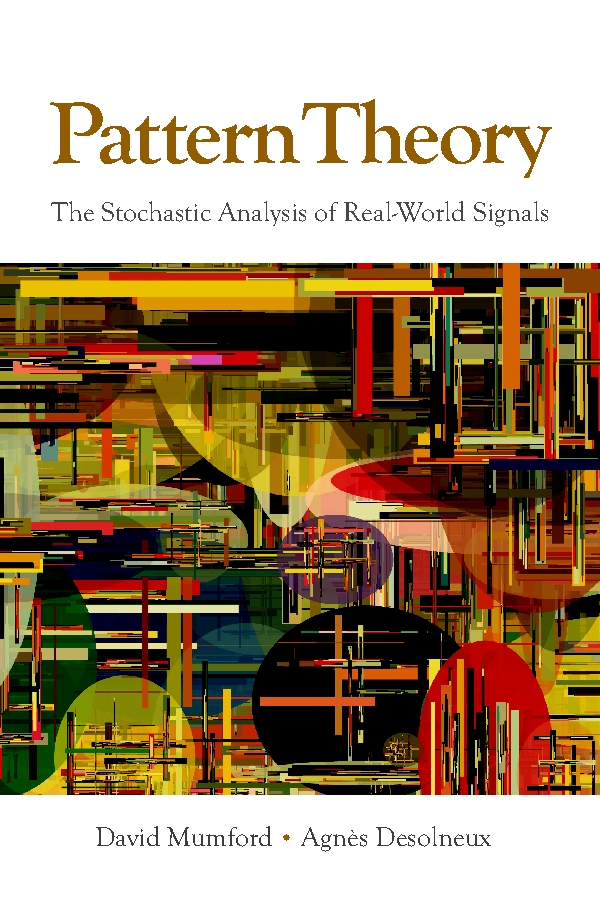
Agnes Desolneux is a CNRS Research Director at the Borelli Centre (formerly CMLA) and a Professor attached to the Mathematics Department at ENS Paris-Saclay. Education: PhD in Applied Mathematics (2000) from ENS Cachan Habilitation in Applied Mathematics (2010) from Université Paris Descartes Her research focuses on image analysis via statistical methods , particularly a contrario approaches, image restoration, texture synthesis, Determinantal Point Processes (DPP), optimal transport, Gaussian mixtures, geometry of random field excursions, shot-noise models, and mathematical modeling of visual perception through Gestalt theory. The articles extracted reflect her expertise in applied mathematics and computer vision , with recent works (2025-2020) on optimal transport algorithms, DPP applications, multiscale texture analysis, and stochastic modeling in medical imaging. Keywords span machine learning, probability theory, medical imaging, and computer vision . She has no listed scientific awards but has authored influential works including the book From Gestalt Theory to Image Analysis: A Probabilistic Approach (Springer, 2008) and Pattern Theory: the stochastic analysis of real-world signals (AK Peters, 2010).
Jonathan Shihao Ji is an Associate Professor in the School of Computing at the University of Connecticut (UConn), leading the Intelligent Systems Lab. He holds a Ph.D. in Electrical and Computer Engineering from Duke University and previously served as an Associate Professor at Georgia State University and Director of the DoD Center of Excellence (CiARE). His research focuses on deep learning applications in computer vision, NLP, robotics, and high-performance computing, with over 50 publications in top venues like CVPR, NeurIPS, and IEEE journals. He has secured grants from NSF, NIH, DoD, and industry partners including VMware and Nvidia. His work emphasizes efficient algorithms for large-scale data processing, parameter-efficient model fine-tuning (e.g., VB-LoRA), and 3D perception benchmarks for UAVs (UAV3D). Notable contributions include sparse network optimization (Dep-L0), energy-based models (M-EBM), and robust defenses against adversarial attacks (Defense-VAE). He is a Senior Member of IEEE and has developed open-source tools like Parallel Word2Vec and WordRank. Recent projects include accelerating Llama2 models on FPGAs (LlamaF) and improving text-to-image synthesis via contrastive learning. His research spans theoretical advancements and practical applications, with industry collaborations in healthcare, robotics, and embedded systems.
Wenping Wang is a Professor in the Department of Computer Science & Engineering at Texas A&M University, part of the College of Engineering. His research focuses on computer graphics, computer vision, geometric modeling, and visualization. He holds Fellowships from ACM and IEEE, and has received notable awards including the 2021 AsiaGraphics Outstanding Technical Contributions Award and the 2017 John Gregory Memorial Award. Wang's educational background includes a Ph.D. from the University of Alberta and M.Eng. and B.Sc. degrees from Shandong University. His work spans advancements in neural implicit surfaces, 3D reconstruction, and medical imaging applications such as orthodontic treatment prediction. He has authored numerous influential papers in top-tier conferences like SIGGRAPH and journals like ACM Transactions on Graphics. His research interests emphasize bridging geometric modeling with machine learning, particularly in neural rendering, surface parameterization, and medical visualization. Recent projects include developing frameworks for automatic tooth alignment and high-fidelity 3D geometry generation. Wang's contributions have significantly impacted both theoretical foundations and practical applications in computer graphics.