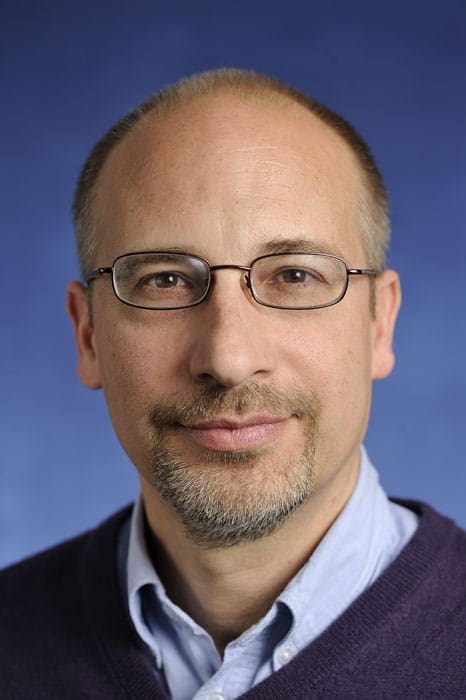
Joel Andreas is a Professor of Sociology at Johns Hopkins University since 2003, serving as Program Director of the East Asian Studies Program. His research focuses on political contention, social inequality, and social change in contemporary China. He holds a PhD in Sociology from UCLA and teaches social theory, political sociology, and courses on Chinese society. He has held visiting positions at universities including the University of Sydney, Hong Kong University, and Ningxia University. His work examines labor movements, rural land policies, and class dynamics in China. Recent research includes analyses of staff-worker congresses, rural land dispossession, and the persistence of militarism in U.S. policy. He critiques market reforms and explores the legacy of the Cultural Revolution. Andreas has contributed to debates on China’s transition to capitalism and the decline of socialist systems. His publications span topics from urbanization to state coercion in rural development. He maintains an active role in academic exchanges and policy-relevant research on China’s socio-political landscape.
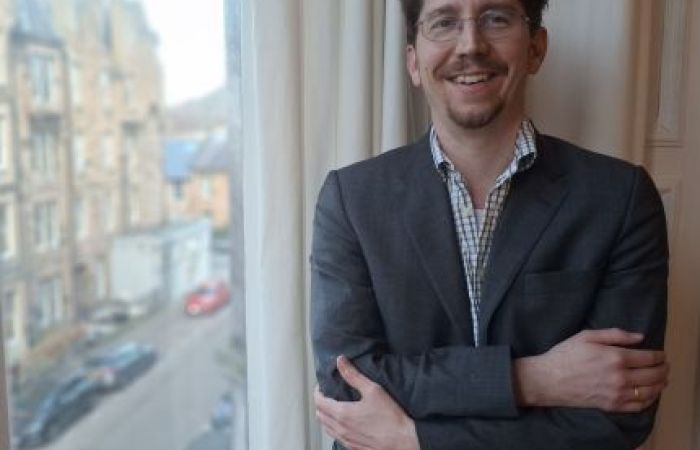
Aaron Kappeler is a Lecturer in Anthropology of Development at the University of Edinburgh's School of Social and Political Science, Department of Social Anthropology. He teaches core courses in the MSc International Development program and MA Social Anthropology, including Anthropology and Environment and Social Development. Education: PhD, University of Toronto Graduate studies, University of Heidelberg and University of Leipzig Undergraduate, University of Arizona Research Focus: Kappeler specializes in Latin American political economy with emphasis on agricultural development , petro-populism , and rural livelihoods . His fifteen-year ethnographic fieldwork in Venezuela examines state enterprises, agrarian reform under Chávez, and the interplay of race, nature, and capital in socialist policy implementation. Current work analyzes oil rent redistribution mechanisms. Publication Trends: Recent scholarship (2021-2025) reveals consistent focus on Venezuelan political economy , bridging anthropology and political science . Key themes include petro-populism's impact on rural cooperatives (2024), racialized sovereignty production (2023), and neo-structural socialism in state enterprises (2025). His work critically engages with dependency theory while documenting grassroots responses to resource nationalism. Scientific Awards: None documented in source material. Academic Supervision: Kappeler annually supervises MSc dissertations in International Development and MA dissertations in Social Anthropology. He has served as Director of Admissions for graduate development programs and coordinates departmental open-day events.
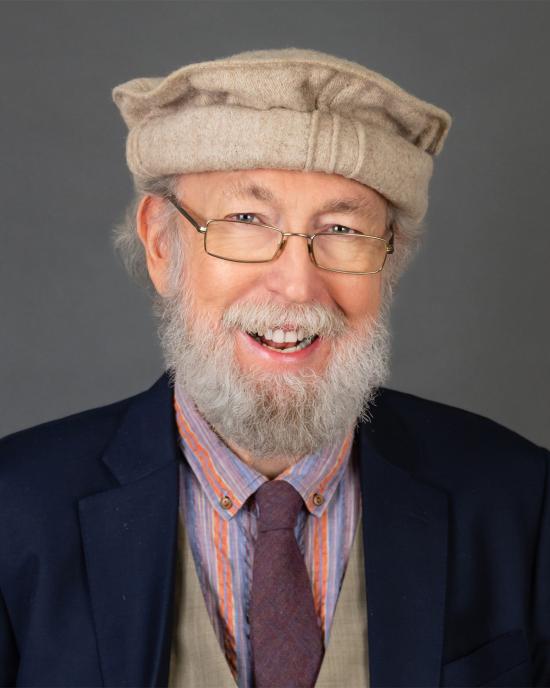
Michael R. Dove is the Margaret K. Musser Professor of Social Ecology and Professor of Anthropology at Yale University, where he also serves as Curator of Anthropology at the Peabody Museum and Co-Coordinator of the Combined YSE/Anthropology Doctoral Program. With over forty years of research experience, his work focuses on environmental anthropology, particularly the environmental relations of local communities in South and Southeast Asia. Dove earned his B.A. from Northwestern University and his M.A. and Ph.D. from Stanford University. His academic journey has spanned decades of field research in Asia, including more than a dozen years conducting long-term studies on human ecology in Borneo and Java, developing government research capacity in Indonesia, and advising the Pakistan Forest Service on social forestry policies. Professor Dove's research interests encompass the anthropology of climate change, cultural and political aspects of natural hazards and disasters, indigenous environmental knowledge and practice, environmental institutions and movements, history of environment-related sciences, and multispecies ethnography. His work often examines how local environmental systems interact with national and global markets, politics, and ideologies, with a focus on problematizing orthodox approaches to conservation and development. He has made significant contributions to understanding human-environment relations through both theoretical frameworks and practical applications. Dove's recent scholarly output demonstrates a progression toward more integrated approaches to environmental challenges, blending historical perspectives with contemporary issues. His publications increasingly focus on the intersections of climate change, social justice, and indigenous knowledge systems, while maintaining his longstanding interest in Southeast Asian environmental relations. The work shows a growing emphasis on post-humanist approaches and multispecies ethnography, reflecting broader trends in environmental anthropology while maintaining his distinctive focus on political ecology and institutional analysis. As an educator, Professor Dove has supervised numerous doctoral and master's students, many of whom have gone on to win research awards and secure prestigious positions. He organizes separate research labs for doctoral students from Yale School of the Environment and other departments, as well as for joint YSE/Anthropology doctoral students. His advisees typically conduct international research and have excellent records of obtaining research support both within and beyond Yale. The Dove Lab at Yale School of the Environment serves as a hub for environmental anthropology research, focusing on topics including natural resource management, property rights, power struggles, household energy transitions, and human-wildlife interactions. The lab fosters a collaborative environment with 30-50 students working on related issues each year, characterized by supportive peer dynamics rather than competition. It also contributes to policy and social change through its research and the work of its alumni.
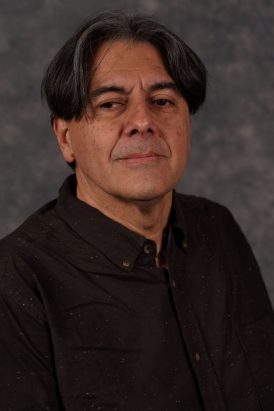
Tong Lam is an Associate Professor in the Department of Historical Studies and the Graduate Department of History at the University of Toronto, where he also directs the Dr. David Chu Program in Asia-Pacific Studies at the Asian Institute. His research sits at the intersection of media studies, environmental history, and science and technology studies (STS), focusing on the politics and aesthetics of mobilization in China’s special zones across socialist and postsocialist eras. Employing interdisciplinary methodologies, his work explores themes such as state-precipitated violence, industrial ruination, and the socio-political implications of technology. He is a visual artist whose lens-based projects interrogate military violence, surveillance, and postindustrial landscapes. His recent scholarship analyzes postsocialist urbanism, digital governance, and the temporalities of infrastructure. While the absence of explicit scientific awards or student advisement records in the provided text precludes their inclusion here, his publications and creative practice reflect a sustained engagement with critical historical inquiry and contemporary socio-technological challenges.
Ethiraj Gabriel Dattatreyan is an Assistant Professor in the Department of Anthropology at New York University. He holds a joint PhD in Anthropology and Education from the University of Pennsylvania (2015) and a B.A. in Economics and Finance from George Mason University (1997). His research focuses on media consumption, production, and circulation in relation to migration, gender, race, and urban space. He co-edits the Multimodal Section of the American Anthropological Association's flagship journal, American Anthropologist. His first book, *The Globally Familiar: Digital hip hop, masculinity and urban space in Delhi* (Duke UP, 2020), examines how Delhi’s youth utilize hip hop aesthetics through digital platforms. His forthcoming co-authored book *Digital Unsettling: Decoloniality and Dispossession in the Age of Social Media* (NYU Press) critiques corporate social media’s colonial legacies. Current projects include ethnographic work on African communities in India and a study of Angolan anthropologist Augusto Zita N’Gonguenho’s anticolonial methodologies. He previously served as Senior Lecturer and co-director of the Centre for Visual Anthropology at Goldsmiths, University of London. His research employs collaborative, multimodal approaches to explore decoloniality, digital media’s socio-political impacts, and urban cultural dynamics.
Professor Libby Porter is a leading academic and researcher in urban planning and human geography at RMIT University, Australia. As Director of the Centre for Urban Research (CUR) and Professor in the School of Global, Urban and Social Studies (GUSS), her work focuses on critical urban governance, decolonising planning practices, Indigenous rights, and urban displacement. She holds a prestigious position as a Fellow of the Higher Education Academy and has contributed extensively to international policy debates through her role as Assistant Editor for Planning Theory and Practice . Her research examines settler-colonial dynamics in urban development, public housing policy, and the intersection of planning with Indigenous sovereignty. Notable publications include Unlearning the Colonial Cultures of Planning (2010) and Planning in Indigenous Australia (2018). Libby has held academic roles in the UK and Australia and previously worked in urban planning policy for Victorian Government departments. She supervises students in Honours, Masters, and PhD programs, focusing on topics like Indigenous housing, urban displacement, and environmental policy. Her work has been featured in The Conversation , BBC News, and academic journals. Libby also leads the Critical Urban Governance Research Program and oversees the Bachelor of Urban and Regional Planning at RMIT. Awards: Fellow of the Higher Education Academy Key Roles: Director, Centre for Urban Research; Co-founder, Planners Network UK; Member, Expert Advisory Panel for Melbourne 2030 Research Themes: Property rights, urban sustainability, decolonisation, Indigenous planning, gentrification
Juliet M. Moringiello is Professor of Law and Associate Dean for Academic Affairs at Widener University - Commonwealth Law School, where she has established herself as a leading scholar in property law, electronic contracting, and blockchain technology. Her work bridges traditional legal doctrines with emerging digital economies, particularly in the areas of NFTs, crypto assets, and secured transactions. Position: Professor of Law, Associate Dean for Academic Affairs Institution: Widener University - Commonwealth Law School, Harrisburg, PA Her research interests focus on the evolving landscape of digital property, including the legal treatment of tokens, virtual assets, and blockchain-based real estate. She critically examines the Uniform Commercial Code (UCC), particularly Articles 9 and 12, in the context of technological innovation. Moringiello also explores municipal bankruptcy, consumer contracts, and the implications of automated enforcement mechanisms like smart contracts. The trends in her recent publications reflect a growing scholarly engagement with decentralized technologies. Her work analyzes how traditional legal frameworks—such as property rights, title registration, and contract formation—apply (or fail) in digital environments. She frequently collaborates with legal scholars like Christopher K. Odinet and William L. Reynolds, contributing to foundational debates on electronic assent, consumer protection, and financial regulation. Moringiello’s scholarship has been widely disseminated through major law reviews and research platforms. Her publications appear in journals such as Florida Law Review , William & Mary Law Review , Rutgers Law Review , and Yale Journal on Regulation . She has also contributed to book chapters with Cambridge University Press. She has been involved in public policy discussions, notably co-authoring commentaries on the Federal Trade Commission’s proposed ban on non-compete clauses. Her academic leadership is evident in her editorial and collaborative roles across legal academia. Moringiello has advised on issues related to data security, domain name enforcement, and the legal infrastructure of subprime mortgages. Her work on municipal receiverships and bankruptcy highlights the intersection of public trust, governance, and financial distress. Although no formal advising or grant information is listed, her extensive collaborative research suggests active engagement in scholarly networks and policy initiatives.
Martha Stiegman is an Associate Professor at the Faculty of Environmental and Urban Change, York University. Her research integrates Indigenous knowledge, food sovereignty, and arts-based methodologies to address issues of social, environmental, and disability justice. She is actively engaged in community-based research and public scholarship in Toronto and Mi’kma’ki (Nova Scotia). Her educational background includes a PhD from Concordia University’s Special Individualized Program and a BA in English Literature & Political Science from McGill University. This interdisciplinary foundation supports her work at the intersection of activism, research, and art. Stiegman’s research focuses on three interconnected domains: Indigenous/settler treaty relations, food sovereignty and justice movements, and participatory video and arts-based research. She emphasizes decolonizing methodologies and community-led knowledge production. Her work explores how arts-based approaches can deepen dialogues across communities and strengthen collective action for justice. Her recent publications and multimedia projects demonstrate a strong trend toward interdisciplinary, community-engaged scholarship that bridges Indigenous epistemologies, environmental justice, and disability justice. She frequently uses film, digital storytelling, and public art to mobilize knowledge and challenge colonial narratives. Co-creator of A Treaty Guide for Torontonians (2022) Lead on the Polishing the Chain project exploring Toronto’s treaty relationships Editor of the forthcoming Anti Colonial Food Systems (Routledge) Active collaborator with Indigenous scholars and artists including Dr. Sherry Pictou, Ange Loft, and Elder Kerry Prosper Stiegman has been involved in significant research grants such as the Atlantic Aboriginal Health Research Program. While specific advisees are not listed, her collaborative projects suggest active mentorship and supervision. She does not appear to lead a formal lab but works within research collectives and community partnerships.
Alexander Dunlap is a Research Scientist at Boston University's Institute for Global Sustainability (IGS) and a visiting research fellow at the University of Helsinki's Global Development Studies department. He holds a PhD in Social Anthropology from Vrije Universiteit Amsterdam, an MSc in Modules from the University of Sussex (UK), an MA in Environment, Development and Policy from Sussex, and a BS in Political Science from Portland State University (USA). His work critically examines energy transitions, extractive industries, and the socioecological impacts of green capitalism. Research Interests: Political ecology of low-carbon technologies Green extractivism in global contexts Decolonial and anarchist approaches to sustainability State violence and counterinsurgency tactics Environmental justice in renewable energy projects Publications: Dunlap’s recent work focuses on solar energy injustices in California, industrial solar manufacturing in Ohio, and the militarization of nature. His articles interrogate how 'green' infrastructure reinforces colonial and capitalist systems, often through spatial dispossession and anti-Indigenous violence. Labs/Teams: Active in IGS research clusters studying infrastructural harm and energy justice. Co-editor of Human Geography , a journal promoting radical interdisciplinary scholarship. Future Work: Continuing research on solar project lifecycles, particularly mining-to-decommissioning impacts, and expanding analysis of Europe’s energy grid conflicts.
Gustavo Verdesio serves as an Associate Professor of Spanish within the Department of Romance Languages & Literatures at the University of Michigan. He maintains significant interdisciplinary affiliations as a faculty member of the Program in Native American Studies and as a Faculty Associate for Latina/o Studies. His academic credentials include: Ph.D. in Hispanic Studies or Latin American Studies from Northwestern University (1992) Verdesio's research critically engages with Colonial Studies, Native American Studies, and Material Culture, focusing on Indigenous materialities in Uruguayan history. His current project examines the re-emergence of Indigenous groups previously declared extinct in Uruguay and non-Indigenous responses to Indigenous bodies within settler colonial structures. He investigates objects, agricultural practices, monumentality, and the political implications of Indigenous bodily recognition. Analysis of his 2018-2021 publications reveals consistent thematic focus on settler colonialism in Latin America, Indigenous rights frameworks, and decolonial approaches to archaeology and historical knowledge, with concentrated attention on Southern Cone nations including Uruguay and Argentina. Scientific Awards: No awards, fellowships, or medals were documented in available materials No information regarding graduate student advising, dissertation supervision, or specific research grants was provided in the source documentation. His academic activities appear centered on independent research and interdisciplinary collaboration rather than directed mentorship or externally funded projects as described. The available texts contain no references to laboratories, research centers, or formal collaborative teams associated with Professor Verdesio's work.
Rana Jaleel is an Associate Professor in the Department of Gender, Sexuality, and Women's Studies at the University of California, Davis, within the College of Arts & Sciences. She holds multiple leadership roles, including Chair of the Cultural Studies Graduate Group, Chair of the Designated Emphasis in Feminist Theory and Research, Faculty Advisor for the Sexuality Studies Minor, and Co-Director of HATCH: The Feminist Arts & Sciences Initiative. She is also a 2021–2024 College of Arts & Sciences Dean's Faculty Fellow. Education: Ph.D. in American Studies, New York University J.D., Yale Law School MFA in Poetry, University of Michigan, Ann Arbor Rana Jaleel’s research centers on the politics of evidence, examining how harm is recognized or erased in legal, cultural, and political contexts. Her work critically engages with reproductive labor, race, gender, sexuality, property, and international law. She draws from feminist theory, critical ethnic studies, legal studies, and decolonial thought to interrogate the intersections of power, knowledge, and violence. Her interdisciplinary approach is reflected in her contributions across law, cultural studies, and creative writing. Her publications and editorial projects reveal a strong focus on racial capitalism, settler colonialism, queer/trans of color critique, and feminist legal theory. She explores how international legal frameworks for sexual violence are shaped by imperial and racial power. Her work frequently appears in journals such as Critical Ethnic Studies Journal , Cultural Studies , and Brooklyn Law Review . She has co-edited special issues on democracy, gendered citizenship, and racial capitalism, demonstrating a commitment to collective scholarly work. Scientific Awards: Author of Color First Book Award from Duke University Press for The Work of Rape Rana Jaleel is actively involved in academic service and mentorship. As Co-Director of HATCH and leader of the Write the Future! Lab, she fosters creative and critical scholarship among undergraduate students, particularly from women/queer/trans of color and transnational feminist perspectives. She serves on the Editorial Collective and Board of The Critical Ethnic Studies Journal and is a member of the American Association of University Professors’ Committee A on Academic Freedom and Tenure. Her leadership extends to admissions and curriculum development in interdisciplinary programs. She is co-editing a forthcoming issue of South Atlantic Quarterly on 'Queer/Trans of Color Transits and the Global Imaginaries of Racial Capitalism' and continues to develop projects that bridge creative practice, legal critique, and feminist theory.
Paige West is The Claire Tow Professor of Anthropology at Barnard College and a faculty member at Columbia University. She directs Columbia's Climate School Transdisciplinary Research Lab. Her work focuses on environmental conservation, Indigenous sovereignty in Melanesia, and climate change adaptation. She earned her Ph.D. in cultural and environmental anthropology from Rutgers University, with earlier degrees from Wofford College and the University of Georgia. Dr. West has conducted over 100 months of fieldwork in Papua New Guinea, collaborating with Indigenous communities to revitalize socio-ecological systems. Her research bridges anthropology with political ecology, examining linkages between environmental policy and international development. Key interests include Indigenous knowledge systems, conservation inequities, and commodity cultures. Director: Columbia University Climate School Transdisciplinary Research Lab Co-founder: PNG Institute of Biological Research and Roviana Solwara Skul Anthropological Director: Ailan Awareness NGO Award-winning author of three books, she founded the journal *Environment and Society: Advances in Research*. Her 2016 book *Dispossession and the Environment* won the Columbia University Distinguished Book Award. Current projects include a Guggenheim-funded book on climate change and kinship. Notable recognitions include Guggenheim Fellowship, Phi Beta Kappa Lecturer (2017-2018), and designation as one of 2021's 50 people changing the world by The Explorers Club. Her work integrates academic research with applied conservation initiatives, emphasizing Indigenous-led methodologies.
Kelly Askew is a Professor of Anthropology and Afroamerican & African Studies at the University of Michigan’s College of Literature, Science, and the Arts. She holds a PhD in Anthropology (Harvard, 1997) and a BA in Music and Anthropology (Yale, 1997), with over three decades of fieldwork in Tanzania and Kenya. Education PhD in Anthropology, Harvard University (1997) BA in Music and Anthropology, Yale University Key Roles Chair of the Department of Anthropology Niara Sudarkasa Collegiate Professor Her research bridges three primary domains: Postsocialist transitions (e.g., property rights formalization and land conflicts), art and political aesthetics (e.g., Swahili music, African visual arts, ethnographic filmmaking), and indigenous political movements (e.g., Maasai and Parakuyo pastoralists). She has produced award-winning documentaries like The Chairman and the Lions (2013) and Maasai Remix (2019), which examine cultural resilience and land rights. Scientific awards include being a finalist for the African Studies Association Herskovits Award (2002). Recent publications analyze land dispossession mechanisms, postsocialist cultural production, and media’s role in political identity. She has secured grants from the National Science Foundation, National Endowment for the Humanities, and Ford Foundation.
Adriana Chira is an Associate Professor of Atlantic World History at Emory University. She holds a Ph.D. from the University of Michigan, an M.A. from Cornell University, and a B.A. from Cambridge University (UK). Her research focuses on race, law, and property in Cuba and Puerto Rico during and after slavery. Her award-winning book Patchwork Freedoms examines how enslaved and free Afro-descendants navigated legal systems to claim land and freedom in 19th-century Cuba. Dr. Chira’s work has been supported by the National Endowment for the Humanities and fellowships at Yale and Harvard. She teaches courses on global history, Cuba, Puerto Rico, and the Caribbean. She also leads a study abroad program in Cuba focused on food sovereignty and environmental history. Her current research includes projects on labor markets in 18th-century Cuba/Colombia, land ownership theories in Cuba, and 20th-century Puerto Rican land policies. She has published widely in journals like the American Historical Review and Law and History Review , and her work has earned multiple prizes, including the James A. Rawley Prize and Elsa Goveia Prize. Education: B.A. Cambridge University (2005), M.A. Cornell (2008), Ph.D. University of Michigan (2016) Key Awards: Outstanding First Book Prize (ASWAD), James A. Rawley Prize (AHA), Peter Gonville Stein Award (ASLH) Teaching: Courses include Human Trafficking in World History , Globalization: The Atlantic World , and Cuba in World History
Ricarda Hammer is an Assistant Professor in the Department of Sociology at the University of California, Berkeley. Her work bridges colonialism, postcolonialism, empire, and race with a focus on the Caribbean as a site of global historical transformation. Department of Sociology, University of California, Berkeley Co-leader of the Anticolonial Lab (with Michael Rodríguez-Muñiz and Tianna Paschel) Former Postdoctoral Fellow at the University of Michigan, Ann Arbor Research Interests: Anticolonial Politics Imperial Legacies Racial Capitalism Caribbean Studies Radical Democracy Black Atlantic Thought Article Trends: Ricarda's recent publications emphasize the intersections of colonial history, racial capitalism, and radical anticolonial theory. Her work increasingly incorporates Du Boisian frameworks and examines the erasure of Caribbean revolutionary imaginaries from European political genealogies. Labs & Teams: At Berkeley, Ricarda co-leads the Anticolonial Lab, which investigates global anticolonial solidarity movements with special attention to the Caribbean and Bay Area resistance networks.