Johanna Ruusuvuori is Professor of Social Psychology at Tampere University, Faculty of Social Sciences, Unit of Social Research. Her work integrates social psychology, health communication and interaction research, focusing on how emotions and social practices unfold in professional and care settings. Education : (Detailed educational background not provided in the text.) Research Interests Her research programme revolves around emotion in interaction , vocal and non-vocal communication , and social interaction at work . She investigates work-life participation , the quality of working life , and health-care practices , especially how digitalisation is reshaping service delivery. Methodologically, she is an expert in qualitative methodologies , ethnomethodology and conversation analysis , often using research interviews as a key data source. Current Projects Reliable knowledge for health care: Process and practice of shared decision making Touch and affect in health-care interaction SOL-TECH: Human-centred solar smart-technology design for healthy ageing Testaamisen sosiologia (Sociology of testing) Etätyöterveysneuvottelu – new models and functional interaction for supporting work ability Scientific Awards : (No specific awards mentioned in the provided text.) Advising & Grants : The text does not list individual students, but Professor Ruusuvuori leads multiple nationally funded projects and supervises research within her unit. Her teams include post-doctoral researchers, doctoral candidates and research assistants working on health-interaction studies. Labs & Teams : She carries out her research within the Unit of Social Research at Tampere University, collaborating across disciplines such as nursing science, gerontology, audiology and occupational health.
Professor Andreas Steffen leads the Inorganic Chemistry research group at the Faculty of Chemistry and Chemical Biology at Technische Universität Dortmund. His laboratory, located in Room C2-07-332 at Otto-Hahn-Str. 6, focuses on advanced photophysical research with applications in quantum information technologies and luminescent materials. His research interests center on the design and characterization of luminescent coordination compounds, particularly zinc(II), copper(I), and silver(I) complexes . His group investigates photoactive transition metal complexes , stimulus-responsive luminescent materials , and molecular entangled photon sources for quantum applications. Key research areas include TADF emitters, circularly polarized luminescence, and long-lived phosphorescent systems. Professor Steffen's recent publications reveal a strong focus on zinc-based emitters for quantum IT applications , chiral copper complexes for OLED technology , and smart luminescent materials that respond to environmental stimuli like pressure. His work bridges fundamental photophysical studies with practical applications in next-generation display technologies and quantum information processing. Among his notable recognitions is the TU Dortmund University's 2021 Teaching Prize, Category 1 , which he received jointly with Prof. Sebastian Henke for their innovative digital delivery of the General and Inorganic Chemistry (AC1) lecture during the pandemic. His research has been supported by significant grants from the German Research Foundation (DFG) , the Volkswagen Foundation (including an 800,000 euro 'Momentum' grant), and other prestigious funding bodies. Professor Steffen actively mentors numerous doctoral students and postdoctoral researchers, including several supported by scholarships from the German Federal Environmental Foundation and the Hans Boeckler Foundation. His research group maintains state-of-the-art equipment including an FLS1000 spectrometer, FS5 Spectrofluorometer, and a transient absorption spectrometer capable of measurements from 77K to room temperature with picosecond resolution.
Сергій Миколайович Журавель is a Senior Lecturer at the Department of Occupational Safety and Environmental Protection within the Faculty of Construction, Architecture and Design at National University 'Zaporizhzhia Polytechnic'. With academic activity spanning since 2010, he holds multiple advanced degrees including specialized training in civil defense and occupational safety. His professional credentials include associated membership in the European Community for Occupational Safety (ESOP) and the International Foundation of Scientists and Educators (IESF). Dr. Zhuravel's research focuses on critical areas of occupational safety, civil defense, and emergency management. His educational background spans electromechanics, economics, and civil security, creating a unique interdisciplinary perspective on safety systems. His scholarly output demonstrates particular attention to Ukraine's specific safety challenges, including ecological security in conflict-affected regions and wartime safety protocols. The analysis of his 15 most recent publications reveals a strong emphasis on practical safety implementation, with significant contributions to civil defense education, emergency response systems, and occupational risk management. His work shows increasing relevance to Ukraine's current security context, particularly evident in his 2022-2023 publications addressing ecological safety in conflict zones. Certificate of Honor from the Department of Civil Protection of the Zaporizhzhia Regional State Administration (2021) Certificate of Honor from National University 'Zaporizhzhia Polytechnic' (2019) Certificate from the Zaporizhzhia City Council Administration for Oleksandrivskyi District (2018) Dr. Zhuravel has developed comprehensive educational resources including textbooks and terminological dictionaries that standardize safety terminology across Ukrainian institutions. His professional development activities demonstrate commitment to contemporary safety challenges, including specialized training in wartime first aid and explosive risk prevention completed in 2023. His work bridges theoretical safety frameworks with practical implementation in Ukraine's evolving security environment.
Søren Knudsen is an Assistant Professor at the Digital Design Department, IT University of Copenhagen and holds a Marie Curie Fellowship for postdoctoral work at the University of Copenhagen. He serves as Academic Director of the Human Data Interaction Lab. Positions: Assistant Professor, Marie Curie Postdoctoral Scholar Affiliations: IT University of Copenhagen, University of Copenhagen Key Roles: Academic Director, Human Data Interaction Lab His research centers on information visualization and human-computer interaction , particularly in face-to-face and online contexts. He explores how large-area displays and social media can enhance data comprehension and collaborative discussion. Notable work includes surveys on interactive visualization techniques for large displays, frameworks for data visualization education , and EMR-based algorithms for healthcare performance evaluation. His publications span journals like IEEE Transactions on Visualization and Computer Graphics and PLOS ONE . Awards and honors: Marie Curie Fellowship He collaborates across disciplines, with ties to healthcare analytics, educational technology, and computer science departments. His recent studies address challenges in visualization design handoff , proxemics , and ubiquitous data interaction .
Rémi Cozot is a Professor at the University of Littoral Côte d'Opale, affiliated with the MAP Research Group and LISIC Laboratory. His research focuses on Image Aesthetics , High Dynamic Range (HDR) Imaging , and Image Editing , with an emphasis on preserving artistic intent during media retargeting. He has pioneered methods to reduce Temporal Artifacts in HDR video tone mapping, including the Zonal Brightness Coherency operator, and developed Style Aware Tone Expansion for HDR displays, which won the NAB 2017 Innovation Award . Key contributions include computational distances for aesthetic similarity and models for Brightness Comfort in HDR displays. He has supervised 9 PhD students, including Mathieu Chambe (HDR aesthetics) and Dmitry Kuzovkin (photo album assessment). His scientific accolades include best paper awards at VISIGRAPP/GRAPP 2018 and Computer Graphics International 2017.
Paul Rosen is an Associate Professor at the University of South Florida within the Department of Computer Science and Engineering. His research focuses on computer graphics, visualization, and geometric modeling, with significant contributions in camera models, 3D rendering, and interactive visualization techniques. Academic Rank: Associate Professor Affiliation: University of South Florida, Department of Computer Science and Engineering Research Areas: Computer Graphics, 3D Visualization, Geometric Modeling, Image Processing, Human-Computer Interaction. His publications span topics including Bézier curves, nonpinhole camera approximations, and volumetric display perception studies. While he collaborates with institutions like Purdue University (CGVLab), he is currently an active faculty member at USF, not part-time, retired, or former staff.
Dietrich Kammer serves as Professor of Technical Visualization at Dresden University of Applied Sciences' Faculty of Computer Science/Mathematics, holding Germany's first dedicated professorship in this field established to address growing demands for innovative visualization methods in human-computer interaction. His teaching emphasizes project-based learning grounded in solid theoretical foundations, focusing on virtual/augmented reality technologies and comprehensible user interfaces across programs including Media Informatics and Geomatics. His research centers on transforming abstract data into interactive visual representations through technical visualization, employing creative techniques like metaphor production and morphological analysis. Key focus areas include tangible user interfaces, elastic displays, and multimodal interaction systems designed to enhance user experience with complex datasets. He explores how customized graphical interfaces can make otherwise unmanageable data volumes visually interpretable and actionable. Analysis of his 2021-2025 publications reveals dominant research themes in elastic display technology, tangible interaction, and information visualization. Notable trends include adaptive visual assistance systems for smart factories (AVISAR), dynamic vibrotactile feedback mechanisms, and AI applications in metadata acquisition and learning analytics. His work consistently bridges theoretical frameworks with practical industrial and educational implementations. No specific details regarding student advising or research grants appear in available materials, though he advocates for student-led project development in his pedagogical approach. He directs the Technical Visualistics Working Group, which functions as an interdisciplinary platform for developing innovative interaction and visualization solutions through collaborative research and development initiatives.
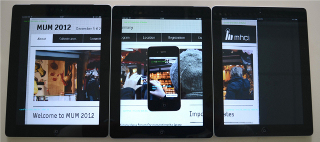
Dr. Ming Li is a researcher at RWTH Aachen University , focusing on interdisciplinary research spanning Human-Computer Interaction (HCI) and Geotechnical Engineering . His work on mobile devices and augmented reality has led to practical applications like MobileVideoTiles for multi-device video display and ACTUI for tangible interfaces using commodity hardware. Email: mingli@informatik.rwth-aachen.de In 2012 , he contributed to Dynamic Tiling Display and Segway AR-Tactile Navigation , emphasizing visual synchronization and vibro-tactile feedback. His recent publications (2020–2025) pivot toward soil mechanics , foamed concrete , and machine learning applications in geotechnical modeling, including Bayesian optimization for soil parameter calibration and multiscale fracture modeling for composites. He received the Best Paper Award at MUM12 . His work explores both mobile technologies and civil engineering materials , suggesting a broad technical scope.
Dr. Andrey Alenin serves as a Senior Lecturer at UNSW Canberra within the School of Engineering and Technology. His extensive academic contributions focus on advanced optical systems, particularly in polarimetry and imaging technologies. With numerous publications spanning over a decade, his work has established him as a significant contributor to the field of optical science and engineering. Dr. Alenin's research interests center on optical polarimetry, Mueller matrix systems, and advanced imaging techniques. His work spans theoretical foundations of linear systems in optics to practical implementations of polarimetric imaging systems. He has made significant contributions to channeled spectropolarimetry, photoelastic modulator systems, and polarization visualization methods. His research bridges fundamental optical theory with real-world applications in remote sensing, satellite imaging, and quantum communications. The extensive list of book chapters he co-authored demonstrates his deep understanding of Fourier optics and linear systems theory. Analysis of Dr. Alenin's recent publications reveals a strong trajectory from fundamental polarimetric theory toward practical implementations. His work increasingly incorporates machine learning techniques for polarization data processing, particularly deep learning for spectral-temporal analysis. The research shows progression toward applications in remote sensing and satellite systems, including tropical cyclone monitoring and intersatellite quantum communications. His co-authorship of the comprehensive reference 'Field Guide to Linear Systems in Optics' with J.S. Tyo has provided valuable educational resources for students and researchers in the field. Dr. Alenin maintains active collaborations with researchers across multiple institutions, as evidenced by his extensive co-authorship network. His work appears in leading optics journals including Applied Optics, Optics Express, and the Journal of the Optical Society of America. His research has practical applications in defense, remote sensing, and quantum communications technologies.
Associate Professor Warren Smith is a faculty member in the School of Engineering and Information Technology at the University of New South Wales (UNSW) Canberra campus. He serves as the Naval Architecture Coordinator and has held various leadership positions including Head of School from 2003-2009. With a background in naval architecture and operations research, Professor Smith has established himself as a leading educator and researcher in maritime engineering and design education. Professor Smith holds a PhD in Operations Research from the University of Houston, an MS in Mechanical Engineering from the same institution, and a BE in Naval Architecture with First Class Honours from UNSW Sydney. His extensive professional experience includes 20 years as a Naval Architect with the Australian Department of Defence (1978-1998), where he held various specialist engineering, research and managerial positions. Professor Smith's primary research interests span Naval Architecture, Ship Design and Safety, Engineering Design Education, and Complex Systems. He has pioneered authentic and immersive experiential learning approaches, particularly through student design competitions. His work in systems modeling, decision-based design, and optimization methods has contributed significantly to both naval architecture and engineering education fields. Professor Smith has developed innovative frameworks for ship design optimization, particularly for high-speed planing craft, and has explored the application of evolutionary algorithms to complex engineering problems. His recent scholarly output demonstrates a continued focus on naval architecture education, maritime engineering, and interdisciplinary applications of optimization techniques. Professor Smith has expanded his research into aircraft proximity systems and air traffic management, showing the transferability of his systems engineering approach across domains. His work consistently bridges theoretical advances with practical applications in both maritime and aerospace contexts. AGM Michell Medal, Mechanical College Board of Engineers Australia for outstanding service to mechanical engineering (2018) Australian Council of Engineering Deans National Award for Engineering Education Excellence Re-Engineering Australia Foundation Founder's Award for Outstanding Contributions to the F1inSchools Program (2017, 2013) Australian Society for Operations Research Conference Best Paper Award (2016) UNSW Canberra Community Engagement Award for Services to the F1inSchools Program (2013) UNSW Canberra Rector's Commendation for Excellence in Classroom Teaching (2010) ALTC Citation for Outstanding Contributions to Student Learning (2008) AAEE Citation for Outstanding Contributions to Student Learning (2008) Ship Shape 2000, Royal Institution of Naval Architects Walter Atkinson Prize (1993) Professor Smith has been instrumental in developing and leading numerous student design competitions that provide authentic learning experiences. He has served as Faculty Advisor for the Formula SAE Student Design & Build Competition (2003-2013 at UNSW Canberra, 2013-2014 at University of Oklahoma) and as National Coordinator for the Warman Design & Build Project & Competition (2002-2021). He currently chairs the Re-Engineering Australia National Rules Committee and serves as Chair of Judges for F1inSchools and Subs in Schools competitions. His educational leadership extends to mentoring first-year engineering students and researching the development of student teamwork competencies. Professor Smith leads the UNSW Canberra Warman Design and Build Project & Competition (1998-present) and is actively involved with the Re-Engineering Australia Foundation as ACT Hub Chair (2007-present). His work connects academic research with practical engineering challenges through student competitions that engage thousands of participants annually. These initiatives form an integrated ecosystem for engineering education that spans from primary school through to university level.
University of Illinois Urbana-ChampaignUnited States
Sung-Jin Park is an Adjunct Research Professor in the Department of Electrical and Computer Engineering at the University of Illinois at Urbana-Champaign , with affiliations to the College of Engineering and the Laboratory for Optical Physics and Engineering . His career spans academic and entrepreneurial roles, including Project Professor at the University of Tokyo (2019) and Adjunct Associate Professor at UIUC (since 2007). Ph.D. in Chemistry (1999) and Postdoctoral Research in Electrical and Computer Engineering (2001) Research interests include plasma science and technology , UV/VUV radiation applications , MEMS and nanophotonics , and environmental and biomedical engineering using advanced plasma and optical systems. Article trends highlight recent work in UV-based pandemic control , MEMS-integrated plasma devices , quantum optical clocks , and biodegradable 3D printing , reflecting interdisciplinary innovation in plasma chemistry , nanophotonics , and microscale engineering . Scientific awards include: Mohammed bin Rashid Al Maktoum Global Water Award (2023, team win) Red Herring 100 Award (2009) Clean Energy Challenge Grand Prize (2014) His professional activities also encompass co-founding ventures like Cygnus Photonics and EPL Power Electronics , translating research into commercial applications. Park’s work bridges plasma physics , optical engineering , and environmental technology , with ongoing projects in UV-C antimicrobial systems and microplasma arrays .
Olaf Von Ramm is the Thomas Lord Distinguished Professor of Engineering and Professor of Biomedical Engineering at Duke University. His research focuses on diagnostic ultrasound imaging systems, infrared imaging, and medical instrumentation. He has pioneered advancements in high-speed 3D ultrasound imaging, cardiac function quantification, and ultrasonic transducer design. B.S., University of Toronto (1968) M.S., University of Toronto (1970) Ph.D., Duke University (1973) Dr. von Ramm's research spans diagnostic ultrasound systems , medical device development , and cardiovascular imaging technologies . Key projects include: Real-time volumetric ultrasound systems Cardiac stimulation devices for arrhythmia prevention Harmonic wavefront correction techniques Acoustic scatter imaging for tissue characterization His work combines engineering innovation with clinical applications , particularly in cardiology and vascular disease diagnostics. Notable trends include: Progressive development from 2D to 4D imaging systems Integration of VLSI ASICs and piezoelectric micromachined transducers Advancements in angle-independent blood flow measurement Scientific recognition includes: Fellow, American Institute for Medical and Biological Engineering (1998) Thomas Lord Distinguished Professor of Engineering Dr. von Ramm's laboratory employs advanced equipment including second-generation phased array systems, Kontron image processors, and 256-channel ultrasound data acquisition systems. He has coauthored over 40 publications in ultrasound imaging , cardiac function analysis , and transducer array design , with recent work focusing on 4D imaging systems and autogenic cardiac wave visualization.
University of Illinois Urbana-ChampaignUnited States
Mary Pietrowicz is a Teaching Assistant Professor in the Department of Biomedical and Translational Sciences at the University of Illinois and a Senior Research Scientist at the Illinois Applied Research Institute. Her interdisciplinary research integrates computational methods with health sciences, focusing on acoustic and behavioral signal analysis for conditions like ALS, schizophrenia, and depression. She earned a Ph.D. in Computer Science from the University of Illinois, an M.S. in Computer Science from Florida Atlantic University, and a B.S. in Electrical Engineering from Purdue University. Her research explores computational modeling of human expression through speech, movement, and creativity to develop scalable health assessment tools. Key areas include: Machine learning for disease state detection via vocal and kinetic biomarkers Deployable telehealth systems using ubiquitous devices (phones, sensors) Cross-disciplinary applications in neurology, psychiatry, and addiction science Cultural computing through interactive art and sonic installations Her publications reveal a consistent focus on acoustic signal processing applied to neurodegenerative/psychiatric disorders, with innovations in laughter analysis, verbal fluency testing, and real-time health monitoring. Trends include machine learning refinement for clinical diagnostics and multimodal data fusion. She contributes to patented technologies in sensor security, geolocation systems, and speech characterization. At the Illinois Applied Research Institute, she develops deployable health-assessment frameworks and collaborates on interdisciplinary projects bridging engineering, medicine, and digital art.
Frans Lundgren is a Senior Lecturer at Uppsala University's Department of History of Science and Ideas. His research explores intersections between the history of science, media studies, and the cultural and political dimensions of social institutions. Role: Senior Lecturer/Associate Professor University: Uppsala University Department: Department of History of Science and Ideas Lundgren's work focuses on: Media and Public Engagement: Civic media, social museums, and visual culture's role in shaping societal narratives. History of Science: Statistical methods, surveillance theory, and the evolution of social sciences. Political and Social History: Mechanisms of social control, welfare state education, and participatory frameworks. His publications span from 1998 to 2024, with recent works examining academic quality culture and historical media forms. Articles highlight themes like civic identity construction, social engineering, and the didactic role of museums.
Alain Gauvin is a Lecturer affiliated with McGill University's Medical Physics Unit École Polytechnique de Montréal's Department of Continuing Education Université de Montréal's Department of Radiology . He holds advanced degrees in Physics, Medical Physics, and Management Sciences. His research focuses on Medical Imaging Informatics , particularly Digital mammography technology Quality control protocols for medical displays Imaging standards in public health programs . He has authored three key publications advancing clinical practice in diagnostic imaging. He is certified by the American Board of Medical Physics, American Board of Radiology, and American Board of Imaging Informatics. In 2017, he was named a Fellow by the Canadian College of Physicists in Medicine. His work bridges clinical imaging, technology evaluation, and healthcare management.