Professor Danilo Mandic is a leading academic in Machine Intelligence and Signal Processing at Imperial College London's Department of Electrical and Electronic Engineering. He holds roles including President of the International Neural Network Society and Distinguished Lecturer for IEEE Computational Intelligence and Signal Processing Societies. His research spans Statistical Learning, Wearable Sensing (Hearables), Financial Signal Processing, and Tensor Networks for Big Data. Key contributions include pioneering in-ear physiological sensing and developing quaternion-based adaptive filters. He has authored over 600 publications, including seminal monographs on neural networks and complex-valued signal processing. Education: PhD in Nonlinear Adaptive Signal Processing from Imperial College (1999). Professional accolades include the 2019 Dennis Gabor Award and multiple IEEE Best Paper Awards. His labs include the Financial Signal Processing & Machine Learning Lab and collaborations with the Centre for Neurotechnology. He advises numerous students and leads projects on AI ethics, graph signal processing, and biomedical applications. His work emphasizes translating research into educational curricula via participatory sensor-based learning.
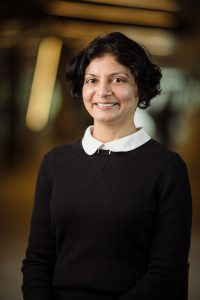
Dr. Sudha Mokkapati is an Associate Professor in the Department of Materials Science and Engineering at Monash University. Her research focuses on semiconductor nano-photonics, nano-lasers, and nanostructured solar cells. She holds a PhD from the Australian National University (2008) and has held academic positions at Cardiff University (2016–2019) and postdoctoral roles at ANU's Centre for Sustainable Energy Systems and Research School of Physics and Engineering. Education: M.Sc. Physics, University of Hyderabad M.Tech. Materials Science and Engineering, Indian Institute of Technology Kanpur Ph.D. Physics, Australian National University Research Interests: Semiconductor nanostructures for optoelectronics Nanowire-based lasers and solar cells Photon management in thin-film solar cells Plasmonic and nanophotonic device engineering Her recent publications emphasize advancements in gas sensing technologies, photonic resonators, and nanoscale optoelectronic devices. She leads projects on chemical detection platforms and wafer-scale 2D heterostructure synthesis. Collaborations span international institutions, addressing sustainable energy and nanotechnology challenges aligned with UN Sustainable Development Goals. Grants/Projects: All-electronic platform for real-time toxic gas detection (2024–2025) Low-cost wireless sensors for chemical hazards (2021–2023) van der Waals Epitaxy for flexible optoelectronics (2017–2020) Labs/Teams: Engaged in nanophotonics and materials engineering research groups at Monash, focusing on device fabrication and characterization for energy and sensing applications.
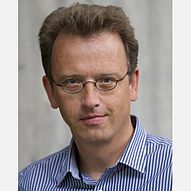
Dr. Daniel Weber is an Assistant Professor in the Department of Chemistry and Chemical Engineering at Chalmers University of Technology, specializing in Energy and Materials. His research focuses on synthesizing novel inorganic layered materials for energy storage/conversion applications, including electrocatalysts and quantum materials. He leads the Daniel Weber Research Group, which combines high-temperature and soft-chemistry synthesis techniques with advanced characterization methods like X-ray diffraction. Dr. Weber earned his PhD from the Max-Planck-Institute for Solid State Research in Stuttgart, followed by postdoctoral work at Ohio State University (USA) and a research associate position at the Karlsruhe Institute of Technology. In September 2023, he established his independent research group at Chalmers, supported by a fellowship from the Wallenberg Initiative for Materials Science for Sustainability. His research interests span layered bulk materials, 2D magnets, water oxidation catalysts, CO₂ utilization systems, and ionic conductors. Recent work emphasizes defect engineering in cathode materials and strain-tuning of magnetic properties in 2D systems. Key achievements include contributions to LiNiO₂ cathode optimization, W-doping strategies, and magnetic behavior analysis in twisted bilayer CrI₃. His publications reflect expertise in materials synthesis, electrochemistry, and quantum phenomena. Dr. Weber collaborates actively on thesis projects and industrial partnerships, offering supervision opportunities at all academic levels. His group's lab facilities include specialized equipment for operando X-ray diffraction and advanced materials characterization.
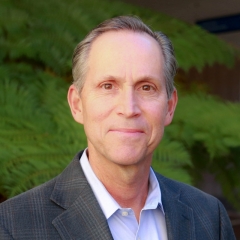
Prof. Dr. Ferdinand Evers is a Chair of Computational Condensed Matter Theory at the Institute of Theoretical Physics , University of Regensburg. His research spans quantum transport , spintronics , molecular electronics , and many-body localization , with a focus on ab initio and DFT-based modeling of nanostructures and low-dimensional systems . Key Research Areas: Quantum transport in molecular junctions Spin-orbit coupling and chiral effects Multifractality at quantum phase transitions Electronic structure of topological materials Ultrafast laser-driven electron dynamics Anderson localization and disorder Recent Article Trends (2021–2024): High-harmonic generation in topological insulators Spin-selective transport in chiral systems Mechanical torque in molecular rotors Self-consistent GW methods for molecular electronics Quantum interference in graphene nanoribbons Teaching: Lecturer for Theoretical Physics I-IV , Advanced Quantum Mechanics , and Scientific Perspectives courses at the University of Regensburg Focus on statistical mechanics , quantum transport , and computational nanoscience
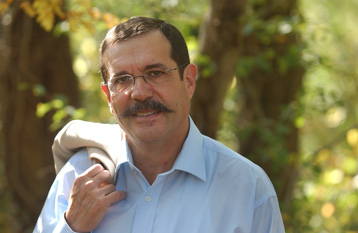
Alex Kamenev is a Professor in the School of Physics and Astronomy at the University of Minnesota and serves as Director of the William I. Fine Theoretical Physics Institute. His academic career spans multiple decades with continuous research output since 1991, demonstrating sustained contributions to theoretical physics. His research focuses on theoretical condensed matter physics, with particular emphasis on disordered systems and glasses, field-theoretical treatment of many-body systems, mesoscopic systems, and out-of-equilibrium phenomena. His fingerprint analysis reveals strong expertise in Instanton Physics (100%), Fermion Physics (90%), Conductance (69%), Quantum Dot Physics (64%), and Superconductor physics (62%). Analysis of his recent publications shows a clear trend toward quantum computing applications, non-equilibrium quantum dynamics, and advanced field-theoretical approaches to many-body problems. His work bridges fundamental theoretical physics with practical applications in quantum information science, particularly in understanding quantum dissipation, localization phenomena, and quantum annealing processes. As Principal Investigator, Kamenev has led numerous significant research projects, primarily funded by the National Science Foundation. His current active projects include the REU Site: Physics and Astronomy at the University of Minnesota (2024-2027) and NSF-BSF: Many Body Physics of Quantum Computation (2024-2027), demonstrating his leadership in training the next generation of physicists and advancing quantum computing research. He actively mentors graduate students, as indicated by his statement that he is "Accepting new graduate research students." His research group contributes to the Condensed Matter Theory research area within the School of Physics and Astronomy, focusing on theoretical approaches to quantum systems.
Boris Svistunov is a Professor in the Department of Physics at the University of Massachusetts Amherst . His research focuses on Theoretical Condensed Matter Physics , particularly on quantum fluids and superconductivity phenomena. Research Interests His work explores fundamental aspects of superfluidity , superconductivity , and quantum phase transitions . Key topics include: Transverse quantum fluids and their statistical features Bipolaronic superconductivity mechanisms Quantum dynamics of topological defects Monte Carlo studies of strongly correlated systems Phonon-modulated electron interactions Publications (2024-2025 Trends) Recent articles emphasize quantum hydrodynamics , Cooper flow precursors , and diagrammatic Monte Carlo approaches. Key themes include: Emergent phenomena in multi-component superfluids Unconventional pairing mechanisms in low-dimensional systems Critical behavior in disordered quantum systems Quantum plasticity and defect-mediated superfluidity Renormalization approaches to superconductivity Contact Details Email: svistunov@physics.umass.edu Phone: (413) 545-4428 Office: Hasbrouck Laboratory 408, 666 N Pleasant St, Amherst, MA 01003-9300
Karin A Dahmen is a Professor in the Department of Physics at the University of Illinois at Urbana-Champaign, affiliated with the Carl R. Woese Institute for Genomic Biology. Her research focuses on disordered systems, avalanche dynamics, and plasticity in metallic glasses. She explores material deformation mechanisms, critical phenomena, and the interplay between structure and mechanical properties in complex materials. Her work bridges condensed matter physics and materials science, with emphasis on slip avalanches in bulk metallic glasses, serration statistics in high-entropy alloys, and nanoscale magnetic ordering dynamics. Recent studies include experimental investigations of muscovite mica micromechanics and novel methods for analyzing compressive ductility in metallic glasses. Key achievements include the discovery of universal avalanche statistics across materials from nano-crystals to earthquakes, and the development of theoretical frameworks explaining memory effects in cyclically deformed glasses. Her honors include the APS Fellowship (2013), Guggenheim Fellowship (2016), and Sloan Research Fellowship (2001). Research trends show sustained focus on critical phenomena in materials under stress, with recent emphasis on seismic analogs in slip events and chemo-mechanical weakening mechanisms. Over 170 publications demonstrate her leadership in understanding deformation dynamics across multiple length scales.
Sebastian Schulz is an Associate Professor at the University of Waterloo, specializing in advanced photonics research. His work focuses on nanophotonics, plasmonics, and metasurfaces, particularly exploring epsilon-near-zero (ENZ) materials and their applications in optical sensors, integrated photonics, and augmented reality systems. He is affiliated with the Quantum Nano Centre (QNC 4601), indicating a strong involvement in cutting-edge nanotechnology research. His research interests encompass nonlinear optical phenomena, metamaterials design, and the development of novel optical components such as flexible holographic metasurfaces and tunable photonic devices. Schulz has contributed significantly to understanding the coupling dynamics between ENZ materials and plasmonic structures, as well as the optimization of photonic crystal waveguides for low-loss signal transmission. Recent work includes advancements in temperature-controlled polymer-based lasers, high-throughput speckle spectrometers, and dynamically tunable optical systems. His publications frequently address the integration of nonlinear effects and nanostructured materials to achieve breakthroughs in optical performance metrics like time-bandwidth product limits. While no specific grants or awards are explicitly listed, his prolific output in top-tier photonics journals underscores his influential role in the field. Schulz collaborates on interdisciplinary projects at the intersection of materials science and optical engineering, driving innovations in sensor technologies and next-generation photonic systems.
Professor James Zanotti is a faculty member at the University of Adelaide, holding the position of Professor/Reader in the School of Physics, Chemistry and Earth Sciences within the Faculty of Sciences, Engineering and Technology. His research focuses on advanced theoretical and computational studies of particle physics, particularly in the realm of lattice Quantum Chromodynamics (QCD). He specializes in exploring nucleon structure, quark dynamics, and the internal forces within protons using lattice simulations. His work includes groundbreaking studies on transverse force distributions, parity-odd structure functions, and the application of the Feynman-Hellmann theorem to nucleon matrix elements. Professor Zanotti is actively involved in supervising Masters and PhD students in these areas. His recent research highlights include mapping proton force distributions, constraining beyond-Standard-Model physics through nucleon charges, and investigating collective magnetic states in materials. He is affiliated with Adelaide's physics department and accessible via james.zanotti@adelaide.edu.au.
Dr. Rico Friedrich is a computational materials scientist leading the "Autonomous Materials Thermodynamics - AutoMaT" research group, jointly operated by the Chair of Theoretical Chemistry at Technische Universität Dresden and the Helmholtz-Zentrum Dresden-Rossendorf (HZDR). His work focuses on data-driven computational design of advanced materials for information technology and energy applications through the DRESDEN-concept research alliance. His research spans several cutting-edge areas: Discovery and design of 2D non-van der Waals materials with novel electronic and magnetic properties Data-driven modeling of high-entropy ceramics based on entropy maximization principles Development of computational methods for accurate thermodynamic stability prediction, particularly the coordination corrected enthalpies (CCE) method Applications of artificial intelligence in materials design Dr. Friedrich's publication record shows a strong trend toward computational materials discovery, with significant contributions to understanding non-van der Waals 2D materials and high-entropy ceramics. His work bridges theoretical developments with practical applications, resulting in publications in high-impact journals including Nature, Nano Letters, and Advanced Electronic Materials. His key scientific contributions include: Development of the coordination corrected enthalpies (CCE) method for accurate formation enthalpy calculations Creation of the AFLOW-CCE module implemented in the AFLOW software ecosystem Discovery of novel 2D non-van der Waals materials with ultra-low exfoliation energies Formulation of the disordered enthalpy-entropy descriptor (DEED) for high-entropy ceramics Dr. Friedrich actively mentors the next generation of materials scientists, currently supervising PhD students and postdoctoral researchers in his AutoMaT lab. His research group collaborates extensively within the DRESDEN-concept research alliance, leveraging computational resources and expertise across multiple institutions to advance materials science and engineering.
Nikita Kavokine serves as Tenure Track Assistant Professor at École Polytechnique Fédérale de Lausanne (EPFL) within the School of Basic Sciences . His dual appointments span the Institute of Chemical Sciences and Engineering (ISIC) and the School of Chemical Sciences and Engineering (SCGC) , where he leads the Quantum Plumbing Lab (LNQ) and contributes to graduate teaching. Based at Building CH A2 398 in Lausanne, he maintains active research and instructional roles across EPFL's chemistry and chemical engineering programs. His research pioneers quantum nanofluidics and nanoscale transport phenomena , focusing on electron-ion coupling mechanisms in confined geometries. Key investigations include quantum friction in water-carbon interfaces, hydroelectric energy conversion through nanochannels, and plasmon-hydron resonances in two-dimensional materials. His work bridges condensed matter physics, electrochemistry, and fluid dynamics to develop fundamental principles for next-generation nanofluidic devices and quantum sensors. Analysis of his 15 most recent publications (2023-2025) reveals three dominant research thrusts: quantum-enhanced energy conversion (evident in hydroelectric drag and electron cooling studies), non-classical ion transport (including ionic Coulomb blockade and interaction confinement), and emergent quantum hydrodynamics (momentum tunneling, collective modes). These publications consistently integrate advanced numerical methods with nanoscale experimental systems, establishing new paradigms for solid-liquid quantum interactions. Kavokine currently supervises three PhD students: Gispert Peter , Lu Hao , and Rigaux Killian David . His teaching portfolio includes graduate courses in Statistical Mechanics for Chemistry and Nanofluidics , emphasizing theoretical frameworks for many-particle systems and nanoscale fluid dynamics. Research funding supports his laboratory's exploration of quantum effects in nanofluidic channels, though specific grant details are not provided in source materials. The Quantum Plumbing Lab (LNQ) operates at the forefront of nanoscale quantum transport research, utilizing advanced nanofabrication and characterization techniques to probe electron-ion coupling phenomena. The lab's interdisciplinary team combines expertise in quantum physics, electrochemistry, and fluid dynamics to investigate fundamental limits of energy conversion and transport at atomic scales, with particular focus on graphene-based systems and angstrom-scale confinement.
Igor Di Marco is a Researcher at Uppsala University's Department of Physics and Astronomy, specializing in Materials Theory. He has maintained continuous research activity at Uppsala since 2009, initially as a postdoctoral fellow and subsequently as a researcher, with a temporary leave in 2017 to lead a group at the Asia-Pacific Center for Theoretical Physics in South Korea. Dr. Di Marco earned his PhD in condensed matter theory from Radboud University of Nijmegen in 2009. His academic trajectory has focused on computational approaches to understanding complex quantum materials, particularly those exhibiting strong electron correlations. His research centers on computational physics and condensed matter theory , with emphasis on developing methods to determine electronic and magnetic properties of strongly correlated materials . Dr. Di Marco is one of the principal developers of the all-electron DFT code RSPt (a Sweden-USA-France collaboration), which utilizes the full-potential linearized muffin-tin orbitals method. His expertise spans density-functional theory (DFT) , dynamical mean-field theory (DMFT) , and their integration (DFT+DMFT). Current research extends to X-ray absorption spectroscopy (XAS) and resonant inelastic X-ray scattering (RIXS) . Analysis of his recent publications reveals a consistent focus on electronic correlations in quantum materials, particularly in kagome metals, van der Waals magnets, and complex alloys. His work bridges theoretical method development with practical materials applications, frequently examining magnetic properties and electronic structure calculations across diverse material systems. Dr. Di Marco has made significant contributions to computational methodologies for strongly correlated electron systems, including the development of the DFT+DMFT framework within RSPt featuring full self-consistency over electron density and self-energy. His research projects have addressed magnetic properties of transition metals, excitation spectra of metal oxides, theoretical frameworks for lanthanides, and prediction of novel 2D materials.
Glenn H. Fredrickson is the Mitsubishi Chemical Professor of Functional Materials in the Department of Chemical Engineering at the University of California, Santa Barbara, with additional appointments in the Materials Department. He directs the Mitsubishi Chemical Center for Advanced Materials (MC-CAM) and the Complex Fluids Design Consortium (CFDC), and previously chaired the Chemical Engineering department (1998-2001). He is an elected member of both the National Academy of Engineering and the National Academy of Sciences. Education Ph.D. Chemical Engineering, Stanford University (1984) M.S. Chemical Engineering, Stanford University (1981) B.S. Chemical Engineering, University of Florida (1980) Research Interests Fredrickson leads an internationally recognized program in theoretical and computational polymer science , focusing on self-assembly of block copolymers , complex fluids , and field-theoretic simulation methods . His group pioneered field-theoretic simulations (FTS) —numerical techniques to solve statistical field theories of polymers—enabling predictive design of advanced materials including high-performance plastics, ion-conducting electrolytes, and nanostructured membranes. Current themes include quantum-fluid analogs, machine-learning-accelerated discovery, and sustainable polymer formulations. Recent Publication Trends Between 2022 and 2025, Fredrickson’s group published extensively on block copolymer morphology control , polymer electrolytes for energy storage , phase-separation kinetics , and quantum many-body analogs in soft matter . Notable advances include machine-learning-enhanced self-consistent field theory, molecularly informed models for surfactant and polyelectrolyte systems, and the application of polymer field theory to spin-orbit-coupled Bose-Einstein condensates. Scientific Awards & Honors Election to National Academy of Sciences (2021) Materials Theory Award, Materials Research Society (2017) William H. Walker Award, AIChE (2016) Polymer Physics Prize, American Physical Society (2007) Election to National Academy of Engineering (2003) Alfred P. Sloan Fellow (1992) Camille and Henry Dreyfus Teacher-Scholar Award (1991) Presidential Young Investigator Award, NSF (1991) Research Group & Funding The Fredrickson Research Group comprises ~15 graduate students and several post-doctoral researchers. The group is supported by multi-agency grants including NSF, DOE, and industry partnerships through the Mitsubishi Chemical Center for Advanced Materials and the Complex Fluids Design Consortium. Laboratory & Collaborative Networks State-of-the-art computational facilities are housed in the Materials Research Laboratory (MRL) at UCSB. Collaborative projects extend to leading experimental groups worldwide, integrating theory with synthesis, characterization, and device testing to accelerate materials innovation.
Dr. Axel Lubk is a Group Leader at the Institute for Solid State Research (IFW Dresden) , specializing in advanced electron microscopy techniques for materials science. His research spans four key areas: (1) TEM method development (high-resolution imaging, tomography, holography, and in-situ techniques), (2) charge particle optics and scattering theory , (3) magnetic nanotextures (domain walls, skyrmions), and (4) plasmonics (mode hybridization in heterogeneous structures and semiconductor heterostructures). Dr. Lubk’s work focuses on three-dimensional magnetic texture analysis using electron holography and tomography, particularly in systems like skyrmion tubes , FeGe , and Cr2O3 thin films . He has pioneered techniques for vector-field electron tomography and phase retrieval under varying boundary conditions, advancing nanoscale magnetic imaging. His recent studies include plasmonic properties in AgAu nanosphere chains , thermoelectric multilayer systems , and topological insulators like NiRh2Sb and TaTMTe4 . Dr. Lubk has published extensively in high-impact journals such as Nature Communications and Advanced Materials , with a focus on TEM instrumentation and quantitative analysis . He frequently presents at international conferences like the International Microscopy Congress and European School of Magnetism , emphasizing applications in spintronics , quantum materials , and nanostructured systems . His contributions to holographic vector-field electron tomography and machine learning for spectrum-image data have set new standards in electron microscopy.
Alain Aspect is a renowned Professor at École Polytechnique and Augustin Fresnel Professor at Institut d'Optique, holding the rank of CNRS distinguished scientist (directeur de recherche de classe exceptionnelle). He has led the Atom Optics group at Laboratoire Charles Fabry since 1992. His career spans roles from assistant lecturer (1969–1971) to distinguished academic positions across institutions, including the Collège de France and international academic fellowships. His research focuses on quantum optics, foundational tests of quantum mechanics (e.g., Bell's theorem experiments), laser cooling, and ultra-cold atoms. Notably, his groundbreaking work violating Bell’s inequalities earned him the 2022 Nobel Prize in Physics. His contributions also include pioneering quantum information science and atom optics. Aspect has received over 30 prestigious awards, including the Balzan Prize, Wolf Prize, and multiple honorary doctorates. He is a member of the French Académie des Sciences, the Royal Society, and the U.S. National Academy of Sciences. His lectureship engagements include the Elliott W. Montroll Lecture (U of Rochester) and the Asher Peres Memorial Lecture (Technion). Aspect’s research groups at Laboratoire Charles Fabry have advanced Bose-Einstein condensates, quantum correlations, and Anderson localization of matter waves. His work bridges experimental quantum optics with foundational physics, influencing both theoretical and applied quantum technologies.