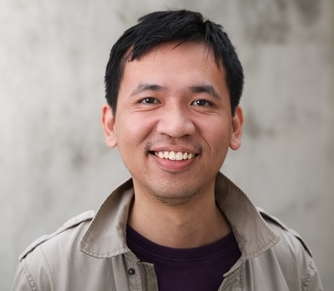
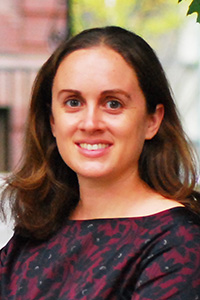
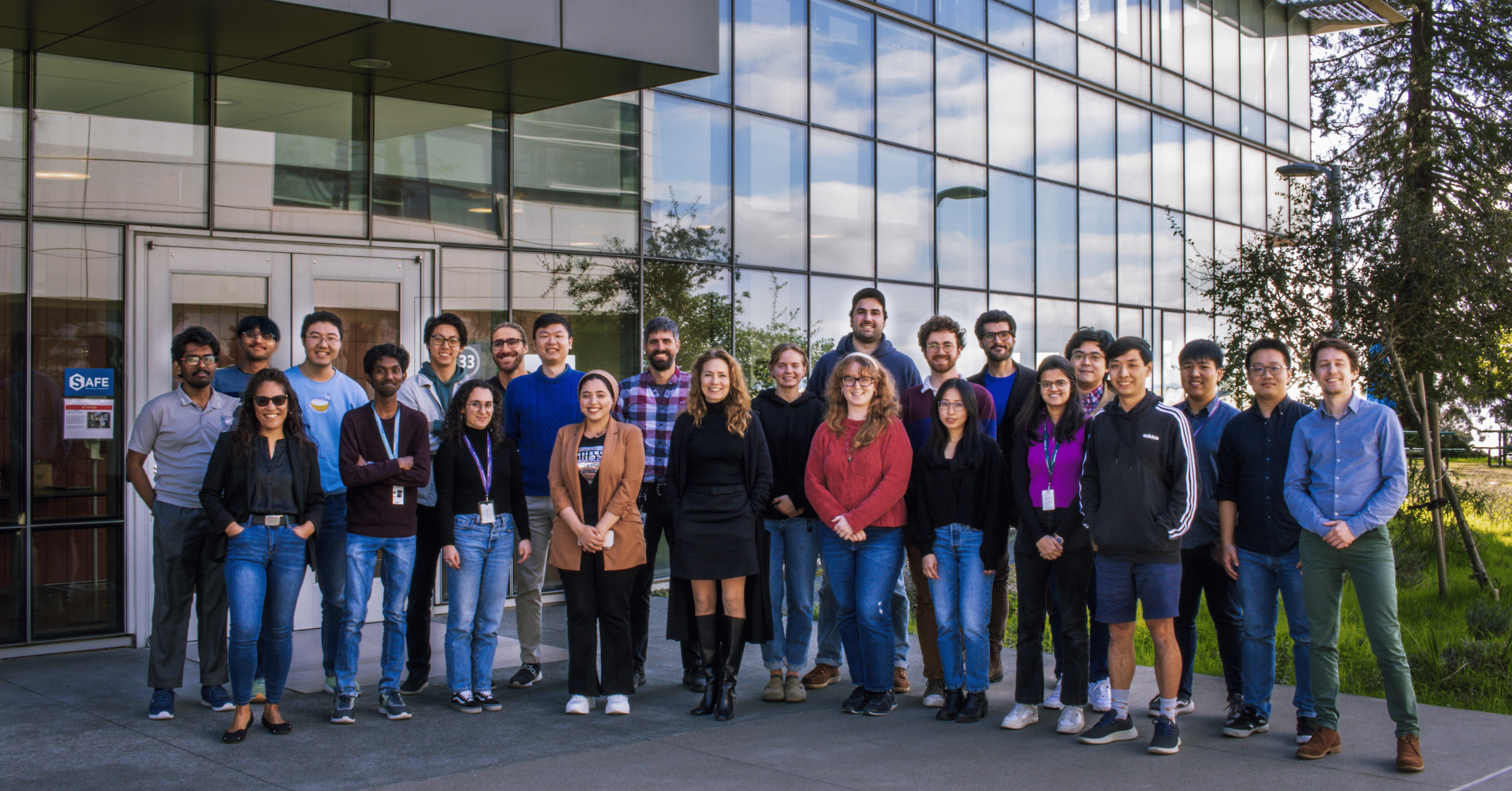
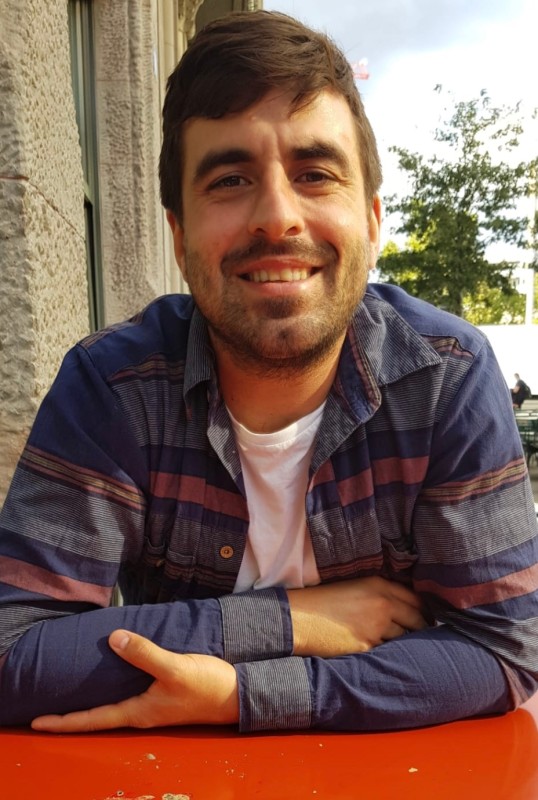
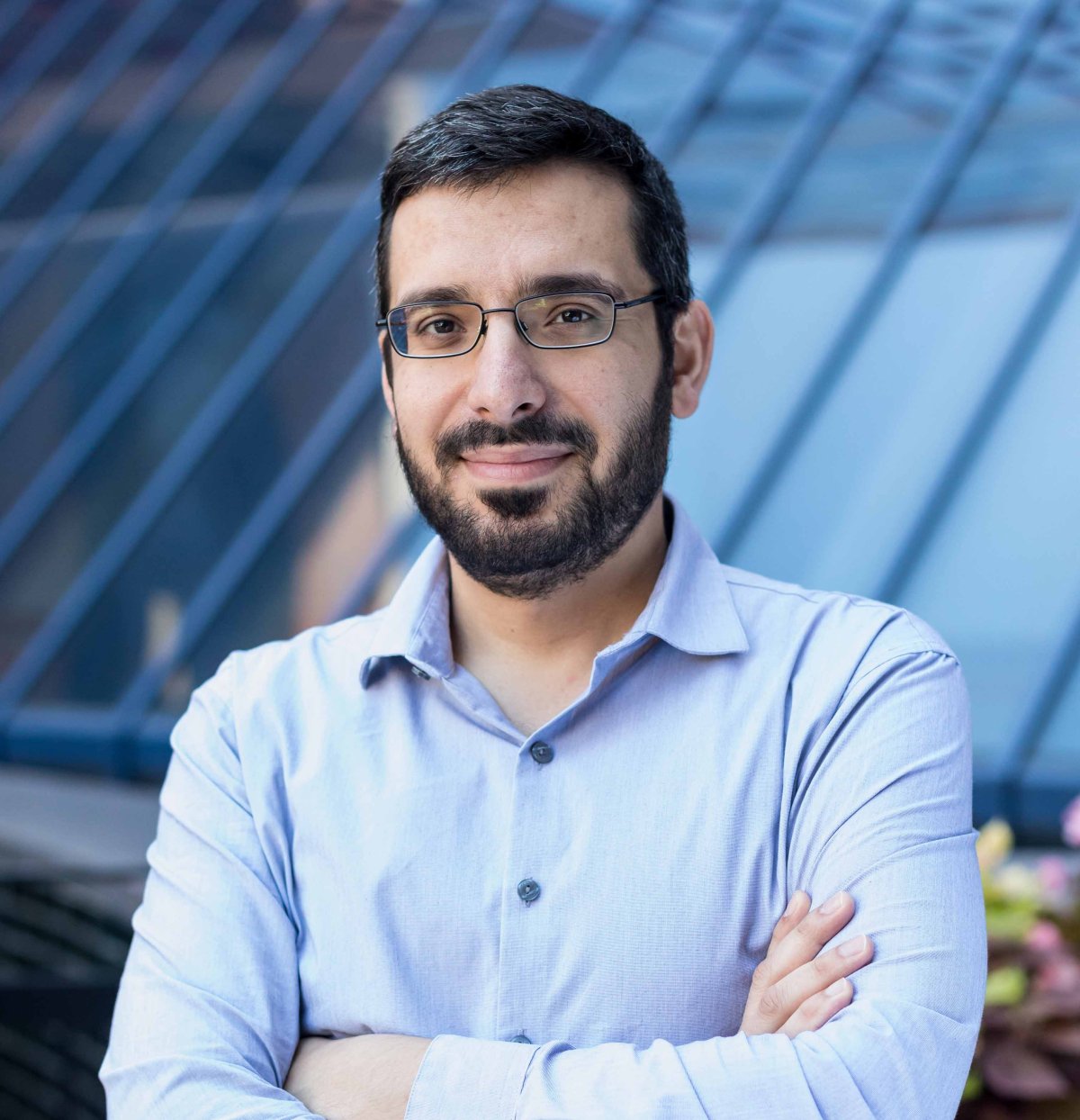
Jon Simon is the Joan Reinhart Professor and Professor of Applied Physics at Stanford University . He leads the Simon Lab , which explores the convergence of condensed matter physics , quantum optics , and quantum information science , focusing on creating synthetic materials from light and investigating topological and strongly correlated quantum systems. His research spans constructing photonic materials in quantum circuits, studying small quantum systems with strong correlations, and applying Hamiltonian engineering to realize exotic states of matter. The lab has achieved milestones like the first Mott insulator of photons and topologically insulating circuits . Collaborative projects with the Schuster Lab leverage superconducting quantum circuits for synthetic matter studies. Jon's students include Adam Shaw (PhD, now at Stony Brook) Lavanya Taneja (PhD, now at Atom Computing) Ruichao Ma (Postdoc, now faculty at Purdue) among others. The lab's recent publications focus on cavity arrays, hybrid quantum systems, and topological photonics. Research is supported by grants and affiliations with Stanford's Department of Applied Physics and interdisciplinary institutes.
Ravindra N. Bhatt is currently a Professor of Electrical and Computer Engineering at Princeton University and an associated faculty member in Physics. His academic career spans leadership roles at prestigious institutions, including Director of the Princeton Center for Complex Materials (1999-2005) and Acting Associate Director of the Princeton Center for Theoretical Science (2005-2012). He previously headed Theoretical Physics Research at Bell Laboratories. Ph.D., University of Illinois, Urbana, 1976 M.S., Physics, University of Illinois, Urbana, 1974 B.Sc. Hons., Physics, University of Delhi, India, 1971 Bhatt specializes in theoretical condensed matter physics, focusing on topological materials, quantum Hall effects, and spin-based quantum computation. His work explores disordered systems, many-body localization, and quantum dynamics in low-dimensional structures like graphene and semiconductor heterostructures. His recent publications emphasize topological phases, composite fermions, and critical ground state dynamics, employing methods such as Density Matrix Renormalization Group (DMRG) and Monte Carlo simulations. Key themes include disorder-driven quantum phase transitions and applications in quantum information science. Scientific honors include: Fellow, American Physical Society (1986) Guggenheim Fellowship (1995) Fellow, American Association for the Advancement of Science (2004) Bhatt has led major research centers at Princeton and contributed to quantum science initiatives. His group utilizes computational techniques like Transfer Matrix Methods and Sparse Matrix Diagonalization to study complex materials.
Prof. Dr. Frank Pollmann is a Full Professor (W3) at the Department of Physics PH-I, Technical University of Munich (TUM), leading the Chair of Theoretical Solid-State Physics since 2022. His research focuses on condensed matter theory and quantum information concepts , particularly in systems of correlated electrons and quantum many-body dynamics . PhD: Max Planck Institute for the Physics of Complex Systems / TU Ilmenau (2006) Postdoc: UC Berkeley (2008-2010) Group Leader: MPIPKS Dresden (2011-2016) Associate Professor: TUM (2017-2022) His work spans topological phases , frustrated spin systems , and non-equilibrium quantum dynamics , utilizing tensor network methods and quantum information theory to study phenomena like many-body localization and Hilbert space fragmentation . His publications demonstrate trends in quantum scar states , Kardar-Parisi-Zhang hydrodynamics , and quantum transport anomalies . Scientific Awards : ERC Consolidator Grant (2017) Walter Schottky Prize (2015) Otto-Hahn Medal (2007) He teaches courses including Advanced Methods in Quantum Many-Body Theory , Solid State Theory , and Topology in Condensed Matter , while leading the Pollmann Group under the TUM School of Natural Sciences.
Meng Cheng is an Assistant Professor of Physics at Yale University, specializing in condensed matter theory. He holds a B.S. from Nanjing University (2008) and a Ph.D. in Condensed Matter Theory from the University of Maryland (2013). After a postdoctoral position at Microsoft Research Station Q (2013–2016), he joined Yale in 2017. His research focuses on quantum criticality, fractonic phases, and symmetric topological phases, with a particular emphasis on classification and characterization of exotic quantum matter. He has received prestigious awards including the NSF CAREER Award (2019) and the Alfred P. Sloan Fellowship (2019). Key research interests include topological superconductivity, global symmetry interactions, and applications in quantum information. His work bridges theoretical frameworks with experimental implications, exploring topics like Wilson loop operators, disorder operators, and entanglement entropy in gapless systems. He has contributed to advancements in understanding symmetry-enriched topological phases and their surface topological order. Publications span high-impact journals and cover topics such as fractionalization in electronic insulators, quantum Hall effects, and topological stabilizer models. His talks highlight interdisciplinary approaches, including seminars at the Perimeter Institute and Université de Montréal on fractonic topological phases and infinite-component Chern-Simons theories. Awards and grants underscore his contributions to advancing theoretical physics, with a focus on fostering innovation in quantum materials and computational methods. Teaching and mentorship activities further his commitment to education within the Yale Physics Department.
Anna Delin is a Full Professor at KTH Royal Institute of Technology since 2011, leading research on magnetic and quantum phenomena in materials. She heads the WISE research school (wise-materials.org) and served as Deputy Head of the School of Engineering Sciences (SCI) from 2018–2022. Her expertise spans condensed matter physics, with a focus on nanomagnetism, skyrmions, spin-lattice couplings, and topological materials. Education: PhD in Condensed Matter Physics from Uppsala University (1998). Key awards include Naturvetarpriset (1998), Royal Swedish Academy of Sciences Research Fellowship (2007), Thuréus Prize (2018), and Edlundska Prize (2024). She has held visiting roles at ICTP, Los Alamos National Lab, and the Fritz Haber Institute. Research interests include magnetic skyrmions, magnonics, spintronics, and ultrafast demagnetization. Recent publications focus on spin-lattice dynamics, topological materials, and quantum analogs of classical magnetic models. Her work bridges theory and experiment, with contributions to tools like SpinView for computational magnetism analysis. Teaching includes roles as examiner for the Degree Project in Applied Physics and teacher for Sustainable Development in Engineering Physics. She actively participates in materials design initiatives and semantic data processing for big research data. Lab affiliations include her own research group at KTH and collaborations through WISE. Current projects explore skyrmion stabilization, magnon entanglement, and quantum spin systems, with implications for next-generation spintronic devices.
Julia A. Mundy is the John L. Loeb Associate Professor of the Natural Sciences and Engineering and Applied Sciences at Harvard University. Her research focuses on designing quantum materials at the atomic scale using molecular-beam epitaxy (MBE) to synthesize metastable thin films. She leads the Mundy Group, which explores superconductors, frustrated magnets, and oxide interfaces for quantum and energy applications. Her work bridges materials synthesis, characterization, and fundamental physics. Affiliations: Harvard University, School of Engineering and Applied Sciences, Applied Physics Department Labs: Mundy Group (LISE 7th floor) Research interests include MBE growth of novel oxides, thin film superconductors, and 2D electronic systems. She has pioneered methods for creating room-temperature multiferroics and discovered superconductivity in layered nickelates. Her group uses advanced tools like aberration-corrected electron microscopy and synchrotron-based spectroscopy. Key achievements include the 2024 Moore Inventor Fellowship, NSF CAREER Award, and Packard Fellowship. Her work on transparent superconductors and fluoride-ion battery materials highlights interdisciplinary impact. Notable Grants: DOE Early Career Award, NSF MRI funding for LEEM/PEEM microscopy Team: 15+ current members including graduate students, postdocs, and undergraduates
Dr. Kristin A. Persson is a Professor and Daniel M. Tellep Distinguished Professor in Engineering at the University of California, Berkeley's Department of Materials Science and Engineering. She leads the Persson Group at Lawrence Berkeley National Laboratory (LBNL), focusing on atomistic computational methods for energy materials. As director of the Materials Project, she pioneers high-throughput computing and data-driven approaches to accelerate material discovery for clean energy applications, including batteries, electrolytes, and photocatalysts. Her research spans lithium-ion and multivalent batteries, with a focus on electrolyte design, interfacial chemistry, and sustainable materials. Persson has directed the Materials Project since its inception, a global initiative to computationally predict material properties and provide open-access data. She holds affiliations with LBNL’s Energy Sciences Area and collaborates with industry and academia on projects like the Electrolyte Genome and piezoelectric materials databases. Key achievements include election to the National Academy of Engineering (2025), Royal Swedish Academy of Sciences (2024), and Fellowships from the AAAS (2022) and APS (2021). Her group’s work has produced over 200 publications, with recent highlights on disordered cathodes, ML-driven material predictions, and circular polymers. Persson advises a dynamic team of ~50 graduate students, postdocs, and staff, fostering interdisciplinary innovation in energy storage and materials informatics. Awards include DOE’s Distinguished Scientist Fellowship (2024), Cyril Stanley Smith Award (2022), and Web of Science Highly Cited Researcher recognition (2020). Her lab’s infrastructure supports projects from computational workflows to experimental collaborations, with a focus on translating theory into real-world energy solutions.
David Goldhaber-Gordon is a Professor in the Department of Physics at Stanford University, specializing in nanoscale electron behavior and quantum effects. His research spans nanofabrication, materials growth, low-temperature measurements, and scanning probe techniques, focusing on materials like graphene, carbon nanotubes, and topological insulators. Harvard AB in Physics (1994) Harvard AM in History of Science (1994) MIT PhD in Physics (1999) His work explores electron organization and flow in nanoscale systems, emphasizing quantum effects and interactions. Research areas include twisted bilayer graphene, helical trilayer platforms, and topological insulator applications for quantum devices and energy technologies. Recent publications focus on strain effects in twisted graphene, moiré superlattice engineering, and quantum anomalous Hall integration. Themes include topological phases, correlated insulators, and metrology advancements. Co-founder and Director, Center for Probing the Nanoscale (NSF Center) Junior Fellow, Harvard Society of Fellows He teaches advanced physics labs, independent research, and dissertation courses at Stanford. His group collaborates with materials scientists, engineers, and chemists to develop novel electronic applications.
Nuri Yazdani is a Lecturer at the Department of Information Technology and Electrical Engineering at ETH Zürich, Switzerland. Based at the Institute for Electronics (Institut für Elektronik) in Zurich, Dr. Yazdani contributes to both teaching and research in advanced materials and nanotechnology. His work spans multiple interdisciplinary areas connecting physics, chemistry, and electrical engineering, with particular emphasis on nanocrystal-based materials and their applications in electronics and optoelectronics. Dr. Yazdani's research focuses on the synthesis, characterization, and application of nanomaterials, particularly semiconductor nanocrystals and quantum dots. His work explores the fundamental physical properties of these materials, including exciton-phonon interactions, structural ordering in multicomponent systems, and charge transport mechanisms in nanocrystal assemblies. He investigates how nanoscale phenomena affect macroscopic material properties, with applications ranging from catalysis to optoelectronic devices. His approach combines experimental techniques like small-angle X-ray scattering with theoretical modeling to understand structure-property relationships in nanomaterials. Analysis of Dr. Yazdani's recent publications reveals a strong emphasis on perovskite and chalcogenide nanocrystals, with particular interest in how structural features like cation distribution, octahedral tilting, and surface chemistry affect optical and electronic properties. His work bridges fundamental physics with practical applications, spanning from quantum optics to energy conversion technologies. A recurring theme is the investigation of size-dependent phenomena and the role of phonons in determining material behavior at the nanoscale. Dr. Yazdani collaborates extensively with researchers across multiple institutions and disciplines, as evidenced by his authorship on numerous multi-investigator publications. His work appears in high-impact journals including Nature Communications, Journal of the American Chemical Society, and Nature Physics, reflecting the significance and interdisciplinary nature of his contributions to nanoscience and nanotechnology.
Yu He is an Assistant Professor of Applied Physics and Physics at Yale University, affiliated with the Department of Physics. His research focuses on condensed matter physics and experimental techniques such as angle-resolved photoemission spectroscopy (ARPES) and x-ray scattering to study correlated electronic systems and quantum materials. Prior to Yale, he completed a Miller Research Fellowship at UC Berkeley (2019) after earning his Ph.D. in Applied Physics from Stanford University. Key research areas include metal-to-insulator transitions, superconductivity, 2D magnetism, and solid-state quantum simulation. He has contributed to advancements in material characterization techniques, including high-resolution ARPES using tabletop lasers. His work integrates crystal synthesis, electric transport measurements, and surface decoration to explore material properties. Education: B.S. in Physics from University of Science and Technology of China (USTC); M.S. in Electrical Engineering and Ph.D. in Applied Physics from Stanford University. Research Interests: Experimental condensed matter physics, quantum materials, superconductivity, and light-matter interaction studies. His current projects aim to dissect microscopic degrees of freedom (electronic, lattice, spin) in novel materials using cutting-edge spectroscopic methods. The lab employs complementary techniques like electric transport measurements and crystal growth to characterize material properties comprehensively. Awards: Miller Research Fellow, UC Berkeley (2019) Advising & Grants: No student advisees listed. Research supported by Yale University and prior fellowships. Labs & Teams: Leads a research group at Yale focused on experimental condensed matter physics, collaborating on projects involving advanced material characterization and quantum material discovery.
Turan Birol is an Associate Professor in the Department of Chemical Engineering and Materials Science at the University of Minnesota, with a secondary appointment in the School of Physics. He leads the Theoretical Materials Physics Group , focusing on computational materials design to discover exotic condensed matter phenomena. Education: PhD in Physics (Cornell University), Postdoc (Rutgers University) Research Areas: Ferroelectricity, Charge Density Waves, Multiferroics, Strongly Correlated Systems, Kagome Metals His work combines Density Functional Theory with Dynamical Mean Field Theory to study materials like perovskites, layered antiperovskites, and 2D/3D compounds. Recent projects include Office of Naval Research -funded ferroelectric design and NSF Discovery File -featured transparent conductors. Scientific contributions include 15+ recent articles on topics spanning structural chirality in superconductors, strain-tuned magnetism, and catalytic resonance theory. Former advisees include PhD graduates in Physics and Materials Science.
David A. Muller serves as the Samuel B. Eckert Professor of Engineering in the School of Applied and Engineering Physics at Cornell University and co-directs the Kavli Institute at Cornell for Nanoscale Science. His research group focuses on developing quantitative electron microscopy methods to understand materials properties at the atomic scale, with particular emphasis on sustainable energy applications and quantum materials. Muller's laboratory utilizes some of the world's highest resolution electron microscopes housed in specially designed, environmentally isolated rooms. Muller received his undergraduate education at the University of Sydney and earned his Ph.D. in Physics from Cornell University in 1996. Between 1997 and 2003, he was a member of the technical staff at Bell Laboratories, where he applied his expertise in imaging single atoms and atomic-scale spectroscopy to determine the physical limits of transistor miniaturization. In 2003, he returned to Cornell as a faculty member, where he has since established himself as a leader in advanced electron microscopy techniques. Muller's research spans multiple frontiers in materials science, with particular focus on understanding how electronic-structure changes at the atomic scale control macroscopic behavior in diverse systems like turbine blades, fuel cells, and transistors. His current work emphasizes the physics of renewable energy materials, atomic-scale control of materials to create electronic phases that cannot exist in bulk, and developing hardware and algorithms for 'big data' acquisition from high-bandwidth pixelated electron microscope detectors. His group's work bridges theoretical physics and experimental techniques, requiring researchers who can think in both real and reciprocal space while considering both fundamental principles and practical applications. Analysis of Muller's recent publications reveals a strong trend toward advancing electron ptychography and 4D-STEM techniques for atomic-scale imaging. His group has pioneered methods for 3D atomic-scale metrology, strain mapping, and imaging of radiation-sensitive materials. The research spans applications from semiconductor technology to quantum materials and energy storage systems, demonstrating the versatility of his microscopy approaches across multiple scientific domains. Top 100 Young Innovator by Tech Review Magazine (2003) Burton Medal from Microscopy Society of America (2006) Ernst Ruska Prize of German Society for Electron Microscopy (2021) John Cowley Medal from International Federation of Societies for Microscopy (2023) Fellow of American Physical Society Fellow of American Association for the Advancement of Science Fellow of Microscopy Society of America Muller has mentored an extensive group of students and postdocs who have gone on to successful careers in academia and industry. His former students hold faculty positions at institutions including Rice University, University of Southern California, Seoul National University, Colorado School of Mines, and the University of Michigan, among others. His research has been supported by substantial grants, including a $22.5M NSF grant that accelerates materials discovery. The Muller lab maintains close collaborations with the Kavli Institute at Cornell and PARADIM (Platform for the Accelerated Realization, Analysis, and Discovery of Interface Materials). The Muller lab operates at the forefront of electron microscopy, housing specialized instrumentation including high-resolution transmission electron microscopes in environmentally isolated rooms. The group collaborates extensively with other research teams at Cornell and worldwide, focusing on understanding materials atom by atom. Current research directions include applying machine learning to electron microscopy data analysis, developing cryogenic techniques for studying low-melting-point materials, and exploring quantum phenomena in engineered materials systems.
John M. Dallesasse is the Gregory E. Stillman Professor of Electrical and Computer Engineering at the University of Illinois at Urbana-Champaign, where he also serves as Associate Dean for Facilities and Capital Planning. He holds dual roles in academia and industry leadership, with prior experience as CTO, Vice President, and co-founder of Skorpios Technologies. His expertise spans optoelectronics, semiconductor materials, and photonic integration. Dallesasse earned his B.S., M.S., and Ph.D. from UIUC ECE in 1985, 1987, and 1991, respectively. His research focuses on III-V semiconductors, heterogeneous integration, quantum cascade lasers, and silicon photonics. He has pioneered innovations like III-V oxidation and the transistor-injected quantum cascade laser. Education: Ph.D., Electrical and Computer Engineering, UIUC, 1991 M.S., Electrical and Computer Engineering, UIUC, 1987 B.S., Electrical and Computer Engineering, UIUC, 1985 Research Interests: Compound semiconductor materials and devices Heterogeneous integration and wafer bonding Quantum cascade lasers and transistor lasers Photonic integration and silicon photonics III-Nitride devices and optoelectronics Awards: IEEE Fellow (2015) Optica Fellow (2013) Dean’s Award for Excellence in Research (2016) Advising and Labs: Leads the Advanced Semiconductor Device and Integration Laboratory Mentors undergraduate researchers in semiconductor innovation and photonics
Yong Chen is a Professor of Electrical and Computer Engineering and Physics at Purdue University. His research spans quantum physics, nanotechnology, and materials science, focusing on advanced 2D materials, topological insulators, and quantum transport phenomena. Condensed Matter Physics Quantum Computing Nanotechnology Materials Science Photonics Spintronics Recent publications highlight his work on van der Waals heterostructures, Bose-Einstein condensates, Raman spectroscopy applications, and quantum interference effects. His studies often intersect with machine learning, energy storage, and synthetic magnetic field engineering of quantum systems. Yong Chen's email address is yongchen@purdue.edu , and further information can be accessed at his Purdue University profile .
Leonid Glazman is the Donner Professor of Physics and Professor of Applied Physics at Yale University. His research focuses on condensed matter physics, particularly in mesoscopic systems, superconductivity, and topological materials. He is a Fellow of the American Physical Society and recipient of the Humboldt Research Award. His work explores quantum fluctuations in low-dimensional systems, nonlinear Luttinger liquids, and superconducting qubits such as fluxonium. Collaborations with experimentalists like Rob Schoelkopf and Michel Devoret have led to breakthroughs in quantum technologies. Key research areas include topological insulators, helical edge states, and the dynamics of quantum phase slips. His theoretical contributions span Coulomb blockade effects, Kondo physics in quantum dots, and vortex lattice dynamics in layered superconductors. Recent studies address quantum interference in superconducting circuits and the development of high-coherence qubit architectures. Awards: Humboldt Research Award, APS Fellowship Grants: Supported by the Simons Foundation and National Science Foundation Labs/Teams: Collaborates with Yale Quantum Institute and experimental groups on superconducting devices His publications include seminal reviews on nonlinear Luttinger liquids and articles in Nature , Science , and Physical Review Letters . Current research emphasizes topological superconductivity, Majorana fermions, and quantum noise suppression in qubits.