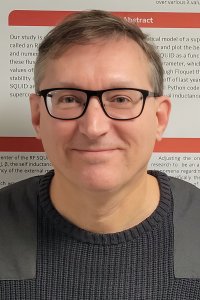
Collin Leslie Broholm is the Gerhard H. Dieke Professor in the Department of Physics and Astronomy at Johns Hopkins University . He earned his PhD from the University of Copenhagen in 1988 and joined Johns Hopkins in 1990 after postdoctoral work at AT&T Bell Laboratories. Affiliated with Oak Ridge National Laboratory as joint faculty Director of the Johns Hopkins Institute for Quantum Matter His research focuses on experimental condensed matter physics , particularly anomalous magnetism, superconductivity, and quantum effects in frustrated or low-dimensional materials. He employs neutron scattering as his primary tool and has contributed to spectrometer development at the NIST Center for Neutron Research. Recent publications highlight investigations into quantum spin liquids, Kagome and honeycomb magnets, topological superconductivity, and frustrated systems. Key themes include critical phenomena, spin-orbital coupling, and disorder effects. Presidential Faculty Fellowship (1994) Fellow of the American Physical Society (2004) Sustained Research Award, Neutron Scattering Society of America (2010) Moore Experimental Investigator in Quantum Materials (2014) Dr. Broholm has served on instrumentation committees for national neutron scattering facilities and developed ultra-high field magnets for spectroscopic studies.
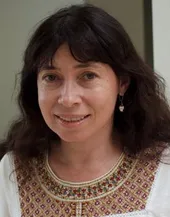
Natalia Perkins is a Professor at the School of Physics and Astronomy , University of Minnesota , and a Hans Fischer Senior Fellow at the Technical University of Munich Institute for Advanced Study (TUM-IAS) since 2022. Her work bridges fundamental theoretical condensed matter physics and quantum magnetism. Her research explores unconventional quantum phases in correlated electron systems , focusing on quantum spin liquids , topological transitions , and spin-orbit coupling in geometrically frustrated materials. She develops microscopic models to explain phenomena in Kitaev spin liquids and iridates . NSF CAREER Award (DMR-1929311) U.S. Department of Energy Grant (DE-SC0018056) Fellow of the American Physical Society Her recent work with colleagues like Prof. Johannes Knolle examines fractionalized excitations , vacancy-induced modes , and chiral quantum orders in Kitaev-Γ and Yao-Lee models . She contributes to understanding topological materials and strongly correlated quantum systems , with applications in next-generation quantum technologies.
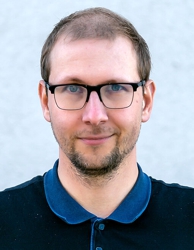
Robert Streubel is an Assistant Professor in the Department of Physics and Astronomy at the University of Nebraska-Lincoln. His research focuses on 3D nanomagnetism, leveraging curvature, structural disorder, and spin-orbit coupling to stabilize topological spin textures for applications in quantum microelectronics, soft robotics, and neuromorphic computing. Academic appointments: UNL Department of Physics and Astronomy (2021–present) Editorial roles: IEEE Transactions on Magnetics (2025–present) Funding: NSF DMR (2022), UNL Layman Seed Grant (2021), Nebraska EPSCoR FIRST Award (2021) Research Interests : Streubel's group investigates curvature-driven magnetism, short-range order in amorphous systems, and ferromagnetic liquids. Key subfields include chiral spin textures (skyrmions, hopfions), dipolar-coupled macrospins, and vector exchange interactions in heterogeneous media. His work bridges synthesis, characterization, and theory, with a focus on quantum materials and energy applications. Recent Publications highlight trends in 3D magnetic nanostructures (2025), ferromagnetic liquid propulsion (2024), and topological order in amorphous films (2021). The group employs advanced techniques like x-ray ptychography, Lorentz microscopy, and magneto-optical Kerr effect magnetometry. Scientific Recognition : Emerging Investigator, Nanoscale (2022) Nebraska EPSCoR FIRST Award (2021) IEEE Transactions on Magnetics Editorial Board (2025) Outreach & Education : Streubel leads the START SMART program (2023–present), integrating physics and art for high school engagement. He oversees graduate and undergraduate researchers in projects involving molecular magnets, magnetic resonators, and spin-crossover materials. His group collaborates extensively with national labs and universities on quantum materials.
Brad Trees is a Professor and Chair of the Department of Physics & Astronomy at Ohio Wesleyan University , where he has taught since 1997. He holds a B.A. from Ohio Wesleyan and M.S./Ph.D. from The Ohio State University, and serves as Pre-Engineering Program Director. Richardson-Linebaugh Professor Department Chair NSF-REU Program Administrator Research Focus : Theoretical condensed matter physics with emphasis on Josephson junction arrays and synchronization of coupled oscillators. His work spans quantum dynamics, phase locking, and nonlinear system behavior, revealing fundamental insights into superconducting devices and synchronization mechanisms. Condensed matter theory Josephson junction dynamics Quantum synchronization Nonlinear oscillator networks Superconducting circuit modeling Scientific Awards : 2022 Libuse L. Reed Endowed Professorship 2017 Bishop Herbert Welch Meritorious Teaching Award 2003 Sherwood Dodge Shankland Award Educational Impact : Recognized for innovative teaching methods, Dr. Trees has secured significant NSF funding for undergraduate research through the REU program, mentoring students from diverse backgrounds while maintaining active research collaborations with institutions like Carnegie Mellon University.
Professor Abbie McLaughlin is a Personal Chair in Inorganic Chemistry at the University of Aberdeen, affiliated with the School of Natural and Computing Sciences and Head of the Department of Chemistry. Her research focuses on the synthesis and characterization of transition metal oxides with exceptional electrical and magnetic properties, particularly for applications in solid oxide fuel cells and advanced electronic materials. She holds a BSc from Durham and a PhD from Cambridge, and her research expertise spans solid-state synthesis, Rietveld refinement, impedance spectroscopy, and magnetic characterization. She utilizes large-scale facilities such as ISIS, Diamond, ILL, and ESRF for neutron and synchrotron studies. Her research interests include oxide ion and mixed proton-oxide ion conductors, magnetic materials, colossal magnetoresistance in oxypnictides, and structure-property relationships in perovskite derivatives. She has published around 80 papers and secured over £2.5M in funding from EPSRC, Leverhulme Trust, Royal Society, and others. The recent publications highlight trends in designing novel electrolytes with high ionic conductivity, understanding conduction mechanisms in disordered perovskites, and exploring exotic electronic and magnetic phenomena such as phase separation and insulator-insulator transitions in quantum materials. Scientific Awards: University of Aberdeen Excellence Award - Outstanding Research Awards: Individuals Further Stage of Career – STEM (2021) Leverhulme Trust research fellowship (2020-2021) Leverhulme Trust early career fellowship (2006-2009) Royal Society of Edinburgh, SEELLD personal research fellowship (2003-2006) She actively supervises PhD students and teaches undergraduate courses in chemistry, including solid-state chemistry, transition metals, and superconductors. She has served on EPSRC panels and facility access committees for ISIS, ILL, and Oak Ridge. Her research group operates advanced instrumentation for synthesis and characterization, including high-temperature furnaces, X-ray and neutron diffractometers, and impedance analysis systems. Her group investigates oxide ion conductors like Ba 3 M'M''O 8.5 and Ba 7 Nb 4 MoO 20 , mixed conductors, and magnetic oxypnictides such as Sr 2 Mn 2 CrAs 2 O 2 , aiming to discover new materials with tunable functionalities for energy and electronic applications.
Murilo da Silva Baptista is a Reader at the Institute for Complex Systems and Mathematical Biology , within the School of Natural and Computing Sciences at the University of Aberdeen . He has been with the university since 2009, initially as a Senior Lecturer and promoted to Reader in 2014. He is actively accepting PhD students in Physics, Mathematics, and Engineering, and his research is internationally recognized in the fields of complex systems and chaos theory. His research focuses on understanding the relationship between function—such as information processing, collective behavior, and synchronization—and structure in large networked complex systems. He applies analytical methods, data science, nonlinear time series analysis, and machine learning to model systems in neuroscience, smart engineering, and Earth sustainability. He is a leading scientist in chaos-based communication, demonstrating how chaotic signals can enable smart and secure wireless and underwater communication systems. His work includes theoretical developments in phase definition in chaotic oscillators, chaos-based cryptography using Poincaré return times, and the discovery of phenomena like Collective Almost Synchronization, which enhances machine learning for EEG signal prediction. His recent publications (2023–2025) span a wide range of applications, including chaotic image and 3D model encryption, UAV surveillance using chaotic paths, causal feature selection in health systems, modeling neurological disorders, and socio-environmental analysis in Brazil. These works reflect a strong trend toward applying nonlinear dynamics and network science to real-world engineering, biomedical, and societal challenges. Scientific Contributions and Recognition: Proved a conjecture on the analytical calculation of Poincaré first return times using unstable periodic orbits. Contributed foundational work to chaos-based cryptography. Proposed a formula linking mutual information to Lyapunov exponents, supporting the Infomax theory of brain evolution. Discovered the phenomenon of Collective Almost Synchronization in complex networks. Demonstrated that causality is a space-time phenomenon, not purely temporal. Advising and Research Support: He is currently supervising PhD students in Physics, Maths, and Engineering, indicating active mentorship. His research is supported by analytical developments and data-driven modeling. He leads work on optimal wireless chaos communication, synapse modeling, brain network changes post-surgery, and socio-economic causality in Brazil. His collaborations span institutions in the USA, Brazil, Germany, and Portugal. Labs and Research Groups: He is affiliated with the Institute for Complex Systems and Mathematical Biology at Aberdeen, a hub for interdisciplinary research in nonlinear dynamics, network theory, and their applications across physical, biological, and social systems.
Jace Cruddas is a Research Fellow in the Department of Psychology at Monash University, Australia. His work focuses on spin crossover materials, exploring phenomena such as multistep phase transitions, spin ice behavior, and light-induced spin-state trapping. He employs elastic and Ising models to analyze material properties, particularly in low-dimensional frameworks. Research interests include condensed matter physics, materials science, and statistical mechanics, with emphasis on how external stimuli (light, temperature, pressure) influence spin dynamics. His studies bridge molecular-level mechanisms with collective phenomena, such as Coulomb phases and emergent thermodynamic behaviors. Key contributions include elucidating dimensional reduction effects on spin state ordering, developing circuit-theoretic models for bi-SQUID systems, and investigating Hofmann-like frameworks for tunable spin crossover. Publications highlight advancements in understanding hidden Devil’s staircase transitions and temperature-tunable ice rules in pyrochlore lattices. No scientific awards or grants are listed in the provided text. His research demonstrates a focus on experimental-theoretical collaborations to address challenges in next-generation functional materials.
Harry Lane is a Dame Kathleen Ollerenshaw Fellow in the Theoretical Physics Group at the University of Manchester, actively engaged in research at the theory-experiment interface with a focus on spin systems and neutron scattering methodologies. He participates in the University of Manchester at Harwell (UoMaH) initiative strengthening university-facility partnerships and currently accepts PhD students. His academic qualifications include: Doctor of Philosophy from the University of Edinburgh (awarded June 15, 2022) Master of Science in Theoretical Physics from University College London (awarded July 1, 2018) Dr. Lane's research investigates exotic order and dynamics in spin systems, particularly examining spin-orbital-lattice coupling in magnetic insulators. His work develops theoretical frameworks for neutron scattering experiments, advancing understanding of quantum spin liquids , magnetoelastic phenomena , and phase transitions in correlated materials. Expertise spans condensed matter theory, spin dynamics, and quantum computing physics applications. His 2025 publications reveal strong emphasis on iron-based chalcogenides (e.g. $$ \text{FePSe}_3 $$) and computational tool development, bridging theoretical models with experimental neutron data. Key themes include thermal-quantum mimicry effects, magnetoelastic coupling mechanisms, and cluster excitation dynamics across multiple high-impact journals. Recognized through the Dame Kathleen Ollerenshaw Fellowship, his work receives institutional support via the UoMaH project. Research impact is evidenced by coverage in 3 news outlets, 36+ X posts, and 7 Mendeley readers. As a supervisor, Dr. Lane mentors PhD students while collaborating internationally through the UoMaH network. His projects demonstrate significant cross-institutional engagement with national facilities, particularly in tomography and nanoparticle research.
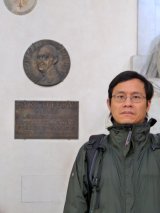
Yoichiro Tsurimaki is an Assistant Professor in the Department of Mechanical Engineering at Michigan State University's College of Engineering. His research focuses on nanophotonics, thermal radiation, and topological materials, with emphasis on nonreciprocal phenomena, energy conversion, and advanced material engineering. He explores topics such as radiative heat transfer, metamaterials, and optoelectronic systems through experimental and theoretical approaches. Key research areas include: nanophotonic heat exchangers, directional thermal emitters, and anti-fogging materials. His work integrates condensed matter physics with applied engineering solutions, addressing challenges in energy efficiency and material innovation. Recent contributions include studies on Weyl semimetals, Casimir forces in nonreciprocal systems, and flexo-electric energy generators. Tsurimaki's interdisciplinary approach bridges quantum phenomena and practical applications, with publications in high-impact journals and patent filings for innovative technologies.
Rosa Tamara Branca is a Professor at the University of North Carolina at Chapel Hill, leading the Branca Lab. Her research focuses on advancing nuclear spin dynamics and magnetic resonance imaging (MRI) techniques to enhance diagnostic capabilities. She specializes in hyperpolarization methods, low-field MRI systems, and the development of innovative imaging tools for clinical applications. The lab is located in Marsico Hall within the Biomedical Research Imaging Center. Her work integrates physics, engineering, and medicine to improve MRI sensitivity and specificity, particularly through reducing reliance on bulky superconducting magnets. Key areas include xenon-129 MRI, brown adipose tissue imaging, and contrast agent development. She actively seeks students interested in spin physics and biomedical engineering. Publications highlight contributions to ultra-low field NMR, hyperpolarized gas applications, and thermometry. Research emphasizes translating lab innovations into clinical tools for metabolic disorder diagnosis and imaging precision. The lab’s projects often involve interdisciplinary collaborations and open-source hardware development for cost-effective medical solutions.
Dr. Stanislau Piatrusha is a Research Fellow at the Chair of Experimental Physics III, University of Würzburg. He specializes in quantum transport phenomena, topological materials, and superconductivity. His work focuses on experimental investigations of HgTe quantum wells, Josephson junctions, and hybrid superconductor-semiconductor systems. He explores topics such as topological protection mechanisms, proximity effects, and nanoscale thermal management. Research interests include: Topological Insulators and Superconductors Quantum Phase Transitions Low-Temperature Electronics Shot Noise Spectroscopy Proximity-Induced Phenomena His recent articles highlight advancements in understanding Josephson junction dynamics, thermal relaxation in disordered systems, and topological edge state protection. Ongoing projects involve nanoscale thermal biasing strategies and electronic state mapping via noise analysis. Contact: stanislau.piatrusha@physik.uni-wuerzburg.de | Institute for Topological Insulators, ITI Building 02.013, University of Würzburg
Leonid Bovkun is a Research Fellow in the Department of Technical Physics at the University of Würzburg. His research focuses on quantum materials, topological insulators, and semiconductor physics, with a particular emphasis on HgTe-based quantum wells. He has contributed to seminal studies on band structure engineering, magnetospectroscopy, and the development of computational tools like kdotpy for simulating semiconductor properties. Research Interests: Dr. Bovkun’s work explores topological phase transitions in quantum wells, cyclotron resonance phenomena, and the interplay between symmetry breaking and electronic properties. His research bridges experimental magnetospectroscopy with theoretical modeling, addressing questions in condensed matter physics and optoelectronics. Key Contributions: His recent work (2025) includes mapping topological phase diagrams of mercury cadmium telluride systems and developing the kdotpy code for band structure simulations. He has also investigated optically induced effects in quantum wells and the role of electron-electron interactions under high magnetic fields. Labs/Teams: Bovkun is part of the Technical Physics research group at Würzburg, collaborating on projects involving quantum well heterostructures and terahertz spectroscopy. His work aligns with institutional initiatives in quantum materials and topological insulators.
Andrew Ho is a Senior Lecturer in the Department of Physics at Royal Holloway, University of London, with a focus on theoretical quantum many-body physics. He holds a PhD from Rutgers University and has previously held an EPSRC Advanced Research Fellowship (2006-2011). His research spans condensed matter theory, ultracold atomic gases, and helium thin film modeling. His research interests center on strong electronic correlations and non-Fermi liquid behavior in metals, motivated by cuprate superconductors and heavy fermion materials. He investigates quantum mixtures in optical lattices, dimensionality effects in cold atoms, and non-equilibrium dynamics in these systems. His work leverages cold atom experiments to explore tunable interactions, SU(N) symmetry, and novel superfluid states. Recent publications highlight his studies on supersolid thermodynamics (2024), spatially modulated magnetic states in YbRh2Si2 (2023), and intertwined superfluid-density wave orders in p-orbital Bose condensates (2019). He has collaborated extensively with experimental groups led by Professors Saunders and Cowan on helium thin film systems. Scientific awards include the EPSRC Advanced Research Fellowship and Leverhulme Trust funding. His teaching contributions encompass undergraduate Quantum Theory (PH3210) and postgraduate Strongly Correlated Systems courses. No student names are listed in the provided materials.
Peter Bose is a researcher at the Institute of Physics, Faculty of Natural Sciences II at Martin Luther University Halle-Wittenberg, specializing in quantum theory of solids with emphasis on electronic transport phenomena in tunnel junctions. His research expertise includes: Solid-State and Quantum Physics Nanoscale Electronic Transport Tunnel Magnetoresistance Effects Computational Methods in Condensed Matter Interface Phenomena in Magnetic Systems Dr. Bose employs advanced computational techniques based on the Landauer-Büttiker formalism and multiple scattering theory to investigate quantum transport properties. His work demonstrates how atomic-scale interface structures critically influence electronic behavior in planar tunnel junctions, with significant implications for spintronic device design. His research has revealed substantial reductions in tunnel magnetoresistance ratios due to interfacial oxygen contamination and explored potential tuning mechanisms through magnetic interlayers. These findings contribute to the fundamental understanding of quantum transport in magnetic multilayer systems.
Vladislav Kataev is a Senior Scientist at the Leibniz Institute for Solid State and Materials Research Dresden (IFW Dresden). He previously held positions at the Kazan Physical Technical Institute (1979–2023) and has been a visiting professor at Tohoku University (2014) and Kobe University (2019). His research focuses on strong electronic correlations in solids , quantum spin systems , and magnetic resonance in van der Waals materials . Education: Diploma (1979), PhD (1988), and DSc (1995) in Physics from Kazan State University. Appointments: Senior Scientist at IFW Dresden (2003–2023, Group Leader EPR), Post-Doc/Visiting Scientist at University of Cologne (1990–1999), Research Associate (2001–2003). His work spans magnetic resonance spectroscopy , superconducting spin valves , and topological magnetic materials . Recent studies include Fe4GeTe2 and Cr4PtGa17 for quantum applications. Articles highlight spin dynamics , unconventional metallic states , and molecular magnetism .