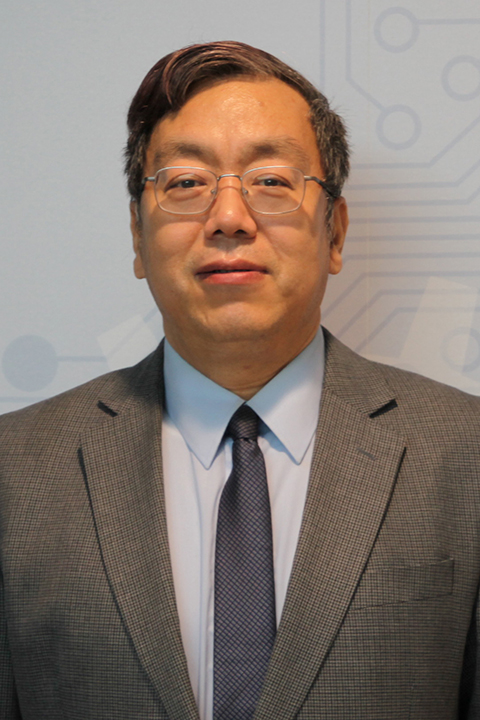
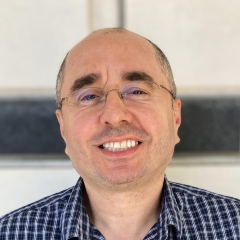
Rémi Dingreville is an Adjunct Assistant Professor at the Woodruff School of Mechanical Engineering, Georgia Institute of Technology, and is based at Sandia National Laboratories. His research focuses on the mechanical behavior and aging of materials under extreme environments, including irradiation and high strain rates. He specializes in computational materials science, combining molecular dynamics, cluster dynamics, and phase-field methods to study defect mechanisms and interface engineering. Education: Ph.D. in Mechanical Engineering (Georgia Tech, 2007), M.S. in Materials Science (Université de Rennes, 2001), and B.S. in Mechanical Engineering (École Nationale Supérieure des Techniques Avancées, 2001). Research emphasizes designing materials with enhanced performance through interface engineering, particularly in nanocrystalline systems and advanced alloys. Key areas include radiation damage, hydrogen effects, and materials aging under extreme conditions. Distinctions: International visiting scholar fellowships (CNRS, 2017 and 2015) Sandia SPOT Awards (2017, 2009) ASME and TMS awards for leadership and innovation Advising/Grants: Collaborates on interdisciplinary projects at Sandia, focusing on materials for energy and defense applications. Extensive grants include DOE and DOD funding (details not explicitly listed). Active in developing computational models integrated with experimental data, such as the X-LPR fracture criterion and multiscale simulations of radiation effects. Collaborates with national labs and academic institutions globally.
Jeff Ma is an Associate Professor of Mechanical Engineering at Saint Louis University's School of Science and Engineering, Department of Aerospace and Mechanical Engineering. He teaches core Mechanical Engineering courses including Computer Aided Engineering, Machine Design, Materials Science, Manufacturing Processes, Principles of Mechatronics, Engineering Fracture Mechanics, Theories of Plasticity, Finite Element Analysis of Composite Materials with Abaqus, Advanced Manufacturing Technology, and Finite Element Method I and II. Ph.D. in Computational Solid Mechanics, Kansas State University M.Sc. in Mechanical Manufacturing and Automation, Beijing Institute of Technology B.Sc. in Mechanical Design and Manufacturing, Beijing Institute of Technology Dr. Ma's primary research focuses on computational solid mechanics (including Meshless method, Finite Element Method, and Peridynamics), multi-scale modeling of manufacturing processes, and advanced materials processing. His work spans from theoretical computational mechanics to practical applications in machining difficult-to-machine materials like titanium alloys, structural ceramics, superalloys, composites, and biomaterials. He has developed significant expertise in laser-assisted machining, laser peening, and the application of machine learning/AI in manufacturing processes. His research bridges the gap between computational modeling and experimental validation, with strong emphasis on industrial applications. Recent publications reveal a trend toward integrating computational mechanics with emerging technologies. There's a clear focus on 3D printed composites manufacturing and post-processing, vibration-assisted nano machining techniques, and the coupling of different numerical methods (particularly peridynamics with FEM). His work increasingly incorporates machine learning for quality control and process optimization, reflecting the growing trend of Industry 4.0 in manufacturing research. 2022 NAMRC Outstanding Paper Award 2019 ASME Reviewers of the Year Award Saint Louis University Parks College Outstanding Graduate Faculty Award (2014) National Science Foundation (NSF) CMMI Award (2016) President's Research Fund Award, SLU (2012) Dr. Ma serves as Faculty Advisor for the ASME SLU Student Chapter and has been actively involved in numerous research projects funded by NSF and other agencies. He has mentored students in computational mechanics, advanced manufacturing, and materials research. His service includes reviewing proposals for NSF, NASA, and the Nebraska Transportation Center, as well as manuscript reviews for top journals including Engineering Fracture Mechanics and ASME Journal of Manufacturing Science and Engineering. He also serves as an associate editor for SME Journal of Manufacturing Processes. Dr. Ma directs or is associated with several research laboratories at Saint Louis University, including the Manufacturing System Laboratory with conventional and CNC machine tools, the Mechatronics Laboratory with autonomous mobile robots and PLC systems, and the Laser Peening Laboratory which operates in collaboration with the U.S. Air Force Research Laboratory. These facilities support both educational activities and research projects focused on advanced manufacturing technologies.
Professor Soran Birosca is a faculty member at the University of Portsmouth's Faculty of Technology, leading the Materials Design & Characterisation (MD&C) Research Group within the School of Mechanical and Design Engineering. He holds a PhD from Loughborough University and has held previous roles at Swansea University, the University of Cambridge, and the University of Manchester. His research focuses on advanced manufacturing, materials characterisation, physical metallurgy, and alloy optimization, with expertise in microstructure/microtexture analysis and synchrotron/neutron diffraction techniques. Education: PhD in Materials Science and Engineering, Loughborough University MSc in Corrosion Science and Engineering, University of Manchester BSc in Mechanical Engineering, Salahaddin University Research Interests: His work emphasizes microstructure-property relationships in alloys for aerospace, automotive, and energy sectors. Key areas include deformation mechanisms, phase transformations, and material processing optimization. Techniques employed include electron microscopy, diffraction-based methods, and in-situ mechanical testing. Recent Research Trends: Recent publications highlight corrosion mechanisms in marine environments, fatigue analysis in titanium alloys, and optimizing magnetic/mechanical properties in electrical steel. His studies often integrate advanced characterization tools to understand microstructural evolution and performance under extreme conditions. Grants & Advising: As a PhD supervisor, Prof. Birosca guides students in materials science and engineering. His grants support research on alloy design, additive manufacturing, and high-temperature material behavior. Collaborations span academia and industry, focusing on practical applications of materials innovation. Labs & Teams: Leads the MD&C Group, which collaborates with global institutions to advance materials characterization and design. Projects include developing novel alloys and optimizing manufacturing processes for critical infrastructure components.
Siniša Mesarović serves as a Visiting Professor at the Faculty of Engineering, University of Kragujevac, while maintaining his primary academic position at Washington State University's School of Mechanical and Materials Engineering. His research bridges theoretical and computational approaches to complex material behaviors. Education: Graduated from the Faculty of Mechanical Engineering, University of Belgrade Master's degree from Case Western Reserve University, Cleveland, USA PhD from Harvard University, USA Research Focus: Dr. Mesarović specializes in multiscale material modeling, with emphasis on dislocation dynamics in plasticity, granular media mechanics, and phase transformation phenomena. His computational frameworks address contact mechanics challenges and multi-scale material failure analysis, contributing to fundamental understanding of mechanical behavior across atomic to continuum scales. Professional Context: As a visiting academic at Kragujevac, he connects Serbian engineering education with international research networks. The Faculty of Engineering's departments—including Applied Mechanics, Energy Engineering, and Production Engineering—provide context for potential collaborations, though specific departmental affiliation isn't documented. No information appears regarding student supervision, research funding, or laboratory leadership in the source material.
Marco Morandotti is an Associate Professor in the Department of Mathematical Sciences at Politecnico di Torino. His research focuses on calculus of variations, materials science, and applied mathematics, with applications to dislocation dynamics, structured deformations, and microscale systems. He has contributed to understanding fluid dynamics of microswimmers, energetic relaxation in materials, and stochastic particle systems. Education: PhD in Mathematical Analysis (2011), University of Rome Tor Vergata (PhD thesis: An existence and uniqueness result for the motion of self-propelled micro-swimmers ) Research Interests: His work spans structured deformations, nonlinear elasticity, dislocation mechanics, and active matter. Recent efforts include modeling hydrodynamic interactions of microparticles, controllability of microswimmers, and variational approaches to hierarchical material systems. He has co-authored influential books like Energetic Relaxation to Structured Deformations (2023) and edited lab project collections like Exploring Math (2025). Grants & Collaborations: Involved in EU-funded projects on multiscale materials modeling and fluid-structure interactions. Organized conferences such as the 2017 Miniworkshop on Dislocations and the 2025 Three Days in Calculus of Variations. Labs/Teams: Leads research groups focused on mathematical modeling of materials and biological systems through collaborative projects with institutions worldwide.
Dr. Ganesh Balasubramanian is the Lambrakis Endowed Professor and Chair of the Department of Mechanical and Industrial Engineering at the University of New Haven's Tagliatela College of Engineering. He holds a B.E. in Mechanical Engineering from Jadavpur University (2007) and a Ph.D. in Engineering Mechanics from Virginia Tech (2011). Prior to his current role, he served on the faculties of Iowa State University and Lehigh University. His research focuses on advanced materials , predictive manufacturing , and computational materials science , with emphasis on high-entropy alloys, machine learning-driven material discovery, and additive manufacturing. He has secured significant funding through the NSF CAREER Grant and other federal grants (DOD, DOE). His work spans multi-principal element alloys , thermal transport , and materials under extreme conditions . Key achievements include pioneering studies on hydrogen storage materials, surface engineering via predictive laser deposition, and optimizing mechanical properties of refractory alloys. His interdisciplinary approach bridges computational modeling and experimental validation, addressing challenges in energy storage, corrosion resistance, and nanotechnology. Awards include multiple teaching and mentorship recognitions for his contributions to student development. His lab actively collaborates with industry partners to advance manufacturing technologies and sustainable materials solutions.
Dr. Orçun Koray Çelebi is an Assistant Professor in the Department of Mechanical Engineering at Bilkent University, Ankara. He leads the Atomistic Mechanics & Materials Modeling Laboratory (A3ML), which focuses on computational and theoretical modeling of metallic materials' deformation mechanics using quantum mechanics-based methods, molecular dynamics, and machine learning. His academic journey includes a B.S. from Boğaziçi University (2018) and a Ph.D. from the University of Illinois Urbana-Champaign (2024), followed by a postdoctoral position there before joining Bilkent. Research interests center on multiscale modeling of plastic deformation in metals, alloys, and high-entropy alloys, with a focus on crystal defects (point, line, interface defects) and their role in material behavior. Techniques employed include Density Functional Theory, Molecular Dynamics, and machine learning approaches. His work aims to develop predictive models for high-performance material design. Recent publications emphasize dislocation dynamics, CRSS prediction, and machine learning applications in materials science. He actively contributes to academic networks like CPERN but has no listed scientific awards. The A3ML lab collaborates on projects across scales, integrating quantum-to-mesoscale modeling for practical material solutions in aerospace, automotive, and defense sectors.
John V. Winters is Professor of Economics at Iowa State University, serving as Graduate Placement Officer and Research Fellow at both the Institute of Labor Economics (IZA) and Global Labor Organization (GLO). His research examines labor market dynamics across geographic regions. His expertise spans regional wage differentials, college graduate migration, education policy impacts, teacher labor markets, self-employment outcomes, and human capital effects on regional economies. Current investigations include fracking boom impacts, STEM labor markets, and pandemic employment effects. Publications demonstrate consistent focus on regional disparities in employment, migration patterns, and education outcomes. Recent work examines COVID-19 impacts across geographic areas, energy boom effects on local labor, and minimum wage policy variations. No scientific awards are mentioned. As Graduate Placement Officer, he oversees student career outcomes. His research receives funding for projects on immigrant self-employment, regional economic shocks, and education policy evaluation. He leads research initiatives on regional economic disparities through IZA and GLO collaborations, contributing to policy discussions on workforce development and regional competitiveness.
Dr. Sang M. Han is a Regents' Professor in the Departments of Chemical & Biological Engineering and Electrical & Computer Engineering at the University of New Mexico (UNM). He holds a PhD from UC Santa Barbara and a BS (with honors) from UC Berkeley. His research focuses on semiconductor materials engineering, nanofluidic systems, and photovoltaic integration, with over 50 peer-reviewed publications and 10 patents. Education : PhD, Chemical Engineering, UC Santa Barbara BS, Chemical Engineering with Honors, UC Berkeley Research Interests : Dr. Han’s work spans: Selective growth of Ge quantum structures on Si III-V integration on engineered Ge/Si virtual substrates Hybrid micro/nanofluidic systems for bioseparation Semiconductor surface modification Nanocrystal synthesis for optical/biological applications Publications & Patents : Over 50 journal articles and 10 UNM-affiliated patents, with recent work on carbon-nanotube-reinforced composites and bioinspired optical materials. Awards : NSF Career Award (2001) UNM Junior Faculty Research Excellence Award (2005) UNM Senior Teaching Excellence Award (2012) Multple UNM Creative Awards (2009-2014) Advising & Labs : Leads research groups focused on semiconductor heteroepitaxy and nanofluidic systems. Active in developing crack-tolerant photovoltaic gridlines and biomimetic optical coatings.
Dr. Arda Genc is the Microscopy and Microanalysis Facility Supervisor at the University of California, Santa Barbara (UCSB), affiliated with the Department of Materials within the College of Engineering. His research focuses on advanced microscopy techniques, nanomaterials characterization, and energy storage materials. He holds a Researcher academic rank and has contributed extensively to the fields of materials science and nanotechnology through his work on electron microscopy, machine learning applications in materials analysis, and catalytic systems. Key research interests include high-throughput analysis of nanomaterials using AI-driven methods, defect engineering in alloys, and thin film characterization. His work bridges computational approaches with experimental microscopy, addressing challenges in energy storage and catalytic efficiency. Dr. Genc’s articles highlight advancements in 4D STEM analysis, superconducting thin films, and battery material degradation mechanisms. His studies often integrate machine learning with electron microscopy to enhance material characterization speed and accuracy. He has collaborated on projects involving semiconductor defect dynamics, CO2 hydrogenation catalysts, and silicon anode degradation in lithium-ion batteries. As facility supervisor, he oversees cutting-edge microscopy resources supporting UCSB’s research community. His contributions span over 50 peer-reviewed publications, emphasizing interdisciplinary approaches to materials innovation.
Jesper Byggmästar is an Academy Postdoctoral Researcher at the University of Helsinki, affiliated with the Department of Physics under the Faculty of Science. His research focuses on computational materials physics, particularly radiation damage mechanisms, interatomic potential development, and the behavior of advanced materials in extreme environments. His work spans topics such as machine learning-driven simulations of materials like tungsten, gallium oxide, and high-entropy alloys, with applications in nuclear fusion and aerospace engineering. Key contributions include studies on radiation resistance, defect evolution, and interatomic potential optimization for metallic systems. Byggmästar leads the OCRAMLIP project (2023–2027), which explores refractory alloys using machine learning, and participates in the Finnish Center for Artificial Intelligence (FCAI) flagship program. His research emphasizes bridging atomic-scale simulations with macroscopic material behavior, addressing challenges in fusion reactor materials and structural integrity under irradiation.
Dr. Yuxiang Wu is a Researcher at the Max Planck Institute for Sustainable Materials, Department of Microstructure Physics and Alloy Design. His research focuses on advanced alloy design, corrosion mechanisms, and material science applications, including artificial intelligence-driven material discovery. He investigates high-performance alloys, corrosion resistance in aluminum and steel systems, and microstructural optimization for enhanced mechanical properties. Key research areas include mechanism-based alloy design, hydrogen embrittlement in alloys, and sustainable material recycling strategies. His work integrates experimental techniques like in-situ TEM/XRD with computational modeling to understand material behavior at atomic and macroscopic scales. Dr. Wu’s publications highlight innovations in advanced high-strength steels, corrosion-resistant alloys, and additive manufacturing composites. His research contributes to both fundamental metallurgical understanding and industrial applications in automotive, aerospace, and infrastructure sectors. He is affiliated with the 'Mechanism-based Alloy Design' research group at the Max Planck Institute, and his work is accessible via Google Scholar, ResearchGate, and ORCID profiles. His lab focuses on bridging computational predictions with experimental validation for next-generation materials.
P.Dr. Steffen Brinckmann is affiliated with Forschungszentrum Jülich GmbH, leading research in structure and nanomechanics of materials. Formerly, he held roles as Group Leader at Max-Planck Institut für Eisenforschung and Junior Group Leader at Ruhr University Bochum's ICAMS. His career includes postdoctoral research at Caltech and Purdue University. He specializes in experimental and numerical studies of metal degradation, focusing on nanotribology, multiscale modeling (dislocation/molecular dynamics), and fracture mechanics. Education: PhD in numerical solid mechanics from University of Groningen (2005), with prior studies at TU Hanover and TU Delft. Extensive postdoctoral training in the US (Purdue, Caltech). Research interests span tribology-induced microstructure evolution, concurrent multiscale modeling, micromechanical experiments, and fatigue simulations. Expertise includes advanced data processing (Python/Matlab) and FEM/multiscale numerical methods. His interdisciplinary work extends to plasma disinfection (biology) and urban economics studies. Key projects include the Sandia Fracture Challenge (blind simulation success), AtoDis multiscale model development, and powder compaction studies using micro-CT. Active in international collaborations (e.g., Sandia National Labs, Boise State University).
Dr. Steffen Brinckmann is a researcher in materials science, specializing in metal degradation, nanotribology, and fracture mechanics. He holds a PhD from the University of Delft and the University of Groningen, Netherlands, and completed postdoctoral research at Purdue University and the California Institute of Technology. His work bridges experimental and numerical methods, focusing on multiscale modeling (e.g., the AtoDis model), micrometer-scale deformation studies, and powder compaction. He collaborates internationally with institutions like Sandia National Labs and Boise State University. Education: PhD in Mechanical Engineering/Applied Physics (Delft/Groningen), postdoctoral studies at Purdue University (Mechanical Engineering) and Caltech (Materials Science). Research interests include tribology-induced wear mechanisms, fracture mechanics at micro/nanoscales, and interdisciplinary projects in plasma disinfection (biology) and urban economics. His numerical expertise spans Finite Element Methods, Discrete Dislocation Dynamics, and Python-based data analysis. He has led the Sandia Fracture Challenge project, outperforming international teams in macroscopic fracture prediction. Labs/teams: Department of Structure and Nano-/Micromechanics at Max Planck Institute, Materials Science Department at Ruhr-University Bochum (RUB).
Dr. Baptiste Bienvenu is a Researcher at the Max Planck Institute for Sustainable Materials, affiliated with the Computational Materials Design department. His work focuses on the intersection of materials science, solid-state physics, and computational modeling, particularly in understanding deformation mechanisms in body-centered cubic (BCC) metals like chromium and iron. He investigates magnetic effects on mechanical behavior, interfacial phenomena in materials, and sustainable synthesis methods for advanced alloys. Research interests include: Dislocation dynamics and plasticity modeling in BCC metals Magnetism-mechanics coupling in transition metals Ab initio simulations for phase stability and electronic structure Interface engineering in 2D heterostructures Oxidation mechanisms and corrosion science His recent publications (2020–2025) emphasize atomic-scale modeling of slip systems, magnetic excitations influencing yield strength, and the electronic properties of layered materials. Research highlights include developing novel computational potentials for iron oxides and uncovering anomalous plasticity behaviors in BCC alloys. No scientific awards or grants are explicitly listed in the profile. He is based at the Institute's Düsseldorf campus, collaborating with groups in microstructure physics and sustainable materials synthesis.