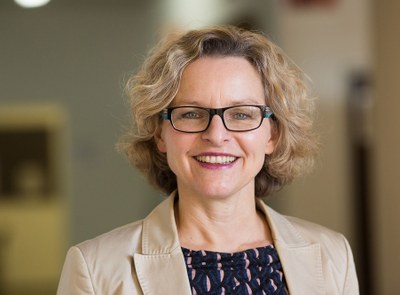
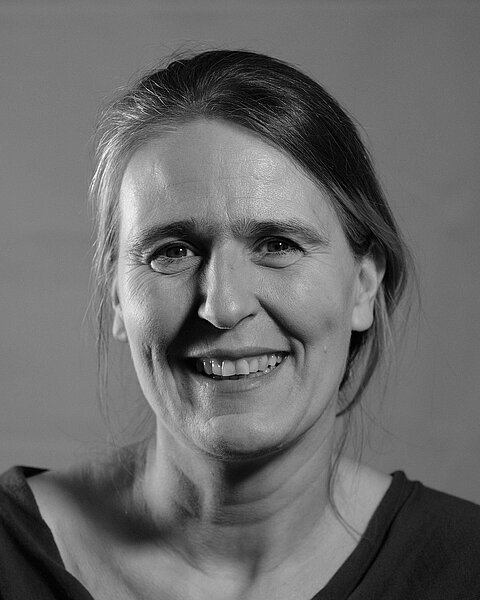
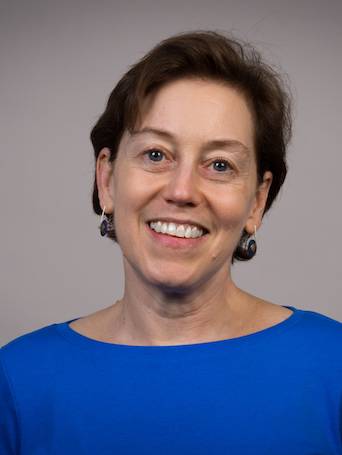
Sigrid Ruby , Professor of Art History at the Justus Liebig University of Giessen , specializes in French Renaissance court art, post-1945 transatlantic art relations, and gendered visual culture. Her work bridges portraiture, ecological art, and security discourses. Born in 1968, she studied in Bonn, Frankfurt, and Cambridge (MA). Doctorate (1998) and Habilitation (2007) at Bonn University. Research assistant at Giessen (1998-2014) before ascending to professorships at Munich, Marburg, Saarland, Vienna, and Giessen (since 2016). Research Interests include: French 16th-century court art and portraiture Gender dynamics in early modern domestic spaces Security as a cultural construct in art Ecological themes in contemporary art Historical intersections of architecture and modernity Publication Trends reflect interdisciplinary work on household security, gendered spatial norms, and Surrealism's exile trajectories. Her recent articles explore domestic spaces, dream imagery, and Renaissance political symbols. Projects : DFG-funded project on Surrealism revision through Kay Sage Subproject C03 of TRR138: 'The House as Security and Gender (In)Security' Exhibition 'Made in Hesse' on industrial heritage narratives Collaborative research on Hugo von Ritgen's architectural legacy Affiliations : Editorial roles at Kunstform and sehepunkte Member of the Hessian Historical Commission , GCSC, and ZMI directorates Advisory Board for Giessen's Art in Public Spaces
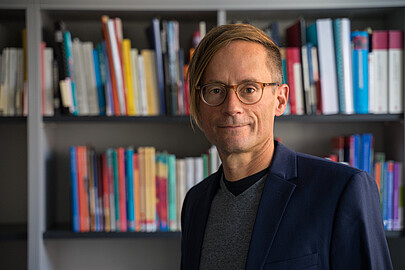
Prof. Dr. Meik Zülsdorf-Kersting is a W2 Professor for History Didactics at the Leibniz University Hannover since 2019. He has held academic positions at the University of Osnabrück (2011–2019) and the University of Teacher Education Northwestern Switzerland (2011). His research focuses on historical teaching and learning , empirical history education , and interdisciplinary didactics , particularly integrating mathematics didactics. PhD in History Didactics (University of Dortmund, 2007) Teaching Certification in History, Protestant Religious Education, and German Studies His recent publications analyze historical competence , metacognitive strategies , and curriculum evaluation . Collaborative projects include studies on interdisciplinary teaching quality (2018–2020) and video-based assessment tools (DFG-funded, 2015–2017). He co-edits the Researching History Education book series and contributes to debates on collective memory , genocide education , and political identity in history classrooms.
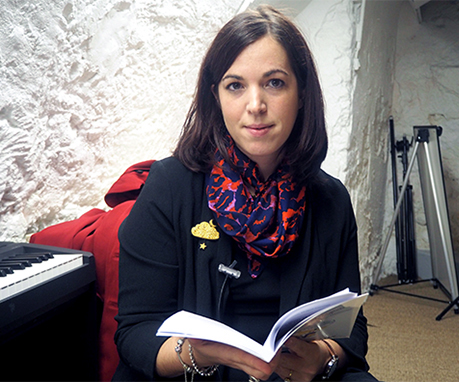
Clémentine Hugol-Gential is an Associate Professor at the University of Burgundy's Faculty of Languages and Communication, Department of Applied Foreign Languages, where she has served as a teacher-researcher since 2014. Her work bridges communication studies with food science, focusing on the intersection of media, health, and dietary practices. She directs the Junior Agence Masci and serves as the Vitagora competitiveness cluster liaison for her laboratory. PhD in Linguistics from Université Lumière Lyon 2 (2011) Diplôme Universitaire GSI from Université Claude Bernard Lyon 1 (2011) Master's in Mediations: Interactions, Semiotics and Multimedia from Université Lumière Lyon 2 (2008) Hugol-Gential's research explores how communication shapes eating behaviors across multiple contexts, from social media's impact on body image to hospital nutrition practices and sustainable food systems. Her work combines qualitative analysis of discursive practices with practical applications in public health communication, particularly regarding salt reduction campaigns and cancer nutrition. She examines how food becomes politicized through media coverage and institutional policies, with special attention to gender dimensions in food representation. Her publication trends reveal growing focus on digital food culture (particularly Instagram's influence on dietary standards), sustainable food transitions, and gendered aspects of food communication. Recent work increasingly addresses social media's role in shaping eating disorders among adolescents and the development of therapeutic culinary workshops for vulnerable populations. Hugol-Gential actively engages in knowledge transfer through numerous conference presentations (over 100 listed), public outreach activities including radio appearances, and collaborations with food industry partners like SEB and Vitagora. She has led research projects such as 'Alimentation et Lutte Contre les Inégalités en Milieu de Santé' funded by the French Ministry of Agriculture. Her teaching spans communication theory, digital media, sensory communication, and food-related branding strategies across undergraduate and graduate levels. She has developed specialized courses on food communication and sensory marketing that connect academic theory with industry applications through her Junior Agency.
Glen Rangwala serves as an Associate Professor in the Department of Politics and International Studies (POLIS) at the University of Cambridge. He holds multiple roles at Trinity College including Fellow, Director of Studies for Politics, Director of Admissions, and Fellow for Ethnic Diversity, demonstrating significant institutional commitment across both departmental and collegiate structures. His research centers on Middle Eastern politics with dual thematic emphases: political argumentation frameworks and the political economy of conflict. This work critically examines how discursive practices interact with economic structures in conflict zones, contributing to broader theoretical understandings of power dynamics in the region. Scientific Awards University of Cambridge Pilkington Prize for teaching Rangwala directs undergraduate academic development as Politics Director of Studies at Trinity College while founding and administering the RA Butler Essay Prize for school students. His external scholarly leadership includes chairing the Fieldwork & Research programme at the British Institute for the Study of Iraq where he also serves as Trustee, facilitating critical research infrastructure for Iraq-focused scholarship. Through his dual institutional roles and leadership in the British Institute for the Study of Iraq, Rangwala maintains active engagement with both academic development initiatives and regional research ecosystems, particularly supporting emerging scholars through structured mentorship and fieldwork opportunities.
Sergej Ivanov is a Senior Lecturer at Linnaeus University, holding dual affiliations with the Faculty of Technology and Faculty of Arts and Humanities . He teaches courses in language acquisition and literacy within preschool teacher training programs and technical communication in technology education, while supervising and assessing student theses across educational levels. His research focuses on criticality practices in educational contexts from primary to tertiary, with specific projects on critical thinking development in six-year-olds (2022-2024) and semantic waves in preschool language use (co-led with Andreas Ebbelind). Since 2020, he has pioneered keylogging methodology in studying digital source-based writing among university students, funded by the Linnaeus Knowledge Environment Education in Change . Recent publications emphasize transnational comparisons of educational policies, digital writing fluency metrics, and criticality instruction strategies across Nordic contexts. His leadership roles include directing the Nordic Research Network for Educational Linguistics and serving as Area Coordinator for Educational Linguistics at AAAL.
Raul Alberto Urbina Fonturbel is a Contracted Professor in the Department of Philology at the University of Burgos, Spain, within the Faculty of Humanities and Communication. He teaches Spanish Language in both the undergraduate program of Spanish: Language and Literature and the Master's program in Teaching Spanish as a Foreign Language. He serves as Director of the International Center for Spanish at the University of Burgos and as Local Responsible for the subject "Castilian Language and Literature" for the Burgos region's university entrance exams (EBAU). Additionally, he coordinates the INFORELE research group (Research and Training Group in Spanish as a Foreign Language). Dr. Urbina Fonturbel earned his PhD from Universidad Autónoma de Madrid with a dissertation titled "Los macroactos literarios de ficción y las relaciones intertextuales diferidas en la constitución de la Literatura a propósito de la literatura medieval" (2003), supervised by Dr. Tomás Albaladejo. His academic journey has established him as a specialist in Spanish language, rhetoric, and discourse analysis with particular expertise in advertising communication. Dr. Urbina Fonturbel's research focuses on the intersection of rhetoric, pragmatics, and discourse analysis applied to advertising communication. His work explores how emotional elements, argumentative strategies, and rhetorical devices function within advertising discourse to create persuasive communication. He has particular expertise in analyzing Spanish-language advertising, examining how brands establish emotional connections with consumers through cultural values and linguistic strategies. His research also extends to digital communication, including social media discourse and non-verbal communication in film. His theoretical framework draws heavily from cultural rhetoric, which allows for comprehensive analysis of persuasive discourse across various contexts. Analysis of his recent publications reveals consistent scholarly productivity with a clear thematic focus on advertising discourse and rhetorical persuasion. His work demonstrates evolution from traditional rhetorical analysis toward contemporary applications in digital environments, including studies on Twitter discourse and pandemic-era advertising. The majority of his publications examine emotional dimensions of advertising, rhetorical strategies, and the relationship between language and persuasion in commercial contexts, with particular attention to Spanish-language materials. His methodological approach typically combines theoretical frameworks from rhetoric and discourse analysis with practical applications to real-world communication scenarios. While no specific scientific awards are explicitly mentioned in the available information, Dr. Urbina Fonturbel has secured significant research funding through multiple projects including "Prácticas argumentativas y pragmática de las razones (Parg_Praz)" funded by the Ministry of Science, Innovation and Universities (2019-2021), and "Analogía, equivalencia, polivalencia y transferibilidad como fundamentos retórico-culturales e interdiscursivos del arte de lenguaje: literatura, retórica, discurso" (TRANSLATIO) (2019-2022). He has also participated in international collaboration projects between Spain and Algeria. Dr. Urbina Fonturbel has supervised graduate students and contributed to academic development through his role as coordinator of the Master's program in Teaching Spanish as a Foreign Language. He has conducted research stays at institutions including the Institute of Linguistics at the Faculty of Philosophy and Letters of Buenos Aires (2015), where he worked with Professor María Alejandra Vitale on linguistic-rhetorical mechanisms in advertising discourse. His academic service includes participation in two educational innovation groups at the University of Burgos focused on improving reading comprehension and online teaching experiences. He coordinates the INFORELE research group dedicated to Spanish as a Foreign Language and actively participates in the academic community through presentations at national conferences such as the University International Congress on Communication in the Profession and University (CUICIID). His research collaborations extend internationally, as evidenced by his co-authorship with scholars from institutions across Europe and beyond, reflecting his engagement with the global academic community in linguistics and communication studies.
PD Dr. Alexandra Binnenkade is a Lecturer in Modern and Contemporary History at the Department of History, University of Basel, holding the Lengwiler Professorship. She is based at Hirschgässlein 21 in Basel, Switzerland, with office 503. Her academic work focuses on Modern and Contemporary History within the broader context of the Department of History, which employs approximately 150 staff members and serves around 850 students at the bachelor's and master's levels. Dr. Binnenkade's research interests span Memory Studies, Jewish-Christian Relations, Civil Rights Movement history, Violence Studies, and Media History. Her scholarly work demonstrates a particular focus on how historical memory is constructed, transmitted, and taught, with special attention to the representation of violence in historical narratives. She has made significant contributions to understanding Jewish-Christian relations in Swiss local contexts, particularly through her work on the Jewish-Christian contact zone in the Swiss village of Lengnau during the nineteenth century. Analysis of her 15 most recent publications reveals a consistent engagement with memory practices, historical education, and the representation of violence in historical narratives. Her work bridges theoretical concerns in memory studies with practical applications in historical education, examining how historical consciousness is formed through educational practices and institutional frameworks. She has published extensively on Jewish-Christian relations in Switzerland and Eastern Europe, with particular attention to spatial and material dimensions of historical memory. Dr. Binnenkade's contributions to historical scholarship include significant publications on the Black Liberation Movement, Civil Rights Movement education, Algerian War memory in French textbooks, and Jewish-Christian relations in Swiss local history. Her work often examines the intersection of material culture, spatial practices, and memory construction in historical contexts. As a dedicated educator within the Department of History at the University of Basel, Dr. Binnenkade contributes to teaching programs that cover Modern and Contemporary History. The department offers comprehensive programs in multiple historical fields including Middle Ages, Early Modern Period, Modern and Contemporary History, Eastern European History, and History of Africa.
Dr. Daniele Salerno is an Affiliate Researcher at Utrecht University's School of Humanities, focusing on Modern and Contemporary Literature. His work intersects narratology, semiotics, and cultural memory with strong emphasis on gender studies and political activism. Narrative Theory Queer Cultural Analysis Memory & Post-Conflict Studies Intercultural Communication His research examines memory activism through: LGBTQIA+ archival practices Spatial memory in Argentina Transnational queer movements Migration memory frameworks Recent publications include: 2025: Queer press memoryscapes 2024: Trans memory archives in Argentina 2023: Narrative spatiality in memory sites Contact: d.salerno@uu.nl
Prof. Dr. Sonja Kretzschmar holds the Chair for Innovation in Journalism at Bundeswehr University Munich since 2018, previously serving as Professor for TV and Radio Journalism since 2012. She leads the journalism newsroom and x-media-campus teaching editorial team. Education: PhD in Journalism, University of Dortmund (2001) Journalism and Political Science studies, Universities of Dortmund and Edinburgh (1990-1996) Her research investigates journalism's evolution through cross-media production, mobile communication, and risk communication. She contributes to public service media studies and media ethics frameworks. Research Trends: Discursive journalism's role in polarization mitigation Media systems in violent conflict contexts Social media discourse analysis in crisis reporting Honors: Lise Meitner Postdoc Fellowship Heinz Kühn Foundation Journalism Scholarship Doctoral scholarship from North Rhine-Westphalia Kretzschmar integrates practical journalism experience (ARD aktuell, freelance work) into her teaching of TV/radio journalism, conflict reporting, and media ethics.
Erica Gabrielle Foldy serves as Associate Professor of Public and Nonprofit Management at New York University's Wagner Graduate School of Public Service, where she concurrently holds leadership roles as Co-Director of the Capstone Program and Director of the Advocacy and Political Action Specialization. Her office is located at 105 East 17th Street, Room 365, New York, NY 10003, with office hours held Mondays 5-6pm by appointment. Professor Foldy's research examines inequality, power dynamics, and leadership within public/nonprofit organizations, with particular emphasis on how race, class, gender, and diversity intersect in organizational contexts. Her work critically analyzes discursive racism, colorblind ideology, and cultural competence frameworks while investigating strategies for advancing equity through collective leadership approaches in high-stakes environments like healthcare settings and social change organizations. Analysis of her recent publications (2016-2025) reveals consistent thematic focus across healthcare, higher education, and social justice sectors. Key patterns include examining perioperative team performance through diversity lenses, exploring collective leadership emergence in contested spaces, and developing frameworks for addressing marginalization in graduate education. Her methodological approach frequently combines qualitative narrative analysis with mixed-methods designs to capture critical incidents in leadership development. As Capstone Program Co-Director, Foldy advises Master of Public Administration students on implementing practical solutions to public service challenges. The available documentation does not specify research grant funding sources. Her collaborative research engages healthcare institutions and social justice advocacy groups, particularly examining operating room dynamics and racial equity initiatives. This work contributes to understanding how organizations navigate tensions between unity and diversity while developing actionable strategies for inclusive leadership development in complex institutional environments.
Assoc. Prof. Dr. philol. Ilva Skulte is a Lecturer and Academic Staff member at the Faculty of Social Sciences , Rīga Stradiņš University. Her work focuses on media pluralism, freedom of expression, cultural journalism, and media literacy , with a regional emphasis on the Baltic states and Europe. Her research examines Discursive constructions of gendered violence in the Istanbul Convention debates Ethical dimensions of journalism in democratic societies Media pluralism monitoring frameworks Family-level deliberative communication patterns She contributes to understanding how media systems evolve across Europe and how competencies of media users shape civic dialogue. Recent publications address Press freedom dynamics in Baltic contexts Religious narratives in European media Media education policy challenges Visual representations in street art Her interdisciplinary work bridges media studies with political philosophy and gender theory.
Stephanie Béreiziat-Lang is Acting Professor of Romance Philology at the University of Heidelberg since April 2024, holding the Chair of Prof. Dr. Robert Folger. She previously served as a Research Associate at the Collaborative Research Center 933 Material Text Cultures (2015-2024) and as a Research Assistant at Heidelberg’s Romance Department (2013-2015). Doctorate in Romance Philology (2009-2014) from Ludwig Maximilian University of Munich and Utrecht University Magister Artium in Romance Studies and Classical Archaeology (Munich, Tarragona, Bordeaux) Licence de Lettres Modernes in Spanish and French (Bordeaux III) Her research focuses on comparative literature , text-body relationships , and transculturality in pre-modern and modern Iberian literatures. She leads the DFG network An den Rändern der Moderne (2023-2025) and contributed to the SFB 933 Material Text Cultures project. Publications include a monograph on Translationen der décadence (Winter, 2015) and co-edited volumes on Transcultural Modernity (tranvía, 2017) and Somatic Writing (Brill, 2020). Scientific Awards: Doctoral scholarship from the Research Institute for History and Culture (OGC), University of Utrecht (2011-2013) She collaborates with scholars like Prof. Dr. Robert Folger and PD Dr. Michael R. Ott, focusing on material text cultures and interdisciplinary approaches to literary studies.
Dr. Laura Camargo Fernández serves as a Substitute Lecturer in the Department of Spanish, Modern and Classical Languages at the University of the Balearic Islands (UIB). Her teaching portfolio spans Spanish Language and Literature, Catalan Language and Literature, and Education degrees, with courses including Geographical Variation in Spanish, Conversation Analysis, and Final Degree Projects across multiple academic programs. Her research centers on Pragmatics and Sociolinguistics, with specialized focus on perceptual dialectology of Spanish varieties in Majorca, political discourse analysis of reactionary movements, and gender dynamics in conversational patterns. She investigates how social factors shape language attitudes toward Andean, Chilean, and standard Spanish varieties while examining the discursive strategies of far-right politics through frameworks like Trumpism and Vox party rhetoric. Recent publications (2023-2025) demonstrate interdisciplinary convergence between linguistics and political science, analyzing language variation through corpus-based methodologies while exploring digital discourse in far-right movements and silence as a pragmatic resource in gendered interactions. Her work bridges theoretical linguistics with contemporary sociopolitical phenomena. No scientific awards were documented in the source materials. Dr. Camargo Fernández supervises Final Degree Projects for Spanish Language and Literature undergraduates and coordinates Practicum placements for Education students. Her advising focuses on linguistic variation research and discourse analysis methodologies, though specific grant funding details remain unreported. She actively contributes to the Consolidated R+D+I Group "Corpus based approaches to language variation (CAVA)", utilizing corpus linguistics to study regional Spanish dialects and sociolinguistic patterns in the Balearic context.
Kurt Borchard is a Professor in the Department of Sociology at the University of Nebraska Kearney (UNK). His research spans critical criminology, qualitative methods, and experimental writing, with a focus on deconstructing positivist paradigms in social sciences. He teaches courses on sociological theory, criminology, and the Holocaust. Education: PhD (1998) and MA (1993) from the University of Nevada, Las Vegas, and University of Colorado respectively; BA (1990) from the University of Alaska, Fairbanks. Key Research Interests: Ethnography, Homelessness, Critical Media Studies, Criminology, and Holocaust Studies. Borchard’s recent work employs conceptual writing to interrogate discursive constructions of categories like 'the criminal' and 'the girl of the period,' linking these to broader critiques of positivism and institutional legitimacy in criminology. His experimental approach combines artistic and academic methodologies, challenging traditional narrative forms. His publications engage with interdisciplinary trends, including: Deconstructing historical criminological texts (Havelock Ellis) and their ideological underpinnings. Reproductive rights and post-Roe societal shifts. Autoethnographic reflections on pandemic-era communication. Critical analyses of racism, militarism, and environmental derailment. Notable awards include multiple fellowships at Holocaust studies institutions and twice winning the UNK Outstanding Teaching and Instructional Creativity Award. He has taught courses ranging from introductory sociology to specialized topics in criminology and Holocaust studies.
Karen Barad is a Professor in the Feminist Studies Department within the Humanities Division at the University of California, Santa Cruz , holding joint appointments in History of Consciousness and Philosophy of Physics. Her work bridges theoretical physics and feminist philosophy to develop transformative frameworks for understanding materiality and ethics. Her research centers on agential realism , which reconceptualizes ontology through quantum physics principles, challenging anthropocentric and dualistic paradigms. Key interests include posthumanist ethics, diffractive methodologies, and the ontological inseparability of matter and meaning. This approach reconfigures debates in science studies, queer theory, and environmental philosophy by emphasizing intra-action over interaction and phenomena over pre-existing entities. Barad's publications exhibit a consistent trajectory from foundational quantum physics analyses to expansive applications in social justice and education. Her work increasingly integrates ethico-onto-epistemology —treating ethics, ontology, and epistemology as co-constitutive—with growing emphasis on transmaterial politics and responsive responsibility in technoscientific contexts. She has received the Ludwik Fleck Book Prize for her seminal monograph Meeting the Universe Halfway and was elected a Fellow of the American Academy of Arts and Sciences for interdisciplinary contributions spanning physics, philosophy, and feminist theory. Barad advises doctoral candidates in Feminist Studies and History of Consciousness, focusing on material-discursive approaches to knowledge production. Her collaborative projects include the Science & Justice Research Center at UC Santa Cruz, where she explores justice-oriented technoscientific practices through agential realist lenses.