Oliver G. Ernst is a Professor of Numerical Analysis at Technische Universität Chemnitz . His research focuses on Numerical Analysis , Uncertainty Quantification , and Inverse Problems , with applications in Thermo-Hydro-Mechanical (THM) processes , Electromagnetics , and Stochastic Partial Differential Equations . He is associated with the Numerical Analysis group at TU Chemnitz. Key Research Areas : Efficient numerical methods for PDEs Krylov subspace techniques Stochastic finite element methods Multi-physics modeling Geoscientific applications Recent Publications (2025-2010): THM simulations under uncertainty Neural network PDE solvers Bayesian inversion frameworks Rational Krylov algorithms Deflated restarting strategies Collaborations : TU Bergakademie Freiberg University of Manchester Technical University of Munich University of Maryland University of Geneva Software Development : Contributor to OpenGeoSys platform Developer of FEMALY MATLAB library Academic Recognition : h-index 32, i10-index 66, with over 4423 citations since 2020.
Jim Renshaw is an Associate Professor in the Mathematics department at the University of Southampton, where he conducts research in algebraic semigroup theory with particular emphasis on actions of semigroups and monoids on sets and ordered structures. Renshaw's primary research interests include: Algebraic semigroup theory and its applications Actions of semigroups and monoids on sets and ordered structures Semigroup amalgams and homological classification theory of monoids Flat covers and pre-covers of monoid acts Structure and actions of E-dense and E-inversive semigroups Discrete log problem and its connections with semigroup theory His publication record shows a clear progression in his research focus, beginning with foundational work on semigroup amalgams and flat covers of monoid acts, then expanding to investigate inverse semigroup actions on graphs and trees, and most recently exploring connections between E-dense semigroups and the discrete log problem. His 2024 paper 'Semilattices of stratified extensions' represents the current direction of his research in ordered algebraic structures. Renshaw is actively involved in doctoral supervision, currently mentoring William Lee Warhurst who is pursuing an iPhD in Mathematical Sciences. He has indicated that he is accepting applications from prospective PhD students. His teaching interests are concentrated in algebra and number theory, contributing to the mathematics curriculum at the University of Southampton.
Zongchen Chen is an Assistant Professor in the School of Computer Science at the Georgia Institute of Technology . He holds a PhD in Algorithms, Combinatorics and Optimization from Georgia Tech (2021) and a BS in Mathematics & Applied Mathematics from Shanghai Jiao Tong University (2016). Previously, he was an Assistant Professor at University at Buffalo and a postdoctoral instructor at MIT. His research spans randomized algorithms , discrete probability , and machine learning , with current focus on: Markov chain Monte Carlo (MCMC) methods Approximate counting and sampling algorithms Learning/testing of high-dimensional distributions Phase transitions in combinatorial structures His publication profile shows strong emphasis on: Mixing time analysis of Markov chains (13/15 papers) Combinatorial problems including k-SAT, graph colorings, and spin systems Theoretical computer science venues (STOC/FOCS/SODA/RANDOM) Awards & Honors 2021 Outstanding Doctoral Dissertation Award, College of Computing, Georgia Tech Teaching Spring 2025: CS 3510 Design and Analysis of Algorithms Fall 2024: CS 8803 Counting and Sampling Spring 2024: CSE 632 Analysis of Algorithms II (University at Buffalo) Office: KACB 2134 | Email: chenzongchen@gatech.edu
Sergey Bobkov is a Professor at the School of Mathematics, University of Minnesota. His research spans probability theory, mathematical analysis, information theory, convex geometry, and discrete mathematics, with a focus on high-dimensional distributions, measure concentration, isoperimetric inequalities, entropic stability, and transportation distances. He has made significant contributions to the central limit theorem, Rényi divergence analysis, and Gaussian approximation problems. Research Interests: Probability Theory: High-dimensional distributions, Empirical measures Mathematical Analysis: Isoperimetry, Poincaré and logarithmic Sobolev inequalities Information Theory: Entropic inequalities, Rényi divergence Convex Geometry: Convex bodies, Localization Discrete Mathematics: Finite Markov chains, Graphs Contact: Email: bobkov@umn.edu Office: Vincent Hall 228, University of Minnesota His work often bridges probability with functional inequalities and convex geometry, analyzing phenomena like concentration of measure, transport distances, and stability of Gaussian laws under various conditions.
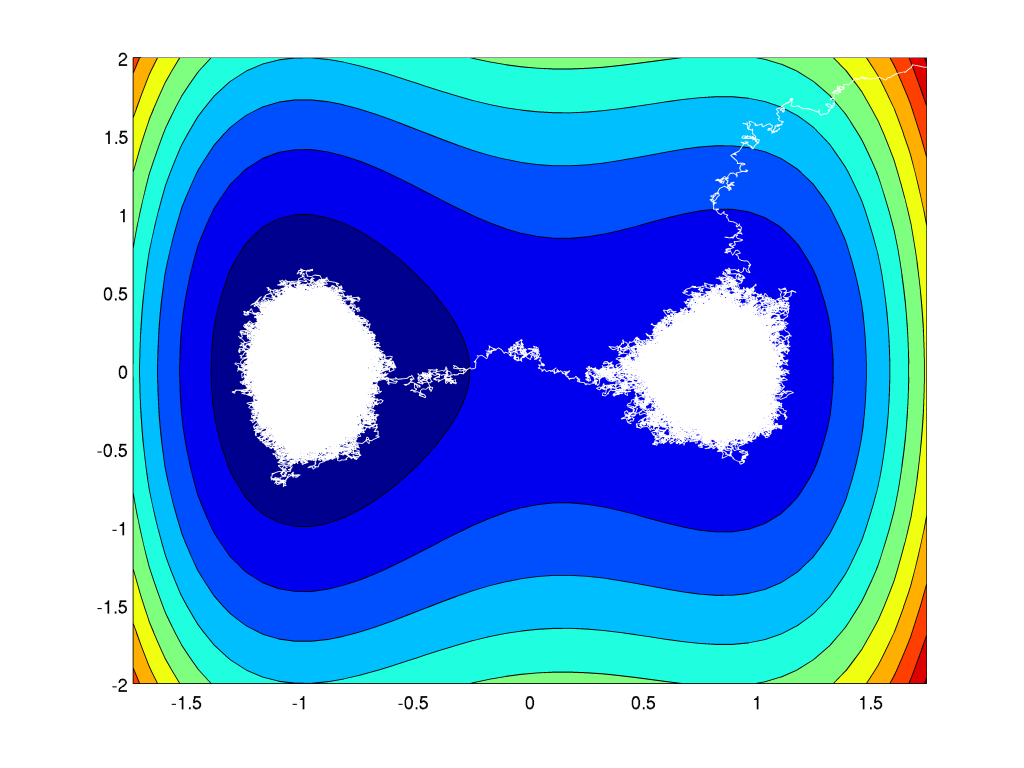
André Schlichting is a Full Professor of Applied Analysis at the University of Ulm, leading the Institute of Applied Analysis since October 2024. Previously, he served as an Associate Professor for Applied Mathematics at the University of Münster (2020–2024) and held postdoctoral and visiting professor roles at institutions including the University of Bonn and RWTH Aachen. His research focuses on the qualitative analysis of complex systems, combining methods from partial differential equations, stochastic analysis, and numerical analysis. Key interests include metastability in statistical mechanics, phase transitions, variational methods, and the longtime behavior of dissipative systems. Education: Habilitation (Facultas Docendi), University of Bonn, 2020 (Phase Transitions in Interacting Systems) PhD in Mathematics, Universität Leipzig, 2012 Diploma in Mathematics, TU Freiberg, 2008 Studies in Mathematics at University of Pavia (Italy) and TU Freiberg Research Interests: His work bridges applied mathematics and theoretical physics, addressing problems in statistical mechanics, stochastic processes, and machine learning. Key areas include: Metastability in molecular and statistical mechanics systems Coarsening and nucleation phenomena in interacting particle systems Variational methods for dissipative evolution equations Entropy methods and functional inequalities (spectral gap, log-Sobolev) Gradient flows and their limits in continuum and discrete settings Discrete and nonlocal dynamics on graphs and data sets Recent Article Trends: His recent work emphasizes gradient flow structures, discretization schemes for PDEs, and metastability in stochastic systems. Notable contributions include analysis of the exchange-driven growth model, McKean-Vlasov equations on manifolds, and covariance-modulated optimal transport. These studies highlight interdisciplinary approaches to bridging discrete and continuum dynamics. Labs/Teams: He leads the Applied Analysis group at Ulm University, focusing on collaborative research in PDEs, stochastic processes, and numerical methods. Active participation in initiatives like the Hausdorff Trimester Program (Bonn) underscores his role in fostering interdisciplinary research networks.
Robert Dell is the Chair Professor in the Department of Industrial and Systems Engineering at the University at Buffalo, School of Engineering and Applied Sciences. He also serves as Managing Director of the Collaborative Institute for Multisource Information Fusion. His research spans optimization, production scheduling, supply chain design, and professional sports analytics. Recent publications highlight his work in military logistics (aircraft maintenance planning, amphibious group routing), integer programming (web session reconstruction, pallet loading), and defense infrastructure optimization. His methodologies integrate machine learning, combinatorial optimization, and geospatial modeling. Scientific achievements include the IFORS Prize Finalist (2012) .
Dr. Jaroslav Hron is an Associate Professor at the Department of Numerical Mathematics within the Faculty of Mathematics and Physics at Charles University in Prague, Czech Republic. His primary research focuses on fluid mechanics, biomechanics, and numerical analysis, with particular expertise in fluid-structure interaction problems and their applications to cardiovascular mechanics. Dr. Hron's research interests span fluid mechanics, biomechanics, numerical analysis, and computational mathematics. His work primarily investigates fluid-structure interaction problems, particularly as they apply to cardiovascular mechanics and hemodynamics. He has made significant contributions to the understanding of non-Newtonian fluids, pressure-dependent viscosities, and the development of advanced numerical methods for solving complex fluid flow problems. His research often bridges the gap between theoretical mathematics and practical applications in biomedical engineering. Analysis of his recent publications reveals a strong focus on cardiovascular applications, particularly in determining pressure data from velocity measurements and modeling blood flow in complex geometries. His work demonstrates a consistent progression from theoretical considerations to practical applications in biomechanics, with increasing emphasis on computational methods for fluid-structure interaction problems. The research shows interdisciplinary collaboration across mathematics, engineering, and medical fields. Dr. Hron has been actively involved in academic advising and research supervision, contributing to the development of computational methods in fluid mechanics. His work has established important benchmarks in fluid-structure interaction simulation, particularly in hemodynamic applications. His laboratory work primarily focuses on computational fluid dynamics and fluid-structure interaction, with applications to cardiovascular mechanics. He has developed and refined numerical methods for simulating complex fluid behaviors, particularly those relevant to biological systems.
Carl Ollivier-Gooch is a Professor and Associate Head of Equity, Diversity, Inclusion, Indigeneity & Engagement at the Department of Mechanical Engineering, Faculty of Applied Science, University of British Columbia (UBC). His research focuses on computational fluid dynamics, particularly algorithm development for computational aerodynamics, high-order accurate methods, unstructured mesh adaptation, and error assessment and control. Dr. Ollivier-Gooch received his B.A. in Russian and B.S.M.E. from Rice University, followed by M.S. and Ph.D. degrees from Stanford University. He is a Member of ASME, Senior Member of AIAA, and Member of the Canadian CFD Society. His educational background combines engineering expertise with strong mathematical foundations. Dr. Ollivier-Gooch's research spans multiple critical areas in computational fluid dynamics. His work on algorithm development aims to combine the geometric flexibility of unstructured mesh methods with the accuracy benefits of high-order methods. He has developed highly efficient, high-order accurate methods for inviscid compressible aerodynamics problems, demonstrating that high-order methods can achieve engineering accuracy more quickly than second-order methods. His research group also studies unstructured mesh generation, developing techniques for mesh improvement and refinement, particularly for anisotropic meshes used in high Reynolds number viscous flows. Additionally, his work on error assessment and control seeks to provide known error bounds for CFD simulations, improving understanding of error for unstructured mesh finite volume methods. His research on stability and convergence addresses problems where aerodynamics simulations don't converge properly to steady-state. Analysis of Dr. Ollivier-Gooch's recent publications reveals a strong focus on numerical stability, mesh optimization, and high-order methods in computational fluid dynamics. His work consistently addresses challenges in unstructured mesh methods, with particular emphasis on improving stability, convergence rates, and error estimation. The research shows a progression toward more sophisticated techniques combining traditional numerical methods with machine learning approaches for mesh optimization and stability improvement. His recent work has increasingly integrated modal analysis and machine learning techniques to identify problematic mesh features and improve solution convergence. Member ASME Senior Member AIAA Member Canadian CFD Society Dr. Ollivier-Gooch leads the ANSLab (tetra.mech.ubc.ca/ANSLab), which has developed a widely used software library for unstructured mesh generation that has been downloaded by over 6000 users in 62 countries since 1998. His research group develops techniques that take advantage of both the geometric flexibility of unstructured mesh methods and the accuracy benefits of high-order methods. They have written and maintain a software library for unstructured mesh generation that has been freely available for non-profit use since January 1998, now in its tenth version, with applications spanning fluid and solid mechanics, cancer research, microbiology, and simulation of star and planet formation.
Eva Kopfer is an Associate Professor at the University of Bonn's Institute for Applied Mathematics, Department of Stochastic Analysis. Her research focuses on stochastic analysis, optimal transport theory, Ricci flows, and geometric analysis. She has led courses on stochastic analysis, financial mathematics, and advanced calculus. Notable contributions include work on exponential ergodicity for kinetic SDEs, stochastic homogenization of transport problems, and quantum gravity measures on manifolds. Her research interests bridge probability theory, differential geometry, and functional analysis, with applications to geometric flows and metric measure spaces. Recent work explores conformally invariant random fields, polyharmonic structures in quantum gravity, and generalized Ricci flow dynamics. She has collaborated extensively on projects involving discrete-to-continuous limits in optimal transport and Liouville quantum gravity measures. Publications highlight advancements in stochastic differential equations, ergodic theory, and geometric PDEs. Her work often integrates probabilistic methods with geometric analysis, yielding insights into transport phenomena and manifold structures. Current research themes include non-equilibrium systems, functional inequalities, and random geometric structures. Eva Kopfer's academic contributions are evident in high-impact journals like Journal of Functional Analysis and Communications in Pure and Applied Mathematics. She actively engages in seminar series and lecture series at the University of Bonn, covering topics from stochastic calculus to frontiers in economics and mathematics.
Thomas S Richardson serves as a Professor in the Department of Statistics at the University of Washington, where he maintains an active research profile in theoretical and applied statistics. His academic work is centered within the university's statistical research community with primary focus on methodological innovation. Richardson's research spans two core domains: Causal Inference and Multivariate Statistics. Within causal inference, he investigates foundational frameworks including potential outcomes, decision-theoretic approaches, and graphical causal models. His multivariate statistics work emphasizes complex dependency structures, parameter estimation for high-dimensional data, and novel modeling techniques for discrete and continuous variables. This dual focus drives methodological advancements applicable to biomedical, social, and computational sciences. Analysis of his recent preprints reveals strong concentration on causal identification problems, particularly instrumental variable bounds, individual treatment effect quantification, and graphical model parameterization. His work consistently bridges theoretical rigor with practical estimation challenges, often developing new mathematical frameworks for causal effect estimation under complex constraints. Key recurring themes include counterfactual reasoning, nonparametric bounds, and computational approaches to causal estimation. Richardson maintains active collaboration with prominent researchers including James M. Robins, evidenced by co-authored preprints. His email contact thomasr@uw.edu serves as the primary professional communication channel. No formal advising relationships, grants, or laboratory affiliations are documented in the available information.
Justin Pearson is an Associate Professor at the Department of Information Technology; Division of Computing Science at Uppsala University . He is a member of the university's optimisation group and coordinates the IT department's mentor programme for new employees . Research Interests include Constraint Programming , Combinatorial Optimisation , Artificial Intelligence , Software Testing , and Complexity Theory . His work focuses on theoretical and practical aspects of constraint satisfaction, local search algorithms, and symmetry breaking in constraint programming. Teaching involves courses such as Algorithms and Data Structures II (1DL231) and Introduction to Machine Learning for Bachelor Students (1DL034), with a PhD-level course on Category Theory offered periodically based on demand. Scientific Contributions span publications in constraint programming for air traffic management, sensor networks, and industrial applications. Recent work includes parameterised treewidth in constraint models, time-series constraints, and symmetry breaking techniques. Students supervised include PhD candidates Frej Knutar Lewander (co-supervised with Pierre Flener), Yi Zhao (co-supervised with Di Yuan), and previously graduated students Gustav Björdal , María Andreína Francisco Rodríguez , and Joseph Scott .
Matthias Beck is a Professor of Mathematics at San Francisco State University (SFSU), where he has held positions since 2004. He specializes in combinatorics, number theory, and discrete geometry, focusing on lattice-point enumeration in polyhedra and Ehrhart theory. His research has led to influential textbooks such as Computing the Continuous Discretely (2007) and Combinatorial Reciprocity Theorems (2018). Beck has also contributed to education through the Art of Proof textbook and leadership roles like Associate Chair of the Mathematics Department. Beck's academic journey includes a Ph.D. from Temple University (2000) and postdoctoral fellowships at institutions like MSRI and the Max Planck Institute. His awards include the MAA's Deborah and Franklin Tepper Haimo Award for Distinguished Teaching (2013). He has advised numerous graduate and undergraduate students, fostering collaborations in research areas from magic squares to graph colorings. His work bridges pure and applied mathematics, with applications in music theory, optimization, and combinatorial geometry. Beck actively participates in academic service, including editorial roles at journals like the Electronic Journal of Combinatorics and leadership in initiatives like the National Alliance for Doctoral Studies in Mathematics.
Istvan Tomon is an Associate Professor in the Department of Mathematics and Mathematical Statistics at Umeå University in Sweden. His research focuses on discrete mathematics, extremal and probabilistic combinatorics, and geometry. He leads research in combinatorial structures and graph theory, with recent work exploring hereditary families, symmetric chain decompositions, and Zarankiewicz problems. His publications demonstrate broad expertise in combinatorial optimization, hypergraph theory, and geometric combinatorics. Recent articles show consistent focus on extremal problems in set systems, matrix combinatorics, and incidence geometry.
Bernard Yett is a Teaching Assistant Professor at Stevens Institute of Technology's Department of Electrical and Computer Engineering within the Charles V. Schaefer, Jr. School of Engineering and Science. He holds a PhD (2023) and MS (2018) in Electrical Engineering from Vanderbilt University, alongside dual BS degrees (2015) in Electrical Engineering and Mathematics from Lamar University. His research focuses on STEM education, particularly in cybersecurity curriculum development, collaborative learning environments, and computational thinking pedagogy. Yett has held adjunct faculty roles at Vanderbilt University (Summer 2022), Tennessee State University (2022-2023), and Stevens Institute (Summer 2023). He is an active member of the American Society for Engineering Education (ASEE) and contributes to institutional service roles, including the ECE Department Undergraduate Committee and the Division of Student Affairs. His work emphasizes robotics-based cybersecurity education, log-based analysis of collaborative programming, and improving K-12 STEM engagement. Key research themes include designing hands-on cybersecurity curricula using robotics platforms, analyzing collaborative discourse in programming environments, and evaluating computational modeling outcomes. His 2020 paper on collaborative programming analysis won the Best Student Paper Award at the International Conference on Artificial Intelligence in Education. Yett teaches courses like Microprocessor Systems (EE/CPE 390), Digital Signal Processing (EE 448), and Applied Discrete Mathematics (CPE 602). His professional service includes contributions to the ECE Department’s recruitment efforts and student affairs initiatives.
Ravi Montenegro is a Professor and Department Chair in the Department of Mathematics & Statistics at the University of Massachusetts Lowell (UML), within the Kennedy College of Sciences. He also serves as the GPS Math Coordinator. His research focuses on Markov chain convergence rates, combinatorics, isoperimetric inequalities, and cryptographic algorithms like Pollard's Rho and Kangaroo methods for discrete logarithm problems. Montenegro holds a Ph.D. in Mathematics from Yale University (2002) and a BS in Mathematics from the California Institute of Technology (1995). Education Background: Ph.D. in Mathematics, Yale University (2002) B.S. in Mathematics, California Institute of Technology (1995) Research Interests: Markov chain mixing times and convergence rates Cryptanalysis and birthday attack algorithms Combinatorial optimization and graph theory Isoperimetric inequalities and geometric bounds Notable Works: Developed rigorous analyses of Pollard’s Rho and Kangaroo methods Contributed to spectral profile and conductance-based mixing time bounds Explored evolving set processes and canonical path methods for Markov chains Awards and Honors: Japan Society for the Promotion of Science (JSPS) Invitation Fellowship (2013) NSF-VIGRE Postdoctoral Fellowship (2002) NSF-VIGRE Graduate Fellowship (1999) Professional Contributions: Guided multiple research papers on discrete logarithm algorithms and Markov chain theory Active in academic leadership roles, including graduate program coordination