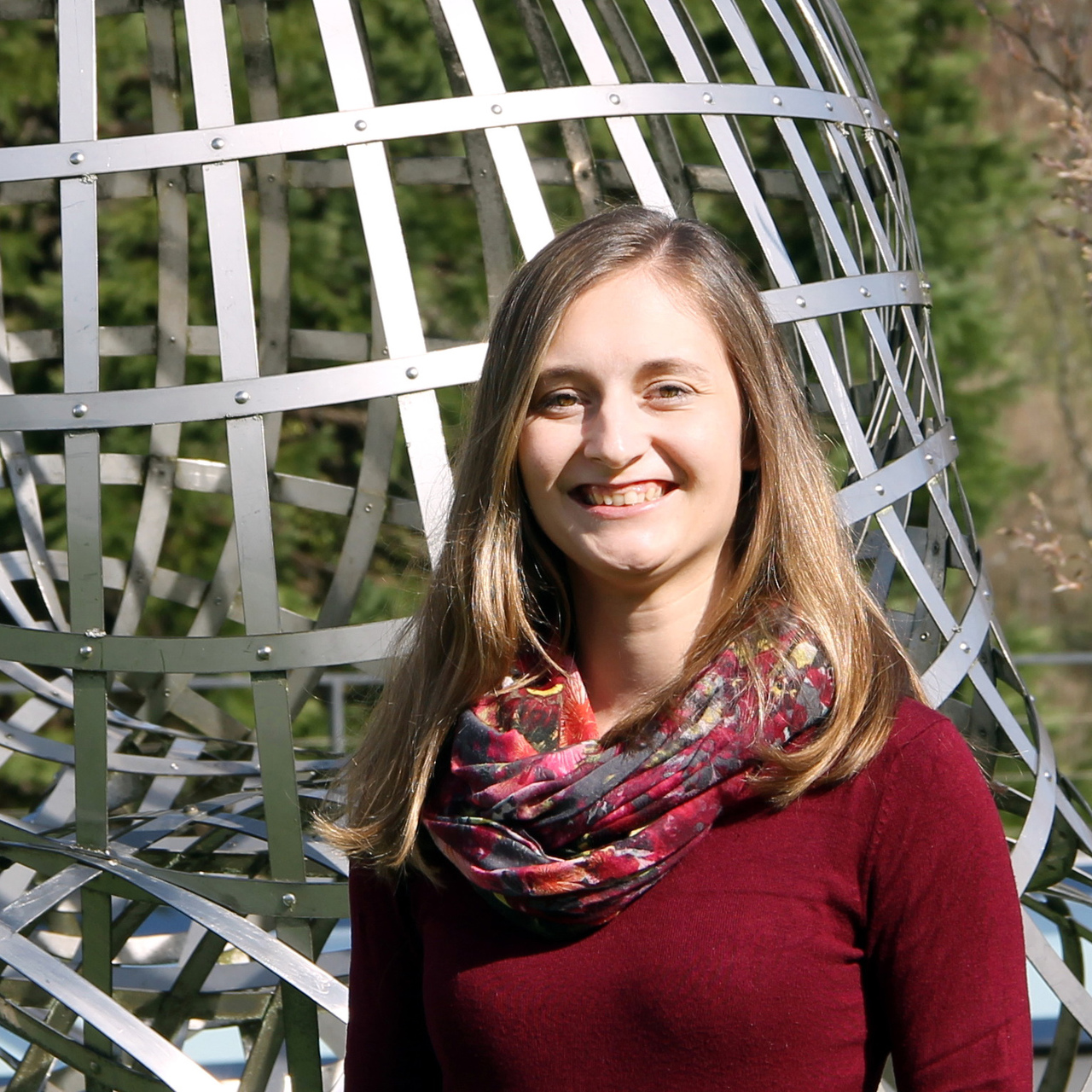
Prof. Dr.-Ing. Andrea Beck is a faculty member and Managing Director of the Institute of Aerodynamics and Gas Dynamics (IAG) at the University of Stuttgart. She leads the Numerical Methods in Fluid Mechanics working group, focusing on high-precision numerical methods for supercomputers, particularly discontinuous Galerkin (DG) methods. Her research spans fluid mechanics, aeroacoustics, plasma physics, and multiphase flows, with applications in wind energy, helicopter systems, and environmental aerodynamics. Role: Professor and Managing Director, IAG Committees: Member of the DFG Review Board, Strategy Committee for National HPC, and steering committee of High Performance Center Stuttgart. Her research emphasizes high-order methods, turbulence modeling, and data-driven approaches. She teaches courses such as 'Numerical Methods in Fluid Mechanics' and 'CFD Programming Projects', and has developed open-source software like FLEXI and HOPR for high-performance computing. Recent articles highlight advancements in entropy-stable DG methods, turbulence simulation using graph neural networks, and multiphase flow modeling. Her work integrates machine learning with CFD to enhance simulation accuracy and efficiency.
Dr. Amon Göppert serves as Professor and Chair of the Intelligence in Quality Sensing group at RWTH Aachen University's Laboratory for Machine Tools and Production Engineering (WZL). His work integrates artificial intelligence into manufacturing processes to enhance quality control, production efficiency, and sustainable practices. Göppert's research spans intelligent manufacturing systems with core expertise in AI-driven production engineering, circular economy applications, and advanced assembly systems. He investigates how machine learning optimizes production ramp-up, disassembly processes, and flexible manufacturing while developing sensor-based quality control solutions for industrial applications. His recent publications reveal strong trends toward AI implementation in production planning, with emphasis on worker assistance systems for disassembly, digital twin applications for real-time control, and mobile robotics in line-less assembly environments. Key focus areas include sustainable manufacturing, metrology innovation, and adaptive scheduling systems. Göppert leads multiple high-impact research initiatives: AI-driven Product Development: Machine learning for smart measurement strategies in metrology MetaVision Consortium: Industrial metaverse applications for AI-supported vision systems Generative AI for Non-Destructive Testing optimization Cluster of Excellence Internet of Production participation As Chief Engineer at WZL, he oversees technical implementation of research projects and collaborates with industry partners to translate innovations into practical manufacturing solutions, particularly in adaptive assembly systems and quality sensing technologies.
Prof. Arie Levant is a Professor in the Department of Applied Mathematics at Tel Aviv University's School of Mathematical Sciences, actively teaching Spring 2025 courses with Monday reception hours via Zoom (17:10-18:00). His foundational work established High-Order and Homogeneous Sliding Mode Control theories alongside Robust Exact Differentiation. His educational background includes: Ph.D. (1987) from USSR Academy of Sciences, Moscow: Thesis "Higher-order sliding modes and their application in control of uncertain processes" supervised by Prof. S.V. Emelyanov Postgraduate studies (1983-1987) in mathematical control theory at same institute B.Sc./M.Sc. (1980) from Moscow State University under Prof. V.I. Arnold in Theory of Differential Equations Levant's research centers on Nonlinear Control Theory with specialization in Sliding Mode Control , Homogeneous Discontinuous Control , and Robust Exact High-Order Differentiation . His methodologies enable finite-time-exact tracking in uncertain systems and real-time noise-robust signal differentiation, addressing fundamental challenges in control system resilience. Analysis of his 15 most recent publications (2016-2023) reveals concentrated advancements in chattering reduction, discretization for digital implementation, and noise filtering within sliding mode frameworks. These works demonstrate consistent focus on bridging theoretical control principles with practical engineering applications, particularly in real-time signal processing and robust controller design.
Prof. Thomas Weiland is a Full Professor of Computational Electromagnetics at the Technische Universität Darmstadt since 1989. His research focuses on numerical methods, computational engineering, and multiphysics simulation techniques, particularly in accelerator physics and beam dynamics. He holds a Dr.-Ing. from TU Darmstadt and has held postdoctoral and research positions at CERN and TU Darmstadt. His work includes pioneering contributions to electromagnetic field simulations, including advanced finite element methods, discontinuous Galerkin techniques, and boundary element approaches. Education highlights include his Diplom in Electrical Engineering from TU Darmstadt (1975) and a Habilitation in Experimental Physics from the University of Hamburg (1984). His research spans computational electromagnetics, accelerator physics, and numerical methods for electromagnetic field problems. Notable areas of innovation include transparent boundary conditions, eigenmode calculations, and high-performance simulation frameworks for rotating systems and particle accelerators. His publications emphasize advancements in electromagnetic simulation tools, such as the MagPEEC method and Trefftz-discontinuous Galerkin approaches. Collaborative projects include modeling RF photoinjectors for light sources and electrohydrodynamic droplet dynamics. Technical contributions also extend to wake field analysis in particle accelerators and SAR distribution studies in bioelectromagnetics. Research interests further include multiphysics coupling (thermal-electromagnetic effects in surge arresters), stochastic modeling of electromagnetic systems, and field-circuit co-simulation techniques. His work addresses challenges in large-scale eigenvalue problems, adaptive mesh optimization, and high-precision numerical methods for complex geometries.
Matthias Becker is a Professor at the Institute for Practical Computer Science within the Faculty of Electrical Engineering and Computer Science at Leibniz University Hannover, where he has been a core member of the Human-Computer Interaction group since 2019. He serves as Internship Coordinator for Computer Science and Computer Engineering and holds key roles in the Computer Science Examination Board and Selection Committee, actively shaping academic governance and student development. His academic journey began with PhD studies at the University of Bremen (1996-2000) supported by a DFG grant, followed by a postdoctoral permanent position at Leibniz University Hannover (2000-2019), an Associated Assistant Professor role at École des Mines de Nantes (2000), and a Habilitation in Computer Science in 2013. This foundation enabled his transition to a full professorship in 2019. Becker's research spans Human-Computer Interaction, Simulation and Modeling, and Bio-inspired Computing, with applications in agriculture, renewable energy, and manufacturing. His work integrates distributed systems, optimization algorithms, and wireless sensor networks to solve complex real-world problems, such as greenhouse monitoring, wind farm logistics, and tire noise reduction. Recent publications reveal a strategic focus on practical validation of simulation models and cross-domain applications of nature-inspired algorithms. His 15 most recent publications (2018-2024) demonstrate consistent innovation in applying simulation techniques to offshore wind farm installation, agricultural pest management, and sports science. These works emphasize real-world validation, collaborative problem-solving, and the development of domain-specific optimization frameworks that bridge theoretical algorithms and industrial implementation. As Internship Coordinator, Becker facilitates critical industry-academia connections for students, while his examination board responsibilities ensure rigorous academic standards. His leadership in the Human-Computer Interaction group drives research on interactive systems for agriculture, energy, and health, with particular emphasis on user-centered design in complex operational environments like wind farm logistics and greenhouse automation.
Oliver G. Ernst is a Professor of Numerical Analysis at Technische Universität Chemnitz . His research focuses on Numerical Analysis , Uncertainty Quantification , and Inverse Problems , with applications in Thermo-Hydro-Mechanical (THM) processes , Electromagnetics , and Stochastic Partial Differential Equations . He is associated with the Numerical Analysis group at TU Chemnitz. Key Research Areas : Efficient numerical methods for PDEs Krylov subspace techniques Stochastic finite element methods Multi-physics modeling Geoscientific applications Recent Publications (2025-2010): THM simulations under uncertainty Neural network PDE solvers Bayesian inversion frameworks Rational Krylov algorithms Deflated restarting strategies Collaborations : TU Bergakademie Freiberg University of Manchester Technical University of Munich University of Maryland University of Geneva Software Development : Contributor to OpenGeoSys platform Developer of FEMALY MATLAB library Academic Recognition : h-index 32, i10-index 66, with over 4423 citations since 2020.
Paul Kotyczka is a Professor at the Technical University of Munich (TUM) in the School of Engineering and Design , Department of Automatic Control Engineering. He leads the Energy-based Modeling and Control Working Group and focuses on modeling, geometric discretization, and control of multi-physical systems, with expertise in nonlinear and passivity-based control. His work spans applications in robotics, mechatronics, and process engineering. Education : Dipl.-Ing. in Electrical Engineering (TUM, 2005), Dr.-Ing. (TUM, 2010), Habilitation (Dr.-Ing. habil., TUM, 2019). Research : Core areas include port-Hamiltonian systems, predictive control of active chassis, structural mechanics modeling, and numerical methods for control. His projects address autonomous driving, distributed parametric systems, and passivity-based control of switching nonlinear systems. Awards : Held a Marie Sklodowska-Curie Fellowship (2015–2017). Grants : Leads DFG projects (e.g., HermInE, INFIDHEM), MSCA-IF, and Franco-German Doctoral Program on port-Hamiltonian systems. Labs : Head of the Energy-based Modeling and Control group at TUM, collaborating internationally (e.g., IIT Bombay, Grenoble INP, LCIS France).
Karim Cherifi is a Researcher at the Institute of Mathematics , Technical University of Berlin, within the College of Mathematics and Natural Sciences. His academic journey includes a PhD in Control Theory (2015–2019) and postdoctoral work at the Max Planck Institute Magdeburg (2019–2020). Since 2021, he contributes to the ProFIT project "Electric Drives 2.0" at the Werner von Siemens Centre (WvSC). 2010–2013: Bachelor in Electrical and Electronic Engineering 2013–2015: Master in Control Engineering 2015–2019: PhD in Control Theory His research focuses on Control Theory , Numerical Analysis , and Port-Hamiltonian Systems , with applications in Linear Systems , Data-driven Modeling , and Model Reduction . Key trends include geometric formulations for discrete-time systems, dissipativity analysis, and integration of energy-based models with machine learning. Notable scientific recognition includes the DAAD Scholarship (2018) . His work spans publications on topics like structure-preserving interconnections, digital twin simulations, and data-driven realization techniques. Affiliated with the Institute of Mathematics at TU Berlin, he is based in Room MA 469 and collaborates within the Numerical Analysis research group.
Prof. Dr. Igor Lesanovsky is a leading researcher in quantum physics at the University of Tübingen, where he heads the Arbeitsgruppe (Research Group) Lesanovsky within the Institute of Theoretical Physics, part of the Faculty of Mathematics and Natural Sciences. His research focuses on quantum many-body systems, particularly utilizing Rydberg atoms for quantum simulation, quantum information processing, and exploring non-equilibrium phenomena. His research interests span quantum many-body physics, Rydberg atom systems, quantum simulation techniques, non-equilibrium quantum dynamics, quantum thermodynamics, and quantum soft-matter physics. His group investigates how highly excited Rydberg atoms can be used to simulate complex quantum processes, study phase transitions, and develop applications for quantum information processing. They're particularly interested in emergent phenomena such as time-crystals, quantum glassiness, and non-ergodic behavior in quantum systems. The publication record shows a consistent stream of high-impact research, primarily in Physical Review Letters, Physical Review A, and other top physics journals. The research trends indicate a strong focus on quantum simulation with Rydberg systems, quantum non-equilibrium dynamics, quantum information applications, and increasingly on the intersection of quantum physics with machine learning. Recent work explores quantum neural networks, quantum measurement theory, and the application of large-deviation methods to quantum trajectory ensembles. Prof. Lesanovsky's research is supported by multiple prestigious projects including the BMBF Quantum Technology project 'Neural quantum networks on NISQ quantum computers', the DFG Excellence Cluster 'Machine Learning: New Perspectives for Science', DFG Research Units on long-range interacting quantum spin systems and quantum thermalization, the EU EIC Pathfinder Project 'Brisk Rydberg Ions for Scalable Quantum Processors', the QuantERA Project CoQuaDis, and The Center for Integrated Quantum Science and Technology (IQST). The group maintains strong connections with experimental teams, particularly in the areas of quantum simulation of interacting many-body systems and the development of matter wave interferometers and collectively enhanced electric field sensors. They collaborate extensively across Germany and internationally, with publications showing co-authorship with researchers from multiple institutions worldwide.
Karin Nachbagauer is a Professor of Applied Mathematics at the University of Applied Sciences Upper Austria, affiliated with the Faculty for Engineering's Mechanical Engineering Department. She holds a Hans Fischer Fellowship at the TUM Institute for Advanced Study (since 2020). Her research focuses on multibody system dynamics, numerical mathematics, optimal control, and inverse dynamics, with applications in mechanical engineering and robotics. She earned her PhD in Engineering Sciences (2012) and Diploma in Industrial Mathematics (2009) from Johannes Kepler University Linz. Notable awards include the 2020 Best Paper Award for optimal control research and 2019 Excellence in Teaching Award. Her work emphasizes adjoint gradient methods for optimization problems, parameter identification in multibody systems, and time-optimal control applications. Current projects include the VRoboCoop initiative for human-robot collaboration and IOMMS for innovative optimization in multibody systems. Publications span journals like Journal of Computational and Nonlinear Dynamics and Multibody System Dynamics , with over 80 peer-reviewed articles. She actively participates in international conferences and serves on editorial boards.
Sven Schewe is a Professor in the Department of Computer Science at the University of Liverpool, affiliated with the School of Electrical Engineering, Electronics and Computer Science. He leads the AI Section and is a founding member and former leader of the Verification Group. He also has secondary affiliations with the Algorithms, Complexity Theory and Optimisation Group and the Institute for Risk and Uncertainty. Research Interests: His research centers on automata theory and game theory, particularly their applications in the verification and synthesis of reactive and safety-critical systems. He investigates infinite-duration games, automata over infinite words and trees, and develops algorithms and tools for automated verification, synthesis, and learning of optimal control strategies. His work extends to reinforcement learning with formal guarantees, cyber-physical systems, and AI safety. Recent Research Trends: His recent publications demonstrate a strong integration of formal methods with machine learning, particularly in adversarial training, neural network robustness, and model-free reinforcement learning under omega-regular objectives. He also applies formal reasoning to interdisciplinary domains such as chemical space exploration and materials science. Scientific Awards: Finalist for the ERCIM Cor Baayen Award 2010 Dr. Eduard Martin Preis 2009 GI Dissertation Award 2008 Advising and Grants: He actively supervises numerous PhD students and postdoctoral researchers. He is Principal Investigator (PI) or Co-Investigator (CI) on multiple major grants, including EPSRC Programme Grants, Royal Society Fellowships, and Horizon Europe projects. His funded research spans topics such as game theory, verification, synthesis, reinforcement learning, and risk analysis. He has hosted visiting researchers and collaborated internationally with institutions in Germany, France, India, Taiwan, and the US. Labs and Teams: He co-founded and led the Verification Group and previously led the AI Section at the University of Liverpool. These groups focus on formal methods, automata, games, and their applications in AI and safety-critical systems.
Mitra Baratchi is an Associate Professor at the Leiden Institute of Advanced Computer Science (LIACS) , Leiden University. She leads the Spatio-temporal data Analysis and Reasoning (STAR) research group, co-leads the Automated Design of Algorithms (ADA) group, and founded the Special Interest Group on Spatio-Temporal Data Mining (SIG-SDTM) . PhD from University of Twente (Mobility Data) Master’s/Bachelor’s in Computer Engineering, Iran Research Interests focus on automated pattern extraction from spatio-temporal data across urban, environmental, and industrial domains. Key applications include: Automated Machine Learning (AutoML) for Earth Observations Time-Series Forecasting for public health (e.g., pandemic modeling) Urban Mobility Optimization with ESA, Honda, and municipalities Reliable Vehicular Communication Systems Smart Garments for Health Risk Detection Geocast Protocols for Internet-wide Communication Grant Highlights include €120K NWO-Aspasia, €2.9M Marie Skłodowska-Curie, €350K NWO-KLEIN, and €135K Center for BOLD Cities funding. She has supervised 12 PhD students and 4 current Master’s students since 2011, with notable best paper award at WWIC'16. Teaching includes Machine Learning (2020-present) and Urban Computing (2018-present) at Leiden, plus past courses in Data Visualization, Software Engineering, and Research Methods.
Silke Glas is a Postdoctoral Researcher at the Institute of Numerical Mathematics, Ulm University, a position she has held since July 2018. Previously, she served as a Research Assistant at the same institute from April 2016 to July 2018 and at the Chair of Energy Trading and Finance, University of Duisburg-Essen (2012-2016), funded by the German Research Foundation's Priority Programme 1324. Her research visits include the Institut Henri-Poincaré in Paris and SISSA in Trieste. Her educational background features: Diploma in Mathematics and Economics from Ulm University (2006-2012), thesis on "Reduced Basis Method for Variational Inequalities" Master of Mathematics from the University of South Florida (2009-2010) Dr. Glas specializes in model reduction for nonlinear problems, with core expertise in reduced basis methods applied to variational inequalities, wave equations, Hamilton-Jacobi-Bellman equations, and space-time formulations. Her work bridges theoretical numerical analysis with practical applications in energy markets, particularly intraday electricity trading. She has developed novel approaches for noncoercive and parabolic systems, addressing challenges in error estimation and computational efficiency. Her publication trajectory reveals evolving sophistication in handling time-dependent nonlinear systems, with increasing emphasis on financial applications. Early work focused on theoretical foundations of variational inequalities, while recent publications integrate model reduction with optimal control for energy trading problems, demonstrating cross-disciplinary impact. Scientific recognition includes: No formal awards documented in source material Research funding has been secured through the German Research Foundation's Priority Programme 1324. No student advising activities are mentioned, though her collaborative work involves prominent researchers like K. Urban and Anthony T. Patera. Her primary research environment at Ulm University's Institute of Numerical Mathematics supports her focus on computational mathematics and real-world applications.
Professor Javier Villalba-Diez serves at the Faculty of Business of Heilbronn University of Applied Sciences, Germany, where he integrates artificial intelligence with lean management principles in industrial and business contexts. His international collaborations include a cooperative doctoral program with Technical University of Madrid and Erasmus exchanges with Universidad Politécnica de Madrid. Dr. Villalba-Diez earned dual engineering degrees: Mechanical Engineering from Technische Universität München and Industrial Engineering from Universidad Politécnica de Madrid (2003). His PhD in Engineering, Economics and Organizational Innovation (2016) from Universidad Politécnica de Madrid received the institution's best doctoral thesis award. His research spans Artificial Intelligence (particularly Deep Learning applications), Hoshin Kanri strategic planning, Business Intelligence , and Lean Manufacturing . He pioneers sensor-based methodologies for organizational design, using EEG and industrial IoT to analyze problem-solving patterns and network resilience. His work bridges theoretical models with practical implementations across German, American, Japanese, and Spanish manufacturing facilities. Recent publications demonstrate a clear trajectory toward Industry 4.0 integration , with 60% of his 2019-2020 work focusing on deep learning applications in quality control, sensor networks, and cyber-physical systems. The journal Sensors (MDPI) serves as his primary publication venue, reflecting his emphasis on data-driven industrial analytics. His recognition includes: Prize for best doctoral thesis by Universidad Politécnica de Madrid (2016) As Guest Editor for Sensors and reviewer for journals like Sustainability and Journal of Manufacturing Systems , he shapes discourse in industrial AI. His doctoral supervision with Madrid focuses on AI-driven strategic organizational design, while industry collaborations with manufacturing facilities worldwide translate research into operational frameworks. He maintains active roles in curriculum development for Industry 4.0 education through the PROFH4 digital initiative. Dr. Villalba-Diez operates within international research networks, leveraging his multilingual capabilities (German, English, Spanish) to facilitate transnational projects. His work with Neo4j for Hoshin Kanri visualization exemplifies his approach to making complex organizational networks actionable for industry leaders.
Stephan Kessler is a researcher at the Technical University of Munich , affiliated with the Department of Mechanical Engineering and the Chair of Conveying Technology, Material Handling, and Logistics . His work focuses on construction logistics, digital twins, and IoT integration in building processes. Contact: stephan.kessler@tum.de Key research areas: Digital Twin, BIM, DEM simulations, IoT in construction Collaborates with Prof. Johannes Fottner on construction automation projects His research emphasizes digitalization of construction processes through technologies like RFID, machine learning, and simulation tools. Recent publications address tower crane planning, co-robot integration, and bulk material handling standards. Article trends show consistent focus on construction automation (IoT, digital twins, BIM), material flow optimization (DEM simulations, screw conveyor standards), and equipment lifecycle management (telematics, RFID identification). Kessler contributes to industry-university collaborations through projects like BauFlott (fleet management systems) and TEP (Tower Crane Deployment Planner). His work bridges theoretical research with practical implementations in construction site logistics.