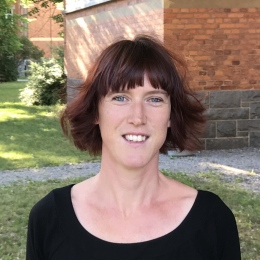
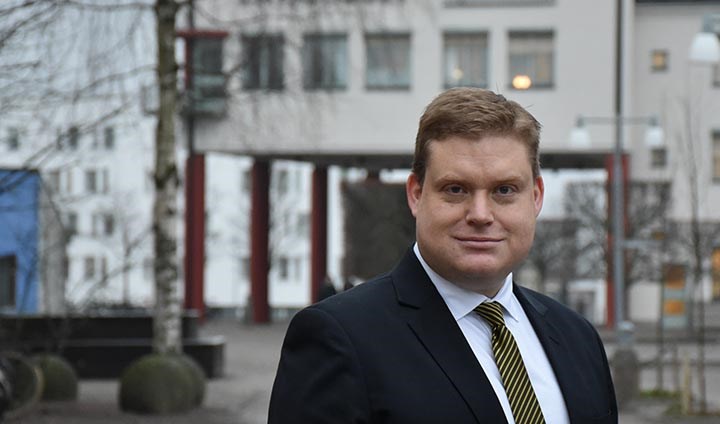
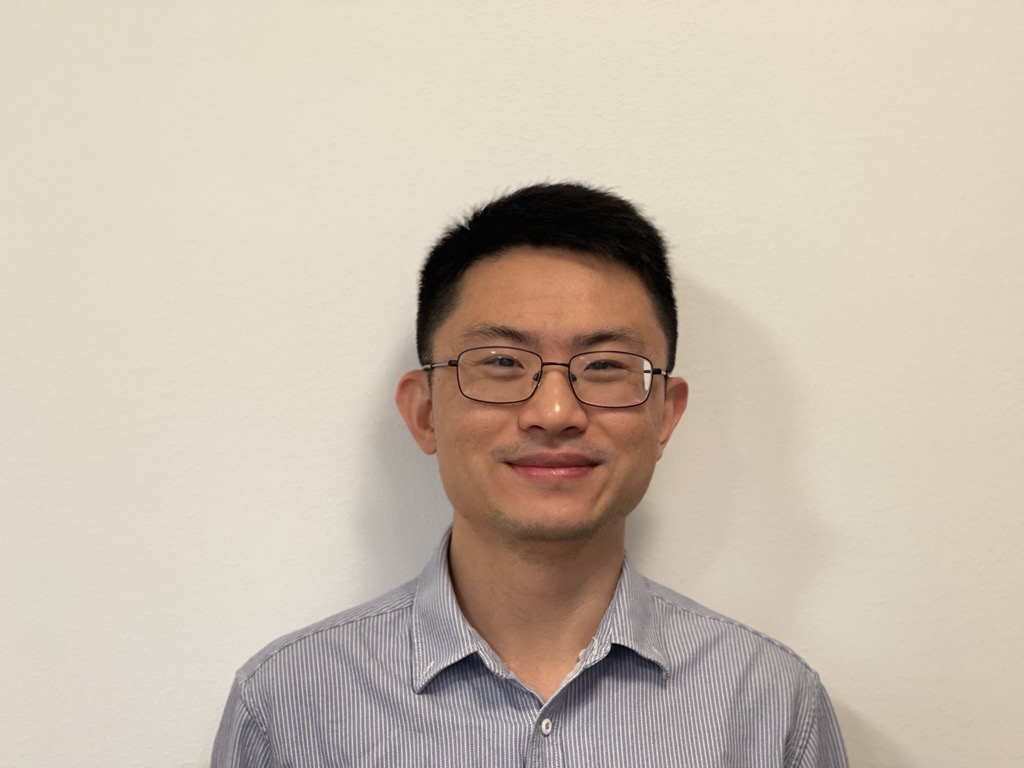
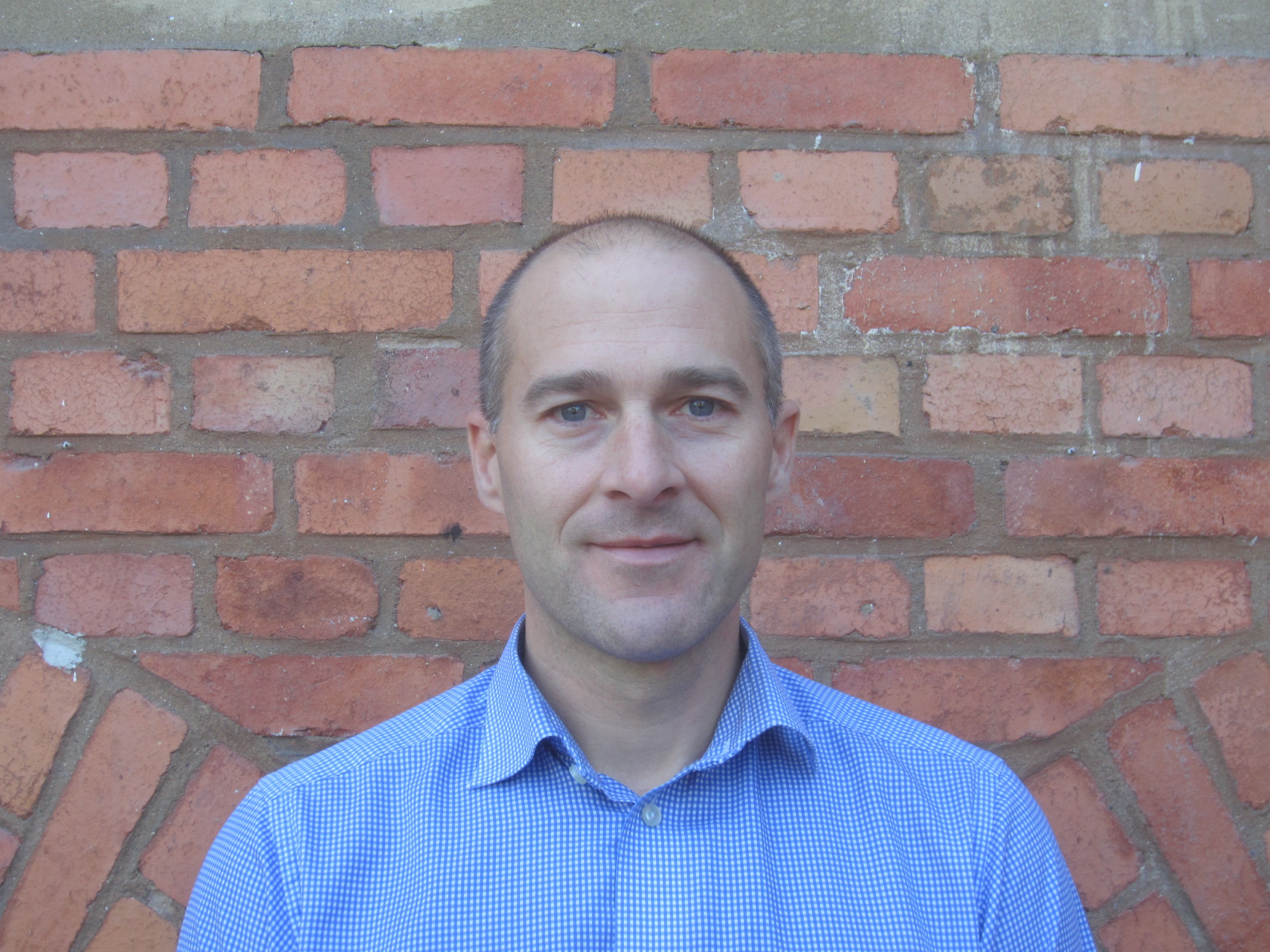
Maria Deijfen is Professor of Mathematical Statistics at Stockholm University and Director of Graduate Studies in mathematical statistics. Her research focuses on discrete probability theory with emphasis on spatial random structures and graph theory. She investigates fundamental problems in stochastic geometry, interacting particle systems, and growth models including applications to mathematical physics. Current projects examine connectivity in spatial growth models and competitive dynamics on lattices.
Magnus Löfstrand is a Professor of Mechanical Engineering at Örebro University, Sweden. He holds a PhD in Computer-Aided Design (2007) from Luleå University of Technology and a Docent (2015) in Product and Production Development from Chalmers University of Technology. His academic career spans multiple institutions, including Uppsala University and Umeå University prior to his current role. Research focuses on industrial system availability, digital twin technology, and data-driven approaches for optimizing production systems. Key areas include simulation-driven design, predictive maintenance, and integrating mechanical engineering with information technology. His work emphasizes sustainability through resource-efficient production processes and competitive industrial advantages. Teaching responsibilities include courses in the Industrial Engineering and Management program at Örebro University, covering topics like Process Development, Reliability Engineering, and Academic Writing. He supervises bachelor's and master's theses across engineering disciplines. Collaborations with institutions like the University of Nottingham and Umeå University's Logic and Applications group highlight his interdisciplinary approach. He is a member of the American Society of Mechanical Engineers (ASME) and actively participates in international conferences and research projects, including the AVANS MAXI program and digital twin initiatives in mining innovation.
He Guo is a Researcher in the Department of Mathematics and Mathematical Statistics at Umeå University, Sweden. He holds a Ph.D. from Georgia Institute of Technology and a B.S. with distinction from Zhejiang University. His research focuses on combinatorics and graph theory, particularly probabilistic and topological methods. He has been affiliated with Technion – Israel Institute of Technology as a postdoctoral fellow, hosted by Ron Aharoni, and currently works under the mentorship of István Tomon. Key achievements include receiving the Top Graduate Student Award during his Ph.D., ranking first in his undergraduate class, and presenting at events like the European Conference on Combinatorics (Eurocomb'25). His work spans topics such as Ramsey theory, matroid intersections, rainbow cycles, and random graph structures. He maintains an active presence in the Discrete Mathematics research group and contributes to academic service and teaching.
Karl-Olof Lindahl is a Professor in Mathematics at Linnaeus University , Sweden. He has held postdoctoral positions at Brown University, Pontífica Universidad Católica de Chile, and Universidad de Santiago de Chile, and was a guest researcher at Université de Picardie, Amiens. His research spans stochastic and deterministic dynamical systems , number theory , and machine learning , with a focus on reinforcement learning and optimization for AI applications in energy systems and agriculture. Current Teaching: Discrete Mathematics, Applied Probability and Statistics, Ordinary Differential Equations, Research Methodology Supervision: Head supervisor for PhD student Björn Lindenberg and Jonas Nordqvist (2020 graduate) Research Groups: AI and Machine Learning for Optimization , Computational Mathematics for Predictive Digital Twins (PreDiTwin) , and International Center for Mathematical Modeling (ICMM) His ongoing projects include reinforcement learning algorithms , climate-smart agriculture , and sustainable energy optimization , supported by collaborations with Kalmar Energi. International partners include Juan Rivera-Letelier (University of Rochester), Mike Zieve (University of Michigan), Charles Favre (École Polytechnique), and Youssef Fares (Université de Picardie). Key publications highlight advancements in p-adic dynamics , ergodicity , and reinforcement learning applications.
Rolf Larsson is a Professor at the Department of Mathematics at Uppsala University, Sweden. His academic career spans theoretical statistics, econometrics, and applied statistical analysis across multiple disciplines. His primary research interests include: Time Series Analysis and Econometrics Statistical Inference and Methodology Panel Data Analysis Climate Data Modeling Bayesian and Frequentist Statistics Multivariate Statistical Methods Discrete Data Analysis Professor Larsson's publication record demonstrates exceptional breadth across statistical theory and applications. His work on autoregressive models, unit root testing, and confidence distributions represents significant theoretical contributions to statistics. He has also made important applied contributions in climate science through his analysis of ice core data examining relationships between temperature, CO2, and methane. His methodological innovations span from discrete factor analysis to shrinkage estimators in beta regression models, with applications in econometrics, educational data, and medical research. His recent work on confidence distributions for autoregressive parameters (2024) continues his long-standing interest in foundational statistical theory. His collaborative work extends across disciplines, including medical statistics research examining the relationship between serotonergic medication, sunshine, and suicide. His publication record shows consistent high-quality output across top statistical and econometric journals over multiple decades.
Kurt Johansson is a Professor at the Department of Mathematics, KTH Royal Institute of Technology. His research focuses on probability theory, mathematical physics, and statistical mechanics, with a particular emphasis on random matrix theory and determinantal processes. He is known for groundbreaking work on the asymptotic analysis of random systems, including dimer models, tilings, and stochastic growth processes. His research group explores themes such as Coulomb gases, Airy processes, and universality in particle systems. Key research directions include the study of phase transitions in random tilings (e.g., the Aztec diamond), fluctuations in the KPZ universality class, and the interplay between random matrices and combinatorial structures. Recent work addresses the statistical mechanics of Coulomb gases on Jordan domains and the analysis of multi-time distribution in discrete growth models. These investigations often involve advanced techniques from complex analysis, orthogonal polynomials, and determinantal point processes. No scientific awards are explicitly mentioned in the text. Teaching responsibilities include courses such as Differential Equations I and Fourier Analysis. While no specific grants or labs are listed, his work forms the foundation for several probabilistic models widely studied in mathematical physics.
Victor Falgas Ravry is an Associate Professor in Mathematics at the Department of Mathematics and Mathematical Statistics, Umeå University. He holds a Docent qualification and has been affiliated with Umeå University since 2016, following a Kempe research fellowship (2012-2014) and a tenure as Assistant Professor at Vanderbilt University (2014-2016). Education: MMath (University of Cambridge, UK, 2004-2008); PhD (University of London, UK, 2008-2012) Research Interests: His work focuses on extremal combinatorics and discrete probability , particularly extremal graph and hypergraph theory and random graph models. These fields address optimization problems in discrete structures and probabilistic modeling of complex networks. Awards: He has received significant research funding, including: Swedish Research Council Project Grant (VR 2021-03687) for 2022-2025 Swedish Research Council Starting Grant (VR 2016-03488) for 2017-2021 Teaching & Organization: Since 2020, he serves as head of the Master's programmes in Mathematics and Mathematical Statistics, and deputy head of the Bachelor's programme in Mathematics since 2022. He regularly organizes the Discrete Mathematics Seminar, the Midwinter Workshop in Discrete Probability, and an upcoming extremal graph/hypergraph workshop at the Mittag-Leffler Institute.
Ole Sönnerborn is a Lecturer in Mathematics at Karlstad University, focusing on the intersection of topology, geometry, and quantum mechanics. His research explores quantum systems with topological/geometric origins, including holonomy, geometric phases, quantum speed limits, and quantum information theory. He teaches advanced mathematics courses for engineering and mathematics education programs. Key research areas include: Quantum holonomy and its applications in computation Time constraints for quantum processes (quantum speed limits) Self-testing quantum systems and Bell inequality violations Geometric uncertainty principles Symmetric informationally complete measurements (SICs) Recent work (2023-2025) emphasizes iso-holonomic inequalities, tight quantum speed limits, and non-adiabatic holonomic computation. Over 20 peer-reviewed articles span topics from quantum control to topological systems. Teaching responsibilities include: Mathematics for Engineers I/II Mathematical relationships in single-variable calculus Discrete Mathematics and Algebraic Structures Linear Algebra II Supervises bachelor/master thesis projects in mathematical physics and quantum theory. No awards explicitly listed in provided materials.
Rafael Messias Martins is a Researcher at Linnaeus University, affiliated with the Department of Computer Science and Media Technology within the Faculty of Technology. He holds an MSc in Computer Science from the University of São Paulo and a PhD in Computer Science from the University of Groningen. His primary research focuses on Information Visualization and Visual Analytics, particularly emphasizing Multidimensional Data and Networks. He is a core member of the Information and Software Visualization (ISOVIS) research group and leads multiple ongoing and completed research projects, including InfraVis (a national research infrastructure for data visualization) and initiatives addressing medication risks and carbon mitigation in forestry. His work bridges theoretical advancements in visualization with practical applications in education, healthcare, and environmental science. Education MSc in Computer Science, University of São Paulo, Brazil PhD in Computer Science, University of Groningen, Netherlands Research Interests His research explores the intersection of visualization techniques with complex data analysis, emphasizing: Interactive visual analytics for high-dimensional data Machine learning interpretability through visualization Educational data analytics for K-12 institutions Applications in healthcare (e.g., medication risk prediction) and environmental science (e.g., carbon footprint reduction) Development of national visualization infrastructures (InfraVis) Recent Trends in Articles His recent work emphasizes: Enhancing trust in machine learning models through visual explanations Optimizing visualization tools for educational stakeholders Algorithmic fairness in urban planning simulations Scalable dimensionality reduction techniques for streaming data Grants & Collaborations He has coordinated projects such as IDEAL (interaction design curriculum development), TimberVis (3D timber structure visualization), and seed projects addressing carbon mitigation and medication risks. Collaborations span academic, industrial, and governmental partners in Sweden and internationally. Labs & Teams He leads the ISOVIS group, which develops open-source tools like SBGTool (student grouping analytics) and FeatureEnVi (feature engineering visualization). The group also contributes to InfraVis, a national platform for visualization resources.
Jens Wittsten is a Researcher affiliated with the Department of Engineering at the University of Borås' Academy of Textiles, Technology and Economics. He serves as the main supervisor for doctoral student Markus Klintborg and holds office in room C801. His work bridges applied mathematics, materials science, and computational engineering. Research interests include modeling phenomena in moiré heterostructures (e.g., twisted graphene layers), semiclassical quantization in strained lattices, and seismic data processing techniques. He has contributed to understanding electronic phase transitions, magic angles in bilayer graphene systems, and numerical methods for wave propagation modeling. His publication trends reflect interdisciplinary focus: recent works address both fundamental physics (e.g., Hofstadter butterfly studies) and applied engineering challenges (e.g., warehouse optimization via GPU-accelerated routing). Jens advises one doctoral candidate and maintains an active research portfolio spanning over 25 peer-reviewed articles since 2010. His methodological innovations include contributions to seismic apparition techniques and dealiasing algorithms.
Filip Lindskog is a Professor of Insurance Mathematics at Stockholm University (SU) , where he heads the Mathematical Statistics division within the Department of Mathematics . With a background in financial mathematics and actuarial science, his research focuses on quantitative risk management, non-life insurance pricing, and applications of biostochastics and biostatistics. He has co-authored the textbook Risk and Portfolio Analysis: Principles and Methods (Springer, 2012) and supervises PhD students in actuarial mathematics. Education \n \n MSc in Engineering Physics, KTH Royal Institute of Technology (2000) \n PhD in Mathematical Statistics, ETH Zürich (2004) \n Research Interests Filip's work spans actuarial mathematics , financial risk modeling , and insurance analytics . He investigates stochastic processes in regime-switching environments, capital requirements for insurers, and mathematical frameworks for claims reserving. His recent publications emphasize machine learning applications in risk adjustment, asymptotic analysis of Poisson models, and regulatory compliance under IFRS 17.\n Scientific Contributions \n \n Editor, Scandinavian Actuarial Journal (2018–present) \n Director of SU's Master's Program in Actuarial Mathematics (2016–present) \n Head of SU's Mathematical Statistics Division (2018–present) \n \n Students and Collaborations Current and former PhD students include Nils Engler , Lina Palmborg , Jonas Alm , and Johan Nykvist . Former postdocs include Julie Thøgersen , Abhishek Pal Majumder , and Kristoffer Lindensjö . His research group explores discrete random structures, financial applications of biostatistics, and insurance modeling under capacity constraints.\n
Martina Favero is a Knut and Alice Wallenberg postdoctoral researcher at the Department of Mathematics, Stockholm University, specializing in Mathematical Statistics. Her research spans multiple domains within mathematical statistics: Biostatistics and biostochastics Discrete random structures Applications in finance and insurance Infectious disease modeling and analysis Dr. Favero is actively involved with two research groups at Stockholm University: The Mathematical Statistics group focusing on applications in biostochastics, discrete random structures, and finance/insurance The SU-InfDisMod-group dedicated to infectious disease modelling and analysis Based at Albano hus 1 in Stockholm (postal address: Matematiska institutionen, 106 91 Stockholm), her work bridges theoretical mathematical statistics with practical applications in public health and financial domains through these collaborative research initiatives.