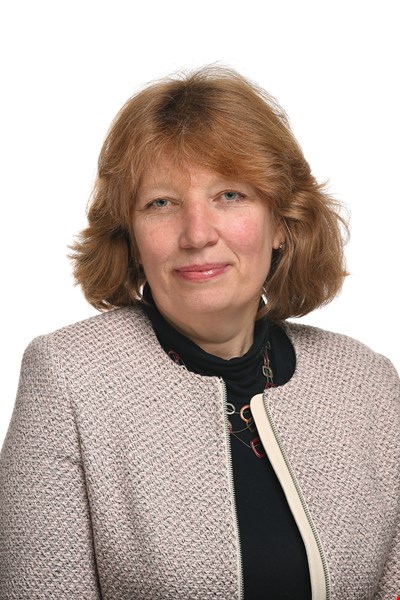
Professor Tatiana Kalganova is a faculty member at Brunel University London, affiliated with the Department of Electronic and Electrical Engineering and the College of Engineering, Design and Physical Sciences. With a career spanning over two decades at Brunel, she has established expertise in Artificial Intelligence, Evolvable Hardware, and Operational Research. Education: PhD in Evolutionary Computing, Napier University MSc (distinction) in Informatics, Belarusian State University of Informatics and Radio-Electronics Research-Engineer Degree, Belarusian State University of Informatics and Radio-Electronics Her research focuses on Evolutionary Design , Swarm Optimization , and Robotics , with applications in supply chain modeling, neuromorphic computing, and intelligent systems. Recent publications emphasize Large Language Models and data-efficient machine learning techniques. Scientific Awards: 2nd place in Caterpillar's Research and Innovation in Demand Strategy Competition (2012) AFWERX Challenge Award (2019-2020) Professor Kalganova has supervised numerous PhD students on topics like 3D Autorouting Systems and Ambidextrous Robot Hands . Her funded projects include the Horizon Europe Guarantee's ReCharged initiative for climate-resilient infrastructure and collaborations with Intel, Caterpillar, and the Nuffield Foundation.
Eleftheria Sergaki is a permanent Laboratory Teaching Staff member (EDIP) at the Technical University of Crete , School of Electronic and Computer Engineering and the Electrical Power Systems Laboratory . She has served the university continuously since 1985 in roles ranging from Contract Lecturer-Researcher to her current academic post. Education PhD in Electronic & Computer Engineering, Technical University of Crete, 2011 MSc in Electronic & Computer Engineering, Technical University of Crete, 1997 BSc in Physics, Aristotle University of Thessaloniki, 1985 Research Interests Her research lies at the intersection of automatic control, energy efficiency and machine learning . Core themes include the design of fuzzy-logic-based control algorithms that minimise energy losses in electric motors—work that has yielded an individual 2008 patent—the application of machine-learning techniques for predictive modelling of physical processes, and the development of AI-assisted diagnostic algorithms for medical imaging. Across these areas she leverages techniques such as adaptive control, artificial neural networks, neuro-fuzzy systems, discrete wavelet transforms and convolutional neural networks, bridging power engineering, biomedical engineering and computer science. Publication Trends Her 27 peer-reviewed works (2000–2023) exhibit a clear trajectory: early contributions focused on laser instrumentation and physics education shifted after 2006 toward electric-motor efficiency optimisation and advanced motor-control algorithms , and since 2018 have expanded into deep-learning applications in medical imaging , particularly capsule endoscopy and brain-tumour detection. Scientific Awards & Distinctions Teaching Work Award (EDIP) – Senate of the Technical University of Crete, 2018 National distinction – Greek delegation leader, International Physics Teaching Conference, CERN Distinction – Panhellenic Physics Construction and Experiment Competition, National Research Foundation 2 nd eligible contractor – national educational textbook authoring programme Grants, Projects & Service Scientific Project Manager, EPEAEK Project (Greek National Research Council), 1998–2000 Evaluator, IEEE Transactions on Industrial Electronics, IEEE Transactions on Fuzzy Systems, Elsevier journals, etc. Co-author, Laser: Working Principles and Applications (Evgenidis Foundation, 2008) Laboratory & Team Affiliations She is a key member of the Electrical Power Systems Laboratory , where she co-supervises student projects and experimental work. Previously she co-founded and worked in the Laboratory of Matter Structure & Laser Physics (TUC) from 1985 to 2013, contributing to its establishment and instrumentation.
Frédéric Segonds is a Full Professor at Arts et Métiers Institute of Technology (ENSAM) in Paris, France, working at the Design and Innovation Laboratory (CPI/LCPI, EA3927). His academic career spans from Professor Agrégé in Mechanical Engineering (2005-2011) to Maître de Conférences (2012-2022), and finally to Professor des universités since 2022. He holds a PhD in Industrial Engineering from Arts et Métiers ParisTech specializing in Design Sciences and obtained his HDR (Habilitation à diriger des recherches) in 2018 from Grenoble Alpes University. His educational background includes: PhD in Industrial Engineering from Arts et Métiers ParisTech, specialty Design Sciences HDR (Habilitation à diriger des recherches) from Grenoble Alpes University (2018) Graduate of Arts et Métiers and ENS Cachan (2001-2005) Professor Segonds' research focuses on the intersection of digital engineering and product innovation. His primary expertise lies in Product Lifecycle Management (PLM), Additive Manufacturing, and Design for Additive Manufacturing (DFAM), particularly in early design stages. He investigates how digital tools can enhance collaborative design processes and optimize knowledge management in engineering contexts. His research has significant industrial applications with companies including Thalès, Airbus, Dassault Systèmes, Lacoste, Eurostep, Keonys, Add-Up, and Safran. His publications consistently address challenges in integrating PLM systems with emerging manufacturing technologies. The recurring themes across his work include innovative design methodologies, knowledge management optimization, and the development of digital tools for product innovation. His research bridges theoretical frameworks with practical industrial applications, demonstrating strong industry-academia collaboration. Professor Segonds serves as an elected member of the International Federation for Information Processing (IFIP) WG5.1 and leads the Master's Degree program (Mastère Spécialisé) on PLM and BIM called IngéNUM (Management and Digital Engineering for Products and Buildings). He actively supervises PhD students with the following current projects: Emma TALEC (2021-2024, Saint Gobain Research): Development of a multidisciplinary and collaborative upstream design method that takes into account customer perception Jean-René CAMARA (2020-2023, CAPGEMINI): Knowledge Management optimisation in design Marine CATEL (2020-2023, Cartier): Creation of an employee experience design methodology Orphé CATHARIA (2020-2023, SNCF Gares & Connexions): BIM Mixed Digital Models for stations Asset Management At the Design and Innovation Laboratory (CPI) in Paris, Professor Segonds leads research initiatives that translate academic findings into practical industrial solutions. His laboratory maintains strong partnerships with major industrial players, ensuring that research remains relevant to current engineering challenges while pushing the boundaries of digital product innovation.
Professor Thijs Dekker is a faculty member in the Faculty of Environment at the University of Leeds , where he holds the Professor of Transport Economics position. He previously served as Associate Professor (2020-2024) and Lecturer in Transport Economics (2014-2020) at the Institute for Transport Studies. PhD in Economics, VU University Amsterdam (2012) MSc in Economics, Erasmus University Rotterdam (with highest honour, 2006) BSc in Economics, Erasmus University Rotterdam (2005) His research focuses on empirical analysis of travel behaviour and non-market valuation , with emphasis on discrete choice models , Bayesian econometrics , and Participatory Value Evaluation (PVE) . He develops statistical frameworks for preference heterogeneity and welfare measurement in transport contexts, and has pioneered PVE as an alternative to traditional cost-benefit analysis. Recent publications explore transport decarbonization , choice model robustness , and value of travel time across freight, rail-air intermodality, and shared mobility services. Methodological contributions include computational gradients for choice modelling and validity standards for experimental design. Scientific roles include: Elected Regular Board member, International Association for Travel Behaviour Research (2019-2023) Editorial advisory board member, Journal of Choice Modelling Editorial advisory board member, Transportation Research Part C: Emerging Technologies As Director of Postgraduate Research Studies, he supervises PhD researchers including Phil Churchman, Abdul Muti Sazali, and Robby Yudo Purnomo. His applied work includes UK national VTT studies, Dutch policy appraisals, and World Bank freight analysis. He contributes to the Choice Modelling research group and participates in projects like DRYvER (biodiversity in river networks) and VAAR (rail accessibility appraisal). Current responsibilities include leading the MSc Transport Economics program and developing robust transport valuation frameworks.
Matteo D'Achille is an Associate Professor (maître de conférences) of Probability at the Institut Élie Cartan de Lorraine , Université de Lorraine, France, since September 2025. He previously held post-doctoral positions at Laboratoire de Mathématiques d’Orsay (2022-2025) and at LAMA, Université Paris-Est Créteil (2020-2022), and obtained his PhD from Paris-Saclay University in 2020. Education: Ph.D. in Mathematics, Paris-Saclay University, 2020 M.Sc. in Physics (110/110 cum laude), University of Milan, 2016 B.Sc. in Physics (110/110), University of Milan, 2012 Research interests: D’Achille’s work lies at the interface of probability theory, statistical mechanics and random combinatorial optimisation . He investigates random geometric structures such as ideal Poisson–Voronoi tessellations in hyperbolic spaces, massive spanning forests , and random assignment problems on manifolds. A recurrent theme is the study of Gibbs measures and their stability under renormalisation transformations, exemplified by his analyses of decimated Ising and rotator models. Publications trend: His 13 papers (9 published, 4 submitted) display a steady trajectory from early works on one-dimensional random matching to recent deep contributions on hyperbolic random tessellations and extremal Gibbs states on Lobachevsky lattices . The research spans pure probability, rigorous statistical physics and discrete geometry, often combining exact computations with probabilistic limit theorems. Grants & recognition: He was awarded a €2.25k travel grant (2023-2025) from the Fondation Mathématique Jacques Hadamard and serves as a peer reviewer for leading journals including Ann. Inst. Henri Poincaré B , Prob. Theory Rel. Fields , Electronic J. Probability , IEEE Trans. Information Theory and Phys. Rev. X . Supervision & seminars: D’Achille currently advises PhD students and co-organises three recurring seminar series in the Paris area: the SuPerGRandMa Weekly Seminar (Orsay), The Probabilities of Tomorrow (IHP), and the Seed Seminar of Mathematics and Physics (IHP/IHES).
Dr. Saikat Kundu is a Senior Lecturer in Mechanical Engineering at the Department of Engineering, Manchester Metropolitan University (MMU), since September 2012. He holds Chartered Engineer (CEng) status and is a Fellow of the Higher Education Academy (FHEA). He is also a visiting researcher at the Institute of Design, Robotics and Optimisation, School of Mechanical Engineering at the University of Leeds. His educational background includes a PhD in Supply Chain Engineering from the University of Leeds (2005), an MSc in Mechanical Engineering from the University of Leeds (2001), and a BEng from Jalpaiguri Government Engineering College, India (1997). He completed a Postgraduate Certificate in Academic Practice (PGCAP) at MMU in 2016. Dr. Kundu’s research focuses on Engineering Management, Supply Chain & Logistics, Lean/Six Sigma methodologies, and Industry 4.0 applications. He has led collaborative projects with ABB Limited, Rolls-Royce Plc, BAE Systems, and Age UK. Notable projects include the EPSRC-funded KIM (2006-2009) and SEEDS (2010-2011) initiatives, as well as Innovate UK KTP projects like AIR HANDLERS (2018-2020) and BIND-A-TEX (2021-2022) as Co-Investigator. His teaching spans undergraduate and postgraduate courses in Manufacturing Systems Management, Engineering Project Management, and Industry 4.0 integration. He has received the IMechE’s Professional Engineering Publishing Best Paper Award (2008) for work published in the Journal of Engineering Manufacture. Dr. Kundu actively contributes to academic governance at MMU, serving as UG Placement Coordinator and Health & Safety Coordinator for the Engineering Department. He is also an expert reviewer for the Journal of Service Research and maintains professional affiliations with the Institution of Mechanical Engineers and British Computer Society.
Pablo Salinas is a Research Fellow in the Novel Reservoir and Simulation group (NORMS) at Imperial College London's Department of Earth Science & Engineering. He holds affiliations with the Applied Modelling and Computation Group and NORMS. His primary role involves advancing reservoir simulation through computational methods. Current Position: Research Fellow (2018–Present) Previous Roles: Post-doctoral research associate (2013–2018) Research focuses on subsurface energy systems, multiphase flow dynamics, and numerical methods like multigrid solvers and unstructured mesh optimization. He is the lead developer of the Imperial College Finite Element Reservoir Simulator (IC-FERST), pioneering coupled physics/chemistry simulations with dynamic mesh adaptation. Salinas currently supervises 5 PhD projects and contributes to the UK's national core studies program addressing the COVID-19 pandemic, advising SAGE. His work integrates geothermal energy, contaminant transport modeling, and well optimization. Labs/Teams: NORMS group, leading IC-FERST development.
Dr. Andrei Gagarin is a Senior Lecturer in the School of Mathematics at Cardiff University, Wales, United Kingdom. His academic career spans multiple institutions across Canada, France, and the UK, with research expertise spanning combinatorics, graph theory, and operational research. He serves as Year Abroad Coordinator (since 2022), British Combinatorial Committee representative (since 2018), and co-organizer of the Discrete Mathematics and Data Science Research Team (since 2016). Dr. Gagarin earned his PhD in Computer Science from the University of Manitoba (2003), MSc in Operational Research, Combinatorics, and Optimisation from National Polytechnic Institute of Grenoble and Joseph Fourier University (1996), and MSc in Mathematics from Belarusian State University (1994). His research focuses on combinatorial optimization, graph theory, and their applications to real-world problems. Dr. Gagarin's work bridges theoretical mathematics with practical applications in transportation networks, information security, and data analysis. His research interests include: Combinatorics and Graph Theory Optimization and Algorithm Design Network Analysis and Operational Research Access Control and Information Security Data Analysis and Mining Biomedical Research Applications Dr. Gagarin's publication record demonstrates a strong trajectory in applying graph theory to solve complex problems in transportation networks, particularly for electric vehicle infrastructure, as well as in workflow satisfiability and information security. His recent work shows increasing interdisciplinary collaboration, connecting mathematical theory with urban planning, sustainable transportation, and decision support systems. Dr. Gagarin is actively involved in academic service, serving on the British Combinatorial Committee and as an editor for Utilitas Mathematica. He has organized significant academic events including the 31st British Combinatorial Conference (2026) as principal organizer. As an educator, Dr. Gagarin supervises multiple PhD students including Lukas Dijkstra and Lucy Maybury, and teaches courses such as Graph Theory and Algorithms, Foundations of Operational Research & Analytics, and Further Operational Research. He has received recognition as a Fellow of the Higher Education Academy (FHEA, since 2018). Dr. Gagarin is a member of several research groups including the Discrete Mathematics and Data Science Team, Operational Research group, Sustainable Transport Interdisciplinary Doctoral Training Hub, and Electric Vehicle Centre of Excellence. His current research projects include DECIDE (Decoding Cities for Informed Decision Making) with WSA and combinatorial models for optimizing placement of refueling stations for alternative fuel vehicles.
Adam Letchford is a Professor of Analytics and Optimisation at the Management School, Lancaster University, and serves as Interim Head of Department. He holds a BA in Linguistics & Psychology from the University of Nottingham (1989), an MSc in Operational Research from Lancaster University (1993), and a PhD in Management Science from Lancaster (1997). His research focuses on optimisation theory and applications, including discrete and nonlinear optimisation, vehicle routing, facility layout, scheduling, and inventory control. His work is interdisciplinary, combining Mathematics (graph theory, linear algebra) and Computer Science (algorithm design, complexity theory). Prof. Letchford has supervised numerous PhD students on topics such as knapsack problems, resource allocation, and change-point analysis. He is a Fellow of the Operational Research Society, a member of the EPSRC Peer Review College, and serves as an Associate Editor for journals like the EURO Journal on Computational Optimization and the Open Journal on Mathematical Optimization . His recent research includes advancements in polytope theory, cutting-plane algorithms, and heuristic methods for complex optimisation problems. Notable contributions include work on clique partitioning polytopes and the quadratic knapsack problem. He has been involved in projects such as KTP with Jaguar Land Rover and STOR-i initiatives on waste collection route optimisation. External Roles: REF2021 Mathematical Sciences Subpanel Member, UKRI Future Leaders Peer Review College (2018–present) Awards: IBM Faculty Award, Fellow of the Operational Research Society (2009) Research Groups: STOR-i Centre for Doctoral Training, Centre for Transport & Logistics (CENTRAL) Prof. Letchford’s publications span topics in optimisation theory, algorithm design, and applications in logistics and telecommunications. His work emphasizes exact solution algorithms for NP-hard problems, with a focus on practical implementations in real-world scenarios.
Christos Konaxis is a researcher affiliated with the Department of Informatics and Telecommunications at the National and Kapodistrian University of Athens. His academic career spans over a decade, with significant contributions to computational geometry and algebraic algorithms. He serves as Technical Coordinator for major European research projects including GRAPES (Learning, processing and optimising shapes) and previously ARCADES (Algebraic Representations in Computer-Aided Design for complEx Shapes). Dr. Konaxis specializes in computational geometry, algebraic algorithms, and computer-aided design. His research focuses on implicitization techniques, polynomial systems, resultant polytopes, and sparse interpolation methods. He has developed novel algorithms for computing Newton polygons, Minkowski sums, and geometric operations using matrix representations. His work bridges theoretical algebraic geometry with practical applications in geometric modeling and computer-aided design. His publication record shows a consistent trajectory of high-impact research in computational geometry, with recent work emphasizing efficient algorithms for shape processing and optimization. His articles demonstrate expertise in both theoretical foundations and practical implementations, particularly in developing output-sensitive algorithms and software frameworks for algebraic computations. Technical Coordinator, GRAPES Marie Curie Training Network (2019-2024) Technical Coordinator, ARCADES Marie Curie Training Network (2016-2019) Researcher, Thales Collaborative Project (2012-2015) Post-doctoral researcher, ACMAC, University of Crete (2011-2013) Dr. Konaxis has contributed to numerous research projects funded by European programs, demonstrating strong grant acquisition capabilities. His teaching portfolio includes Algorithms in Structural Bioinformatics, Discrete Mathematics, Computational Algebra, and Computational Geometry, reflecting the breadth of his expertise across theoretical and applied domains.
Assoc Prof Kok Choon Tan is an Associate Professor in the Department of Analytics and Operations at the NUS Business School. He holds a Deputy Director role at the Centre for Maritime Studies (CMS), Singapore. His research focuses on container terminal operations optimization, maritime logistics, and simulation-based decision-making. He has been with NUS since 1984, starting as a Senior Tutor in Mathematics, and later earning a Post-Graduate Diploma in Teaching in Higher Education (PG DipTHE) to enhance his pedagogical skills. Research Interests: Transportation and logistics optimization, applied mathematics, operations research modeling, and maritime systems. He leads the Port Operations Modelling & Analysis track at CMS, focusing on container terminal efficiency through mathematical optimization and simulation. Teaching Philosophy: Emphasizes student-centered learning, active learning strategies (e.g., collaborative learning, case studies), and bridging theory to real-world applications. His teaching integrates problem-solving, critical thinking, and presentation skills development through group projects and industrial case studies. Recent Research Trends: His articles address AGV scheduling, container relocation under uncertainty, and multi-modal port operations. These contributions highlight innovations in automated systems, data-driven decision-making, and sustainability in port logistics. Labs/Teams: Active in the NUS Centre for Maritime Studies and collaborates with departments in Industrial Systems Engineering and Civil & Environmental Engineering. His work supports Singapore’s maritime and logistics industry through applied research and strategic planning.
Vittorio Erba is a Lecturer at the Department of Physics within the School of Basic Sciences at École Polytechnique Fédérale de Lausanne (EPFL), with concurrent Scientist appointments across three laboratories: Statistical Physics of Computation Laboratory (SPOC1/SPOC2) and Information, Learning & Physics Laboratory (IDEPHICS2). His research integrates statistical physics methodologies with computational challenges, focusing on disordered systems applied to: Machine learning optimization Graph theory analysis Statistical inference frameworks Discrete computational problem-solving He teaches the graduate course 'Statistical physics of computation', training students in applying physics-derived tools to computational and statistical problems. Laboratory affiliations span both the School of Basic Sciences (IPHYS institute) and School of Computer and Communication Sciences (IINFCOM institute), reflecting interdisciplinary work at the physics-computation interface. Contact details remain active with office BSP 514 at Cubotron UNIL, Lausanne.
Alex Newcombe serves as a Lecturer in the College of Science and Engineering at Flinders University, where he also holds a Research Staff position with the Centre for Defence Engineering Research and Training. His academic profile shows strong connections between theoretical mathematics and practical defense applications. His educational background includes: PhD in Mathematics from Flinders University (2019) Bachelor of Science with First Class Honours in Mathematics from Flinders University (2015) Newcombe's research centers on graph theory and combinatorics, with particular expertise in domination problems, crossing numbers, and Cartesian graph products. His work bridges theoretical mathematics with practical applications in defense and geolocation systems through collaborations with the Centre for Defence Research and Training. His publications demonstrate sophisticated approaches to complex graph structures using methods like cross-entropy optimization and binary programming formulations. Analysis of his recent publications reveals a consistent research trajectory focused on domination variants and graph product structures. His work shows increasing sophistication in handling complex graph problems with applications to network security and optimization. The publications span specialized mathematics journals including Entropy, Journal of Combinatorial Mathematics and Combinatorial Computing, and Ars Mathematica Contemporanea. His notable achievements include: Vice Chancellor's Award for Doctoral Thesis Excellence (2019) Participation in the Artificial Intelligence for Decision Making Initiative through the Defence Innovation Partnership (2020-2022) Newcombe teaches several engineering mathematics courses including ENGR2711 Engineering Mathematics, MATH3703 Optimisation, and ENGR8761 Engineering Mathematics. His research grants indicate strong institutional support for his work at the intersection of theoretical mathematics and defense applications. The Centre for Defence Engineering Research and Training serves as his primary research hub, facilitating collaborations between academic mathematics and practical defense challenges. His research activities are centered at the Tonsley campus of Flinders University, working within the College of Science and Engineering's research ecosystem. The Centre for Defence Engineering Research and Training provides the institutional framework for his defense-related collaborations, connecting mathematical theory with real-world security applications.
Dr. Hoa Bui is a Research Fellow at Curtin University's Centre for Optimisation and Decision Science, affiliated with the School of Electrical Engineering, Computing and Mathematical Sciences. Her research focuses on Operations Research, Optimization, Combinatorics and Discrete Mathematics, and Variational Analysis. She holds a PhD in Mathematics from Federation University, Australia (2020) and a BSc (Hons) in Mathematics from the University of Education, Ho Chi Minh City, Vietnam (2016). Research Interests: Dr. Bui's work bridges theoretical and applied aspects of optimisation, including discrete optimisation, convex optimisation, and their applications in scheduling, facility location, and combinatorial problems. She also explores variational analysis and graph theory, contributing to both foundational and industry-driven solutions. Awards: Trailblazer Prize Curtinnovation Award (2024) AustMS WIMSIG Cheryl E. Praeger Travel Award (2021) Maryam Mirzakhani Award (2020) Lift-Off Fellowship (2020) Advising & Grants: While her profile does not list formal advisees, her collaborative work indicates involvement in interdisciplinary projects. She is active in grant-funded research, particularly in optimisation for mining and industrial applications. Labs/Teams: Dr. Bui contributes to the Centre for Optimisation and Decision Science, focusing on cutting-edge optimisation methodologies and their real-world implementation.
Professor Ryan Loxton is the Director of the Centre for Optimisation and Decision Science at Curtin University, leading research in optimisation, optimal control, and data science. His work focuses on applying advanced mathematics to complex industrial processes, collaborating with companies like Woodside Energy and BHP. He holds a PhD and BSc Honours in Applied Mathematics from Curtin University. His research interests include optimisation algorithms, maintenance scheduling, and resource management, supported by grants from the Australian Research Council and industry partners. Notable awards include the 2020 Christopher Heyde Medal and the 2014 West Australian Young Scientist of the Year Award. Professor Loxton has pioneered software tools like the Quantum platform for maintenance optimisation, which won the 2017 South32 Designing for Excellence Innovation Award. His publications span optimisation techniques for mining, energy, and logistics, with a focus on cutting-edge methods like Benders decomposition and control parametrisation. Current projects include the ARC Industrial Training Centre for Transforming Maintenance through Data Science, addressing industry challenges in the resources sector.