Dr. En-Hui Yang is University Professor in Electrical and Computer Engineering at the University of Waterloo and founding Director of the Leitch-University of Waterloo Multimedia Communications Lab. A world-renowned expert in information theory, he co-developed the Yang-Kieffer algorithm for lossless compression and invented soft decision quantization technology used in smartphones and web browsers. His research spans multimedia compression, digital communications, and deep learning. Education: Ph.D. Electrical Engineering, University of Southern California (1996) Ph.D. Probability and Statistics, Nankai University (1991) B.Sc. Applied Mathematics, HuaQiao University (1986) His transformative work in data compression has impacted millions globally through technologies accelerating data transmission efficiency. Articles focus on optimization of video/image compression standards (HEVC/H.264), channel coding theorems, and novel compression algorithms. Scientific Awards: IEEE Eric E. Sumner Award (2021) Canada Research Chair - Tier 1 (2010, 2017) Fellow of the Royal Society of Canada (2009)
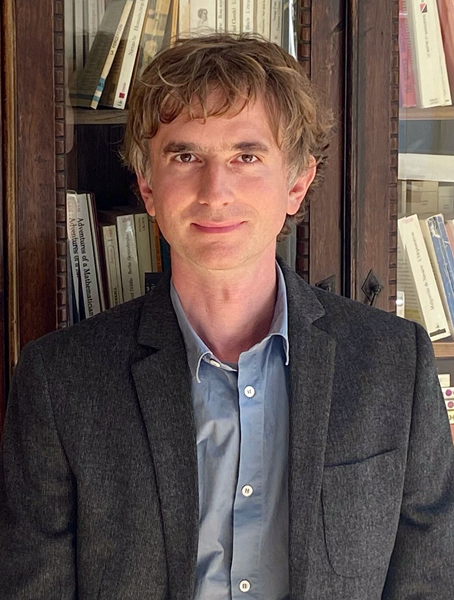
Emmanuel Breuillard is a Professor of Pure Mathematics at the University of Oxford. Previously, he held positions as Sadleirian Professor at the University of Cambridge (2017-2021), Professor at Université Paris-Sud (2008-2017), and Associate Hadamard Professor at École Polytechnique (2006-2008). His academic journey includes a PhD from Université Paris-Sud and Yale University, supervised by Frédéric Paulin and Gregory Margulis, and a Master in Mathematics from Cambridge. PhD: Université Paris-Sud (2004), supervised by Frédéric Paulin; Yale University, supervised by Gregory Margulis Master: University of Cambridge (2000) Ecole Normale Superieure (1997-1999) His research spans Combinatorics , Geometric Group Theory , Ergodic Theory , and Number Theory , focusing on approximate groups, expansion in finite simple groups, and Diophantine geometry. His recent work analyzes Elekes-Szabo problems in projective geometries. He has authored 50+ publications in prestigious journals, addressing topics like random polynomials, C*-simplicity, and uniform independence in linear groups. Fellow of the Royal Society (2024) ERC Consolidator Grant (2014-2019) Prix Charles-Louis de Freycinet (2013) European Mathematical Society Prize (2012) ERC Starting Grant (2008-2013) Cours Péccot, Collège de France (2006)
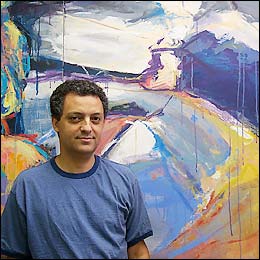
Shlomo Ta'asan is a Professor Emeritus in the Department of Mathematical Sciences at Carnegie Mellon University, affiliated with the Mellon College of Science. He holds a Ph.D. from The Weizmann Institute of Science. His research spans computational materials science and systems biology, with a focus on grain growth dynamics and immune response modeling. Collaborations include work with David Kinderlehrer, R. Suter Lab, and materials science faculty at CMU. Key research areas include bridging microscopic dynamics to macroscopic equations, grain boundary evolution, and immune system modeling. His work on inverse problems using HEDM data and entropy-based theories of grain boundary character distribution has advanced materials science. In biology, he develops models for circulatory system instabilities and shock mechanisms. Notable contributions include mesoscale simulations of grain growth and multigrid optimization methods for aerodynamics. His interdisciplinary approach integrates computational mathematics with experimental data from materials and biological systems.
Associate Professor Chris Wensrich is a faculty member in the School of Engineering at the University of Newcastle, specializing in Mechanical Engineering. He holds a PhD, Bachelor of Mathematics, and Bachelor of Engineering from the same university. His research focuses on granular mechanics, neutron diffraction, and strain tomography, with pioneering work in Bragg-edge transmission strain tomography and granular dynamics modeling. Wensrich has held visiting appointments at Clare Hall College, Cambridge University, and the Isaac Newton Institute for Mathematical Sciences in the UK. He currently serves as President of the Australian Neutron Beam User Group (ANBUG) and is a member of the ACNS Program Advisory Team at ANSTO. His expertise spans applied mechanics, computational modeling (DEM), and experimental techniques involving neutron diffraction. His research interests include granular material behavior, stress distribution measurement, and validation of computational models using neutron imaging. Notable contributions include studies on silo quaking dynamics, force chain analysis in granular assemblies, and residual stress characterization in additive manufacturing. Wensrich has supervised 11 PhD students and secured over $5.4M in grants, including ARC Discovery Projects and industry-linked initiatives. Publications span granular mechanics, strain tomography, and material characterization, with over 60 journal articles and 38 conference papers. His work bridges theoretical, computational, and experimental methods to advance understanding of particulate systems and engineering materials.
Hakan Demirtas is an Associate Professor in the Department of Epidemiology and Biostatistics at the University of Illinois at Chicago (UIC) School of Public Health. His research focuses on statistical methods for handling missing data, multiple imputation, and simulation techniques in public health contexts. He leads the Center for Health Statistics and has developed several R packages for data generation and analysis. His work emphasizes improving statistical methodologies for correlated data, particularly in discretization and correlation modeling. Notable contributions include frameworks for generating multivariate data with mixed variable types and modeling correlational transformations in non-normal contexts. His research also applies statistical models to epidemiological studies, such as estimating pandemic dynamics and assessing environmental health risks. Dr. Demirtas has published extensively on topics like Poisson data generation, fractional Brownian motion discretization, and software tools for statistical analysis. He actively contributes to the R community through packages like MultiOrd and PoisNor. Despite no explicit awards listed, his impactful methodological work underscores his expertise in biostatistics.
Taras Shevchenko National University of KyivUkraine
Alexander V. Marynych is a Professor at Taras Shevchenko National University of Kyiv. He holds a Doctorate with habilitation in Physics and Mathematics and has been recognized with numerous awards including the Gold Medal of the Ukraine Mathematics Competition (2020) and the Alexander von Humboldt Foundation fellowship (2015-2017). His research focuses on stochastic geometry, regenerative random structures, and probabilistic number theory. He has authored over 30 publications in top-tier journals such as Probability Theory and Related Fields and Annals of Probability . Key academic roles include: Guest Professorship at Leopold-Franzens-Universität Innsbruck (2018) Recipient of the President of Ukraine Prize for Young Scientists (2018, 2017) Lead researcher in projects funded by UC Berkeley, Humboldt Foundation, and Polish National Agency Teaching responsibilities include courses on: Algebra and Geometry for undergraduates Probabilistic Analysis of Algorithms Cryptography and Data Security His research portfolio demonstrates significant contributions to limit theorems, random analytic functions, and convex hull analysis through high-dimensional stochastic models.
Dr. Matt Amy is an Assistant Professor in the School of Computing Science at Simon Fraser University (SFU), holding the Canada Research Chair in Quantum Computing. His research focuses on quantum compilers, programming languages, and formal verification of quantum programs. He also explores quantum circuit optimization and models of quantum computation. Education: PhD in Computer Science (University of Waterloo, 2019), M.Math in Quantum Information (2013), and B.Math in Computer Science (2011), all from the University of Waterloo. Research Interests: Quantum compilers and languages, circuit optimization, formal verification, and quantum computation models. His work bridges theoretical foundations with practical implementations, emphasizing efficient quantum software development. Recent research trends include advancing quantum compilation techniques, exploring NP-hard optimization problems in quantum circuits, and developing formal methods for quantum program analysis. His work on symbolic synthesis and equational theories for quantum circuits demonstrates a focus on foundational algorithmic challenges. Scientific Awards: Canada Research Chair (2025–present) Advising and Grants: While no current advisees are listed, his research is supported by grants focused on quantum computing and formal methods. He collaborates with industry through SFU’s School of Computing Science. Labs and Teams: Involved with the Tangent Lab, a research group exploring quantum algorithms and software systems at SFU.
Felix Otto is a Professor and Director at the Max Planck Institute for Mathematics in the Sciences (Leipzig, Germany) since 2010. Previously, he held Full Professorships at the University of Bonn (1999–2010) and the University of California, Santa Barbara (1998–1999). His research focuses on applied mathematics, including micromagnetics, coarsening dynamics, stochastic homogenization, and hydrodynamic limits. He has received prestigious awards such as the Gottfried Wilhelm Leibniz Prize (2006) and the Max Planck Research Prize (2001). Education: 1993 PhD in Mathematics (advisor S. Luckhaus), University of Bonn 1990 Diploma in Mathematics (advisor G. Dziuk), University of Bonn Research interests emphasize the interplay between analysis, probability, and physics, particularly in understanding complex systems through rigorous mathematical methods. His work on gradient flows and optimal transport has led to foundational contributions in applied mathematics. Awards: Collatz Prize (2007) Membership in Berlin-Brandenburg Academy (2014) Leopoldina Academy (2008) Professional activities include roles as Editor of Archive for Rational Mechanics and Analysis and advisory roles at institutions like the Weierstrass Institute and Fondation Mathématique Jacques Hadamard.
Rutgers, The State University of New JerseyUnited States
Sheldon Goldstein is a Professor in the Department of Mathematics at Rutgers, The State University of New Jersey (Rutgers-New Brunswick). His research focuses on foundational questions in quantum mechanics, particularly Bohmian mechanics, and their intersections with mathematical physics and statistical mechanics. He collaborates extensively with leading researchers such as Detlef Dürr and Nino Zanghì. Goldstein's work addresses nonlocality, quantum foundations, entropy in non-equilibrium systems, and the philosophical implications of quantum theory. Education: Not explicitly stated in the provided texts, but his academic role implies Ph.D. in Mathematics/Physics. Affiliations: Rutgers Mathematics Department, School of Arts and Sciences (implied). His research explores Bohmian Mechanics , quantum nonlocality , statistical equilibrium , and thermodynamic principles . Key interests include resolving paradoxes like EPR and Bell's theorem, analyzing entropy dynamics, and advancing relational interpretations of physical laws. Recent publications (2021–2024) investigate hyperuniformity in exclusion processes, detection times in quantum mechanics, and Boltzmann entropy in quantum systems. Goldstein's interdisciplinary approach bridges physics, mathematics, and philosophy, emphasizing deterministic interpretations of quantum phenomena. Grants and awards: None explicitly listed in the provided texts. His work is supported through academic collaborations and institutional resources. Labs/Teams: Active in foundational physics research groups, including collaborations with Munich and Innsbruck workgroups on Bohmian mechanics.
James K. Hammitt is a Professor of Economics and Decision Sciences at the Harvard T.H. Chan School of Public Health , affiliated with the Center for Risk Analysis , Center for Health Decision Science , and Health Policy and Management Department . He is also a Senior Common Room member at Winthrop House (Faculty of Arts & Sciences, Harvard University). Education: AB in Applied Mathematics (magna cum laude, Harvard College, 1978), ScM in Applied Mathematics (Harvard University, 1978), MPP in Public Policy (Kennedy School of Government, 1981), PhD in Public Policy (Harvard University, 1988) His research focuses on quantitative methods in health and environmental policy , including benefit-cost analysis , decision analysis , and risk analysis . Key areas include managing long-term environmental uncertainties (climate change, ozone depletion), ancillary benefits/risk trade-offs , and social preference characterization using revealed/stated-preference and health-utility methods. He has contributed to 15+ recent publications spanning mortality risk valuation , health impact modeling , and policy evaluation in contexts ranging from COVID-19 to electric vehicles . Awards: Distinguished Achievement Award, Society for Risk Analysis (2015) Outstanding Achievement Award, Society for Benefit-Cost Analysis (2021) His work addresses complex policy challenges through interdisciplinary approaches, integrating economics , public health , and environmental science . While student advising isn't explicitly mentioned, his leadership in National Academies of Sciences panels and advisory committees to EPA/government agencies underscores his policy influence. No email addresses are publicly available.
Roel Bloo is a University Lecturer in the Department of Mathematics and Computer Science at Eindhoven University of Technology. His research group focuses on Algorithms and Logics for Verification. His research spans theoretical computer science with emphasis on: Formal methods and verification techniques Lambda calculus and type systems Computational logic and term rewriting Explicit substitution models Publications (2001-2012) demonstrate consistent specialization in foundational aspects of computer science, particularly formal semantics of programming languages, type theory implementations, and equivalence proofs in computational systems. Teaching responsibilities include courses in Discrete Mathematics, Logic and Set Theory, and Automata Theory.
ZİYATTİN TAŞ is a Lecturer in the Mathematics Department at the Faculty of Arts and Sciences, Bingöl University. He holds a Ph.D. in Mathematics from Yüzüncü Yıl University (2005) after completing his M.Sc. at Harran University (1995) and B.Sc. at Yüzüncü Yıl University (1993). His research focuses on functional analysis, Banach spaces, graph theory, and topological descriptors. He has published extensively in international journals like Journal of Discrete Mathematical Sciences & Cryptography and Graphs and Linear Algebra . Educations: B.Sc. (1993), M.Sc. (1995), Ph.D. (2005) Research interests include metric geometry, topological indices of molecular structures, and mathematical properties of graphs. His recent work involves analyzing entropy measurements in hexagonal cycloarene structures and domination connectivity in paths/cycles. He has collaborated on studies applying topological descriptors to Remdesivir drug design and silicate carbide analysis. Over 20 peer-reviewed articles, including contributions to QSPR analysis of octanes and Petersen graph topological correlations. No explicit awards listed, but active in national/international conferences since 2007.
Jason Miller is a Reader in Probability at the Department of Pure Mathematics and Mathematical Statistics (DPMMS) within the Faculty of Mathematics at the University of Cambridge. His research focuses on advanced topics in probability theory and mathematical physics, particularly exploring the deep connections between random geometry, conformal invariance, and quantum gravity. Miller's research interests span a sophisticated range of topics in modern probability, with particular emphasis on Schramm-Loewner evolution (SLE), Gaussian free field, Liouville quantum gravity, random planar maps, and random walks. His work sits at the intersection of probability theory, complex analysis, and mathematical physics, developing rigorous mathematical frameworks for understanding two-dimensional random structures that arise in statistical mechanics and quantum gravity. He has made significant contributions to establishing the connections between discrete random structures and their continuum limits, particularly in the context of Liouville quantum gravity and the Brownian map. Analysis of Miller's recent publications reveals a consistent research program focused on establishing the deep connections between various mathematical objects in two-dimensional random geometry. His work demonstrates how Liouville quantum gravity serves as a universal scaling limit for random planar maps, how Schramm-Loewner evolution describes the continuum limits of critical interfaces, and how these objects relate to the Brownian map through various characterization theorems. The mathematical techniques employed span conformal field theory, metric geometry, stochastic analysis, and complex analysis. As a member of the Statistical Laboratory research group within DPMMS, Miller collaborates extensively with leading researchers in probability theory, including Scott Sheffield, Ewain Gwynne, and Wendelin Werner. His work has been published in the most prestigious mathematics journals including Acta Mathematica, Inventiones Mathematicae, and the Annals of Probability, reflecting the significance and rigor of his contributions to the field.
James F. Peters is a faculty member in the Department of Electrical and Computer Engineering at the University of Manitoba, Winnipeg, Canada. His research lies at the intersection of computational topology, proximity theory, rough sets, and digital image analysis, with applications in computer vision, pattern recognition, and biologically-inspired computing. He has made foundational contributions to the theory of near sets and computational proximity, publishing extensively in journals and book series by Springer. His research interests include computational proximity, near sets, rough sets, digital image analysis, pattern recognition, and topological models of perception. These are evident from his numerous publications in theoretical and applied computer science, often in collaboration with researchers such as Andrzej Skowron, Sheela Ramanna, and Arturo Tozzi. His work spans mathematical foundations, computational models, and real-world applications in biomedical imaging and rehabilitation systems. The recent articles (2017–2025) show a strong trend toward integrating topology, physics, and neuroscience in the analysis of digital images and brain activity. Topics include proximal nerves, optical vortices, thermodynamics of emotions, and entropy in cosmology, indicating a broad interdisciplinary approach. His publications frequently appear in journals such as Entropy , Information Sciences , and Transactions on Rough Sets , as well as in Springer’s Lecture Notes in Computer Science and Intelligent Systems Reference Library series. He has authored or co-authored several books and special issues, notably in the Transactions on Rough Sets series, and has contributed to encyclopedic works on rough sets and computational intelligence. His editorial and collaborative roles highlight his leadership in the rough and near sets research community. Dr. Peters has advised or collaborated with several researchers, though specific student names are not listed in the provided text. He has been involved in projects related to adaptive learning, telerehabilitation gaming systems, and image classification using tolerance near sets. His work often involves grants and interdisciplinary teams, especially in computational intelligence and biomedical applications. He is associated with research groups and labs focused on computational intelligence, rough sets, and digital image analysis, often in collaboration with the University of Warsaw and other international institutions. His ongoing work continues to explore the mathematical foundations of perception and proximity in both artificial and biological systems.
Yann Ponty is a tenured CNRS Researcher at the Computer Science Department (LIX) of École Polytechnique (Institut Polytechnique de Paris, France). He leads the AMIBio team and serves as Deputy Director of LIX. His work focuses on developing bioinformatics methods at the intersection of computer science, mathematics, and molecular biology, particularly for RNA structure prediction, design, and evolution. He holds leadership roles in the ISCB Board of Directors (2025-2027) and the HDR referent for the IDIA department (CS&Interactions) at IP Paris. Research Interests: RNA folding/design/evolution, RNA-RNA/RNA-protein interactions, random generation, enumerative combinatorics, discrete algorithms, parameterized complexity, RNA visualization Key Contributions: Developed algorithms for RNA inverse folding, pseudoknot modeling, and dynamic programming optimization Collaborations: Partnerships with institutions like Simon Fraser University, Boston College, and Université Paris-Saclay His recent publications (15 most recent) span RNA structure prediction, pseudoknot partition functions, linear-time inverse folding algorithms, and parameterized sampling techniques. The work emphasizes dynamic programming, combinatorial approaches, and integration of experimental data for improving RNA modeling. Scientific awards include election to the ISCB Board of Directors (2025-2027) and leadership roles in academic networks like GdR BIM. He actively contributes to software development (VARNA, RNANR, SPARCS, IncaRNAtion, RNARedPrint) and serves as Associate Editor for Bioinformatics (OUP). Teaching engagements include graduate-level courses in combinatorial optimization, RNA bioinformatics, and algorithms at Université Paris-Saclay and École Polytechnique.