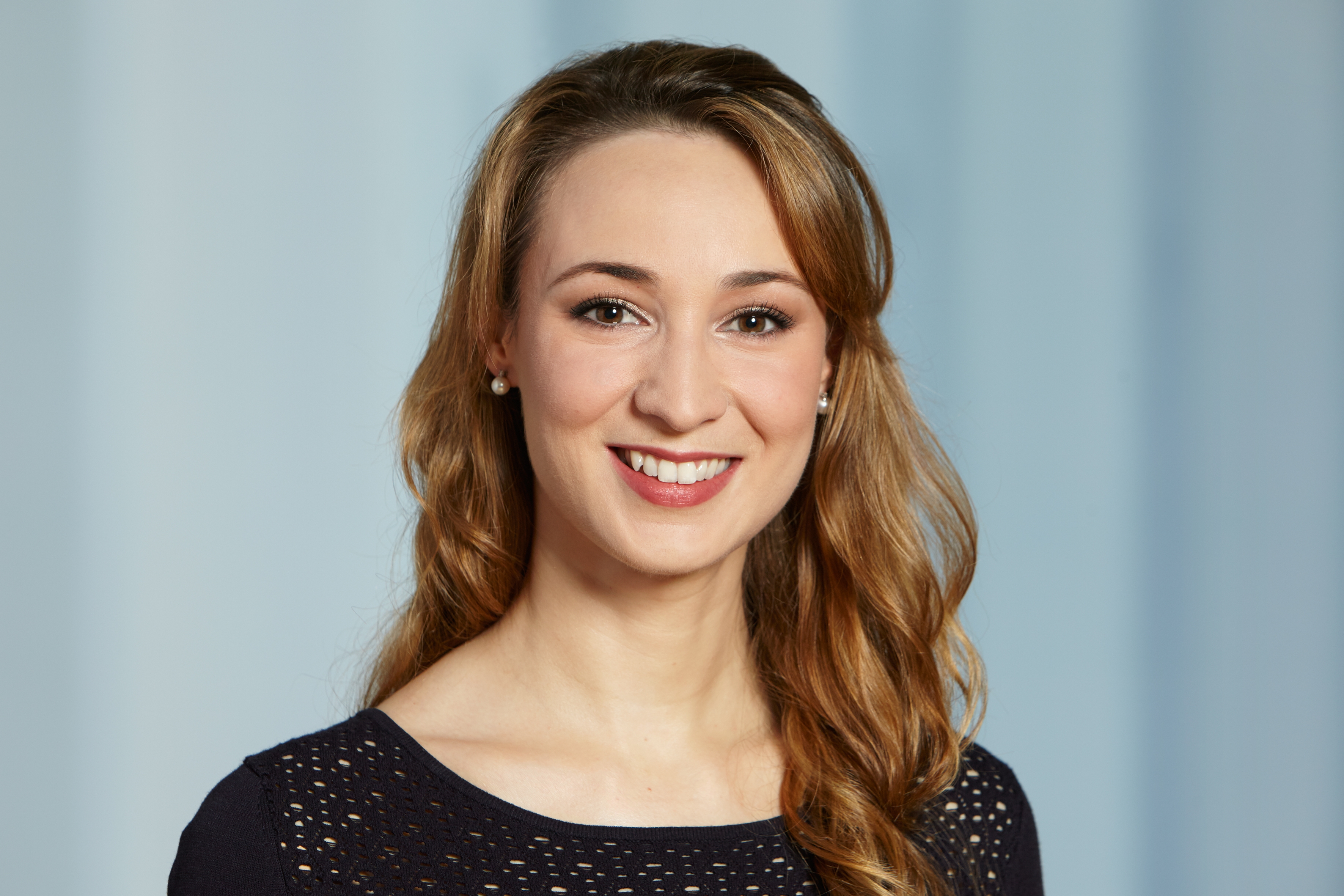
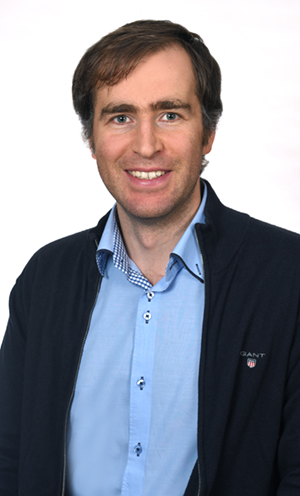
Maria Rita Casali is a Full Professor at the Department of Physical, Computer and Mathematical Sciences, University of Modena and Reggio Emilia. Her research focuses on geometry, topology, and mathematical structures, particularly in relation to PL-manifolds and colored tensor models. Teaching: Courses in Geometry, Discrete Mathematics, and Linear Algebra for Engineering and Strategic Sciences degrees. Research: Investigates combinatorial invariants (regular genus, G-degree, gem-complexity) for compact 4-manifolds, linking them to quantum gravity and tensor models. Publications: Recent works include studies on trisections of 4-manifolds, classifications via colored graphs, and combinatorial properties of the G-degree. Her contributions to crystallization theory and PL-manifold representation have advanced the understanding of geometric topology and its applications in theoretical physics.
Mikaela Iacobelli is an Associate Professor in the Department of Mathematics at ETH Zürich. During the 2024-25 academic year, she was a von Neumann Fellow at the Institute for Advanced Study in Princeton. Previously, she held faculty positions at Durham University and a research fellowship at the University of Cambridge. Her educational background includes: PhD in Mathematics from Sapienza University of Rome and École Polytechnique in Paris (2015) Master's degree from Sapienza University of Rome (2012) Bachelor's degree from Sapienza University of Rome (2009) Mikaela's research lies at the interface of analysis, kinetic theory, and statistical mechanics. She studies partial differential equations that model the collective behavior of many-particle systems, with a focus on Vlasov-type plasmas and gravitational dynamics. Her current projects range from quasineutral and singular-limit problems for Vlasov-type systems to quantization of measures, ultrafast diffusion, and gradient-flow structures that link microscopic particle models to macroscopic fluid descriptions. She makes extensive use of PDEs techniques, optimal transport, probability, calculus of variations, and Riemannian geometry in her work. Her recent publications demonstrate a strong focus on Vlasov-type equations, particularly examining quasineutral limits, stability properties, and connections to other physical systems like Euler equations and magnetohydrodynamics. She has made significant contributions to understanding Landau damping, quantization problems on manifolds, and the mathematical foundations of plasma physics. Her notable scientific awards include: SNSF Starting Grant (Swiss ERC) Challenges and Breakthroughs in the Mathematics of Plasmas (2025-2030) von Neumann Fellow at the Institute for Advanced Study, Princeton (2024-2025) Invited speaker at the International Congress of Mathematical Physics (2021) CO-PI of the Germaine de Staël Funding Program for French-Swiss cooperation (2021-2023) L'Oréal prize for Women in Science (2015) Mikaela actively mentors postdocs, PhD, Master's, and Bachelor's students. Her current mentees include postdocs Dennis Chemnitz, Rishabh Gvalani, Stefano Rossi, and Simon Becker, as well as PhD students Thérèse Moerschell, Ata Deniz Aydin, and Antoine Gagnebin. She has served as PI for the Starting Research Grant from the University of Rome Sapienza and is currently the PI for the SNSF Starting Grant. She co-organizes several academic seminars including the Zurich Colloquium in Mathematics, the PDE and Mathematical Physics seminar at ETH Zürich and UZH, and the Analysis Seminar. She also serves on various committees including as Chair of the European Mathematical Society Committee for Women in Mathematics.
Ivan Dokmanic is an Assistant Professor at the Coordinated Science Laboratory (CSL) within the University of Illinois . His research bridges signal processing , machine learning , and applied inverse problems , with a focus on acoustics, biomedical imaging, and distance geometry. Current Role : Assistant Professor, CSL Email : dokmanic@illinois.edu Research Interests : Dokmanic explores machine learning applications in inverse problems , particularly distance geometry for molecular imaging and acoustics . His work includes unlabeled sensing , where distances between points are known but their arrangement is not. This has implications for powder diffraction , indoor localization , and echo modeling . Article Trends : His recent publications emphasize distance geometry in machine learning , acoustic signal processing , and inverse problem theory . Key areas include molecular imaging , audio encryption , and sensor positioning . Collaborative work spans medical imaging , cyberphysical systems , and geometric invariants . 2016 Google Faculty Award NSF Grant (1 year, $157,079) Students and Grants : Dokmanic mentors PhD students like Puoya, Shuai, and Anadi. His research is funded by the National Science Foundation , Google , VISA , and nVidia .
Paata Ivanisvili is an Associate Professor at the University of California, Irvine (UCI), Department of Mathematics, School of Physical Sciences. His research focuses on Analysis, Probability, Harmonic Analysis, and Functional Analysis, with a particular emphasis on isoperimetric inequalities, functional inequalities, and discrete structures such as the Hamming cube. He has held visiting positions at institutions including the Hausdorff Research Institute for Mathematics and Princeton University. Ivanisvili has organized conferences such as the Dual Trimester Program at the Hausdorff Institute on Boolean Analysis in Computer Science (2024) and annual Summer/Fall Schools since 2021. He earned his PhD in Mathematics from Michigan State University (2015) and a BS from Saint Petersburg State University (2011). His research interests include sharp inequalities in analysis (e.g., Poincaré, Beckner, Ehrhard), hypercontractivity, and applications to discrete mathematics and probability. He has collaborated with prominent mathematicians such as Fedor Nazarov, Alexander Volberg, and Roman Vershynin. Notable awards include the NSF CAREER Award (2021–2025) and Simons Fellowship in Mathematics (2025–2026). Ivanisvili’s recent work explores the interface between harmonic analysis and discrete mathematics, including studies on additive energies, convex hulls of space curves, and learning theory. His articles frequently address foundational questions in geometric functional analysis, often using tools like Bellman functions and optimal control theory. He actively advises PhD students and has mentored visiting researchers at UCI.
Quoc Thong Le Gia is an Associate Professor in the School of Mathematics & Statistics at the University of New South Wales (UNSW), Sydney. He holds a PhD in Mathematics from Texas A&M University (2003), an MS in Mathematics from Texas A&M University (2000), and a BSc in Mathematics and Computer Science from UNSW (1998). His research focuses on Numerical Analysis , Approximation Theory , Partial Differential Equations , and Stochastic Processes , with particular expertise in problems on spherical domains. His work bridges theoretical mathematics with practical applications in computational science, data science, and machine learning. Le Gia's recent publications demonstrate a strong focus on numerical methods for PDEs on spheres, stochastic analysis, and machine learning applications. His work shows consistent progression from theoretical foundations to practical implementations, with increasing interdisciplinary applications in recent years. L. F. Guseman Prize in Mathematics, Texas A&M University (2003) As a dedicated academic mentor, Le Gia has supervised numerous PhD, Master's, and Honours students across computational mathematics and data science topics. He has secured significant research funding through ARC Discovery Projects including DP220101811 (2022-2024) and DP180100506 (2018-2020). Professionally, he serves as External Associate Editor for Frontiers in Applied Mathematics and Statistics , Secretary for ANZIAM's Computational Mathematics Group, and Co-chair of Mathematics of Computation and Optimisation (AustMS Special Interest Group).
David Jao is a Professor in the Department of Combinatorics and Optimization at the University of Waterloo. His research focuses on post-quantum cryptography, particularly leveraging isogenies of supersingular elliptic curves for secure cryptographic protocols. He is renowned for co-developing the Supersingular Isogeny Key Encapsulation (SIKE) protocol, a leading candidate for post-quantum cryptography standards. His work spans theoretical foundations and practical implementations, including optimizing isogeny-based systems for embedded devices and ARM processors. Research interests include isogeny-based cryptosystems, elliptic curve cryptography, zero-knowledge proofs, and cryptographic security against quantum attacks. He explores applications of expander graphs and Ramanujan graphs in cryptography, alongside algorithmic improvements for cryptographic protocols such as SIDH (Supersingular Isogeny Diffie-Hellman). Key contributions include advancements in key compression techniques for SIKE, side-channel attack mitigation, and formalizing security models for post-quantum key exchange. His publications analyze cryptographic hardness assumptions, such as the discrete logarithm problem in finite groups and the semidirect product structure in isogeny-based systems. Jao’s work bridges theoretical mathematics and applied cryptography, with a focus on ensuring practical security in next-generation cryptographic systems. His research addresses challenges in quantum-resistant authentication, key establishment, and digital signatures, often emphasizing efficiency and resistance to both classical and quantum attacks.
David Eppstein is a Distinguished Professor of Computer Science at the University of California, Irvine (UCI), affiliated with the Donald Bren School of Information & Computer Sciences. He holds academic leadership roles as director of the Center for Algorithms and Theory of Computation and associate director of the Center for Algorithms, Combinatorics, and Optimization. His research focuses on graph algorithms, computational geometry, discrete mathematics, and geometric graph theory. Eppstein earned a B.S. in Mathematics from Stanford University (1984) and a Ph.D. in Computer Science from Columbia University (1989). Research Interests: Graph drawing, information visualization, dynamic graph algorithms, mesh generation, optimal triangulation, K-shortest paths, subgraph isomorphism, data depth, exponential-time algorithms for NP-hard problems. Awards: ACM Fellow (2012), AAAS Fellow (2017), Distinguished Professor (2020), Best Paper Awards (2023, 2022), and SIAM recognition. Grants: Co-PI on a $1.2M NSF grant (2022) for geometric graph research, and previous NSF grants for algorithm studies (2016). His work bridges theoretical computer science and practical applications, including contributions to graph visualization, geometric algorithms, and combinatorial optimization. Notable recent achievements include resolving open questions in graph biplanarity and authoring the book Forbidden Configurations in Discrete Geometry (2018).
Vadim Lozin is a Professor of Mathematics at the University of Warwick, affiliated with the Department of Mathematics within the School of Mathematics. His research interests span graph theory, combinatorics, and discrete mathematics, focusing on areas such as clique-width, Ramsey numbers, and structural graph theory. He has held visiting positions at institutions including the Université Paris-Dauphine, EPFL, and KAUST. Lozin has received several accolades, including the Best Paper Award for 'Linear Ramsey numbers' in 2018 and a 2024 award at the International Symposium on Algorithms and Computation. His work involves collaborations with global researchers and contributions to conferences like IWOCA and WG. Lozin serves on editorial boards for journals such as Discrete Applied Mathematics and Electronic Notes in Discrete Mathematics . His research explores foundational problems in graph theory, with applications in algorithm design and complexity analysis. Lozin’s publications include studies on union-closed sets, functional graph properties, and algorithmic approaches to graph parameters. He has also contributed to books like Words and Graphs , bridging formal language theory with graph structures. His grants focus on clique-width and stability in graphs, reflecting his commitment to advancing theoretical and applied discrete mathematics.
Michał Pilipczuk is an Associate Professor at the Institute of Informatics, Faculty of Mathematics, Informatics and Mechanics of the University of Warsaw. His research focuses on theoretical computer science, particularly algorithms on discrete structures, parameterized algorithms, structural graph theory, and logic in computer science. He leads the ERC-funded project "BOBR: Decomposition Method for Discrete Problems" and previously led a grant on optimality in parameterized complexity funded by the Polish National Science Center. His research interests include parameterized algorithms , structural graph theory , graph algorithms , and computational complexity . He has made significant contributions to the understanding of problems such as Independent Set in restricted graph classes, graph editing problems, and structural decompositions. The recent publications highlight a strong focus on structural graph theory and exact algorithms . Key themes include quasi-polynomial time algorithms for Independent Set in claw-free graphs, diameter computation in bounded genus graphs, and kernelization in trivially perfect graphs. His work often bridges combinatorial insights with algorithmic applications, particularly in the context of parameterized complexity. Principal Investigator, ERC Grant BOBR: Decomposition Method for Discrete Problems (2021–2026) Principal Investigator, Polish National Science Center Grant on Optimality in Parameterized Complexity (2014–2017) He has advised or collaborated with several researchers, including Marcin Wrochna and Marcin Pilipczuk. His work is published in top venues such as STOC, SODA, ESA, and ICALP.
David Croydon is an Associate Professor at the Research Institute for Mathematical Sciences (RIMS), Kyoto University. His research focuses on probability theory, particularly diffusions on random fractals and scaling limits of random walks on random graphs. He also investigates discrete integrable systems with random initial conditions. Dr. Croydon's primary research interests span several areas of probability theory and mathematical physics. His work centers on diffusions on random fractals and how these processes can be constructed as scaling limits of related random walks on random graphs. He has made significant contributions to understanding random walks on critical structures including Galton-Watson trees, uniform spanning trees, and percolation clusters. More recently, he has developed a growing interest in the behavior of discrete integrable systems such as the box-ball system, particularly when started from random initial conditions. His research often bridges theoretical probability with applications in statistical physics and mathematical physics. Dr. Croydon's recent publications demonstrate a dual focus on theoretical probability and mathematical physics. His work on random walks spans various structures including binary trees, critical percolation clusters, and uniform spanning trees. He has made significant contributions to understanding aging phenomena, heat kernel fluctuations, and scaling limits in random media. Simultaneously, his research on discrete integrable systems explores the connections between probability theory and soliton theory, particularly through the lens of the box-ball system and related models. These two research strands converge in his investigations of scaling limits and invariant measures for complex stochastic systems. Dr. Croydon's scientific contributions have been recognized through publications in top-tier journals across probability theory and mathematical physics, though specific awards are not mentioned in the available information. Dr. Croydon has supervised several doctoral students to completion, including Adam Bowditch (2017), George Andriopoulos (2019), Eleanor Archer (2020), and Takumu Ooi (2024). He has also served in advisory roles for other students including John Sylvester (2017). His collaborative research spans multiple international institutions, suggesting involvement in various research grants supporting his work in probability theory and mathematical physics. While specific lab names aren't mentioned, Dr. Croydon is part of the vibrant probability theory research group at the Research Institute for Mathematical Sciences (RIMS) at Kyoto University. His extensive collaborations with researchers worldwide, particularly in the UK, France, and Japan, indicate active participation in international research networks focused on stochastic processes, random media, and discrete integrable systems.
Sara Zahedi is a Professor of Numerical Analysis at the Department of Mathematics, KTH Royal Institute of Technology, working within the Division of Numerical Analysis, Optimization and Systems Theory. She serves as an Associate Editor for the SIAM Journal on Numerical Analysis and contributes to the SCI Faculty Board to enhance collaboration and transparency in academic decision-making. Her educational background includes a doctorate from KTH on numerical methods for fluid interface problems followed by a postdoctoral position at Uppsala University. Doctorate: KTH Royal Institute of Technology Postdoctoral Position: Uppsala University Zahedi's research bridges mathematical theory and practical applications, focusing on computational methods for partial differential equations in evolving domains. She pioneers Cut Finite Element Methods (CutFEM) to eliminate re-meshing requirements in multiphase flow simulations, ensuring accuracy and robustness when interfaces separate immiscible fluids. Her work specifically targets challenges in large deformations and time-dependent geometries. Analysis of her recent publications reveals a concentrated research trajectory in advancing CutFEM for diverse applications including Stokes flow, Darcy flow, Maxwell's equations, and hyperbolic conservation laws. Key trends include high-order conservative schemes, divergence preservation, stabilization techniques for unfitted meshes, and extensions to surface PDEs and multi-physics problems. Her scientific recognition includes: European Mathematical Society Prize (2016) for outstanding contributions by young researchers Wallenberg Fellowship (2019) with extension granted in 2024 Zahedi serves as examiner for Degree Projects in Scientific Computing (SF250X, SF259X) and course responsible for Engineering Mathematics projects (SA120X). Her Wallenberg Fellowship provides substantial research funding supporting her work on numerical algorithm development. While specific lab structures aren't detailed, her research operates within KTH's Division of Numerical Analysis, emphasizing collaborative development of simulation tools for industrial and scientific applications. Her current research focuses on extending CutFEM to complex multi-physics scenarios with emphasis on conservation properties and computational efficiency, with potential applications in aerospace, biomedical engineering, and environmental modeling.
Aaron Smith is an Associate Professor in the Department of Mathematics and Statistics at the University of Ottawa, affiliated with the Faculty of Science. He holds a PhD from Stanford University. His research focuses on applied probability, computational statistics, Monte Carlo methods, and Markov chains, with an emphasis on advancing theoretical understanding and practical applications of these methodologies. Dr. Smith's work includes contributions to community detection algorithms, Markov chain mixing times, and synthetic health data generation. His recent publications explore topics such as nonstandard Dirichlet form representations, perturbation analysis of MCMC algorithms, and sparse Bayesian multidimensional scaling. He advises students in applied probability and has supervised postdoctoral researchers in related fields. His research interests span a wide range of topics, including stochastic processes, statistical inference, and algorithm design. He is particularly known for his analysis of convergence rates in Markov chains and the development of efficient sampling techniques for complex models. His interdisciplinary work bridges theoretical mathematics and practical computational challenges in data science and healthcare. Dr. Smith collaborates on projects involving synthetic data frameworks for privacy-preserving applications and has contributed to foundational work on mixing times and perturbation effects in stochastic systems.
Euiwoong Lee is an Assistant Professor in the Computer Science and Engineering Division at the University of Michigan. He holds a PhD from Carnegie Mellon University, advised by Venkatesan Guruswami, and has held postdoctoral positions at New York University and the Simons Institute for the Theory of Computing. His research focuses on approximation algorithms, hardness of approximation, and parameterized complexity. **Education:** PhD in Computer Science, Carnegie Mellon University (2017), advised by Venkatesan Guruswami Postdoctoral Fellowships: NYU (2017–2020), Simons Institute (2017–2020) **Research Interests:** Approximation Algorithms & Hardness of Approximation Convex Hierarchies (e.g., Sum-of-Squares) Clustering Algorithms (e.g., Correlation Clustering) Parameterized Complexity Facility Location & Metric Optimization **Awards:** Edmund M. Clarke Doctoral Dissertation Award (2017) Simons Award for Graduate Students in Theoretical Computer Science **Advising & Grants:** PhD Students: Anthony Della Pella, Aditya Anand, Amatya Sharma, Ian DeHaan Co-organizes the Michigan Theory Seminar **Labs/Teams:** Collaborates with researchers in approximation algorithms, optimization, and theoretical computer science at the University of Michigan and beyond.
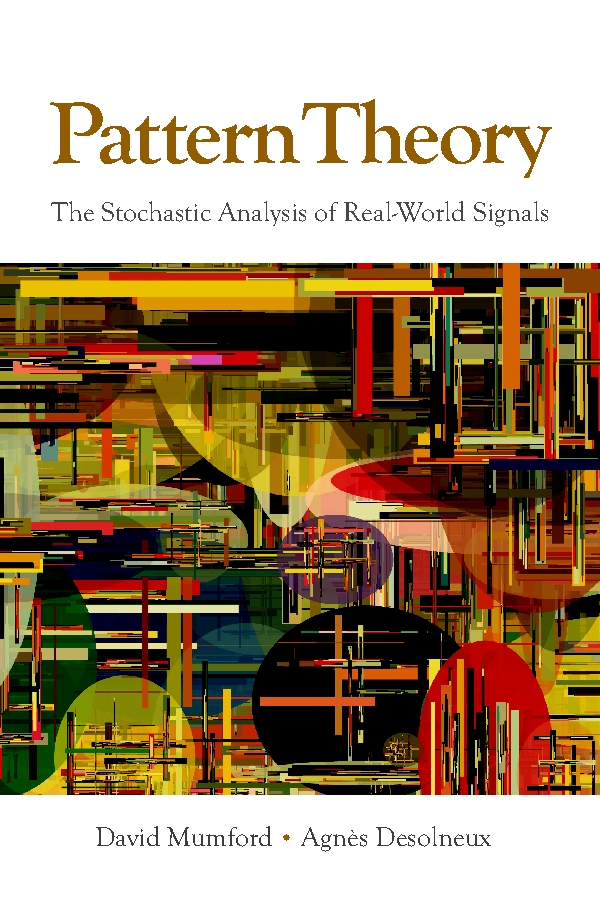
Agnes Desolneux is a CNRS Research Director at the Borelli Centre (formerly CMLA) and a Professor attached to the Mathematics Department at ENS Paris-Saclay. Education: PhD in Applied Mathematics (2000) from ENS Cachan Habilitation in Applied Mathematics (2010) from Université Paris Descartes Her research focuses on image analysis via statistical methods , particularly a contrario approaches, image restoration, texture synthesis, Determinantal Point Processes (DPP), optimal transport, Gaussian mixtures, geometry of random field excursions, shot-noise models, and mathematical modeling of visual perception through Gestalt theory. The articles extracted reflect her expertise in applied mathematics and computer vision , with recent works (2025-2020) on optimal transport algorithms, DPP applications, multiscale texture analysis, and stochastic modeling in medical imaging. Keywords span machine learning, probability theory, medical imaging, and computer vision . She has no listed scientific awards but has authored influential works including the book From Gestalt Theory to Image Analysis: A Probabilistic Approach (Springer, 2008) and Pattern Theory: the stochastic analysis of real-world signals (AK Peters, 2010).
Nathan (Nati) Linial is a Professor at the School of Computer Science and Engineering at the Hebrew University of Jerusalem, where he has been a faculty member since completing his postdoctoral period at UCLA. He earned his undergraduate degree in mathematics from the Technion and his PhD in graph theory from the Hebrew University. His research spans multiple areas of theoretical computer science and mathematics, with primary focus on combinatorics, theoretical computer science, and bioinformatics. Linial's work has made significant contributions to high-dimensional combinatorics, expander graphs, metric embeddings, and computational molecular biology. His research often bridges geometry, analysis, and combinatorial structures, demonstrating deep connections between seemingly disparate mathematical fields. Linial's recent publications reveal a strong trend toward high-dimensional combinatorial structures, including simplicial complexes, hypertrees, and high-dimensional permutations. His work frequently employs probabilistic methods, linear programming techniques, and geometric approaches to solve fundamental combinatorial problems. The breadth of his research is evident in both pure mathematical contributions and applications to computational biology. Fellow of the American Mathematical Society ISI Highly Cited Researcher Conant Prize (2008) for the influential survey paper "Expander graphs and their applications" Linial has served on the editorial boards of several prestigious journals including the Israel Journal of Mathematics (as Chief Editor 2013-2017), Random Structures and Algorithms, and Combinatorica. His academic leadership extends to organizing conferences and workshops in combinatorics and theoretical computer science. He has mentored numerous students whose work spans theoretical computer science, combinatorics, and computational biology. Linial is associated with research projects including ProtoNet (for protein sequence classification) and EVEREST (for evolutionary conserved protein domains), demonstrating his commitment to interdisciplinary research that bridges computer science with molecular biology.