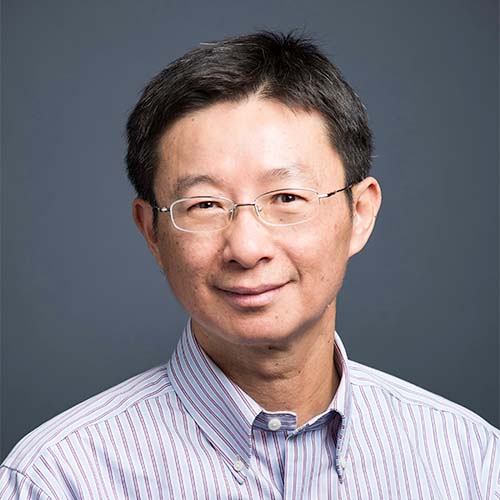
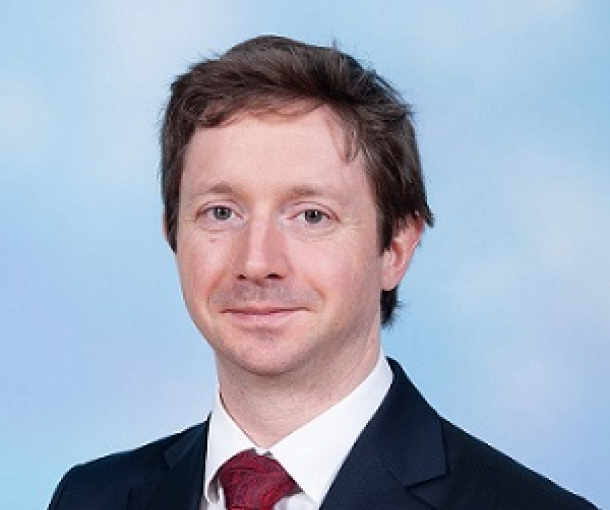
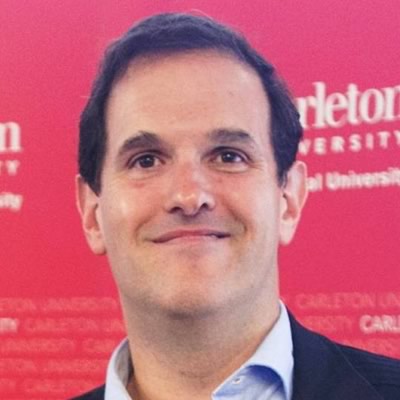
Christiane Barz is a Professor of Mathematics at the University of Zurich's Institute for Business Administration since 2016. Previously, she held academic roles at the UCLA Anderson School of Management, the Chicago Booth School of Business, and the Technical University (TU) Berlin. Her research focuses on stochastic dynamic systems, Markov decision processes, and their applications in revenue management. She emphasizes making mathematical tools accessible and practical for real-world problem-solving, particularly in optimizing decision-making under uncertainty. Education includes a degree in industrial engineering and a doctorate from the University of Karlsruhe (TH), Germany. Her career path includes postdoctoral research at the University of Chicago's Booth School of Business and roles as an Assistant Professor at UCLA. She combines academic excellence with balancing family life, advocating for gender equity in STEM fields. Her research explores risk-sensitive decision-making frameworks, dynamic pricing models for transportation and healthcare, and optimizing resource allocation in complex systems. Recent work includes applications in FlixBus, air cargo networks, and improving patient admission scheduling in hospitals. Barz's teaching philosophy prioritizes demystifying mathematics for students, encouraging critical engagement rather than fear of complexity. She collaborates with industry partners to apply operations research methods to real-world challenges, emphasizing both theoretical rigor and practical relevance.
Professor Chun-Hung Chen is a distinguished academic at George Mason University ’s Volgenau School of Engineering , where he holds the rank of Professor in the Department of Systems Engineering and Operations Research . He has also held professorships at National Taiwan University and visiting roles at institutions like University of Pennsylvania and Microsoft Research Asia . Education: PhD in Decision and Control, Harvard University (1994) MS in Electrical Engineering, National Taiwan University (1989) BS in Control Engineering, National Chiao-Tung University (1987) Research Interests focus on Stochastic Simulation Optimization , particularly his pioneering Optimal Computing Budget Allocation (OCBA) methodology. OCBA enhances simulation efficiency by dynamically allocating computational resources to critical design alternatives, reducing computation time by orders of magnitude. Applications span air transportation , healthcare , power grids , and semiconductor manufacturing . His 15 most recent articles (2022–2025) explore intersections of simulation optimization , artificial intelligence , reinforcement learning , and personalized medicine , emphasizing computational efficiency and stochastic systems in domains like microgrids and organ transplant logistics . Scientific Awards include: IEEE Fellow (2015) K.D. Tocher Medal (2017) Best Paper Awards at IEEE CASE (2019), LOGMS (2019), and IEEE ICC (2021) Harvard’s Eliahu I. Jury Award (1994) Advisory roles include editorial leadership in IIE Transactions , Journal of Simulation , and IEEE Transactions series. He has coordinated graduate programs at George Mason (2006–11, 2015–19) and led conferences like INFORMS International Meeting (2025) and Harvard Control Workshop (2024). His work is funded by organizations such as the National Science Foundation , National Institutes of Health , and Department of Energy , with applications in healthcare logistics and microgrid control .
Paul Daly is Professor and University Research Chair in Administrative Law & Governance at the University of Ottawa's Faculty of Law (Common Law Section), appointed in July 2019. Fluent in English and French, he maintains an active external role as part-time member of Canada's Environmental Protection Tribunal since 2019 and has held prior positions at the University of Cambridge and Université de Montréal, with visiting appointments at Harvard Law School, Université Paris II, Louvain Global College of Law, Trinity College Dublin, and Ireland's Law Reform Commission. His academic credentials include: BCL and LLM from University College Cork LLM from University of Pennsylvania Law School PhD from University of Cambridge Professor Daly's research centers on public law with exceptional focus on administrative law, examining judicial review standards, deference principles, and the constitutional foundations of administrative decision-making. His scholarship on the Vavilov framework and Doré duty has reshaped understanding of reasonableness review and fundamental rights application in administrative contexts. He pioneers interdisciplinary approaches connecting legal theory with practical governance challenges, emphasizing procedural fairness and accountability within the administrative state. Analysis of his publication trends reveals deep engagement with Canadian administrative law evolution while maintaining strong comparative perspectives across common law jurisdictions. His work consistently bridges doctrinal analysis with practical implications for tribunals, courts, and policymakers, particularly regarding standard of review methodologies and rights protection mechanisms. Scientific recognition includes: Lexpert Rising Stars Award (2023) for outstanding contributions to public law While specific doctoral students aren't documented, Professor Daly actively mentors through judicial training seminars and continuing legal education events nationwide. His scholarly influence extends through over 150 judicial citations internationally and frequent expert testimony. Grant funding details aren't specified, but his University Research Chair position signifies substantial institutional support for his administrative governance research program. His influential blog Administrative Law Matters serves as a central hub for global administrative law discourse, featuring case commentaries and theoretical analyses that directly inform judicial reasoning as evidenced by multiple Supreme Court of Canada citations.
Professor Ingrid Bouwer Utne is a faculty member at the Department of Marine Engineering, Norwegian University of Science and Technology (NTNU). Her primary research focuses on risk analyses of ships, marine systems, and autonomy, with emphasis on operational safety, maintenance management, and risk control in autonomous maritime technologies. Key Projects: Leader of the Risk Group at NTNU, involved in the SFI Autoship initiative and ERC AdG BREACH project addressing risk-based rationality in autonomous systems. Research Interests: Autonomous systems design, probabilistic risk assessment, safety engineering, and risk-informed decision-making for marine operations. Grants & Funding: Secured funding from the Research Council of Norway, MAROFF, and industry partners for projects like ORCAS (Online Risk Management for Autonomous Ships) and UNLOCK (Supervisory Risk Control). She supervises numerous PhD students and postdocs, focusing on topics such as autonomous vessel navigation, risk modeling for underwater robotics, and decarbonization of maritime systems. Her work bridges theoretical risk analysis with practical applications in marine autonomy and safety systems.
Dr. Gabriel Wainer is a Professor in the Department of Systems and Computer Engineering at Carleton University's Faculty of Engineering and Design. He leads the Advanced Real-Time Simulation Lab and specializes in modeling and simulation methodologies, particularly focusing on discrete event systems, real-time modeling, cellular automata, and DEVS formalism. Research Interests: Discrete event systems, DEVS formalism, cellular automata, real-time simulation, IoT applications, and parallel/distributed simulation Affiliation: Carleton University Recent publications highlight his work in advanced simulation frameworks, energy-efficient 5G systems using deep reinforcement learning, and pandemic modeling with cellular automata. His lab develops tools like PROMETHEUS and Devsmap for standardized DEVS model representation, while also exploring applications in wireless communication, building energy systems, and behavioral epidemiology.
Professor Dmitri Panov is a Professor of Geometry at King's College London, part of the Faculty of Natural, Mathematical & Engineering Sciences. He holds a PhD from École Polytechnique (2005) and has held academic positions including Royal Society Research Fellow (2010–2012), Senior Research Fellow (2012–2015), and Reader (2015–2020) at King’s College. His research focuses on complex, symplectic, and hyperbolic geometry, with a particular emphasis on polyhedral Kahler structures and definite connections. Education: Bachelor’s degree from Moscow State University (1998) PhD from École Polytechnique, France (2005) Research Interests: Panov studies geometric structures such as polyhedral Kahler manifolds and definite connections. His work bridges algebraic, differential, and symplectic geometry, with applications to moduli spaces, spherical metrics, and geometric analysis. Grants & Projects: EPSRC Grant: Kaehler manifolds of constant curvature with conical singularities (2019–2023) Royal Society Grant: Polyhedral Kahler Geometry (2017–2018) Geometric structures on manifolds (2015–2018) Events: Panov has participated in events like the Mathematics Inaugural Lecture (2023) and PhD program introductions, emphasizing his role in academic leadership and outreach.
Francisco Camara Pereira is a Professor and Head of Section at the Department of Technology, Management and Economics at the Technical University of Denmark (DTU). His research focuses on Intelligent Transportation Systems, Machine Learning, and Data-Driven Decision-Making in transportation contexts. He actively contributes to advancing transportation science through interdisciplinary approaches combining simulation, optimization, and AI techniques. His work addresses challenges in public transport analysis, charging infrastructure planning, and multimodal demand prediction. Recent projects include developing graph-based optimization methods for electric vehicle networks and causal discovery frameworks for transportation systems. He supervises multiple PhD students in areas like federated learning for cyclist safety, causal graph neural networks, and socially aware AI models. Key contributions include publications on smart card data analysis for travel surveys, stochastic infrastructure expansion models, and transfer learning for bike-share systems. His research aligns with UN Sustainable Development Goals related to sustainable cities and innovation. Dr. Pereira collaborates internationally on transportation policy and infrastructure projects. His lab focuses on translating theoretical advancements into practical solutions for urban mobility challenges.
Dr. Victoria C. P. Chen is a Professor in the Industrial, Manufacturing, and Systems Engineering (IMSE) department at The University of Texas at Arlington (UTA), where she has served since 2002. She previously held positions at the Georgia Institute of Technology from 1993-2001. Dr. Chen has held several leadership roles at UTA, including Interim Department Chair (2012-2014), Director of the Center on Stochastic Modeling, Optimization, & Statistics (COSMOS) (2008-2012, and again from 2017-present), and Director of Doctoral Studies (2019-present). She was also the George & Elizabeth Pickett Professor from 2015-2017 and was inducted into the UT Arlington Academy of Distinguished Teachers in 2019. Dr. Chen is actively involved with INFORMS (Institute for Operations Research and the Management Science), where she currently serves as Secretary on the Executive Board. Dr. Chen earned her B.S. in Mathematical Sciences from The Johns Hopkins University, and her M.S. and Ph.D. in Operations Research and Industrial Engineering from Cornell University. Her academic journey includes visiting professorships at the University of Genoa, Italy, and Iowa State University. Dr. Chen's research utilizes statistical perspectives to create new methodologies for operations research problems appearing in engineering and science. Her expertise includes the design of experiments, statistical modeling, and data mining, particularly for computer experiments and stochastic optimization. Through her statistics-based approach, she has developed computationally-tractable decision-making methods for many high-dimensional complex systems. Her work spans multiple domains including sustainability, energy, water management, healthcare, and law enforcement. Specific application areas include inventory forecasting, airline optimization, water reservoir networks, wastewater treatment, air quality monitoring, green building design, nurse assignment systems, and pain management programs. Her recent publications demonstrate continued innovation in mixed integer programming for electric vehicle charging stations, vacuum ultraviolet spectroscopy prediction, and sustainable building education. Senior Member, Institute for Operations Research and the Management Sciences (INFORMS) (2024) Data Mining Prize (Lifetime Achievement Award), INFORMS Society on Data Mining (2023) College of Engineering Teaching Award, UT Arlington (2021) Third Place Award, C3.ai COVID-19 Grand Challenge (2020) Academy of Distinguished Teachers, University of Texas at Arlington (2019) George & Elizabeth Pickett Professorship (2015-2017) As an educator and mentor, Dr. Chen has advised over 25 doctoral students across diverse research topics in operations research and systems engineering. She has secured substantial research funding from multiple sources including the National Science Foundation (over $1.5 million in active projects), Environmental Protection Agency, National Institute of Justice, and industry partners like Luminant and Dallas-Fort Worth International Airport. Her current research projects focus on decision analytics for sustainable urban environments, optimization for Texas water management, and statistical methods for pain management programs. She has served as Principal Investigator or Co-PI on more than 20 externally funded research projects totaling over $3 million in funding. Dr. Chen co-founded the Center on Stochastic Modeling, Optimization, & Statistics (COSMOS) at UTA with Dr. H. W. Corley. This research center brings together faculty and students from multiple disciplines to address complex problems through advanced statistical and optimization methods. She also leads interdisciplinary research teams working on projects related to sustainable infrastructure, energy systems, and healthcare optimization, frequently collaborating with researchers from civil engineering, environmental science, and medical fields.
Michele Dolce is a Lecturer and Scientist at the École Polytechnique Fédérale de Lausanne (EPFL), affiliated with the School of Basic Sciences (SB) and the Chair of Mathematical Analysis, Calculus of Variations and PDEs (AMCV). He previously held positions as a Postdoc at EPFL and a Research Associate at Imperial College London, where he worked under Prof. Michele Coti Zelati. His academic journey includes a PhD from the Gran Sasso Science Institute. Current affiliation: EPFL, School of Basic Sciences (SB), Department of Mathematics (MATH), AMCV Past affiliation: Imperial College London His research focuses on the mathematical analysis of Partial Differential Equations (PDEs) in fluid dynamics and kinetic theory. Key areas include hydrodynamic stability, long-time behavior of viscous vortex systems, and time-decay properties of kinetic models like the Boltzmann and Wave Kinetic Equations. Recent work explores vortex merging phenomena and Taylor dispersion in rotationally symmetric flows. Scientific activities include organizing workshops such as "Long time dynamics in random and deterministic systems" (2025) and co-organizing events like the "Deterministic and random features of fluids" summer school (2023) and the "Enjoying Probability and Fluids in Lausanne" workshop (2023). His publications span journals including Communications in Mathematical Physics, Archive for Rational Mechanics and Analysis, and Journal of Mathematical Fluid Mechanics. Supported by Swiss National Science Foundation (SNF Ambizione grant PZ00P2_223294) Partially funded by GNAMPA (INdAM group)
Christos G. Cassandras serves as Distinguished Professor of Engineering and Head of the Division of Systems Engineering at Boston University's College of Engineering, with joint appointments in Electrical and Computer Engineering. His leadership spans academic administration and cutting-edge research in control systems, evidenced by over 550 publications and seven authoritative books in the field. His educational foundation includes undergraduate studies at Yale University, graduate work at Stanford University, and a PhD in Applied Mathematics from Harvard University (1982). This multidisciplinary background underpins his research approach. Dr. Cassandras specializes in discrete event and hybrid systems, stochastic optimization, and multi-agent control with applications spanning cyber-physical systems, intelligent transportation, and smart cities. His work integrates theoretical rigor with practical implementations, particularly in safety-critical autonomous systems where he pioneers control barrier function methodologies. Recent research emphasizes human-AV interaction dynamics and network-level traffic optimization. Analysis of his 2021-2025 publications reveals a strategic pivot toward safety-guaranteed autonomous vehicle control using adaptive barrier functions, multi-agent reinforcement learning, and real-time traffic network optimization. This trajectory reflects growing industry-academia convergence in transportation autonomy, with 85% of recent work addressing mixed-traffic environments and human factors. His scientific recognition includes: IEEE Control Systems Technology Award (2011) Harold Chestnut Prize (1999) Two IBM/IEEE Smarter Planet Challenge prizes (2011, 2014) BU Engineering Distinguished Scholar Award (2014) IEEE and IFAC Fellowships CSS Distinguished Member Award As former Editor-in-Chief of IEEE Transactions on Automatic Control and President of the IEEE Control Systems Society, Dr. Cassandras has shaped global research directions. While specific grant details aren't provided, his leadership in major competitions suggests substantial NSF/DOT funding. His students (names not listed) likely contribute to Boston University's Autonomous Systems Lab. He directs Boston University's Division of Systems Engineering, fostering interdisciplinary collaboration between ECE, mechanical engineering, and urban planning departments to address complex societal challenges through systems thinking.
Maurice Heemels is a Full Professor at Eindhoven University of Technology (TU/e), leading the Control Systems Technology group. He holds additional professorships in EAISI Mobility, EAISI Foundational, EAISI Health, and EAISI High Tech Systems. His research focuses on hybrid and networked systems, emphasizing resource-aware control, event-triggered strategies, and cyber-physical systems integration. He is an IEEE Fellow and chairs the IFAC Technical Committee on Networked Systems. Academic Background: MSc and PhD in Mathematics (TU/e, 1995 and 1999, both summa cum laude ) Visiting Professorships: ETH Zurich (2001), UC Santa Barbara (2008) Industry Experience: Research & Development at Océ NV Research Interests: Hybrid Systems, Networked Control, Event-Triggered Control Model Predictive Control (MPC) in healthcare and high-tech systems Cyber-Physical Systems for applications like lithography and precision agriculture Key Contributions: Developed Hybrid Integrator-Gain (HIGS) systems and Projection-Based Control methodologies Recipient of a VICI Grant for wireless control systems research Oversaw over €7M in research funding from NWO, EU, and industry Awards & Recognition: Automatica Outstanding Service Award (2014) Best Paper Awards (EBCCSP 2017, etc.) Invited Keynote Speaker at ECC, CDC, and others Grants & Projects: Current Projects: COMEDI (Cost-effective Mechatronics), PROACTHIS (Projection-based Control) Past Projects: Fault Detection in Wafer Scanners, Drone-based Farming Labs & Teams: Active in TU/e’s Cyber-Physical Systems and Systems Engineering research groups, collaborating globally on nonsmooth dynamics and hybrid systems.
Hao Liu is a researcher affiliated with institutions like Chinese Academy of Sciences , Beihang University , and Stanford University . His work spans Computer Science , Artificial Intelligence , and Robotics . Key affiliations: National Space Science Center (Beijing), School of Astronautics (Beihang), Key Laboratory of Pervasive Computing (Tsinghua) Research interests include Machine Learning , Image Processing , Graph Neural Networks , and Wireless Communication Optimization His recent publications focus on: Advanced control systems for fuzzy models Medical imaging via hyperspectral analysis Transformer-based approaches in NLP and vision Quantum-safe and edge computing protocols
Francesco Caravenna is a Full Professor at the Department of Mathematics and Applications of the University of Milan-Bicocca. His research focuses on Probability Theory and Mathematical Statistics, particularly in stochastic processes, disordered systems, and scaling limits. Editorial Roles: Associate Editor for The Annals of Applied Probability (2019) and Annales de l'Institut Henri Poincaré-Probabilités et Statistiques (2018). His recent work includes studies on the critical 2D stochastic heat flow, directed polymers, and the interplay between disorder and criticality. Publications emphasize rigorous mathematical analysis of stochastic partial differential equations, Gaussian multiplicative chaos, and universal scaling properties. He has received grants from MIUR and the Italian-French University (UniTO) for projects like Random Walks and Polymers (2019) and Large Scale Random Structures (2016). Scientific Awards: Fubini Award (2011), Mario Boella High School, with the Polymath Project and Subalpine Mathesis Association. His contributions span stochastic analysis, disordered systems, and interdisciplinary applications in statistical mechanics and financial modeling. Key themes include pathwise analysis, multiscale behavior, and critical phenomena in random systems.
Yuanyuan Shi is an Assistant Professor in the Electrical and Computer Engineering Department at the University of California, San Diego (UCSD), with affiliations at the Center for Energy Research and the MICS. Her research integrates machine learning with control theory, focusing on energy systems, cyber-physical systems, and PDE-governed systems, aiming to provide reliable and efficient decision-making in complex environments like power grids and buildings. Assistant Professor, UCSD (2021–present) Postdoctoral Fellow, Caltech (2020–2021) Ph.D., Electrical and Computer Engineering, University of Washington (2020) M.Sc., Electrical Engineering and Statistics, University of Washington B.Eng., Nanjing University, China Her work spans machine learning, optimization, and control theory, with applications in power systems, PDEs, and intelligent systems. She develops algorithms that combine learning with control guarantees, enabling robust solutions for energy management and grid stability. Recent publications highlight her focus on neural operators for PDE and delay systems, stability-constrained reinforcement learning, and multi-agent control in sustainability contexts. These works advance physics-informed models, grid frequency regulation, and commercialized energy storage integration. She has received prestigious awards, including: NSF CAREER Award (2025) Schmidt Sciences AI2050 Early Career Fellowship (2025) Hellman Fellowship (2023) Jacobs School Early-Career Faculty Acceleration Award (2024) MIT Rising Star in EECS (2018) Clean Energy Institute Scientific Achievement Award (2020) At UCSD, her lab collaborates on projects like FedNeMO (federated neural operators) and BEAR-Data (multi-zone building dataset). She co-organized Control Meets Learning seminars and serves as guest co-editor for the Applied Energy special issue on Trustworthy Machine Learning.
Oliver Kosut is an Associate Professor at the School of Electrical, Computer and Energy Engineering at Arizona State University (ASU), where he has worked since August 2012. He was promoted to Associate Professor in 2018 and received the NSF CAREER award in 2015. His research spans information theory, machine learning, cybersecurity, and power systems, with a focus on theoretical foundations and applications to privacy, security, and smart grid resilience. Education: B.S. in Electrical Engineering and Mathematics from MIT (2004), Ph.D. in Electrical and Computer Engineering from Cornell University (2010) His recent work explores differential privacy, adversarial robustness in decentralized networks, and information-theoretic approaches to cybersecurity. He advises graduate students with strong mathematical backgrounds, particularly those interested in fundamental theory for applied problems. Scientific accolades include the IEEE Information Theory Society Distinguished Lecturer (2023–2024) and NSF CAREER award. Key research areas: Information Theory, Privacy, Machine Learning, Power System Security Students: Obai Bahwal, Atefeh Gilani, Naima Tasnim (current); Nima Bazargani, Andrea Pinceti, Jingwen Liang, Zhigang Chu, Fatemeh Hosseinigoki, Nematollah Iri, Kousha Kalantari, Roozbeh Khodadadeh (former)