Arne Koors serves as a scientific Assistant at the Department of Computer Science , University of Hamburg , under the Faculty of Mathematics, Informatics and Natural Sciences (MIN) . His research focuses on discrete-event simulation optimization , financial market modeling , and ERP system integration . He has contributed to 9 Bachelor's and 5 Diplom theses as primary supervisor. Education & Teaching: He teaches courses including Mathematics for Computer Science , Introduction to Computer Science , and Simulation Projects . His teaching spans topics like cryptography, network systems, and simulation seminars. Research Contributions: His work emphasizes performance optimization of simulators, priority queue algorithms, and simulation-ERP system interaction. Notable achievements include a Best Paper Award at ESM 2014 for Analysis by State: An Alternative View on Discrete Event Time Series . Practical Experience: He led project management for 75 manufacturing companies in ERP implementation and developed a globally used sales planning software deployed in 250 firms. His invited talks include presentations on ERP systems in education and sales planning strategies. Key Projects: Development of the DESMO-J simulation framework, integration of financial risk metrics into discrete-event systems, and asynchronous RNG methods for performance enhancement.
Anita Onay is a Professor of Production Management at MCI Management Center Innsbruck. She holds a PhD in Production Management from the University of Innsbruck (2012–2016) and a Mag. rer. soc. oec. in Business Administration with a focus on Production and Logistics (2004–2010). Her academic career includes roles as Senior Lecturer (2021–2023), Lecturer (2018–2021), and Research Assistant (2016–2018) at MCI. She is actively involved in professional associations including the EURO Working Group on Behavioral OR (Coordination Board Member since 2022) and the Industry 5.0 Community of Practice (EU member since 2023). Her research focuses on integrating behavioral aspects into production and supply chain systems, with emphasis on simulation-based decision support, stochastic processes, and human factors in operations. Key areas include hierarchical production planning, lead time management, and behavioral workload control. She has led projects such as the Tyrolean Innovation Funding initiative on digital traceability in timber trade (2022–2024) and a TWF-funded study on lean production in SMEs (2017). Teaching responsibilities span Industrial Engineering and Mechatronics programs at MCI, covering courses like Production Planning & Control, Simulation & Optimization, and Lean Practice Lab. She advises over 40 students in bachelor and master theses, focusing on topics like production simulation, lean manufacturing, and Industry 4.0 implementation. Notable achievements include the 2023 Innsbruck Prize for Research and Innovation for her doctoral work on behavioral operations. She also received a PhD Program Support Grant from the University of Innsbruck (2014). Her professional experience includes roles as a project manager in quality management (GE Jenbacher, 2008–2009) and IT project leadership (Auviso Ltd., 2010–2014).
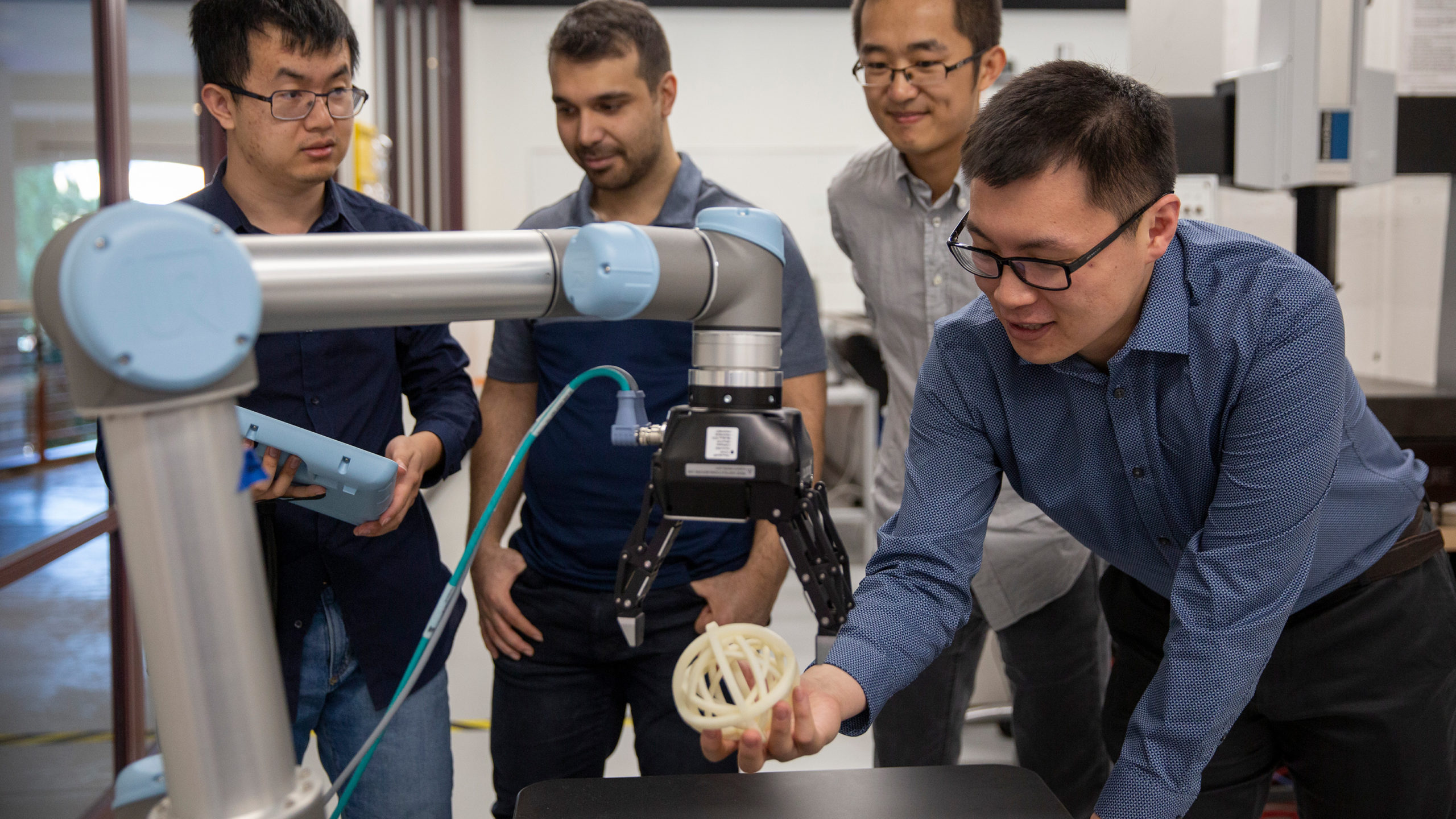
Dr. Feng Ju is an Associate Professor and Program Chair of Industrial Engineering at the School of Computing and Augmented Intelligence, Arizona State University (ASU). He joined ASU in 2015 and holds additional roles as a Senior Global Futures Scientist at the Julie Ann Wrigley Global Futures Laboratory. His research focuses on stochastic modeling, optimization of production systems, additive manufacturing, healthcare delivery systems, and battery management for electric vehicles. He is affiliated with IEEE, IISE, and INFORMS, and serves as an associate editor for multiple journals. Dr. Ju has received numerous awards, including the Dr. Hamed K. Eldin Outstanding Early Career IE Award and SME Outstanding Young Manufacturing Engineer Award. He advises students in Industrial Engineering and collaborates on projects funded by NIST, Boeing, and NSF. Education: Ph.D. Industrial and Systems Engineering from University of Wisconsin-Madison; M.S. Electrical and Computer Engineering from UW-Madison; B.S. Electrical and Computer Engineering from Shanghai Jiao Tong University. Additional training includes a visiting scholar position at Carnegie Mellon University’s Robotics Institute. Research Interests: Stochastic modeling of production systems, semiconductor manufacturing, healthcare logistics, machine learning in additive manufacturing, and battery management systems. His work emphasizes real-time control, simulation optimization, and smart manufacturing integration. Awards: Over 15 honors including Best Paper Awards at IEEE CASE, IISE Transactions, and NIST competitions. Mentored students in winning hackathons and competitions, including ASME-CIE Hackathon 2021 and Tesla Factory collaborations. Service: Organized conferences including IEEE CASE 2019 and served as track chair for IISE Annual Conference 2019. Active in editorial roles for IISE Transactions and IEEE Robotics and Automation Letters. Labs: Leads the Manufacturing and Service Automation Lab, focusing on interdisciplinary research in smart manufacturing, healthcare systems, and sustainable production.
Abhijit Gosavi is an Associate Professor in the Department of Engineering Management & Systems Engineering at Missouri University of Science and Technology. His research focuses on simulation-based optimization, Markov Decision Processes, and reinforcement learning, with applications in disaster response, maintenance scheduling, and supply chain management. He has been funded by the National Science Foundation (NSF), Department of Defense, and industry partners. Dr. Gosavi teaches courses on discrete-event simulation, MDPs, product management, and facilities design. Education: Ph.D. in Industrial Engineering from University of South Florida (1999), M.Tech in Mechanical Engineering from Indian Institute of Technology Madras (1995), and B.E. in Mechanical Engineering from Jadavpur University (1992). His research interests span machine learning, data analytics, and systems engineering. Key research contributions include developing simulation-based models for post-earthquake response strategies, digital twins for production line maintenance, and reinforcement learning algorithms for inventory control. His work has been published in journals like Natural Hazards Review , Annals of Operations Research , and International Journal of Production Economics . Funding highlights include an NSF grant for reducing pollution through AI-driven maintenance strategies. He collaborates with researchers in disaster management, cyber-physical systems, and healthcare policy analysis. Labs/Teams: Investigator at the Intelligent Systems Center, focusing on advanced computational methods for systems engineering and optimization.
Susan dosReis is a Professor and Co-Vice Chair for Research in the Department of Practice, Sciences, and Health Outcomes Research (P-SHOR) at the University of Maryland School of Pharmacy. She is a core faculty member at the Center for Child Mental Health Innovations at the University of Maryland School of Medicine and collaborates closely with the Maryland State Department of Human Services and the Mental Hygiene Administration to improve child mental health services and psychotropic medication oversight. Her educational background includes: Bachelor of Science in Pharmacy from the University of Rhode Island School of Pharmacy Doctorate in Pharmacoepidemiology from the University of Maryland Graduate School Postdoctoral Fellowship in Child Mental Health Services from the Johns Hopkins Bloomberg School of Public Health Dr. dosReis previously served on the faculty at the Johns Hopkins University School of Medicine, Division of Child and Adolescent Psychiatry. Her research focuses on psychotropic medication use in children and adolescents, disparities in mental health care, patient preferences in treatment decisions, and the impact of telehealth and policy on access and outcomes. She uses both quantitative methods with large claims databases and qualitative approaches to understand caregiver and patient perspectives. Her recent publications reveal a strong focus on mental health disparities, particularly during the pandemic, the safety and patterns of psychotropic use in youth, suicide prevention modeling, and patient-centered benefit-risk assessment. Her work frequently involves Medicaid and administrative data across multiple states, emphasizing real-world evidence and policy impact. Key scientific contributions include: Federally funded research from NIMH and AHRQ Collaborative projects with FDA through M-CERSI Leadership in integrating patient voices into regulatory science Development of frameworks for telehealth medication management Dr. dosReis mentors several PHSR graduate students and leads a research team focused on pharmacoepidemiology, patient-reported outcomes, and health services research. Her lab conducts longitudinal analyses, discrete choice experiments, and qualitative studies to inform mental health policy and clinical practice. She has secured contracts and grants to evaluate psychotropic oversight in foster care and telehealth equity in rural and minoritized populations.
Dr. Christoph Kogler MSc. BSc. is a postdoctoral researcher and lecturer at the University of Natural Resources and Life Sciences, Vienna (BOKU) and the University of Applied Sciences Campus Wien. He is affiliated with the Department of Economics and Social Sciences and the Institute of Production, Economics and Logistics, where his work focuses on logistics, supply chain and risk management, business analytics, industrial engineering, and sustainability in the bioeconomy, particularly the forestry and timber sectors. He is actively pursuing his habilitation and is recognized for his innovative teaching and research. His research interests center on sustainability research, supply chain management, risk management, agent-based and discrete event simulation, serious game-based learning, logistics, business process modeling, and transport in industrial engineering. He applies interdisciplinary methods from economics, social sciences, and computer science to promote a fair transition toward a sustainable bioeconomy. His teaching innovations have earned him nominations for the Austrian State Prize for Teaching (Ars Docendi) in 2022 and 2023, and his courses are featured in the national Atlas of Good Teaching. The recent publications and projects reflect a strong trend in using simulation technologies to enhance the sustainability, resilience, and efficiency of wood supply chains. His work emphasizes decision support systems, risk analysis, contingency planning, and educational applications of simulation in forestry logistics. He leads and contributes to multiple projects funded by FFG, the Austrian government, and Erasmus+, with a focus on digital transformation and e-learning in higher education. Fellow of the Freiburg Rising Stars Academy Fellow of the Austrian Marshall Plan Foundation Fellow of ACM/SIGSIM Nominated for Ars Docendi State Teaching Prize (2022, 2023) Recipient of Dissertation, Teaching, and Paper Awards Best Thesis Award, Karl-Franzens-University Graz (2016) Kogler advises master’s students in logistics and supply chain topics and has led numerous workshops and international symposia. He is deeply involved in academic service, serving as a reviewer for over 30 journals, editorial board member of Drewno , and active organizer and program committee member for major conferences such as the Winter Simulation Conference and International Wood Supply Game Competition. His research stays at UC Berkeley, Brno University of Technology, and the University of Freiburg highlight his international collaboration and academic leadership. He leads the project 'Serious Game-basierte and Agenten-basierte Modellierungskompetenzen für die Holzwertschöpfungskette' and contributes to several others focused on sustainable wood transport and resilient supply chain management. His work integrates serious games and simulation to train future leaders in sustainable enterprise management. He is a key figure in advancing simulation-based learning and digital transformation in academic and industrial forestry contexts.
Vitor Basto Fernandes is an Associate Professor with tenure at Iscte - University Institute of Lisbon, affiliated with the Department of Information Science and Technology (ISTA) and ISTAR-Iscte research center. His career spans academic, research, and industry roles across institutions like University of Minho, University of Trás-os-Montes, and Polytechnic Institute of Leiria. PhD in Informatics (2006), University of Minho Postgraduate in Mobile Computing (2005), University of Minho Postgraduate in Distributed Systems (1997), University of Minho BSc in Information Systems Management (1995), University of Minho His research focuses on Evolutionary Multiobjective Optimization , Search-Based Software Engineering , and Cyber Security , with applications in healthcare systems, cloud computing, and anti-spam technologies. He has coordinated academic programs, led international research projects, and served as principal investigator for FCT-funded initiatives. Recent publications highlight expertise in cybersecurity risk analysis , ontological knowledge management , and multiobjective evolutionary algorithms . He organizes international conferences and mentors graduate students in fields like cloud infrastructure and data science . As an Integrated Researcher at ISTAR-Iscte, he contributes to projects involving semantic web technologies , enterprise application integration , and dimensionality reduction for spam filtering.
Li-Lian Gao is an Associate Professor in the Department of Management and Entrepreneurship at the Business School of Hofstra University. He holds a Ph.D. and MBA from Indiana University Bloomington and a B.S. from Shanghai Institute of Mechanical Engineering. His academic career includes prior teaching roles at Indiana University and Shanghai Institute of Mechanical Engineering. B.S., Shanghai Institute of Mechanical Engineering M.B.A., Indiana University Bloomington Ph.D., Indiana University Bloomington Dr. Gao's research centers on operations and supply chain management, with emphasis on distribution systems design , facility location , distributed data networks , multi-echelon inventory systems , and fixed charge network programming . His work applies quantitative and optimization techniques to solve complex logistical and operational problems in both industrial and service sectors. His publications appear in leading journals such as Management Science , Naval Research Logistics , Decision Sciences , and European Journal of Operational Research , reflecting a consistent focus on applied operations research and decision modeling. The articles demonstrate strong methodological rigor and practical relevance in logistics, network design, and inventory optimization. Dr. Gao is a member of several professional organizations including the Decision Sciences Institute , Institute for Operations Research and the Management Sciences (INFORMS) , and the Production and Operations Management Society (POMS) . He has advised various undergraduate courses including Introduction to Operations & Supply Chain Management (MGT 110) , Management Systems (MGT 114) , Business Process Management (MGT 143) , and Business Internship (MGT 174) . While no specific grants or student advisees are mentioned, his research output and professional affiliations indicate active engagement in scholarly activities. There is no mention of lab affiliations or research teams, but his publication record suggests independent and possibly collaborative research in operations management and logistics.
Dr. Chao Meng is an Assistant Professor at the School of Marketing, University of Southern Mississippi, since 2019. He holds a Ph.D. in Systems and Industrial Engineering (2015), M.S. (2013), and B.S. (2008) in Logistics Engineering from the University of Arizona and South West Jiaotong University, respectively. Research focuses on logistics system design, production simulation, and supply chain coordination Expertise in multi-paradigm simulation and supply chain management Experience in coal mining, agriculture, manufacturing, and transportation industries Active in professional service roles including session chair for INFORMS and IISE conferences Recent publications analyze mobile game supply chains, secondary market competition, plant factory technology, VMI-consignment contracts, and energy-efficient manufacturing. His work integrates systems engineering principles with supply chain optimization across diverse sectors. Professional Affiliations: Institute for Operations Research and the Management Sciences (INFORMS) Society for Marketing Advances Languages: Mandarin (Native/Bilingual), English (Full Professional)
Hans de Ferrante is a University Researcher at the Faculty of Mathematics and Computer Science, Eindhoven University of Technology, specializing in Combinatorial Optimization. His work focuses on applying operations research and mathematical modeling to organ transplantation policy within the Eurotransplant system, which coordinates organ allocation across multiple European countries. His primary research interests include healthcare operations research, organ allocation systems, mathematical modeling of transplant outcomes, combinatorial optimization for policy evaluation, medical statistics, and health equity. He has conducted significant research on liver allocation (addressing sex disparities and model revisions for end-stage liver disease) and kidney allocation (focusing on barriers for immunized patients). Analysis of his recent publications (2023-2025) shows a consistent methodological approach using discrete event simulation, statistical correction for selection bias, and optimization algorithms to evaluate organ allocation policies. This interdisciplinary work bridges computer science, mathematics, and transplant medicine to produce actionable insights for improving equity and efficiency in organ distribution systems. Dr. de Ferrante is an active member of the Combinatorial Optimization research group at Eindhoven University of Technology, where he develops computational frameworks for healthcare policy analysis. He also contributes to academic community through conference organization (including FRICO 2023) and teaching Mathematics courses.
Bart M.L. Smeulders is an Assistant Professor at Eindhoven University of Technology within the Mathematics and Computer Science school, specializing in Combinatorial Optimization . His research spans: Healthcare policy modeling for organ allocation systems Algorithmic game theory in transplantation markets Robust optimization techniques for medical logistics Key research outputs include: 2025: Policy evaluation simulator for Eurotransplant 2024: Kidney exchange complexity and optimization approaches 2025: Gender disparity analysis in liver allocation His work intersects computer science, operations research, and medical decision-making, contributing to UN Sustainable Development Goal 3 (Good Health and Well-being).
Gautham Ramana Moorthy is a Doctoral Candidate at Eindhoven University of Technology (TU/e), affiliated with the OPaC group within the Department of Industrial Engineering and Innovation Sciences. His research focuses on integrating digital twin technology into prefabricated construction logistics to enhance sustainability and efficiency. Education: Master's in Industrial Engineering with Agile Management from École Centrale de Nantes; Bachelor's in Mechanical Engineering from SRM Institute of Science and Technology Research interests include: Optimization of logistics and supply chains in modular construction Digital twin applications for real-time data and predictive modeling Sustainable and data-driven construction management solutions Lean manufacturing principles for waste reduction Non-destructive quality control in cable production His current work contributes to the UN Sustainable Development Goals (SDGs), particularly in advancing sustainable industrial practices. He participates in projects like "Modular Prefabricated Construction IENW/BSK-2023/261229," collaborating with cross-disciplinary teams to develop circular asset management frameworks. His expertise spans process planning, asset management, and resource consumption optimization in industrial systems. He has contributed to research outputs such as a peer-reviewed conference paper analyzing digital twin-driven asset management in modular construction, reflecting his focus on bridging technology and operational efficiency.
Yanbo Zhang is a researcher affiliated with Nanyang Technological University , holding a PhD in Wireless Communication and Sensing (2022). His work spans machine learning , biomedical engineering , and signal processing with applications in healthcare, communication systems, and computer vision. Education: PhD from Nanyang Technological University, Singapore (2022) Research areas include: Machine learning for medical diagnosis (predicting infections, cardiovascular events, and cancer) Advanced analog-digital converter designs for precision electronics Diffusion models and evolutionary algorithms in AI Federated learning for imbalanced data and cybersecurity Recent publications focus on multi-label learning for disease prediction, secure communication architectures , and deep learning applications in medical imaging. Collaborations include institutions in Singapore, China, and international teams.
Carla Soares Geraldes is an Assistant Professor in the Industrial Management Department at the School of Technology and Management, Polytechnic Institute of Bragança, Portugal. She specializes in Supply Chain Management, Logistics, and Operational Research, with a focus on Industry 4.0 and Mathematical Modelling. Her work spans academic research and practical applications in production optimization and decision-making systems. She actively contributes to R&D projects and has co-authored over 24 publications. Education: PhD in Industrial and Systems Engineering (University of Minho), MSc in Industrial Engineering (Logistics specialization), and Mechanical Engineering (Production Management) from the University of Porto. Research affiliations include the SLoTS research group at University of Minho’s CENTRO ALGORITMI and CeDRI at Polytechnic Institute of Bragança. She supervises student projects in supply chain and operations management. Publications focus on inventory optimization, production simulation, and lean-agile methodologies in manufacturing. Recent work includes bakery process improvements and training program design for technical upskilling.
Klaus Altendorfer is a Professor at FH Steyr - University of Applied Sciences, affiliated with the School of Production and Operations Management. He leads the Research Center Steyr's work on smart production systems, focusing on topics like material requirements planning, production scheduling, and simulation-based optimization. His research contributes to UN Sustainable Development Goals related to Industry, Innovation, and Infrastructure (SDG9). Key areas of expertise include production system engineering, lead time optimization, service level management, and robust production planning. His work emphasizes simulation modeling for evaluating planning parameters under uncertainty, with recent projects addressing energy cost balancing and stochastic demand scenarios. Altendorfer has received the FH OÖ Forscher*innen Preis 2020 award and actively participates in academic activities, including organizing conferences like the ASIM Dedicated Conference on Simulation in Production and Logistics. He has supervised 9 research projects and holds an h-index of 49 with 14 citations. His current grants include leadership roles in projects such as 'SimGenOpt2 - Integrated Methods for Robust Production Planning and Control' (2017-2021) and 'Optimal Workforce' (2016-2018), focusing on workforce planning and simulation optimization in manufacturing environments. Research activities span interdisciplinary collaboration with industry partners, emphasizing practical applications of simulation-based methods in production systems and logistics optimization.