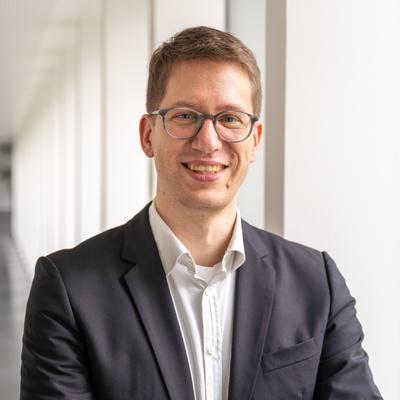
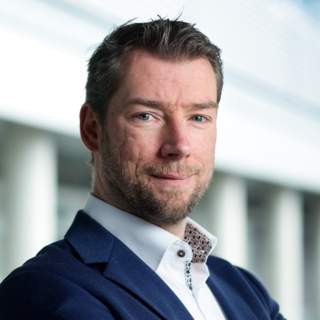
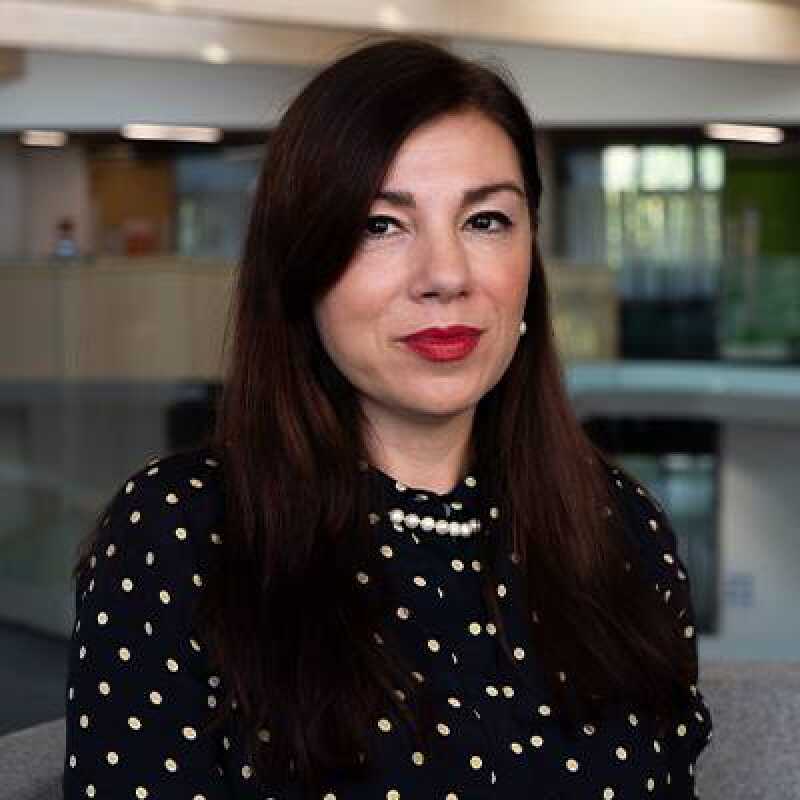
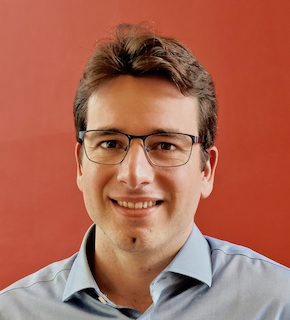
Dr. Sönke Knoch is a researcher affiliated with the Ubiquitous Media Technology Lab (UMTL) at the Saarland Informatics Campus and the German Research Center for Artificial Intelligence (DFKI) GmbH . His work focuses on Human-Computer Interaction , Activity Recognition , Process Mining , and Industry 4.0 technologies. Current Affiliation: DFKI GmbH (Saarland Informatics Campus) Academic Role: Researcher Research Interests span digital twins, augmented reality in manufacturing, and safety-critical systems. He leads projects like RZzKI (AI and Digital Transformation) and BaSySafe (risk assessment via management shells). His work addresses zero-defect manufacturing and cognitive support for impaired workers . Recent Publications focus on digital twins for industrial safety, AR-based task adaptation , and AI quality management in smart factories. Key themes include human-centric AI , real-time process conformance , and context-aware systems . Leadership includes contributing to the WALL-ET project for autonomous logistics and co-developing the PARTAS system for cognitively impaired workers.
Martijn Mes is a full professor of Transportation and Logistics Management and chair of the Industrial Engineering & Business Information Systems section at the University of Twente, Netherlands. He leads research and education initiatives that integrate AI, simulation and optimisation into logistics and supply-chain innovation. Education: Ph.D. in Operations Research, University of Twente – 2008 M.Sc. in Applied Mathematics, University of Twente – 2002 Post-doctoral researcher, Princeton University, Dept. of Operations Research & Financial Engineering Research focus: Mes develops quantitative models and AI techniques for strategic, tactical and operational logistics challenges. His work spans three application pillars: Emergency & humanitarian logistics – rapid relief distribution with trucks and UAVs Urban logistics – city distribution, self-organising systems and last-mile innovations Sustainable logistics – synchromodal transport, green ports and electric/autonomous fleets Methodologically he combines approximate dynamic programming, reinforcement learning, multi-agent simulation, discrete-event simulation and stochastic optimisation to create decision-support tools for industry and government. Publications trend: Recent articles (2025-2022) exhibit a strong emphasis on integrating reinforcement learning and stochastic optimisation into dynamic vehicle routing, drone-assisted delivery and post-disaster inventory allocation, signalling a shift towards data-driven, real-time logistic systems. Grants & projects: Mes has coordinated and participated in numerous national and European projects on sustainable logistics, urban distribution, port optimisation and healthcare logistics, frequently collaborating with industry partners and public bodies. Teaching & supervision: He coordinates and lectures in the BSc and MSc programmes Industrial Engineering & Management, offering courses on simulation, queueing theory, dynamic programming, Markov chains, transportation management and technology management. He has authored a widely used Plant Simulation tutorial and supervises PhD candidates working on AI-driven logistics, autonomous vehicles and digital twins.
Professor Kathy Kotiadis is Professor of Operational Research and Co-Director of the Centre for Advanced Diagnostic Development and Application (CADDA) at Kent Business School. Co-developed PartiSim framework for participatory simulation. Research expertise in simulation methodology (discrete-event/hybrid), conceptual modeling, and stakeholder engagement approaches applied to healthcare, transport, and energy sectors. Recipient of K.D. Tocher Medal (2007-08) and Daphne Jackson Fellowship (2014). Secured funding from EPSRC, Innovate UK, and Research England. Serves as Co-Editor of Health Systems and Editorial Board member for Journal of Simulation. Supervised 7 PhD students to completion in simulation methodologies and healthcare applications. Current projects include HS1 Ltd (2024) and North Kent Industrial Cluster (2025).
Professor Daniel Chicksand is a faculty member in the Department of Management at Birmingham Business School, University of Birmingham , where he holds the rank of Professor of Operations and Supply Management . He also serves as the Director of the Distance Learning MBA programme. Daniel has held academic positions at Warwick Business School and Aston Business School prior to joining Birmingham in 2016 as a Reader, being promoted to full Professor in 2021. Education: PhD in Commerce, University of Birmingham (2009) MBA in Business Strategy & Procurement, University of Birmingham (2003) MSc in Industrial Logistics, University of Central England (1996) BSc in Industrial Information Technology (2:1 hons), University of Central England (1995) Postgraduate Certificate in Academic and Professional Practice, University of Warwick (2011–2013) Daniel’s research is centered on Operations and Supply Chain Management , with a strong theoretical foundation in Resource Dependency Theory (RDT) . His work explores power dynamics , value appropriation , and relationship management in buyer-supplier interactions across sectors such as food, construction, and sustainable supply chains. He has a growing interest in servitization and its impact on value creation. His methodological approach is primarily qualitative, using case-based research. The recent publications reflect a consistent focus on power and negotiation in procurement , resilience and disruption in supply chains (including simulation modeling), and sustainability reporting . His research spans both private and public sectors and often involves international collaboration with institutions in the UK, Europe, and the US. Scientific Engagement and Awards: Visiting Lecturer at Audencia Nantes School of Management (France) Visiting Lecturer at Ecole des Ponts ParisTech and Solvay Business School (France/Belgium) Educator for Duke Corporate Education Collaborator with leading researchers from Aston, Cardiff, Cranfield, Loughborough, Linkoping, and Fox Business School Daniel supervises multiple doctoral students and is involved in pilot research projects funded by the British Academy and the Chartered Institute of Logistics and Supply. He also leads two consultancy firms— DDC Solutions Ltd and Opsworks Ltd —delivering bespoke training and education programmes to corporate clients like UBS, KPMG, and Adams Foods. His prior experience as a business owner in African arts and crafts importation provides practical insights into supply chain and operations management, enriching his teaching and research. Laboratories and Research Teams: Member of the Aston Centre for Seritization Research and Practice (2015–present) Collaborative research network across UK, European, and US universities Lead on projects involving discrete-event simulation and gamification in SCM
Prof. Mike Barth is a Professor for Networked Secure Automation Technology at the Karlsruhe Institute of Technology (KIT), affiliated with the Department of Electrical Engineering and Information Technology (ETIT) and the Institute for Control Systems (IRS). His academic background includes a doctorate from Helmut Schmidt University (2011) and a master's degree from Pforzheim University (2008). He previously held roles as a researcher at ABB and as a professor at Pforzheim University, focusing on blended learning and Industry 4.0 integration. Education: PhD in Automation Technology, Helmut Schmidt University (2011) M.Sc. in Product Development, Pforzheim University (2008) Diploma in Mechanical Engineering, Pforzheim University (2006) Research Interests: Automation technology, control systems, Industry 4.0, cyber-physical systems, digital twin engineering, cybersecurity, and IoT protocols. Teaching: Courses include System Modeling, Cyber Physical Production Systems, and Digital Twin Engineering. His research emphasizes secure automation architectures, decentralized systems, and model-based engineering. He chairs multiple committees including IFAC TC3.1 and the VDI/VDE Society for Measurement and Automation. Over 50+ publications span topics like simulation models, industrial security, and robotic integration. Labs/Teams: Leads the IRS Automation Technology team, focusing on innovation in control systems and digital twin applications.
Harsha Gangammanavar is an Associate Professor in the Department of Operations Research and Engineering Management (OREM) at Southern Methodist University (SMU), affiliated with the Data Science Institute. He holds a Ph.D. in Operations Research and M.S. in Electrical Engineering from The Ohio State University, and a B.E. in Electronics and Communication Engineering from Visvesvaraya Technological University, India. Education: Ph.D. in Operations Research, The Ohio State University M.S. in Electrical Engineering, The Ohio State University B.E. in Electronics and Communication Engineering, Visvesvaraya Technological University Research Interests: His work focuses on stochastic programming, large-scale computational optimization, and their applications in infrastructure systems, healthcare, and wireless communication. Key areas include optimization under uncertainty, stochastic decomposition methods, and scalable algorithms for power systems and renewable energy integration. Recent Activities & Awards: Recipient of NSF XTRIPODS grant for collaborative research in data science (2024). DOE Office of Science grant for multiscale stochastic optimization (2022). ONR grant for decomposition-based stochastic models in discrete-event systems (2022). Awarded INFORMS Undergraduate Student Paper Award (2021) and INFORMS Minority Affairs Poster Competition (2016). Advising & Grants: Current advisees include Ph.D. students Ishara A.A.D.H., Jackson Forner, Chhavi Sharma, and Zhiyuan Zhang. Former students Niloofar Fadavi, Sakitha Ariyarathne, and others have secured roles in industry and academia. Active in securing grants from AFOSR, ONR, DOE, and NSF. Labs & Teams: Leads research on stochastic optimization algorithms, power grid resilience, and healthcare applications through interdisciplinary collaborations. Open to motivated students for Ph.D. research in optimization and data science.
Dr. Damian Nale Dailisan is a Lecturer in the Department of Humanities, Social and Political Sciences at ETH Zürich, affiliated with the Computational Social Science group. He holds a Ph.D. in Physics from the University of the Philippines, specializing in traffic modeling and machine learning applications. His research focuses on multi-agent systems, particularly in transportation and urban systems. He has held postdoctoral roles and contributed to projects like the ACCeSs@AIM lab. His work bridges computational methods with real-world challenges, including traffic control optimization, AI-driven decision-making, and smart city infrastructure. Notable projects include FAIRLANE for priority lane management and studies on democratizing traffic control systems. Dailisan’s publications span journals like Transportation Research Part C and IEEE Access, addressing topics such as reinforcement learning in traffic signals and ethical AI frameworks. He has presented at workshops like 'Back to the Future' at ETH Zurich and collaborates with interdisciplinary teams to enhance urban mobility solutions. His technical expertise includes Python, network analysis, and agent-based modeling, with contributions to open-source tools for earthquake networks and social systems analysis.
Mohammad Dehghani is an Associate Teaching Professor in the Department of Mechanical and Industrial Engineering at Northeastern University, where he also serves as Program Director of the Galante Engineering Business Program. He holds a Ph.D. in Engineering Management from Western New England University (2016), an M.S. in Industrial Engineering from Tarbiat Modares University (2011), and a B.S. in Industrial Engineering from Yazd University (2008). His research focuses on Reinforcement Learning (RL), Simulation Optimization, and Healthcare Operations, with applications in manufacturing, digital twin systems, and UAV routing. He has developed multiple courses in Industrial Engineering and Data Analytics, receiving the 2020 Fostering Engineering Innovation in Education Award and the 2025 DAIS Data Analytics Teaching Award. Education: Ph.D. in Engineering Management, Western New England University, 2016 M.S. in Industrial Engineering, Tarbiat Modares University, 2011 B.S. in Industrial Engineering, Yazd University, 2008 Dehghani’s research bridges AI and operations research, emphasizing practical applications. His work includes developing RL frameworks for manufacturing scheduling and UAV routing, as well as simulation-optimization models for healthcare and pandemic preparedness. He has collaborated on projects addressing supply chain resilience during the COVID-19 pandemic and multi-objective supplier selection processes. His publications span journals like Simulation and conferences such as Winter Simulation Conference (WSC). His honors include the 2015 Best Ph.D. Paper Award at WSC and recognition from the Institute of Industrial and Systems Engineers (IISE). He actively contributes to professional societies, including the American Society of Engineering Management and Institute of Industrial Engineers. His teaching focuses on integrating data analytics and simulation tools into engineering curricula, with courses emphasizing Python integration, simheuristics, and digital twin technology. Dehghani leads initiatives in the Galante Program to enhance engineering-business synergies, preparing students for industry roles through interdisciplinary training. His work emphasizes practical problem-solving, with grants supporting projects in healthcare logistics and sustainable construction in cold climates.
Hokeun Kim is an Assistant Professor in the School of Computing and Augmented Intelligence (SCAI) at Arizona State University (ASU), part of the Ira A. Fulton Schools of Engineering. He previously held positions at Hanyang University (2021-2023) and worked in industry roles at Google, LinkedIn, and HP Labs. His research focuses on cyber-physical systems, IoT security, and computer architecture, with a particular emphasis on safety and security aspects of time-sensitive systems. Education: Ph.D. in EECS, University of California, Berkeley (2017) M.S. in EECS, Seoul National University (2012) B.S. in Computer Science and Engineering, Seoul National University (2010) Research Interests: Kim’s work spans secure IoT frameworks, real-time embedded systems, and edge computing. He develops tools like the Secure Swarm Toolkit (SST) and Lingua Franca, addressing challenges in distributed system security, interoperability, and performance. Key Contributions: Authored over 30 peer-reviewed publications in top venues like IEEE Transactions, ACM Conferences, and DATE. Received the ACM/IEEE Best Paper Award (IoTDI 2017) and IEEE Micro Top Picks Honorable Mention (2017). Active in organizing conferences (e.g., DATE, FDL) and serves on technical committees for top journals/conferences. Teaching: Courses include Computer Architecture I/II, Real-Time Embedded Systems, and IoT design at both undergraduate and graduate levels.
Sebastián Uchitel is a Professor at the Department of Computing, Imperial College London, UK. His research focuses on foundational aspects of Software Engineering, particularly in modeling and analysis for automated reasoning, verification of probabilistic systems, controller synthesis, and adaptive systems. He has led major research projects, including the ERC-funded IDEAS StG project on Partial Behaviour Modelling and the European FP6 SENSORIA project. Research Interests: Model-Based Software Engineering, Controller Synthesis, Probabilistic Systems, Adaptive Systems, Requirements Engineering External Roles: General Chair, International Conference on Software Engineering (2017); Associate Editor, Elsevier Science of Computer Programming; Steering Committee, International Conference on Software Engineering His recent work explores intersections between Software Engineering and AI, including assured adaptive systems and logic-based learning. A Senior Member of IEEE and Distinguished Scientist of ACM , he has received awards like the Houssay Prize (2015) and Philip Leverhulme Prize (2005). Collaborators include institutions in Argentina, Canada, and the UK. Selected Publications: 150+ peer-reviewed works spanning controller synthesis, requirements engineering, and formal methods Students: Supervised 12 PhD students since 2003 Grants: Principal Investigator for 3 major grants (2005-2016) totaling over $3.7M USD, including: 2013-2016: Technology Platform in Software Engineering (ANPCYT, $1.6M) 2009-2014: ERC IDEAS StG on Partial Behaviour Modelling (€1.4M) 2005-2008: FP6 SENSORIA Project (€0.7M)
Daniel G Georgiev is a Professor in the Department of Electrical Engineering and Computer Science at the University of Toledo's College of Engineering. He has been on faculty since Fall 2006, following prior roles as a research faculty member at Wayne State University's Center for Smart Sensors and Integrated Microsystems (SSIM). Education : M.S. in Engineering Physics (Quantum Electronics and Laser Equipment) from Sofia University (1994), Ph.D. in Electrical Engineering (Electronic Materials and Devices) from the University of Cincinnati (2003). Research Interests : Dr. Georgiev's work focuses on laser modification and micro-structuring of materials, thin films of semiconducting oxides/nitrides (e.g., NiO, Zn3N2), glassy materials, metal whiskers (Sn, Cu), wide bandgap semiconductors (GaN, Zn3N2), photovoltaics, and biomedical device applications. His expertise spans device fabrication, material characterization, and radiation effects. Article Trends : Recent publications emphasize GaN-based power electronics, hybrid edge termination structures, threshold switching in nanocircuitries, and material innovations via reactive sputtering. Subfields include laser microstructuring, whisker suppression in Sn films, and doping strategies for nitride semiconductors. Collaborations : Co-authorship with researchers across institutions, including contributions to biomedical implants, II-VI nanocrystals, and chalcogenide glasses.
Twan Basten is a Full Professor in the Electronic Systems group at Eindhoven University of Technology (TU/e). He leads research on embedded and cyber-physical systems, focusing on model-driven design, computational models, and system dependability. He holds an MSc (1993) and PhD (1998) in Computing Science from TU/e, advancing from Assistant to Full Professor by 2009, and became the Electronic Systems group chair in 2013. His research spans international projects (FP5-7, H2020, ECSEL) and Dutch initiatives (STW, NWO, RVO), with over 200 publications and seven best paper awards. He has co-supervised 21 PhD students and actively participates in program committees and conferences. His work contributes to UN Sustainable Development Goals through innovations in smart systems. Education: MSc in Computing Science, TU/e (1993) PhD in Computing Science, TU/e (1998) Research Interests: Explores design methodologies for embedded systems, including scenario-based design, real-time scheduling, and performance analysis. Specializes in model-driven engineering and computational models to ensure system dependability. Active in projects like TRANSACT (real-time systems) and SAM-FMS (flexible manufacturing). Key Contributions: Co-author of 1 book and over 200 scientific publications Recipient of seven best paper awards Co-supervised 21 PhD degrees Senior member of IEEE and lifetime member of ACM Labs & Teams: Leads the Model-Based Design Lab and contributes to EAISI High Tech Systems initiatives. Collaborates on tools like TRACE4CPS for execution trace analysis and CReTS for vehicle platooning simulation.
Dr. Tommaso Schettini is an Assistant Professor in the Department of Mechanical, Industrial and Aerospace Engineering at Concordia University. His research focuses on transportation systems optimization, including electric vehicle charger location, metro timetabling, and demand-driven scheduling strategies. He holds an ORCID identifier (0000-0003-2578-1539) and supervises Master's and PhD students in Industrial Engineering. His work integrates operations research techniques like Benders decomposition and metaheuristics to solve real-world transportation and manufacturing challenges. Research Areas: Electric Vehicle Infrastructure Planning, Metro Timetabling Strategies, Integer Programming, Discrete Simulation-based Optimization, and Combinatorial Optimization. Notable contributions include developing pattern-based algorithms for short-turning metro lines and optimizing micro-mobility integration with public transit. His articles span 2016–2024, emphasizing demand-driven approaches in transportation and manufacturing systems.
Jean-Philippe Avouac is the Earle C. Anthony Professor of Geology and Mechanical and Civil Engineering at the California Institute of Technology (Caltech). He is also the Associate Director of the Center for Autonomous Systems and Technologies and the former Director of the Tectonic Observatory (2004–2013). His academic career includes roles at the University of Cambridge (2018–2021) and leadership in geomechanics research. Avouac holds a M.E. from École Polytechnique (1987), a Ph.D. from Institut de Physique du Globe de Paris (1991), and a Habilitation (1992). His research focuses on crustal deformation, earthquake mechanics, and geomorphic processes, using field observations, geodetic measurements, and remote sensing. He has authored over 200 peer-reviewed publications and pioneered geodetic imaging techniques. Key research areas include seismicity forecasting, fault dynamics, and subsurface engineering impacts. Awards include the AGU Fellow distinction and the Wolfson Merit Award. Avouac advises numerous PhD students and postdocs, directing labs like the Center for Geomechanics and Mitigation of Geohazards. His work spans tectonic processes in the Himalayas, induced seismicity, and planetary surface dynamics.
Dr Athanasios Angeloudis is a Reader (Associate Professor) and Director of Impact in the School of Engineering at the University of Edinburgh. He is affiliated with the Institute for Infrastructure and the Environment, leading research on hydro-environmental applications and offshore renewable energy systems. His academic roles include coordinating the Edinburgh Fluid Dynamics Group and serving as a member of NERC’s Peer Review College. Dr Angeloudis holds a PhD in Hydro-environmental Engineering (2014) and an MEng in Civil Engineering (2010) from Cardiff University. He is Chartered with the Technical Chamber of Greece (CEng) and a member of the Institution of Civil Engineers. His research focuses on environmental fluid mechanics, coastal processes, numerical methods, and data analytics. His teaching responsibilities include courses like Civil Engineering Hydraulics and Water Engineering Transport and Treatment . He has secured significant research funding, including the NERC Industrial Innovation Fellowship, and leads projects such as CoTide (tidal stream energy optimization) and ILIAD (maritime data services). Key research contributions span tidal energy systems, climate change impacts on river flows, and computational modeling frameworks like Thetis-SWAN . His work emphasizes collaboration with industry and international partners to advance sustainable energy solutions and environmental resilience.