

Guilherme Augusto Borges Pereira is an Associate Professor at the School of Engineering, University of Minho, and serves as Pro-Rector for Institutional Assessment and Special Projects since 2017. He holds a PhD in Manufacturing and Mechanical Engineering from the University of Birmingham (2000) and has been at the University of Minho since 1984. His research focuses on supply chain logistics, operational research, and simulation through the SLOTS Research Group under ALGORITMI Center. Education: BSc in Systems Engineering (UMinho, 1984), MSc in Operational Research (Birmingham, 1989), PhD in Manufacturing Engineering (Birmingham, 2000). Research emphasizes industrial applications, with over 80 ISI/Scopus publications. He co-founded a university spin-off (2016) and has held roles such as Director of Industrial Engineering programs (2000–2010), Vice-Dean of Engineering (2013–2016), and leadership in academic governance bodies (Scientific Council, 2010–2016). Professional roles include Portuguese Navy Operational Research Officer (1985–1987) and Vice-President of the Portuguese/Brazilian Simulation Association.
جستوجوی استاد و پژوهشگر
استاد راهنما، استاد دانشگاه یا پژوهشگر مناسب برای مسیر پژوهشیتان را پیدا کنید و با او ارتباط بگیرید.
نمایش ۷۲۱-۷۳۵ از ۸۳۸ استاد راهنما
اطلاعات این پروفایلها از صفحات عمومی دانشگاهها جمعآوری شده و ممکن است بهروز نباشد.
Prof. Martin Gebser is a University Professor and Deputy Director at the Institute for Artificial Intelligence and Cybersecurity, University of Klagenfurt. His work bridges theoretical advancements in Answer Set Programming (ASP) with practical applications in industrial scheduling, semiconductor manufacturing, and explainable AI systems. Institute for Artificial Intelligence and Cybersecurity, University of Klagenfurt His research focuses on Answer Set Programming and its extensions for complex scheduling problems, particularly in semiconductor production. Key areas include: Multi-shot ASP solving for job-shop decomposition Hybrid AI systems integrating reinforcement learning and logic programming Explainable AI for battery health monitoring and semiconductor dispatching Recent publications emphasize temporal planning, constraint learning, and real-world data integration. He has developed customizable simulators and optimization frameworks for industrial applications.
- Operations Research
- Optimization
- Network Flows
- +۳ مورد دیگر
Prof. Horst W. Hamacher is a Professor in the Department of Optimization at the University of Kaiserslautern's Faculty of Mathematics. His research focuses on optimization, operations research, and their applications in logistics, healthcare, and disaster management. Key areas include network flow optimization, evacuation planning models, radiation therapy treatment design, and hub location problems. He leads the Optimization Group (AG Optimierung), developing algorithms for complex systems. His work integrates theoretical advancements with practical solutions, such as minimizing beam-on time in radiation therapy and optimizing urban evacuation routes. He has authored/co-authored over 100 journal papers and book chapters, including seminal contributions to facility location theory and dynamic network flows. Collaborations span academic and industrial partners, addressing challenges in public transportation, medical engineering, and sustainable urban planning. Notable projects include the 'OptionS' initiative for sustainable water management optimization and the 'FlowLoc' framework for evacuation dynamics. He actively contributes to interdisciplinary education, bridging mathematics with real-world applications like robotic assembly and infrastructure design.

Hexu Liuمشاهده پروفایل
دانشیار
- Construction Engineering and Management
- Building Information Modeling (BIM)
- Discrete-Event Simulation
- +۷ مورد دیگر
Hexu Liu is an Associate Professor in the Department of Civil and Construction Engineering at Western Michigan University. His research focuses on integrating emerging technologies like BIM, discrete-event simulation, virtual reality, and AI into construction planning and management. He holds a Ph.D. from the University of Alberta, where he also served as a post-doctoral fellow. Dr. Liu received his bachelor's and master's degrees from Shaanxi, China, and has been recognized with awards such as the Joseph D. Thompson/Zurich Canada Graduate Award and the 2017 Outstanding Reviewer from the Journal of Automation in Construction. His work emphasizes automation in construction through BIM innovations, including semantic quantity take-off and BIM-simulation integration. Research Interests: Building Information Modeling (BIM) and its applications Discrete-event simulation for construction processes AI-driven predictive maintenance and safety monitoring Offsite construction technologies Occupant-centric facility management Recent work highlights include frameworks for highway cost indices during inflation, digital twin-based fire safety systems, and human-robot collaboration in construction. He actively reviews for journals like Automation in Construction and conferences like CRC 2018. Awards and Honors: Joseph D. Thompson/Zurich Canada Graduate Award 2017 Outstanding Reviewer Award (Journal of Automation in Construction) Ernie Tromposch Graduate Scholarship Labs/Teams: Leads the DSC (Data-Driven Sustainable Construction) Lab, focused on advancing smart technologies in construction through interdisciplinary research.
Yue Zhangمشاهده پروفایل
دانشیار
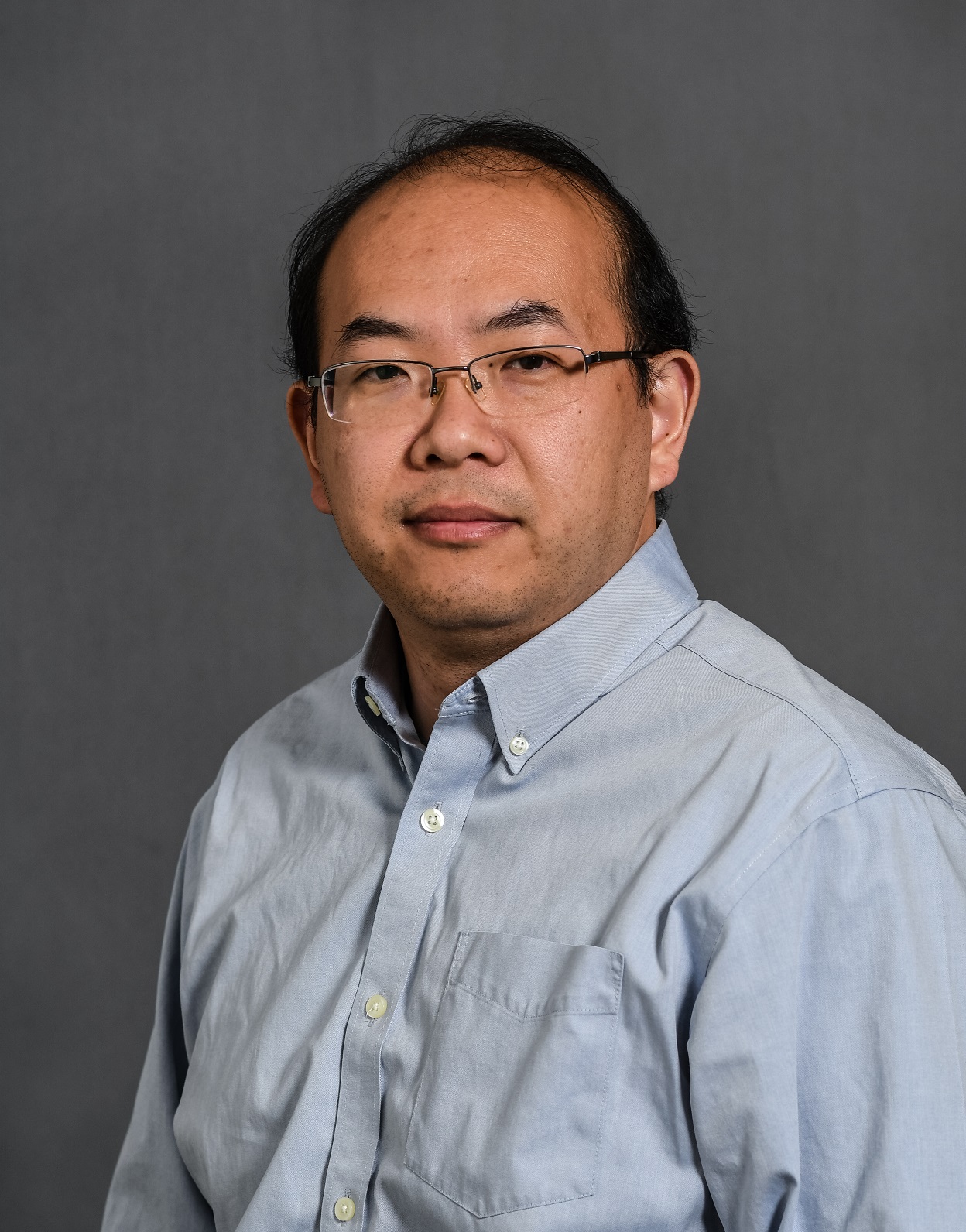
Dr. Yue Zhang is an Associate Professor in Operations Management at the John B. and Lillian E. Neff College of Business and Innovation , University of Toledo . His research focuses on service and healthcare operations management, supply chain design, facility location, and logistics optimization. Education: Ph.D. in Operations Management, Desautels Faculty of Management, McGill University (2009) M.Sc. in Management Science and Engineering, Tsinghua University (2003) B.Sc. in Management Information Systems, Tsinghua University (2001) His work spans healthcare facility network design , patient choice modeling , long-term care capacity planning , and retail network optimization . Publications appear in journals like Operations Research , European Journal of Operational Research , and Health Care Management Science . Recent research includes multi-criteria surgery scheduling , streetlight location optimization , and preventive healthcare network design , emphasizing stochastic modeling , congestion management , and equity in healthcare access . Scientific Awards: Brooks Insurance Research Fellowship (2016-2018) Simonetti Graduate Teaching Award (2015) URAF Summer Research Award (2013) Junior Faculty Research Award (2012) He teaches courses in business statistics , prescriptive analytics , and supply chain management , and has contributed to book chapters on healthcare location models and business analytics.
Magdalena BARBU is a Lecturer at the Department of Engineering and Industrial Management, Faculty of Technological Engineering and Industrial Management, Transilvania University of Brașov. Her research focuses on production system design, flexible manufacturing systems, and computer-aided design. She has contributed to advancements in automation, tool management, and 3D printing process optimization. Her work bridges theoretical frameworks with practical applications in manufacturing processes and industrial systems. Key research interests include: Automation of assembly processes and robotics integration 3D printing techniques and process management Tool flow dynamics and manufacturing system perturbations Green manufacturing and eco-friendly lubrication systems Kanban-based inventory and production control methodologies Publications emphasize industrial automation, sustainable manufacturing, and mathematical modeling for technical-economic forecasting. Her work spans journals like RECENT and METALURGIA INTERNATIONAL , with a notable book on manufacturing equipment systems (2020). No scientific awards or grants are explicitly listed in the provided materials. Her advisory role is currently unspecified, though her research themes suggest involvement in industrial collaborations.

Patrizia Scandurra is a Professor at the University of Bergamo, Italy. She has held significant roles including Co-chair of the Doctoral Symposium-track at ECSA 2020, Program Co-Chair for multiple conferences, and is a member of steering and organizing committees for various international software engineering events. Her research focuses on Software Architecture, Formal Methods, Self-adaptive Systems, and Cyber-Physical Systems. She has contributed to frameworks like ASMETA and RAMSES, emphasizing rigorous system design and safety assurance. Her work spans formal specification, model-based testing under uncertainty, and adaptive systems for diverse applications such as automotive systems, medical devices, and smart cities. She has published extensively on topics like self-adaptation under model uncertainty, microservices resilience, and anomaly detection in urban infrastructure. Patrizia’s contributions include conference organization across ECSA, ASE, ICSE, and SEAMS, reflecting her leadership in advancing software architecture theory and practice. Her research bridges formal methods with real-world applications, addressing challenges in autonomous systems and digital twin integration.
Chris Winsteadمشاهده پروفایل
دانشیار
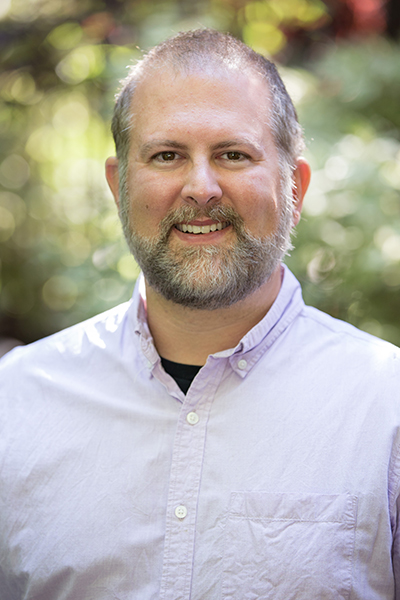
Chris Winstead is an Associate Professor in the Department of Electrical and Computer Engineering at Utah State University. His research focuses on error correction algorithms, probabilistic logic systems, and neuromorphic hardware design. He has mentored over 15 graduate students and received significant recognition including an NSF Career Award. Dr. Winstead's research spans hardware security, stochastic computing, and communication systems. His work integrates theoretical frameworks with practical implementations for low-power and fault-tolerant systems. Recent publications demonstrate applications in autonomous vehicle security, biological circuit modeling, and probabilistic computing architectures. Honors include the 2014 Fulbright Research Scholarship and 2010 NSF Career Award. He leads research on noise-enhanced computing methods and maintains collaborations in stochastic algorithm development. Current projects investigate adversarial resilience in cyber-physical systems and hardware acceleration for probabilistic decoders.

Sarah Vigelandمشاهده پروفایل
دانشیار
Sarah Vigeland is an Associate Professor and Graduate Advisor in the Physics Department at the University of Wisconsin Milwaukee, where she works in the Center for Gravitation, Cosmology & Astrophysics. She is a prominent member of both NANOGrav (North American Nanohertz Observatory for Gravitational Waves) and the International Pulsar Timing Array (IPTA), contributing significantly to the field of gravitational wave astronomy. Her research focuses on the detection of low-frequency gravitational waves using pulsar timing arrays, with particular emphasis on gravitational waves from supermassive binary black holes. She develops advanced techniques for gravitational wave detection, studying how these phenomena connect to the growth and evolution of galaxies. Her work spans both the gravitational wave background and individual supermassive binary black hole systems. Analysis of her recent publication record shows a strong focus on the NANOGrav 15-year dataset, with contributions across multiple aspects of gravitational wave detection including spectral analysis, memory effects, individual source detection, and statistical methods. Her work demonstrates a consistent integration of computational physics with astrophysical theory, particularly in developing efficient Bayesian methods for gravitational wave searches. As a member of major international collaborations, she contributes to advancing the field of gravitational wave astronomy through both theoretical developments and practical data analysis techniques. Her GitHub activity shows active contributions to critical software infrastructure for pulsar timing array analysis, demonstrating her commitment to open science and collaborative research.
Dario Pacinoمشاهده پروفایل
دانشیار
Associate Professor Dario Pacino is affiliated with the Technical University of Denmark (DTU), specifically within the Department of Technology, Management and Economics under the Operations Research Section. His research focuses on optimization challenges in logistics and transportation systems, including container stowage planning, berth allocation, and the application of AI techniques like reinforcement learning. He holds a position at DTU's Management Science Division and is based in Lyngby, Denmark. His work emphasizes heuristic and metaheuristic algorithms for solving complex logistics problems. Notable areas include Roll-on/Roll-off (RoRo) ship stowage planning, dynamic berth allocation, and discrete event simulation for healthcare logistics. He has contributed to mathematical models addressing draft limits in shipping and stochastic fleet optimization for urban mobility. Publications from 2022 onward highlight advancements in reinforcement learning integration with traditional operations research methods, demonstrating a trend toward AI-driven logistics solutions. His work bridges theoretical optimization with practical applications in maritime and healthcare sectors. No scientific awards are explicitly listed in the provided text. His advising and grants sections remain unspecified, though his research collaborations are evident through multi-institutional projects. He is part of the Operations Research Section's research team, focusing on decision support systems and optimization under uncertainty.
Patrizia Scandurra is a Professor affiliated with the University of Bergamo, Italy. Her research focuses on formal methods, software architecture, self-adaptive systems, and model-driven engineering. She has contributed extensively to the development of rigorous system design frameworks like ASMETA and has led work on resilience engineering in cyber-physical systems. Scandurra has co-authored numerous papers in top venues such as ECSA, ABZ, and IEEE Transactions, and has served as editor for conference proceedings including ECSA 2024 and ABZ 2024. Her work emphasizes practical applications of formal methods in safety-critical systems, IoT, and medical devices, with a recent focus on explainable AI and trustworthiness in autonomous systems. Areas: Formal Methods, Self-Adaptation, Cyber-Physical Systems Tools: ASMETA, HYPpOTesT Toolkit Key Projects: MVM-Adapt, RAMSES, IPSOS emergency response system Her research spans theoretical advancements and practical implementations, often bridging gaps between model-driven approaches and real-world system deployment. Current trends include addressing uncertainty in self-adaptive systems, trust analysis for medical devices, andexplainability in robotics.
Tobias Hartungمشاهده پروفایل
دانشیار
Tobias Hartung is an Associate Professor in Computer Science at Northeastern University London, affiliated with the CoMENS Faculty and the Computing and Information Systems department. He holds a PhD in Mathematics from King’s College London (2015) and a Diplom in Mathematics with a Physics minor from TU Dresden (2013). His academic positions prior to Northeastern included roles at King’s College London and the University of Bath. His research focuses on the intersection of functional analysis, mathematical physics, quantum computing, and algorithm design for high-energy physics simulations. He develops mathematical frameworks to design quantum and classical algorithms for overcoming computational bottlenecks in physics simulations, particularly lattice gauge theory and particle physics. Recent work emphasizes error mitigation in quantum computing, parametric quantum circuit expressivity, and lattice field computations using advanced numerical integration techniques. Teaching includes courses on discrete structures, algorithms, and quantum computing at Northeastern, the University of Bath, and King’s College London. His courses emphasize algorithmic foundations and mathematical rigor in computer science. Publications span quantum algorithms for particle track reconstruction, error mitigation strategies, and theoretical advancements in lattice field theory. Current research trends include applying quantum computing to solve problems in high-energy physics, optimizing quantum circuits, and addressing noise limitations in NISQ-era devices. No scientific awards are explicitly listed, but his work demonstrates significant contributions to quantum computing and mathematical physics. Grants and advising details are not provided in the source material. He is affiliated with Northeastern University London’s campus in Devon House, London.
João Paulo Coelhoمشاهده پروفایل
استاد مدعو
João Paulo Coelho is an Adjunct Professor at the Polytechnic Institute of Bragança's Higher School of Technology and Management and a researcher at CeDRI. His expertise includes computational intelligence applications in agricultural systems and industrial automation. Research Domains: Development of control systems and electronic instrumentation IoT solutions for industrial and agricultural applications Robotics prototyping and automation systems Educational Contributions: Author of "Hidden Markov Models: Theory and Implementation using MATLAB®" Course development in electronic instrumentation, automation, and control systems
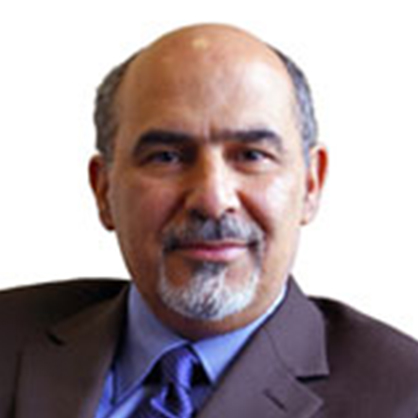
Dr. M. Ali Montazer serves as Professor in the Industrial and Systems Engineering Department at the Tagliatela College of Engineering, University of New Haven. He has held significant leadership roles including Interim Dean of Engineering (2010-2011), Associate Dean (2007-2010), and Department Chair (1992-1998, 2003-2006), demonstrating deep institutional commitment. His educational foundation includes: Ph.D. in Industrial Engineering from University at Buffalo - SUNY M.S. in Industrial Engineering/Human Factors from University at Buffalo - SUNY B.S. in Industrial Engineering (Cum Laude) from University at Buffalo - SUNY Dr. Montazer's research centers on simulation modeling of production systems and business operations, statistical methods, and lean/six sigma initiatives. His work bridges manufacturing and healthcare sectors, with industry collaborations at Bilco Company, Consolidated Industries, Valley Tool & Manufacturing, Remington Products, and Unilever. Current projects emphasize operational efficiency through computational modeling and process optimization. Publication trends reveal consistent focus on practical applications of industrial engineering principles, with recent work targeting mailroom operations (2022), casting/forging lean metrics (2018), and healthcare process improvement (2017). His scholarship demonstrates progression from manufacturing systems to healthcare operations while maintaining core simulation and lean methodologies. He received the University's Distinguished Teaching Award (1988) and has contributed to educational innovation through presentations on multidisciplinary engineering programs and experiential learning institutionalization. As an educator, Dr. Montazer mentors graduate students (evidenced by co-authored publications) and teaches across multiple programs including Simulation Modeling, Operations Research, and executive-level courses in Probability, Statistics, and Lean for MBA/EMBA cohorts. His industry projects function as applied research grants, providing students with real-world problem-solving opportunities through partnerships with major manufacturing and healthcare organizations. While specific laboratory facilities aren't detailed, his simulation modeling work utilizes computational resources for industry-collaborative projects focused on production line optimization and process improvement across manufacturing and healthcare settings.

Niklas Manz is Professor and Physics Department Chair at the College of Wooster, specializing in pattern formation in nonequilibrium systems including chemical waves and fire propagation models. Innovative Analogues: Develops table-top experiments using Belousov-Zhabotinsky reactions to model astrophysical phenomena like black hole event horizons and gravitational lensing. Research Applications: Light-sensitive reaction-diffusion systems Forest fire propagation modeling Biological pattern formation (e.g., geographic tongue) Student Research: Mentors experimental physics projects on wave dynamics, with recent studies on electron drift visualization and BZ reaction catalysts. Education: Ph.D., Physics, Otto-von-Guericke University M.S., Technical University Braunschweig
فقط ۷۵۰ نتیجه اول نمایش داده میشود. برای رسیدن به نتایج دقیقتر، جستوجو را با فیلترها محدودتر کنید.