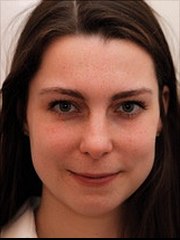
Marko Lindner is a Professor at the Institute of Mathematics, Hamburg University of Technology (TUHH), where he holds the Chair of Applied Analysis. His research lies at the intersection of functional analysis and numerical analysis, particularly focusing on the spectral and Fredholm theory of infinite matrices and linear operators. He has led significant research projects funded by the European Union through Marie-Curie grants and has collaborated with institutions and industries including BAE Systems, UK Met Office, and Schlumberger Ltd. Hamburg University of Technology (TUHH), Institute of Mathematics Chair of Applied Analysis Email: lindner@tuhh.de Office: Room 3,094, Building E, Am Schwarzenberg-Campus 3, D-21073 Hamburg His research interests include operator theory, spectral theory, pseudospectra, finite section methods, discrete Schrödinger operators, and applications in mathematical physics and wave scattering. He investigates the stability and convergence of numerical approximation schemes for infinite-dimensional operators, with deep theoretical contributions to limit operator theory and collective compactness. The recent publications highlight a strong trend in spectral approximation of non-selfadjoint operators, particularly Schrödinger-type operators with periodic, aperiodic, and random potentials. His work combines rigorous functional analytic foundations with computational insights, often involving pseudospectra, condition number asymptotics, and subword-based approximation techniques. The integration of numerical methods with spectral theory is a consistent theme, especially in the context of wave propagation and scattering problems. Scientific awards include: Individual Marie-Curie Fellowship (EU, 2005–2007) Individual Marie-Curie Grant (EU, 2008–2011) Marko Lindner has supervised various research projects, particularly in the areas of wave scattering in unbounded domains and the spectral analysis of infinite matrices. His collaborations span applied mathematics, mathematical physics, and engineering, with funding from both public and private sectors. He is actively involved in the academic community, organizing events such as the Operator Theory Workshop and participating in SIAM & GAMM Chapter activities. He leads and contributes to research teams working on applied operator theory, with a focus on developing stable and efficient numerical methods for complex physical systems. His work bridges theoretical operator algebras and practical computational techniques.