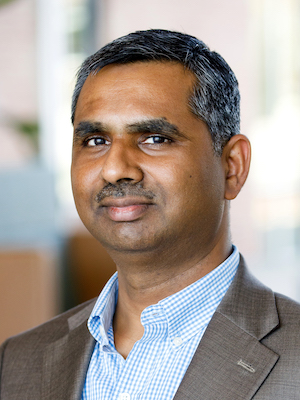
Dr. Deepak Gupta is Professor and Department Chair of Industrial and Manufacturing Engineering at Wichita State University's College of Engineering. As Graduate Coordinator, he leads research in industrial systems optimization and sustainable manufacturing. His research develops computational models for production scheduling, supply chain management, and energy efficiency. Recent publications focus on Industry 4.0 applications in logistics, including dynamic vehicle routing algorithms and machine scheduling optimizations under uncertainty. Sustainability integration in manufacturing systems is a growing thematic focus. Earlier foundational work established energy efficiency frameworks through projects like the Energy Efficiency Knowledge Center (EEKC) and maintenance models for industrial equipment.
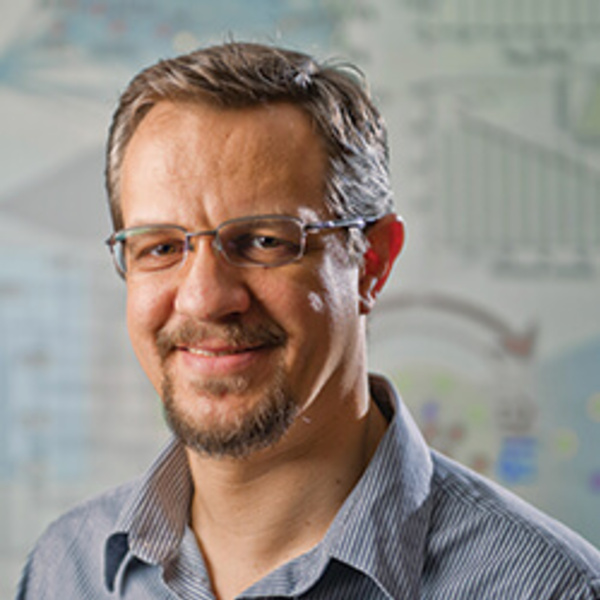
Zoltan Toroczkai is a Professor in the Department of Physics & Astronomy at the University of Notre Dame, with a concurrent appointment in the Department of Computer Science and Engineering. His research focuses on complex systems, integrating tools from statistical physics, nonlinear dynamics, and network science to address problems in neuroscience, biophysics, and computational foundations. He holds a Ph.D. from Virginia Polytechnic Institute and State University (1997) and an M.Sc. from Babeș-Bolyai University (1992). His work spans interdisciplinary areas including cortical connectivity modeling, optimization problems (e.g., Sudoku as a chaos-driven system), and network dynamics. Notable achievements include developing predictive models of cerebral cortical networks and analyzing structural bottlenecks in communication systems. He is a Fellow of the American Physical Society (2012) and has contributed to foundational studies on scale-free networks and disease outbreak modeling. Education : M.Sc., Physics, Babeș-Bolyai University, 1992 Ph.D., Physics, Virginia Tech, 1997 Key Research Themes : Complex systems and network science Neuroscience and cortical architecture Optimization and computational complexity Fluid dynamics and chaotic flows Awards : 2012: Fellow of the American Physical Society Publications : Focus on interdisciplinary applications of physics to real-world systems Notable contributions to Science , Neuron , and Nature journals
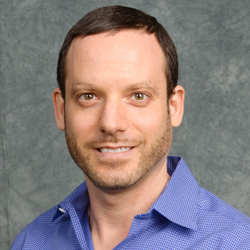
Ohad Perry is an Adjunct Associate Professor in the Department of Industrial Engineering and Management Sciences at Northwestern University under the McCormick School of Engineering . He holds a Ph.D. and M.S. in Operations Research from Columbia University and a B.Sc. in Mathematics and Statistics from the University of Haifa . Research Interests : Stochastic models and applied probability Queueing theory for service and healthcare systems Performance analysis and control of stochastic systems Inventory and contact center optimization Recent Publications : Focus on polling systems , patient flow dynamics , stability of parallel servers , and fluid-diffusion hybrids in priority queues. His work spans theoretical advancements (e.g., Stochastic Systems ) and applied implementations (e.g., Stroke ). Scientific Awards : 2020 APS Best Student Paper Award (as advisor for Hu Y. et al.) Advising and Grants : Co-advisor to doctoral graduates now at HKUST , Tsinghua University , and Stanford GSB . Recipient of multiple NSF grants (2014-2023) and Northwestern Memorial Hospital funding.
Dr. Neville Hurst is a Senior Lecturer at the School of PCPM, RMIT University. His research focuses on Civil Engineering, Urban and Regional Planning, and Environmental Engineering, with a particular emphasis on sustainable infrastructure and real estate policies. He actively collaborates through his ORCID profile (0000-0001-5039-3621) and is open to supervising postgraduate students in Masters Research or PhD programs. His work integrates transportation systems, energy efficiency in buildings, and housing policy analysis. Recent studies include evaluating rail infrastructure performance, exploring green building technologies, and analyzing investor behavior in residential markets. He frequently engages with urban planning challenges, such as transit-oriented development and smart city initiatives. Dr. Hurst’s research also addresses regulatory frameworks, professionalization of real estate roles, and the implications of taxation policies on housing availability. His interdisciplinary approach bridges engineering, policy, and urban design to advance sustainable development goals.
Dr Steffen Bayer is a Lecturer in Business Analytics at the University of Southampton's Southampton Business School. He holds additional roles as Programme Leader for the MSc in Business Analytics and Finance, and PGR Senior Tutor for the Faculty of Social Sciences. His professional background includes prior positions as an Assistant Professor at Duke-NUS Medical School in Singapore and research fellowships at Imperial College London and the University of Sussex. Education: Doctorate in Science and Technology Policy from the University of Sussex Initial training in Physics (specific degree details not provided) Research Interests: Steffen’s primary research areas include: Simulation Modelling Health Systems Research Health Planning System Dynamics Agent-Based Modelling His work integrates these methodologies to address challenges in healthcare service delivery (e.g., stroke care, renal care, home-based health technologies) and operational problems in business contexts (e.g., retail fraud, product returns sustainability). In recent publications (2022–2025), Steffen has explored topics such as NHS diagnostic optimization, cervical cancer screening access in Colombia, and retail fraud mitigation. He consistently applies simulation and data-driven techniques to solve complex system challenges in healthcare and supply chain operations. Dr Bayer has not listed any scientific awards, though he holds editorial roles with Operations Research for Health Care and BMC Health Services Research , and previously served as President of the UK Chapter of the International Systems Dynamics Society. Advising and Grants: Currently supervising two PhD students in Business Studies & Management. His research projects include 'Forecasting and influencing product returns and fraud rates in a Covid-19 world', presented at the EurOMA Sustainability Forum 2022. He emphasizes interdisciplinary collaboration and applied research addressing real-world operational issues. Labs and Teams: Centre for Operational Research, Management Science and Information Systems (CORMSIS) Centre for Healthcare Analytics Centre for Resilient Socio-Technical Systems Supply Chain Excellence Centre These affiliations support his focus on advancing operational research and business analytics in healthcare and business systems.
Dr. George (Georgios) Kouretzis is an Associate Professor in the School of Engineering at the University of Newcastle. His research focuses on pipeline engineering, soil-structure interaction, computational geomechanics, and geotechnical earthquake engineering. He has contributed to the development of practical design tools for buried pipelines affected by geohazards and seismic events. His work integrates advanced numerical simulations with experimental methods, such as physical modeling and vane shear testing. Educations: PhD in Geotechnical Engineering, National Technical University of Athens (NTUA), Greece (2005) MSc in Civil Engineering, NTUA, Greece Diploma in Civil Engineering, Democritus University of Thrace, Greece Research Interests: Onshore pipeline infrastructure safety under environmental and seismic hazards Soil dynamics and computational geomechanics Seismic design of tunnels and geotechnical structures Advanced constitutive models for soft soils Dr. Kouretzis has led major projects funded by the Australian Research Council (ARC), focusing on environmental impacts on pipelines and laboratory apparatus development. He collaborates internationally, aiming to establish a national buried pipeline research hub. His awards include recognition for research and teaching excellence from IACMAG and ACCM. He serves as an associate editor for the Canadian Geotechnical Journal and actively reviews for leading journals and funding bodies. His academic roles include course coordination for geotechnical engineering courses and supervision of postgraduate students. Parallel to academia, he provides expert consultancy for energy and transportation infrastructure projects, including pipelines and seismic-resistant tunnels. He is a member of the Australian Geomechanics Society and served as Secretary of its NSW-Newcastle Chapter.
Brian Van Koten is an Assistant Professor in the Department of Mathematics and Statistics at the University of Massachusetts Amherst. His research focuses on applied probability and numerical analysis, with applications to molecular systems simulation, variance reduction in statistical physics, and numerical methods for saddle point identification. He teaches courses such as Math 652 (Numerical Analysis II), emphasizing computational methods for partial differential equations and optimization in machine learning. Key research interests include computer simulations of biological and materials systems, rare event sampling techniques, and atomistic/continuum coupling methods. He has presented work at institutions like the Institute for Computational and Experimental Research in Mathematics (ICERM) and the Institute for Pure and Applied Mathematics (IPAM), focusing on topics like stratification for Markov chain Monte Carlo and the string method for minimum energy paths. Van Koten's work bridges theoretical numerical analysis with practical computational challenges, addressing issues in multiscale modeling and error analysis. His teaching philosophy integrates advanced numerical methods with real-world applications, supported by detailed course materials on topics like finite difference methods and optimization algorithms for large-scale data science problems.
Henrik Schiøler is an Associate Professor at the Department of Electronic Systems, Aalborg University, affiliated with The Technical Faculty of IT and Design. His research focuses on robotics, unmanned aerial vehicles (UAVs), control systems, and embedded software systems. He leads the Learning and Decisions Lab and contributes to the AI for the People initiative and the CISS Center for Embedded Software Systems. Key projects include Industry 4.0 digital technologies, UAV safety (BVLOS FastTrack), and global air traffic optimization (GATOSS). His work spans predictive manufacturing models, fault-tolerant control systems, and statistical methodologies for cosmological hypotheses. Research interests: Robotics, UAV navigation, control systems, embedded systems, predictive analytics, multiverse theory. Recent projects (2015–2021): Digital tech for Industry 4.0, UAV collision avoidance, satellite-based air traffic surveillance. Awards: Best Paper Award (2015). He supervises PhD students in advanced control systems and manufacturing optimization. Collaborates internationally on UAV applications and AI-driven industrial solutions.
Fantahun M. Defersha is a Full Professor in the Department of Mechanical and Industrial Engineering at the University of Guelph, Ontario, Canada. He holds a PhD in Mechanical Engineering from Concordia University (2006) and has over 28 years of academic experience, including roles as Area Head in Mechanical Engineering. His research focuses on manufacturing systems optimization, cellular manufacturing, supply chain modeling, meta-heuristics, and parallel computing applications. Education: B.Sc. Mechanical Engineering (1995), Addis Ababa University MEng. Mechanical Engineering (2000), University of Roorkee (IIT Roorkee) PhD Mechanical Engineering (2006), Concordia University Research Interests: Manufacturing system analysis, flexible/cellular manufacturing systems, reconfigurable manufacturing systems, supply chain optimization, meta-heuristics, parallel computing, and additive manufacturing sustainability. His work integrates computational methods like genetic algorithms and machine learning to solve complex industrial problems. Publications: Over 50 peer-reviewed journal articles, emphasizing sustainable manufacturing, optimization algorithms, and industrial systems. Recent work includes hybrid machine learning approaches for additive manufacturing and cloud-based digital twin systems. Honors: Campaign for a New Millennium Graduate Scholarship (2004–2005) Concordia University International Tuition Fees Remission Award (2004–2005) Concordia University Graduate Fellowship (2004–2005) Teaching & Advising: Taught over 25 courses, including Optimization in Engineering, Discrete Event Simulation, and Manufacturing Systems Design. Actively advises graduate students in mechanical and industrial engineering. Current research funding includes NSERC grants for Industry 4.0 integration and digital twin technologies. Labs/Teams: Leads research on smart manufacturing systems, digital twins, and sustainable production processes through collaborations with industry partners like AVL Manufacturing Inc.
Con Sheahan is an Associate Professor at the University of Limerick with joint appointments in Lero – the Research Ireland Centre for Software and the School of Engineering. His research focuses on industrial engineering solutions including additive manufacturing, serious games for engineering education, and optimization of production systems. Sheahan develops innovative approaches to product development processes and sustainable manufacturing techniques. Research domains: Application of 3D printing for industrial tooling Gamification of product development processes Techno-economic analysis of biofuel production Mass customization strategies in manufacturing Discrete event simulation for production environments Publication analysis shows consistent focus on bridging theoretical engineering principles with practical industrial applications. Recent work demonstrates strong interdisciplinary connections between manufacturing technology, educational innovation, and sustainable production methods. Community engagement includes collaborative research with European partners on bioethanol production optimization and participation in engineering design education conferences. Current projects explore democratization of product development through game-based learning frameworks.
Edmund Burke is a Professor and Vice Chancellor at Bangor University. His research focuses on operations research, combinatorial optimization, and algorithm development, with notable contributions to scheduling, hyper-heuristics, and airport ground movement optimization. He has published extensively on topics such as constraint propagation, routing algorithms, and multi-objective optimization. Research interests include algorithmic approaches for real-world problems, such as airport slot allocation, maintenance crew scheduling, and timetabling. His work often integrates heuristics and metaheuristics to tackle complex optimization challenges. Recent publications explore cutting-edge techniques like memetic algorithms for ground movement and hyper-heuristics for nurse rostering. Burke has contributed to interdisciplinary projects, including collaborations with Danish railways and airport logistics systems. He actively participates in university administration, organizing alumni events and engaging in outreach activities such as exhibitions and community days. His academic leadership roles underscore his commitment to both research excellence and institutional governance.
Gustavo Schwenkler is an Associate Professor of Finance at Santa Clara University's Leavey School of Business. His research focuses on asset pricing, econometrics, risk management, and derivatives, with notable contributions to understanding systemic risk and financial networks. He holds a PhD in Management Science and Engineering from Stanford University (2013) and a diploma in Applied Mathematics and Economics from the University of Cologne. Educations: PhD in Management Science and Engineering, Stanford University, 2013 Master's Diploma in Applied Mathematics and Economics, University of Cologne Research Interests: Dr. Schwenkler explores how news and information shape financial markets, particularly in crypto markets and firm networks. He develops econometric models to analyze risk dynamics, default clustering, and systemic stability. His work bridges theoretical finance with practical applications in policy and risk management. Professional Roles: Associate Editor at Management Science , Journal of Business & Economic Statistics , and Digital Finance Board Member at Cointree and Indicia Labs Articles Trends: Recent studies emphasize crypto market dynamics, news-driven volatility, and systemic risk in financial networks. His 2020s work explores pandemic policy impacts and venture capital mechanisms, reflecting growing interest in real-world economic interventions and emerging financial instruments.
Paul Maglio is a Professor in the Department of Management of Complex Systems at the University of California Merced's School of of Engineering, where he maintains an active research and teaching role with direct contact via pmaglio@ucmerced.edu. His institutional affiliation reflects deep integration within engineering-focused complex systems research. His primary research domains center on Service Science, Human-Computer Interaction, and Robotics, with specific expertise in trust dynamics in anthropomorphic robots, AI-driven service system architecture, and data-enabled value creation. Work consistently bridges theoretical frameworks like service ecosystems with practical applications in smart service systems, emphasizing how physical interaction and epistemic actions enhance human performance in complex tasks. Analysis of 15 recent publications (2019-2025) reveals three dominant trajectories: (1) foundational contributions to Service Science through conference minitrack leadership, (2) experimental investigations into anthropomorphism's impact on robot trust, and (3) methodological innovations in text mining for smart service analytics. The 2025 household robot study exemplifies his trend of combining cognitive psychology with service design. No scientific awards were documented in the source materials. Student advising and research grant activities remain unreported in available documentation, though his publication record suggests active mentorship through co-authored works. The absence of explicit grant mentions contrasts with his focus on applied service innovation. Research infrastructure details including laboratories or dedicated teams were not specified in the provided academic profile.
Monica Gentili is an Associate Professor in the Department of Industrial & Systems Engineering at the University of Louisville. Her research focuses on operations research, optimization under uncertainty, healthcare systems analysis, and logistics. She holds a Ph.D. in Operations Research from the University of Rome (2003). Key areas of expertise include interval linear programming, organ donation system optimization, and spatial accessibility modeling. Dr. Gentili has collaborated on projects addressing kidney paired donation protocols, disaster relief drone logistics, and policy analysis for healthcare access disparities. Her work integrates mathematical modeling with real-world applications in healthcare and transportation systems. Her research has been published in journals like Soft Computing , Health Services Research , and Annals of Operations Research . Notable contributions include developing methods to quantify outcome ranges in interval programming, optimizing liver and heart allocation systems, and analyzing social media discourse around living organ donation. She also leads initiatives to improve pediatric dental care accessibility and evaluate impacts of healthcare policies like the Affordable Care Act. Dr. Gentili's interdisciplinary approach bridges engineering optimization with public health challenges, emphasizing data-driven solutions for equitable resource distribution.
Prof. Dr. Karin Lunde is a Professor at Technische Hochschule Ulm (THU), co-opted at the Faculty of Computer Science, the Faculty of Mechatronics and Medical Engineering at THU, and the Faculty of Mathematics and Economics at the University of Ulm. Her research focuses on mathematics, modeling and simulation, particularly discrete-event-based systems applied to operating/manufacturing systems and queuing systems. She actively participates in the COSH initiative (School-University Cooperation), contributing to educational networking since 2012 as part of the core team of the COSH Baden-Württemberg working group. Teaching spans Computer Science, Mechatronics, Medical Engineering, Computational Science and Engineering, and the Information Systems Master's program. Courses are accessible via Moodle on THU's e-learning platform. Professional memberships include ASIM and DMV. Contact details: Room A305c, Prittwitzstraße 10, Ulm, Email: Karin.Lunde@thu.de.