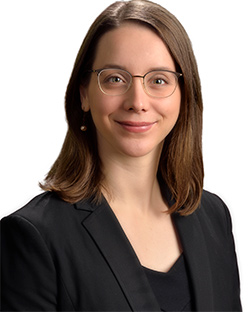
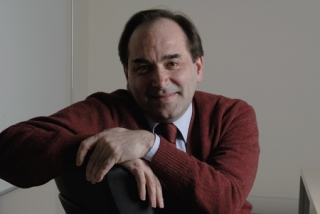
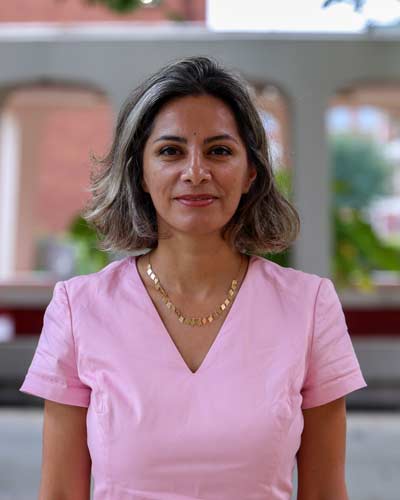
Palma Paciocco is an Associate Professor at Osgoode Hall Law School within York University . Her work focuses on criminal law, criminal procedure, evidence law, sentencing, professional ethics, and interdisciplinary approaches via law and the humanities. Education: BA (McGill), BCL/LLB (McGill), SJD (Harvard) Professional Affiliations: Co-director of the Juris Doctor/Master of Arts in Philosophy Program, Board of Directors, Canadian Law and Society Association Her research addresses systemic challenges in criminal justice, including trial delays, prosecutorial ethics in plea bargaining, and judicial discretion. She has contributed to leading journals and co-authored Canada’s premier evidence law textbook. Scientific Awards: Osgoode Hall Law School Teaching Award (2018) SSHRC Doctoral Fellow Thomas Shearer Stewart Travelling Fellow Landon H. Gammon Fellow Professor Paciocco supervises graduate students in socio-legal studies and law-and-humanities frameworks, serving on examination committees for Katherine Poehlmann (Master's) and Danardo Jones (PhD).
Hadi Mahmoudzadeh serves as a Lecturer in the Department of Industrial Engineering at Yeditepe University's Faculty of Engineering since 2023, following prior research assistant positions at Koç University (2018) and Urmia University (2013). His academic credentials include: PhD in Industrial Engineering, Koç University (2018-2022), thesis: "Strategic customer behavior in service systems: Externalities, risk sensitivity and heterogeneity" Master's Degree in Industrial Engineering, Urmia University (2013-2015) Bachelor's Degree in Industrial Engineering, Iran University of Arts and Sciences (2009-2013) His research specializes in queueing theory with applications in strategic customer behavior analysis, particularly examining risk sensitivity and heterogeneity in service systems. This work extends to healthcare optimization including facility location modeling, hospital performance improvement, and healthcare network design, frequently incorporating stochastic processes and machine learning methodologies. Publication analysis reveals consistent focus on equilibrium behavior of risk-averse customers in queueing environments, with emerging trends in heterogeneous customer modeling (2023-2024) and healthcare system applications. His work bridges theoretical operations research with practical implementations in service pricing, healthcare infrastructure, and supply chain management. Research funding includes two TÜBİTAK 1001 projects: "Strategic Customer Behavior in Service Systems" (2018-2022) as Scholarship Holder "Data-Driven Production Systems Optimization" (2022-present) as Researcher He teaches Engineering Economics, Decision Analysis, and Mathematical Modeling while serving as Yeditepe University's Erasmus Coordinator since 2024.
Alexander Wolff is a Professor at the Chair of Algorithms and Complexity within the Institute of Computer Science at the University of Würzburg. His work focuses on graph drawing, computational geometry, and algorithmic complexity, with applications in geographic information systems and network visualization. Chair of Algorithms and Complexity, Institute of Computer Science, University of Würzburg (since 2009) Managing Director, Institute of Computer Science (2011–2013, 2015–2017) Editorial roles in journals like JoCG and JGAA Conference leadership in Graph Drawing (GD) and SOFSEM His research explores geometric graph representations, obstacle numbers, and parameterized complexity. Recent publications address level planarity, polyhedral surface adjacency, and metro map visualization. Collaborative projects include algorithmic quality assurance and interactive industrial network visualization. Wolff’s work bridges theoretical graph algorithms with practical applications, such as optimizing public transport schematics and enhancing data accessibility. He has supervised numerous PhD students and co-authored over 100 publications, with editorial and organizational roles in major computational geometry and graph drawing conferences.
Alberto De Santis is an Associate Professor in the Department of Computer, Automatic and Management Engineering A. Ruberti at the University of Rome La Sapienza, Faculty of Information Engineering, Computer Science and Statistics. He has maintained this position since 1998 in the sector ING-INF04 - Automatica, following his progression from researcher positions at both the National Research Council and the university's Department of Computer and System Engineering. His educational background includes a degree in Electronic Engineering from University of Rome La Sapienza (1984, with honors) and a Specialization in Control Systems and Automatic Computing Engineering (1985-86). His academic journey included a visiting scholar position at UCLA's School of Engineering and Applied Mathematics (1990-91) and research fellowships at the Institute of Systems Analysis and Informatics. Professor De Santis teaches Fundamentals of Automatic Control for Management Engineering undergraduate programs and Modeling and Identification for Master's degree students. His research spans theoretical and applied domains with particular emphasis on filtering and control theory, signal processing, and system identification. He's also a member of Continuous Optimization research group and since 2011 has been associated with the university spin-off ACTOR SRL focused on Analytics, Control Technologies and Operations Research. His recent publications (2022-2024) demonstrate remarkable interdisciplinary reach, connecting traditional control engineering with aerospace systems, nutrition science, healthcare optimization, and sports medicine. This reflects a research trajectory that has evolved from core control theory to practical applications across diverse fields including aircraft formation, sustainable diet planning, emergency department operations, and dietary supplement usage patterns. He maintains active academic engagement through regular teaching (with documented 2024/25 course schedules), ongoing research collaborations, and participation in university spin-off initiatives. His office is located in room A204 at the university's Department of Computer, Automatic and Management Engineering.
Bengt Lennartson is a Professor of Automation at Chalmers University of Technology and Head of the Department of Systems and Control Engineering. His research focuses on automation engineering, sustainable production, robotics, and energy optimization, with over 280 international publications. Collaborations include industry leaders like Volvo, Daimler, Kuka, and TetraPak. IEEE Fellow for contributions to automation systems Specializes in hybrid/discrete-event systems Develops energy optimization strategies for robotic production lines Recent work explores Plug-and-Produce systems , digital twin calibration , and stochastic energy optimization in robotics. His team integrates AI with formal methods for safety verification and develops open-source educational tools like biomedical exoskeletons. Scientific awards include IEEE Fellowship , with articles addressing energy-efficient robot trajectories, safety-aware multi-agent control, and formal verification of cyber-physical systems.
Marc Geilen is an Associate Professor at the Electronic Systems group of Eindhoven University of Technology (TU/e) . He leads the Model-Based Design Lab within the CompSOC Lab and High Tech Systems Center .
Nicholas Evangelopoulos is an Associate Professor in the Information Technology and Decision Sciences department at the University of North Texas. His academic career spans over a decade with consistent research contributions in information systems and text mining methodologies. Dr. Evangelopoulos's research focuses on Latent Semantic Analysis (LSA) and its applications across various domains. His work bridges theoretical methodological developments with practical applications in areas including: Text mining and analysis of unstructured data Quality management and customer feedback analysis E-democracy and citizen engagement Information systems research methodology Sentiment analysis and public agenda setting His publication record from 2007-2014 demonstrates consistent scholarly output with a focus on methodological innovations in text analysis and their practical applications. Dr. Evangelopoulos has contributed to understanding how textual data can be leveraged for quality control, government decision support, and analyzing public discourse on social issues like human trafficking. Notable contributions include: Methodological improvements to Latent Semantic Analysis including orthogonal rotations Applications of text mining to e-democracy and citizen feedback analysis Integration of LSA with quality control methodologies Studies on research diversity within the information systems discipline Dr. Evangelopoulos frequently collaborates with researchers like Anna Sidorova, suggesting a collaborative research approach. His work demonstrates both theoretical contributions to methodology and practical applications across multiple domains, positioning him as a researcher who effectively bridges academic theory with real-world problems.
Andrés Jonathan Abeliuk Kimelman is an Assistant Professor at the University of Chile's Faculty of Physical Sciences and Mathematics , affiliated with the Department of Computer Science . He holds a PhD in Computer Science (University of Melbourne, 2017) and a Civil Engineering degree in Computing (University of Chile, 2012). Research Focus : AI ethics, network analysis, natural language processing, and machine learning applications in social systems. Teaching : Leads undergraduate and postgraduate courses in Discrete Mathematics, Data Mining, and Computational Theory. Students : Advises multiple thesis and research projects, including works on AI-assisted urban planning, misinformation analysis, and algorithmic bias. Collaborations : Participates in the National Center for Artificial Intelligence (CENIA) as a co-investigator (2022-2027). Key Publications explore polarization detection, networked public spheres, and computational models for social systems. Current projects include unsupervised topic quantification and extreme multi-label classification in multilingual contexts.
Gheorghe Craciun is a Professor in the Department of Mathematics and Department of Biomolecular Chemistry at the University of Wisconsin-Madison . His research focuses on Mathematical and Computational Methods in Biology and Medicine , particularly in analyzing chemical reaction networks, dynamical systems, and algebraic geometry applications. He has taught advanced courses like Math 703 and organized workshops, including the Moshe Mendelson Memorial Lecture and the Moshe Mendelson Workshop on Mathematics of Reaction Networks . His recent publications explore topics such as Toric Differential Inclusions , Complex Balanced Equilibrium , and Reaction Network Stability . His work involves collaborations with researchers like Casian Pantea , Polly Yu , and Minh Binh Tran . He also contributes to interdisciplinary areas, including biochemistry , neuroscience , and genomics , applying mathematical frameworks to biological systems.
Vikas Bhandawat is an Associate Professor at Drexel University's School of Biomedical Engineering, Science and Health Systems, where he leads the Bhandawat Laboratory. His research focuses on understanding how animal behavior emerges from the complex interaction between the nervous system, the body, and the environment, using Drosophila (fruit flies) as a model organism due to their relatively simple brain and available genetic tools. His educational background includes: MS in Chemistry (Integrated BS and MS) from Indian Institute of Technology, Kanpur, India (1993-1998) PhD in Neuroscience from Johns Hopkins School of Medicine (1999-2005), with thesis on "Elementary Events Underlying Olfactory Transduction" Postdoctoral training at Harvard Medical School (2005-2009) under Prof. Rachel Wilson Dr. Bhandawat's research spans multiple timescales of behavior, from milliseconds to minutes, with a focus on sensorimotor integration during locomotion. His lab employs a highly interdisciplinary approach combining in vivo whole-cell patch clamp recordings, imaging, quantitative behavioral measurement, biomechanics, and computational modeling. His work has revealed that fly locomotion can be decomposed into discrete "locomotor features" that are modularly affected by odors, providing insight into how sensory information transforms into action. An analysis of his recent publications shows a consistent focus on understanding the neural and biomechanical basis of locomotion across multiple timescales. His work bridges neuroscience, biomechanics, and computational approaches, with particular emphasis on odor-modulated locomotion, descending motor control, and the biomechanics of legged locomotion in Drosophila. His research demonstrates how complex behaviors emerge from relatively simple neural systems. Dr. Bhandawat has built a productive research program with numerous publications in high-impact journals including Nature Neuroscience, Neuron, eLife, and PNAS. His work has contributed significantly to our understanding of how sensory information is transformed into motor output in a relatively simple model system. His laboratory actively mentors students and researchers, employing a multi-pronged approach to study behavior. The lab seeks to create the next generation of professionals with multidisciplinary skills necessary to tackle complex real-world problems. They are particularly interested in building a diverse team of biologists, neuroscientists, and engineers to address questions spanning from sensation to action. The Bhandawat Laboratory focuses on three main research areas: 1) From Sensation to Action (algorithms and circuits underlying transformation of sensation to action), 2) Descending Motor Control (studying descending pathways in Drosophila), and 3) Biomechanics of Locomotion (understanding the mechanics of legged movement). The lab has developed innovative techniques for recording neural activity while measuring behavior and has made significant contributions to understanding how odors modulate locomotion through discrete behavioral states.
Christoph Ableitinger is an Associate Professor at the Department of Mathematics , Faculty of Mathematics , University of Vienna , with a dual affiliation to the Center for Teacher Education . His academic profile focuses on the intersection of theory and practice in mathematics education, particularly through his roles in curriculum development and teacher training programs. Broadly investigates mathematical procedural knowledge and its assessment Examines technology integration in secondary mathematics instruction Develops modeling seminars and educational outreach initiatives Studies teacher-student belief systems in mathematical contexts Researches the impact of standardized testing on educational practices Recent publications highlight trends in analyzing student errors, optimizing technology use in classrooms, and bridging university mathematics with secondary school requirements through modeling activities. His work offers valuable insights into improving mathematical understanding and instructional effectiveness across educational systems.
Lawrence Holloway is a Professor in the Department of Electrical and Computer Engineering at the University of Kentucky's Stanley and Karen Pigman College of Engineering. He has held multiple leadership roles including Interim Dean of the College of Dentistry, Vice Provost of the University of Kentucky, and Director of the Power and Energy Institute Kentucky (PEIK). His research focuses on discrete event control systems, fault detection, and manufacturing automation. Ph.D., Electrical and Computer Engineering, Carnegie Mellon University M.S., Electrical and Computer Engineering, Carnegie Mellon University B.S., Electrical Engineering, Southern Methodist University Holloway's work spans critical areas in control systems and manufacturing engineering, emphasizing fault monitoring, embedded systems, and power systems analysis. He has developed methodologies for anomalous behavior detection and resilience modeling in production networks. His publications reflect expertise in discrete event dynamic systems, lean manufacturing pedagogy, and control synthesis techniques. From 1991 to present, Holloway has been affiliated with the University of Kentucky as both faculty and administrator. He also maintains joint faculty roles in the Center for Manufacturing and the Department of Electrical and Computer Engineering. His career includes industry experience at Rockwell Science Center and National Instruments.
Dr. Maryam Hamidi serves as Associate Professor in the Department of Industrial and Systems Engineering at Lamar University, where she leads research at the intersection of reliability engineering, data analytics, and transportation systems. Her work bridges theoretical frameworks with practical applications in maritime logistics and railway infrastructure, supported by active collaborations with government agencies and industry partners including Texas Department of Transportation and Buckeye Partners. Dr. Hamidi's academic foundation includes: Ph.D. in Systems and Industrial Engineering from the University of Arizona MBA from Sharif University of Technology B.S. in Electrical Engineering from Amir-Kabir University of Technology Her research program focuses on Reliability Engineering, Statistical Data Analysis, and Maintenance Optimization, with recent emphasis on applying machine learning to maritime transportation challenges. Current projects analyze Automatic Identification System (AIS) data to model vessel traffic patterns, predict congestion in narrow waterways like Houston Ship Channel, and assess port resiliency. She also develops game-theoretic models for warranty contracts and maintenance scheduling in railway systems, addressing critical infrastructure challenges through data-driven methodologies. Dr. Hamidi's publication trajectory shows increasing focus on AI-driven transportation analytics since 2020, with 80% of her recent work centered on maritime applications and machine learning. Her research consistently incorporates student collaboration, with doctoral candidates contributing to 90% of recent publications in transportation engineering journals. Dr. Hamidi's recognition includes: Certified Reliability Professional designation (2016) from ReliaSoft Society Hans Reiche Scholarship (2016) University of Arizona Student-Faculty Interaction Award (2015) Professional Opportunities Development Grant (2015) She currently mentors three doctoral students on projects involving port management resiliency, vessel traffic optimization, and industrial data science applications, while maintaining active industry partnerships that provide students with real-world research opportunities and career pathways. Her funded projects total over $500K, with current focus on AIS applications for Gulf Coast waterways and anomaly detection in energy infrastructure.
Simone Paoletti serves as Associate Professor in the Department of Information Engineering and Mathematical Sciences at the University of Siena, where he joined as a Researcher in 2007 and currently chairs the Teaching Committee for the Master's Degree in Artificial Intelligence and Automation Engineering. His international research includes collaborations at Linköping University, Eindhoven University of Technology, and University of Colorado Boulder. Education: Bachelor's Degree in Computer Engineering (Automatic Control & Industrial Automation), University of Rome Tor Vergata, 2000 PhD in Information Engineering, University of Siena, 2004 Research Focus: Dr. Paoletti specializes in robust control of uncertain systems , identification of hybrid systems , and optimization techniques for smart grid management . His work bridges theoretical control systems with practical sustainable energy applications, highlighted by his 2019 seminar invitation at the National Renewable Energy Laboratory (NREL). Publication Trends: Recent works (2023-2025) demonstrate concentrated research on reinforcement learning and mathematical optimization for renewable energy communities, particularly addressing electric vehicle integration and distributed energy resource management within European-scale frameworks. Scientific Awards: No awards documented in provided materials. Teaching & Service: He instructs Discrete-Event Systems (Master's level) and Dynamic Systems (Bachelor's level), with office hours held Thursdays 12:00-13:00 in S.Niccolo' Building Room 229. His research projects focus on renewable energy community management and grid optimization.
Dr. Gang Mei is an Associate Professor in Scientific Computing within the School of Engineering and Technology at China University of Geosciences (Beijing), where he has held academic positions since 2014. His career progression includes Postdoctoral Researcher (2014-2016), Lecturer (Oct-Dec 2016), and current Associate Professor (since Jan 2017). His research bridges computational science and engineering applications with significant editorial contributions to computer science literature. Education: Ph.D. in Computer Science, University of Freiburg, Germany (2014) Research Interests: Dr. Mei specializes in Numerical Simulation and Computational Modeling, GPU Computing, Machine Learning, and Data Mining, with strong applications in Network Science and Spatial Information Systems. His work integrates Distributed and Parallel Computing techniques for large-scale scientific simulations, particularly in geospatial modeling and network analysis. The research demonstrates consistent focus on computational efficiency through hardware acceleration and algorithmic optimization across diverse domains including satellite imagery processing, financial event detection, and medical image classification. Publication Trends: His editorial portfolio reveals strong interdisciplinary patterns connecting computer science fundamentals with domain-specific applications. Recent works emphasize GPU-accelerated methods for data-intensive problems (2020-2022), spatial-temporal modeling (2019-2020), and network science applications (2021). The publications consistently address computational scalability challenges while maintaining practical relevance across geospatial, financial, medical, and engineering contexts. Professional Recognition: As an IEEE Member, Dr. Mei serves on editorial boards for IEEE Access and PeerJ Computer Science, reflecting peer recognition in computational fields. His editorial contributions span 15+ publications demonstrating expertise in evaluating cutting-edge computer science research. Academic Service: Beyond editorial work, Dr. Mei's service includes advising on computational methodology across multiple disciplines. His role as Academic Editor demonstrates commitment to scholarly communication, particularly in bridging theoretical computer science with practical engineering applications. No grant funding details were specified in available materials.