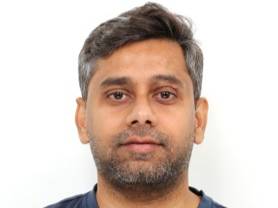
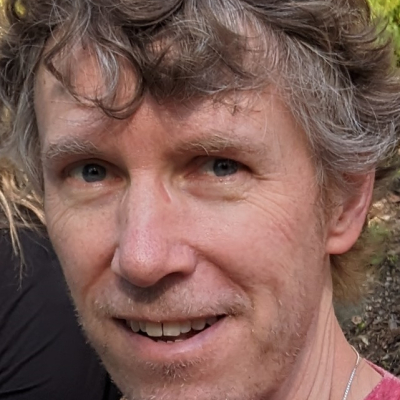
Professor Ha Bui is the Head of the Department of Civil and Environmental Engineering at Monash University and an ARC Future Fellow. He holds a PhD in Computational Geomechanics from Ritsumeikan University, Japan, and has been with Monash since 2012. His research focuses on computational mechanics, material modeling, and geomechanics, with a particular emphasis on failure mechanisms of geomaterials and developing predictive tools for geo-disasters. He leads the development of GeoXPM, a particle-based computational software for geotechnical applications. Bui has received numerous awards, including the ALERT Research Medal (2021) and the ARC Future Fellowship (2020). He serves as Editor of Computers & Geotechnics and Associate Editor of multiple journals, contributing significantly to the field through editorial and review work. His research spans numerical methods like SPH and DEM, addressing challenges in geohazard prediction, material behavior under extreme conditions, and infrastructure resilience.
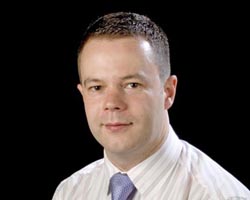
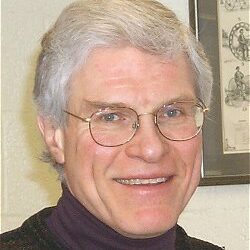
Dr. Khosro Shahbazi is a tenured Associate Professor of Mechanical Engineering at South Dakota Mines. His expertise includes computational fluid dynamics, multiphase flows, and nanophysics applications in energy and medicine. He completed his Ph.D. at the University of Toronto and held postdoctoral positions at Brown University and University of Wyoming. Research interests focus on novel numerical methods for compressible flows, nanoparticle optoacoustics for cancer therapy, and turbulence modeling. His work bridges theory, computation, and experimentation in renewable energy, inertial confinement fusion, and biomedical systems. Recent publications emphasize high-order finite difference methods, compressible multiphase flows, mining ventilation systems, and photoacoustic diagnostics. Teaching includes Thermodynamics, Fluid Mechanics, Heat Transfer, and specialized graduate courses in computational transport phenomena. Education: B.S. (Sharif University), M.A.S. (Toronto), Ph.D. (Toronto) Laboratory: Computational Transport Phenomena Pedagogy: Emphasizes constructivism and rigorous challenge with support
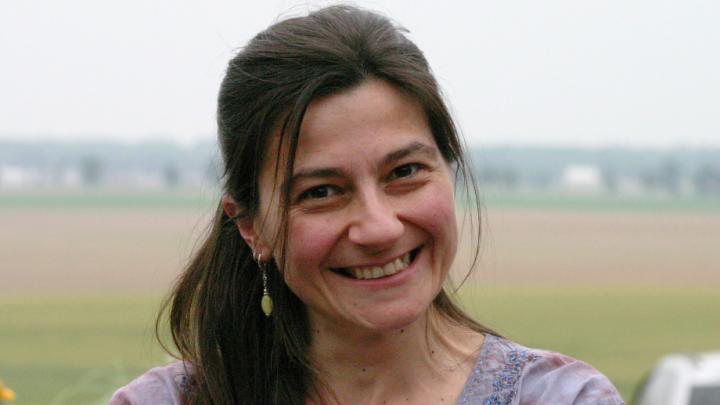
Prashant K. Jha is an Assistant Professor in the Department of Mechanical Engineering at the South Dakota School of Mines and Technology. Previously, he served as a Mechanical Engineering Lecturer (equivalent to Assistant Professor) at the University of Portsmouth and held postdoctoral positions at Louisiana State University and the Oden Institute at UT Austin. PhD in Civil and Environmental Engineering (2016), Carnegie Mellon University ME in Mechanical Engineering (2012), Indian Institute of Science BE in Mechanical Engineering (2010), Govt. Engineering College Raipur His research focuses on computational mechanics of materials, combining peridynamics , machine learning , and nonlocal modeling to study: Fracture mechanics in soft and granular materials Multiphysics and multiscale simulations Neural operators for scientific computing Uncertainty quantification in material models Design of functional materials under extreme conditions Applications to biomedical imaging and tumor growth Recent publications emphasize neural operator surrogates with error correction, peridynamic modeling of granular media, and multi-fidelity simulations. His work has appeared in journals like CMAME , ARMA , and JCP . NSF ERI award (2025) for multi-fidelity modeling SDBOR CRG award (2025) for magnetic soft materials He advises students in computational mechanics and serves on editorial boards of Journal of Peridynamics and Nonlocal Modeling , JOSS , and Scientific Reports . The CEAD Lab develops methods for fracture analysis, smart material design, and nonlocal neural operator frameworks.
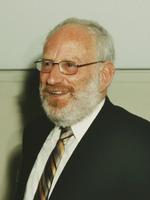
Blaise Bourdin is a Professor of Mathematics and the Canada Research Chair in Mathematical and Computational Aspects of Solid Mechanics (Tier 1) at McMaster University's Department of Mathematics & Statistics. He holds a Doctorate from Université Paris 13 (1998) and has held academic positions at Louisiana State University (2002-2021) and postdoctoral roles at Technical University of Denmark, Caltech, and NYU. His research focuses on interdisciplinary modeling, numerical simulation, and analysis in solid mechanics, with emphasis on defect mechanics and optimal design. He pioneered the phase-field approach to brittle fracture, a widely influential method in fracture mechanics. His work has been supported by over $6M in grants from NSF, NSERC, and industry. Key research areas include solid mechanics, applied mathematics, numerical analysis, and theoretical mechanics. Recent publications (2018-2025) explore fracture toughness measurement, phase-field discretization, hydraulic fracturing, and topology optimization. Education: Doctorate in Mathematics, Université Paris 13 (1995-1998) Advanced Studies Diploma (DEA), Université Paris 13 (1994-1995) Master's and Undergraduate degrees, Université Paris 13 (1990-1993) Teaching includes advanced courses like Fourier Analysis, Optimal Design, and Engineering Mathematics. His software contributions include the open-source 'mef90/vDef' project. Awards include the prestigious Tier 1 Canada Research Chair (2022).
Anastasia Kisil is a Royal Society Dorothy Hodgkin and Dame Kathleen Ollerenshaw Research Fellow in Applied Mathematics at the University of Manchester. Her work focuses on analytical and semi-analytical methods in diffraction theory and metamaterials, with expertise in Wiener-Hopf techniques, aeroacoustics, and canonical scattering problems. She holds affiliations within the School of Mathematics and Department of Applied Mathematics. Her research interests span the mathematical analysis of wave phenomena, including elastic wave scattering, acoustic diffraction, and metamaterial design. Notable contributions include advancements in iterative Wiener-Hopf methods for solving complex boundary value problems and their applications to real-world systems like porous extensions in aeroacoustics. Publications highlight her work on anti-plane elastic wave scattering, matrix factorization, and wave diffraction in structured media. Articles often explore the interplay between theoretical developments and numerical simulations, emphasizing practical applications in engineering and materials science. Kisil’s methodological innovations aim to bridge gaps between classical mathematical techniques and modern computational approaches. Her work has been disseminated through peer-reviewed journals such as the Journal of Fluid Mechanics , SIAM Journal on Applied Mathematics , and Proceedings of the Royal Society A . Media engagement includes contributions to podcasts and articles on metamaterial theory and wave scattering.
James Elliott is a Professor of Macromolecular Materials Science at the Department of Materials Science & Metallurgy, University of Cambridge. His research spans computational materials science, focusing on pharmaceutical powders, polymer membranes, carbon nanomaterials, and composite systems. He employs multi-scale modelling techniques validated by advanced imaging, such as X-ray microtomography, to address industrial challenges in material design and processing. MA, University of Cambridge PhD, University of Bristol (Materials Modelling) Key research areas include: Pharmaceutical powder compaction using discrete and finite-element modelling Polymer electrolyte membranes for fuel cells Carbon nanotube composites Multi-scale simulation methodologies Recent publications emphasize computational approaches to powder dynamics, CO2 electroreduction catalysts, and nanotube fiber optimization. His work bridges molecular-scale simulations with macroscopic industrial applications. Laboratory: Macromolecular Materials Laboratory
Professor Herbert Huppert is a distinguished academic at the University of Cambridge, holding the position of Professor of Theoretical Geophysics within the Faculty of Mathematics and the Department of Applied Mathematics and Theoretical Physics (DAMTP) . He has been affiliated with the university since 1968, serving as a Fellow at King's College since 1970. His research focuses on geophysical fluid mechanics, environmental fluid dynamics, and granular media dynamics, with significant contributions to carbon sequestration and volcanic processes. His career highlights include roles as Assistant Director of Research (1970–1981), University Lecturer (1981–1988), and Reader in Geophysical Dynamics (1988–1989). He is a key figure in the Theoretical Geophysics Research Group , with expertise spanning magma dynamics, porous media flows, and volcanic eruption modeling. His work has been published in leading journals such as Journal of Fluid Mechanics and Earth and Planetary Science Letters . Recent research trends include investigations into granular column collapses, buoyant fluid dynamics, and CO2 sequestration mechanisms. His studies on volcanic hazards and fluid-rock interactions have practical implications for disaster management and energy storage. Collaborations with institutions worldwide, including the Weizmann Institute and MIT, underscore his global academic influence.
Rik Blok serves as a Lecturer in the Department of Computer Science within the Faculty of Science at the University of British Columbia. His teaching portfolio includes foundational courses such as APSC_V 160 (Introduction to Computation in Engineering Design), CPSC_V 302 (Numerical Computation for Algebraic Problems), and the CPSC_V 100/103/107/110 series on computational thinking and program design, with documented teaching activity spanning from 2018 through the 2025 Winter term. Dr. Blok's research centers on complex systems theory, with particular emphasis on emergent phenomena arising from interactions of simple elements. His scholarly output demonstrates interdisciplinary reach across game theory, statistical physics, and computational biology. Notable contributions include NetLogo implementations exploring cooperation dynamics in Axelrod's tournaments, climate modeling through radiation balance simulations, and medical intervention strategies using evolutionary approaches. His work consistently applies computational modeling to reveal fundamental patterns in irreducible systems. Analysis of his 15 most recent scholarly outputs reveals strong thematic continuity in studying emergent behavior through computational frameworks. Approximately 40% focus on game-theoretic approaches to cooperation and strategic decision-making, while 30% examine physical and biological systems through simulation. The remaining works bridge mathematical theory with practical implementation, demonstrating his commitment to making complex concepts accessible through computational visualization. His research methodology consistently prioritizes model utility over perfect accuracy, embracing George Box's principle that 'all models are wrong, but some are useful.' As an educator, Dr. Blok champions curiosity-driven learning and scientific skepticism, as reflected in his 'curious skeptic' philosophy. His teaching materials, including the comprehensive UBC ISCI 344 Game Theory course resources, demonstrate innovative approaches to flipping the classroom through video lectures and interactive materials. His personal website 'Rik's Treehouse' serves as both an educational resource and research portfolio, showcasing his commitment to open knowledge sharing across computational, mathematical, and scientific domains.
Stuart Leigh Phoenix is a Professor of Engineering at Cornell University's College of Engineering since 1974. His research focuses on the long-term reliability of fibrous composites in aerospace and defense applications, including pressure vessels, rocket motor casings, wind turbine blades, and soft body armor. He has pioneered computational models for creep-rupture failure, ballistic impact dynamics, and stress-rupture analysis in composite materials. Education: B.S. in Engineering (University of Guelph, 1967), M.S. in Agricultural Engineering (University of Guelph, 1968), Ph.D. in Mechanical Engineering (Cornell University, 1972). Academic roles include teaching applied mathematics and advanced composite materials courses. Research Interests: Development of micromechanical and statistical models for composite failure, computational methods for stress field analysis, and ballistic impact modeling for body armor. Key areas include creep-rupture models for polymers/metals, fast influence function techniques, and fracture statistics in fibrous materials. Awards: Fiber Society Award (1983) Harold DeWitt Smith Award (1992) NASA NESC Engineering Excellence Award (2005) Outstanding Referee for American Physical Society Journals (2014) Notable contributions include work on NASA’s Space Shuttle Return to Flight (via COPV reliability), models for composite overwrapped pressure vessels (COPVs), and interdisciplinary projects involving gas hydrates for offshore energy storage. His publications span theoretical mechanics, computational modeling, and experimental validation across composites and ballistics.
Anna Stefanopoulou is a Professor at the University of Michigan College of Engineering , holding the William Clay Ford Professor of Manufacturing and courtesy appointments in Naval Architecture & Marine Engineering and Electrical Engineering & Computer Science . Her work focuses on estimation and control of electrochemical systems including batteries, fuel cells, and internal combustion engines. Education : Ph.D. in Electrical Engineering & Computer Science (1996), M.S. in Electrical Engineering & Computer Science (1994), M.S. in Naval Architecture & Marine Engineering (1992), and Diploma in Naval Architecture & Marine Engineering from National Technical University of Athens (1991). Her research spans energy storage systems for automotive applications, emphasizing lithium-ion battery modeling , fuel cell water management , and hybrid powertrain optimization . She has pioneered adaptive observers for battery state-of-charge estimation and thermal management strategies for cold-temperature battery operation. Her 15 most recent publications (2013-2017) explore electrochemical degradation , mechanical stress in battery cells , and fuel cell dynamics , with applications in electric vehicles and microgrids . Key scientific awards include: Fellow, SAE (2018) IEEE Control Systems Technology Award (2016) Rackham Distinguished Graduate Mentor Award (2018) ASME Gustus L. Larson Memorial Award (2009) NSF CAREER Award (1997) She advises doctoral students through modeling, lab work, and authorship prioritization , supporting internships post-second year and requiring 4+ conference papers per student . Her Battery Control Group collaborates on automotive electrification and energy storage safety .
Anthony Waas is a Felix Pawlowski Collegiate Professor in Mechanical Engineering and a joint faculty member in Aerospace Engineering at the University of Michigan's College of Engineering. His research focuses on composite materials, structural mechanics, and failure analysis, with a strong emphasis on computational modeling and experimental validation. He leads studies on fatigue damage, impact mechanics, and advanced material systems like metamaterials and additive manufacturing. Research interests include: Composite materials under static and dynamic loading Structural failure analysis and predictive modeling Computational tools for progressive damage simulation Applications in aerospace and biomedical engineering Recent work explores advancements in fatigue life prediction, delamination modeling, and high-precision antenna structures. His experimental methods integrate digital image correlation and multiscale testing to validate computational models. Grants and collaborations involve AFRL/NGC programs on fail-safe composite structures and NASA initiatives on space deployable systems. His lab develops novel solutions for stress concentration mitigation and lightweight aerospace components.
Jean-François Molinari is a Full Professor at École Polytechnique Fédérale de Lausanne (EPFL), directing the Computational Solid Mechanics Laboratory (LSMS) and holding joint appointments in the Civil Engineering Institute and Materials Science Institute. He has worked internationally at Johns Hopkins University, Ecole Normale Supérieure Cachan, and Ecole Polytechnique de Paris. His research spans damage mechanics , multiscale modeling , tribology , fracture dynamics , and contact mechanics , integrating atomistic to macroscopic scales. Recent work includes Physics-informed neural networks for friction Dynamic fragmentation in granular media Exascale molecular dynamics with adaptive clustering as seen in his 2024-2025 publications. He has supervised numerous PhD students in projects related to wear modeling , crack propagation , and multiscale geomechanics . His group develops open-source tools like Tamaas and Akantu , and he contributes to SNSF Research Council and editorial roles.
Dr. Truong Truong is an Honorary Professor of Sustainable Transport Systems at the University of Sydney’s Institute of Transport and Logistics Studies. He holds degrees in electrical engineering, economics, law, and a PhD in economics. His career spans academia and industry, including roles as a Visiting Associate Professor at Purdue University and a Marie Curie Fellow at the German Institute for Economic Research (DIW). He has also been a Fellow at the Hanse Wissenschaftskolleg Institute for Advanced Study in Germany. Research interests include sustainable transport systems, energy-economy-environment modeling, computable general equilibrium analysis, climate change mitigation strategies, and transport infrastructure policy. His work bridges theoretical economic frameworks with applied policy analysis, particularly in the context of global trade and environmental sustainability. Key achievements include contributions to congestion modeling, electricity sector technology substitution, and the integration of discrete choice models into spatial economic analysis. His publications span journals like Energy Economics and Journal of Transport Geography , alongside conference proceedings and book chapters. He has received prestigious fellowships, including the Marie Curie International Incoming Fellowship and a residency at the Hanse Wissenschaftskolleg. His research has informed policy debates on transport infrastructure, climate change adaptation, and sustainable energy systems.
Allan M. Rubin is a Professor of Geosciences at Princeton University and a core member of the Rubin Research Group. Active since 1992, his work focuses on integrating seismic, geodetic, and laboratory data with numerical models to study crustal deformation, particularly in volcanic and faulting regions. His research emphasizes understanding slow slip events, tectonic tremor, and friction mechanics in subduction zones and fault systems. He holds an ORCID ID (0000-0003-0563-9412) and oversees the Rubin Research Group’s investigations into brittle deformation processes. Research interests include the mechanics of slow slip and tremor, which represent a novel style of fault movement with implications for seismic hazard assessment. His studies explore how these phenomena influence stress on major faults, such as those near Seattle. Rubin’s approach combines observational data with advanced numerical simulations to refine models of fault behavior. His work also addresses the micro-scale mechanics of friction and fault slip. Advising: Rubin has guided students such as Xiaoyu (Allen) Wang, Ling Xia, and Chao Song in their doctoral research. His team’s findings are disseminated through peer-reviewed publications and ongoing projects. The Rubin Research Group collaborates with global institutions to advance understanding of Earth’s crustal dynamics. Labs & Teams: The Rubin Research Group operates at Princeton, leveraging computational and experimental tools to study geophysical processes. While specific grants are not detailed, his work reflects sustained engagement with critical topics in geophysics and tectonics.
Prof. Christian Lubich is a Professor in the Mathematical Institute at the University of Tübingen, Germany. His research focuses on numerical analysis, geometric integration, quantum dynamics, and partial differential equations. He has authored influential books such as *Geometric Numerical Integration* (with E. Hairer and G. Wanner) and *From Quantum to Classical Molecular Dynamics*. His work emphasizes stability, accuracy, and computational efficiency in numerical methods for high-dimensional and oscillatory systems. Lubich's contributions span dynamical low-rank approximation, oscillatory Hamiltonian systems, and wave propagation in dispersive media. He has developed novel algorithms for tensor networks and matrix differential equations, addressing challenges in quantum many-body dynamics and stiff evolution problems. His research bridges numerical analysis with applications in physics, chemistry, and engineering. Key areas of exploration include: (1) structure-preserving integrators for long-time simulations, (2) error analysis of finite difference methods in semi-classical regimes, and (3) parallel algorithms for tensor-based computations. His work on pseudospectra and eigenvalue optimization has advanced stability analysis in linear dynamical systems. Lubich collaborates extensively on boundary element methods, finite element algorithms for evolving surfaces, and variational discretization techniques. His publications reflect a commitment to both theoretical rigor and practical computational solutions for complex physical systems.