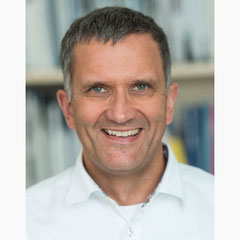
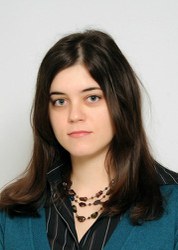
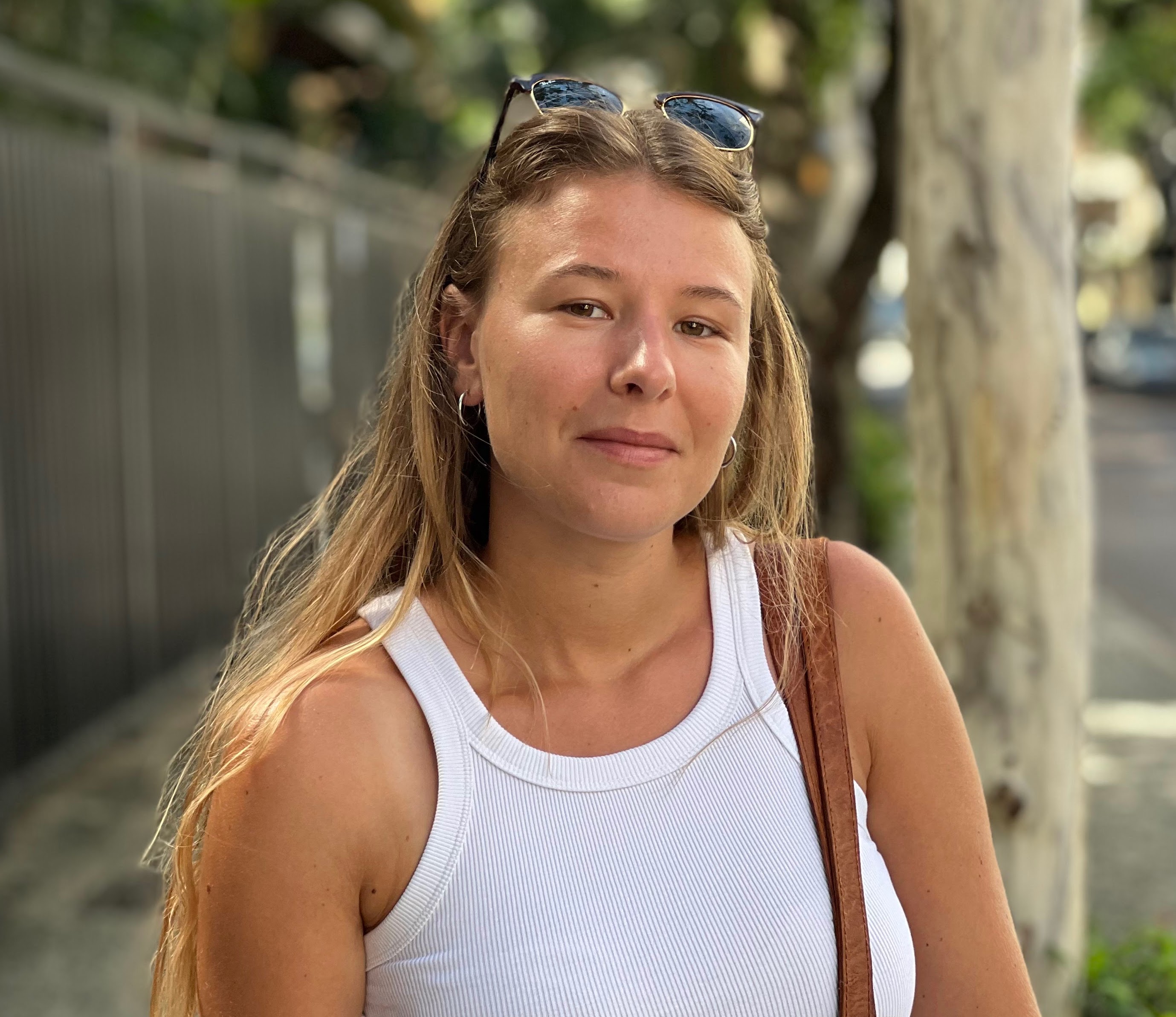
Emanuele Paolini is an Associate Professor in the Department of Mathematics at the University of Pisa. His research focuses on geometric measure theory, calculus of variations, and optimal transportation networks. He has contributed to studies on Steiner trees, isoperimetric problems, and fractal solutions in differential systems. He has co-authored over 40 publications and actively participates in academic events, including organizing conferences and seminars on geometric analysis. Education: PhD in Mathematics (not explicitly stated, inferred from publications). Affiliations: Member of the Calculus of Variations research group and involved in teaching across multiple universities including Florence and Pisa. Research interests include geometric optimization, metric geometry, and partial differential equations. His work often bridges theoretical mathematics with applications in network design and physical systems. He has taught courses such as Elements of Calculus of Variations and Mathematical Analysis for physics students, reflecting his commitment to both research and education.
Antonia Larese is an Associate Professor in Hydraulic and Maritime Constructions and Hydrology at the University of Padova, Italy, and a Hans Fischer Fellow at the Technical University of Munich (TUM-IAS). She holds a PhD in Structural Analysis from the Technical University of Catalonia (UPC) and has extensive postdoctoral experience, including fellowships at the Spanish Ministry and the Catalonian Government. Her research focuses on Computational Mechanics, Fluid-Structure Interaction, and advanced numerical methods like the Material Point Method (MPM) and Finite Element Method (FEM). She is a core developer of the open-source KRATOS Multiphysics platform. Affiliations: University of Padova (Department of Mathematics), TUM-IAS, and the International Center for Numerical Methods in Engineering (CIMNE). Education: M.Sc. in Civil Engineering (University of Padova, 2006), M.Sc. in Numerical Methods (UPC, 2011), PhD in Structural Analysis (UPC, 2012). Research Interests: Computational Fluid Dynamics (CFD), fluid-structure interaction, unfitted numerical techniques, free surface flows, and non-Newtonian materials. Her work emphasizes innovative methods for simulating complex engineering systems, including porous media and protective structures against natural hazards. Her recent publications (2021–2024) address topics like sediment transport optimization, wind engineering applications, and coupled material point-discrete element methods. These studies highlight advancements in numerical modeling for environmental and geotechnical challenges. Awards: - Rita Levi Montalcini Fellowship (2018–2021) - Juan de la Cierva Fellowship (2017–2018) - Special Doctoral Award (UPC, 2014) - Best PhD Thesis finalist (SEMNI, 2012) Advising & Grants: She leads projects like the Digital Twins of Civil Structures (REACT) and collaborates on initiatives such as the Material Point Method (MPM) development. Her work bridges academic research with industrial applications in civil and environmental engineering. Labs/Teams: Active contributor to CIMNE’s research groups and the KRATOS Multiphysics open-source community, advancing computational tools for multiphysics problems.
Carl Wassgren is a Professor of Mechanical Engineering at Purdue University, with a courtesy appointment in Industrial and Physical Pharmacy. He serves as a faculty member in the School of Mechanical Engineering and holds office ME 3003J at the West Lafayette campus. His research focuses on fluid mechanics, thermodynamics, and particle technology, with applications in pharmaceutical manufacturing, granular flow, and computational modeling. Wassgren teaches courses such as Thermodynamics I, Fluid Mechanics, and Pharmaceutical Manufacturing Processes. He is actively involved in developing novel methodologies for material characterization, including discrete element method (DEM) simulations and continuum modeling of cohesive powders. Research interests span granulation processes, material flow analysis, and the mechanics of agricultural and pharmaceutical materials. His work integrates experimental techniques with computational tools to address challenges in industrial granulation, fluidized bed systems, and particle dynamics. Recent studies include optimizing fertilizer formulations, improving air purifier effectiveness, and advancing safety protocols for grain entrapment scenarios. Wassgren has contributed to over 50 peer-reviewed articles, with a focus on process optimization, material behavior under mechanical stress, and multi-scale modeling approaches. His research group collaborates on projects involving hopper flow analysis, flexible fiber fluidization, and tablet disintegration kinetics. Despite his extensive academic contributions, no specific awards or honors are explicitly listed in the provided materials.
Hannah Morgan is an Assistant Instructional Professor in the Department of Computer Science at the University of Chicago and also serves as a Lecturer in the Masters Program in Computer Science. She previously held a postdoctoral position in numerical methods at Argonne National Laboratory. Her work focuses on high performance computing, numerical models, and algorithms, particularly in the context of exascale computing and parallel implementations. Her research emphasizes developing performance models for high-performance computing algorithms, including those for solving large sparse systems and finite element methods for fluid models. At Argonne, she contributed to the Exascale Computing Project by studying computational kernels on heterogeneous CPU-GPU architectures. Her publications span topics like PETSc library enhancements for exascale systems, performance analysis of Krylov solvers, and finite element methods for fluid dynamics. These reflect her expertise in parallel computing, numerical linear algebra, and scalable simulation techniques. Morgan’s work bridges theoretical numerical methods with practical high-performance computing challenges, aiming to advance computational tools for scientific discovery at extreme scales.
Stein Sture is the Vice Chancellor for Research Emeritus and Huber and Helen Croft Professor Emeritus at the University of Colorado Boulder's College of Engineering and Applied Science. He has been a faculty member since 1980 and held leadership roles including Interim Provost and Dean of the Graduate School. His expertise spans geomechanics, computational geotechnics, and granular materials mechanics. Education: Studied in Oslo, Norway, and earned degrees in engineering mechanics and a PhD from the University of Colorado (1976). Research Interests: Focuses on geomechanics, geotechnical engineering, computational modeling, and granular materials under low-stress conditions. His work includes microgravity experiments and soil-structure interactions. Awards: Walter Huber Research Prize (1990) Richard Torrens Awards (2000) CU-Boulder College of Engineering Research Award (1992) Max Peters Service Award (2002) He has authored over 270 publications and advised 34 PhD and 45 MS students. His service includes leadership roles in ASCE and editorial boards.
Dr. Alexey Androsov is a Researcher at the Alfred Wegener Institute (AWI), specializing in Coastal Ecology and Physical Oceanography. He focuses on tidal dynamics, coastal processes, and climate impacts, particularly in the North Sea and Arctic regions. His work integrates numerical modeling (e.g., FESOM-C, TsunAWI) to study hydrodynamics, larval connectivity, and sea-level changes. Notable projects include the MOSAiC expedition, Lena River plume dynamics, and tsunami early warning systems. Education & Research: Androsov’s research spans over two decades, with expertise in unstructured mesh modeling, tidal energy interactions, and coastal adaptation. He contributes to global efforts like the German-Indonesian Tsunami Early Warning System (InaTEWS) and Arctic Oceanography initiatives. Grants & Projects: His involvement includes EU-funded projects (e.g., Antarctica InSync) and collaborations on climate change impacts in marine protected areas. Technical strengths lie in FESOM-C development, data assimilation, and high-resolution coastal simulations. Awards & Recognition: While no explicit awards are listed, his extensive publication record and contributions to operational tsunami modeling highlight his scientific impact.
Adrien MERLINI is a Researcher at IMT Atlantique's Microwave Department in Brest, France. His work focuses on computational electromagnetics, integral equation methods, and neuroimaging applications. He specializes in developing numerical techniques for low-to-high-frequency electromagnetic modeling, preconditioning strategies for integral equations, and machine learning-enhanced solutions for inverse problems. His research bridges fundamental theory and applied engineering, addressing challenges in medical imaging, material characterization, and high-performance computing. Key areas of expertise include: High-frequency spectral analysis of boundary integral operators Stabilized formulations for low-frequency electromagnetic simulations Supervised learning approaches for electrical source imaging Quasi-Helmholtz projector-based preconditioning techniques Fast direct solvers for integral equations His innovations in numerical methods have advanced applications in brain-computer interfaces, microwave-based medical imaging, and terahertz dosimetry. Collaborative projects include developing the simBCI framework for EEG simulation and the Pythran compiler for accelerating scientific Python codes. Research contributions span over 30 peer-reviewed articles since 2015, with recent emphases on conditioning analysis of electromagnetic integral equations and regularization strategies for neuroimaging inverse problems.
Jacobus J.W. van der Vegt is a Full Professor in Mathematics of Computational Science with extensive contributions to numerical methods and wave dynamics. His research spans finite element analysis , port-Hamiltonian systems , and photonic band gap structures , focusing on structure-preserving discretizations and wave confinement phenomena.
Prof. Martin Rumpf is a leading academic at the University of Bonn's Institute for Numerical Simulation, specializing in numerical methods for partial differential equations, image/surface processing, and scientific visualization. His work bridges mathematics, computer science, and engineering, with applications in materials science, biomedical imaging, and computer graphics. Research focuses on developing and analyzing numerical algorithms for PDEs, optimal transport, shape optimization, and geometric calculus. Key contributions include discrete geodesic calculus, elastic shape correspondence, and multiresolutional visualization techniques. His group's projects often involve collaborations with industries and medical institutions. Notable achievements include the 'Best Paper Award' at SIGGRAPH 2024 for research on Willmore flow and neural networks. His research also extends to biomedical applications, such as kidney microstructure analysis using fast-marching algorithms. Teaching includes graduate seminars on optimal transport and numerical methods (e.g., 'Analysis and Computation of Optimal Transport', 'Einführung in die Numerische Mathematik').
Kuhar Andrijana is a Lecturer at the Institute of Electronics within the Faculty of Electrical Engineering and Information Technologies (FEIT) at Ss. Cyril and Methodius University in Skopje. She holds a BSc (2006), MSc (2010), and PhD (2018), all from FEIT. Her academic work focuses on applied electromagnetics and computational methods, with affiliations to research in electromagnetic field exposure and grounding systems. Her research interests span: Electromagnetics : Human exposure modeling near transmission lines and wireless networks. Numerical Methods : Finite Element Method (FEM), Method of Moments (MoM), and circuit-based simulations. Biomedical Engineering : ECG signal processing and cortical activity analysis. Electrical Safety : Grounding systems optimization and EMF impact assessment. Her recent publications (2017–2023) demonstrate a consistent focus on: Modeling electromagnetic exposure risks from infrastructure (e.g., transmission lines, 5G networks). Advancing numerical techniques for electrostatic and grounding problems. Exploring biomedical applications like ECG noise handling and neural signal representation. No scientific awards or student advisories are documented in available sources. She is affiliated with the Institute of Electronics' research initiatives but no specific labs or teams are detailed.
Oliver Sutton is a researcher specializing in artificial intelligence, machine learning, and computational methods. His work focuses on adversarial attacks, robustness of AI systems, high-dimensional data analysis, and finite element methods for solving complex equations. He collaborates with experts in mathematics and computer science to address challenges in AI reliability and model security, including stealth edits in large language models and feature space optimization. Sutton's recent contributions include developing frameworks to handle AI errors with theoretical guarantees and improving numerical methods for transport equations. Research interests include adversarial machine learning, neuromorphic computing, and mathematical foundations of few-shot learning. His publications span topics from theoretical guarantees in AI to practical implementations of discontinuous Galerkin methods. Sutton's work highlights interdisciplinary approaches to advancing both theoretical understanding and applied solutions in computational science and AI security.
Dr Yilin Gui is a Senior Lecturer in Geotechnical Engineering at the School of Civil & Environmental Engineering, Queensland University of Technology (QUT), since 2019. Previously, he held positions as Lecturer at Newcastle University (UK) and Research Fellow at Nanyang Technological University and Monash University. He earned his PhD from the University of New South Wales (UNSW) and a Postgraduate Certificate in Academic Practice from Newcastle University, UK. As a Senior Fellow of the Higher Education Academy, he emphasizes innovative teaching and research in geomechanics. His research focuses on rock and soil mechanics, computational modeling of geomaterials, geoenvironmental engineering, and mining engineering. Key areas include expansive soils, thermal effects on geotechnical materials, and machine learning applications in pavement stability and blast prediction. He actively supervises PhD candidates and offers scholarships. Dr Gui holds editorial roles in the Journal of Rock Mechanics and Geotechnical Engineering. He is a member of leading professional bodies, including the Australian Geomechanics Society, International Society for Soil Mechanics, and UK Carbon Capture and Storage Research Centre. His work bridges computational methods with practical geotechnical challenges, contributing to sustainable infrastructure and environmental resilience.
A/Pr Lei Ge is an Associate Professor in the School of Engineering at the University of Southern Queensland, affiliated with the Centre for Future Materials. He holds a PhD in Chemical Engineering from Queensland University and specializes in clean energy catalysis, electrolysis, and porous materials for unconventional energy applications. His research focuses on advancing materials for CO2 reduction, solid oxide fuel cells, and gas-diffusion electrodes, with an emphasis on energy efficiency and sustainability. Research expertise includes catalytic materials for energy conversion (e.g., perovskite oxides, MXenes), gas separation technologies using metal-organic frameworks (MOFs), and electrochemical processes for CO2 utilization. He has pioneered studies on microtubular electrodes and hollow fiber configurations to enhance reaction kinetics and selectivity in electrochemical systems. Recent publications highlight innovations in catalyst design for ammonia-based fuel cells, defect-minimized MOF membranes, and CO2 electrolysis mechanisms. His work bridges fundamental material science with practical applications in renewable energy and environmental engineering. No scientific awards are explicitly listed, but his extensive publication record reflects impactful contributions to electrochemical engineering and sustainable materials. Supervision and grant details are pending further data. Labs/Teams: Active member of the Centre for Future Materials, collaborating on advanced material synthesis and energy systems.
Théophile Chaumont-Frelet is a junior researcher at Inria , working with project-team Rapsodi . Previously, he held post-doctoral positions at the Basque Center for Applied Mathematics (BCAM, Bilbao) and CERMICS (École des Ponts ParisTech). His research focuses on partial differential equations , numerical analysis , high-performance computing , and applications in wave propagation , electromagnetism , and geophysics . Education : Engineer in Mathematical Engineering from INSA Rouen (2012), Master in Fundamental and Applied Mathematics (Grade A+, 2012). His work addresses high-frequency Helmholtz and Maxwell equations in heterogeneous media, with emphasis on finite element methods , discontinuous Galerkin techniques , and multiscale modeling . Recent publications analyze frequency-explicit error bounds , polynomial-degree robustness , and stable local reconstructions . He has received the C3I label from GENCI (2017) for computational expertise. Notable collaborations include projects with Total, INRIA, and the Spanish Ministry of Economy (MTM2016-76329-R). Current PhD students and postdocs include Sumit Mahajan and Florentin Proust, while former advisees are Zakaria Kassali, Josselin Defrance, and Patrick Vega. His research grants involve M2NUM (Normandy/FEDER), DIP (INRIA MAGIQUE3D/Total), and the Spanish Ministry project MTM2016-76329-R.
Zoé Lambert is an Associate Professor at the University of Rouen Normandy and a member of the LITIS laboratory. She completed her PhD in Applied Mathematics (2019–2022) at INSA Rouen Normandie, funded by the Normandy Region, with a thesis on hybrid variational and deep learning approaches for medical image segmentation. Prior to her PhD, she worked as a Research Engineer at INSA Rouen (2018–2019) on weakly supervised learning for medical imaging and as a Data Scientist Intern at AID in Paris (2018). Her current research focuses on integrating geometric and topological constraints into deep learning models for medical imaging and coastal cliff crack detection. Research Interests Zoé develops advanced image segmentation methods combining variational models and deep learning, with emphasis on: Topological prescriptions in CNNs Geometric constraints for anatomical accuracy Registration techniques via nonlinear elasticity Public dataset creation for crack segmentation Directional total variation decomposition models AI applications in energy transition (Prioreno tool) Scientific Contributions She co-organized the SegTHOR challenge at IEEE ISBI’19, which automated segmentation of thoracic organs-at-risk for radiotherapy. Her work on weighted total variation regularization and Mumford-Shah terms has improved segmentation reliability in scenarios with limited data. She also contributed to the DEPHY3GEO project at CEREMA (2023–2024), focusing on cliff crack detection using thermal infrared imagery. Honors and Collaborations Zoé won first place in the Normandy Datathon (2023) for her energy vulnerability decision support tool. She served on INSA Rouen’s Scientific Council (2020–2022) and laboratory council (LMI). Her collaborations span LITIS, LMI, CEREMA, INRIA, and international institutions like INSA Lyon and the University of Bordeaux.