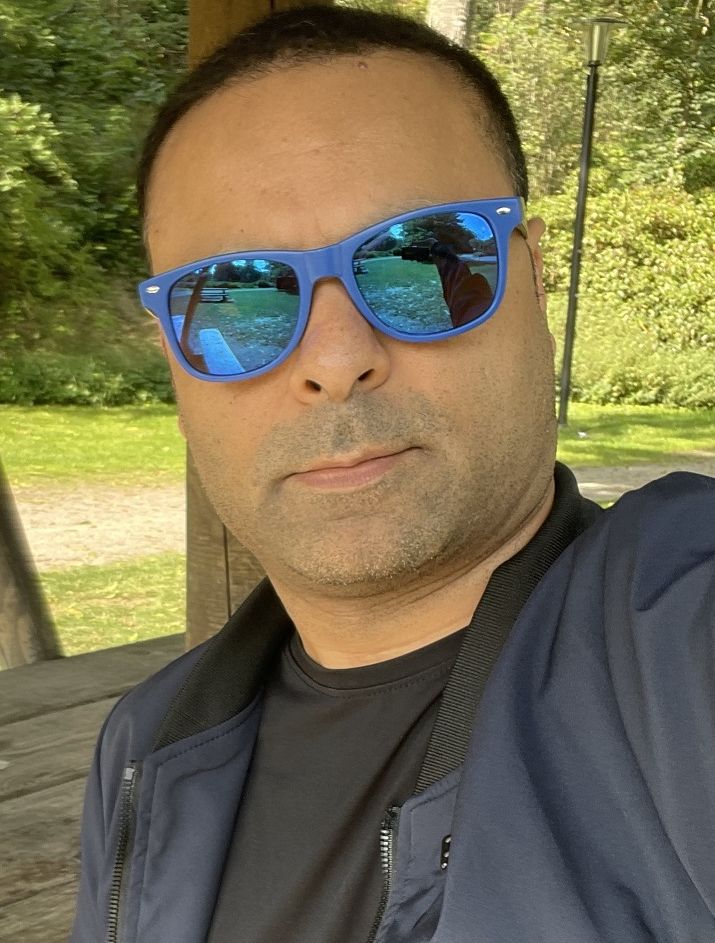
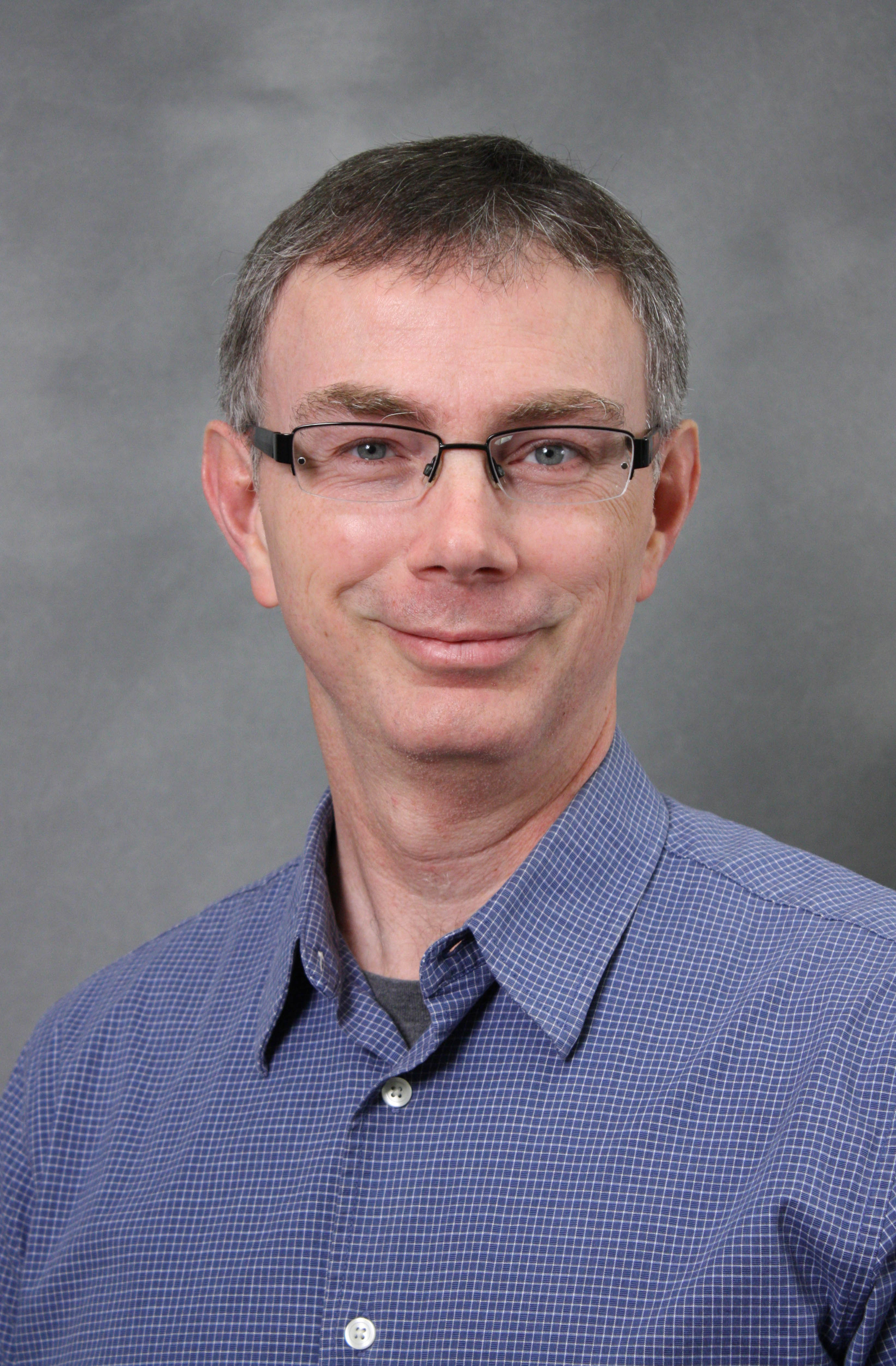
Dr. Prashant Goswami is an Associate Professor in the Department of Computer Science at Blekinge Institute of Technology (BTH), Sweden, within the Faculty of Computing. He also serves as Adjunct Faculty in the CSE Department at IIIT Delhi, India. B.Tech/M.Tech (IIT Delhi) PhD in Computer Graphics (University of Zurich) His research focuses on Computer Graphics , Virtual Reality , AI Integration , and Real-Time Simulations , with recent work bridging Immersive Analytics and Human-Centered Intelligent Systems . He has contributed to snow/ice animation, foveated rendering, and XR ethics. Recent publications highlight trends in GPU-Based Simulation , GAN-Driven Cloud Animation , and AI-Enriched XR Systems . As Guest Editor for the Journal of Imaging (MDPI), he is advancing immersive metaverse experiences. Previously, he worked at gameLab (NTU Singapore) and INRIA's MAVERICK group, focusing on geometric modeling and cloud simulation. His industry experience preceded his PhD at University of Zurich.
Ignacio Pérez Rey is a Postdoctoral Researcher at the University of Alicante's Department of Natural Resources and Environmental Engineering. His work focuses on rock mechanics, geotechnical stability analysis, and wildfire impacts on soil properties, combining experimental, numerical, and analytical methodologies. ORCID: 0000-0003-0883-7211 Scopus Author ID: 56178650200 University: University of Alicante Department: Natural Resources and Environmental Engineering Research interests include: Rock mechanics (frictional behavior, toppling stability, size effects) Geotechnical engineering (slope stability, tunneling in heterogeneous rocks) Wildfire-induced geotechnical changes in volcanic soils Machine learning applications for rock strength prediction Historical mining techniques and modern geomechanical analysis Interactive geological education methods Recent publications demonstrate a strong focus on: Failure mechanisms in dry masonry and rock structures Machine learning integration in geotechnical characterization Post-fire slope stability assessment Experimental validation of rock friction models 3D modeling of geological features Interactive teaching methodologies in civil engineering
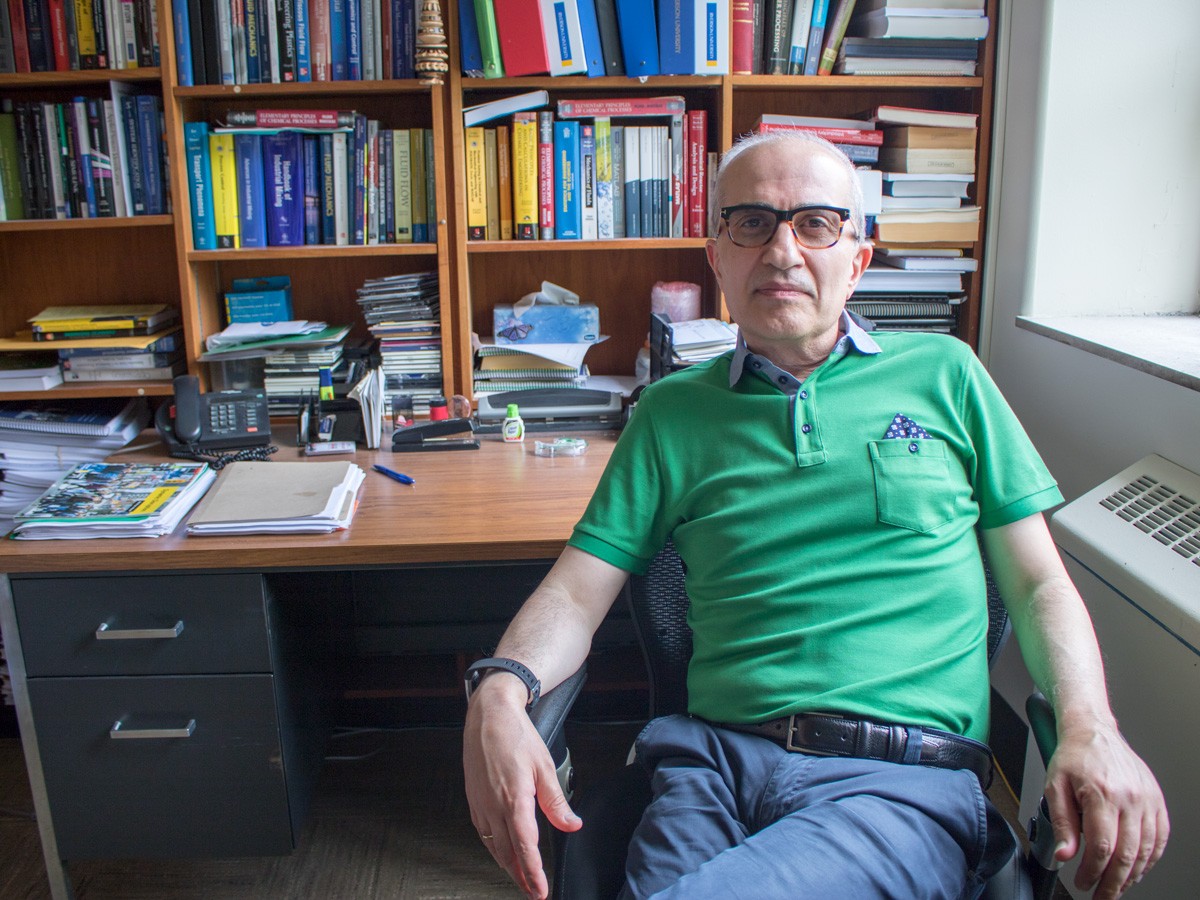
Dr. Farhad Ein-Mozaffari is a Professor in Chemical Engineering at Toronto Metropolitan University. His research specializes in fluid mixing dynamics, particularly non-Newtonian and multiphase systems relevant to pharmaceutical and bioprocessing industries. Research integrates experimental methods like tomography and ultrasonic velocimetry with computational fluid dynamics (CFD) and machine learning to optimize industrial mixing processes. His work advances bioreactor design, powder blending, and energy-efficient processing through fundamental studies of fluid-particle interactions. Ein-Mozaffari's lab focuses on solving practical industrial challenges through multidisciplinary approaches. Current projects include gas-liquid dispersion in yield-stress fluids, cohesive particle mixing optimization, and scale-up strategies for aerated bioreactors. His research has attracted NSERC funding and pharmaceutical industry partnerships, aiming to reduce production costs for essential materials including pharmaceuticals.
Ana N. Vuckovic is an Associate Professor at the Department of Theoretical Electrical Engineering, Faculty of Electronics in Niš, University of Niš. She holds a PhD (2015) and Master's degree (2008) from the same institution, with a BEng in Computing and Informatics (2003). Her academic career includes promotion to Assistant Professor in 2004 and Associate Professor in 2022. Her research focuses on computational electromagnetics, with emphasis on magnetic force calculations using hybrid boundary element methods (H-BEM). Key areas include permanent magnet systems, magnetic bearings, and bi-isotropic media analysis. She has contributed 8 peer-reviewed articles and participates in 1 national and 1 international research project. Professional activities include two international study stays and proficiency in English/French. Her work bridges theoretical electromagnetism with practical engineering applications, particularly in improving numerical simulation techniques for electromagnetic systems.
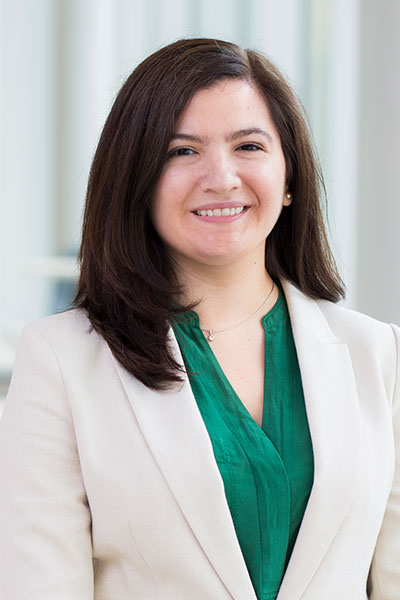
Dr. Nadia Kouraytem is an Assistant Professor in the Department of Mechanical and Aerospace Engineering at Utah State University, where she directs the METAL 3D Structures Lab. Her research focuses on characterizing process-structure-property relationships in laser-based metal additive manufacturing using advanced experimental techniques and in-situ measurements. She collaborates with national laboratories and industry partners to advance applications in aerospace, defense, and renewable energy sectors. Education PhD in Mechanical Engineering from King Abdullah University of Science and Technology (KAUST, 2016), MS in Mechanical Engineering (KAUST, 2013), and BS in Mechanical Engineering from American University of Beirut (2011). Research Interests Her work encompasses metal additive manufacturing (3D printing), multi-scale material characterization, process optimization for structural applications, and the development of physics-driven and data-driven models to predict material behavior under extreme conditions. She employs techniques ranging from in-situ X-ray imaging to mechanical testing across temperature and strain-rate regimes. Publication Focus Her 15 most recent articles (2016–2025) predominantly explore additive manufacturing defects, process parameter optimization, material behavior under dynamic loading, and innovative characterization methods. Trends include laser powder bed fusion, multi-material systems, and computational modeling approaches bridging microstructural features to macroscopic properties. Awards and Honors Undergraduate Research Mentor of the Year, MAE Department, USU Recognition as a woman leader in Utah's advanced manufacturing industry (UAMMI) Grants and Advising She secured a $800,000 NEUP grant to study mechanical variability in additively manufactured metals and collaborates on a DOE-SETO project analyzing creep-fatigue interactions for renewable energy applications. Currently advises five graduate students on topics including functionally graded materials and recuperator design for concentrated solar power. Laboratory Leadership The METAL 3D Structures Lab utilizes in-situ process monitoring, microstructural characterization, and multi-scale mechanical testing to evaluate additive manufacturing outcomes. Current projects involve collaborations with Argonne National Laboratory and industry partners to qualify materials for high-temperature applications.
Joshua A. Levine is a researcher in the Department of Computer Science at the University of Arizona, focusing on topological data analysis, scientific visualization, and computational geometry. His work bridges computer graphics, data science, and mathematical methods. Key Research Areas: Topological data analysis, visualization of scientific simulations, mesh processing algorithms, and computational methods for scalar fields. Recent Trends: 2025 publications highlight discrete vector field construction and topological simplification solvers, building on 2024 work in open-access repositories. Earlier work includes particle system simulations (2022), neural representations for volumetric data (2021), and foundational contributions to Delaunay meshing (2008–2012). Collaborations: Regularly works with Julien Tierny, Matthew Berger, Robert M. Kirby, and Valerio Pascucci.
Bowei (Bobbie) Wu is an Assistant Professor in the Department of Mathematics & Statistics at the University of Massachusetts Lowell. He holds affiliations with the Kennedy College of Sciences. His research focuses on numerical methods for partial differential equations, integral equation techniques, and scientific computing with applications in fluid dynamics and wave propagation. Education: Ph.D. in Applied and Interdisciplinary Mathematics, University of Michigan (2019) M.S. in Applied and Interdisciplinary Mathematics, University of Michigan (2014) B.S. in Mathematics, Sun Yat-sen University (2012) Research Interests: Dr. Wu specializes in high-order numerical methods, fast solvers for complex fluid systems, and wave propagation phenomena. His work emphasizes accurate and efficient computational techniques for boundary integral equations, particularly in nonsmooth geometries. Key themes include electrohydrodynamics of vesicles, Stokes flow simulations, and quadrature rule development for singular integrals. Publications: His recent work explores unified quadrature methods for boundary integral operators, robust solvers for scattering problems, and computational models of biological systems. These contributions advance computational efficiency and accuracy in fluid dynamics and biophysical modeling. Labs/Code: He develops computational tools such as ZetaTrap2D/3D for high-order quadrature rules and BIE2D for boundary integral equation solvers. These are publicly available on GitHub.
Emanuele Paolini is an Associate Professor in the Department of Mathematics at the University of Pisa. His research focuses on geometric measure theory, calculus of variations, and optimal transportation networks. He has contributed to studies on Steiner trees, isoperimetric problems, and fractal solutions in differential systems. He has co-authored over 40 publications and actively participates in academic events, including organizing conferences and seminars on geometric analysis. Education: PhD in Mathematics (not explicitly stated, inferred from publications). Affiliations: Member of the Calculus of Variations research group and involved in teaching across multiple universities including Florence and Pisa. Research interests include geometric optimization, metric geometry, and partial differential equations. His work often bridges theoretical mathematics with applications in network design and physical systems. He has taught courses such as Elements of Calculus of Variations and Mathematical Analysis for physics students, reflecting his commitment to both research and education.
Antonia Larese is an Associate Professor in Hydraulic and Maritime Constructions and Hydrology at the University of Padova, Italy, and a Hans Fischer Fellow at the Technical University of Munich (TUM-IAS). She holds a PhD in Structural Analysis from the Technical University of Catalonia (UPC) and has extensive postdoctoral experience, including fellowships at the Spanish Ministry and the Catalonian Government. Her research focuses on Computational Mechanics, Fluid-Structure Interaction, and advanced numerical methods like the Material Point Method (MPM) and Finite Element Method (FEM). She is a core developer of the open-source KRATOS Multiphysics platform. Affiliations: University of Padova (Department of Mathematics), TUM-IAS, and the International Center for Numerical Methods in Engineering (CIMNE). Education: M.Sc. in Civil Engineering (University of Padova, 2006), M.Sc. in Numerical Methods (UPC, 2011), PhD in Structural Analysis (UPC, 2012). Research Interests: Computational Fluid Dynamics (CFD), fluid-structure interaction, unfitted numerical techniques, free surface flows, and non-Newtonian materials. Her work emphasizes innovative methods for simulating complex engineering systems, including porous media and protective structures against natural hazards. Her recent publications (2021–2024) address topics like sediment transport optimization, wind engineering applications, and coupled material point-discrete element methods. These studies highlight advancements in numerical modeling for environmental and geotechnical challenges. Awards: - Rita Levi Montalcini Fellowship (2018–2021) - Juan de la Cierva Fellowship (2017–2018) - Special Doctoral Award (UPC, 2014) - Best PhD Thesis finalist (SEMNI, 2012) Advising & Grants: She leads projects like the Digital Twins of Civil Structures (REACT) and collaborates on initiatives such as the Material Point Method (MPM) development. Her work bridges academic research with industrial applications in civil and environmental engineering. Labs/Teams: Active contributor to CIMNE’s research groups and the KRATOS Multiphysics open-source community, advancing computational tools for multiphysics problems.
Carl Wassgren is a Professor of Mechanical Engineering at Purdue University, with a courtesy appointment in Industrial and Physical Pharmacy. He serves as a faculty member in the School of Mechanical Engineering and holds office ME 3003J at the West Lafayette campus. His research focuses on fluid mechanics, thermodynamics, and particle technology, with applications in pharmaceutical manufacturing, granular flow, and computational modeling. Wassgren teaches courses such as Thermodynamics I, Fluid Mechanics, and Pharmaceutical Manufacturing Processes. He is actively involved in developing novel methodologies for material characterization, including discrete element method (DEM) simulations and continuum modeling of cohesive powders. Research interests span granulation processes, material flow analysis, and the mechanics of agricultural and pharmaceutical materials. His work integrates experimental techniques with computational tools to address challenges in industrial granulation, fluidized bed systems, and particle dynamics. Recent studies include optimizing fertilizer formulations, improving air purifier effectiveness, and advancing safety protocols for grain entrapment scenarios. Wassgren has contributed to over 50 peer-reviewed articles, with a focus on process optimization, material behavior under mechanical stress, and multi-scale modeling approaches. His research group collaborates on projects involving hopper flow analysis, flexible fiber fluidization, and tablet disintegration kinetics. Despite his extensive academic contributions, no specific awards or honors are explicitly listed in the provided materials.
Hannah Morgan is an Assistant Instructional Professor in the Department of Computer Science at the University of Chicago and also serves as a Lecturer in the Masters Program in Computer Science. She previously held a postdoctoral position in numerical methods at Argonne National Laboratory. Her work focuses on high performance computing, numerical models, and algorithms, particularly in the context of exascale computing and parallel implementations. Her research emphasizes developing performance models for high-performance computing algorithms, including those for solving large sparse systems and finite element methods for fluid models. At Argonne, she contributed to the Exascale Computing Project by studying computational kernels on heterogeneous CPU-GPU architectures. Her publications span topics like PETSc library enhancements for exascale systems, performance analysis of Krylov solvers, and finite element methods for fluid dynamics. These reflect her expertise in parallel computing, numerical linear algebra, and scalable simulation techniques. Morgan’s work bridges theoretical numerical methods with practical high-performance computing challenges, aiming to advance computational tools for scientific discovery at extreme scales.
Stein Sture is the Vice Chancellor for Research Emeritus and Huber and Helen Croft Professor Emeritus at the University of Colorado Boulder's College of Engineering and Applied Science. He has been a faculty member since 1980 and held leadership roles including Interim Provost and Dean of the Graduate School. His expertise spans geomechanics, computational geotechnics, and granular materials mechanics. Education: Studied in Oslo, Norway, and earned degrees in engineering mechanics and a PhD from the University of Colorado (1976). Research Interests: Focuses on geomechanics, geotechnical engineering, computational modeling, and granular materials under low-stress conditions. His work includes microgravity experiments and soil-structure interactions. Awards: Walter Huber Research Prize (1990) Richard Torrens Awards (2000) CU-Boulder College of Engineering Research Award (1992) Max Peters Service Award (2002) He has authored over 270 publications and advised 34 PhD and 45 MS students. His service includes leadership roles in ASCE and editorial boards.
Dr. Alexey Androsov is a Researcher at the Alfred Wegener Institute (AWI), specializing in Coastal Ecology and Physical Oceanography. He focuses on tidal dynamics, coastal processes, and climate impacts, particularly in the North Sea and Arctic regions. His work integrates numerical modeling (e.g., FESOM-C, TsunAWI) to study hydrodynamics, larval connectivity, and sea-level changes. Notable projects include the MOSAiC expedition, Lena River plume dynamics, and tsunami early warning systems. Education & Research: Androsov’s research spans over two decades, with expertise in unstructured mesh modeling, tidal energy interactions, and coastal adaptation. He contributes to global efforts like the German-Indonesian Tsunami Early Warning System (InaTEWS) and Arctic Oceanography initiatives. Grants & Projects: His involvement includes EU-funded projects (e.g., Antarctica InSync) and collaborations on climate change impacts in marine protected areas. Technical strengths lie in FESOM-C development, data assimilation, and high-resolution coastal simulations. Awards & Recognition: While no explicit awards are listed, his extensive publication record and contributions to operational tsunami modeling highlight his scientific impact.
Adrien MERLINI is a Researcher at IMT Atlantique's Microwave Department in Brest, France. His work focuses on computational electromagnetics, integral equation methods, and neuroimaging applications. He specializes in developing numerical techniques for low-to-high-frequency electromagnetic modeling, preconditioning strategies for integral equations, and machine learning-enhanced solutions for inverse problems. His research bridges fundamental theory and applied engineering, addressing challenges in medical imaging, material characterization, and high-performance computing. Key areas of expertise include: High-frequency spectral analysis of boundary integral operators Stabilized formulations for low-frequency electromagnetic simulations Supervised learning approaches for electrical source imaging Quasi-Helmholtz projector-based preconditioning techniques Fast direct solvers for integral equations His innovations in numerical methods have advanced applications in brain-computer interfaces, microwave-based medical imaging, and terahertz dosimetry. Collaborative projects include developing the simBCI framework for EEG simulation and the Pythran compiler for accelerating scientific Python codes. Research contributions span over 30 peer-reviewed articles since 2015, with recent emphases on conditioning analysis of electromagnetic integral equations and regularization strategies for neuroimaging inverse problems.
Jacobus J.W. van der Vegt is a Full Professor in Mathematics of Computational Science with extensive contributions to numerical methods and wave dynamics. His research spans finite element analysis , port-Hamiltonian systems , and photonic band gap structures , focusing on structure-preserving discretizations and wave confinement phenomena.