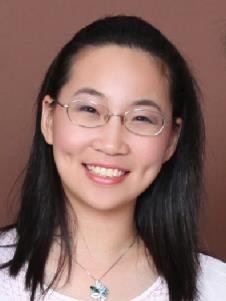
Danielle TAN S is a Senior Lecturer in the Department of Mechanical Engineering at the National University of Singapore (NUS), affiliated with the College of Design and Engineering. Her research focuses on fluid mechanics, granular materials, and computational modeling techniques. She holds a Ph.D. in Theoretical & Applied Mechanics from Cornell University (USA), a Master of Engineering (1st Class Honours) from Imperial College London (UK), and a Diploma from the City and Guilds of London Institute. Her research interests include the rheology of granular mixtures, discrete element method (DEM) modeling, and fluid dynamics. She has published extensively on topics such as moisture effects in granular materials, DEM simulation accuracy, and flow dynamics around cylinders. Her work bridges computational mechanics with experimental validation, contributing to geotechnical engineering and environmental fluid mechanics. Recent publications (2013-2014) highlight her focus on DEM applications in pavement engineering, granular segregation dynamics, and fluid-structure interactions. She maintains an active Google Scholar profile and is based at E1-05-30, NUS.
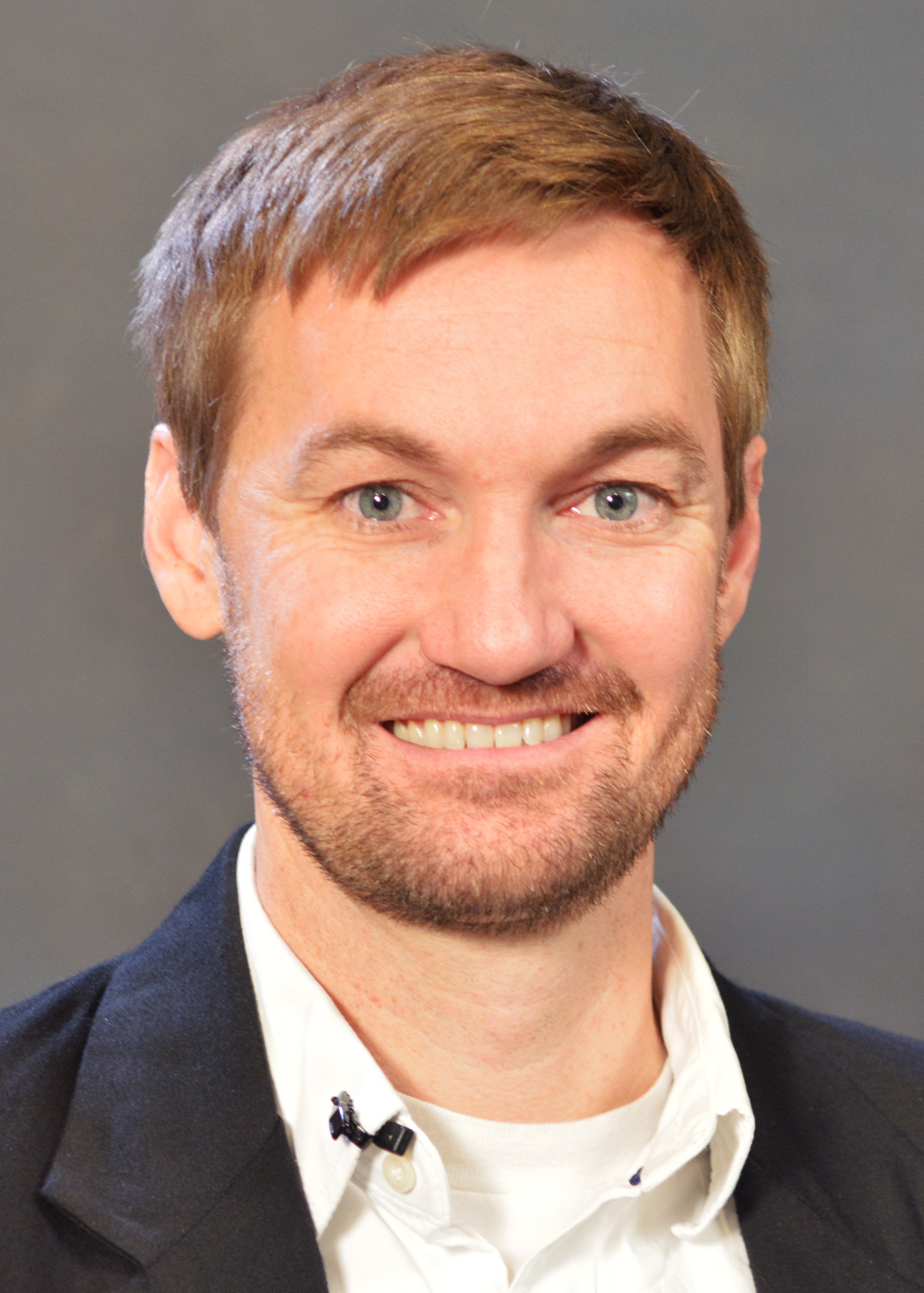
Steven Dargaville is a Research Fellow in the Department of Earth Science & Engineering at Imperial College London, part of the Faculty of Engineering. His research focuses on numerical methods for energy systems, including battery chemistry modeling and Boltzmann transport applications. He holds an Orcid identifier (0000-0002-8890-7437) and is affiliated with the Royal School of Mines campus. His work emphasizes parallel computing, adaptive mesh refinement, and finite element methods applied to nuclear science and radiative transfer. Research Interests: Modeling phase transitions in LiFePO₄ batteries Numerical methods for Boltzmann transport (e.g., multigrid, adaptive angular discretization) Applications in civil nuclear energy, radiative transfer, and lattice Boltzmann methods Publications Trends: Recent work (2020–2025) emphasizes scalable algorithms for Boltzmann transport, AI integration in nuclear modeling, and angular adaptivity techniques. Earlier research (2010–2015) centered on LiFePO₄ cathode phase behavior using phase-field models. Awards: None explicitly listed in the provided text. Advising/Grants: No student names or grant details provided. His research is likely funded through Imperial College projects or external grants in computational physics/engineering. Labs/Teams: Likely affiliated with Imperial’s Energy Futures Lab or Nuclear Energy Systems Group, though exact lab names are unspecified.
Nathaniel Morgan serves as an Adjunct Professor affiliated with a Mechanical Engineering department. He is currently a researcher at Los Alamos National Laboratory's X-Computational Physics Division, where he has worked since 2010. His career at LANL spans multiple divisions including Applied Physics (2005-2010), Theoretical Division (2003), and Engineering Sciences and Applications Division (2001-2002). Dr. Morgan received his academic training in Mechanical Engineering: Ph.D., Mechanical Engineering, Georgia Institute of Technology, 2005 M.S., Mechanical Engineering, Georgia Institute of Technology, 2003 B.S., Mechanical Engineering, University of Arizona, 2000 His research focuses on computational physics and engineering, specializing in developing advanced numerical methods for simulating complex physical phenomena. Dr. Morgan's work centers on creating transformative numerical approaches suitable for predictive simulations of multidimensional high-speed flows with shocks, contact discontinuities, disparate materials, complex strength models, and diverse equations of state. He has made significant contributions to high-order discontinuous Galerkin methods for simulating large deformation flows and developing explicit gas and solid dynamics codes optimized for heterogeneous supercomputing architectures including GPUs. Analysis of Dr. Morgan's recent publications reveals a strong focus on Lagrangian hydrodynamic methods, particularly discontinuous Galerkin approaches. His work spans computational physics, fluid dynamics, and high-performance computing, with applications in gas and solid dynamics. Key themes include mesh motion stability, multi-material flow simulation, and optimization of numerical methods for modern supercomputing architectures. His research demonstrates a consistent trajectory toward higher-order, more accurate simulation methods for complex physical systems. Dr. Morgan collaborates extensively with researchers at Los Alamos National Laboratory and likely supervises graduate students through his adjunct professorship, though specific advisees are not listed in the available information. His work appears to be supported by LANL resources and potentially external grants related to computational physics and high-performance computing. As a member of LANL's X-Computational Physics Division, Dr. Morgan contributes to advanced computational research teams focusing on hydrodynamics, material science simulations, and high-performance computing applications. His work supports LANL's mission in computational physics and national security-related research.
Dr. Shadi Saadeh is a Professor in the Department of Civil Engineering and Construction Engineering Management at California State University, Long Beach, College of Engineering. He joined CSULB in 2007 after research positions at Texas Transportation Institute (2003-2005) and Louisiana Transportation Research Center (2006-2007). His research focuses on experimental characterization and modeling of highway materials, with emphasis on sustainable infrastructure development. Education includes: BSc Civil Engineering - University of Jordan (1997) MSc Civil Engineering - Washington State University (2002) PhD Civil Engineering - Texas A&M University (2005) Research spans granular material behavior, asphalt technology, and advanced characterization using X-ray CT and image analysis. Recent work emphasizes sustainable materials including recycled plastics, biochar additives, and permeable pavements to reduce environmental impact. Publications demonstrate strong focus on pavement performance testing (82% of recent articles), recycling technologies (43%), and advanced material characterization (37%). Trends show increasing emphasis on sustainability aspects since 2020.
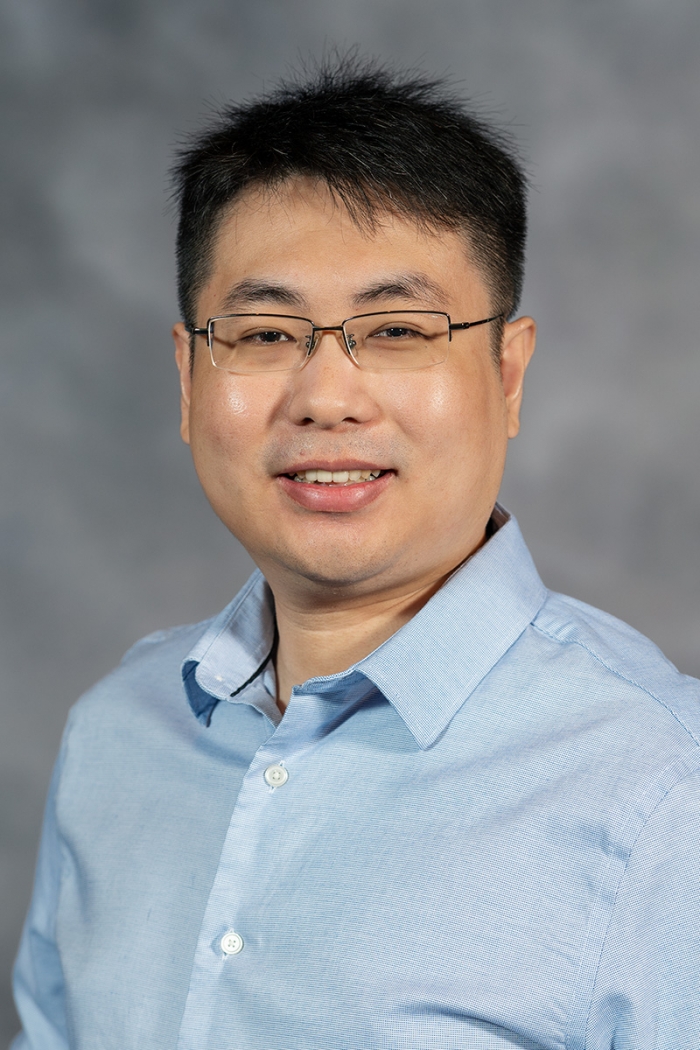
Dr. Ning Wang is an Assistant Professor at the Department of Concrete and Construction Management within the School of Concrete and Construction Management at Middle Tennessee State University (MTSU). He holds a Ph.D. in Design, Construction, and Planning from the University of Florida (2022), an M.S. in Civil Engineering from the University of Illinois at Urbana-Champaign (2014), and a B.S. in Construction Management from Hebei University of Technology (2013). His research focuses on Building Information Modeling (BIM) , Artificial Intelligence (AI) , Machine Learning , Natural Language Processing (NLP) , and their applications in construction technology. Notable areas include Construction Robotics , Geographic Information Systems (GIS) , and Ontology-Based Integration of BIM and GIS . Recent work emphasizes AI-driven solutions for infrastructure maintenance, such as pavement structural analysis using object detection models and nondestructive testing. Dr. Wang has published extensively in journals like Automation in Construction and Journal of Computing in Civil Engineering , and his work spans BIM-based conversational AI systems, NLP for construction information extraction, and smart materials testing using advanced sensors. He serves as a reviewer for journals including ASCE Journal of Computing in Civil Engineering and conferences like the International Conference on Construction Engineering and Project Management. He teaches courses in architectural CAD, software applications for virtual design, and construction management at MTSU. His professional affiliations include the American Society of Civil Engineers (ASCE).
Seokyon Hwang, Ph.D., is an Associate Professor at Lamar University, specializing in Construction Project Management. He holds a Ph.D. in Civil Engineering from the University of Illinois at Urbana-Champaign and has over six years of construction field experience as a project engineer/superintendent. His research focuses on probabilistic modeling, BIM integration, sensor technologies, and organizational sustainability, with over 20 publications and a book in these areas. Education: Ph.D. in Civil Engineering, University of Illinois at Urbana-Champaign Research Interests: Statistical modeling of longitudinal data Computer simulation for process dynamics BIM and sensor technologies in construction Resilience engineering for infrastructure systems His work bridges engineering and technology, emphasizing practical applications in construction safety, cost analysis, and sustainable practices. Teaching Contributions: Teaches courses like Construction Planning and Scheduling and Construction Project Management in Lamar’s MBA program. Emphasizes career development and collaborative learning, fostering student resilience through real-world projects. Advising & Grants: While no advisees are listed, his research has received attention for innovations in infrastructure resilience and automated inspection techniques. Active in grant proposals for BIM integration and drone-based monitoring systems. Labs/Teams: Engaged in interdisciplinary projects involving UAV technology, AI, and smart infrastructure systems, collaborating with industry partners to advance practical solutions.
Benjamin Marussig is an Associate Professor at the Institute of Structural Mechanics, Graz University of Technology. His work focuses on computational mechanics, particularly in isogeometric analysis, boundary element methods, and integration of CAD models with engineering simulations. He develops advanced numerical techniques for handling trimmed geometries, nonlinear solid mechanics, and fluid-structure interactions. His research emphasizes improving computational efficiency and accuracy in simulations involving complex geometries and inclusions. Key research areas include: Isogeometric Analysis (IGA) for structural and electromagnetic problems Boundary element methods for electrostatic and magnetostatic computations Fast algorithms for fictitious domain and immersed boundary methods Integration of design and analysis workflows using CAD-compatible models Recent work highlights advancements in multi-level Bézier extraction, weighted quadrature for cut cells, and automated correction systems for mechanics education. His contributions address challenges in meshing requirements, nonlinear behavior modeling, and efficient matrix assembly techniques for trimmed CAD geometries. Marussig collaborates on applications in geomechanics, tunneling simulations, and elasto-plastic material analysis. He holds teaching responsibilities in mechanics and structural analysis, emphasizing computational methods. His research portal lists over 40 peer-reviewed articles since 2012, demonstrating sustained innovation in computational mechanics and CAD-integrated simulation technologies.
Alejandro López García is a Lecturer at the University of Deusto, with additional affiliations as a Visiting Scholar at the University of Leeds and the University of Strathclyde. His academic background includes a Master's Degree in Mechanical Engineering from the University of The Basque Country (2010) and concurrent pursuit of a Ph.D. in Mechanical and Aerospace Engineering and a Master's in Industrial Engineering since 2012. His research centers on fluid dynamics, erosion processes, and computational modeling techniques. Key projects include: Investigating geometric impacts on fluid flow during erosion (Ph.D. focus) Modeling Vertical Roller Mills using CFD and DEM for IIT Analyzing cohesive powder flowability in the ADDoPT pharmaceutical project He is an active member of the Ghadiri Research Group at Leeds University. Office hours at Deusto: Monday: 12:00–13:00 (Room 590-D) Tuesday: 12:00–13:00 (Room 590-D) Wednesday: 9:00–10:00 (Room 590-D)
Dr. Ado Farsi is a Research Fellow in Computational Mechanics at Imperial College London and University College London. He holds a PhD in Computational Mechanics from Imperial College and leads research on discrete element modeling of complex materials. His work develops FDEM (Finite-Discrete Element Method) simulations for industrial applications including catalyst pellet design, geothermal drilling, and fiber-reinforced concrete structures. He maintains collaborations with Johnson Matthey, Petronas, and Transport for London, translating computational models into engineering solutions for energy and infrastructure sectors. Dr. Farsi secured over £734k in research funding and contributes to open-source computational mechanics software development. He serves on the Royal Society's RAMP committee during the COVID-19 pandemic.
Björn Liljegren-Sailer is a Research Scientist at the Johann Radon Institute for Computational and Applied Mathematics (RICAM), part of the Austrian Academy of Sciences (OEAW), and an employee at MathConsult. His research focuses on computational methods for partial differential equations (PDEs), model order reduction, and port-Hamiltonian systems, with applications to gas networks, numerical analysis, and optimization. He holds a PhD in Mathematics from the University of Trier (2020) and a Master of Science in Technomathematics from Friedrich-Alexander-Universität Erlangen-Nürnberg (2015). Dr. Liljegren-Sailer’s work emphasizes structure-preserving numerical methods and system-theoretic approaches. Key contributions include error estimation for model reduction under inhomogeneous conditions, port-Hamiltonian approximations for nonlinear flow problems, and stability-preserving gas transport models. His research bridges theoretical advancements with practical applications in engineering and computational science. Publications span topics like damped wave equations on networks, input-tailored model reduction for quadratic-bilinear systems, and certified reduced basis methods. His work aligns with RICAM’s mission in mathematical data science and optimization, contributing to industrial collaborations through MathConsult. Though no formal awards are listed, his prolific publication record reflects recognition in computational mathematics and applied sciences. He advises no students currently listed but collaborates extensively on interdisciplinary projects.
Ecevit Bilgili is a Professor in the Department of Chemical and Materials Engineering at New Jersey Institute of Technology (NJIT). His research focuses on particulate processes, pharmaceutical engineering, and materials science, with a strong emphasis on drug delivery systems, nanoparticle stabilization, and process optimization. He has authored over 125 publications and holds an h-index of 35, with 3,827 citations. His work spans topics such as wet media milling for drug nanosuspensions, nonlinear breakage kinetics in milling processes, and the development of robust drug delivery platforms like polymer strip films. Bilgili has secured federal grants, including a 2022 grant supporting his research. His contributions include advancing understanding of particle breakage mechanisms, pharmaceutical process engineering, and material recycling techniques. Collaborations with industry and academic partners have led to innovations in drug formulation, including fast-dissolving nanocomposite drug powders and surfactant-free delivery systems. His research also extends to polymer mechanics, particularly the behavior of vulcanized rubbers under complex deformation conditions. Key achievements include pioneering studies on the Rehbinder effect in continuous nanoparticle production, the role of stabilizers in nanosuspensions, and the application of discrete element methods for breakage rate modeling. His work bridges fundamental science and industrial applications, addressing challenges in pharmaceutical manufacturing, materials recycling, and sustainable processing technologies.
Emmanouil Kakouris is an Assistant Professor in Civil Engineering at the School of Engineering, University of Warwick. He holds a PhD from the University of Nottingham (2019), a MEng in Civil Engineering (2012) and a MSc in Earthquake Resistant Structures (2014) from the National Technical University of Athens, Greece. He previously worked as a Research & Design Engineer at Roughan & O’Donovan (ROD) Consulting Engineers, Ireland, and as a Research Associate at the University of Nottingham. His research focuses on computational mechanics, damage modeling, multiscale modeling, and AI-driven engineering systems. Key projects include probabilistic damage assessment of additive manufacturing materials (P-DAM), AI for multiscale material damage modeling, and infrastructure climate change risk assessment (INFRALIC). He also collaborates on transport infrastructure projects, such as mitigating bridge/tunnel strikes by oversized vehicles. Teaching includes leading the ES3G8 Integrated Project module for undergraduate and Degree Apprentices. He reviews for top journals like Computer Methods in Applied Mechanics and Engineering and International Journal for Numerical Methods in Engineering . Active in PhD supervision, he offers scholarships through CIS, CSC, Monash-Warwick Alliance, and Shanghai Jiao Tong University programs. His funded research spans over £3.5M, including EPSRC grants and EU Horizon 2020 projects. Current vacancies include a PhD on AI-assisted modeling of ductile fracture, with applications prioritized until a candidate is identified.
Dr. Mattias Brynjell-Rahkola is a Marie Sklodowska-Curie postdoctoral fellow at the University of Cambridge's Department of Applied Mathematics and Theoretical Physics (DAMTP), part of the Faculty of Mathematics. His research focuses on magnetohydrodynamics (MHD), astrophysical fluid dynamics, and high-order numerical methods, with applications to accretion discs and turbulence processes. Prior roles include postdoctoral positions at the Technical University of Ilmenau (Germany) and a PhD at KTH Royal Institute of Technology (Sweden). Key research areas include self-sustaining MHD flow processes, nonlinear dynamo theory, and stability analysis of fluid systems. His work combines theoretical frameworks with advanced computational techniques to study instabilities, transition dynamics, and edge states in complex flows. Recent projects involve energy stability analysis in MHD duct flows and chaotic regimes in channel systems. Education: PhD in Fluid Mechanics (KTH Royal Institute of Technology, 201?), followed by postdoctoral research at TU Ilmenau (201?–201?). Current position since joining DAMTP in 202?. Labs/Teams: Active member of the Astrophysics Group at DAMTP, collaborating on applied mathematics and theoretical physics projects. Specializes in developing numerical methods for plasma and fluid flow simulations.
David Grégoire is a Full Professor in Mechanics at Université de Pau et des Pays de l'Adour (UPPA), specializing in failure mechanisms, transport properties, and multiphysics couplings in porous media. He serves as Deputy Head for the Anglet campus and leads the MPPM research group at the Laboratory of Complex Fluids and their Reservoirs (LFCR), a joint UPPA/CNRS/Total lab. His roles include co-leading the Newpores international hub focused on porous material mechanics and collaborating with institutions like Northwestern University and University of Liège. Education: Graduated from École Normale Supérieure (2004), PhD in Mechanics from INSA-Lyon (2008), and habilitation thesis from UPPA (2014). Awards include an honorary membership at the Institut Universitaire de France (2017-2022) and a CNRS Higher Education Chair (2010-2015). Research interests span bio-inspired materials, adsorption-induced deformation, and sustainable construction using waste like seashells and rice husk. Teaching includes courses on poromechanics, computational modeling, and ethics in engineering. Active in grants and collaborations, his lab investigates geomechanics, energy storage, and environmental challenges. Current projects include optimizing shell waste for low-carbon concrete and studying adsorption effects in microporous materials.
Cyrille Chazallon is a Professor in the Department of Civil Engineering at the University of Strasbourg, affiliated with the ICube UMR7357 research institute. His research focuses on advanced material modeling, geotechnical engineering, and fatigue analysis of civil infrastructure materials, particularly asphalt mixtures and recycled aggregates. He specializes in computational mechanics techniques like the Discrete Element Method (DEM), Finite Element Method (FEM), and Boundary Element Method (BEM) to study material behavior under complex loading conditions. Key research areas include: (1) Tire-pavement interaction mechanics under rolling loads, (2) Fatigue crack propagation in quasi-brittle materials, (3) Characterization of recycled concrete aggregates' self-cementing properties, (4) Multiscale modeling of asphalt mixture responses, and (5) Sustainable infrastructure design using fiber-reinforced composites. He leads European projects like ORRAP and national initiatives like BINARY and SolDuGri, advancing pavement technology through material innovation and computational methods. His work integrates experimental validation with numerical simulations to understand material behavior across scales, addressing challenges in pavement durability, recycled material performance, and energy-efficient construction. Current projects emphasize environmental impact assessments of reinforced asphalt pavements and optimizing material recycling strategies for infrastructure sustainability.