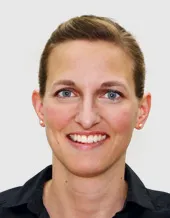
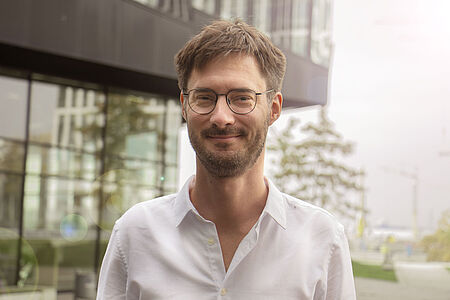
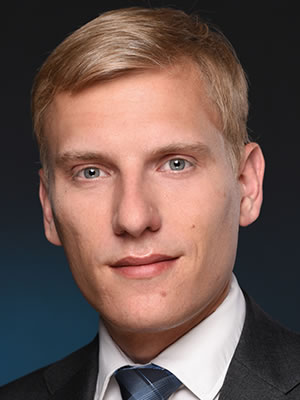
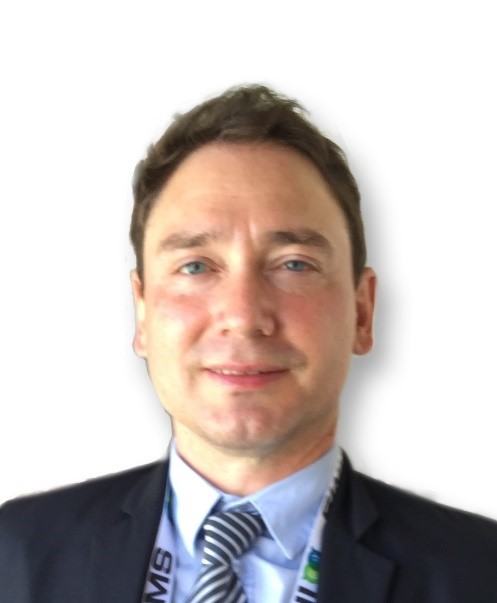
Paul Kotyczka is a Professor at the Technical University of Munich (TUM) in the School of Engineering and Design , Department of Automatic Control Engineering. He leads the Energy-based Modeling and Control Working Group and focuses on modeling, geometric discretization, and control of multi-physical systems, with expertise in nonlinear and passivity-based control. His work spans applications in robotics, mechatronics, and process engineering. Education : Dipl.-Ing. in Electrical Engineering (TUM, 2005), Dr.-Ing. (TUM, 2010), Habilitation (Dr.-Ing. habil., TUM, 2019). Research : Core areas include port-Hamiltonian systems, predictive control of active chassis, structural mechanics modeling, and numerical methods for control. His projects address autonomous driving, distributed parametric systems, and passivity-based control of switching nonlinear systems. Awards : Held a Marie Sklodowska-Curie Fellowship (2015–2017). Grants : Leads DFG projects (e.g., HermInE, INFIDHEM), MSCA-IF, and Franco-German Doctoral Program on port-Hamiltonian systems. Labs : Head of the Energy-based Modeling and Control group at TUM, collaborating internationally (e.g., IIT Bombay, Grenoble INP, LCIS France).
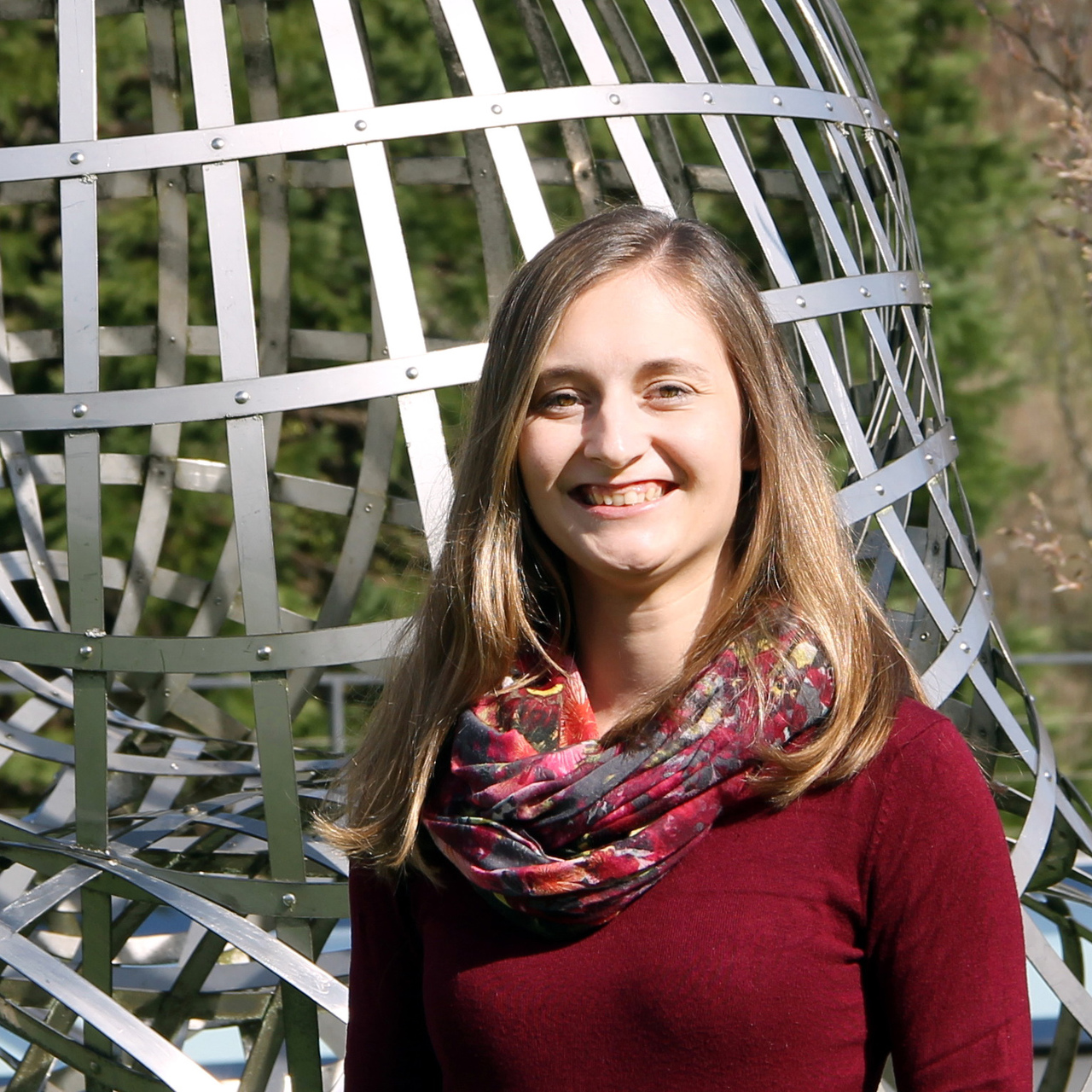
Karin Nachbagauer is a Professor of Applied Mathematics at the University of Applied Sciences Upper Austria, affiliated with the Faculty for Engineering's Mechanical Engineering Department. She holds a Hans Fischer Fellowship at the TUM Institute for Advanced Study (since 2020). Her research focuses on multibody system dynamics, numerical mathematics, optimal control, and inverse dynamics, with applications in mechanical engineering and robotics. She earned her PhD in Engineering Sciences (2012) and Diploma in Industrial Mathematics (2009) from Johannes Kepler University Linz. Notable awards include the 2020 Best Paper Award for optimal control research and 2019 Excellence in Teaching Award. Her work emphasizes adjoint gradient methods for optimization problems, parameter identification in multibody systems, and time-optimal control applications. Current projects include the VRoboCoop initiative for human-robot collaboration and IOMMS for innovative optimization in multibody systems. Publications span journals like Journal of Computational and Nonlinear Dynamics and Multibody System Dynamics , with over 80 peer-reviewed articles. She actively participates in international conferences and serves on editorial boards.
Silke Glas is a Postdoctoral Researcher at the Institute of Numerical Mathematics, Ulm University, a position she has held since July 2018. Previously, she served as a Research Assistant at the same institute from April 2016 to July 2018 and at the Chair of Energy Trading and Finance, University of Duisburg-Essen (2012-2016), funded by the German Research Foundation's Priority Programme 1324. Her research visits include the Institut Henri-Poincaré in Paris and SISSA in Trieste. Her educational background features: Diploma in Mathematics and Economics from Ulm University (2006-2012), thesis on "Reduced Basis Method for Variational Inequalities" Master of Mathematics from the University of South Florida (2009-2010) Dr. Glas specializes in model reduction for nonlinear problems, with core expertise in reduced basis methods applied to variational inequalities, wave equations, Hamilton-Jacobi-Bellman equations, and space-time formulations. Her work bridges theoretical numerical analysis with practical applications in energy markets, particularly intraday electricity trading. She has developed novel approaches for noncoercive and parabolic systems, addressing challenges in error estimation and computational efficiency. Her publication trajectory reveals evolving sophistication in handling time-dependent nonlinear systems, with increasing emphasis on financial applications. Early work focused on theoretical foundations of variational inequalities, while recent publications integrate model reduction with optimal control for energy trading problems, demonstrating cross-disciplinary impact. Scientific recognition includes: No formal awards documented in source material Research funding has been secured through the German Research Foundation's Priority Programme 1324. No student advising activities are mentioned, though her collaborative work involves prominent researchers like K. Urban and Anthony T. Patera. Her primary research environment at Ulm University's Institute of Numerical Mathematics supports her focus on computational mathematics and real-world applications.
Prof. Philip Lederer is a Professor of Numerical Analysis at the University of Hamburg’s Department of Mathematics. He holds a position within the Applied Mathematics (AM) group under the Faculty of Mathematics, Computer Science, and Natural Sciences. His research focuses on advanced numerical methods for partial differential equations, particularly finite element methods for fluid dynamics and elasticity problems. His work emphasizes pressure-robust discretizations, divergence-free schemes, and high-order methods for incompressible flows. Key contributions include hybrid discontinuous Galerkin methods, stress-based formulations for Stokes equations, and error estimation techniques. He collaborates on projects like the FWF-funded initiative P35931, exploring computational methods for poroelasticity and biomechanics. Prof. Lederer frequently presents at international conferences such as ENUMATH, ICIAM, and the European Finite Element Fair. His publications span topics from turbulence simulation to multiphase flow dynamics and photonic crystal modeling. Despite no explicitly listed awards, his active research and peer-reviewed contributions highlight his expertise in computational mathematics. He advises on FWF-funded projects and collaborates with institutions like Aalto University, TU Wien, and the Weierstrass Institute. His teaching includes advanced numerical analysis courses, and his lab focuses on developing robust, high-fidelity computational tools for engineering and scientific applications.
Prof. Dr.-Ing. Tim Pucker is a full professor at HafenCity University Hamburg, affiliated with the College of Civil Engineering and the Department of Geotechnical Engineering. His research focuses on numerical modeling of geotechnical systems, particularly in offshore foundations, lunar soil interaction, and pile installation mechanics. Developed modular hypoplastic models for granular soils (2025) Investigated jack-up platform footprints' impact on offshore foundations (2024) Explored lunar soft lander soil interaction (2024) Advanced numerical methods for groundwater flow analysis (2025) His 15 most recent publications (2025-2015) demonstrate expertise in computational geotechnics, foundation dynamics, and structural optimization. Key themes include offshore wind turbine foundations, hypoplastic material modeling, and extraterrestrial geotechnics. Notable subfields: soil-structure interaction, large deformation analysis, and discrete element method applications. Teaching responsibilities include Geotechnics I/II, Water Engineering, and Numerical Methods for both bachelor's and master's programs. Office hours: Thursdays 14:00-15:00 during lecture periods, by appointment otherwise.
Prof. Simon Adrian holds the Chair of Theoretical Electrical Engineering at the Institute of General Electrical Engineering, University of Rostock, Germany. His research focuses on computational electromagnetics with critical applications in antenna design, electromagnetic compatibility, and medical technology. He serves as Associate Editor for the IEEE Transactions on Antennas and Propagation and contributes to the IEEE Antennas and Propagation Society Education Committee, demonstrating significant academic leadership in the global electromagnetics community. His primary research addresses low-frequency instability challenges in electromagnetic integral equations through innovative numerical techniques. Key areas include Calderón preconditioners, quasi-Helmholtz projectors, B-spline discretizations, and adaptive cross approximation methods. These approaches enable robust simulations across diverse applications from radar systems and antenna design to biomedical problems like deep brain stimulation and electroencephalography. Recent work emphasizes broadband stability and efficient solvers for multiply-connected geometries. Analysis of Prof. Adrian's publication trends (2023-2025) reveals a concentrated effort on overcoming fundamental limitations in electromagnetic modeling. His work consistently targets low-frequency regimes where traditional methods fail, developing mathematically rigorous stabilization techniques while expanding into biomedical applications. The integration of isogeometric analysis with specialized discretization strategies represents a cutting-edge direction in computational electromagnetics. Professional engagement includes active membership in the Institute of Electrical and Electronics Engineers (IEEE), IEEE Antennas and Propagation Society, and Union Radio-Scientifique Internationale (URSI), reflecting his commitment to advancing the field through collaborative research and scholarly communication.
Univ.-Prof. Dr.-Ing. habil. Peter Mark is the Chair Holder of Concrete Structures at Ruhr-Universität Bochum (RUB). His research focuses on advancing concrete technology through sustainable and innovative methods, including modular construction, fiber-reinforced materials, structural health monitoring, and tunneling. He leads interdisciplinary projects such as DFG SPP 2187 (adaptive modular construction) and collaborates extensively on industrial applications. Research interests span concrete optimization , structural resilience , and automated manufacturing . Key areas include thermal prestressing, fatigue analysis, and resource-efficient design. Recent work emphasizes digital twins for production systems and ultrasonic monitoring of infrastructure. Publications demonstrate a strong focus on experimental validation and computational modeling, with trends toward sustainability and Industry 4.0 integration. No awards are listed in the provided text. He directs the Experimental Laboratory KIBKON, supporting large-scale testing of concrete components. Collaborative projects include tunnel lining optimization and solar concrete structures.
Michael Bader is a Professor in the Department of Computer Science at the Technical University of Munich (TUM), part of the TUM School of CIT. He leads the research group on hardware-aware algorithms and software for high-performance computing at the Leibniz Supercomputing Center. His work focuses on developing efficient algorithms and software for supercomputing platforms, particularly in geosciences and simulation of earthquakes and tsunamis. His research interests include high-performance computing, simulation software development (e.g., SeisSol and ExaHyPE), parallel numerical algorithms, adaptive mesh refinement, and large-scale geophysical simulations such as earthquake dynamics and tsunami modeling. He emphasizes optimizing algorithms for modern supercomputing architectures to handle complex computational challenges. Professor Bader has supervised numerous PhD students, including Lukas Krenz, Ravil Dorozhinskii, and Sebastian Wolf, among others. His research has been supported by grants from the EuroHPC JU, BMBF, DFG, and other institutions. Notable projects include ChEESE-2P for exascale computing in solid earth sciences and the targetDART project for adaptive task distribution on exascale systems. He is actively involved in teaching, offering courses such as Numerical Algorithms for High Performance Computing and Scientific Computing 1 . His group collaborates extensively with institutions like the Leibniz Supercomputing Center to advance computational methods for simulating natural disasters and geophysical phenomena.
R. Berger is a Professor at the Department of Chemistry , Philipps-University Marburg , leading the Theoretical Chemistry research group (AG Berger). He has been actively involved in teaching and research since at least 1998, with a focus on theoretical chemistry, computational spectroscopy, and fundamental symmetry tests. Active in symposium organization (e.g., Symmetries in Science Symposium XX, 2025) Hosts doctoral candidates in his group (Mihnea Mlak-Mărginean, Namrata Gohain, Kjell Janke) Develops theoretical frameworks for parity violation, relativistic effects, and chiral systems His research spans quantum chemistry for fundamental physics experiments, including parity-violating energy differences , laser cooling of molecules, and electroweak effects in molecular systems. Recent publications highlight studies on radioactive molecules (RaF, AcF) and highly charged ions for precision tests of fundamental symmetries. Key scientific awards include the 2008 Hellmann Award and the 2012 Outstanding Young German Investigator Award Lectureship . He collaborates internationally with institutions like CERN , ETH Zurich , and University of Mainz .
Alice Niemeyer is a Professor at the Algebra Teaching and Research Area of RWTH Aachen University , specializing in computational algebra, finite group theory, and interdisciplinary applications in civil engineering. She has co-authored over 30 publications in journals like PNAS Nexus , Linear Algebra and Its Applications , and International Journal of Solids and Structures , with recent work bridging abstract algebra and topological interlocking concrete systems. Research Interests : Finite groups, matrix decomposition algorithms, combinatorial design, and applications to sustainable construction. Key Collaborators : Cheryl Praeger, Tomasz Popiel, Wilhelm Plesken, Daniel Robertz, Reymond Akpanya. Notable Grants : Funding from the Simons Foundation for computational algebra research. Awards : No explicit awards mentioned in the provided text.
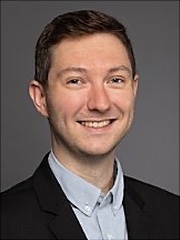
Stephan Kessler is a researcher at the Technical University of Munich , affiliated with the Department of Mechanical Engineering and the Chair of Conveying Technology, Material Handling, and Logistics . His work focuses on construction logistics, digital twins, and IoT integration in building processes. Contact: stephan.kessler@tum.de Key research areas: Digital Twin, BIM, DEM simulations, IoT in construction Collaborates with Prof. Johannes Fottner on construction automation projects His research emphasizes digitalization of construction processes through technologies like RFID, machine learning, and simulation tools. Recent publications address tower crane planning, co-robot integration, and bulk material handling standards. Article trends show consistent focus on construction automation (IoT, digital twins, BIM), material flow optimization (DEM simulations, screw conveyor standards), and equipment lifecycle management (telematics, RFID identification). Kessler contributes to industry-university collaborations through projects like BauFlott (fleet management systems) and TEP (Tower Crane Deployment Planner). His work bridges theoretical research with practical implementations in construction site logistics.
Prof. Dr. Matti Schneider serves as Professor of Engineering Mathematics and Head of the Institute of Engineering Mathematics within the Faculty of Civil Engineering at the University of Duisburg-Essen. His academic leadership spans computational mechanics research and teaching core mathematics courses for civil engineering students. His educational background includes: Diploma in Applied Mathematics with distinction from TU Bergakademie Freiberg (2009) PhD (Dr. rer. nat.) from Leipzig University (2013) on "The Leray-Serre spectral sequence in Morse homology on Hilbert manifolds and in Floer homology on cotangent bundles" Professor Schneider's research focuses on advancing computational methods for solid mechanics through FFT-based homogenization techniques, microstructure modeling, and multi-scale material analysis. His work bridges applied mathematics and engineering to solve complex problems in heterogeneous material systems, with particular emphasis on numerical stability, boundary condition implementation, and efficient solver development for industrial applications. His methodologies enable accurate prediction of material behavior across scales from microscopic structures to macroscopic components. Analysis of his 15 most recent publications reveals dominant trends in FFT-based computational homogenization, with significant contributions to thermal problems, porous media, and fiber-reinforced composites. He pioneers the integration of machine learning (particularly deep material networks) with traditional numerical methods to model complex material behaviors like shear-thinning suspensions and 3D-printed materials. His work consistently addresses computational challenges in boundary condition implementation and convergence for stochastic microstructures. Professor Schneider leads the Institute of Engineering Mathematics and directs research within the ERC-funded BeyondRVE project, which focuses on extending representative volume element concepts for advanced material modeling. His collaborative network includes major German research institutions like Fraunhofer ITWM and international partners in materials science.
Georg Wimmer is a Professor at the School of New Materials and New Energy , Shenzhen Technology University , PR China. He holds a Ph.D. in Numerical Mathematics from Munich Technical University and has held academic roles at the Technical University of Applied Sciences Würzburg-Schweinfurt and Helmut Schmidt University Hamburg, Germany. Education : Ph.D. (2004), Master's (1998), and Bachelor's (1996, Mathematics; 1994, Physics) from Munich Technology University. Research Interests : Computational Electromagnetics, Numerical and Computational Mathematics, and High Performance Computing, with a focus on adaptive finite element methods and electromagnetic field simulations. Scientific Awards : IEEE subcommittee member for electromagnetic safety standards (2008) Multiple student awards and scholarships in Germany (1989–1991) Projects : Led research on finite element methods for adaptive grids (2019–2021), RLCG-parameter calculations (2015–2018), and quality assurance for 2D-FEM solvers (2015–2016). Previously involved in German Research Foundation projects on magnetodynamic simulations (2004–2007) and stabilized flight trajectories (1998–2003). Publications : Authored ~40 papers and served as a reviewer for Transactions on Magnetics and conferences like CEFC, IGTE, and ISEM.
Bo Wang is an active academic researcher primarily affiliated with multiple Chinese institutions, with strong connections to Tsinghua University, Beijing Jiaotong University, and other leading Chinese universities. His research spans artificial intelligence, machine learning, computer vision, medical image analysis, and intelligent control systems, demonstrating significant interdisciplinary work across computer science, engineering, and biomedical applications. Primary institutional affiliation: School of Computer Science and Technology at multiple Chinese universities Active research areas: AI/ML applications in healthcare, computer vision, federated learning, and intelligent control systems Extensive publication record across top-tier venues in multiple disciplines Wang's research interests focus on the intersection of artificial intelligence and practical applications. His work demonstrates strong expertise in developing novel machine learning architectures for medical image analysis, including applications in CT imaging, MRI, and sperm tracking. He has made significant contributions to federated learning approaches for large language models, sliding mode control systems, and molecular optimization frameworks. His research consistently bridges theoretical advances with practical implementations across healthcare, manufacturing, and environmental monitoring domains. Analysis of Wang's recent publications reveals a strong trend toward interdisciplinary AI applications, particularly in medical imaging and bioinformatics. His work on VAE-GANMDA for microbe-drug association prediction, ACE-QSM for accelerating MRI acquisition, and text-guided molecular optimization demonstrates innovative approaches at the intersection of AI and life sciences. Wang also maintains active research in industrial applications including digital twin technology for energy systems and robust scheduling approaches for multi-factory production. Notable research contributions include: FLFT: A Large-Scale Pre-Training Model Distributed Fine-Tuning Method with Federated Learning VAE-GANMDA: Microbe-drug association prediction model ACE-QSM: Accelerating quantitative susceptibility mapping using diffusion models Digital twin-empowered power consumption prediction systems Wang actively collaborates with researchers across China and internationally, with publications spanning computer science, engineering, medical imaging, and environmental science journals. His work demonstrates strong technical depth across multiple AI methodologies while maintaining focus on practical applications that address real-world challenges in healthcare, manufacturing, and environmental monitoring.
Prof. Michael Beer is the Executive Director of the Institute for Risk and Reliability at Leibniz University Hannover. He holds a professorship in the Faculty of Civil Engineering and Geodetic Science and serves on the Faculty Council. His research focuses on structural reliability, uncertainty quantification, and risk analysis with applications in civil engineering systems. He leads the Collaborative Research Centres (CRC) 871 and 1463, addressing regeneration of complex capital goods and offshore megastructure design, respectively. His work integrates machine learning, Bayesian methods, and stochastic modeling to address challenges in seismic vulnerability, geotechnical systems, and reliability-based design optimization. Beer is also a member of the Leibniz Research Centre Energy 2050, emphasizing interdisciplinary energy systems research. Beer's research interests span probabilistic modeling of dynamic systems, uncertainty propagation in engineering systems, and data-driven methods for reliability assessment. His recent publications emphasize computational methods for reliability, machine learning applications, and seismic risk analysis. He actively contributes to academic leadership roles, including editorial boards and research center management.