Dr Jack Betteridge is an Honorary Research Fellow in the Department of Mathematics, Faculty of Natural Sciences, at Imperial College London. His work bridges computational mathematics with environmental sciences, focusing on numerical methods for atmospheric and oceanic systems. His research interests include: Numerical and Computational Mathematics Atmospheric Sciences Oceanography Physical Geography and Environmental Geoscience Computation Theory and Mathematics Distributed Computing Analysis of his 2019-2024 publications reveals deep engagement with finite element methods, particularly through the Firedrake project for automated PDE solutions. His work emphasizes high-performance computing applications in geophysical fluid dynamics, developing novel preconditioners and solvers for atmospheric modeling while contributing to computational education for mathematicians.
Prof. Benjamin Stamm is a Professor of Numerical Mathematics at the University of Stuttgart, leading the Chair of Numerical Mathematics for High Performance Computing within Faculty 08. He holds a Ph.D. and master's degree in mathematics from École Polytechnique Fédérale de Lausanne (EPFL) and has previously worked at RWTH Aachen University, Sorbonne Université UPMC Paris 6, UC Berkeley, and Brown University. His research focuses on numerical analysis, scientific computing, and simulations, particularly efficient discretizations for PDEs, eigenvalue problems, error certification, reduced basis methods, and HPC implementations. He develops scalable numerical methods for problems in computational chemistry and physics, emphasizing accuracy, efficiency, and interdisciplinary collaboration with chemists, physicists, and materials scientists. Prof. Stamm’s work includes contributions to domain decomposition methods, polarization energy calculations, and software development like the ddX library. His publications span topics such as model order reduction, quantum simulations, and molecular dynamics. Collaborations and software tools underscore his commitment to bridging computational methods with real-world scientific challenges.
Jean-Philippe Avouac is the Earle C. Anthony Professor of Geology and Mechanical and Civil Engineering at the California Institute of Technology (Caltech). He is also the Associate Director of the Center for Autonomous Systems and Technologies and the former Director of the Tectonic Observatory (2004–2013). His academic career includes roles at the University of Cambridge (2018–2021) and leadership in geomechanics research. Avouac holds a M.E. from École Polytechnique (1987), a Ph.D. from Institut de Physique du Globe de Paris (1991), and a Habilitation (1992). His research focuses on crustal deformation, earthquake mechanics, and geomorphic processes, using field observations, geodetic measurements, and remote sensing. He has authored over 200 peer-reviewed publications and pioneered geodetic imaging techniques. Key research areas include seismicity forecasting, fault dynamics, and subsurface engineering impacts. Awards include the AGU Fellow distinction and the Wolfson Merit Award. Avouac advises numerous PhD students and postdocs, directing labs like the Center for Geomechanics and Mitigation of Geohazards. His work spans tectonic processes in the Himalayas, induced seismicity, and planetary surface dynamics.
Brandon Karchewski is an Associate Head (Undergraduate) and Teaching Professor in the Department of Earth, Energy and Environment at the University of Calgary. He earned his PhD in Civil Engineering from McMaster University and teaches courses including Engineering Geology, Computational Methods, and Natural Disasters. His research program focuses on: Computational methods in geophysics and geomechanics Geoscience education innovation Climate change impacts on frozen soils Inverse modeling applications Karchewski has pioneered virtual field experiences and developed open-source tools for modeling climate impacts on permafrost. His educational research examines metaphor use in geoscience communication and field pedagogy. Recent computational work includes Python-based permafrost modeling and stochastic inversion methods for biogeochemical transport. He leads the geophysics field school program emphasizing team-based learning. Award recognition includes: Geoscience Teaching Award (2019) Best Poster Award for teaching innovation research (2018) Team Teaching Excellence award (2016) Multiple teaching assistant awards
Bojan Popov is a Professor in the Department of Mathematics at Texas A&M University, part of the College of Arts & Sciences. His research focuses on numerical analysis, nonlinear partial differential equations, and approximation theory, with a particular emphasis on invariant domain preserving schemes and hyperbolic conservation laws. He holds a Ph.D. from the University of South Carolina (1999) and an M.S. from the University of Sofia (1992). Popov has led or co-led numerous grants from agencies like NSF, DOD, and DOE, totaling over $30 million. He has advised four Ph.D. students and organized major conferences, including the 2007 'Approximation and Learning in High Dimensions' and the 2008 'Nonlinear Approximation Techniques Using L1'. His work bridges numerical methods with applications in fluid dynamics, materials science, and high-performance computing. Recent research includes invariant domain preserving techniques for hyperbolic systems, entropy viscosity methods, and robust finite element approximations. He teaches advanced courses such as Hyperbolic Conservation Laws (Math 638) and Linear Algebra (Math 304).
Summary Adam Szymkiewicz is a full Professor and Vice-Dean for Scientific Research at the Faculty of Civil and Environmental Engineering, Gdańsk University of Technology. He leads the Department of Geotechnics and Water Engineering and holds academic positions since 2021. His research focuses on groundwater flow, contaminant transport, and numerical modeling in porous media. Key roles include Head of Department (2022–present) and Vice-Dean (2024–present). Education includes a PhD from Joseph Fourier University (2004) and habilitation from Gdańsk University of Technology (2013). Research Interests: Hydraulic properties of porous media, multiphase fluid flow, climate change impacts, and integrated hydrological modeling. Notable projects include AQUIGROW (HORIZON EUROPE) and SOILPROM. Publications: Over 50 peer-reviewed articles on topics like PFAS migration, groundwater recharge, and MODFLOW coupling. Recent work emphasizes climate change effects on aquifers and coastal hydrogeology. Awards: Multiple Rector awards (2012–2022) and Polish Academy of Sciences Award (2013). Membership: AGU, EGU, InterPore, and Polish Hydrogeologists Society. Editorial roles include Associate Editor of Acta Geophysica .
Ralf Hiptmair is a Full Professor at ETH Zürich, serving as Head of the Seminar for Applied Mathematics and Deputy Head of the Department of Mathematics. He also holds the position of Director of Studies for ETH BSc and MSc in Computational Sciences and Engineering (CSE). His research spans computational mathematics, numerical analysis, finite element methods, boundary element methods, computational electromagnetism, multigrid methods, discrete differential forms, shape optimization, wave propagation, and kinetic equations. Hiptmair's work on auxiliary space methods was recognized as a breakthrough in computational science in the 2008 DOE Report on recent significant advancements in computational science. His research focuses on developing and analyzing numerical methods for partial differential equations, with particular emphasis on structure-preserving discretizations, computational electromagnetism, and boundary integral equations. His work has significant applications in engineering, physics, and computational science. Hiptmair's publications demonstrate a strong focus on advancing numerical techniques for electromagnetic problems, wave propagation, and shape optimization. His recent work shows increasing interest in computational topology, geometric numerical integration, and interdisciplinary applications of numerical methods. Featured as breakthrough in computational science in the 2008 DOE Report on recent significant advancements in computational science (for Auxiliary space methods) Hiptmair has supervised numerous doctoral, master's, and bachelor's students across mathematics, computational science and engineering, and related fields. His research group has received funding for developing advanced numerical methods with applications in electromagnetism, fluid dynamics, and computational physics. He is actively involved in teaching numerical methods courses at both undergraduate and graduate levels. Hiptmair leads research efforts in the Seminar for Applied Mathematics, collaborating with industry partners like ABB Corporate Research and Siemens on practical applications of computational methods. His work bridges theoretical numerical analysis with real-world engineering challenges.
John P. Swensen is an Associate Professor at Washington State University's School of Mechanical and Materials Engineering, directing the M3 Robotics Lab. His research focuses on medical robotics, particularly steerable needle technology and tunably compliant mechanisms using smart materials. Ph.D., Johns Hopkins University (2012) M.S., Mechanical Engineering, Johns Hopkins University (2009) B.S., Electrical Engineering, Utah State University (2003) Research areas include: Medical robotics and surgical devices Compliant and steerable mechanisms Smart material applications in robotics Kinematic modeling and control algorithms Recent work demonstrates waterjet-assisted needle technology achieving unprecedented curvature control and reduced tissue damage in soft tissue phantoms. Collaborations with graduate students Mahdieh Babaiasl, Fan Yang, Emily Allen, and Lee Taylor have resulted in multiple IEEE publications and conference presentations at IROS, BioRob, and ISMR.
Sonia Fliss is a Full Professor at ENSTA Paris , affiliated with the Department of Applied Mathematics and the POEMS laboratory (UMR CNRS-INRIA-ENSTA) . She teaches applied mathematics courses on partial differential equations (PDEs) , finite element methods , and periodic homogenization to undergraduate and graduate students. Doctor in Applied Mathematics (2009) Authorized to supervise research (2019) Research Interests : Sonia Fliss specializes in the modeling and numerical analysis of wave propagation in periodic, quasi-periodic, and random media . Her work includes transparent boundary conditions , guided waves , and asymptotic methods for acoustic, electromagnetic, and elastic wave phenomena . Recent Publications highlight her contributions to the Half-Space Matching Method , edge states in honeycomb structures , and scattering problems in unbounded domains . Her numerical techniques address multi-scale waveguides and time-harmonic propagation . Laboratory : As a member of the POEMS team, she collaborates on interdisciplinary projects involving mathematical analysis , computational physics , and engineering applications in domains like defence, energy, and transport .
Sheng C. Dai is an Associate Professor and group coordinator in Geosystems Engineering at the Georgia Institute of Technology, holding the Georgia Mining Association Early Career Professorship in the School of Civil and Environmental Engineering with courtesy appointments in Ocean Science and Engineering and the School of Earth and Atmospheric Sciences. Dr. Dai earned his Ph.D. from Georgia Tech in 2013 following ORISE postdoctoral fellowships at the National Energy Technology Laboratory (2013-2015). His educational background includes specialized training in geosystems engineering and energy-related subsurface processes. His research focuses on energy geotechnics and nature-inspired engineering, addressing critical challenges in energy sustainability and environmental protection through studies of geomechanics, granular dynamics, and porous media flow. Key applications include gas hydrate systems for energy recovery, waste-to-fuel conversion, and biomimetic solutions inspired by natural processes like rock-boring clams. Analysis of Dr. Dai's 2023-2025 publications reveals strong interdisciplinary integration of computational modeling (DEM, SPH), machine learning, and experimental techniques across energy geotechnics, granular material flow, and bio-inspired mechanisms. His work bridges petroleum engineering, environmental sustainability, and space exploration contexts. Dr. Dai has received numerous accolades recognizing his research, teaching, and service contributions: 2025: Early Career Researcher Award (USUCGER) 2024: Emerging Leaders Program (EVPR/Georgia Tech) 2023: Interdisciplinary Research Award and Woodruff Academic Leadership Fellows 2022: NSF Game Changer Academies and CREATE-X Faculty Fellowship 2020: NSF CAREER Award 2017: Bill Schutz Teaching Award and NETL Research Spotlight His Subsurface Processes Laboratory secures funding from DOE, NSF, NASA, and DOT for projects including $1M awards for waste-to-fuel conversion and methane clathrate research. Dr. Dai serves as Associate Editor for Journal of Geophysical Research: Solid Earth and leads ISSMGE's TC308 Energy Geotechnics Task Force while advising USGS and NETL programs. The laboratory conducts cutting-edge experimental and computational research on hydrate-bearing sediments, granular biomass flow, and bio-inspired geotechnical solutions, maintaining strong industry partnerships for real-world application of subsurface engineering innovations.
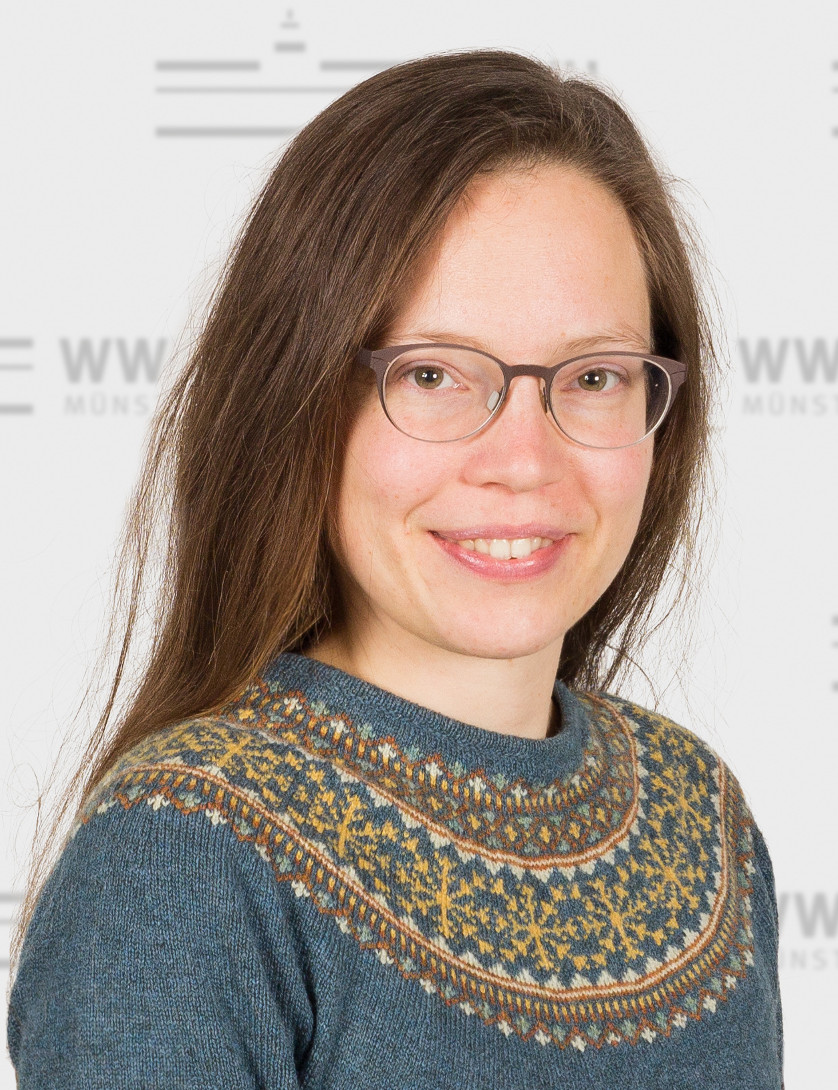
JProf. Dr. Mira Schedensack is a faculty member at the Institute for Analysis and Numerics within the Department of Mathematics and Computer Science , University of Münster. Her expertise lies in Numerical Analysis, Machine Learning, and Scientific Computing , with a focus on finite element methods and numerical solutions for partial differential equations. Research Interests: Numerical methods for PDEs, mixed finite element formulations, adaptive algorithms, and thermo-optical interactions in computational physics. Teaching: Offers courses in Numerical Partial Differential Equations and Adaptive Finite Element Methods. Students: Mentors doctoral student Jonas Ketteler . Publications: Key contributions to non-conforming FEM, Stokes equations, and gradient elasticity.
Joscha Gedicke is a Professor at the Institute for Numerical Simulation (University of Bonn), specializing in Numerical Analysis , Finite Element Methods , and Scientific Computing . His research focuses on adaptive algorithms, error estimation, and computational methods for partial differential equations (PDEs) and optimal control problems. Contact: gedicke@ins.uni-bonn.de | +49 228 73-69835 Teaching: Lectures on Hybrid High-Order Methods (V5E1), Adaptive Finite Element Methods (S4E1), and Discontinuous Galerkin Methods (V5E5). Research Trends: Gedicke's work spans Numerical Methods for PDEs , Adaptive Finite Element Analysis , Mixed and Discontinuous Galerkin Formulations , and Error Estimation . His recent publications emphasize Virtual Element Methods and Robust Discretizations for magnetostatic and optimal control problems. Collaborative Networks: He collaborates with researchers in computational mathematics, including institutions like TU Munich, University of Milano-Bicocca, and the University of Bonn's research seminar on Mathematics of Computation .
Shangyou Zhang is an Associate Professor in the Department of Mathematical Sciences at the University of Delaware, affiliated with the College of Arts & Sciences. He holds a B.S. from the University of Science and Technology of China and a Ph.D. from The Pennsylvania State University. His research focuses on finite element methods, numerical analysis, and computational mathematics, with an emphasis on constructing and analyzing finite elements for partial differential equations, including superconvergence and error analysis. He has contributed extensively to the development of conforming and nonconforming elements for various equations such as the Stokes, biharmonic, and Maxwell equations, with a particular interest in divergence-free and H(div)-conforming elements. His work bridges theoretical analysis and practical numerical methods, addressing challenges in mesh adaptivity, stabilization, and high-order accuracy. Education: B.S. (USTC), Ph.D. (Penn State) Affiliations: University of Delaware, Department of Mathematical Sciences Research interests include finite element methods for PDEs, superconvergence, and numerical solutions of fluid dynamics and elasticity. Recent work emphasizes weak Galerkin methods, HDG schemes, and stabilized finite elements for complex geometries. His publications span topics like C1-Pk elements, divergence-free discretizations, and error estimates for mixed formulations. Publications highlight contributions to high-order elements, locking-free plate models, and robust discretizations for singular perturbations. Teaching includes computational mathematics courses such as MATH 426 (Spring 2025).
Daswin De Silva is a Full Professor of AI and Analytics at La Trobe University, Australia, and Deputy Director of the Centre for Data Analytics and Cognition (CDAC). He also holds an Adjunct Professor position at Lulea University of Technology, Sweden. His expertise spans AI ethics, algorithm development, and applications in healthcare, energy, and education. He leads major initiatives like the La Trobe Energy AI Platform for net-zero emissions and the OptusU AI Micro-credentials program. Education: PhD in AI (Monash University, 2011). Awards include the Australian Awards for University Teaching (2021), Vice-Chancellor’s Teaching Award (2019), and Mid-Career Research Excellence Award (2018). Editor of five journals including IEEE Transactions on Industrial Informatics and Springer Discover AI. Research focuses on generative AI, ethical AI systems, and vector symbolic architectures. Recent work includes AI applications in healthcare diagnostics, energy efficiency, and smart cities. He has secured AU$14M in research funding and supervised 15 PhD completions with 10 current students. Leadership roles include Deputy Chair of La Trobe’s Research & Graduate Studies Committee and chairmanship of IEEE committees on Responsible AI and Web/Information Systems. Keynote speaker at global conferences like IEEE HSI, INDIN, and ETFA. Media engagements include ABC News, Forbes, and The Conversation.
Dr David M G Taborda serves as a Reader (equivalent to Associate Professor) in the Geotechnics section of Imperial College London's Department of Civil and Environmental Engineering within the Faculty of Engineering. His research focuses on energy geotechnics, numerical modeling of soil behavior, and offshore wind turbine foundation design, with significant contributions to thermo-active infrastructure systems. Civil Engineering, University of Coimbra, Portugal (2004) PhD in Numerical Modelling of Dynamic Soil Behaviour and Liquefaction, Imperial College London (2010) Dr Taborda's research program spans energy geotechnics , where he pioneered experimental techniques and numerical methods for thermo-active foundations including piles, retaining walls, and tunnels. His work integrates constitutive modeling of soils with applications in offshore wind turbine foundations through the PISA project, developing advanced design methodologies for monopiles in challenging soil conditions. Current investigations address soil liquefaction mechanisms, thermo-hydro-mechanical coupling in granular materials, and machine learning applications for foundation analysis. His research bridges experimental validation with computational innovation to solve complex geotechnical challenges in sustainable energy infrastructure. Analysis of Dr Taborda's 41 publications (2017-2025) reveals three dominant research trajectories: (1) thermo-active infrastructure optimization with increasing focus on thermal interference and machine learning applications; (2) cyclic behavior of offshore foundations using high-cycle accumulation frameworks; and (3) multi-physics modeling of liquefaction and soil-structure interaction. Recent work demonstrates a strong trend toward data-driven approaches and surrogate modeling for complex geotechnical systems, particularly in energy geostructures and offshore wind applications. Dr Taborda actively supports prospective PhD students through Imperial College's President's Scholarships and College funding schemes, and encourages applications for Imperial College Research Fellowships. His research has been advanced through significant industry-academic collaborations including the PISA project for offshore wind foundations, though specific grant details are not provided in the source material. He maintains strong connections with the Geotechnical Consulting Group where he previously worked, facilitating industry-relevant research translation. Affiliated with Imperial's Energy Futures Lab, Dr Taborda collaborates within the Geotechnics section on experimental and computational research. His team develops specialized equipment for thermo-hydro-mechanical testing and contributes to the department's leadership in energy geostructures research, with applications spanning urban infrastructure, renewable energy systems, and offshore engineering projects.