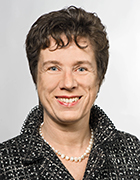
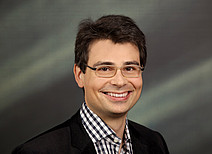
Dr. Tathagata Bhaduri is a Lecturer in the Department of Civil and Environmental Engineering at Rensselaer Polytechnic Institute (RPI). He holds a Ph.D. in Civil Engineering from RPI (2021), an M.Tech. from the Indian Institute of Technology, Kanpur (2016), and a B.E. from the Indian Institute of Engineering, Science and Technology, Shibpur (2014). His research focuses on computational modeling of ultra-high-performance concrete (UHPC), particularly multi-scale techniques, fiber orientation effects, and failure modes in UHPC structures. He also explores smart systems for structural vibration control using bracing and fluid dampers. Dr. Bhaduri teaches core courses including Strength of Materials and Engineering Economics, and served as the course coordinator for Strength of Materials in Fall 2023. His professional involvement includes contributions to the American Concrete Institute (ACI) 239C committee, aiding in UHPC design guide development. His publications emphasize UHPC's mechanical properties, multi-scale modeling, and fiber-reinforced material behavior. Research trends highlight interdisciplinary approaches combining experimental and computational methods to address structural challenges in advanced materials.
Lina von Sydow is a Professor in Computational Science at Uppsala University's Department of Information Technology. She serves as Section Dean for the Mathematical-Computer Science Section since July 2023. Her academic journey includes becoming an Associate Professor in 2000, Senior Lecturer since 1997, and leading the Department of Information Technology from 2018 to 2023. PhD in Domain Decomposition Methods (1995, Uppsala University) Postdoctoral Fellow at Oxford University (1996-1997) Her research spans computational science with dual focuses on Computational Finance and Ice Sheet Modeling . In finance, she develops numerical methods for option pricing using PDEs, radial basis functions, and stochastic volatility models. In climate science, she contributes to ice sheet dynamics through full Stokes models and adaptive time-stepping approaches, particularly in simulating grounding line migration. Recent publications (2025) address gender disparities in IT education, including comparative analysis of admission trends and intervention studies to boost female enrollment. Earlier works (2020-2015) focus on high-order finite difference methods for financial derivatives, BENCHOP benchmarking projects, and preconditioning techniques for PDEs. Scientific awards include Excellent Teacher (2013) She actively collaborates on educational reforms, co-authoring studies like Gender-aware course reform in Scientific Computing (2013). Her leadership roles include Head of Department (2018-2023) and Section Dean (2023-present), influencing academic governance and interdisciplinary research. Labs and teams: Works with Uppsala University's Computational Science group, Elmer/ICE project collaborators (e.g., Per Lötstedt, Gong Cheng), and international partners in numerical finance and climate modeling.
Kirill Serkh is an Assistant Professor in the Department of Mathematics at the University of Toronto, with a cross-appointment to the Department of Computer Science. His research focuses on advanced numerical methods for solving complex mathematical problems. Key Research Areas: Numerical analysis, Scientific computing, Partial differential equations, Numerical linear algebra, Quadrature and approximation theory, Special functions His recent work explores high-order numerical schemes for PDEs on non-smooth domains, adaptive methods for oscillatory integrals, and efficient evaluation of Newtonian potentials. He has contributed to the development of hybrid boundary integral methods and spectral techniques for challenging computational problems. While no specific scientific awards are mentioned in the provided text, his publications demonstrate expertise in computational mathematics and interdisciplinary applications in fluid dynamics, wave propagation, and machine learning. His methodological innovations span both theoretical and applied domains.
Jakob Wagner is a Research Fellow at the Technical University of Munich (TUM), affiliated with the School of Computation, Information and Technology and the Department of Mathematics. He works within the Chair of Optimal Control under Prof. Boris Vexler and serves as an Invited Lecturer at Kutaisi International University in Georgia since 2022. His educational background includes a Master's degree in Mathematics from TUM (2019-2020, grade 1.0) and a Bachelor's degree in Mathematics from TUM (2014-2018, grade 1.2). Wagner's research focuses on Optimal Control of fluid dynamics equations, particularly the Navier-Stokes and Stokes systems. He specializes in Finite Element Methods and rigorous Error Estimates for discretizations of partial differential equations. His work addresses time-dependent problems, state constraints, and boundary control mechanisms in computational fluid dynamics, with significant contributions to stream-function formulations and pressure boundary conditions. Analysis of his publication record reveals a concentrated research trajectory in numerical analysis of incompressible flow control. His work consistently advances theoretical foundations for finite element discretizations, emphasizing fully discrete error analysis and pointwise constraints across Stokes and Navier-Stokes frameworks. Key innovations include novel approaches to blood flow modeling and ocean current reconstruction through coupled ODE systems. Wagner actively mentors students, supervising Master's theses by Alexandro Jedaidi (2025, ocean current reconstruction), Chenhong Lin (2025, Stokes equations), and Hendrik Bruhse (2023, parabolic problems), plus Noah An der Lan's Bachelor thesis (2025, Bayesian experiment design). His teaching portfolio spans Analysis, Optimization, and Numerical Methods courses at TUM and Kutaisi International University. He operates within TUM's Chair of Optimal Control research ecosystem, contributing to international collaborations through conference presentations at GAMM Annual Meetings and specialized symposia, while maintaining active involvement in computational mathematics projects including robotic swarm applications for radio imaging.
Professor Craig Wheeler is a distinguished academic in the School of Engineering at the University of Newcastle, specializing in Mechanical Engineering with a focus on bulk solids handling and belt conveyor technology. As Associate Director of the Centre for Bulk Solids and Particulate Technologies and Deputy Chairman for the Australian Society for Bulk Solid Handling, he has established the university as a global leader in fundamental and applied research within this field. Wheeler's research interests primarily center on reducing the energy intensity and environmental impact of ore and mineral transportation globally. His work develops novel theoretical approaches to model and optimize belt conveyor and bulk handling systems, with significant contributions in energy-efficient transportation, dust emission control, and innovative conveying technologies like the Rail Conveyor system. His research bridges fundamental computational techniques with practical industrial applications, addressing real-world challenges in bulk material handling. His extensive publication record demonstrates trends toward increasingly sophisticated modeling techniques, combining continuum mechanics, discrete element methods, and computational fluid dynamics to solve complex problems in bulk material flow and energy consumption. Recent work shows particular emphasis on large-diameter idler rollers for energy savings, rail-running conveyor systems, and advanced dust control methodologies. 2023 Engineers Australia - Australian Society for Bulk Solids Handling 2017 Significant Contributions to Engineers Australia's Warman Design and Build Competition (Weir Minerals) 2017 Australian Council of Engineering Deans National Award for Engineering Education Excellence 2016 Innovative Technology Award (Australian Bulk Handling) 2010 Rising Star Award (Newcastle Innovation, The University of Newcastle) 2009 Pro-Vice Chancellor's Award for Research Excellence 2006 Best Research and Development Project (Australian Bulk Handling Review) 2000 A.W. Roberts Award (Australian Society for Bulk Solids Handling) Professor Wheeler has successfully led numerous Linkage Projects with major companies including Rio Tinto, Veyance Technologies, and Laing O'Rourke, securing significant cash and in-kind contributions for research projects. His industrial consulting experience, built on a 10-year engineering career with BHP, provides valuable insights that bridge fundamental research with practical applications. He actively supervises research students and contributes to professional development courses both within Australia and internationally. As a key member of the Centre for Bulk Solids and Particulate Technologies in association with TUNRA Bulk Solids, Wheeler leads research teams focused on developing eco-friendly conveying solutions. His work has resulted in new licensed technologies, internationally recognized testing methods, design guidelines, and Australian Standards that have transformed industry practices worldwide.
Professor Anna Giacomini is a leading academic in Rock Mechanics and Civil Engineering at the University of Newcastle. She holds a PhD from the University of Parma, Italy, and has been at the University of Newcastle since 2005. Her roles include Director of the Priority Research Centre for Geotechnical Science and Engineering and Deputy President of the Academic Senate (Research). She specializes in rockfall hazard analysis, mine geotechnics, and numerical modeling of geomechanical systems. Her research focuses on improving safety in mining and civil environments, with over $7.5M in funding and 140+ publications. Key areas include rockfall trajectory analysis, energy absorption in safety barriers, and drapery systems. She has led 20 major projects through ACARP and pioneered low-cost photogrammetric monitoring systems for rock slopes. Professor Giacomini is also a co-founder of HunterWiSE, promoting women in STEM. She has received prestigious awards such as the 2022 NSW Premier’s Engineering Prize and the 2019 John Booker Medal. Her administrative roles include membership in the ARC College of Experts and leadership in gender equity initiatives. Her technical contributions span experimental and numerical rock mechanics, including advancements in discrete element modeling (DEM) and stochastic approaches for discontinuity shear strength prediction. She collaborates internationally with institutions like the Colorado School of Mines and the University of Bologna.
Prof. Wojciech Sobieski is a faculty member at the Department of Mechanics and Fundamentals of Machine Design within the Faculty of Technical Sciences at the University of Warmia and Mazury in Olsztyn . His research focuses on fluid mechanics, numerical modeling, and porous media analysis, with applications in environmental engineering, hydraulic systems, and 3D printing. Academic Rank: Professor Scientific Discipline: Mechanical Engineering Key Research Areas: Tortuosity Analysis, Multiphase Flow, DEM Simulations His recent publications highlight advancements in computational methods for granular porous media, fluid flow modeling, and thermodynamic applications. Notable trends include the use of the Waterfall Algorithm for geometric analysis and sensitivity studies of numerical models like the Eulerian multiphase approach. He has contributed to understanding Forchheimer's laws and cavitation phenomena in hydraulic systems. Prof. Sobieski oversees the PathFinder Project , a research initiative focused on numerical modeling of porous media. His laboratory maintains infrastructure for multiphase flow simulations and particle-scale modeling. He has supervised 2 doctoral students to completion but currently has no active advisees.
Associate Professor Chris Wensrich is a faculty member in the School of Engineering at the University of Newcastle, specializing in Mechanical Engineering. He holds a PhD, Bachelor of Mathematics, and Bachelor of Engineering from the same university. His research focuses on granular mechanics, neutron diffraction, and strain tomography, with pioneering work in Bragg-edge transmission strain tomography and granular dynamics modeling. Wensrich has held visiting appointments at Clare Hall College, Cambridge University, and the Isaac Newton Institute for Mathematical Sciences in the UK. He currently serves as President of the Australian Neutron Beam User Group (ANBUG) and is a member of the ACNS Program Advisory Team at ANSTO. His expertise spans applied mechanics, computational modeling (DEM), and experimental techniques involving neutron diffraction. His research interests include granular material behavior, stress distribution measurement, and validation of computational models using neutron imaging. Notable contributions include studies on silo quaking dynamics, force chain analysis in granular assemblies, and residual stress characterization in additive manufacturing. Wensrich has supervised 11 PhD students and secured over $5.4M in grants, including ARC Discovery Projects and industry-linked initiatives. Publications span granular mechanics, strain tomography, and material characterization, with over 60 journal articles and 38 conference papers. His work bridges theoretical, computational, and experimental methods to advance understanding of particulate systems and engineering materials.
Professor Ronny Pini is a Professor of Multiphase Systems at Imperial College London's Department of Chemical Engineering within the Faculty of Engineering. His research focuses on sustainable industrial processes, particularly carbon capture and storage (CCS), porous media dynamics, and imaging-based process design. He holds a PhD in Mechanical and Process Engineering from ETH Zurich and has held academic positions including Senior Lecturer and Reader at Imperial College since 2015. His educational background includes a Postdoctoral fellowship at Stanford University (2010-2013) and prior roles at the Colorado School of Mines. Research interests span multiphase flow mechanics, adsorption science, and environmental engineering applications. Key projects include the InFUSE Prosperity Partnership and Digital Rocks Lab, leveraging X-ray tomography, positron emission tomography, and computational models to study subsurface CO2 storage and sustainable materials. Professor Pini's work integrates chemical engineering with material science and earth sciences, addressing global challenges like industrial decarbonisation. He collaborates on developing advanced imaging techniques to characterise porous media behavior and optimise processes for energy transition. Current focus areas include direct air capture technologies and enhancing oil recovery via CO2 utilisation. His research outputs include over 150 peer-reviewed articles, with recent emphasis on adsorption-based CO2 capture systems, pore-scale transport phenomena, and sustainable process design frameworks. He is actively involved in training early-career researchers through Imperial College's Chemical Engineering programs and international collaborations.
Willem Leterme is a Professor of High Voltage Technology at RWTH Aachen University, specializing in advanced power systems engineering. His research focuses on high-voltage direct current (HVDC) grids, fault protection mechanisms, and grid integration challenges. His work addresses critical issues such as DC fault mitigation, converter control strategies, and system resilience under fault conditions. He leads projects on HVDC grid protection algorithms, cable aging analysis, and interoperability solutions for multi-vendor systems. Key research themes include: DC grid protection and fault detection Modular multilevel converter (MMC) control High-frequency insulation testing Renewable energy grid integration Recent studies (2023-2025) emphasize: Advanced DC fault response modeling Hybrid AC/DC grid stability Multi-terminal HVDC interoperability Transformer insulation under harmonic stresses Publications highlight contributions to protection system design, DC cable testing methodologies, and grid-forming wind turbine applications. He collaborates on EU-funded initiatives for HVDC infrastructure development and standardization efforts.
Prof. Barbara Wohlmuth is a full professor in Numerical Mathematics at the Technical University of Munich (TUM), affiliated with the TUM School of Computation, Information and Technology. She leads the International Graduate School of Science and Engineering at TUM and has held professorships at Stuttgart, Darmstadt, and Berlin universities. Her research focuses on numerical simulation of partial differential equations, multiscale solvers, and coupled multi-field problems with applications in engineering. Education: Studied mathematics at TUM and Université Joseph Fourier in Grenoble, received her doctorate from TUM in 1995, and completed habilitation in Augsburg. Visiting professorships in USA, France, and Hong Kong. Research interests include discretization techniques, predictive modeling, and interdisciplinary collaboration with engineering disciplines. Notable achievements: 2012 Gottfried Wilhelm Leibniz Prize (Germany’s highest academic honor in sciences), 2005 Sacchi-Landriani Prize. Publications emphasize advanced numerical methods in fluid dynamics, geophysics, and biomedical engineering. Active in editorial roles for international journals and scientific committees across Europe and USA. Elected member of Bavarian and European Academies of Sciences. Key contributions include: Development of robust numerical algorithms for exascale simulations Pioneering work in coupled multi-physics modeling Innovative methods for computational contact mechanics Leadership in graduate education initiatives
Campbell Drake is a Senior Lecturer in Interior Architecture at the University of Technology Sydney's School of Architecture within the Faculty of Design, Architecture and Building. Registered as an architect in New South Wales and Victoria with over 15 years of professional experience, he specializes in sustainable eco-tourism development in environmentally sensitive locations. His work bridges academic research and practical application through partnerships with government and non-government agencies focused on Indigenous infrastructure and housing. Education: PhD from RMIT University (2012-2018) Masters of Research Architecture from Goldsmiths College, University of London (2009-2010) Bachelor of Architecture from RMIT University (1999-2005) Dr. Drake's research centers on the interaction between urban infrastructure and social formation within remote communities, particularly investigating socio-architectural relations in Indigenous contexts. His work explores how infrastructure can enhance wellbeing, cultural practices, and environmental sustainability. He specializes in participatory design methods that empower communities through culturally responsive approaches that integrate Indigenous knowledge systems. His research spans sustainable tourism development in Indonesia, Indigenous housing policy in Australia, cultural burning practices, and the spatial politics of tourism infrastructure, demonstrating a commitment to decolonizing design practices and creating architecture that serves community needs. His recent publications reveal a clear trajectory toward evaluating specific programs (like the Roads to Home Program and Wreck Bay housing strategy) while simultaneously developing theoretical frameworks for culturally responsive architecture. There's a consistent focus on Indigenous infrastructure, housing, and participatory design methodologies, with increasing attention to the intersection of traditional knowledge systems with contemporary design practices in remote Australian communities. His work bridges practical implementation with critical theoretical analysis of power dynamics in architectural practice. Scientific Awards: 2018 UTS Teaching and Learning Awards: Indigenous Professional Capabilities High Commendation Interior Design/Interior Architecture Educators Association Teaching Award (2018 Third place finalist) 2018 AILA Research, Policy & Communication Landscape Architecture Award International Interior Design Association 2014 Global Excellence Awards Dr. Drake supervises Masters and PhD students with a focus on Indigenous architecture and sustainable design. His funded research includes culturally responsive design principles for Aboriginal housing, evaluations of the Wreck Bay Village housing program, Roads to Home evaluations for Gulargambone & Bowraville Reserves, and solar lighting projects for Namoi and Gingie Reserves. His grants come from diverse sources including the NSW Aboriginal Land Council, National Indigenous Australians Agency, and Department of Planning Industry and Environment, reflecting the practical impact of his work. As a founding member of UTS TIISHA (The Indigenous Infrastructure and Sustainable Housing Alliance), Dr. Drake leads collaborative research projects focused on 'health enabling infrastructure' to address structural factors of Indigenous disadvantage. TIISHA works with multiple Aboriginal Land Councils and government agencies to evaluate and implement housing and infrastructure programs that respect cultural values and community needs, demonstrating his commitment to creating tangible benefits for Indigenous communities through architectural practice.
Klemens Fellner is a Professor of Mathematics/Computational Sciences and Group Leader of the Applied Analysis Group at the Institute of Mathematics and Scientific Computing, University of Graz. His research focuses on the analysis of partial differential equations and mathematical modeling across physics, chemistry, and biology. Research Interests: Prof. Fellner's work spans theoretical analysis of nonlinear PDEs (reaction-diffusion, kinetic, and non-local equations) using entropy/duality methods, with applications to: Biological systems (lipolysis, protein localization, stem-cell division) Physical processes (organic photovoltaics, semiconductor modeling) Collective behavior (swarming micro-organisms, aggregation dynamics) Interdisciplinary Mathematics-Arts collaborations Publication Trends: His recent articles (2018-2021) demonstrate strong focus on: Global existence and regularity for reaction-diffusion systems Convergence to equilibrium via entropy methods Drift-diffusion models in semiconductor physics Mathematical biology applications (prion dynamics, lipolysis) Novel approaches for non-local aggregation and hysteresis phenomena Research Leadership: Currently leads the Applied Analysis Group with members including postdocs and PhD students. Key projects: Doctoral School IGDK (International Graduate School) SFB Lipid Hydrolysis (Special Research Program) Mathematics and Arts collaborations Colibri research platform Supervises PhD candidate Reymart Lagunero studying generalized reaction-diffusion systems.
Dr Jack Betteridge is an Honorary Research Fellow in the Department of Mathematics, Faculty of Natural Sciences, at Imperial College London. His work bridges computational mathematics with environmental sciences, focusing on numerical methods for atmospheric and oceanic systems. His research interests include: Numerical and Computational Mathematics Atmospheric Sciences Oceanography Physical Geography and Environmental Geoscience Computation Theory and Mathematics Distributed Computing Analysis of his 2019-2024 publications reveals deep engagement with finite element methods, particularly through the Firedrake project for automated PDE solutions. His work emphasizes high-performance computing applications in geophysical fluid dynamics, developing novel preconditioners and solvers for atmospheric modeling while contributing to computational education for mathematicians.
Jean Lachaud is a researcher at the Institute of Mechanics and Engineering (I2M) affiliated with the TREFLE - Transfers, Fluids and Energy department at the University of Bordeaux. His work focuses on thermal and mechanical behavior of porous and reactive materials, particularly in high-temperature environments. Research Interests : Porous media physics, pyrolysis modeling, thermal protection systems, acoustic wave propagation, multiscale simulations. Projects : Involved in ANR, PEPR, and European initiatives related to energy efficiency, material durability, and environmental engineering. His recent publications emphasize thermal non-equilibrium models , biomass pyrolysis , and ablative material response for aerospace applications. He develops computational tools like PATO and integrates experimental data with numerical simulations to study gasification, oxidation, and heat transfer phenomena. Contact : jean.lachaud@u-bordeaux.fr