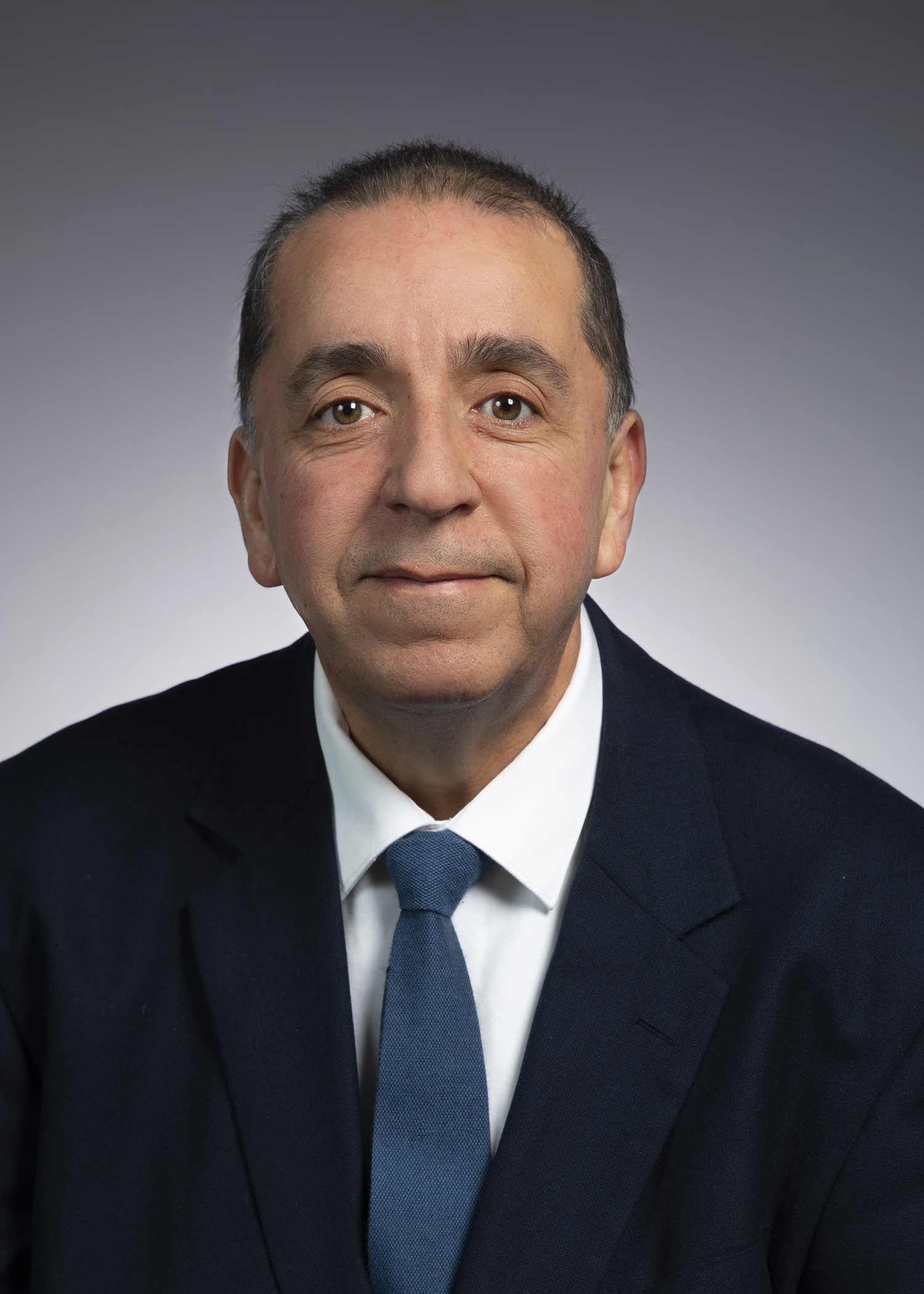
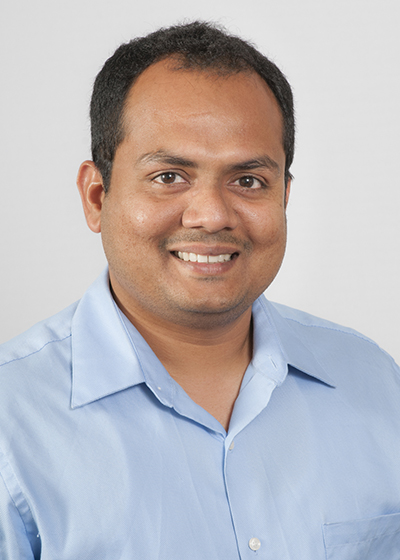
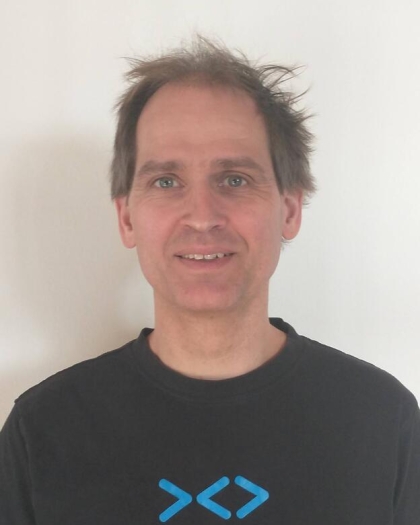
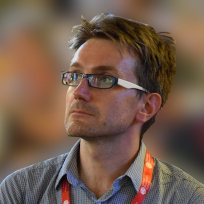
Rafael Gely is the James E. Campbell Missouri Endowed Professor of Law at the University of Missouri School of Law. He previously held academic positions at Texas A&M University’s Mays Business School, Chicago-Kent College of Law, and the University of Cincinnati. His research focuses on labor market regulation, combining legal, economic, and interdisciplinary perspectives. He teaches courses in employment law, labor arbitration, and labor law. Education: BA (Cum Laude) from Kansas State University (1984), JD from the University of Illinois (1987), and PhD in Labor and Industrial Relations from the University of Illinois (1991). Research emphasizes labor law reform, collective bargaining, and the intersection of political polarization with labor dynamics. Recent works include analyses of symphonic industry labor practices, labor law landscapes, and the impact of political divisions on industrial democracy. Publications span over 40 articles in journals like the Rand Journal of Economics and Texas Law Review. Notable awards include the Eisenberg Prize for his Wisconsin Law Review article on Supreme Court dismissals. Teaching and scholarly contributions highlight practical and theoretical aspects of labor law, with a focus on contemporary workplace challenges and legal frameworks.
William Heath is a Professor and Head of the School of Computer Science and Engineering at Bangor University. He holds the position of Chair of the UKACC from 2024 to 2027. His research focuses on feedback control theory, particularly addressing actuator nonlinearities such as saturation, rate constraints, backlash, and hysteresis. He employs multiplier theory within absolute stability frameworks to analyze model predictive control and antiwindup strategies. His research interests include nonlinear control systems design, stability criteria for Lur’e systems, and discrete-time extensions of classical control methodologies. He has contributed to foundational work on O’Shea-Zames-Falb multipliers and their applications in robust control. Key collaborations involve international researchers in control systems and applications, though specific partnerships are not detailed. His work bridges theoretical advancements with practical implementations, such as in biomedical BCIs and industrial systems like wind turbines and diesel engines. No awards or grants are explicitly listed, but his extensive publication record (105+ outputs) reflects sustained academic engagement. As Head of School, he leads a team advancing interdisciplinary research in computer science and engineering.
Galen Dorpalen-Barry is an Assistant Professor at Texas A&M University. Her research focuses on geometric and algebraic combinatorics, particularly hyperplane arrangements, oriented matroids, polytopes, posets, and related fields. Education: PhD in Mathematics (University of Minnesota, 2021) Masters in Mathematics (University of Minnesota, 2018) Bachelor of Arts in Mathematics (Bard College, 2015) Her recent research explores the topology of hyperplane arrangement complements, cohomology of graphical configuration spaces, and combinatorial interpretations of the ab-index. She collaborates with researchers including Nick Proudfoot, Christian Stump, and Vic Reiner. Galen has organized multiple seminars and conferences, including the Algebra and Combinatorics Seminar at Texas A&M and special sessions at SIAM and AMS meetings. She has presented at numerous international workshops and seminars on topics like positive geometries, Shi arrangements, and the Varchenko-Gel'fand ring. Contact: dorpalen-barry@tamu.edu | Website | GitHub
Joan Claramunt Caros is an Assistant Professor in the Department of Mathematics at Carlos III University of Madrid. His research focuses on advanced topics in mathematics and theoretical physics, including dynamical systems, algebraic combinatorics, and spin-orbit coupled gases. He maintains an active publication record with contributions to journals such as Discrete and Continuous Dynamical Systems and Physical Review A . His work bridges pure mathematics and applied physics, addressing complex structures like separated graphs, L2-Betti numbers, and infinite matrix products. Collaborations include co-researcher networks and co-authorships in interdisciplinary projects. No specific grants or awards are listed in the provided information. His academic profile highlights contributions to both algebraic topology and quantum many-body systems, reflecting a dual focus on foundational theory and applied mathematical physics.
Rachel E. Barkow is the Charles Seligson Professor of Law at NYU School of Law and Faculty Director of the Peter L. Zimroth Center on the Administration of Criminal Law. She previously served on the United States Sentencing Commission (2013–2019). Her expertise spans administrative law, criminal law and procedure, sentencing, and separation of powers. Barkow holds a JD from Harvard Law School (1996) and a BA from Northwestern University (1993), with notable clerkships at the US Court of Appeals and the US Supreme Court. She has authored influential works like *Justice Abandoned* (2025) and *Prisoners of Politics* (2019). Her research focuses on systemic legal reforms, particularly addressing mass incarceration and executive power dynamics. Barkow teaches courses in criminal law, administrative law, and constitutional law, earning accolades such as the NYU Distinguished Teaching Award (2013) and Podell Award (2007). She is a member of the American Academy of Arts and Sciences and the American Law Institute. Her work bridges academic scholarship and policy impact, with a commitment to reshaping criminal justice frameworks. The Zimroth Center under her direction addresses critical issues in criminal law administration, reflecting her dedication to practical legal solutions.
Prof. Dr. Peter Sanders is a full professor in Theoretical Computer Science at the Karlsruhe Institute of Technology (KIT), leading the Algorithm Engineering group. His academic career includes a doctoral degree from Karlsruhe University and research stints at institutions like the Max Planck Institute for Informatics. He specializes in algorithm theory and engineering, focusing on parallel computing, large-scale data processing, and graph partitioning. His research bridges theoretical foundations with practical implementations, emphasizing real-world applications in optimization, route planning, and distributed systems. Education: Ph.D. in Computer Science, Karlsruhe University (1996) Bachelor/Master studies at Karlsruhe University (1988-1996) Research Interests: Algorithm design and analysis Parallel and distributed algorithms Graph algorithms and partitioning Algorithm engineering for big data High-performance computing Publications: Over 250 papers, emphasizing parallel algorithms, distributed systems, and graph theory. Recent work includes scalable SAT solving, hypergraph partitioning, and distributed string sorting. His contributions have advanced practical applications in route planning, load balancing, and large dataset processing. Awards: Recipient of the prestigious Leibniz Prize (DFG) and Baden-Württemberg State Research Prize. He coordinated the DFG Priority Program on Algorithm Engineering and is an active reviewer for major funding bodies. Consulting: Engages with companies like SAP and Google, focusing on optimization, route planning, and database algorithms. Leads projects on algorithm scalability and real-world problem-solving. Labs/Teams: Heads the Algorithm Engineering group at KIT, fostering collaborations in distributed computing and algorithmic research.
H. Cheng is a researcher at the University of Twente, affiliated with the Faculty of Engineering Technology and the Department of Mechanics of Solids, Surfaces and Systems. He plays a central role in several interdisciplinary research projects focused on computational modeling of granular materials, geohazards, and machine learning integration in physics-based simulations. His research centers on advancing numerical methods such as the Discrete Element Method (DEM) and developing machine learning surrogates for efficient uncertainty quantification in complex systems. Key project areas include offshore infrastructure resilience under climate change (POSEIDON), dynamic fault slip in induced seismicity (FastSlip), upscaling particulate systems for industrial applications (TUSAIL), and automated segmentation of soil-root systems using micro-CT imaging (UNSAT). H. Cheng leads and supervises multiple early-career researchers across EU-funded initiatives, including MSCA Doctoral Networks and COST Actions. He is the main applicant and supervisor in the GrainLearning project, which integrates Bayesian inference with physics-based models to improve simulation accuracy and efficiency. His scientific contributions span collaborative research across academia and industry, with a strong emphasis on open science, reproducibility, and cross-sectoral training. He contributes to community-building through initiatives like ON-DEM, promoting best practices in particle-based simulations. Supervisor of multiple PhD students and postdoctoral researchers Daily supervisor in POSEIDON, FastSlip, TUSAIL, UNSAT Vice-lead of Working Group 1 in ON-DEM COST Action Main applicant and project lead for GrainLearning H. Cheng is actively involved in training the next generation of computational scientists and engineers, with a focus on interdisciplinary methodologies that bridge mechanics, data science, and industrial applications.
Sven Schewe is a Professor in the Department of Computer Science at the University of Liverpool, affiliated with the School of Electrical Engineering, Electronics and Computer Science. He leads the AI Section and is a founding member and former leader of the Verification Group. He also has secondary affiliations with the Algorithms, Complexity Theory and Optimisation Group and the Institute for Risk and Uncertainty. Research Interests: His research centers on automata theory and game theory, particularly their applications in the verification and synthesis of reactive and safety-critical systems. He investigates infinite-duration games, automata over infinite words and trees, and develops algorithms and tools for automated verification, synthesis, and learning of optimal control strategies. His work extends to reinforcement learning with formal guarantees, cyber-physical systems, and AI safety. Recent Research Trends: His recent publications demonstrate a strong integration of formal methods with machine learning, particularly in adversarial training, neural network robustness, and model-free reinforcement learning under omega-regular objectives. He also applies formal reasoning to interdisciplinary domains such as chemical space exploration and materials science. Scientific Awards: Finalist for the ERCIM Cor Baayen Award 2010 Dr. Eduard Martin Preis 2009 GI Dissertation Award 2008 Advising and Grants: He actively supervises numerous PhD students and postdoctoral researchers. He is Principal Investigator (PI) or Co-Investigator (CI) on multiple major grants, including EPSRC Programme Grants, Royal Society Fellowships, and Horizon Europe projects. His funded research spans topics such as game theory, verification, synthesis, reinforcement learning, and risk analysis. He has hosted visiting researchers and collaborated internationally with institutions in Germany, France, India, Taiwan, and the US. Labs and Teams: He co-founded and led the Verification Group and previously led the AI Section at the University of Liverpool. These groups focus on formal methods, automata, games, and their applications in AI and safety-critical systems.
Saravanan Venkatachalam is an Associate Professor in the Department of Industrial and Systems Engineering at Wayne State University. His research focuses on stochastic programming, robust optimization, and discrete event modeling with applications to supply chain management, healthcare, energy systems, and unmanned vehicle operations. Education Ph.D. in Industrial and Systems Engineering, Texas A&M University M.S. in Industrial and Systems Engineering, Texas A&M University B.E. in Production Engineering, PSG College of Technology, India His work addresses decision-making under uncertainty through decomposition algorithms and data-driven approaches. Recent projects include autonomous vehicle path planning with uncertain parameters, community-aware electric vehicle charging networks, and optimization models for radio advertisement placements. Current research trends emphasize stochastic programming for resource allocation in dynamic environments, robust optimization for transportation and energy systems, and multi-vehicle routing under uncertainty. He has supervised multiple graduate students in thesis work related to optimization models and taught core courses such as Operations Research, Deterministic Optimization, and Stochastic Programming at both undergraduate and graduate levels.
Prof. Igor Krčmar is a full professor at the Faculty of Electrical Engineering of the University of Banja Luka, specializing in Automation and Robotics . He holds a position in the Department of Automation and teaches courses at both undergraduate and graduate levels. His research focuses on control systems, neural networks, electrical drives, and adaptive control methodologies. He has authored several textbooks including Upravljanje u realnom vremenu (Real-Time Control) and Senzori i Aktuatori (Sensors and Actuators). His recent work emphasizes sensorless motor control, PI controller optimization for industrial systems, and machine learning applications in occupancy estimation. Over 25 years, he has published extensively in journals like IEEE Transactions on Industrial Electronics and conferences such as INFOTEH-JAHORINA and IcETRAN. His work bridges theoretical advancements with practical implementations in industrial automation and energy efficiency. Key contributions include: Development of discrete rotor flux estimators for high-speed drives Adaptive neural control algorithms for nonlinear systems Integration of fuzzy logic with hydrodynamic process control Optimization of PMSM drives for energy efficiency He collaborates internationally on EU-funded projects and serves on editorial boards of electrical engineering journals.
Professor Mark Hickman is the TAP Chair and Professor of Transport Engineering at the University of Queensland's School of Civil Engineering. He holds roles as Deputy Head of the School and Affiliate of the Dow Centre for Sustainable Engineering Innovation. His research focuses on public transit planning, sustainable transport innovations, urban transportation modelling, and traffic engineering. He has a PhD from MIT and has authored over 140 publications. Current research includes MaaS trials, electric vehicle infrastructure, and traffic incident prediction using AI. Education: BSc, MSc, and PhD from MIT. Grants include projects on MaaS impact trials, low/zero emission transport strategies, and real-time traffic analytics. Supervised 20+ PhD/Master’s students in areas like autonomous vehicles, transit operations, and sustainable transport policies. Leads grants from Queensland Transport, iMove CRC, and Brisbane City Council. Active in transport policy advising and media commentary on public transport, traffic engineering, and urban planning. Recent work emphasizes decarbonizing road freight, EV charging networks, and integrating MaaS systems. Lab affiliations include the Transport Academic Partnership (TAP) and the Australian Transport Research Cloud (ATRC). Collaborates on projects like the Odin Pass MaaS trial at UQ and Brisbane’s EV readiness assessments.
Morten Brun is an Associate Professor at the Department of Mathematics, University of Bergen. His research spans computational topology, persistent homology, and applications in biology and data science. Email: morten.brun@uib.no Research Interests: He specializes in topological data analysis, focusing on sparse nerves, relative persistent homology, and computational geometry. His work applies topological methods to biological problems, including drug resistance modeling in tuberculosis and immune profiling in multiple sclerosis. Recent Publications: His 2025 work includes hypercubic modeling of tuberculosis drug resistance and high-dimensional immune profiling post-stem cell transplantation. Earlier articles explore computational topology techniques (2017-2024) and interdisciplinary applications in toxicology and systems biology.
Burak Berk Üstündağ is a Professor in the Department of Computer Engineering at the Faculty of Computer and Informatics, Istanbul Technical University (ITU). He has been a key academic figure at ITU since the 1990s, progressing through the ranks from Research Assistant to full Professor, a position he attained in 2019. He has also held significant administrative roles, including Director of the Application and Research Center and membership in the ITU Informatics Institute Management Board. PhD, Control and Computer Engineering, Istanbul Technical University (2000) MSc, Control and Computer Engineering, Istanbul Technical University (1994) BSc, Electrical Engineering, Istanbul Technical University (1991) His research is deeply rooted in Artificial Intelligence , with a focus on Neural Networks , Wavelet-based models , and machine learning applications in environmental, agricultural, and maritime domains. He has developed frameworks like PECNET for multivariate time series forecasting and has pioneered work in cognitive communication systems, particularly for underwater and agricultural monitoring. His work bridges theoretical AI models with real-world applications in precision agriculture, water quality monitoring, and ionospheric forecasting. The most recent articles show a strong trend in applying deep learning (LSTM, DNNs) and hybrid models (Wavelet-NN) to complex, real-time systems. His research spans environmental data science , smart agriculture , underwater acoustics , and cognitive risk management . He emphasizes performance, real-time operation, and intelligence quantification in AI systems. His scientific awards include: Outstanding Young Scientist of the Year (2004) Junior Chamber International - Year's Professional Award (2003) Yılın Meslek Ödülü (2002) Service Award from Air Force Academy (2000) Gelişimine Katkı Ödülü from ITU (1996) Prof. Üstündağ has actively supervised research and led multiple projects as Principal Investigator, including national and institutional grants in AI-driven software systems, social media robots, real-time cognitive risk management, and elderly support devices. He has advised students in AI, neural networks, and intelligent systems, though specific names are not listed. His lab activities are centered around the Software Development Laboratory and cognitive systems research under various funded projects.
Andrea Tosin is a Full Professor of Mathematical Physics at the Department of Mathematical Sciences "G. L. Lagrange" (DISMA), Politecnico di Torino. He serves as Coordinator of the Doctoral College of Mathematical Sciences and Deputy Coordinator of the Doctoral College of Pure and Applied Mathematics. His research bridges kinetic theory, transport equations, and applied mathematics with applications in multi-agent systems, traffic, social dynamics, and epidemiology. His research interests focus on: Kinetic theory and its applications to real-world systems Transport and diffusion equations in complex environments Modeling of vehicular traffic, crowd dynamics, and social behavior Epidemiological modeling with a focus on viral load and multi-scale dynamics Mathematical modeling of collective behavior in biological and social systems His recent publications demonstrate a consistent trend in developing and analyzing kinetic models for traffic flow, opinion dynamics, and epidemic spread, often incorporating uncertainty, network structures, and multi-population interactions. These works frequently involve rigorous mathematical derivations from microscopic models to macroscopic equations, with applications in safety, public health, and urban planning. His scientific awards include: SIMAI Biennial Award (2013) INDAM-SIMAI Award (2010) He actively supervises PhD students and postdoctoral researchers, including Martina Fraia, Emanuele Bernardi, Elisa Paparelli, and Mattia Sensi. He has secured significant research grants from national (PRIN, INdAM) and institutional (Politecnico di Torino, Google) sources. His research is supported by projects such as IMASED (Integrated Mathematical Approaches to Socio-Epidemiological Dynamics) and ANATOMY (A Unitary Mathematical Framework for Modelling Muscular Dystrophies). He also leads the "Modelli e Metodi della Fisica Matematica" research group at DISMA.
Professor Ying Liu is a Professor and Chair in Intelligent Manufacturing at the School of Engineering, Cardiff University, UK, a position he has held since August 2021. He leads the High-value Manufacturing research group within the Department of Mechanical Engineering. Prior to this, he served as an Assistant Professor at the National University of Singapore (2010–2013) and the Hong Kong Polytechnic University (2006–2010). PhD, Innovation in Manufacturing Systems and Technology (IMST), Singapore-MIT Alliance (SMA), National University of Singapore (2006) MSc, Singapore-MIT Alliance (SMA), Nanyang Technological University (NTU) MEng & BEng, Mechanical Engineering, Chongqing University, China His research spans engineering informatics, digital and intelligent manufacturing, AI and machine learning in engineering design, and advanced ICT in manufacturing. He has published over 160 scholarly articles and contributed to major journals and conferences in the field. His recent work focuses on knowledge graphs, digital twins, human-robot collaboration, and energy modeling in smart manufacturing, often integrating large language models and advanced deep learning techniques. The most recent publications highlight a strong trend toward integrating AI, particularly large language models and knowledge graphs, into smart manufacturing systems. Themes include predictive maintenance, battery state estimation, human fatigue modeling, and sustainable manufacturing. His work increasingly emphasizes human-centric approaches aligned with Industry 5.0 principles. Best Paper Award 2022, CCF Transactions on Pervasive Computing and Interaction ESI Highly Cited Paper and Hot Paper, Research and Application of Machine Learning for Additive Manufacturing 2020 Reviewer of the Year, ASME Journal of Computing and Information Science in Engineering (JCISE) Professor Liu actively supervises postgraduate students and has advised several successful PhD candidates, including Dr. Chong Chen and Mr. Zhouyang Ding. His research is funded by major agencies such as EPSRC (UK), GRF (Hong Kong), MOE (Singapore), A*STAR, and NSF (China), as well as industrial partners. He serves as Associate Editor for ASME JCISE, IEEE T-ASE, and several other journals, and was recently appointed Senior Editor of the Journal of Engineering Design. He also leads special issues and topical collections on AI in engineering. He leads the High-value Manufacturing research group at Cardiff University, focusing on digital transformation in manufacturing. His team works on projects involving digital twins, knowledge graphs, and AI-driven design innovation, often in collaboration with international institutions.