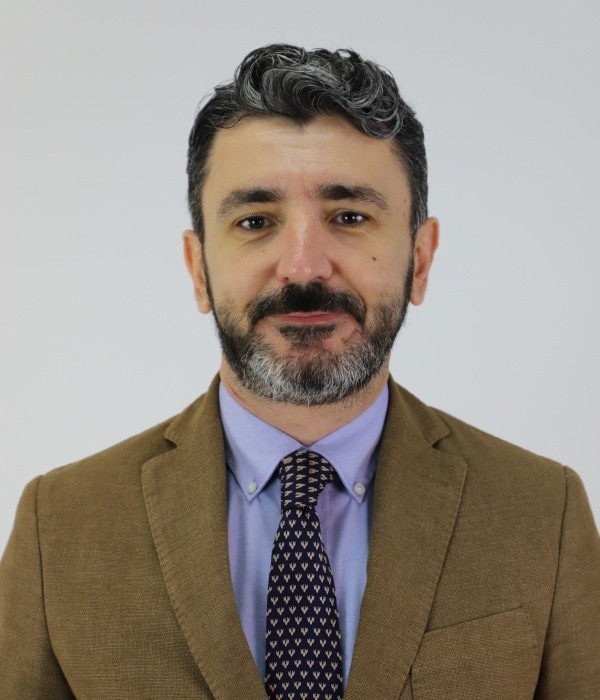
Stéphane Bonhomme is the Ann L. and Lawrence B. Buttenwieser Professor of Economics and the College at the University of Chicago's Kenneth C. Griffin Department of Economics. His research focuses on microeconometrics, econometric theory, and labor economics, with emphasis on latent variable modeling and panel data analysis. He holds a PhD from the University of Paris I, Panthéon-Sorbonne (2005). Key contributions include methodologies for handling unobserved heterogeneity in panel data, nonlinear persistence in consumption dynamics, and bias reduction in econometric models. His work has been published in top journals like Econometrica, Journal of Econometrics, and the Journal of Political Economy. Recent research explores grouped patterns of heterogeneity, firm-worker sorting effects, and functional differencing in networks. He is a Fellow of the Econometric Society (2017) and has developed widely used Stata/Python packages for bias correction and discrete heterogeneity estimation.
Prof. Vladimir Kaishev is a Professor of Actuarial Science at the Faculty of Actuarial Science and Insurance (FASI), Bayes Business School, City, University of London. He holds a PhD in Statistics and Information Theory from Moscow Technical University and has held visiting positions at Kyoto University, the University of Melbourne, and Heriot-Watt University. His research focuses on actuarial mathematics, risk theory, reinsurance modeling, and the application of spline functions in finance and insurance. He has supervised numerous PhD students and contributed to over 30 journal articles, conference papers, and software packages such as StMoMo and KSgeneral . His work includes advancements in ruin probability modeling, copula functions, and operational risk assessment, alongside consultancy roles for institutions like Swiss Reinsurance and the Bulgarian Actuarial Society. He is an Associate Editor of Economic Quality Control and a member of professional societies including the American Mathematical Society. Education: MSc and PhD in Statistics from Moscow Technical University, followed by postdoctoral research at the University of Wisconsin-Madison and UCLA. Research Interests: Multivariate Lévy processes, ruin theory, optimal reinsurance, spline functions, and stochastic modeling. His work bridges actuarial science with financial mathematics and statistical methods. Publications: Over 40 peer-reviewed articles and book chapters, with recent focus on generalized linear models, survival analysis, and actuarial software development. His 2023 paper in Applied Mathematics and Computation introduced novel variable knot spline methods. Awards: Received the Cass Business School Certificate for Excellence in Research in 2009 and 2013. Consultancy & Grants: Projects include stochastic mortality modeling for the UK Office for National Statistics and economic scenario generator development for Aon-Benfield. His research has been supported by grants from the Leverhulme Trust and the Swiss Re. Labs/Teams: Leads the Actuarial Research Center and collaborates internationally on projects such as the StMoMo R package for stochastic mortality modeling.
Risto Lahdelma is a Professor at Aalto University, affiliated with the Department of Mathematics and Systems Analysis within the School of Science. He holds additional professorial roles in the Department of Energy and Mechanical Engineering, Operations Research and Systems Analysis, and Energy Conversion and Systems. His primary focus is on energy systems optimization, sustainability, and district heating technologies. He leads research in renewable energy integration, energy storage solutions, and smart grid technologies. His research interests include energy efficiency, demand response mechanisms, thermal modeling, and multi-criteria decision analysis. He has contributed to over 200 publications, with recent work emphasizing district heating networks, wind power utilization, and resilience in energy systems. Key projects involve optimizing hybrid energy systems, analyzing household energy resilience, and evaluating carbon-neutral technologies. Lahdelma's work bridges operational research and energy engineering, addressing global challenges like climate change mitigation and energy transition. His projects often involve collaboration with industry and policymakers to ensure practical applicability. He has supervised 17 theses and is actively involved in international conferences and editorial boards.
Professor Ralf Werner serves as Professor of Business Mathematics at the University of Augsburg, where he leads the Computational Statistics and Data Analysis working group within the Institute of Mathematics at the Faculty of Mathematics, Natural Sciences and Technology. His academic career spans both theoretical research and practical industry applications in quantitative finance. Werner's research interests encompass: Computational Statistics and Data Analysis Optimization under Uncertainty Financial Engineering and Risk Management Actuarial Science and Insurance Mathematics Portfolio Optimization and Asset Allocation His scholarly output demonstrates a consistent focus on robust mathematical methods applied to financial problems, particularly in replicating portfolios for insurance applications, credit risk modeling, and statistical approaches to financial risk management. Werner's publications appear in leading journals across operations research, mathematical finance, and actuarial science. Professional qualifications include his habilitation at the Karlsruhe Institute of Technology (2011) and doctorate from Friedrich-Alexander University Erlangen (2001). He maintains active industry connections through his role as Scientific Advisor for DEVnet since 2010. Werner serves as Internship Coordinator and DAV (German Actuarial Society) correspondent, supporting students pursuing actuarial careers. He is an active member of multiple professional organizations including the Society for Operations Research (GOR), German Mathematical Society (DMV), and German Society for Insurance and Financial Mathematics (DGVFM).
Lu Yang is an Assistant Professor in the Department of Statistics at the University of Minnesota Twin Cities. Their research focuses on advanced statistical methodologies for non-continuous outcomes, particularly in insurance and healthcare domains. University: University of Minnesota Twin Cities Academic Rank: Assistant Professor Key research areas include: Copula modeling for complex dependencies Regression diagnostics for semi-continuous and discrete outcomes Dynamic prediction frameworks with terminal events Experience rating in insurance contexts Nonparametric estimation techniques Vine copula structures for longitudinal data Recent publications analyze copula-based inference for mixed insurance claims data (2022), D-vine copula models (2022), and probability integral transform residuals (2024). Their work bridges theoretical statistics with practical applications in risk assessment and healthcare analytics. Current research activity (2022-2024) shows consistent contributions to statistical methodology and insurance applications. They received NSF funding (2022-2026) for regression model assessment with non-continuous outcomes.
Vincenzina Vitale serves as a Tenure-Track Assistant Professor of Statistics within the Department of Social and Economic Sciences at Sapienza University of Rome. Her academic profile centers on advanced statistical methodologies with applications spanning economics, public policy, and sustainability initiatives. She teaches core courses including Statistics and Data Science for Sustainability and Statistical Methods and Models for Economics and Public Policy, maintaining regular office hours on Tuesdays from 12:30 to 14:30 by email appointment. Her research program focuses on multivariate analysis, specializing in innovative fuzzy clustering techniques for complex data structures such as time series, spatial data, and mixed data types. She extensively employs probabilistic graphical models, particularly Bayesian networks, for data integration and modeling challenges. This work bridges theoretical statistics with practical applications in electoral analysis, financial volatility, sports analytics, and public health domains including COVID-19 pandemic response. Analysis of her 15 most recent publications reveals a dominant trend toward developing spatially-aware and robust fuzzy clustering algorithms. These methods increasingly incorporate regularization techniques, entropy principles, and copula models to handle interval-valued data, count data, and tail dependencies. Key application areas include regional competitiveness measurement (NUTS2/NUTS3 frameworks), electoral studies, sports performance analytics, and pandemic modeling, demonstrating consistent contributions to top-tier statistical journals. No scientific awards or fellowships were documented in the available materials. While her publication record indicates significant research productivity, specific details regarding graduate student advising, research grants, or collaborative projects were not explicitly mentioned in the provided texts. Similarly, information about laboratory facilities or dedicated research teams remains undocumented in the current sources.
Dusan M Stipanovic is a Professor in the Department of Industrial and Enterprise Systems Engineering at the University of Illinois, affiliated with the Coordinated Science Lab. His research focuses on control theory, multi-agent systems, and mobile robotics, with applications in collision avoidance, formation control, and decentralized optimization. Ph.D. in Electrical Engineering (2000) and M.S.E.E. (1996) from Santa Clara University, and a 5-year Diploma in Electrical Engineering (1994) from the University of Belgrade. His scholarly contributions include publications in IEEE Transactions on Automatic Control , Automatica , and Journal of Optimization Theory and Applications , covering distributed control, game theory, and dynamic systems. His work has been recognized by prestigious awards such as the 2024 IEEE Fellowship and 2017 Alexander von Humboldt Bessel Research Award . Stipanovic has served as an Associate Editor for multiple journals, including IEEE Transactions on Circuits and Systems I (2007-2009) and the Journal of Optimization Theory and Applications (2014-present). He received the 2014 Sharp Outstanding Teaching Award and 2006 Excellence in Teaching Award , underscoring his dual impact in research and education.
Prof. Serkan Eryilmaz is the current President of Atilim University (since 2023) and previously served as Vice President for Research (2017–2023). He holds a Ph.D. in Statistics from Ankara University (2002) and has held academic positions at Izmir University of Economics and Atilim University. His research focuses on reliability engineering, applied probability, stochastic modeling, and renewable energy systems. He is an Editorial Board member of Reliability Engineering and System Safety and an Area Editor of IISE Transactions . Education: Ph.D. in Statistics (Ankara University, 2002), M.Sc. in Statistics (Ankara University, 2000), B.Sc. in Statistics (Ankara University, 1999). Honors include TUBITAK Science Incentive Award (2017) and inclusion in 'The Most Influential Scientists in the World' (2021, 2020). Research Interests: Reliability analysis of systems, stochastic processes, probabilistic models in renewable energy, actuarial risk analysis, and applied probability. Recent work includes publications on δ-shock models, preventive replacement policies, and wind energy systems. Awards: TUBITAK grants (2017, 2006), top-ranked graduate (Ankara University, 1999), and international recognition for impactful research in reliability engineering. Advising & Grants: Supervised 7 PhD and 8 Master’s theses. Active in editorial roles and professional service, including co-chair of the System Reliability Technical Committee at the European Safety and Reliability Association. Labs/Teams: Leads research groups in reliability engineering and stochastic modeling at Atilim University, collaborating on projects involving renewable energy systems and probabilistic risk analysis.
Philippe Bernardoff is an Associate Professor at the University of Pau and the Pays de l'Adour. His research focuses on advanced probabilistic models, including multivariate gamma distributions, negative multinomial laws, and Laplace transform applications in statistical dependence structures. His work bridges theoretical probability and practical applications in areas like polarimetric image processing. Bernardoff's research interests center on developing statistical methodologies for complex multivariate systems, with emphases on distribution theory, simulation algorithms, and copula-based dependence modeling. His publications consistently explore the mathematical frontiers of infinitely divisible distributions and their computational implementations. His recent articles demonstrate a strong focus on advancing simulation techniques for gamma distributions and expanding the theoretical understanding of Laplace transforms in multivariate contexts. This work has implications for high-dimensional data analysis and stochastic modeling.
David A. Edwards is a Professor of Mathematics at the Department of Mathematical Sciences , University of Delaware , where he has been tenured since 2007. His work spans applied mathematics , industrial modeling , and interdisciplinary research involving polymer diffusion , mathematical finance , bioreactions , and 3D printing . Education : B.S. in Applied Mathematics , California Institute of Technology (1990) Ph.D. in Applied Mathematics , Caltech (1994) Research Interests focus on solving real-world problems via asymptotic methods and numerical modeling . Key areas include: Polymer diffusion (non-Fickian transport, trapping skinning) Biosensor dynamics (steric hindrance, receptor heterogeneity) Mathematical finance (mortgage refinancing, options pricing) 3D printing (extrusion rates, welding temperatures) Biological systems (olfactory signaling, blood clotting) Industrial applications (fuel cells, UV irradiation effects) Recent Publications analyze copulas in finance , weld strength in additive manufacturing , and thermal models for 3D printers , reflecting his interdisciplinary approach. Scientific Awards : Caltech Merit Scholar Southern California Edison Scholarship National Merit Scholarship University of Delaware Arts and Science Award Outstanding RSO Advisor (2018) NSF, NIH, and UD Research Foundation grants Advising includes PhD/MS students in applied mathematics and undergraduate researchers working on topics like optical biosensors and 3D printing dynamics . He has co-organized Mathematical Problems in Industry Workshops and advised on NSF-funded modeling camps .
Felix Rempe is a Rudolf Diesel Industry Fellow at the Technical University of Munich Institute for Advanced Study (TUM-IAS) , affiliated with the BMW Group in the field of Autonomous Driving . He holds a PhD in Computational Science and Engineering from TU Munich, awarded summa cum laude in 2018, and an M.Sc. in Mechatronics from DHBW Stuttgart in 2014 with Honours. His research focuses on data-driven approaches to traffic engineering and control , leveraging machine learning and sensor data from vehicles for real-time traffic state estimation and prediction. His work explores the intersection of mobility systems and artificial intelligence , particularly in the domains of traffic flow theory and digital twin development for transportation infrastructure. Felix’s publications highlight advancements in data fusion techniques , deep learning architectures , and statistical modeling applied to autonomous driving and urban mobility challenges. 2018: PhD thesis awarded summa cum laude 2014: M.Sc. with Honours award for completing the Honour’s track at TUM 2012: BayLat grant for study exchange program Latin America
Aristidis K. Nikoloulopoulos is an Associate Professor in Statistics at the School of Mathematics, University of East Anglia (since December 2023). Previously, he was an Associate Professor in the School of Computing Sciences (2013-2023) and a Lecturer (equivalent to Assistant Professor) there (2009-2013). He completed his PhD in Statistics at Athens University of Economics and Business in 2007, followed by postdoctoral work at Laval University and the University of British Columbia. He has also held positions at Athens University of Economics and Business and Cyprus University of Technology. Current affiliation: School of Mathematics, University of East Anglia Past affiliations: School of Computing Sciences (UEA), Department of Statistics (AUEB), Medical School (Cyprus UoT) His research focuses on copula modeling, with applications in biostatistics, econometrics, and finance. Key contributions include copula-GARCH models for financial returns, factor copula models for survey data, and copula-mixed models for meta-analysis of diagnostic tests. He has developed CRAN packages like CopulaREMADA and FactorCopula, and his work addresses dependence structures in multivariate discrete data. Recent publications highlight vine copula mixed models for diagnostic accuracy studies, joint meta-analysis of correlated diagnostic tests, and factor tree copula models for psychometric applications. These works emphasize dependence modeling, computational efficiency, and practical implementations in health and social sciences. He actively supervises PhD students and has delivered numerous invited seminars and short courses on copula modeling, including engagements at the University of Geneva and the Vine Copula Workshop. His teaching portfolio includes statistical methods, linear regression, time series, and computational statistics at undergraduate and postgraduate levels.
Sabrina Giordano is Associate Professor of Statistics at the University of Calabria , where she teaches Statistics and Data Science courses in both Italian and English. She holds a PhD in Methodological Statistics from the University of Milano-Bicocca and has held visiting positions at RWTH Aachen University, University of Florida, and University of Plymouth. Her research focuses on Statistical modeling of categorical and ordinal data Latent variable models and copula functions Longitudinal analysis and hidden Markov chains Applications in finance, health, and environmental statistics Her methodological contributions are implemented in the hmmm R-package and supported by grants like the PRIN2022 project "SMILE: Statistical Modelling and Inference to Live the Environment". She serves as Associate Editor for Biometrical Journal and Statistical Methods & Applications Director of the Post-Graduate Master in Artificial Intelligence & Data Science Local coordinator for the COST Fin-AI research group Her recent collaborative work explores Dynamic response styles in longitudinal data Fairness-aware classification algorithms Copula-based dependence structures Applications to financial vulnerability and risk perception
Bin Li is an Associate Professor at the School of Electrical Engineering and Computer Science. His research focuses on wireless networks, network scheduling, sufficient dimension reduction, and statistical inference. NSF-funded projects: EAGER: TaskDCL, CAREER: Wireless Collaborative Mixed Reality Networking, CNS Core: Scalable Algorithms for Virtual Reality Over Wireless Networks. Grants include foundational work in AI-driven task training, geospatial digital twins, and joint communication-computation-learning systems. His research spans wireless scheduling algorithms, data freshness optimization, and nonlinear sufficient dimension reduction. Recent work explores Fréchet regression, functional graphical models, and kernel-based hypothesis testing. Articles highlight interdisciplinary applications in computer science, statistics, and mathematics. Statistical methods dominate his contributions, including Bayesian credible sets, copula models, and additive independence frameworks. Collaborations extend to multi-source genomic data analysis and immersive educational platforms via augmented reality. With an h-index of 16 and 74 research outputs, Bin Li’s expertise intersects wireless network optimization and statistical learning. His work addresses challenges in edge computing, cloud offloading, and cyber-physical systems through algorithmic innovation and theoretical rigor.
Dr. Anne Opschoor is an Associate Professor in the Department of Finance at Vrije Universiteit Amsterdam and a research fellow at Tinbergen Institute. She holds a PhD from the Tinbergen Institute/Econometric Institute at Erasmus University Rotterdam (2014) and a master's degree in financial econometrics from Erasmus University Rotterdam. Her research focuses on financial econometrics, time series analysis, risk management, and copula models. She has received notable awards, including the NWO VIDI Grant (2021) and the 2014 Journal of Applied Econometrics Dissertation Prize. Her teaching includes courses such as Empirical Finance, Quantitative Research Methods, and Mathematics for Finance. She has supervised PhD theses and contributes to grants like the NWO VIDI-funded project on extreme risks in high dimensions. Her work frequently addresses volatility modeling, tail risk, and multivariate financial dependencies, leveraging computational tools like the R package MitISEM. She has published extensively in journals such as the Journal of Financial Econometrics and Journal of Applied Econometrics.