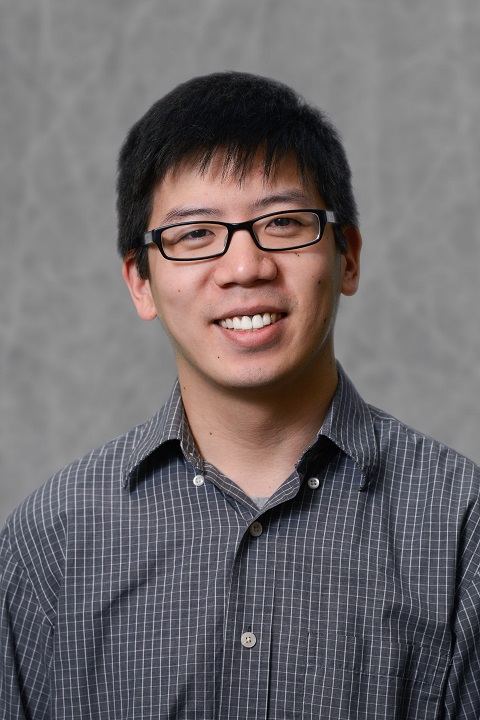
Ricky Ini Liu is an Associate Professor in the Department of Mathematics at the University of Washington. Previously, he held positions at North Carolina State University, the University of Michigan, and the University of Minnesota. He earned his Ph.D. in Mathematics from MIT in 2010 under Alexander Postnikov. His research focuses on algebraic combinatorics, particularly its intersections with algebraic geometry, combinatorial geometry, and representation theory. Key interests include Schubert polynomials, polytopes, Hopf algebras, and Kronecker coefficients. He has contributed to foundational work on birational rowmotion, Gelfand-Tsetlin polytopes, and Fomin-Kirillov algebras. Liu has taught a wide range of courses at UW, including special topics in dynamical algebraic combinatorics, combinatorial theory, and problem-solving. He has also been a key instructor at the Mathematical Olympiad Summer Program since 2007 and mentored undergraduates in research programs at the University of Minnesota, Duluth. His publications span high-impact journals like Selecta Mathematica and Journal of Combinatorial Theory , with recent work addressing topics such as determinantal formulas for Schubert polynomials and applications of flow polytopes to diagonal harmonics. Though no specific awards are listed, his extensive publication record and academic roles reflect significant contributions to combinatorial mathematics.
Andrew Childs is a Professor at the University of Maryland, affiliated with the Department of Computer Science and the Institute for Advanced Computer Studies (UMIACS). He serves as Director of the NSF Quantum Leap Challenge Institute for Robust Quantum Simulation (RQS) and is a Fellow at the Joint Center for Quantum Information and Computer Science (QuICS). His research focuses on quantum algorithms for simulating physical systems, algebraic problems, and quantum walk protocols, with applications in quantum computing and computational complexity. University of Maryland Institute for Advanced Computer Studies (UMIACS) Joint Center for Quantum Information and Computer Science (QuICS) NSF Quantum Leap Challenge Institute for Robust Quantum Simulation Childs' research spans quantum simulation, quantum Fourier transform, phase estimation, and Hamiltonian dynamics. He has developed techniques to reduce quantum computational resources for simulating quantum systems and explored limitations of quantum computers through hidden subgroup problems and non-unitary dynamics. His publications cover diverse areas including quantum walk optimization, Hamiltonian simulation methods, and applications to cryptography and condensed matter physics. Recent works address spatial search algorithms, product formulas for commutators, and quantum routing protocols. As an educator, Childs has taught courses on quantum algorithms and information processing at both the University of Maryland and University of Waterloo, with lecture notes and materials spanning multiple years. Contact: amchilds@umd.edu | Office: ATL 3359 | Affiliated with University of Maryland's quantum research institutes.
Daniel M. Kane is a Professor at the University of California, San Diego (UCSD), holding a joint appointment in the Department of Mathematics and the Department of Computer Science and Engineering (CSE). His research spans mathematics and theoretical computer science, with a focus on number theory, combinatorics, complexity theory, and computational statistics. He earned a Ph.D. in Mathematics from Harvard University (2011) and dual BS degrees in Mathematics with Computer Science and Physics from MIT (2007). Prior to UCSD, he was a postdoctoral researcher at Stanford University (2011–2014) on an NSF fellowship. His research interests include robust statistics, machine learning, polynomial threshold functions, and algorithmic methods for high-dimensional data. Notable achievements include co-authoring the book Algorithmic High-Dimensional Robust Statistics (Cambridge University Press, 2023) and receiving the Best Paper Award at the Conference on Computational Complexity (2013), as well as gold medals at the International Mathematical Olympiad (2002 and 2003). Current teaching includes courses such as Math 96 (Putnam Seminar), Math 154 (Graph Theory), CSE 101 (Algorithms), and CSE 203A (Randomized Algorithms). He has consulted for companies like CASPER Labs and AIble, and his work extends to cryptographic protocols, including quantum money schemes based on quaternion algebras. Key contributions include breakthroughs in robust mean estimation, list-decodable learning, and the development of efficient algorithms for statistical problems. His research often bridges foundational theory with practical applications in machine learning and data analysis.
Raphael Hauser is an Associate Professor in Numerical Mathematics at the University of Oxford's Mathematical Institute, Director of Graduate Studies - Teaching, and Tanaka Fellow in Applied Mathematics at Pembroke College. His affiliations include membership in the Data Science, Numerical Analysis, and Mathematical and Computational Finance research groups, as well as a fellowship at the Alan Turing Institute. Education: PhD in Operations Research, Cornell University, Ithaca, USA Dipl. Math. ETH, Swiss Federal Institute of Technology (ETH Zurich), Switzerland Research interests span data science, numerical optimisation, medical imaging, distributed computing, and applied probability/statistics. His work integrates mathematical rigor with practical applications, particularly in optimization algorithms, machine learning theory, and medical imaging technology. Publications focus on optimization theory, stochastic processes, medical imaging systems, and computational finance, with recurring themes in non-convex optimization guarantees, PCA variants, and X-ray tomography innovations. Awards: Oxford University Teaching Award (2007) SIAM Optimization Prize (2005) SIAM Student Paper Prize (2000) Advising includes 15+ DPhil students and 40+ MSc students, with projects in optimization, finance, imaging, and machine learning. Current postdocs and students are affiliated with the Alan Turing Institute and industrial partners like Siemens and Macquarie Group. He leads teams in the Mathematical Institute's research groups and collaborates with the Alan Turing Institute on large-scale data science initiatives.
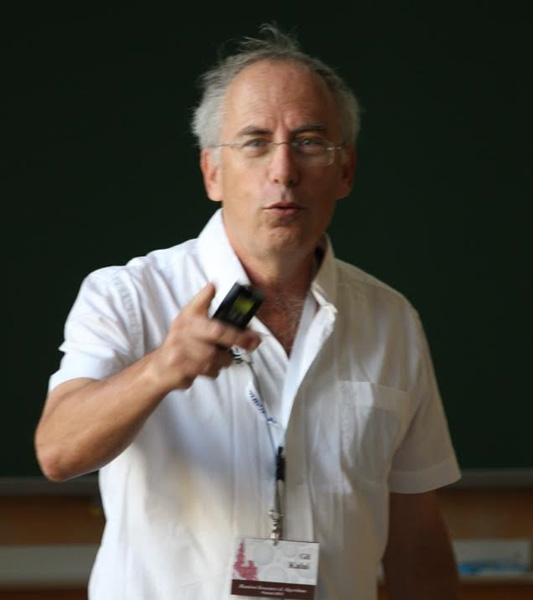
Gil Kalai is a Professor of Mathematics at the Hebrew University of Jerusalem since 1992, where he holds the Henry and Manya Noskwith Chair. He also serves as an Adjunct Professor of Mathematics and Computer Science at Yale University since 2004 in a long-term part-time visiting position. His academic career includes visiting positions at prestigious institutions including MIT, Cornell, IAS Princeton, Berkeley, Bell-labs, IBM, and Microsoft. Professor Kalai's research spans multiple areas within mathematics and theoretical computer science. His work in combinatorics encompasses geometric, probabilistic, and topological approaches. He has made significant contributions to the study of convex sets and polytopes, linear programming, and theoretical computer science. His influential 1988 paper with Kahn and Linial on Boolean functions pioneered applications of Fourier analysis in theoretical computer science. Kalai's research has evolved to include the application of Fourier analysis to thresholds, influences, symmetries, noise, percolation, and social choice. He has developed theories in algebraic shifting and studied face-numbers and other combinatorial invariants of polytopes. His work on the diameter of polytopes and randomized simplex algorithms has been influential in optimization theory. In 1993, his collaboration with Kahn produced a groundbreaking counterexample to Borsuk's Conjecture in 1325 dimensions. Professor Kalai's publications reveal a consistent focus on the intersection of combinatorics, geometry, and theoretical computer science. His work shows a progression from foundational combinatorial geometry to increasingly sophisticated applications of harmonic analysis in discrete mathematics. The recurring themes across his 30+ year career include Boolean functions, polytope theory, and probabilistic methods in combinatorics, demonstrating remarkable coherence in his research trajectory. 2016 European congress of Mathematics, plenary speaker 2013 ERC advanced grant 2012 Rothschild Prize 1994 International Congress of Mathematicians invited section talk, Zurich 1994 Fulkerson Prize 1993 Erdos Prize 1992 Polya Prize Though specific details of his advising are not provided in the source material, Kalai has written over 70 scientific papers and maintains an active research blog entitled "Combinatorics and More." His 2013 ERC advanced grant indicates significant research funding for his work. His extensive collaborations with researchers across multiple institutions suggest a robust research program with numerous PhD students and postdoctoral researchers, though specific names are not mentioned in the provided texts. Professor Kalai maintains active research connections across multiple institutions including Hebrew University, Yale, and various research centers worldwide. His work bridges pure mathematics and theoretical computer science, creating a unique interdisciplinary research environment that influences both fields.
Ivan Dokmanic is an Assistant Professor at the Coordinated Science Laboratory (CSL) within the University of Illinois . His research bridges signal processing , machine learning , and applied inverse problems , with a focus on acoustics, biomedical imaging, and distance geometry. Current Role : Assistant Professor, CSL Email : dokmanic@illinois.edu Research Interests : Dokmanic explores machine learning applications in inverse problems , particularly distance geometry for molecular imaging and acoustics . His work includes unlabeled sensing , where distances between points are known but their arrangement is not. This has implications for powder diffraction , indoor localization , and echo modeling . Article Trends : His recent publications emphasize distance geometry in machine learning , acoustic signal processing , and inverse problem theory . Key areas include molecular imaging , audio encryption , and sensor positioning . Collaborative work spans medical imaging , cyberphysical systems , and geometric invariants . 2016 Google Faculty Award NSF Grant (1 year, $157,079) Students and Grants : Dokmanic mentors PhD students like Puoya, Shuai, and Anadi. His research is funded by the National Science Foundation , Google , VISA , and nVidia .
Paata Ivanisvili is an Associate Professor at the University of California, Irvine (UCI), Department of Mathematics, School of Physical Sciences. His research focuses on Analysis, Probability, Harmonic Analysis, and Functional Analysis, with a particular emphasis on isoperimetric inequalities, functional inequalities, and discrete structures such as the Hamming cube. He has held visiting positions at institutions including the Hausdorff Research Institute for Mathematics and Princeton University. Ivanisvili has organized conferences such as the Dual Trimester Program at the Hausdorff Institute on Boolean Analysis in Computer Science (2024) and annual Summer/Fall Schools since 2021. He earned his PhD in Mathematics from Michigan State University (2015) and a BS from Saint Petersburg State University (2011). His research interests include sharp inequalities in analysis (e.g., Poincaré, Beckner, Ehrhard), hypercontractivity, and applications to discrete mathematics and probability. He has collaborated with prominent mathematicians such as Fedor Nazarov, Alexander Volberg, and Roman Vershynin. Notable awards include the NSF CAREER Award (2021–2025) and Simons Fellowship in Mathematics (2025–2026). Ivanisvili’s recent work explores the interface between harmonic analysis and discrete mathematics, including studies on additive energies, convex hulls of space curves, and learning theory. His articles frequently address foundational questions in geometric functional analysis, often using tools like Bellman functions and optimal control theory. He actively advises PhD students and has mentored visiting researchers at UCI.
Nathan (Nati) Linial is a Professor at the School of Computer Science and Engineering at the Hebrew University of Jerusalem, where he has been a faculty member since completing his postdoctoral period at UCLA. He earned his undergraduate degree in mathematics from the Technion and his PhD in graph theory from the Hebrew University. His research spans multiple areas of theoretical computer science and mathematics, with primary focus on combinatorics, theoretical computer science, and bioinformatics. Linial's work has made significant contributions to high-dimensional combinatorics, expander graphs, metric embeddings, and computational molecular biology. His research often bridges geometry, analysis, and combinatorial structures, demonstrating deep connections between seemingly disparate mathematical fields. Linial's recent publications reveal a strong trend toward high-dimensional combinatorial structures, including simplicial complexes, hypertrees, and high-dimensional permutations. His work frequently employs probabilistic methods, linear programming techniques, and geometric approaches to solve fundamental combinatorial problems. The breadth of his research is evident in both pure mathematical contributions and applications to computational biology. Fellow of the American Mathematical Society ISI Highly Cited Researcher Conant Prize (2008) for the influential survey paper "Expander graphs and their applications" Linial has served on the editorial boards of several prestigious journals including the Israel Journal of Mathematics (as Chief Editor 2013-2017), Random Structures and Algorithms, and Combinatorica. His academic leadership extends to organizing conferences and workshops in combinatorics and theoretical computer science. He has mentored numerous students whose work spans theoretical computer science, combinatorics, and computational biology. Linial is associated with research projects including ProtoNet (for protein sequence classification) and EVEREST (for evolutionary conserved protein domains), demonstrating his commitment to interdisciplinary research that bridges computer science with molecular biology.
Ben Green is the Waynflete Professor of Pure Mathematics at the University of Oxford and a Fellow of Magdalen College. His work spans additive combinatorics, analytic number theory, harmonic analysis, ergodic theory, discrete geometry, and group theory, with a focus on interdisciplinary approaches. Research Interests: Additive combinatorics and its applications to primes Analytic number theory (prime distribution, L-functions) Harmonic analysis (Fourier methods, spectral theory) Ergodic theory and its combinatorial applications Discrete geometry (ordinary lines, convex structures) Group theory (approximate groups, expansion) Article Trends: His recent work emphasizes multiplicative functions, Ramsey-type problems in number theory, expansion in finite groups, and extremal set theory. Themes include prime gaps, arithmetic progressions, and interactions between analysis and algebra. Scientific Awards: Clay Research Award (2004) Ostrowski Prize (2005) Whitehead Prize (2005) Leverhulme Prize (2007) European Mathematical Society Prize (2008) Royal Society Fellow (2010) Sylvester Medal (2014) Senior Whitehead Prize (2019) Advising: Ben has supervised numerous D.Phil students across additive combinatorics, analytic number theory, and related fields. Past students hold postdoctoral and academic positions globally.
Olga Veksler is a Professor at the University of Waterloo's Department of Computer Science, part of the Faculty of Mathematics. She holds a Ph.D. and M.Sc. from Cornell University (1999) and a B.A. from New York University (1995). Her research focuses on computer vision, machine learning, and discrete optimization, with notable contributions to image segmentation, graph algorithms, and deep learning integration. Her work emphasizes semantic segmentation, salient object detection, and efficient optimization techniques for graphical models. Education: Ph.D. in Computer Science, Cornell University, 1999 M.Sc. in Computer Science, Cornell University, 1999 B.A. in Computer Science, New York University, 1995 Her research explores intersections between machine learning and traditional computer vision challenges, particularly leveraging graph-based optimization and CRF models. Recent trends in her work include weakly supervised learning, sparse non-local CRF applications, and test-time adaptation strategies for salient object detection. She has pioneered methods for shape priors in multi-object segmentation and efficient graph-cut algorithms. Her advising and grant activities are foundational to her research, though specific grant details are not listed here. She maintains a lab focused on advancing computer vision through algorithmic innovation, with contributions to both theoretical frameworks and practical applications in medical imaging and scene understanding.
Professor Paul Goulart is a full Professor of Engineering Science at the University of Oxford and Tutorial Fellow at St Edmund Hall, positions he has held since 2014. He leads research and teaching in robust optimization, control systems, and high-speed numerical methods, with applications spanning fluid flows, traffic networks, and economics. Education SB & MSc, Aeronautics and Astronautics – Massachusetts Institute of Technology (MIT) PhD, Control Engineering – University of Cambridge (Gates Scholar, 2007) Research Interests Professor Goulart’s work lies at the intersection of control engineering and optimization . His core expertise includes: Robust and high-speed convex optimization Model predictive control (MPC) and control barrier functions Neural-network-based control and system identification Optimization over traffic and economic networks Real-time and embedded optimization solvers These interests are reflected in prolific publication output and active supervision of doctoral researchers. Publications & Trends From 2020 to 2025 Professor Goulart has co-authored more than thirty papers. A dominant theme is the development of fast, reliable algorithms for conic optimization and robust control , often leveraging machine-learning techniques to enhance scalability and real-time performance. Recent works emphasize safety certificates, GPU-accelerated solvers, and neural-network controllers for uncertain systems. Awards & Honors Gates Cambridge Scholar (2003) Advising & Grants Professor Goulart actively seeks DPhil students in control engineering and optimization . He leads the Control Group within the Department of Engineering Science and has been involved in multiple industrially funded projects, although specific grant identifiers are not provided in the supplied text. Laboratory & Teams He is a member of the Control Group , Department of Engineering Science, University of Oxford, and serves as Secretary to the Governing Body of St Edmund Hall (Michaelmas Term 2024).
Antonio De Rosa is an Associate Professor in the Department of Decision Sciences at Bocconi University, Italy. Previously, he held positions at the University of Maryland, College Park (2020–2024), and the Courant Institute of Mathematical Sciences, New York University (2017–2020). He earned his Ph.D. in Mathematics from the University of Zurich in 2017 under Camillo De Lellis and Guido De Philippis. Education: Ph.D. in Mathematics, University of Zurich (2017). His research spans Geometric Analysis , Partial Differential Equations , Calculus of Variations , Geometric Measure Theory , Optimal Transport , and Non-convex Optimization . Recent work focuses on anisotropic geometric variational problems, including existence, regularity, and uniqueness of anisotropic minimal surfaces and CMC (constant mean curvature) surfaces. He has also contributed to interdisciplinary applications in Explainable Risk Assessment and Data Analysis . The 15 most recent articles highlight advancements in anisotropic surfaces , min-max theory , optimal transport , and mathematical programming (e.g., K-means clustering, linear programming). Key trends include the intersection of geometric measure theory with nonlinear PDEs and applications in machine learning and transportation networks . Scientific Awards and Grants: 2023 Maryland Research Excellence Carlo Ciliberto Prize (2019) ERC Starting Grant ANGEVA (101076411, 2023–2028) Air Force Office of Scientific Research (AFOSR) grant (FA9550-23-1-0123) NSF CAREER Award (DMS-2143124) NSF DMS Awards (DMS-1906451, DMS-2112311) AMS Simons Travel Grant Antonio actively supervises research and teaches courses such as Optimization and Introduction to Partial Differential Equations . His work is supported by significant funding totaling approximately €3 million.
Prof. Dr. Gerold Alsmeyer is a faculty member at the Institute of Mathematical Stochastics, Department of Mathematics and Computer Science, University of Münster. He is an active researcher with a focus on stochastic processes, particularly stochastic fixed-point equations and iterated function systems. His work is supported by his role as an Investigator in Mathematics Münster in the project EXC 2044 - C1: Evolution and asymptotics. His primary research interests include the theory of stochastic processes, branching processes, Markov random walks, renewal theory, and the asymptotic analysis of random structures such as random trees and polytopes. He has made significant contributions to the understanding of fluctuation theory, perpetuities, and the smoothing transform. His recent publications (2017–2023) reveal a sustained focus on theoretical probability, with recurring themes in random difference equations, iterated function systems, and limit theorems for stochastic processes. The work spans pure mathematical theory and applications in mathematical biology and combinatorics, indicating a broad yet deep research profile. Prof. Alsmeyer has supervised numerous doctoral and master’s students, including Viet Hung Hoang, Christopher Eick, Philipp Godland, and Fabian Buckmann, whose dissertations cover topics in branching processes, random walks, and stochastic fixed-point equations. He has no listed scientific awards in the provided texts. He teaches courses in probability theory, mathematical statistics, branching processes, and stochastic recursion equations, demonstrating a strong commitment to academic mentoring and education.
Gábor Somlai is a mathematics researcher at Eötvös Loránd University's Faculty of Science, affiliated with the Department of Algebra and Number Theory since 2006. He is a core member of the HUN-REN-ELTE Geometric and Algebraic Combinatorics Research Group (previously MTA-ELTE until 2023) and participates in the Asymptotic Group Theory ERC project. His institutional roles include contributions to the Mathematics Doctoral School and the Institute of Mathematics. His research spans Algebra , Combinatorics , and Number Theory , with emphasis on spectral sets, tiling problems, group theory, and finite geometry. Recent work explores cyclotomic polynomials, the generalized trifference problem, and connections between tiling and spectral properties in finite abelian groups. His publications reveal a strong focus on combinatorial number theory and algebraic methods in discrete geometry. Somlai's publication trends show sustained contributions to theoretical foundations of tiling and spectral sets (testing Fuglede's conjecture in cyclic groups) Cayley graph properties and CI-group classifications polynomial methods in finite geometry and direction problems His work bridges pure algebra with combinatorial applications, often resolving long-standing conjectures in specialized domains. As part of the HUN-REN-ELTE research group, he collaborates on geometric and algebraic combinatorics projects, leveraging ERC funding for asymptotic group theory investigations. His research infrastructure includes access to the Alfréd Rényi Institute of Mathematics (http://www.renyi.hu) resources.
Soroosh Shafiee is an Assistant Professor in the School of Operations Research and Information Engineering at Cornell University since July 2023. Before joining Cornell, he held postdoctoral positions at the Tepper School of Business (Carnegie Mellon University) and the Automatic Control Laboratory (ETH Zurich). He earned a B.Sc. and M.Sc. in Electrical Engineering from the University of Tehran and a Ph.D. in Operations Research from École Polytechnique Fédérale de Lausanne (EPFL). His research focuses on optimization under uncertainty, robust optimization, optimal transport, and their applications in machine learning and finance. Specific interests include designing algorithms for data-driven optimization, analyzing statistical and computational complexity, and exploring nonconvex optimization structures. Swiss National Science Foundation Early PostDoc Mobility Fellowship (2020) PhD Thesis Distinction Award, EPFL (2020) His work bridges theoretical foundations with practical applications, contributing to areas such as distributionally robust optimization, Wasserstein-based methods, and scalable algorithm development. His research has been published in top venues like Journal of Machine Learning Research and Operations Research .