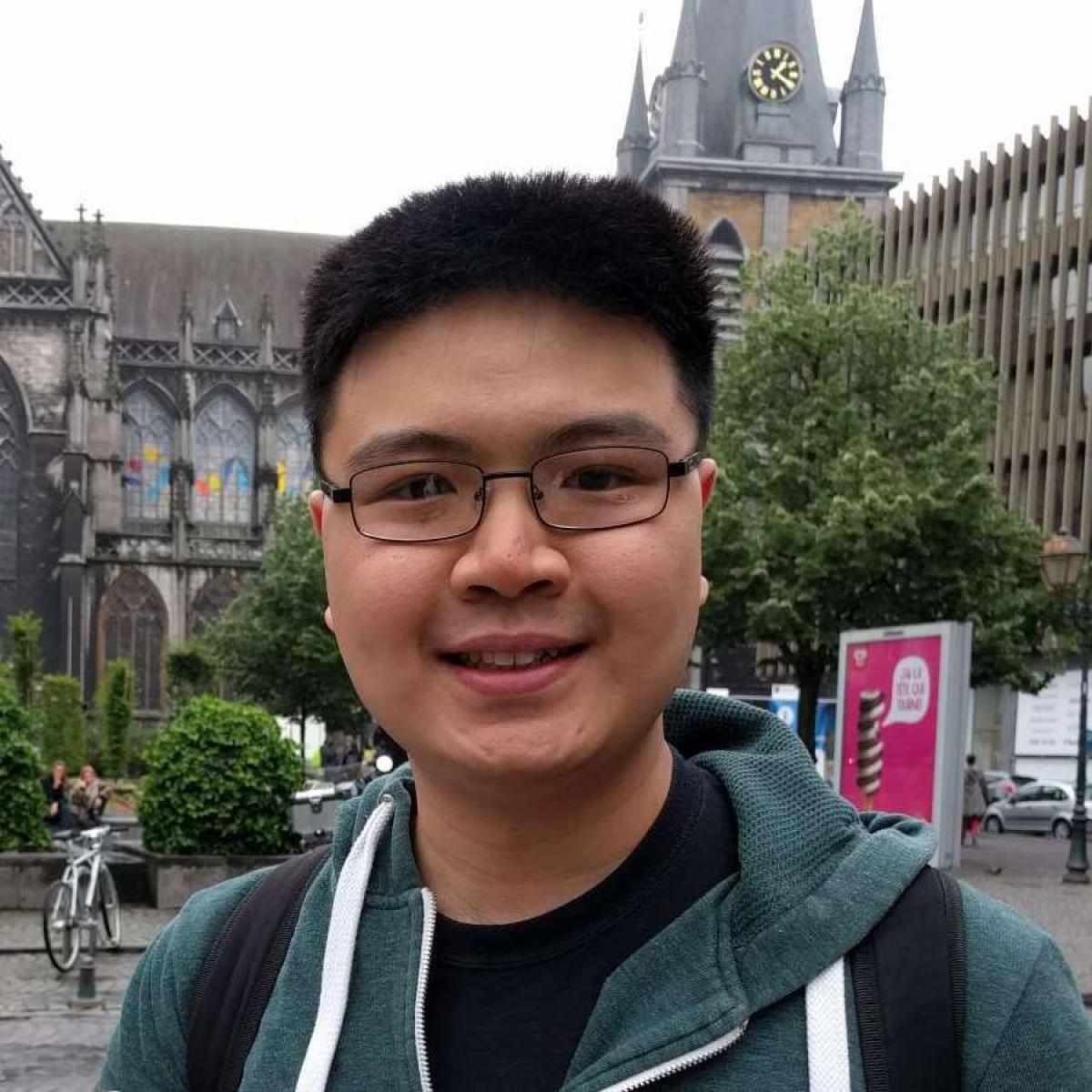
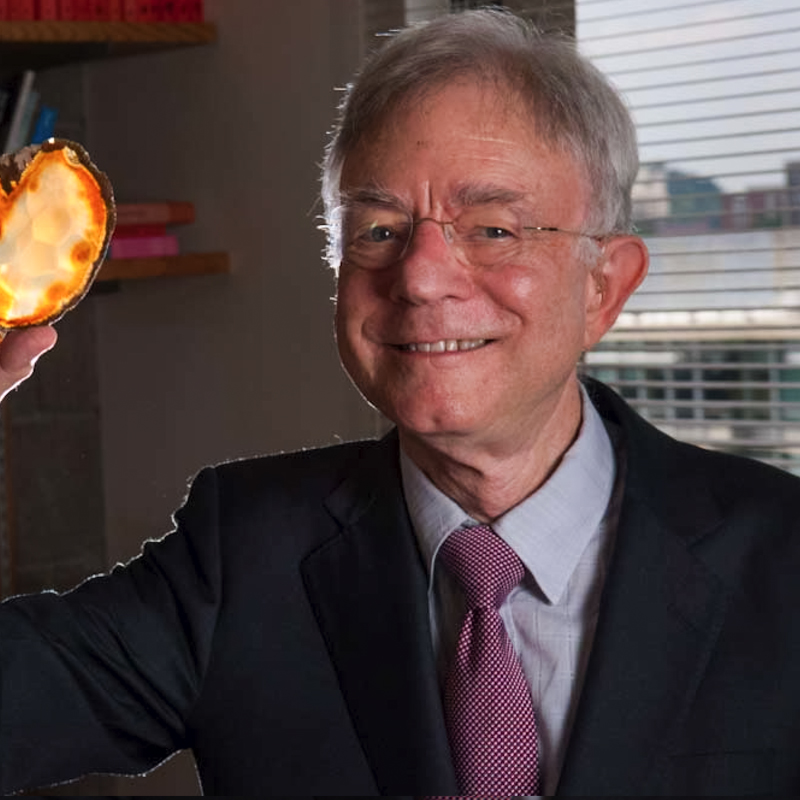
Cong Han Lim is a Postdoctoral Researcher at the Wisconsin Institute for Discovery, University of Wisconsin-Madison, focusing on advanced optimization research. Education: BS in Mathematics and Computer Science, University of Chicago PhD in Computer Sciences, University of Wisconsin-Madison His research specializes in relaxations of discrete optimization problems with cross-disciplinary applications. This work bridges theoretical computer science with practical implementations in engineering systems, machine learning algorithms, and operations research frameworks, emphasizing real-world problem-solving through mathematical modeling. Scientific Recognition: Research Fellow, Bridging Continuous and Discrete Optimization Program (Fall 2017) Dr. Lim's current research trajectory shows strong interdisciplinary impact across computational mathematics and applied engineering fields, though no formal advisees or grant details are specified in available sources.
Tselil Schramm is an Assistant Professor at Stanford University , with courtesy appointments in the Department of Computer Science and Department of Mathematics . Her research bridges Theoretical Computer Science and Statistics , focusing on algorithmic tools for high-dimensional estimation and information-computation tradeoffs. PhD : UC Berkeley (advised by Prasad Raghavendra and Satish Rao) Postdoc : Harvard and MIT (hosted by Boaz Barak, Jon Kelner, Ankur Moitra, Pablo Parrilo) Her work spans algorithms , optimization , and computational complexity in statistical contexts. Recent articles explore semidefinite programming , approximate message passing , and random geometric graphs , reflecting her focus on bridging discrete and continuous optimization for statistical inference. Scientific Awards : NSF CAREER award Stanford Gabilan Fellowship Microsoft Research Fellow Google Research Fellow Teaching : She has taught courses like Machine Learning Theory , Probability Theory , and The Sum-of-Squares Algorithmic Paradigm in Statistics at Stanford since 2021.
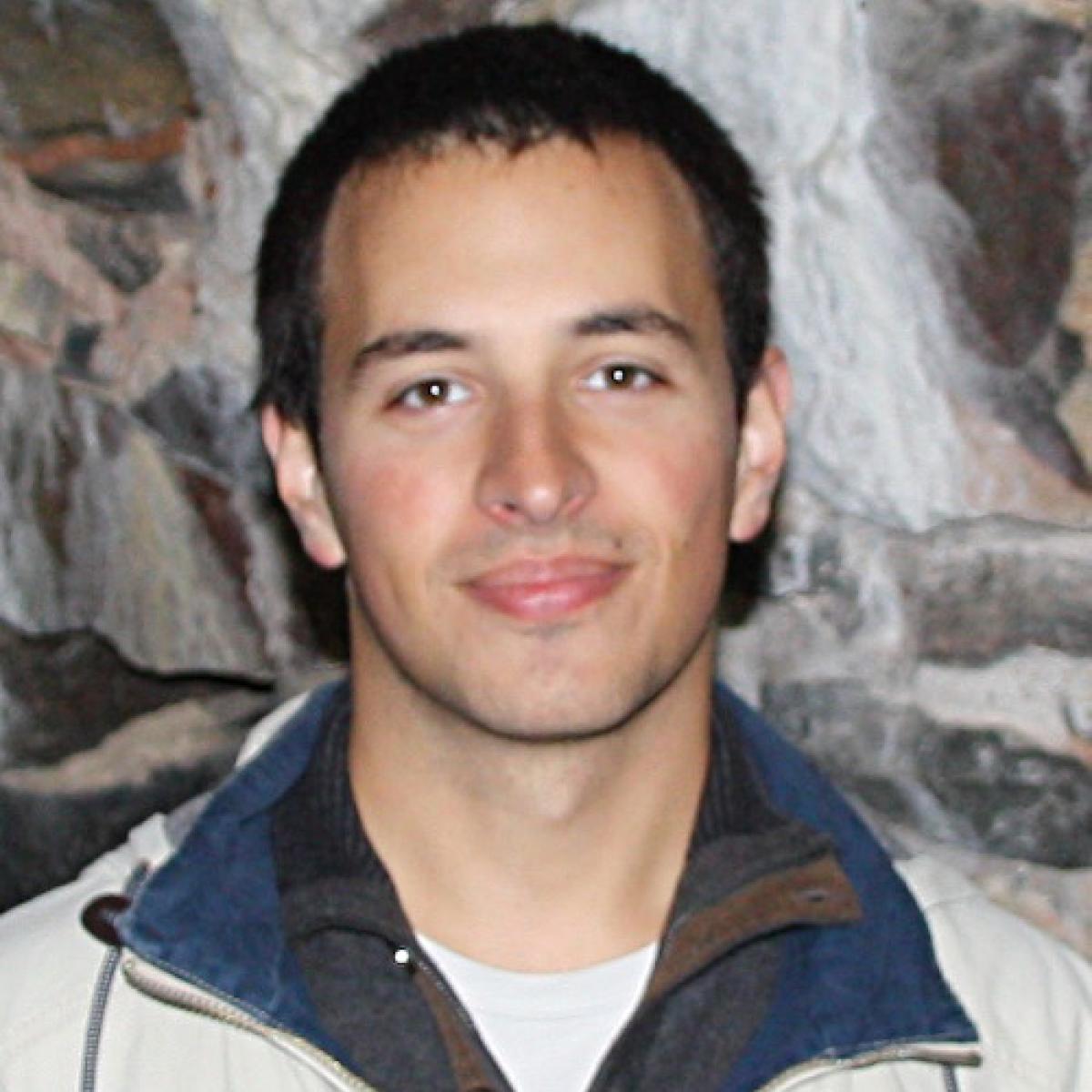
Daniel Vaz is a third-year PhD student at the Max Planck Institute for Informatics in Saarbrücken, Germany, supervised by Parinya Chalermsook . He relocated from Portugal after completing a BSc and MSc in Informatics Engineering at the University of Coimbra . His research focuses on Approximation Algorithms , Network Design , and Cut Problems on trees or graphs of bounded treewidth , with additional interest in Combinatorial Optimization and Graph Theory . He participated in the Bridging Continuous and Discrete Optimization program as a Visiting Graduate Student in Fall 2017.
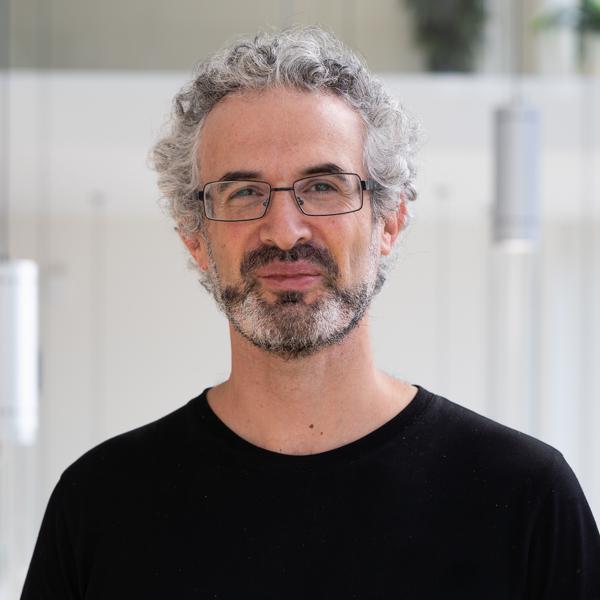
Josep Fàbrega Canudas is a faculty member at the Universitat Politècnica de Catalunya (UPC), affiliated with the Department of Mathematics at the School of Telecommunications Engineering of Barcelona (ETSETB). He is a key member of the COMBGRAPH research group, specifically contributing to the OMGRAPH sub-group focused on Optimization Methods on Graphs. Institution: Universitat Politècnica de Catalunya School: School of Telecommunications Engineering of Barcelona Department: Department of Mathematics Research Group: COMBGRAPH (Combinatorics, Graph Theory, and Applications) Sub-group: OMGRAPH - Optimization Methods on Graphs Email: jfabrega@ma4.upc.edu ORCID: 0000-0002-4922-8562 His research is centered on combinatorial mathematics and graph theory, with applications in network reliability, fault tolerance, and discrete optimization. His work bridges theoretical foundations with practical applications in telecommunications and computer networks. The breadth and longevity of his research output reflect deep expertise and sustained contributions to discrete mathematics. Over his career, he has produced a significant body of scholarly work, including 39 indexed journal articles, 49 conference presentations, 15 competitive R&D projects, and contributions to books and book chapters. His publications span from 1983 to 2024, indicating continuous academic engagement and relevance in his field. Scientific Awards: No specific awards mentioned in the provided text. He has likely supervised PhD and master's students through his involvement in doctoral theses and research projects, although no named students are listed. His leadership in the COMBGRAPH group suggests active mentorship and collaboration. He has participated in scientific committees of conferences and contributed to technical reports, demonstrating service to the academic community. The COMBGRAPH research group at UPC is central to his academic activities, focusing on combinatorial structures and their applications in engineering and computer science. The group fosters interdisciplinary collaboration and innovation in discrete mathematics.
Tatsuya Terao is a Research Fellow at Kyoto University's Research Institute for Mathematical Sciences, holding a prestigious JSPS DC1 fellowship from April 2024 to March 2027. He operates within the Discrete Optimization Group under the supervision of Professor Yusuke Kobayashi, having completed both his Bachelor of Science (2022) and Master of Science (2024) at Kyoto University. His research focuses on theoretical computer science with particular expertise in matroid theory , quantum query algorithms , and discrete optimization . Terao has developed novel approaches for matroid intersection approximation, parameterized quantum algorithms for graph problems, and submodular maximization with matroid constraints. His work demonstrates a consistent pattern of improving query complexities and developing innovative algorithmic techniques that advance theoretical boundaries in combinatorial optimization. His recent publications reveal a strong trend toward optimizing independence oracle queries in matroid problems while expanding into quantum computing applications for fundamental graph problems. The research shows increasing sophistication in handling complex constraints while reducing computational requirements. Research Fellow of the Japan Society for the Promotion of Science (DC1) Terao collaborates extensively with leading researchers in theoretical computer science, particularly with his advisor Yusuke Kobayashi, as evidenced by multiple co-authored publications in top-tier conferences. His work on the shortest disjoint paths problem demonstrates effective interdisciplinary collaboration with Hirai and Namba's research on (A+B)-paths. While no formal grants are explicitly mentioned beyond his JSPS fellowship, his research direction suggests strong institutional support for theoretical algorithm development. Working within Kyoto University's Research Institute for Mathematical Sciences, Terao contributes to Japan's strong tradition in theoretical computer science research, particularly in combinatorial optimization and discrete mathematics. His research group appears focused on pushing the boundaries of what's computationally feasible in matroid theory and quantum algorithm design.
Dániel Marx is a tenured Professor at the CISPA Helmholtz Center for Information Security in Saarbrücken, Germany. He leads research in the area of Algorithmic Foundations and Cryptography, with a focus on parameterized algorithms and computational complexity. He has held previous positions at the Max Planck Institute for Informatics and the Institute for Computer Science and Control of the Hungarian Academy of Sciences (MTA SZTAKI). His work is highly theoretical, aiming to understand the precise complexity of algorithmic problems, especially on bounded-treewidth graphs and in parameterized settings. PhD: Budapest University of Technology and Economics, 2005 Postdoc: Tel Aviv University, Humboldt University Berlin Senior Research Fellow: MTA SZTAKI, 2012–2019 Senior Researcher: Max Planck Institute for Informatics, 2019–2020 Faculty: CISPA Helmholtz Center, 2020–present His research interests lie at the intersection of theoretical computer science and discrete mathematics. He is particularly known for his work on parameterized algorithms , fine-grained complexity , and lower bounds . His group investigates algorithmic graph theory problems, including domination, independence, homomorphism, and clustering, especially under structural constraints like bounded treewidth. He has pioneered techniques in dynamic programming, kernelization, and hardness proofs based on the Exponential Time Hypothesis. The recent publications of Dániel Marx reveal a consistent focus on establishing tight complexity bounds for fundamental algorithmic problems. His work spans from exact and parameterized algorithms to approximation and counting problems. A recurring theme is the analysis of problems on bounded-treewidth graphs, where he explores the boundary between tractable and intractable cases. He also contributes to network design (e.g., Steiner problems), clustering, and subgraph counting, often providing complete classifications of complexity based on parameters. European Research Council Starting Grant European Research Council Consolidator Grant Humboldt Research Fellowship for Experienced Researchers Dániel Marx has advised numerous researchers and collaborated widely across institutions. His research is supported by prestigious grants, including ERC grants that funded his group at MTA SZTAKI. He actively leads a research group at CISPA focused on parameterized algorithms and complexity. While specific PhD students are not listed in the provided text, his extensive co-authorship network indicates a strong mentoring and collaborative presence. His work has significant implications for the foundations of computer science and algorithm design. He leads the research group on Parameterized Algorithms and Complexity at CISPA, continuing his long-standing focus on theoretical algorithm design and analysis. His team works on foundational problems in graph algorithms and complexity theory, aiming to develop new algorithmic techniques and understand the limits of efficient computation.
Mateusz Skomra is a CNRS researcher currently based at the Laboratoire d'analyse et d'architecture des systèmes (LAAS) in Toulouse, France, where he is a member of the POP research team. Previously, he held postdoctoral positions at École normale supérieure de Lyon and CNRS within the Laboratoire de l'Informatique du Parallélisme and the MC2 team. He earned his PhD from École polytechnique, Centre de Mathématiques Appliquées, under the supervision of Xavier Allamigeon and Stéphane Gaubert, as part of the INRIA Tropical team and Université Paris-Saclay. His research lies at the intersection of tropical geometry, convex optimization, algorithmic game theory, and algebraic complexity. He has made significant contributions to the understanding of tropical convexity, semidefinite programming over nonarchimedean fields, mean payoff and stochastic games, and algebraic reconstruction problems. His work often bridges theoretical mathematics with computational aspects, particularly in optimization and complexity theory. The analysis of his recent publications reveals a consistent focus on tropical methods in optimization and game theory, with increasing attention to algorithmic and computational implications. His work connects deep algebraic structures with practical algorithm design, especially in deriving complexity bounds and developing solution methods for games and polynomial systems. Key recurring themes include value iteration, derandomization, Minkowski sums, and the interplay between geometry and algebra in computational settings. Prix Dodu for best presentation by a young researcher Mateusz Skomra has advised doctoral research during his PhD under leading experts and continues to mentor students through master’s internships, such as one on analyzing mean payoff games using sums-of-squares techniques. While specific grant details are not listed, his affiliations with CNRS, INRIA, and participation in numerous national and international workshops suggest active involvement in collaborative research projects. He frequently contributes to academic discourse through seminars and conference presentations across Europe. He is actively involved in research teams including the POP team at LAAS-CNRS, previously the MC2 team at ENS Lyon and the Tropical team at INRIA. These teams focus on mathematical computing, optimization, and theoretical computer science, providing a rich interdisciplinary environment for his work.
Assoc Prof Kaile Su is an Associate Professor at the School of Information and Communication Technology, Griffith University, with expertise in artificial intelligence, multi-agent systems, and deep learning. They hold an ORCID identifier (0000-0001-6741-9699) and have been affiliated with Griffith University since 2004. PhD in Computer Science from Nanjing University (1995) Postdoctoral work at Changsha Institute of Technology Their research spans combinatorial optimization, temporal logic verification, speech enhancement, and medical imaging applications. Recent work focuses on edge AI, federated learning, and neural network regularization techniques. Key funded projects include ARC Discovery Grants (DP150101618, DP120102489) and an ARC Future Fellowship (FT0991785). Awards include the NSFC Award for Distinguished Young Scholar (2007). Supervised 9 doctoral students at Griffith University Contributions to multi-agent coordination, CT reconstruction, and dialogue systems Active in software verification and sparse graph optimization
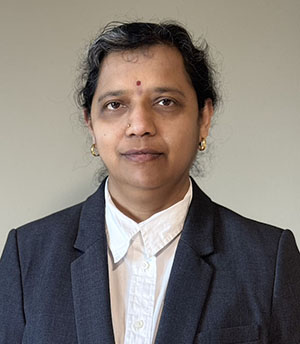
Nagaveni Surubhotla is an Adjunct Lecturer in the Department of Mathematics at Chicago State University, part of the College of Arts & Sciences. She contributes to academic instruction with a strong background in statistical and stochastic modeling. Education: Master of Philosophy in Statistics, Stochastic Modeling – Andhra University, Visakhapatnam, India Master of Science in Statistics – Andhra University, Visakhapatnam, India Bachelor of Science in Mathematics, Physics, and Statistics – Andhra University, Visakhapatnam, India Honors Diploma in System Management – NIIT Her research focuses on advanced modeling techniques including discrete and continuous-time Markov chains, operations research, Bayesian methods, control theory, queueing theory, and simulation methodologies. She integrates these with artificial intelligence frameworks to solve complex systems problems. Her work spans theoretical and applied domains, particularly in environmental modeling and system optimization. The available publication highlights her interest in environmental statistics, specifically modeling carbon monoxide concentration in air using probability distributions. This reflects a trend toward applying statistical models to real-world environmental challenges. She has no listed scientific awards. Nagaveni Surubhotla is actively involved in academic pursuits beyond the university, having institutionalized a six-year online educational program for youth development, blending science and technology with character building and leadership training. The program serves around 1,050 students from 22 countries and is supported by a team of 130 professionals. She has also contributed to a not-for-profit children's education and talent development organization in Chicago. No grant information is available. She leads an initiative that functions like a virtual lab or educational team, focusing on holistic development through science and technology, though no formal research lab is mentioned.
Bodhisattwa Chaudhuri is a faculty member in the Department of Pharmaceutical Sciences at the University of Connecticut's School of Pharmacy. His research bridges computational modeling and pharmaceutical manufacturing, focusing on multiscale approaches to materials science, drug delivery, and process optimization. Education: B.E. in Chemical Engineering (Jadavpur University), M.S. in Chemical Engineering (Indian Institute of Science), Ph.D. in Mechanical Engineering (New Jersey Institute of Technology), Postdoctoral Training in Chemical and Biochemical Engineering (Rutgers University) His work integrates Molecular Dynamics (MD) and Discrete Element Method (DEM) simulations with Computational Fluid Dynamics (CFD) to address challenges in pharmaceutical systems. Key areas include: Aggregation behavior of viral vectors like AAV8 AI/ML applications for biopharmaceutical process prediction 3D printing of tablets and freeze-thaw stability of biologics Tribotechnical challenges in powder systems The 15 most recent publications highlight his focus on computational modeling (MD, CFD, DEM) for pharmaceutical processes, machine learning applications in stability prediction, and multiscale studies of drug delivery systems like lipid nanoparticles and polymeric micelles. His work spans both fundamental research and industrial translation. Contact: bodhi.chaudhuri@uconn.edu | Personal Website
Dr. Tim Bode is a Researcher at Forschungszentrum Jülich's Peter Grünberg Institute (PGI), leading the Institute for Quantum Computing Analytics (PGI-12) and the Helmholtz Enterprise-funded Quicopt project. His work develops quantum-inspired optimization software to solve industrial-scale discrete and continuous optimization problems. His research focuses on: Quantum Optimization Quantum Algorithms Quantum Simulation Operations Research Recent publications (2023-2025) analyze adiabatic bottlenecks in quantum annealing, develop mean-field optimization frameworks, and expose limitations in quantum approximate optimization for higher-order constraints. His benchmarks demonstrate competitive performance against classical solvers like Gurobi on laptop hardware. Dr. Bode actively collaborates internationally, presenting at NASA Ames, University of Minnesota, and German Aerospace Center (DLR). He developed the open-source QAOA.jl toolkit for quantum optimization algorithms. The Quicopt research group operates within Forschungszentrum Jülich's quantum computing ecosystem, leveraging institutional HPC resources for algorithm development and industrial application testing.
János Hamar is an Associate Professor at the Department of Automation and Applied Informatics , Budapest University of Technology and Economics. His work bridges power electronics and control systems with a focus on energy efficiency and renewable energy integration. Specializes in resonant DC-DC converter topologies Developed multi-agent control systems for parallel converters Contributed to E-learning tools in power electronics Explores electromagnetic interference (EMI) mitigation Investigates microgrid power distribution His research spans symmetrical and asymmetrical converter operations, virtual laboratories, and smart energy systems like "Energymon." Publications highlight innovations in multilevel converters, common-mode noise suppression, and discrete-time modeling tools. Awards and student supervision details remain unspecified in available sources.
Kovács Viktor is an assistant lecturer in the Department of Automation and Applied Informatics at the Budapest University of Technology and Economics (BME). His office is located in building Q, room B222 on the Magyar tudósok körútja campus in Budapest. Research interests span computer vision and image processing with a strong emphasis on 3-D data analysis, head-mounted projection displays, and robust feature extraction from range images. He also contributes to process automation in pharmaceutical manufacturing and investigates communication-control co-design for connected vehicles in 5G networks. Across 15 recent publications (2012–2022) one observes a clear trajectory from fundamental computer-vision algorithms—edge detection, corner classification, plane segmentation—to applied engineering solutions such as real-time granulation monitoring and immersive 3-D display systems. Medical data analytics and diffusion MRI modeling further diversify his portfolio, illustrating a blend of theoretical depth and practical impact. Contact & Resources E-mail: Kovacs.Viktor@aut.bme.hu Phone: +36 (1) 463-1648 Profiles: BME Publication Registry , ResearcherID , Google Scholar
David Kinderlehrer is an Alumni Professor of Mathematical Sciences and Professor of Materials Science and Engineering at Carnegie Mellon University. His research focuses on applied mathematics, particularly partial differential equations and optimal transport theory, applied to problems in materials science and cell biology. Education: Ph.D. from the University of California, Berkeley, with postdoctoral training at Scuola Normale Superiore, Pisa Key research areas include understanding the evolution of material microstructures through entropy-based theories, modeling grain boundary dynamics, and developing continuum-scale methods for stochastic systems. His work has revealed connections between materials science and information theory, such as analogies to prefix codes. Recent publications highlight applications of Wasserstein gradient flows to ion transport and the discovery of non-random texture order in materials via grain boundary character distributions. His investigations bridge discrete and continuous modeling paradigms. Scientific Awards Fellow of the American Mathematical Society SIAM Fellow
Samuel A. Burer is the Tippie-Rollins Professor and Departmental Executive Officer in Business Analytics at the University of Iowa's Tippie College of Business. He earned his Ph.D. in Algorithms, Combinatorics, and Optimization from Georgia Institute of Technology and a B.S. in Mathematics from the University of Georgia. Research Interests: Optimization, operations research, management sciences, discrete and continuous optimization, decision making under uncertainty. Editorial Roles: Area Editor for Operations Research (2020-2026), Associate Editor for SIAM Journal on Optimization, Mathematical Programming, and others. Teaching: Teaches across all business education levels and received multiple teaching awards, including the University of Iowa President & Provost Award for Teaching Excellence. Scientific Awards: INFORMS Computing Paper Prize (2020) SIAM Optimization Test of Time Award (2023) President & Provost Award for Teaching Excellence (2022) Collegiate Teaching Award (2020) Optimization Prize for Young Researchers (2002) Grants: Principal Investigator for NSF CAREER grant (2006-2012) and collaborative NSF grants (2002-2005) focused on nonconvex quadratic and conic optimization theory. Projects: Developed optimization algorithms for Trader Joe's warehouse location analysis, college football rankings, and created software tools like QuadProgBB and OPTDNN for solving semidefinite programs.