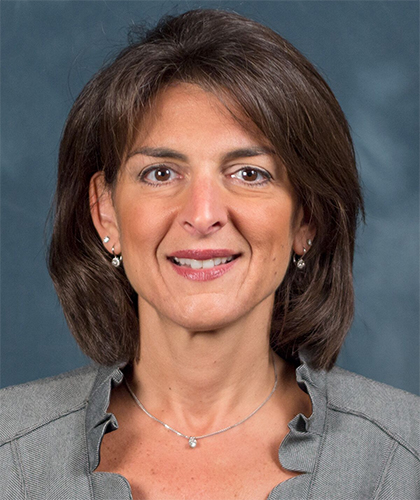
Daniel Dohan is a Professor at the University of California San Francisco (UCSF), holding leadership roles including Deputy Director of the Institute for Health Policy Studies and co-Director of the UCSF/UC Hastings Consortium on Law, Science, and Health Policy. His work focuses on mixed-methods social scientific analysis of medical culture, patient decision-making, and health policy implementation. Harvard College AB in Sociology (1987) UC Berkeley MA (1991), PhD (1997), and postdocs in Health Policy (1999, 2001) His research explores how medical culture influences patient care and clinical research, with projects like EngageUC (biospecimen data harmonization), Cancer Patient Deliberation Study (treatment decisions in advanced cancer), and PCORI-funded initiatives integrating qualitative methods into patient-centered outcomes research. Recent work examines Alzheimer's disease treatment ethics, neurotechnology disparities, and surgical care for frail older adults. Key scientific awards include Harvard's Hoopes Prize, UC Berkeley's Carol Hatch Ethnography Award, and the UCSF-Coro Faculty Leadership Collaborative. His grants include multiple NIH-funded studies on aging research (LEARN-MC), neurotechnology ethics (R01MH126997), and dementia decision-making (DP1AG069809).
Jieun Chang serves as an Associate Professor in the Department of Social Sciences at Southwestern Oklahoma State University (SWOSU) in Weatherford, Oklahoma, teaching core economics courses including Macroeconomics, Microeconomics, International Economics, and Advanced Managerial Economics through diverse modalities (classroom, online, and Zoom). Her academic credentials include: Ph.D. in Economics from the University of Colorado at Boulder M.A. in Economics from Michigan State University Dr. Chang's research program centers on Applied Microeconomics and Telecommunications, with significant contributions to Health Economics and International Economics. Her methodological expertise in econometrics—particularly instrumental variables and discrete-choice experiments—enables rigorous analysis of firm performance, consumer behavior in digital health markets, and regulatory impacts on business innovation. This interdisciplinary approach bridges economic theory with practical policy applications in healthcare and telecommunications sectors. Her publication record reveals a cohesive trajectory examining market dynamics in specialized domains, with recurring emphasis on empirical validation of economic theories through real-world data. Recent work demonstrates growing focus on digital health services and cross-national regulatory comparisons within OECD frameworks. No scientific awards were documented in the provided materials. While specific student advising details and grant funding information remain unreported in the source texts, her course offerings in advanced economics suggest active mentorship of undergraduate and graduate scholars in quantitative economic analysis. The absence of laboratory or team descriptions indicates her research likely operates through individual or small-collaborator frameworks rather than institutionalized research centers.
Michael Tanner is a Research Fellow at the University of Hamburg , affiliated with the Faculty of Business, Economics and Social Sciences and Department of Socioeconomics . He holds a Master of Science in Environmental Economics and Climate Change from the London School of Economics and Political Science (LSE). His research focuses on Environmental Economics , Climate Policy , and Natural Resource Management , with a strong emphasis on Galapagos ecosystems. Key areas include economic valuation of mangroves, sustainable fisheries, and the role of institutions in environmental outcomes. Recent publications highlight his work on Deforestation Mitigation , Small-scale Fisheries adaptation to crises, and Pro-environmental Consumer Behavior . His studies often intersect ecological conservation with socio-economic analysis. Michael works in the Climate, Climatic Change, and Society (CLICCS) project and contributes to the Cluster of Excellence CliCCS as a team member. He is associated with the Professorship for Environmental Economics under Prof. Dr. Grischa Perino.
Matthew Shum is the William D. Hacker Professor of Economics in the Division of Humanities and Social Sciences at the California Institute of Technology (Caltech). He holds a B.A. from Columbia University (1992) and a Ph.D. from Stanford University (1998). His academic appointments at Caltech include Professor (2008-2016), Johnson Professor (2016-2022), Hacker Professor (2023-2024), and currently Visiting Associate (2024-2027). His research focuses on econometrics, industrial organization, and empirical microeconomics, with specific interests in discrete choice modeling, dynamic decision processes, market design, and behavioral economics. He teaches courses on Industrial Organization, Econometrics, and Empirical Methods. Shum's extensive publication record demonstrates a consistent focus on developing and applying innovative econometric methods to real-world market behaviors. His recent work explores dynamic discrete choice models, rational inattention, empirical industrial organization, and behavioral phenomena in markets ranging from pharmaceuticals to online gaming. While no specific awards are mentioned in the provided materials, Shum maintains an active research program with ongoing work on bounded rationality, two-sided platforms, and empirical auction theory. He leads econometrics courses and supervises graduate research at Caltech.
Dhananjay Nayakankuppam serves as Professor and Henry B. Tippie Research Fellow in the Marketing Department at the University of Iowa's Tippie College of Business, where his research bridges psychological theory and marketing practice to investigate fundamental consumer decision processes. His academic foundation spans multiple disciplines: PhD in Marketing, University of Michigan MS in Psychology, University of Michigan MBA in Marketing, University of Madras BE in Mechanical Engineering, Shivaji University Nayakankuppam's scholarly focus centers on understanding how cognitive mechanisms shape consumer responses, with particular expertise in persuasion techniques, attitude formation, and judgment biases. His work examines how contextual factors like mindset abstraction, embodied experiences, and numerical framing influence evaluations and choices, revealing counterintuitive patterns that challenge conventional marketing models and inform practical applications in product design and communication strategies. Analysis of his 2020-2023 publications reveals consistent investigation into perceptual and cognitive biases across diverse contexts - from elongation effects in visual comparisons to contagious endowment phenomena in transactions. These studies collectively demonstrate his methodological rigor in experimental design while addressing substantive questions about how consumers process information under uncertainty, with implications spanning retail environments, healthcare services, and financial decision-making. His scientific contributions have earned significant recognition: Wendell Smith Award for Research Excellence - Tippie College of Business, 2015 Henry B. Tippie Research Fellow - Tippie College of Business, 2005 Dean's Teaching Award - Tippie College of Business, 2005 Outstanding Reviewer Award - Journal of Consumer Research, 2005 Dissertation Award - SCP-Sheth Competition, 2000 Milton and Josephine Kendrick Award in Marketing - University of Michigan, 1999 Nominee, Outstanding Teaching Assistant Award - Tippie College of Business, 2006 Nominee, Dissertation Award - Society for Experimental Social Psychology, 2002 Old Gold Fellowship - University of Iowa, 2001 Nominee, Distinguished Dissertation Award - University of Michigan, 2002 He maintains active scholarly engagement through editorial board service for the Journal of Consumer Research (2004-2005, 2014-2019) and conference presentations at premier venues including the Association for Consumer Research and Society for Consumer Psychology, where his work on embodied metaphors and consumption therapy continues to influence theoretical and practical discourse in the field.
Dr. Daan Hulshof is an Assistant Professor in Energy Economics at the Faculty of Economics and Business, University of Groningen. His work focuses on energy economics, policy evaluation, and economic incentives for sustainable transitions. Education : PhD (2020), MSc (cum laude) in Economics (2015), BSc in Economics (2014), all from University of Groningen, and an MSc in Análisis Económico from Universidad de Chile (2016). Hulshof's research examines economic incentives for renewable energy adoption, energy market regulation, and policy design. His expertise spans gas markets, emission reduction strategies, and information asymmetry in energy transitions. Recent publications analyze windfall profits in subsidy programs, hydrogen market development, and household willingness-to-pay for low-carbon heating. His work contributes to UN Sustainable Development Goals related to affordable energy and climate action.
Louise Demers is a Full Professor at the Department of Occupational Therapy within the School of Rehabilitation at the University of Montreal. She serves as Associate Vice-Dean for Health Sciences in the Faculty of Medicine. Her research focuses on assistive technology , caregiver support , and social participation for older adults. B.Sc. Occupational Therapy, University of Montreal (1985) M.Sc. Biomedical Sciences (Rehabilitation), University of Montreal (1995) Ph.D. Biomedical Sciences (Rehabilitation), University of Montreal (1999) Postdoctoral Fellow in Epidemiology, McGill University (2001) Her publications highlight interdisciplinary work across geriatrics, rehabilitation sciences , and occupational therapy , particularly examining how assistive technologies can enhance caregiver capacity and patient autonomy. Recent studies include Tai Chi interventions for dementia, electronic pillbox efficacy in Alzheimer's patients, and psychometric validation of clinical tools.
Dr. Marrit van den Berg is an Associate Professor in Development Economics at Wageningen University & Research. Her academic work focuses on food systems, nutrition security, and household decision-making processes across multiple continents. She maintains an active research profile with over 88 publications and 21 ongoing or completed projects. Key research areas: Nutrition (100%), Food Security (91%), Healthy Food Choice (50%), Household Economics (50%) Active projects: Women’s Empowerment & Climate Resilience in Ethiopia; Intra-household Decision Making in Tanzania; Agricultural Subsidies in China Recent research examines biofortified crops in Ethiopia, vegetable consumption in China, and pandemic impacts on nutrition in Bangladesh. She supervises multiple PhD projects and has delivered lectures on disaster economics in Peru since 2010.
Domenico Moro is an Assistant Professor in Economics at the Department of Economics, Birmingham Business School, University of Birmingham. He serves as First Year Group Tutor for UG Programmes and Admissions Tutor for the BSc Economics with Languages Programme. PhD in Economics, University of Warwick D.Phil in Economics and Law, Università di Bologna, Italy MSc in Economics, University of Warwick BSc in Economics and Finance, Università Cattolica del Sacro Cuore, Piacenza, Italy His research focuses on the economic impact of third sector organisations in the UK, health economics , and international macroeconomics . He has contributed to methodological debates in social return on investment (SROI) and economic evaluation in healthcare. Recent publications analyze discrete choice experiments in pharmacoeconomics, marketization of the third sector , and cost-effectiveness in rare disease treatments . While no formal scientific awards are listed, his work bridges quantitative analysis with policy-relevant studies in public finance and social welfare. He previously held research roles at the Third Sector Research Centre (University of Birmingham) and Warwick Medical School, where he worked on pharmaceutical economics and decision analysis . No advisees are mentioned in the provided texts.
David Brain is a researcher at the Australian Centre for Health Services Innovation (AusHSI) , Queensland University of Technology, specializing in health economics and public health with a focus on cost-effectiveness analysis , health service optimization , and disease burden evaluation . He collaborates with researchers like Sanjeewa Kularatna and Steven McPhail on studies related to atrial fibrillation , infection control , and chronic disease management . PhD in health economics (2016, QUT) Key collaborations with institutions in Australia, Thailand, and OECD countries His research spans economic evaluations of medical interventions, including stroke prevention in atrial fibrillation, enhanced disinfection protocols, and digital health implementations. Recent work explores cost-utility literature in Australia, mobile app integration for chronic disease, and recovery trajectories post-injury. Articles highlight a trajectory from 2014 (hand hygiene cost-effectiveness) to 2025 (innovative screening programs, atrial fibrillation care, and surgical decision-making). Keywords across his work include Health Economics , Public Health , Medical Informatics , and Clinical Epidemiology , with sub-fields like cost-utility analysis , infection control , and digital health implementation . He contributes to health policy through studies on healthcare-associated infections, chronic wound management, and liver disease screening. His work often utilizes Bayesian methods , discrete choice experiments , and stepped-wedge trial designs .
David L. Kelly is a Professor of Economics at the University of Miami 's Miami Herbert Business School , where he also serves as the Academic Director of the MS in Sustainable Business and Co-Chair of the Sustainable Business Research Cluster. His research and teaching focus on environmental economics, climate policy, and sustainable business practices. Education: Ph.D. in Economics, Carnegie Mellon University (1995) M.S. in Economics, Carnegie Mellon University (1991) B.S. in Mathematical Economics (Honors), Wake Forest University (1989) Research Interests: Kelly's work centers on environmental economics , particularly the design of climate policies under uncertainty, the economics of natural disasters, and the intersection of sustainability and business strategy. He explores how learning and uncertainty affect macroeconomic and financial outcomes, with applications to regulation, risk management, and long-term environmental planning. Publications & Impact: His recent publications address solar geoengineering, coastal adaptation strategies, and the economic valuation of climate resilience infrastructure. A recurring theme is the integration of fat-tailed risk distributions into environmental policy design, highlighting the importance of precautionary approaches in the face of potentially catastrophic climate outcomes. Awards & Recognition: Multiple Excellence in Teaching Awards (2020–2024) Roberta Bosey Fullbright Foote Prize for Sustainability (2024) Excellence in Research Award, UM School of Business (2000) William Larimer Mellon Fellowship (1989–1992) Advising & Grants: Kelly has supervised six PhD students to completion and currently advises Kevin Sterling. His funded research includes ULINK grants on coastal resilience and climate gentrification, as well as projects on sustainable banking and environmental regulation. Teaching & Outreach: Beyond his research, Kelly teaches MBA and MS-level courses in managerial economics, game theory, and sustainable business. He is an active contributor to the Association of Environmental and Resource Economists (AERE), having hosted its 2020 summer conference and served on its program committee for over a decade.
Susan dosReis is Professor and Co-Vice Chair for Research in the Department of Practice, Sciences, and Health Outcomes Research at the University of Maryland School of Pharmacy. Her work focuses on child mental health services, psychotropic medication use patterns, and health disparities among vulnerable youth, particularly those in foster care. She collaborates extensively with Maryland state agencies including the Mental Hygiene Administration and Department of Human Services. Dr. dosReis' educational background includes: Bachelor of Science in Pharmacy from University of Rhode Island School of Pharmacy Doctorate in Pharmacoepidemiology from University of Maryland Graduate School Postdoctoral fellowship in child mental health services from Johns Hopkins Bloomberg School of Public Health Her research integrates pharmacoepidemiology, qualitative methods, and health services research to examine psychotropic medication use among children and adolescents. Key areas include disparities by race, age, and foster care status; combined psychotropic-psychotherapy treatment for ADHD; polypharmacy patterns; and parental decision-making models for mental healthcare. She develops conceptual frameworks for understanding how families navigate mental health systems. Analysis of Dr. dosReis' 2024-2025 publications reveals strong emphasis on patient-centered outcomes, with discrete choice experiments dominating preference research. Her work increasingly bridges oncology and psychiatry, examining antidepressant trajectories in cancer patients, while maintaining focus on psychotropic polypharmacy in youth and health disparities using real-world data. Regulatory science applications through M-CERSI collaborations represent a growing methodological theme. Dr. dosReis mentors graduate students Yueh-Yi Chiang, Onyeka Iloh, Haeyoung Lee, and Phuong Tran. Her research is funded by the National Institute of Mental Health, University of Maryland Center of Excellence in Regulatory Science and Innovation (M-CERSI) with FDA collaboration, Maryland State Department of Human Services contracts, and Agency for Healthcare Research and Quality grants. She leads the PHSR research team conducting pharmacoepidemiologic analyses of claims data, patient preference studies, and qualitative investigations. As core faculty of the Maryland Child Mental Health Advisory group at the University of Maryland School of Medicine, she directly influences state policy regarding psychotropic medication oversight for youth in foster care.
Ilaria Lucrezia Amerise is an Associate Professor in the Department of Economics, Statistics and Finance 'Giovanni Anania' (DESF) at the University of Calabria (UNICAL). Her research focuses on multivariate analysis, time series, nonparametric statistics, and statistical methods for complex/high-dimensional data including functional and spatial data. Editor-in-Chief of JP Journal of Biostatistics (ANVUR Area 13) Editorial Board Member of International Journal of Statistics and Systems (ANVUR Area 13) Recent research involves: Statistical preprocessing of crowdsourced data for Nigerian food prices Quantile regression with heteroskedasticity and non-crossing constraints Electricity demand forecasting via Reg-SARMA models Exchange rate prediction using simultaneous prediction intervals Time series outlier detection and smoothing techniques She contributes to academic governance through the Laboratorio Statistico Informatico (Statistical Informatics Lab) within DESF. Teaching includes undergraduate and graduate courses in Statistics, with materials available in both Italian and English.
Liesbet Vranken is an Associate Professor at the Department of Earth and Environmental Sciences, Faculty of Bioscience Engineering, KU Leuven. She leads the Society-Environment Interactions Research Group , focusing on land resource scarcity, sustainable food systems, and environmental economics. Research: Sustainable food consumption & production, land use optimization, natural hazard economics, agroforestry, and citizen science Projects: Klimaatmitigatie trajecten , TealHelix , and Socio-economische solidariteitsmechanismes in Uganda/Ethiopia Methodology: Interdisciplinary integration of environmental economics, experimental economics, and spatial analysis Her work emphasizes optimizing land use configurations, guiding consumer behavior, and evaluating policy instruments for sustainable transitions. She supervises doctoral researchers in global projects related to climate resilience and food security.
Dr. Julia Philippou is a Senior Lecturer in Nursing Education with expertise in Adult Nursing and intensive care nursing. Her research portfolio demonstrates significant contributions to understanding nursing workforce dynamics, healthcare organization, and educational interventions in critical care settings. With 194 citations across 17 research outputs, her scholarly impact is evident in the nursing field. Her research interests form a distinctive fingerprint spanning Intensive Care Nursing (100%), Intensive Care Unit practices (72%), Health Care Organization (60%), organizational culture in healthcare (40%), systematic review methodologies (40%), telemedicine applications (40%), occupational career trajectories in nursing (32%), and CINAHL database utilization (31%). These interconnected research areas reflect her comprehensive approach to improving nursing practice and healthcare delivery. Dr. Philippou's recent publications reveal a strong focus on contemporary nursing challenges, particularly nurse retention strategies, digital technology integration in nursing practice, and effective educational approaches for intensive care nurses. Her work demonstrates methodological diversity including narrative reviews, discrete choice experiments, and multiple case study approaches. She has secured significant research funding as Co-Investigator on four major projects funded by the NIHR National Institute for Health & Care Research, with total project durations spanning from 2016 to 2025. Her collaborative work extends internationally, with research involving stakeholders in the Kingdom of Saudi Arabia. Dr. Philippou has presented her research findings at professional conferences, including oral presentations on the culture of care barometer in 2015 and 2016. Her work has been disseminated through various channels including journal articles, review articles, and reports, with evidence of impact through news outlet coverage and substantial academic readership on platforms like Mendeley.