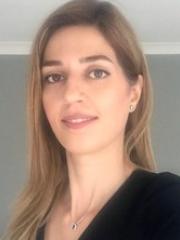
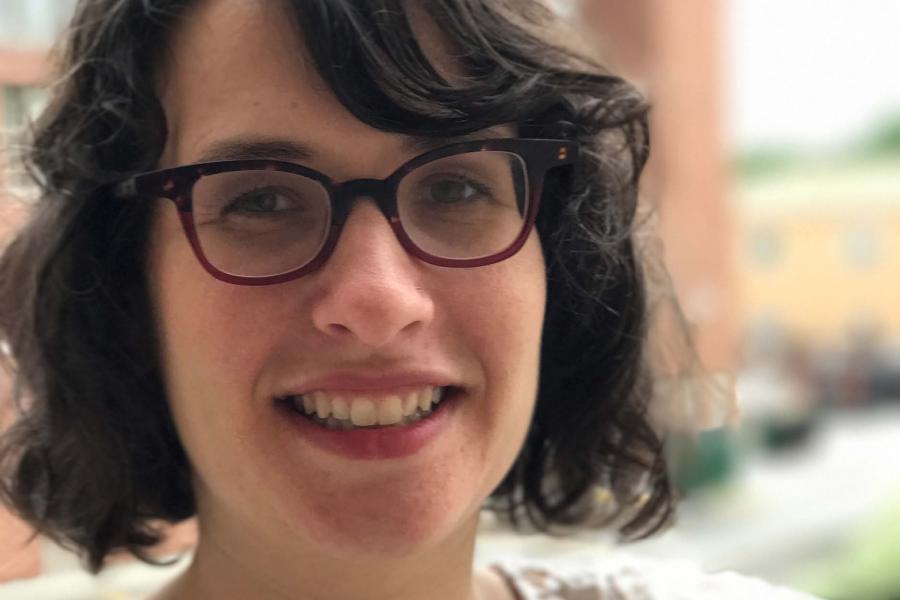
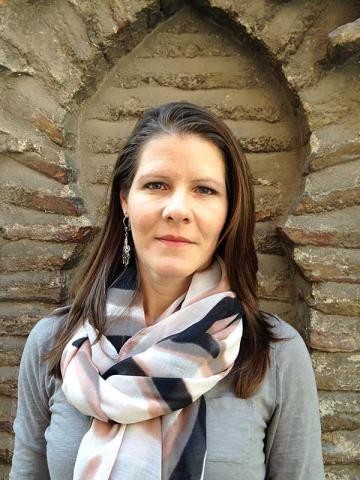
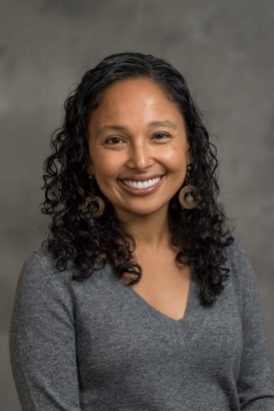
Dr. Sara Alidoust is a Senior Lecturer in Planning at the University of Queensland's School of Architecture, Design and Planning , with affiliations to the Centre for Community Health and Wellbeing and the Centre of Architecture, Theory, Criticism and History. Her research merges Urban Planning and Public Health , focusing on: Developing resilient and liveable cities through systems thinking Age-friendly urban planning for elderly populations Addressing housing vulnerability in the Global North Enhancing community engagement in policy-making Recent publications analyze topics like anti-gating policies in China , thermal comfort in vertical cities , and house-sitting practices among older Australians. Her work informs national and international planning frameworks with emphasis on health equity. As a principal advisor for PhD candidates, she supervises projects on climate-resilient urbanism , gender-focused housing models , and car-free urbanism in low-density contexts. Current initiatives include 1000 Cities Challenge health indicators development.
Jack Halberstam is a Professor of Gender Studies and English at Columbia University, specializing in queer theory, feminist studies, and cultural critique. His research explores intersections of gender, sexuality, and societal norms, with notable works like Female Masculinity and The Queer Art of Failure . Halberstam’s Wild Things: The Disorder of Desire (2020) examines queer ecologies and anarchy, while Trans*: A Quick and Quirky Account of Gender Variance (2018) redefines gender fluidity. He received the 2018 Arcus/Places Prize for scholarship linking gender, sexuality, and urban design. His academic journey includes influential critiques of pop culture in Gaga Feminism (2012) and early explorations of gothic horror in Skin Shows (1995). Halberstam’s forthcoming work The Wild Beyond: Music, Architecture and Anarchy continues his exploration of queer theory’s boundaries. Beyond publications, his teaching focuses on interdisciplinary approaches to gender and literature at Columbia University. Research Focus: Queer temporality, gender variance, cultural criticism, and the built environment. Recent Projects: Investigating anarchist frameworks in queer studies and the role of architecture in gender expression.
Orly Linovski is an Associate Professor in the Department of City Planning at the University of Manitoba’s Faculty of Architecture. Her work bridges professional planning practice, political processes, and urban space, emphasizing equity and justice. She holds a PhD from UCLA and advanced degrees from the University of Toronto and McGill University. Education: PhD (Urban Planning), University of California, Los Angeles M.Sc. (Urban Planning), University of Toronto B.A. (Geography/Urban Systems), McGill University Research focuses on transportation equity, private sector consulting roles, and municipal governance. Notable themes include equity in transit planning, professional practice dynamics in publicly traded firms, and participatory engagement strategies. Her work has been funded by SSHRC, MITACS, and the Centre for Professional and Applied Ethics. Teaching includes courses like Transportation and Urban Form (ARCG 7080) and Planning Research Methods (CITY 7020). She supervises students exploring transportation equity, professional planning practice, or privatization in planning, particularly with GIS or qualitative methods. Grants and Awards: Her research has been supported by SSHRC, MITACS, and other institutions. Collaborations include projects like the SSHRC-funded study on transit equity for marginalized groups in Canada. Labs/Teams: Active in the Manitoba Professional Planners Institute and as a Registered Professional Planner. Engaged in community-based research through partnerships highlighted in her SSHRC-funded projects.
Pascale Trevisiol Okamura is an Associate Professor in Language Sciences and Language Teaching at Sorbonne Nouvelle University, affiliated with the DILTEC research team (EA 2288). Her primary role includes teaching language acquisition and foreign language didactics within the UFR of Literature, Linguistics, and Didactics (LLD). She co-heads the Master 2 program in Language Teaching (FLE/FLS) and holds administrative roles in departmental councils and educational committees. Education Background: Lecturer at Sorbonne Nouvelle University since 2015 Previously taught at Université de Poitiers (2010–2015) and Université Paris 8 (2007–2010) French teaching assistant at Hokkaido University, Japan Research Focus: Specializes in third language acquisition (L3), crosslinguistic influence, and the interface between language acquisition and didactics. Key themes include: Discourse construction in L3 French Input processing and initial language exposure Development of teaching materials for FLE Plurilingual practices among language teachers Current projects involve multilingualism in primary education, Tamil-speaking learners' L3 French acquisition, and reflexive training in research. Teaching & Supervision: Co-supervises doctoral research on topics such as L3 French acquisition in Chinese contexts, translinguistic discourse influences, and plurilingual teacher practices. Teaches advanced courses on language acquisition theories and FLE methodology. Labs/Teams: Member of the Second Language Acquisition Network (ReAL2) and part of the DILTEC team, focusing on language didactics and multilingualism research.
Elliott Green is a Professor of Development Studies at the London School of Economics (LSE), where he holds a joint appointment in the Department of International Development. He earned a BA from Princeton University and an MSc and PhD from LSE, focusing on nationalism, ethnicity, and African development. His research integrates political science, economics, and sociology, with a focus on ethnic politics, African development trajectories, and national identity formation. Key areas include the political demography of modern Africa, patronage systems, and the impact of industrialization on ethnic assimilation. Green is the author of Industrialization and Assimilation: Understanding Ethnic Change in the Modern World (Cambridge University Press, 2022), which explores how industrialization reshapes ethnic identities. His work has appeared in top journals like the British Journal of Political Science , World Development , and Journal of Development Studies . He currently co-directs the MSc Development Management program and teaches the course 'Democracy and Development' at LSE. His research spans Sub-Saharan Africa, with fieldwork in Uganda, Tanzania, and Botswana. Notable contributions include analyzing ethno-regional favoritism in public goods provision and the role of urbanization in identity transformation. Green serves on editorial boards of prestigious journals and is active in professional organizations like the American Political Science Association. His recent work emphasizes the intersection of demographic trends, political systems, and long-term development outcomes. In addition to academia, Green contributes to public discourse through op-eds and media commentary on issues like immigration, nationalism, and global development challenges. His interdisciplinary approach bridges theoretical scholarship with real-world policy implications, making him a leading voice in African studies and development research.
Heather Ferguson is an Associate Professor of History at Claremont McKenna College, specializing in Ottoman and Middle Eastern History. Her research focuses on early modern empires, archival practices, and legal/urban transformations in the Mediterranean. She holds a Ph.D. from UC Berkeley and an M.A. from UT Austin. Notable works include *The Proper Order of Things* (2018) and her current project on Ottoman-Habsburg archival dynamics. Education: Ph.D. in History, University of California, Berkeley M.A. in Middle Eastern Studies, University of Texas at Austin Awards: American Council of Learned Societies Fellow (2014–2015) National Endowment for the Humanities Grant (2019) ACLS Burkhardt Fellowship (2020) Her research integrates comparative imperial studies, exploring how archives and legal frameworks shaped governance in Ottoman and Habsburg contexts. She emphasizes interdisciplinary approaches, linking ethics, power dynamics, and urban development. Ferguson serves as Editor for the *Review of Middle East Studies* and Associate Editor for the *International Journal of Islamic Architecture*. Her publications trace themes of archival mobility, legal discourses, and Mediterranean identities. Current projects investigate 'last acts' in imperial courts and the interplay between statecraft and documentary practices. Grants and Fellowships: Extensive support from ACLS, NEH, Ford Foundation, and FLAS programs. Service: Claremont Faculty Leadership Program member and academic editor roles. Ferguson’s work bridges historical analysis with contemporary scholarly debates, advocating for multi-perspectival research in Middle Eastern and Islamic studies.
Gregory Mann is a Professor of African History at Columbia University, specializing in 20th-century West Africa and the Sahel, with particular focus on Mali. His work bridges colonial and postcolonial studies, analyzing governmentality, migration, human rights, and the historiography of Africa. Education: Ph.D. from Northwestern University (2000) M.A. from Northwestern University (1995) B.A. from University of Georgia (1993) Research interests center on colonial and postcolonial governance, African historiography, and the interplay between state and society. His publications explore themes like military veterans, Islamic policy, citizenship, and NGO transitions. Recent articles examine democracy, human rights, and archival preservation in Mali. Key article trends include historical analysis of French colonial law, transnational citizenship, and postcolonial political crises. Co-authored works reflect collaborative research with scholars in Africa and Europe. Scientific awards: David Pinkney Prize (2007) Melville J. Herskovits Prize Finalist (2007) Choice Outstanding Academic Title (2015) Stanford Humanities Center Fellow (2009-10) NEH Summer Stipend (2005) Fulbright-IIE Fellowship (1998-99) Mann has advised doctoral and Master’s students in History, Anthropology, and Political Science. He directed Columbia's M.A. program in History and Literature (Paris) and co-organized seminars on African temporality. Current projects include preserving Malian feminist archives and writing a synthetic book on Franco-African historical relationships.
Aida Levy-Hussen is an Associate Professor in the Department of English Language and Literature at the University of Michigan's LSA (Literature, Science, and the Arts) College. Her research focuses on African American literature, trauma studies, gender and sexuality studies, and 20th-century American literature. She holds an A.B. from Harvard University (2003) and a Ph.D. from Emory University (2009). Levy-Hussen's work interrogates the intersections of race, memory, and cultural expression. She examines how African American writers engage with historical trauma, particularly slavery's legacies, and explores themes like boredom, affect, and narrative form in contemporary works. Her recent scholarship includes analyses of Ishmael Reed’s postmodern historiography and Spike Lee’s satirical film Bamboozled . She currently teaches courses on African American literature, Toni Morrison, and narrative theory. Her office is located in 3232 Angell Hall, with regular appointment-based office hours. No scientific awards are explicitly mentioned, but her prolific publication record reflects sustained academic impact in literary studies. Levy-Hussen’s writing emphasizes interdisciplinary approaches, blending literary criticism with cultural theory, psychoanalysis, and historical analysis. Her book How to Read African American Literature (2016) provides a transformative framework for interpreting post-civil rights fiction.
Eleanor O'Rourke is an Associate Professor at Northwestern University with joint appointments in the Department of Computer Science and the Learning Sciences, part of the McCormick School of Engineering. She co-directs the Delta Lab, focusing on interdisciplinary research in Human-Computer Interaction, Artificial Intelligence, and Learning Sciences. Her work examines how learning environments can foster motivation and effective practices in computer science education, supported by grants from NSF and Google. Educated at the University of Washington (PhD, MS in Computer Science & Engineering) and Colby College (BS in Computer Science and Spanish), her research employs mixed methods, including design-based research and grounded theory, to study student motivation, affective responses during programming, and AI-driven interventions. Notable contributions include tools like Ply and Isopleth , which support novice web developers, and studies on student self-assessment biases and growth mindset incentives. Her work has been recognized with multiple Best Paper Awards at ACM conferences, including ICER 2024 and SIGCSE 2022. She teaches courses such as Transformative AI and the Learning Sciences and Design of Learning Environments , and advises a diverse cohort of PhD students and undergraduates. The Delta Lab’s collaborative approach emphasizes innovation in educational technology and human-centered design.
Richard Steigmann-Gall is an Associate Professor of History at Kent State University's Department of History, within the College of Arts & Sciences. He previously served as Director of the Jewish Studies Program (2004–2010). Holding degrees from the University of Michigan (BA, MA) and the University of Toronto (PhD), his research focuses on religion and Nazi Germany, transatlantic fascism, and antisemitism. His seminal work, *The Holy Reich: Nazi Conceptions of Christianity, 1919-1945*, has been translated into Spanish, Portuguese, and Italian, earning widespread academic and public acclaim. His research has been supported by grants from institutions like the Social Science and Humanities Research Council of Canada, the Max Planck Institute, and the U.S. Holocaust Memorial Museum. Dr. Steigmann-Gall has presented globally, including at Georgetown, NYU, Cambridge University, and the University of Sydney. He is a recipient of the Distinguished Teaching Award from Kent State's College of Arts & Sciences (2004) and has been a frequent media commentator on fascism and modern political movements. Research & Education: His expertise spans Nazism’s religious dimensions, comparative fascist ideologies, and the cultural underpinnings of antisemitism. Current projects include a chapter on religion and genocide in pre-WWII American fascist thought for *American Fascism: Past and Present* (Cambridge). He has published in journals like *German History*, *Journal of Holocaust Research*, and *Totalitarian Movements and Political Religions*. Teaching & Outreach: Dr. Steigmann-Gall teaches courses on modern European history, fascism, and the Holocaust. He has mentored students in topics including Nazi Germany and transnational extremism, and his pedagogical approach has been recognized through teaching awards and nominations. He has also engaged with public discourse through media appearances in *The New York Times*, *The Daily Beast*, and documentaries on the History Channel. Awards & Grants: Distinguished Teaching Award (2004) Grants from the Max Planck Institute, SSHRC, and the U.S. Holocaust Memorial Museum Collaborations & Networks: He has collaborated on edited volumes and contributed to projects at institutions worldwide, reflecting his commitment to transnational historical inquiry.
Brendan Regan is an Associate Professor of Spanish & Linguistics at Texas Tech University, directing the Sociolinguistics & Bilingualism Research Lab. He coordinates Hispanic Linguistics programs at both undergraduate and graduate levels. His research focuses on sociolinguistics, sociophonetics, and language variation, employing mixed-methods approaches including experimental design, corpus analysis, and discourse analysis. Education: Ph.D., The University of Texas at Austin (2017) M.A., Temple University B.A., University of Richmond Research Interests: His work addresses sociolinguistic variation, bilingualism, SLA, dialect contact, and language attitudes. Recent studies explore phonetic variation in Andalusian Spanish, language ideologies in heritage speakers, and place-name variation in Texas. Lab & Collaborations: The lab focuses on language variation in West Texas, offering research opportunities for students. Collaborative projects include corpus-based analyses of Spanish dialects and experimental studies on listener perception.
Ashton Anderson is an Associate Professor in the Department of Computer Science at the University of Toronto's Faculty of Arts & Science, where he leads the Computational Social Science Lab. His work intersects AI, data science, and societal impact, examining topics from algorithmic fairness to online behavior. Research investigates human-AI collaboration , social media dynamics , and computational ethics . Recent projects evaluate LLMs' impact on creativity and social media's agenda-setting power. His group develops methods to audit algorithmic systems for bias and alignment. Honored with a Google PhD Fellowship and NSERC Scholarship, he mentors graduate students in social computing and human-centered AI. His teaching covers social network analysis and computational social science methodologies.
Eoghan Smith is a Lecturer in English and Creative Writing at Carlow College, St. Patrick's, where he has taught since 2011. He specializes in modern and contemporary Irish writing, creative writing, and world literature, bringing both scholarly expertise and creative practice to his academic role. As an active contributor to Irish literary studies, Smith bridges academic research with creative production, enriching both fields through his dual perspective. Dr. Smith's academic background includes: PhD in English from Maynooth University (2009), with dissertation 'John Banville: Art, Authenticity and Epic' MA in Anglo-Irish Writing and Drama from University College Dublin (2003) BA (Hons) in English & Philosophy from University College Dublin (2002) Smith's research focuses on twentieth- and twenty-first-century Irish literature, particularly fiction, with specific expertise in contemporary Irish writing, John Banville's work, literary and visual cultures of suburban Ireland, and intersections between philosophy and Irish writing. His scholarship demonstrates how Irish literature has evolved through periods of social and economic transformation, especially examining the post-Celtic Tiger era. As a creative writer himself, he brings practical insight to theoretical concepts, creating a dynamic dialogue between academic study and literary creation. Analysis of Smith's recent publications reveals a consistent engagement with contemporary Irish literary developments, particularly the flourishing post-recession literary scene. His work spans scholarly analysis, book reviews in major publications, and creative fiction, demonstrating his multifaceted contribution to Irish letters. He shows particular interest in how Irish writers navigate identity, authenticity, and social change through innovative literary forms. As chair of the Carlow College Research Hub, Smith has co-organized numerous conferences and symposiums that foster academic exchange. His 2024 appointment as editor for the Irish Literature in English area of the Literary Encyclopedia marks significant recognition of his expertise. Smith regularly peer-reviews for journals in contemporary Irish literary studies and contributes to public discourse through reviews in the Irish Times, Books Ireland, and Literary Review. Smith is also an accomplished novelist with three published works: The Failing Heart (2018), A Provincial Death (2022), and A Mind of Winter (2023). His creative output informs his scholarly perspective, creating a rich interdisciplinary approach to Irish literary studies. His leadership in the Research Hub and editorial work on publications like 'Imagining Irish Suburbia in Literature and Culture' (2018) demonstrates his commitment to advancing scholarship in Irish literary studies.
Tatiana Sánchez Parra is an Assistant Professor of Cultural Anthropology at the University of Tennessee. Her research focuses on reproductive violence and justice in contexts of war and transitional justice, particularly in Colombia and Latin America. She employs feminist peacebuilding, social reproduction frameworks, and creative/arts-based methodologies in her work. Previously, she held a Marie Skłodowska-Curie Actions Fellowship at the University of Edinburgh and remains a visiting researcher there. Education: Ph.D. in Sociology, University of Essex (2018) M.A. in Theory and Practice of Human Rights, University of Essex (2013) M.A. and B.A. in Social Anthropology, Universidad de los Andes, Colombia (2007/2006) Key research interests include: Gendered victimhood in transitional justice Reproductive autonomy and social reproduction in militarized contexts Creative methods for knowledge production Environmental devastation and conflict legacies Her book ‘Born of War in Colombia’ (2024) examines how children born of conflict-related sexual violence remain marginalized in Colombia’s transitional justice systems. Recent publications analyze Colombia’s Truth Commission, feminist methodologies, and reparations frameworks. Awards include the prestigious Marie Skłodowska-Curie Actions Fellowship (2018-2020). She co-edits special journal issues on gender-based violence in Latin America and Colombia’s peacebuilding processes. Teaching includes courses on anthropology of human rights and reproduction/sexuality studies. She collaborates with Afro-Colombian communities and transitional justice actors to advance transformative justice measures for conflict-affected populations.
Harvey NEO is a Professorial Research Fellow at Singapore University of Technology and Design (SUTD), leading the Cities and Urban Science programme at the Lee Kuan Yew Centre for Innovative Cities (LKYCIC). He holds a PhD in Geography from Clark University, USA, and previously served as an Associate Professor at the National University of Singapore (NUS). His research focuses on urban sustainability, citizen-centric urban science, and nature-society interactions. He is the Southeast Asian editor for Human Geography and Frontiers in Sustainable Cities , and sits on multiple international advisory boards. Key roles include Director of SUTD's Master in Urban Science, Policy and Planning programme, and co-leader of the Tote Board's Future Ready Society initiative. Education: PhD, Graduate School of Geography, Clark University (2007); MSc, Geography, NUS (2002); BA (Hons), NUS. Research interests emphasize urban futures, participatory governance, and environmental policy, with a focus on Southeast Asian cities like Ho Chi Minh City, Jakarta, Manila, and Phnom Penh. His work bridges academia and practice through projects on electric vehicle policies, urban heat adaptation, and 3P+ (People, Public, Private + Academia) partnerships. Publications span urban mobility, pandemic responses, and eco-city development, reflecting a commitment to interdisciplinary solutions for sustainable urbanization. He has secured grants from Singapore’s Social Sciences Research Council and Housing Development Board, fostering collaborations across sectors to address societal challenges. Labs/Teams: LKYCIC's Urban Environmental Sustainability Programme and the Future Ready Society Initiative, which integrate research with policy and community action.