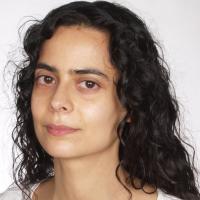
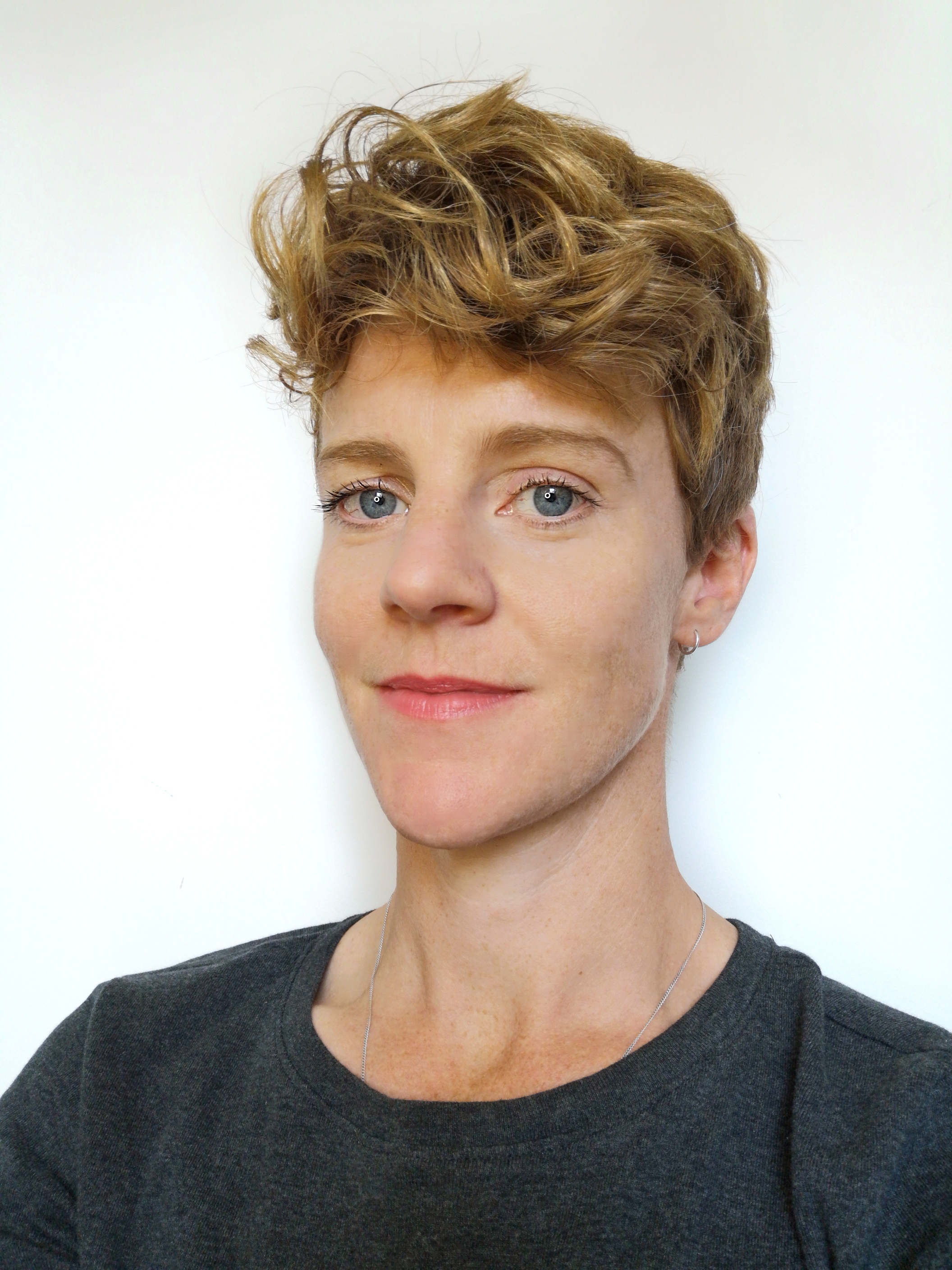
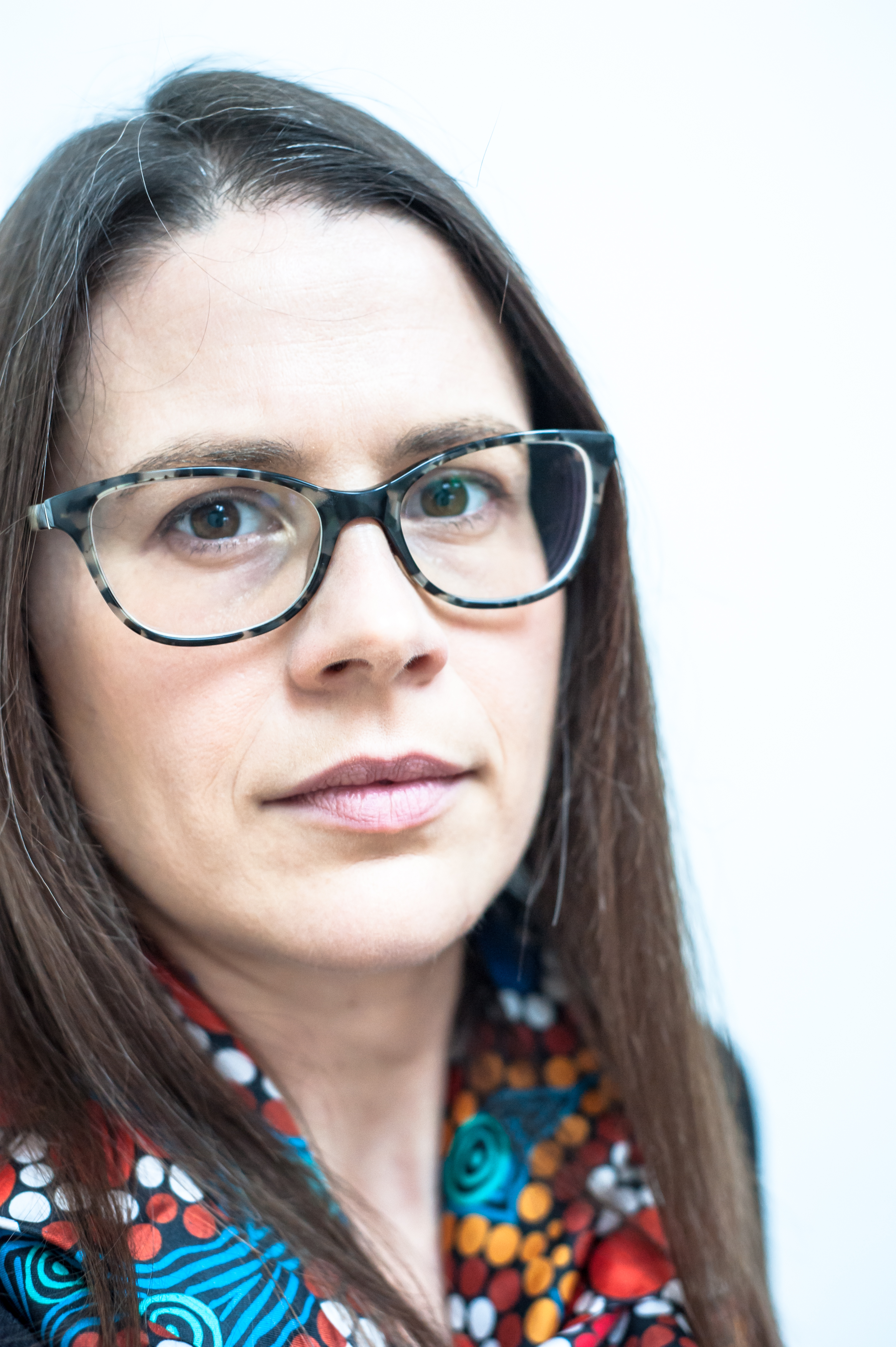
Dr. Kate Beeching is an Associate Professor in Applied Linguistics at the University of the West of England , serving as Director of the Bristol Centre for Linguistics . Her research spans pragmatic markers, sociolinguistics, language variation, and intercultural communication. Her work explores how social interaction shapes lexical meaning, focusing on the evolution of pragmatic markers like "sort of" and "enfin" in English and French. She employs empirical, quantitative, and corpus-based methods across historical, literary, courtroom, and contemporary spoken corpora. Recent research trends include cross-linguistic pragmatic development, discourse markers in multimodal contexts, and phonological variation in Bristol English. She has co-edited four volumes and contributed to journals, book chapters, and special issues. Dr. Beeching has supervised 14 PhD students and authored eight French textbooks. Her affiliations include the Bristol Centre for Linguistics, and she has published extensively on politeness theories, semantic change, and translation studies.
Dr Virginia Calabria is a Research Fellow at Durham University's Department of Sport and Exercise Sciences with cross-affiliation to the Durham Research Methods Centre (DRMC) and Institute for Medical Humanities (IMH). Her work bridges linguistic anthropology and interactional sociology through rigorous multimodal analysis of naturally occurring Italian conversation. Research focuses on collaborative grammar , emotion management , and taboo language in institutional and everyday settings. Key interests include syntactic emergence in real-time interaction, embodied resources for anger expression, swearing as social regulation, and epistemic positioning in collaborative turns. Her methodology integrates conversation analysis with detailed multimodal transcription to expose how grammar, gaze, and gesture co-construct social action. Recent publications (2021-2025) reveal three dominant trends: (1) collaborative clause-combination in Italian talk-in-interaction, (2) linguistic and embodied management of anger/swearing in business contexts, and (3) multimodal construction of taboo topics like religious identity. Work consistently demonstrates how syntax emerges from social coordination rather than pre-existing cognitive structures. Active in interdisciplinary networks through DRMC's methodological innovation and IMH's medical humanities initiatives, Calabria contributes to understanding emotion regulation in professional environments through linguistic lenses. Current projects examine swearing as institutional accountability mechanism and collaborative grammar in high-stakes decision-making.
Professor Silke Brandt is a faculty member at Lancaster University's School of Social Sciences. Her research investigates language acquisition, syntax processing, and cognitive development through experimental studies and corpus analysis. She serves as a member of the ESRC International Centre for Language and Communicative Development (LuCiD), leading projects on communicative development from 2014 to 2025. Her research interests include: Language acquisition and processing of complex syntax Interactions between linguistic development and social cognition (Theory of Mind) Syntactic priming and implicit learning mechanisms Information structure and word order effects in language development Cognitive/usage-based linguistics and construction grammar Professor Brandt actively supervises PhD students, including Xiao Ke, and welcomes applications in first language acquisition, sentence processing, and language-Theory of Mind interactions. Her outreach includes school engagement programs like 'Linguistics in the City' at institutions such as Cardinal Newman College and Loreto College.
Maria Clotilde Camboni is a Marie Skłodowska-Curie Research Fellow at the University of Oxford’s Faculty of Medieval and Modern Languages. She holds a PhD and Laurea in Italian Studies from the University of Pisa. Her research focuses on the evolution of medieval Italian vernacular literary traditions and their Renaissance reinterpretations. Previously, she held the Marco Praloran postdoctoral fellowship (2013-2015) at Florence’s Franceschini Foundation and Lausanne University, and the Le Studium fellowship at Tours’ Centre d'Études Supérieures de la Renaissance (2016-2017). She taught full-time at Blaise Pascal University in Clermont-Ferrand and collaborated on projects across Italian and Swiss institutions. Her work bridges textual analysis, cultural history, and interdisciplinary approaches to medieval and Renaissance Italian literature. Key interests include poetic form, manuscript culture, and the construction of literary canons. Recent publications explore the Raccolta Aragonese’s role in shaping Renaissance literary discourse and Boccaccio’s Decameron ’s narrative techniques. She has contributed to peer-reviewed journals like Modern Language Notes and Studi mediolatini e volgari , with monographs on medieval poetic perception and intertextuality. Awards include the Marie Skłodowska-Curie Fellowship (current), Marco Praloran fellowship, and Le Studium fellowship. Her research often involves collaborative projects, such as semantic indexing studies using the Nuovo Soggettario framework. She is also engaged in digital humanities initiatives, blending traditional philology with modern analytical tools.
Sophie Holmes-Elliott is a Senior Lecturer in Sociolinguistics and Director of Postgraduate Research at Queen Mary University of London (QMUL), based in the Department of Linguistics within the School of Languages, Linguistics and Film. She holds a PhD from the University of Glasgow. Her research focuses on quantitative analysis of linguistic variation and change, particularly in childhood and adolescence, and the intersection of language with gender, identity, and social class. Her educational background includes a doctoral degree from the University of Glasgow, where her thesis examined the spread of metropolitan linguistic features in southeast England. She leads the My Generation Why project, combining real and apparent time methodologies to study early lifespan changes in language, and collaborates on projects like the bidialectalism study with Jennifer Smith (University of Glasgow) and the gendered evaluation of football commentators with Matthew Hunt and Louis Strange. Research Interests: Holmes-Elliott’s work spans developmental sociolinguistics, gendered language patterns, sociophonetics, and the sociolinguistic role of children in propagating change. She explores how linguistic variation emerges during adolescence and how gendered speech styles develop into recognizable linguistic personas. Publications: Her recent work includes studies on gender perceptions in sports commentary (Gender Penalty?), the sociophonetic analysis of Modern RP (The jet set), and structural change across lifespans. She is co-authoring a book on preadolescent sociolinguistic competence, contracted with Routledge (due 2025). Teaching: She teaches undergraduate and postgraduate courses such as LIN4211 (English in Use), LIN6019 (Sex, Gender & Language), and postgraduate modules on sociolinguistic theory and research methods. Grants and Projects: Supported by the BA/Leverhulme Small Grants for the My Generation Why project, she also contributes to ESRC-funded research on bidialectalism. Her work frequently involves experimental methods and corpus-based analysis of reality TV and sports commentary. Labs/Teams: She is part of QMUL’s Linguistics Research Groups, including the Sociolinguistics Research Group and the Experimental Linguistics Research Group. She actively supervises postgraduate students in sociolinguistics, sociophonetics, and language change.
Coppe van Urk is a Reader in Linguistics at Queen Mary University of London, holding a PhD from MIT and affiliated with the School of Languages, Linguistics and Film. His academic profile shows active engagement with theoretical linguistics and regular office hours in ArtsOne 1.17B. Dr. van Urk's research centers on minimalist syntax with particular focus on understudied languages, especially Dinka and Austronesian languages. His work spans multiple linguistic domains including: Syntactic theory and operations Morphological systems across diverse languages Austronesian and Nilo-Saharan language families Constructed languages and their theoretical implications Cross-linguistic variation in syntactic phenomena Theoretical implications of language documentation His publication record demonstrates consistent theoretical engagement with syntax while drawing evidence from diverse linguistic sources. Van Urk frequently uses understudied languages like Dinka to reveal insights about universal grammar through language-specific phenomena, showing how syntactic operations interact with other components of grammar across diverse language families. His research bridges theoretical syntax with morphological and typological considerations. Dr. van Urk maintains an active research agenda with publications spanning from 2010 to 2024. His recent work including 'Constraining predicate fronting' (2024) continues his exploration of core syntactic operations. His research demonstrates methodological consistency in using language-specific phenomena to address broader theoretical questions in generative grammar.
Dr. Stephen J Disney is a Senior Lecturer at the School of Education, University of Marjon, with 15 years of experience in teaching, pedagogical innovation, and international academic program development. He leads the MA TESOL program and oversees English Language courses on campus, while managing degree programs at two Vietnamese universities and developing international initiatives. PhD in Linguistics from Lancaster University TEFLQ certification MA in Modern English Language from UCL BA in English Language and Linguistics from University of Wales Bangor His research focuses on English Language and Second Language Acquisition (SLA), particularly pronunciation challenges for Vietnamese learners. Current projects include a British Council-funded photographic exhibition and ELT materials development partnership with the University of Science & Technology in Hanoi, examining phonology-morphology interactions in Vietnamese English learners. Key research contributions span construction grammar, grammaticalization processes (e.g., BE going to), intercultural communication, and figurative language in healthcare contexts. His publications address topics like Vietnamese English pronunciation patterns, semi-modal constructions, and pain metaphor analysis. Senior Fellow, Higher Education Academy Dr. Disney teaches across linguistics domains including Phonetics, Phonology, Linguistic Analysis, Diversity, Metaphor, and TESOL at undergraduate and MA levels, with particular emphasis on sound, structure, and language in use.
Fang Jackson-Yang is a psycholinguist and lecturer at the University of Edinburgh's Psychology Department within the School of Philosophy, Psychology and Language Sciences. She holds teaching roles across undergraduate and postgraduate programs including Data Analysis in R, Psychological Research Skills, and Second Language Teaching Curriculum. Her research focuses on prominence in language, language-mediated attention, and Mandarin syntax, employing experimental methods and corpus studies. She has presented at leading conferences like AMLaP and IACL, and her work appears in journals such as Discourse Processes and Royal Society Open Science . Education includes MSc/PhD studies at Beijing Language and Culture University, University of Sheffield, University of Manchester, and University of Edinburgh. Her teaching spans quantitative research skills, language acquisition, and multilingual education. She supervises MSc dissertations and has organized academic events including the 2024 AMLaP conference in Edinburgh. Research explores how speakers encode conceptual prominence in transitive sentences and hearers decode attentional cues through eye-tracking experiments. Past work includes Mandarin left-periphery corpus studies and second language acquisition of topic-comment structures. Active in academic service, she reviews for Discourse Processes and Linguistic Inquiry .
Dr Julio Villa-García is an Honorary Senior Lecturer at the University of Manchester and an Associate Professor of English Linguistics at the University of Oviedo (Spain). He specializes in theoretical syntax, syntactic variation, and bilingualism. His research focuses on the syntax of English and Spanish, with contributions to the study of complementisers, clitics, and the syntax-phonology interface. He has held roles at institutions including Villanova University and has been a visiting researcher funded by the EU's 'María Zambrano' grant. Education: BA (Hons) in English Studies (University of Oviedo, 2005); MA in Linguistics (University of Kent, 2005; University of Essex, 2007; University of Connecticut, 2010); PhD in Linguistics (University of Connecticut, 2012). Research Interests: Syntax variation, microvariation, clitic systems, left periphery structures, bilingualism, and applications of linguistic theory to language pedagogy. His work bridges theoretical and descriptive approaches, often comparing Romance languages. Recognition: Recipient of the Arthur Abramson Award for Teaching (2010). He coordinates the Bilingualism Series at the Instituto Cervantes and has engaged in public talks on multilingualism and language learning.
Dr. Tamara Polajnar is a Visiting Researcher at the Department of Computer Science and Technology, University of Cambridge. Her research focuses on computational linguistics and natural language processing, with particular emphasis on distributional semantics and semantic compositionality. Her research interests span multiple areas including computational semantics, distributional models, and semantic composition. She develops tensor-based methods for representing meaning and investigates techniques for semantic analysis of text at different levels from phrases to documents. Her work combines theoretical linguistics with practical machine learning approaches. Her publications primarily focus on compositional distributional semantics, exploring how to effectively combine word vectors to represent larger linguistic units. Recent work examines discourse-level representations and evaluation methods for semantic models. She has contributed datasets and frameworks that advance the understanding of how computational models can capture linguistic phenomena. She actively contributes to the research community through the development of specialized datasets and evaluation resources. Her work on RELPRON provides valuable resources for evaluating compositional distributional models, while her research on short scientific summaries addresses challenges in processing academic text.
Daniel Altshuler is an Associate Professor of Semantics at the University of Oxford's Faculty of Linguistics, Philology and Phonetics, serving as Tutorial Fellow at Jesus College and Lecturer at Brasenose College. He holds a BA in Philosophy from UCLA and a PhD in Linguistics from Rutgers University. His research explores context dependence in semantics and pragmatics, investigating compositional semantics, discourse structure/coherence, and literary extensions of dynamic-semantic frameworks. Core interests include temporal interpretation, narrative discourse, pragmatic inference, and cross-modal communication. His publications demonstrate sustained focus on discourse coherence mechanisms, temporal semantics, and pragmatic interfaces across diverse linguistic phenomena. Recent work integrates literary analysis with formal semantics and extends into computational modeling of language processing.
Dr. Jason Grafmiller is Lecturer in Corpus-Based Sociolinguistics at the University of Birmingham's Department of Linguistics and Communication. He researches grammatical variation using quantitative methods, comparing syntactic alternations across global English varieties through corpus analysis and experimental approaches. Research examines: Probabilistic constraints on genitive/dative alternations Register-specific grammatical patterns Dialectal variation in World Englishes Corpus-cognition interfaces Developed Variation-Based Distance and Similarity Modeling (VADIS) for cross-variety comparisons. Co-author of Comparative Variation Analysis: Grammatical Alternations in World Englishes (2023). Teaches corpus linguistics and research methodologies.
Evi Sifaki is an Assistant Professor in Applied Linguistics at the University of Warwick. She serves as the departmental Director of Student Experience, coordinating initiatives to enhance student participation and learning environments. Her research focuses on syntax-semantics interfaces, language change in Greek and English, and applied linguistics projects involving Cognitive Metaphor Theory in economic discourse. She has taught theoretical modules like Syntax, Morphology, and Sociolinguistics, alongside applied courses such as Qualitative Research Methods. Her research explores topics including null arbitrary subjects in Greek, preposition-drop phenomena, and the conceptual metaphors underlying economic terminology. She has investigated historical language shifts and EDI-related issues like employability skills in diverse student groups. Her work bridges formal linguistic theory with sociocultural applications, contributing to both Greek and English linguistics literature. Notable publications include analyses of Greek syntax structures (e.g., VOS orders, EPP-driven mechanisms) and collaborative studies on metaphorical framing in economic language. Her review of Parametric Variation: Null Subjects in Minimalist Theory highlights her engagement with foundational linguistic theory.
Isabella Fritz is a Research Fellow and Postdoctoral Researcher at the University of Oxford, affiliated with the Language and Brain Laboratory within the Faculty of Linguistics, Philology and Phonetics. She holds a PhD from the University of Birmingham, where her research focused on how co-speech gestures interact with speech. Currently, her work emphasizes the language processing of English learners, exploring topics from discourse-level comprehension to word-level phonological mechanisms. Education: PhD in Linguistics, University of Birmingham Research interests span psycholinguistics, bilingualism, and cognitive neuroscience. She investigates the neural bases of language comprehension, the role of gesture in multimodal communication, and phonological factors influencing second language acquisition. Her studies often employ experimental methods and neuroimaging techniques like ERP to uncover how learners integrate speech and non-speech cues. Publications reflect a sustained focus on bilingual language processing, gesture-speech interaction, and the cognitive and neural underpinnings of linguistic structures. Recent work examines metrical phonology in L2 recognition and explores dissociations between neural mechanisms for noun modification contexts. No scientific awards are mentioned in the provided text. Advising and grants: Isabella has no listed advisees or grants. Her primary role involves conducting independent research within her lab and collaborating on projects related to language acquisition and perception. Labs/Teams: She is actively involved in the Language and Brain Laboratory at Oxford, contributing to studies on the interplay between linguistic and cognitive processes.
Chloe Harrison is a Senior Lecturer in English Language and Literature at Aston University's School of Social Sciences and Humanities (SSH). She specializes in cognitive stylistics and applied linguistics, focusing on cognitive grammar for literary analysis, reader response, and contemporary fiction. She currently directs MA English programs and co-leads the Aston Stylistics Research Group. Her research bridges theoretical linguistics and practical pedagogy, with notable contributions to forensic stylistics and cognitive poetics. Education: PhD in Cognitive Stylistics, University of Nottingham (2013) MA in Literary Linguistics, University of Nottingham (2010) BA in English Studies, University of Nottingham (2009) PG Cert in Academic Practice in Higher Education, Coventry University (2015) Research Interests: Application of cognitive grammar to literary analysis Reader response and re-reading phenomena Contemporary fiction and narrative structures Forensic stylistics and authorship analysis Educational dissemination of cognitive stylistics Awards & Grants: £7.3k 2024 grant for sleep narrative research £4k 2021 seed funding for forensic stylistics Multiple teaching and curriculum development grants COST-funded international training (2016) Academic Service: External Examiner at Anglia Ruskin University (2023-2027) Treasurer of the International Association of Literary Semantics Member of key professional associations including IASL, Poetics and Linguistics Association Teaching: Leads postgraduate modules in cognitive poetics, stylistics, and contemporary literature. Previously taught discourse analysis, creative writing, and qualitative research methods.