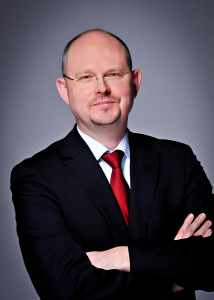
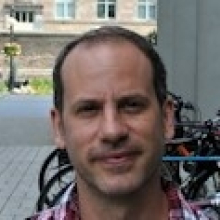
Professor Max Deeg is a leading scholar in Buddhist Studies at Cardiff University , holding a personal chair since 2009. With a career spanning institutions in Germany, Austria, and the UK, his research focuses on transcultural Buddhist history from India to East Asia, Chinese Buddhist travelogues , and interreligious encounters in medieval China. He has held visiting positions at universities in Japan, Nepal, the US, and Germany, and currently directs the Centre for the History of Religion in Asia (CHRA) . PhD from University of Würzburg (1990) Dr. phil. habil. in Religious Studies (1998) Full Professor at University of Vienna (2002-2006) His research explores Buddhist narratives as tools for constructing religious identity, foundation myths in trans-Himalayan contexts, and terminology evolution in Chinese Buddhist translations. Recent publications analyze Indian Buddhist monasticism through Chinese sources and religious concepts like xin (trust) across Buddhist, Manichaean, and Christian traditions. Awarded the KHK Visiting Research Fellowship (2016) and a DAAD Scholarship (1986-87) , Prof Deeg contributes to editorial boards of major journals. He supervises PhD students and teaches Buddhist Studies , Life of the Buddha , and Chinese Buddhist Texts .
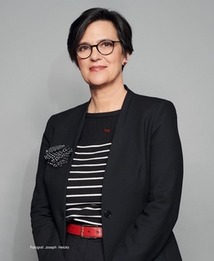
Prof. Paula-Irene Villa Braslavsky holds the Chair of Sociology/Gender Studies at Ludwig Maximilian University of Munich (LMU), Faculty of Social Sciences. She is on sabbatical during Summer Semester 2025 but continues research supervision and colloquia. Her research focuses on intersections of racism, sexism, and neoliberalism, with notable works like The Future of Difference and Top Girls . She co-edits the journal Gender Salon and leads projects on gender studies, queer theory, and postfeminism. Her academic contributions span monographs, anthologies, and journal articles addressing global social movements, anti-genderism, and body politics. Key themes include critical analysis of contemporary gender regimes, decolonial theory, and the sociocultural implications of neoliberalism. Her work frequently bridges theory and activism, emphasizing intersectional approaches to systemic oppression. Publications include edited volumes on #MeToo, fat studies, and the sociological analysis of bodies, reflecting her commitment to interdisciplinary research. She maintains an active academic presence through her website LMU Gender Studies and Academia.edu .
Hans Beck serves as Professor of Greek History at the University of Münster (Westfälische Wilhelms-Universität) since 2018, with an additional appointment as Adjunct Professor in the Faculty of Arts at McGill University. His academic career includes previous positions as Professor of Ancient History and Director of Classical Studies at McGill University (2005-2018), Heisenberg Fellow at Goethe-Universität Frankfurt (2004-2005), and Research Assistant at the University of Cologne (1997-2004). Beck earned his academic training through doctoral studies at the Universities of Erlangen, Canterbury, and Cambridge (1989-1996), followed by a fellowship at the Center for Hellenic Studies in Washington, DC (2001-2002). His educational background reflects a strong international foundation in classical studies. His research spans multiple interconnected fields within ancient history, with particular emphasis on the history and culture of ancient Greece, historical geography of Greece, environmental studies of the ancient Greek world, political culture of the Roman Republic, and ancient historiography. Beck's work consistently explores themes of localism, federalism, and political structures across ancient societies, with notable contributions to understanding Greek city-states, regional identities, and comparative political systems. His approach often bridges geographical, historical, and cultural perspectives to examine how ancient communities organized themselves politically and maintained regional identities within larger frameworks. Analyzing his recent publications reveals a sustained focus on local political structures within broader contexts, particularly examining how Greek city-states maintained autonomy while participating in federal leagues. His work increasingly incorporates comparative approaches, connecting Greek political structures with those of Rome and even ancient China, reflecting his editorial work on cross-cultural studies. Beck demonstrates particular expertise in analyzing how physical landscapes shaped political organization and how religious practices reinforced regional identities. Fellow of the Royal Society of Canada (2018) Anneliese Maier Research Award from Alexander von Humboldt Foundation (2014) Heisenberg Fellowship from Deutsche Forschungsgemeinschaft (2004) Doctoral scholarship from German Academic Exchange Service (1995) Doctoral scholarship from Hanns Seidel Foundation (1994) Beck has supervised numerous doctoral students including Jordan Christopher (2022), Chandra Giroux (2021), Wentian Fu (2020), Rebecca Robinson (2017), Alex McAuley (2015), and François Gauthier (2015), covering diverse topics from ancient Qin and Macedon to cult practices in ancient empires. His academic leadership extends to directing research projects B3-49 'Belonging in/to Lakonia' and B3-40 'Localism and Religion in Ancient Greece' within the Excellence Cluster focusing on 'Religious Diversity and Legal-Political Unity.' As head of the project 'Belonging in/to Lakonia' and 'Localism and Religion in Ancient Greece,' Beck leads interdisciplinary research teams examining archaeological and historical evidence from the Sanctuary of Apollo at Amyklai and its surroundings. His work integrates textual analysis with material culture studies, creating comprehensive approaches to understanding ancient regional identities and religious practices. Beck's leadership in these projects demonstrates his commitment to bridging traditional disciplinary boundaries in classical studies.
David Trend is a Professor and former Chair of the Department of Art at the Claire Trevor School of the Arts, University of California, Irvine. He previously served as Dean of Creative Arts at De Anza College and Graduate Program Coordinator at San Francisco State University's Inter-Arts Center. Trend specializes in visual culture, cultural studies, and critical pedagogy, teaching courses like Language and Vision in Everyday Life and Media, Art, and Technology . His research bridges media analysis, education policy, and radical democracy. He has authored over 200 articles and 16 books, including Elsewhere in America and Reading Digital Culture . As a Getty Scholar, his work explores cultural belonging, digital media impacts, and educational innovation. He advises on state arts councils and the National Endowment for the Arts. His academic contributions span visual arts education, media literacy, and the sociopolitical role of art. Education: - MFA in Photography, Visual Studies Workshop Program, SUNY Buffalo - PhD in Curriculum Theory, Miami University Research Interests: Trend's work examines cultural crises of meaning, digital media's societal impact, and the intersection of art with education and activism. He critiques gentrification's artistic drivers, explores identity formation in digital spaces, and advocates for culturally democratic pedagogical frameworks. Publications Trends: Recent works focus on gentrification's artistic dimensions ( 2022 ), creativity crises ( 2020 ), and belonging in fragmented cultures ( 2016 ). Earlier work addressed media violence myths ( 2007 ), digital literacy ( 2001 ), and radical democracy ( 1996 ). His writing spans academic critiques to practical pedagogical solutions. Awards: Getty Scholar Grants & Consulting: Extensive NEA collaborations, foundation advising, and state arts council consultations. His work emphasizes bridging educational institutions with Silicon Valley corporations through multimedia partnerships. Labs/Teams: Affiliated with UCI's University Art Galleries, Institute and Museum of California Art, and Electronic Art + Design programs.
Min Yen Kan is an Associate Professor and Vice Dean of Undergraduate Studies at the National University of Singapore's School of Computing, Department of Computer Science. With a PhD from Columbia University (2002), he leads the Web Information Retrieval / Natural Language Processing Group (WING.NUS) and serves as ACL Ethics Committee co-chair. His research spans Natural Language Processing , Large Language Models , Digital Libraries , and Information Retrieval , with specific focus on scientific discourse analysis, fact verification, and multimodal systems. Current projects include Scholarly Document Information Extraction (TRL 6), Task-Oriented Dialogue Systems (TRL 4), and Recommendation Systems (TRL 5). Recent publications reveal strong trends in LLM limitations (bias, hallucination, evaluation), conversational recommendation systems , and misinformation detection . His work consistently bridges theoretical NLP with real-world applications in digital libraries and scientific communication. Award highlights include: CIKM 2019 Best Paper Award ACL Distinguished Service Awards Vannevar Bush Best Paper Award (JCDL 2012) ACM Distinguished Speaker designation Kan mentors PhD students with placements at Google and USTC, and serves as associate editor for Information Retrieval and survey editor for Journal of AI Research . His lab WING.NUS develops practical tools like SciWING for scientific document processing and FANG for fake news detection. Media engagements include commentary on AI regulations in Southeast Asia and workforce implications in the AI era.
Kevin D. Ashley is a Professor of Law at the University of Pittsburgh School of Law. He is also a senior scientist at the Learning Research and Development Center and an adjunct professor of computer science at the University of Pittsburgh. His interdisciplinary work bridges artificial intelligence, legal analytics, and ethical reasoning. JD, Harvard Law School M.A. and PhD, University of Massachusetts BA, Princeton University His research focuses on computational modeling of legal reasoning , AI and ethics , legal text analytics , and case-based reasoning . He has pioneered AI applications for legal decision support, automated argumentation, and bias detection in legal corpora. Recent publications include studies on large language models in legal annotation, argument mining, and empirical legal analysis. His work has been supported by multiple National Science Foundation grants, emphasizing fairness in AI and access to justice. 2022 Codex Prize for Computational Law 2015 University of Massachusetts Outstanding Achievement Award 2002 AAAI Fellow for AI in Law contributions 2000 Chancellor’s Distinguished Research Award A former President of the International Association for Artificial Intelligence and Law, Ashley has held visiting roles at the University of Bologna, Stanford CodeX, and IBM Watson Research Center. He co-edits the journal Artificial Intelligence and Law and teaches courses on applied legal analytics.
Professor Hendrik Vollmer is a faculty member in the Accounting Group at Warwick Business School , University of Warwick, since 2020. He previously served as Head of the Accounting Division at the University of Leicester (2015–2020) and worked at Bielefeld University in Germany for 16 years. His research bridges accounting, sociology, and environmental studies, focusing on accounting as a social practice and its role in addressing ecological challenges. Senior Fellow of the Higher Education Academy Associate Editor of European Accounting Review Member of editorial boards for Zeitschrift für Soziologie, Accounting, Organizations and Society, and Social and Environmental Accountability Journal Active in sustainability accounting research and education Contributor to interdisciplinary accounting literature Recent publications explore accounting's role in climate change mitigation, public value creation, and the spatialization of worth. His teaching modules include Accounting for Sustainability, People, Planet and Financial Accounting: Theory and Context .
Catherine Lai is a Reader (~Associate Professor) in the Department of Linguistics and English Language at the University of Edinburgh, with strong affiliations to the Centre for Speech Technology Research (CSTR) and the Institute for Language, Cognition and Computation (ILCC) in the School of Informatics. She is based in the School of Philosophy, Psychology and Language Sciences and is actively involved in research, teaching, and academic service. Department: Department of Linguistics and English Language School: School of Philosophy, Psychology and Language Sciences Research Institutes: Centre for Speech Technology Research, Institute for Language, Cognition and Computation Email: C.Lai@ed.ac.uk Her research centers on the role of prosody—non-lexical aspects of speech—in spoken communication. She investigates how prosody contributes to discourse structure, information structure, and affect in dialogue, using interdisciplinary methods from linguistics and machine learning. Her work bridges theoretical linguistics and practical speech technology, aiming to improve spoken language understanding and synthesis systems. She is particularly interested in how prosody shapes listener expectations and how affect and topic are expressed and perceived in conversation. Her recent publications reflect a strong focus on self-supervised learning in speech models, emotion recognition, ASR error correction using large language models, cognitive state classification, and ethical considerations in language technology. She explores topics such as the uncanny valley in synthetic speech, gender expression through voice, and community-centered development of language technologies. Prize from Scopus Profile Catherine Lai has supervised several PhD students, including Leimin Tian and Yuanchao Li, and has been involved in significant research projects, such as a Toyota-funded initiative on spoken dialogue for robot companions. She has secured multiple grants and leads a research agenda that integrates theoretical inquiry with real-world applications in assistive technologies and social science. Her academic service includes organizing major conferences like Interspeech and UK and Ireland Speech. She is a key member of research teams at CSTR and ILCC, collaborating across disciplines to advance the understanding of spoken communication and the development of robust, ethical speech technologies.
Amy Bruckman is a Regents’ Professor and Senior Associate Chair in the School of Interactive Computing at Georgia Institute of Technology. As a Fellow of The ACM and member of the SIGCHI Academy , she contributes to social computing research focusing on online collaboration, cross-cultural understanding, and content moderation. Her 2022 book "Should You Believe Wikipedia? Online Communities and the Construction of Knowledge" explores digital knowledge creation. Education: Ph.D. from MIT Media Lab (1997), B.A. in Physics from Harvard (1987) Research Affiliations: GVU Center, IRI People and Technology Her work addresses social computing challenges including: AI ethics in human-AI interaction Algorithmic bias in content moderation Epistemic justice in online communities Comparative platform analysis (Reddit, Discord, TikTok) Grassroots technology movements Recent publications examine: AI support tools for online counseling Community-driven research frameworks Racial bias mitigation in toxic language detection Designing teachable social media experiences Human trafficking intervention ethics Scientific recognition includes: ACM Fellowship SIGCHI Academy membership She has contributed to: Georgia Tech's Computing Education initiatives Research ethics frameworks for Human-Computer Interaction
Andrew Postlewaite is the Harry P. Kamen Professor of Economics and Professor of Finance at the University of Pennsylvania's School of Arts and Sciences. He holds dual roles in the Department of Economics and the Ronald O. Perelman Center for Political Science and Economics. As a distinguished academic, he is a member of the American Academy of Arts and Sciences and serves as a director at the National Bureau of Economic Research (NBER). Additionally, he is the founding editor of the American Economic Journal: Microeconomics and a research associate at Penn's Population Studies Center and Institute for Law and Economics. Postlewaite's research focuses on game theory, behavioral economics, and social norms, with contributions to mechanism design, repeated games, and intergenerational transmission of preferences. His work bridges theoretical foundations with applied economic analysis, particularly in areas like consumer behavior, decision-making, and institutional design. He has held visiting positions at institutions including Caltech, Harvard, and Stanford, reflecting his academic prominence. His scholarly contributions include pioneering studies on future-oriented decision-making, interdependent valuations in markets, and equilibrium concepts in repeated games. Recent publications explore topics such as the impact of local media accessibility in the digital age and the welfare implications of consumption fluctuations. His editorial leadership at journals like Econometrica and International Economic Review underscores his influence in shaping economic discourse. Awarded prestigious fellowships and editorial roles, Postlewaite's career exemplifies a blend of rigorous theoretical research and practical applications in economics. His current research trends emphasize behavioral insights and the methodological underpinnings of economic models, reflecting a commitment to advancing both theory and real-world relevance.
Blair Hoxby is Professor of English at Stanford University's School of Humanities and Sciences, where he has taught since 2007. Previously, he served as Associate Professor of History and Literature at Harvard University (2005-2007) and Associate Professor of English at Yale University (2003-2005), where he began as Assistant Professor in 1998. His academic journey includes a Ph.D. in English from Yale University (1998), an M.Phil. in English Studies from the University of Oxford (1990), and an A.B. in English and American Literature and Language from Harvard University (1988). Hoxby's research focuses on literature and culture from 1500 to 1800, with particular emphasis on tragedy theory, Milton studies, and the intersection of literature and economics. His notable works include What Was Tragedy? Theory and the Early Modern Canon (2015) and Mammon's Music: Literature and Economics in the Age of Milton (2002). He argues that early modern tragedy differed significantly from contemporary understandings of the genre, with passions rather than deeds or character serving as the keys to early modern tragic performance. Hoxby's recent scholarly output reveals a consistent engagement with early modern theatrical practices, particularly tragedy and opera. His work demonstrates sophisticated interdisciplinary approaches, connecting literary analysis with historical context, economic theory, and performance studies. He has made significant contributions to understanding how commercial culture shaped literary production and how theatrical conventions evolved across national boundaries in Europe. Scientific Awards and Honors Internal Fellow, Stanford Humanities Center (2009-2010) Morse Fellowship, Juilliard School (2001-2002) Samuel and Ronnie Heyman Prize, Yale University (2001) John Addison Porter Prize, Yale University (1999) Rhodes Scholarship, University of Oxford (1988-1990) Hoxby has supervised numerous doctoral students and served in various administrative roles at Stanford, including Director of Undergraduate Studies (2011-2014) and Director of Graduate Admissions (2008-2011). His teaching portfolio includes courses on English poetry from the Renaissance to Romanticism, tragedy and tragic theory from Aristotle to the present, theater history, and performance theory. Currently, he teaches courses such as Court Theater from Shakespeare to Mozart and Introduction to English II: From Milton to the Romantics . Hoxby maintains active scholarly engagement through committee memberships, including the Executive Committee of the Milton Society of America (2009-2013) and service as a referee for major academic presses including Oxford University Press and the University of Pennsylvania Press.
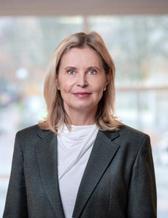
Lisbeth Aggestam is an associate professor at the Department of Political Science and an associate researcher at the Center for European Research (CERGU) at the University of Gothenburg. She serves as the editor-in-chief of the international journal Foreign Policy Analysis , published by the International Studies Association (ISA) and Oxford University Press. Aggestam's research focuses on several interconnected areas: Political leadership and foreign policy Diaspora and foreign policy Foreign policy role theory The European Union as a global actor Her scholarly work demonstrates a consistent focus on leadership dynamics within European foreign policy, particularly examining how the EU navigates its role as a global actor amid shifting geopolitical landscapes. She has developed significant theoretical contributions to role theory in foreign policy analysis, creating frameworks for understanding how states and international organizations perform specific roles on the global stage. Aggestam's publication record reveals several important trends in contemporary foreign policy studies. Her work increasingly examines the intersection of domestic politics and international relations, particularly how diaspora communities influence state foreign policies. Her recent research addresses European strategic autonomy in the context of US foreign policy shifts and the implications of Sweden's NATO membership decision, reflecting her ability to connect theoretical frameworks with pressing real-world issues. As an educator, Aggestam serves as course manager and instructor for several key programs: EU2215: Europe in the World (MA, 15 hec) SK1136: Foreign Policy Analysis (BA, 7.5 hec) EU1145: The European Union in International Affairs (BA, 7.5 hec) Through her leadership of the Swedish Research Council project 'Transnational civil society and foreign policy' (2022-2025) and her editorial role at Foreign Policy Analysis , Aggestam plays a significant role in shaping contemporary discourse on international relations and European foreign policy.
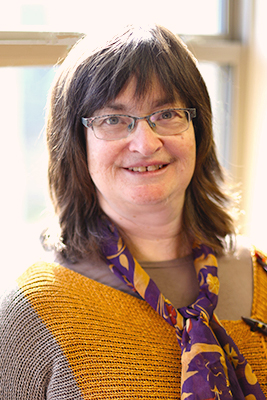
Anna Berge is a Professor of Linguistics at the University of Alaska Fairbanks, directing the Alaska Native Language Archive. She holds a PhD from the University of California, Berkeley (1997), specializing in the documentation, description, and historical analysis of Eskimo-Aleut languages, particularly Unangam Tunuu (Aleut). Her research integrates linguistics with archaeology, genetics, and environmental studies to explore prehistoric language contact and divergence patterns along the North Pacific Coast. Her work focuses on morphosyntax, discourse analysis, and language revitalization for highly endangered languages. She teaches courses in Morphology, Field Methods, Community Language Documentation, and Eskimo-Aleut Linguistics, emphasizing practical skills for language preservation. Berge's multidisciplinary approach addresses Aleut language divergence from Eskimoan branches, leveraging data from multiple disciplines to reconstruct linguistic prehistory. She actively collaborates with Indigenous communities in Russia, Alaska, Canada, and Greenland to archive linguistic materials and support language maintenance initiatives.
Sara Stymne is a Senior Lecturer in Computational Linguistics at the Department of Linguistics and Philology, Uppsala University, where she has been working since 2012. She initially joined as a post-doc (2012-2015), then worked as a researcher (2015-2017), and served as an assistant professor (2017-2023) before her current position as Senior Lecturer. Prior to Uppsala, she was a researcher at Linköping University's Department of Computer and Information Science. Dr. Stymne earned her PhD in Computational Linguistics from Linköping University in 2012 with the thesis 'Text Harmonization Strategies for Phrase-Based Statistical Machine Translation,' following a Licentiate degree in Computational Linguistics (2009) and a Master's degree in Cognitive Science (2006), both also from Linköping University. During her doctoral studies, she spent the autumn of 2010 and spring of 2009 at Xerox Research Centre Europe in Grenoble, France. Her primary research interests focus on cross-lingual natural language processing and digital humanities, with particular emphasis on multilingual dependency parsing. Dr. Stymne is passionate about applying computational linguistics to solve research questions in other fields, including language history, literary analysis, and political science. Her earlier work concentrated on machine translation, with specific interests in discourse-aware translation, compound processing, and error analysis. She has made significant contributions to the development of language technology tools for analyzing dialogue, narrative, and stylistic features in literature. Analysis of Dr. Stymne's recent publications reveals a strong focus on cross-lingual and cross-domain natural language processing. Her work spans multiple subfields including dependency parsing across genres and topics, discourse relation analysis in low-resource languages like Egyptian Arabic, direct speech identification in Swedish literature, and causality detection in governmental documents. A notable trend is her application of NLP techniques to digital humanities problems, particularly in analyzing literary texts and historical language change. Her research often involves creating and utilizing specialized datasets for specific linguistic phenomena across multiple languages. Dr. Stymne actively supervises graduate students, having guided numerous master's and bachelor's theses on topics ranging from speech recognition to multilingual parsing and causality detection. She leads or participates in several research projects including 'Fictional prose and language change' (funded by VR, 2021-2023) and 'Enabling climate-resilient development' (funded by Marianne and Marcus Wallenberg Foundation, 2023-2027), demonstrating her commitment to interdisciplinary research with practical applications. Her work has resulted in several notable software resources including uuPronPred for cross-lingual pronoun prediction, uuparser for dependency parsing, and Docent for document-level machine translation. Within the Computational Linguistics and Language Technology group at Uppsala University, Dr. Stymne contributes to multiple research initiatives focused on developing language technology tools for digital humanities applications. Her team works closely with literary scholars and historians to create computational methods for analyzing large corpora of literary texts, particularly focusing on Swedish literature across different historical periods. Her research bridges the gap between theoretical computational linguistics and practical applications in the humanities, creating new methodologies for quantitative analysis of literary and historical texts.
Kevin Manaugh is an Associate Professor at McGill University, specializing in Urban Planning with a focus on sustainable transportation and spatial justice. His research examines how decision-making processes in urban development balance environmental, economic, and social equity goals, particularly through transport systems. He holds a PhD in Urban Planning from McGill University (2013). His key research interests include integrating social equity into land use policies, analyzing accessibility impacts on socioeconomically diverse populations, and studying behavior change related to sustainable transportation. Current projects explore equitable transit accessibility, responses to local mobility policies, and health/well-being effects of sustainable transport choices. Manaugh has published extensively on transportation equity, urban form analysis, and GIS applications. His work bridges theoretical frameworks with practical policy implementation, emphasizing participatory approaches to urban planning. Notable contributions include studies on pandemic street reallocation equity and cycling infrastructure prioritization strategies. His research has been supported by interdisciplinary collaborations and applied to Canadian urban contexts. Despite prolific output, Manaugh maintains an active engagement with public discourse on urban mobility challenges and equitable urban futures.