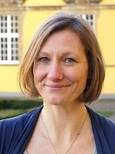
Prof. Dr. Daniel Leese is a full professor of History and Politics of Modern China at the University of Freiburg's Institute of Sinology. He specializes in 20th-century Chinese history, focusing on the Communist Party's legacy and transitional justice. Current research includes a dual biography of Chiang Kai-shek and Mao Zedong, and analysis of PRC information systems. Education: PhD in International History (2006, International University Bremen). Academic roles include ERC grant leadership (2014-2019) and FRIAS Senior Fellowship (2018-2019). Awards include Carl Friedrich von Siemens Fellowship (2022/2023). Key publications: Maos langer Schatten (2021) Justice After Mao (2023) Chinesisches Denken der Gegenwart (2023) Research emphasizes Mao's political impact, historical justice mechanisms, and institutional memory. Maintains a digital archive of Mao-era documents (maoistlegacy.de).
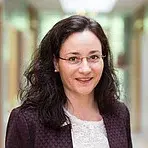
Ignacio Ojea Quintana serves as Assistant Professor at Ludwig Maximilian University of Munich's Faculty of Philosophy, Philosophy of Science and Religious Studies within the Chair of Philosophy of Science. He joined LMU in 2022 after a three-year research fellowship at the Australian National University's School of Philosophy. His academic foundation includes a PhD in Philosophy from Columbia University (2019), supervised by Philip Kitcher with focus on formal social epistemology, and prior Masters/BA degrees in Philosophical Logic from the University of Buenos Aires where he collaborated with the Buenos Aires Logic Group. Ojea Quintana's research employs formal methodologies to examine digital technologies' impact on knowledge organization across scientific and public spheres. His work intersects Social Epistemology , Philosophy of Data Science , and Autonomous Systems Ethics , with significant contributions to social media network analysis of controversial movements. Current projects analyze Twitter dynamics in racial justice movements, ethical constraints in AI decision systems, and consensus formation in scientific modeling. His 2021-2022 publications reveal an interdisciplinary trajectory bridging philosophy, computer science, and social sciences. Key trends include computational analysis of online discourse, formal modeling of group rationality under uncertainty, and ethical frameworks for AI systems. Works appear in high-impact venues including Nature Humanities and Social Sciences Communications and the AAAI/ACM Conference on AI, Ethics, and Society. Ojea Quintana maintains active collaborations with the "Humanising Machine Intelligence" initiative (formerly at ANU) and the Buenos Aires Logic Group. His research program demonstrates sustained engagement with technology's societal implications through formal modeling approaches and empirical digital trace analysis.
Prof. Dr. Oliver Müller is a Professor at the Department of Philosophy, University of Freiburg, and serves as Vice Dean of the Faculty of Philosophy. His academic journey includes a doctorate from Humboldt University Berlin (2005) and a habilitation in Philosophy (2012). Müller leads research on Philosophical Anthropology, Philosophy of Technology, and Ethics, with a focus on human-machine interactions and Anthropocene ethics. He supervises doctoral and postdoctoral researchers across projects like livMatS and BrainLinks-BrainTools. Research interests span neuroethics, transhumanism, and socio-technological systems, emphasizing ethical frameworks for emerging technologies. Publications explore AI ethics, drone warfare, and phenomenological embodiment, reflecting interdisciplinary engagement with neuroscience and environmental philosophy. Honors include the MTZ Bioethics Award and Heisenberg Fellowship. Müller directs participatory discourse initiatives bridging art and science, fostering public engagement with technological ethics. His work advances critical dialogues on human enhancement and ecological responsibility in the digital age.
Bistra Andreeva is a full Professor of Phonetics and Phonology at Saarland University, Department of Language Science and Technology. She is also a principal investigator of the DFG-funded project “Judeo-Spanish in Bulgaria: a contact language between archaism and innovation” (2022-2025) and leads or co-leads several other externally funded projects on prosody, information structure, and language contact. She teaches and has taught at Saarland University, Sofia University “St. Kliment Ohridski”, and other European universities. Education & Academic Background Habilitation (kumulative Habilitationsschrift): “Contrastive Prosody: Bulgarian vs. German”, Saarland University, 2016. PhD (Dr. phil.): “Zur Phonetik und Phonologie der Intonation der Sofioter-Varietät des Bulgarischen”, Saarland University, 2007. Research Interests Andreeva’s research focuses on the phonetics and phonology of intonation and rhythm, cross-language and individual differences in the production and perception of syllabic prominence, the relation between intonation and information structure, minority languages (especially Judeo-Spanish in Bulgaria), and the interaction between information density and prosodic structure. Her methodological expertise includes experimental phonetics, corpus-based studies, and acoustic analysis. Major Projects SFB 1102 C1: “Information Density and the Predictability of Phonetic Structure” (DFG, 2014-2026) JuSpa: “Judeo-Spanish in Bulgaria: a contact language between archaism and innovation” (DFG, 2022-2025) Prosodic aspects of Bulgarian compared to other languages with lexical stress (Bulgarian National Science Fund, 2019-2024) Prosodic manifestations of focus in French and English from a Bulgarian point of view (DAAD & Sofia University, 2021-2023) Scientific Awards & Recognition While no major named prizes are listed, Andreeva’s work has been continuously supported by competitive grants from the German Research Foundation (DFG), DAAD, and Bulgarian National Science Fund. Her publications appear in top-tier journals and conference proceedings (Journal of the Acoustical Society of America, Interspeech, Speech Prosody, International Congress of Phonetic Sciences). Teaching & Supervision She offers a broad spectrum of courses including Experimental Phonetics, Prosody, Phonetics & Phonology of Slavic Languages, Introduction to Instrumental Phonetics, and seminars on language contact. She has supervised numerous BA, MA, and PhD theses and regularly teaches at the PhD School of Sofia University. Labs & Teams She is affiliated with the Phonetics Laboratory at Saarland University and collaborates closely with the Institute for Bulgarian Language (Bulgarian Academy of Sciences), working in interdisciplinary teams involving phoneticians, computational linguists, and field linguists.
Zaur Gasimov is a Lecturer at Johannes Gutenberg University Mainz and currently serves as DAAD Departmental Coordinator and Co-Head at the Faculty of Economics and Administrative Sciences, Turkish-German University. He holds a habilitation in Modern History and Eastern European History, with a focus on Eastern European History, political science, and sociology. Education : B.A. in International Relations from Baku State University; M.A. from Catholic University of Eichstätt-Ingolstadt; Doctorate in Eastern European history Research : Concentrates on Russian-Turkish relations, nationalism in Eastern Europe, cultural transfer processes, and historical narratives. His habilitation thesis analyzed Polish-Turkish anti-Soviet alliances. Publications : Authored monographs on Prometheism, Azerbaijani historiography, and Russification policies. Collaborated on comparative studies of cultural transfer and Ottoman-Russian entanglements.
Schirin Amir-Moazami is a Professor at the Institute of Islamic Studies, Freie Universität Berlin, within the Department of History and Cultural Studies. She leads the research and teaching profile Islam in Europe and serves as a Principal Investigator at the Berlin Graduate School Muslim Cultures and Societies since 2009. Education: PhD in Political Science/Sociology (European University Institute, 2004) Affiliations: Freie Universität Berlin, Berlin University Alliance (RePLITO), SCRIPTS Cluster of Excellence Her research focuses on political theory , critical secular studies , and Islamic practices in European public spheres . She examines how liberal-secular regimes produce knowledge about Islam, intersecting with gendered, racialized hierarchies and institutional inclusion logics. Recent work analyzes funding structures, research agendas, and epistemic frameworks shaping discourses on Islam in Europe. Key themes include racialization of minorities , secular governance of religion , and postcolonial critiques of liberal frameworks . She contributes to editorial platforms like the Trafo Blog-Essay Series and collaborates on projects addressing antimuslimischer Rassismus and liberal epistemic traps .
Grzegorz Lechowski is a visiting researcher at the WZB Berlin Social Science Center within the Research Group Globalization, Work, and Production. His work focuses on technological, organizational, and regulatory changes in globalized industrial and digital economies, with expertise in digital sovereignty, geopolitics of tech, and automotive sector transitions. Doctoral candidate at Freie Universität Berlin Co-edited the 2025 book Global Shifts in the Automotive Sector with M. Krzywdzinski, J. Humphrey, and T. Pardi Collaborated with institutions like ETUI, SASE, and Gerpisa Network Research Themes : Lechowski examines the EU's digital sovereignty discourse, geopolitical tensions in tech value chains, and electromobility's impact on automotive labor and production. His studies span state-business dynamics, Industry 4.0, and global production reorganization. Key Trends in Publications : His outputs highlight geopolitical disruptions in automotive and digital sectors, EU industrial policy, green transitions, and reconfiguration of global value chains. Topics include electric vehicle supply chains, labor rights in electromobility, and corporate adaptation to regulatory shifts. Teaching : Lecturer at Helmut Schmidt University Hamburg for courses on globalization of industry and labor (2021) and introduction to sociology (2020). Projects & Collaborations : Co-led a VolkswagenStiftung-funded study on automotive responses to the pandemic (2021–2023). Participated in the Blankensee Colloquium on global digital economies (2022).
Hannah Engeler is a Researcher at the Institute of Political Science (IPW) at Heidelberg University, affiliated with the Faculty of Economics and Social Sciences. She serves in Examination Administration and holds a master’s degree in Comparative Conflict Analysis and International Governance from Heidelberg University, Aarhus University, and the Università degli Studi di Milano. Since 2024, she has been pursuing a doctoral degree focusing on ambiguity in international politics. Education: Master’s in Comparative Conflict Analysis and International Governance (Heidelberg/Aarhus/Milano) Her research interests include international relations, regulatory policy, migration/asylum policy, and methodological approaches such as qualitative discourse analysis and computational text analysis. Her 2023 publication explores economic metaphors in political discourse, bridging political science and applied linguistics. Consultation hours: Mondays 10:00–11:00 a.m. (registration required). Telephone availability: Mondays 9:00–10:00 a.m. and Thursdays 9:30–10:30 a.m. No scientific awards are listed. No advising or grants are mentioned. She is part of the IPW team, contributing to academic administration and research in political science.
Prof. Dr. Peter Vorderer is a full professor of Media and Communication Studies at the University of Mannheim's Philosophical Faculty, leading the Institute for Media and Communication Studies. He holds a PhD from TU Berlin and has held professorships at institutions such as the University of Toronto, USC's Annenberg School, and the Free University of Amsterdam since 2010. His research focuses on media psychology, exploring media effects, entertainment media narratives, and the pervasive role of digital connectivity in everyday life. Education includes studies at Heidelberg and Mannheim Universities, with additional training at NYU and the University of Michigan. He has served as editor for Zeitschrift für Medienpsychologie and Media Psychology , and as President of the International Communication Association (2014-2015). His work bridges psychological and societal impacts of media, emphasizing entertainment's cognitive and emotional dimensions. Key research themes include media-induced resonance theory, mobile communication's psychological effects, and digital dependency. His 15 most recent articles (2014-2020) reveal a focus on media's role in well-being, social behavior, and cognitive processing. Awards include ICA Fellowship (2016). His lab contributes to understanding media's dual hedonic/eudaimonic functions and their societal implications.
Rhenish Friedrich Wilhelm University of BonnGermany
Prof. Cornelia Richter is a Professor of Systematic Theology and Hermeneutics at the Protestant Theological Faculty of the University of Bonn since 2012. She serves as Chair of the Senate of the University of Bonn since 2024 and has held leadership roles such as Dean of the Faculty of Protestant Theology (2020–2024). Born in 1970, she earned her doctorate (summa cum laude) from the University of Marburg in 2002 and habilitation in 2010. Her research focuses on Philosophy of Religion, Hermeneutics, and Resilience in Religion and Spirituality, notably leading the DFG-funded project FOR 2686. She has held visiting professorships in Zurich and Giessen and contributed to theology through editorial roles in journals like International Journal of Philosophy and Theology . Her work bridges theology with interdisciplinary studies, addressing modern challenges like pandemic resilience and interfaith dialogue. Education: PhD (2002), Habilitation (2010) – University of Marburg Studies in Protestant Theology and Philosophy – Universities of Vienna and Munich Research Fellowship – Center for Subjectivity Research, Copenhagen (2003–2005) Research Interests: Her work explores hermeneutical approaches to religious meaning, resilience in crises, and the interplay between theology and modern challenges. Key areas include: - Critical analysis of resilience frameworks in theology and philosophy - Theological engagement with modern existential issues (e.g., hope, fear, powerlessness) - Interdisciplinary dialogue on religion’s role in human sciences. - Resilience studies in healthcare and pandemic contexts. Grants & Projects: DFG-FOR 2686 “Resilience in Religion and Spirituality” (2019–2022) Editorial leadership in multiple theological journals and book series Co-director of the Bonn Institute of Hermeneutics Labs/Teams: Department of Systematic Theology, University of Bonn; interdisciplinary research groups on resilience and theology.
Max Planck Institute for Innovation and CompetitionGermany
Prof. Dr. Dirk Heckmann is a prominent academic and legal expert currently serving as a member of the Bavarian Institute for Digital Transformation (bidt) Board of Directors and holding the Chair of Digital Law and Security at the Technical University of Munich . As a constitutional lawyer and judge at the Bavarian Constitutional Court, he bridges legal expertise with digital policy through advisory roles in the Federal Government's Data Ethics Commission and the Chancellor's National IT Summit. In 2020, he established the TUM Center for Digital Public Services to advance legally sound, common-good-oriented digitalization. His research focuses on digital education , digital administration , and healthcare digitalization , with particular emphasis on legal certainty for digital systems . Recent projects like ReDiKo (Regulating Digital Communication Platforms) and AFFAIRE (AI Regulation for Examinations) highlight his commitment to evidence-based digital governance. He has authored the juris Practical Commentary on Internet Law since 2021, shaping Germany's digital legal discourse. Professor Heckmann actively engages in public debates about digital sovereignty and platform regulation , most notably at the 2025 Nuremberg Digital Festival where he will discuss open-source foundations for digital sovereignty. His work spans constitutional law , data ethics , and AI policy , with recent publications analyzing social media harassment, AI's impact on education, and digital violence legislation.
Onookome Okome is a Professor in the Department of English and Film Studies at the University of Alberta. He holds MA and PhD degrees from the University of Ibadan, Nigeria. Previously at the University of Calabar (1989-2002), he became a full professor in 2008. He is an External Fellow (FRESCO Programme, 2021-2025) and recipient of the Alexander Humboldt Research Prize (2010). His research focuses on African literature, cinema (especially Nollywood), postcolonial theory, and critical race studies. Education: MA and PhD from University of Ibadan, Nigeria. Professional affiliations include collaborations with institutions in Germany, the UK, and York University, Canada. He co-edited Popular Culture in Africa: The Episteme of the Everyday (2014) with Stephanie Newell and Global Nollywood (2013) with Matthias Krings. Research emphasizes African popular culture's role in understanding everyday life, with notable work on Karin Barber's legacy and Nollywood's cultural significance. Current projects include a book on Nollywood's textual and contextual dynamics. Teaching spans race and literature, postcolonial theory, and African cinema at graduate/undergraduate levels. Awards: Alexander Humboldt Research Prize (2010), Leverhulme Professorship (unspecified period). Collaborations include the "Expressive Cultures of the African Diaspora" project with York University researchers.
Judith Altrogge is a Researcher at the Institute for Migration Research and Intercultural Studies (IMIS) at the University of Osnabrück . Since August 2019, she has served as a Research Associate in the project TRANSMIT - Transnational Perspectives on Migration and Integration . Her academic journey includes completing her PhD (2017-2020) at the University of Basel and Osnabrück, and prior roles as a Research Associate (2017-19) and Project Assistant (2012-17) at the Arnold-Bergstraesser-Institute (ABI) in Freiburg. Education: PhD candidate (2017-2020) at University of Basel and University of Osnabrück Her research spans Migration and Border Regimes , International Political Sociology , and Practice Theories , with geographic focus on North and West Africa . She critically examines policies of externalization, humanitarianism, and the role of international organizations in migration governance. Her work often addresses postcolonial dimensions of sovereignty and deportation practices. Judith's publications (2018-2022) reflect a thematic concentration on EU-African migration cooperation , forced return mechanisms , and diaspora dynamics . Key contributions include analyses of Gambian migration governance, EU-African policy challenges, and the political economy of migration. Her methodological approach integrates practice theory with empirical fieldwork in West Africa. Currently affiliated with IMIS and involved in the Collaborative Research Center 'Production of Migration' , she contributes to projects under the DeZIM Research Association and participates in networks like IMISCOE . Judith actively collaborates with institutions such as the German Society for International Cooperation (GIZ) and the Arnold Bergstraesser Institute (ABI).
Max Planck Institute for the History of ScienceGermany
Dagmar Schäfer is a leading historian of science and technology, serving as Managing Director of the Max Planck Institute for the History of Science (MPIWG) and holding the Chair of China Studies and History of Technology at the University of Manchester (2011). She directs Department III: Artifacts, Action, Knowledge at MPIWG since 2013 and holds Honorary Professorships at Technische Universität Berlin (History of Science and Technology) and Freie Universität Berlin (China Studies). Her research spans the history of Chinese technology (Song-Ming dynasties), material culture, and knowledge systems, emphasizing artifacts' role in scientific diffusion. Doctorate (1996) and Habilitation (2005) in Sinology and History of Science Guest Professorships: Shanghai Jiao Tong University (2017), IAS Princeton (2019), European University Institute (2022) Her seminal work, The Crafting of the 10,000 Things (2011), explores 17th-century Chinese knowledge systems, earning the Pfizer and Levenson Prizes. Recent contributions focus on knowledge ownership (co-edited Ownership of Knowledge , MIT Press 2023) and plurilingual scholarship in Eurasia (co-edited Brill 2023). Her 2020 Leibniz Prize recognized her innovative approaches to global cultural studies. Publications analyze comparative technological paradigms, local knowledge in historical contexts, and transcultural artifact analysis. She is central to the Kn/Own/Able project challenging intellectual property norms in knowledge dissemination.
Catholic University of Eichstätt-IngolstadtGermany
Prof. Dr. Isabelle Stauffer holds the Professorship for Modern German Literature at the Catholic University of Eichstätt-Ingolstadt , where she also serves as Vice Dean of the Faculty of Languages and Literature and Deputy Director of the Center for Religion, Church, and Society in Change (ZRKG) . She co-leads the ZRKG Research Field III on "Religiosity in Contemporary Transformation Processes" and examines intersections of literature with gender/queer studies , postcolonial theory , and cultural history of gallantry . Studied at University of Zurich and Humboldt University Berlin Doctorate (2006) and Habilitation (2015) from Johannes Gutenberg University Mainz Previously held positions at Goethe University Frankfurt, Philipps University Marburg, and Saarland University Her research spans early modern to contemporary German literature , with specializations in intermediality (film, digital media), epistolary culture , and dandyism/fashion history . Current projects include organizing the 2025 IVG congress panel "Figures of Crisis – Crisis of the Figure" and editing the complete works of Aurora von Königsmarck. She has published extensively on topics including: Postcolonial transformations in early modern texts Religious discourse in contemporary literature Intermedia reflexivity in digital age narratives Queer performativity in historical and modern contexts Translation as cultural transfer mechanism Surface aesthetics in cinema and art