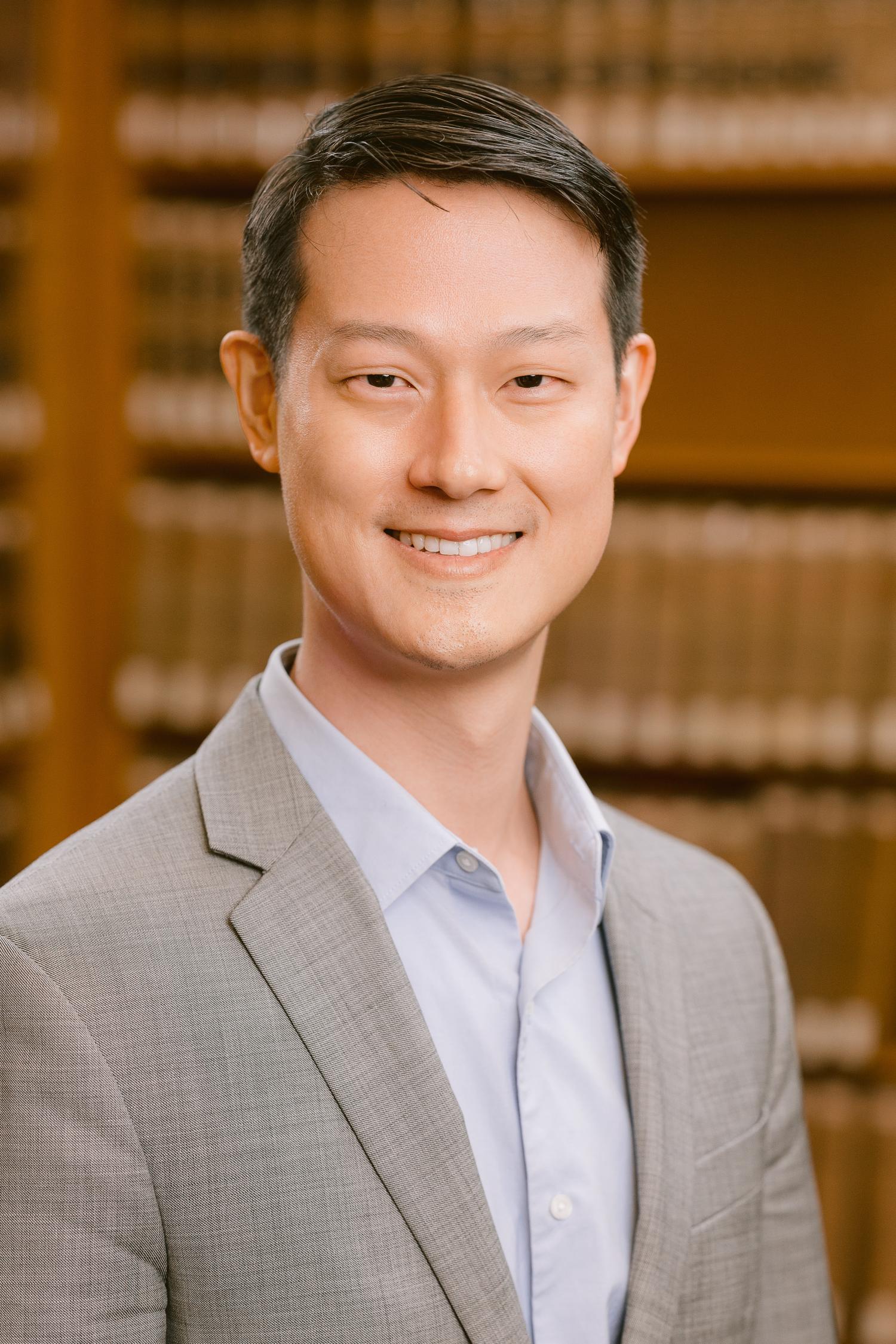
Gary William Hecht is a Professor in the Department of Accountancy at the Gies College of Business, University of Illinois at Urbana-Champaign. He serves as Associate Dean of Professional Education Pathways and holds the Arthur Andersen Faculty Fellowship. His research focuses on performance measurement systems, management accounting, and organizational behavior. Associate Dean, Gies College of Business Arthur Andersen Faculty Fellow Professor, Department of Accountancy Hecht’s research explores the intersection of performance measurement , managerial decision-making , and organizational incentives . Key themes include strategic use of performance data, impact of reporting frequency on employee behavior, and experiential vs. vicarious learning mechanisms in accounting contexts. His recent work (2020-2025) emphasizes effort intensity metrics , transparency in promotion behavior , and noise in performance measures . Articles reveal a focus on optimizing management control systems and understanding behavioral responses to accounting frameworks. Scientific awards : Arthur Andersen Faculty Fellow
Ben Fisch is an Assistant Professor of Computer Science at Yale University's School of Engineering & Applied Science. He is also the co-founder of Espresso Systems, a company focused on blockchain infrastructure. His research focuses on privacy and verifiability in decentralized systems like Bitcoin and Ethereum, with applications in digital finance and healthcare. Dr. Fisch received his B.A. from the University of Pennsylvania and completed his Ph.D. at Stanford University, where he worked with Dan Boneh in the applied cryptography research group. His educational background provided the foundation for his work at the intersection of cryptography, distributed systems, and economics. His research centers on leveraging cryptographic tools such as succinct non-interactive zero-knowledge proofs (zk-SNARKs), private information retrieval, and homomorphic encryption to address challenges in verifiable computation, verifiable storage, and verifiable fairness. He has made significant contributions to verifiable delay functions (VDFs) and proofs of replication, which have been adopted by major blockchain projects including Ethereum 2.0, Chia, and Filecoin. His work on Filecoin's Proofs of Replication has helped the network reach over 1.5 exabytes of storage capacity. His publication record shows a clear trend toward increasingly sophisticated cryptographic protocols for blockchain applications, with recent work focusing on data availability for Bitcoin rollups, efficient folding schemes for pairing-based arguments, and privacy pools with proof-carrying disclosures. His research bridges theoretical cryptography with practical implementations that have real-world impact in decentralized systems. His notable recognition includes: Best Paper Finalist at ACM CCS 2017 for 'Iron: Functional Encryption using Intel SGX' Dr. Fisch's research has led to significant technology transfer, most notably with his work on Verifiable Delay Functions (VDFs) sparking a multimillion dollar industry initiative through the VDF Alliance. His research on Proofs of Replication forms the basis of Filecoin's incentive layer and consensus protocol. His newer SNARK system Basefold is being used by several commercial products. He maintains active collaborations across academia and industry, with publications spanning top conferences in cryptography and security. As co-founder of Espresso Systems, Dr. Fisch leads a team developing next-generation blockchain infrastructure, particularly focusing on sequencing layers for rollups. His work bridges academic research with practical implementation, ensuring that theoretical advances in cryptography find real-world applications in decentralized systems.
Chendi Zhang is a Professor of Finance at the University of Exeter Business School. He serves as the founding Director of the Exeter Sustainable Finance Centre and Director/Treasurer of the Global Research Alliance for Sustainable Finance and Investment. Previously, he was Associate Dean for Research & Impact (2021-2025) and Director of Research for Finance and Accounting (leading REF2021 submission). He holds affiliations with the Global Systems Institute and Environment and Sustainability Institute, contributing to UN Sustainable Development Goals including Climate Action and Responsible Consumption. Education PhD in Financial Economics from Tilburg University MRes in Finance from Tilburg University MSc in Economics from Tilburg University BSc in International Finance from Shanghai Jiao Tong University Research Focus Professor Zhang's research explores sustainable investing, corporate finance, and behavioral finance with emphasis on ESG integration, climate risk, and stakeholder governance. His work examines how environmental/social factors influence financial markets, corporate decision-making, and asset pricing through empirical and theoretical frameworks. Recent studies analyze biodiversity's financial impact, carbon pricing mechanisms, income inequality disclosures, and ESG resilience during crises (e.g., COVID-19, Ukraine conflict). His research identifies market inefficiencies related to climate sensitivity, gambling sentiment, and dividend policies while exploring corporate governance in state-owned enterprises. Funding and Recognition Research funded by UKRI Natural Environment Research Council, British Academy, BNY Mellon, Royal Bank of Canada, and World Bank. Work featured in The Economist , Wall Street Journal , and Forbes . Articles published in top journals including Management Science and Journal of Financial Economics , cited over 10,000 times. Professional Service Vice Chair of Research Committee for Chartered Association of Business Schools. External examiner for Imperial College London. Previous appointments at University of Cambridge, University of Warwick, University of Sheffield, and Tilburg University.
Hami Amiraslani serves as Assistant Professor of Accounting at ESMT Berlin, holding a PhD and MSc from the London School of Economics. Previously faculty at INSEAD and a Wharton School visiting scholar, he teaches Management Accounting and Sustainable Business Finance across master's and executive programs. His educational credentials include: PhD in Accounting, London School of Economics and Political Science MRes, City St George’s, University of London MSc in International Accounting and Finance, London School of Economics and Political Science Amiraslani's research investigates capital markets, corporate governance, and sustainability interfaces with financial contracting and regulation. His work critically examines how ESG integration, board oversight structures, and climate disclosure frameworks reshape market efficiency and investor behavior, blending theoretical rigor with empirical analysis of regulatory impacts. Recent publications (2023-2025) reveal three dominant research trajectories: 1) Board-level governance mechanisms for ESG risk management, 2) Regulatory consequences of climate disclosure mandates on capital allocation, and 3) Bond market valuation effects of sustainability performance. These studies consistently demonstrate how governance quality mediates the relationship between sustainability practices and financial outcomes across debt and equity markets. No scientific awards are documented in the provided materials. His teaching portfolio indicates active mentorship in accounting education though specific student advisees aren't listed. Research activities appear institutionally supported through ESMT's academic infrastructure without explicit grant mentions.
Professor Duc Duy (Louis) Nguyen is Professor in Finance at Durham University Business School. Previously, he was Associate Professor at King's College London and Assistant Professor at University of St Andrews. His research has been featured in Forbes, Harvard Business Review, and BBC. He holds a BSc in Computing from National University of Singapore, MSc in Accounting, Finance, and Management from University of Bristol, and PhD in Finance from University of Edinburgh. Research foci include: Climate risk integration in mortgage markets and corporate finance Impact of social policies (e.g., marriage equality) on credit access Corporate governance and misconduct prevention in banking Local information environments and fraud detection Cross-cultural dimensions of executive decision-making His publication portfolio demonstrates consistent examination of how institutional frameworks (regulation, culture, governance) shape financial behaviors and market outcomes, with recent emphasis on climate finance and social equity impacts. Awards include: David Hume Publication Prize (2015) Semi-finalist, FMA Europe Best Paper Award (2018) Finalist, FMA Asia/Pacific Best Paper Award (2019) Best Registered Report on "Politics and Corporate Power" Vietnam Symposium in Climate Transition Best Paper Award (2024) He currently supervises PhD candidates Bingzhi Zhang and Jing Wei. His externally funded research includes grants from British Academy/Leverhulme Trust and Carnegie UK Trust. He serves as Associate Editor for European Journal of Finance and British Accounting Review. As frequent speaker at central banks and policy forums (Federal Reserve Banks of New York & St. Louis), he translates research insights into regulatory practice and policy development.
Marc-Antoine Dilhac serves as Associate Professor in the Department of Philosophy at the University of Montreal's Faculty of Arts and Sciences, where he also directs governance and international collaboration initiatives. He holds leadership roles as Scientific Director of Algora Lab and leads the Ethics and Politics research axis at the Centre de recherche en éthique (CRÉ). His academic affiliations extend to the Centre d'études et de recherches internationales (CÉRIUM) and the Canada Research Chair in Public Ethics and Political Theory (2014-2019). Education: PhD in Philosophy and Political Science, University of Paris I: Panthéon-Sorbonne (2009) Master 2 in Philosophy and Political Science, University of Paris I: Panthéon-Sorbonne (2003) Agrégation in Philosophy, University of Paris I: Panthéon-Sorbonne (2002) Dilhac's research spans ethics, political philosophy, and AI governance, with particular focus on democratic tolerance, multiculturalism, and the ethical implications of artificial intelligence. His work bridges theoretical political philosophy with practical applications in AI policy development, sustainable finance, and democratic institutions. He has contributed significantly to UNESCO's Recommendation on the Ethics of Artificial Intelligence and leads initiatives examining AI's impact on French-speaking culture and democratic values. His recent publications reveal a clear trajectory from foundational work on tolerance and justice theory toward contemporary AI ethics challenges. The thematic evolution shows increasing engagement with practical governance frameworks, particularly in finance and education sectors, while maintaining strong philosophical grounding in democratic theory and institutional design. Key Awards and Recognition: Canada Research Chair in Public Ethics and Political Theory (2014-2019) Banting Postdoctoral Fellowship (2011) Contributor to UNESCO's Recommendation on AI Ethics (2021) Dilhac has supervised over 15 graduate students across philosophy, political science, and interdisciplinary AI ethics programs. His research is supported by multiple grants from FRQSC, FRQNT, SSHRC, and MITACS, totaling over $2 million CAD. Current projects include the Generative AI Ethics Framework for Educational Technology (2024-2025) and the Sustainable Finance AI Tools project examining ESG/DEI disclosure analysis. He co-founded and leads the CORDÉ research group on corruption and democracy, and directs Algora Lab's work on AI governance. His upcoming February 2025 panel at Université Laval will address AI and Francophone cultural perspectives ahead of the Paris AI Action Summit.
Bryan H. Choi is an Associate Professor of Law at the University of Colorado Law School , where he bridges law and computer science to address software and AI safety. His work on software liability has influenced national cybersecurity strategy discussions. As an Adviser for the ALI Principles Project on Civil Liability for Artificial Intelligence , he shapes legal frameworks for emerging technologies. Education : JD and AB in Computer Science from Harvard University; clerkships with U.S. Court of Appeals judges Leonard I. Garth and William C. Bryson. Roles : Former joint appointment at Ohio State University Law School and Computer Science Department; Faculty Fellow at UPenn's CTIC; Director of Law and Media at Yale's ISP. Research Focus : Choi's scholarship examines software liability , AI accountability , and privacy law through interdisciplinary lenses. He critiques institutional approaches to software safety and advocates for empirical legal frameworks over participation-based models. Recent Articles address AI malpractice , NIST software standards , and forensic tool validation , reflecting trends in AI regulation and cyber-physical system liability . His 2021 NSF grant funded technical-legal methods for safety-critical systems. Awards & Grants : National Science Foundation (NSF) Grant (2021) Adviser, ALI Principles Project on Civil Liability for Artificial Intelligence Community Engagement : Active in Law and Computer Science communities , serving on committees for the ACM Symposium , Cybersecurity Law and Policy Scholars Conference , and co-organizing the AAAI Bridge Program on AI and Law .
Yang Liu is a tenured Associate Professor at the Department of Management and Engineering , Linköping University, Sweden, and an Adjunct Professor at the University of Oulu, Finland. His expertise spans smart manufacturing, clean energy transition, and Industry 4.0 applications. He holds an M.Sc. and D.Sc. from the University of Vaasa, Finland. Research & Awards: Liu's work focuses on sustainable systems, decision support systems, and AI-driven energy efficiency. He has authored over 140 Web of Science publications, including top 0.1% ESI Hot Papers. He is ranked among the world's top 2% scientists (Stanford-Elsevier) and leads globally in 'big data analytics in manufacturing' and 'Industry 4.0-driven circular economy' research. Leadership & Projects: He leads projects like FlexSUS (EU Horizon 2020) and PERSEUS, developing tools for smart urban energy planning and 15-minute city models. He serves as Editor-in-Chief of Cleaner Engineering and Technology and Guest Editor for multiple journals. His research emphasizes bridging data science with sustainability challenges in manufacturing and energy systems. Key Achievements: Top-ranked in global citations, ESI Highly Cited Papers, and industry-driven sustainability frameworks. Grants: Leads EU-funded projects and collaborates with Siemens Energy on energy transition solutions. Labs & Teams: Part of the Environmental Technology and Management (MILJÖ) division and Unit for Product Service Innovation (MILJOPSI) at Linköping.
Mark Aleksanyan is a Professor of Accounting and Finance at the University of Glasgow's Adam Smith Business School, serving as Associate Head of the Accounting and Finance subject group since 2004. He holds a PhD in Accounting and Finance from the University of Glasgow (2004), an MPhil in International Finance (2000), and a bachelor’s degree in Mathematical Economics from Yerevan State University (1997). Prior to academia, he worked as a financial analyst, economist at the Armenian Ministry of Finance, and assistant to the Prime Minister of Armenia (1996–1999). Research Interests Focuses on relationships between market actors (sell-side/buy-side analysts, investor relations officers), equity valuation, corporate reporting, and empirical accounting. His work explores technology’s impact (e.g., generative AI) on financial information practices and regulatory frameworks like MiFID II. Current projects include analyzing the role of state visits in cross-border M&A and media effects on insider trading. Grants & Funding Received grants totaling over £100k from bodies like the Institute of Chartered Accountants of Scotland (2019), the Foreign and Commonwealth Office (2018), and the Adam Smith Research Foundation (2010). Teaching Teaches Financial Analysis & Equity Valuation (MSc), Financial Statement Analysis & Valuation (BSc), and PhD masterclasses. Previously instructed International Corporate Finance and MBA courses. Editorial Roles Serves as Associate Editor for Qualitative Research in Financial Markets and on editorial boards of Review of Business and Economics Studies and Behavioral Research .
Professor Khaled Hussainey is a Professor of Accounting at Bangor Business School, appointed in April 2024. He previously held academic roles at Portsmouth, Plymouth, Stirling, Manchester, and Ain Shams Universities. With over 25 years of teaching experience, his research focuses on corporate narrative reporting, XBRL, and sustainability. He has published over 200 peer-reviewed articles and secured grants from ESRC, Qatar National Research Foundation, and others. His qualifications include a Ph.D. in Accounting & Finance from the University of Manchester (2004), an M.Sc. from the University of Birmingham (2000), and a B.Com. from Ain Shams University (1994). He has supervised 56 PhD and 7 DBA theses. Research interests include corporate governance, earnings management, Islamic accounting, and big data. He serves as Co-Editor of the Journal of Financial Reporting and Accounting and Editor of the International Journal of Emerging Markets . His work has been recognized in Stanford University's Top 2% Researchers list (2023). Grants include £60,000 from ESRC (2005), $120,000 from Qatar NFR (2014), and £48,412 from the British Council (2019). He has held visiting professorships at King Khalid University, Tunis University, and others. He actively participates in international conferences and serves as an external assessor for promotions and research funds globally. His recent articles address sustainability reporting, FinTech disclosure, and climate governance. He emphasizes interdisciplinary research linking accounting practices with technological and environmental trends.
Lorrie Faith Cranor is the Director and Bosch Distinguished Professor in Security and Privacy Technologies at the CyLab Security and Privacy Institute, and the FORE Systems University Professor of Computer Science and Engineering and Public Policy at Carnegie Mellon University. She also directs the CyLab Usable Privacy and Security Laboratory (CUPS) and co-directs the MSIT-Privacy Engineering master’s program. She previously served as Chief Technologist at the U.S. Federal Trade Commission and is a co-founder of Wombat Security Technologies. Carnegie Mellon University – CyLab Security and Privacy Institute School of Computer Science – Department of Computer Science College of Engineering – Department of Engineering and Public Policy PhD Program in Societal Computing Human-Computer Interaction Institute (affiliate) Heinz College (affiliate) Dr. Cranor’s research centers on usable privacy and security, privacy engineering, and technology policy. Her work spans authentication systems, privacy policies, IoT security, and human behavior in digital environments. She has pioneered research on password usability, privacy labels (e.g., 'nutrition labels' for privacy), and privacy decision-making. Her interdisciplinary approach integrates computer science, public policy, and behavioral science to create systems that are both secure and user-friendly. Her recent publications reflect a strong focus on privacy interfaces, consent mechanisms, IoT security labels, and user comprehension of digital privacy. Trends include evaluating the usability of privacy controls across platforms, designing tools for developers to generate accurate privacy disclosures, and understanding user behavior in online tracking and advertising contexts. Her work frequently appears in top venues such as CHI, SOUPS, and PETS. ACM CHI Academy inductee ACM Fellow IEEE Fellow 2018 ACM CHI Social Impact Award 2018 International Association of Privacy Professionals Privacy Leadership Award 2018 IEEE Cybersecurity Award for Practice Alumni Achievement Award, McKelvey School of Engineering Top 100 Innovator under 35, Technology Review Dr. Cranor has advised numerous PhD students in interdisciplinary programs including Societal Computing, Engineering and Public Policy, and Human-Computer Interaction. Her research has been supported by grants from the National Science Foundation, DARPA, and industry partners. She serves on the boards of the Computing Research Association, Center for Democracy and Technology, and Electronic Privacy Information Center. She is a frequent media commentator on privacy and security issues. She leads the CyLab Usable Privacy and Security Laboratory (CUPS), a multidisciplinary research group that includes faculty and students from computer science, policy, and HCI. The lab focuses on making privacy and security systems more intuitive, effective, and user-controlled. Key projects include the Usable Privacy Policy Project, privacy nutrition labels, and the Personalized Privacy Assistant Project.
Professor Tomo Suzuki (Waseda University, Faculty of Commerce) holds a D.Phil. from Oxford University and has held academic positions at Oxford, London School of Economics, and Meiji University. His research spans Institutional Mechanism Design , Sustainability Management , and Mature Socio-Economy across Japan, India, and China. Former Oxford Professor with top academic awards (2008-2012) Advisor to Japanese Cabinet (2020-2023) and LDP Policy Committee Developed "One Additional Line" $2B/year system in India Lead author on 9 Scopus publications with 212 citations Research Focus : • Applied Institutional Design for mature economies • Distribution Statement (DS) for fair value allocation • Critique of shareholder-first capitalism Scientific Awards : Cosmo Awards for Research Excellence (1996, 2015) UK Research Assessment Exercise Top Score (2008) Oxford Executive MBA Outstanding Professor
Elena Pikulina is an Assistant Professor in the Finance Division at the UBC Sauder School of Business, affiliated with The University of British Columbia. She holds an M.Phil and PhD from Tilburg University. Her research focuses on institutional investors, corporate finance, and behavioral finance, with a particular emphasis on integrating experimental methodologies to study decision-making processes in corporate and financial contexts. She teaches courses such as Mergers and Acquisitions. Education: M.Phil, Tilburg University PhD, Tilburg University Research Interests: Institutional investors Corporate finance Experimental and behavioral finance Her publications explore topics such as income inequality’s impact on equity markets, power preferences in decision-making, the behavioral effects of confidence and overconfidence on corporate strategies, and incentive structures like bonus schemes. While no scientific awards are explicitly listed, her work demonstrates contributions to behavioral and corporate finance. Advising & Grants: No students or grants are listed in the provided materials. Labs/Teams: No specific labs or research teams are mentioned.
John Gallemore is an Associate Professor of Accounting at the University of North Carolina Kenan-Flagler Business School, where he focuses on how corporate tax policy and enforcement shape financial reporting behaviors. His research, published in top journals like the Journal of Accounting & Economics and Contemporary Accounting Research , explores tax policy, regulatory impacts, and banking sector dynamics. He teaches courses such as Strategic Cost Analysis and Performance Evaluation in the MBA program and has been recognized for teaching excellence, including the Emory Williams Award and being named one of Poets & Quants’ 'Best 40 Under 40' professors. Gallemore holds a PhD, MBA, and BSBA from UNC Chapel Hill. His career includes roles at the University of Chicago Booth School of Business before joining UNC in 2021. Awards include the Deloitte Foundation Doctoral Fellowship and FASB Doctoral Consortium Fellowships. His research has been featured in media outlets like the Washington Post and Bloomberg. Key research interests include corporate taxation, regulatory spillovers, AI’s impact on white-collar work, and tax avoidance strategies. His recent articles analyze tax policy expectations, bank regulatory oversight effects, and anti-tax avoidance regulation’s role in market concentration.
Alastair Lawrence is a Professor of Accounting at the London Business School . His research focuses on investor behavior, financial reporting, and the market pricing of digital firms. He teaches courses such as Digital Investing and previously taught Financial Statement Analysis . Education: BA, MAcc from University of Waterloo; PhD from University of Toronto Professional Certification: CPA (Chartered Professional Accountants of Ontario, Canada) Prior Role: Associate Professor at University of California, Berkeley His research explores how investors utilize financial reporting information, with a particular emphasis on digital firms. Key themes include earnings announcements, audit quality, media influence on stock markets, and regulatory compliance. Recent studies examine investor attention via digital tools, media-driven stock grouping, and post-crisis market responses. His publications in top-tier journals like The Accounting Review , Management Science , and Journal of Accounting and Economics highlight trends in investor behavior, earnings management, and audit practices. Collaborative work with scholars across institutions underscores interdisciplinary relevance in finance and accounting.