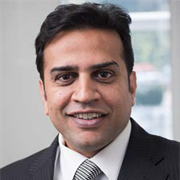
Daniel Kifer is a Professor in the Computer Science and Engineering department at Pennsylvania State University, with affiliations to the Huck Institutes of the Life Sciences. His work bridges computer science, privacy-preserving machine learning, and geoscience applications. With over 10,000 citations and a high h-index, he focuses on methods to unify theoretical and applied research. Research Interests: Differential Privacy, Privacy-Preserving Machine Learning, Physics-Informed Neural Networks, Landslide Prediction, and Formal Verification of Privacy Systems. Recent projects include grants from the National Science Foundation: SaTC: CORE: Small (2024): privacy-preserving user data embedding in machine learning pipelines. SaTC: CORE: Medium (2017-2023): formal methods for differential privacy and accuracy optimization. His research outputs span domains like geoscience, database systems, and policy analysis, emphasizing precision and scalability of privacy-preserving algorithms.
About Vipul Jain: Associate Professor Vipul Jain leads Supply Chain and Logistics Management at RMIT University’s School of Accounting, Information and Supply Chain Management. With over 20 years of academic experience, he has held senior roles at institutions like Victoria University of Wellington (NZ) and IIT Delhi (India), contributing to curriculum development, research strategy, and academic-industry collaboration. His international collaborations span over 20 global institutions, emphasizing interdisciplinary research in supply chain resilience, sustainability, and Industry 4.0. Education & Academic Leadership: Previously served as Programme Director for Master of Technology (Industrial Engineering) at IIT Delhi, leading the establishment of the Modelling and Analysis of Supply Chain (MASC) Lab. Holds editorial roles for journals like International Journal of Intelligent Enterprise and Computers & Industrial Engineering . Research Focus: Specializes in supply chain design, sustainability, circular economy, and business analytics. His work integrates ICT and big data to address complex supply chain challenges, with notable contributions to vaccine distribution, blockchain adoption, and post-pandemic resilience. Over 145 peer-reviewed publications, including high-impact journals like OMEGA and International Journal of Production Economics , reflect his prolific output. Industry Impact: Conducted management training for organizations like JCB and IBM. Served as an expert assessor for New Zealand’s Ministry of Business and Industry and advised the Indian Railways. His research has been funded by the Department of Science and Technology (India) and EU initiatives like FP6 I*PROMS. Awards & Recognition: Ranked #7 in India’s top logistics academics (2018), recipient of Literati Awards (2024, 2020), and multiple editorial leadership roles. Active in global conferences, including co-chairing ANZAM 2023. Labs & Collaborations: Founded MASC Lab at IIT Delhi. Collaborates with Coventry University, Monash University, Hong Kong Polytechnic, and institutions in Switzerland, Spain, Canada, and the U.S. Focus areas include sustainable supply chains, digital transformation, and crisis resilience.
James T. Hamilton is the Vice Provost for Undergraduate Education and Hearst Professor of Communication at Stanford University, where he also directs the Stanford Journalism Program. He previously taught at Duke University’s Sanford School of Public Policy and led the De Witt Wallace Center for Media and Democracy. His academic career spans over three decades, with a focus on media economics, investigative journalism, and environmental policy. Hamilton holds a B.A. (summa cum laude) and Ph.D. in Economics from Harvard University. His research explores how markets shape news content, the economics of investigative reporting, and the societal impact of information access. He co-founded the Stanford Computational Journalism Lab and is a Senior Fellow at the Stanford Institute for Economic Policy Research. His work emphasizes computational tools to enhance journalism’s accountability role, including automated fact-checking and data-driven story discovery. Key contributions include groundbreaking books like Democracy's Detectives (2016) and All the News That’s Fit to Sell (2004), which analyze media markets and transparency policies. Scientific Awards: David N Kershaw Award, Goldsmith Book Prize (twice), Frank Luther Mott Research Award (twice), Tankard Book Award Teaching Honors: Allyn Young Prize, Trinity College Distinguished Teaching Award, Susan Tifft Mentoring Award His current research addresses digital inequality, the psychological effects of online financial ads, and algorithmic transparency in journalism. He advises on media innovation through affiliations with the Brown Institute for Media Innovation and the JSK Fellowships Board.
Susan Wachter is a Professor of Financial Management and Professor of Real Estate at the University of Pennsylvania's Stuart Weitzman School of Design and Wharton School. She has held academic positions since 1972, including roles as Chair of the Real Estate Department and Co-director of the Penn Institute for Urban Research. Her research focuses on urban economics, housing finance, climate risk, and public policy. She serves on editorial boards for journals like Journal of Housing Economics and has advised organizations such as the National Research Council and the American Real Estate and Urban Economics Association. Wachter earned her academic credentials at Bryn Mawr College and held a visiting professorship at Singapore Management University. Her awards include the Lindback Award for Distinguished Teaching (1975) and the American Real Estate and Urban Economics Lifetime Achievement Award (2005). Her work explores topics like mortgage market stability, climate impacts on housing, and equitable housing finance systems. Research Highlights: Climate risk in mortgage markets, pandemic-era housing dynamics, foreign buyer tax impacts, and systemic financial stability. Policy Contributions: Advised on housing finance reforms, GSE viability, and fair housing policy modernization. Grants & Labs: Directed the Wharton Geographical Information Systems Lab since 1995, focusing on urban spatial analytics. Her publications span over four decades, addressing topics such as mortgage stress, urban competitiveness, and the legacy of the 2008 housing bubble. Wachter's interdisciplinary approach bridges real estate finance, public policy, and urban planning to inform sustainable housing solutions.
Cédric Lesage is a Professor and the Lawrence S. Bloomberg Chair in Accountancy at Concordia University. He serves as Associate Dean for Research & Impact, focusing on audit, ethics, corporate governance, and responsibility. His doctoral teaching includes ADMI 861B - Research in Auditing and ADMI 871 - Foundations of Business Research . Research Areas: Audit, Ethics, Corporate Governance, Responsibility Email: cedric.lesage@concordia.ca ORCID: 0000-0001-8460-0895 CV: Available via his profile His publications explore audit pricing, joint audit policies, media bias in corporate fraud reporting, and auditor independence in kinship economies. Collaborative work spans institutions and disciplines, emphasizing empirical and ethical dimensions of accounting research.
Matthew Lee Smith is a Professor at the Texas A&M School of Public Health , part of Texas A&M University . He is a core faculty member of the Center for Community Health and Aging (CCHA) and the Center for Health Equity and Evaluation Research (CHEER) , and serves as the Director of the Texas Research, Analytics, Innovations, and Research Lab (TRAIL) . Education: Post-Doctoral Fellowship, Health Science Center, Texas A&M University (2010) PhD in Health Education, Texas A&M University (2008) MPH, Indiana University Bloomington (2004) BS in Public Health Education, Indiana University Bloomington (2002) Research Interests: Dr. Smith’s research focuses on aging , chronic disease management , and evidence-based public health interventions . He is particularly interested in health behavior change , health risk assessment , and survey research methodology . His translational work bridges research and practice across healthcare, aging services, and public health systems. He has a strong focus on social determinants of health , including social isolation , caregiving , diabetes self-management , and fall prevention among older adults. His work often targets underserved populations, particularly Black/African American men and rural communities . Scientific Awards: Immunization Neighborhood Champion Award (2024) Responsible Research in Management Award (2023) J. Mayhew Derryberry Award (2022) Consumer Education Program Award (Silver) (2022) Bluebonnet Award (2021) Innovators in Aging Award (2019) Redefining American Healthcare Award (2019) Community ConnecTivity Award (2019) Phillip G. Weiler Award for Leadership in Aging and Public Health (2018) Leadership & Mentorship: Dr. Smith holds leadership roles in several national and state-level initiatives. He is the Co-Director of the Advancing Gerontology through Exceptional Scholarship (AGES) Program and serves on the Steering Committees of the Texas Falls Prevention Coalition , Texas Alzheimer’s Research and Care Consortium , and Texas Social Isolation and Loneliness Coalition . He is also the Director of the Research Scholars & Mentorship Program (RSMP) at the American Academy of Health Behavior. Labs & Centers: He leads the Texas Research, Analytics, Innovations, and Research Lab (TRAIL) , which focuses on developing and evaluating community-based interventions. He is also affiliated with: Center for Community Health and Aging (CCHA) Center for Health Equity and Evaluation Research (CHEER)
Thomas Gunther is a Professor of Managerial Accounting and Control at the Department of Economics, Technical University of Dresden. His research focuses on business accounting, controlling of non-profit organisations, value-based management, and the evaluation of intangible resources. University: Technical University of Dresden Department: Department of Economics Academic Rank: Professor Gunther's work explores performance measurement systems, brand valuation, and time-oriented cost accounting, with empirical studies across German companies and the public education sector. He has led research groups on value-oriented leadership in SMEs and intangible assets in accounting. As a consultant, he works with medium-sized businesses and public institutions on implementing controlling systems, including AOK Saxony, Dresden Transport Company, and the Saxon State Ministry of Education. He serves as Managing Editor for the Journal of Management Control (JoMaC) and is a founding member of PRISMA (Centre for Sustainability Assessment and Policy) at TU Dresden.
Professor Ian Ruthven is a Professor of Information Seeking and Retrieval in the Department of Computer and Information Sciences at the University of Strathclyde. He chairs the Scottish Library and Information Council (SLIC) and the Steering Committee of the Information Seeking in Context (ISIC) conference series. His research focuses on human information interaction, including information seeking in health, migration, and cultural heritage contexts. He authored Dealing With Change Through Information Sculpting , proposing a theory explaining how people use information behaviors to adapt during life transitions. Education: PhD in Abduction, Explanation, and Relevance Feedback (University of Glasgow, 2001), MSc (University of Birmingham, 1993), BSc in Computing Science (University of Glasgow, 1992). Research Interests: Information seeking theory, interface design for information access, user studies. His work bridges human-computer interaction with socio-technical systems, emphasizing ethical and inclusive design. Publications: Over 170 peer-reviewed papers, including influential works on information resilience, digital divides, and pandemic impacts on international students. Recent work includes Grey Digital Divide: Factors Associated with Older People’s Use of the Internet for Financial Transactions (2025) and Information Avoidance: A Critical Conceptual Review (2025). Awards: Tony Kent Strix Memorial Award (2020), Fellow of the Royal Society of Arts (2010), and multiple best paper awards. His contributions span academic and policy realms, addressing societal challenges through information science. Projects: Co-investigator in the Participatory Harm Auditing Workbenches and Methodologies (PHAWM) project (2024–2028) and leader of the Scottish Network on Digital Cultural Resources Evaluation (ScotDigiCH) (2015–2016). These projects emphasize participatory design and cultural heritage evaluation. Professional Activities: Editorial roles for major conferences, visiting researcher at the University of Pretoria (2021), and advisory roles in library and information science initiatives. His work fosters collaboration between academia and cultural institutions.
Dr Tracy Qu is a Lecturer in the School of Accountancy at Queensland University of Technology (QUT), within the Faculty of Business & Law. She holds a PhD in Accounting from Griffith University (2018) and is a CPA Australia member (since 2021). Her research focuses on executive remuneration, corporate governance, financial reporting, and environmental accounting. Tracy teaches undergraduate and postgraduate courses in accounting fundamentals, financial analysis, and business valuation. She has also served as a referee for journals like Accounting and Finance and Australian Journal of Management . Tracy’s research explores intersections between governance structures and executive compensation design, particularly in mitigating agency conflicts. Her work examines topics such as carbon emissions policy impacts on corporate behavior, labeling effects in financial disclosures, and CEO celebrity influence on investment decisions. She actively contributes to academic debates on environmental accounting and sustainability reporting. Tracy is currently accepting research students for Honours, Masters, and PhD programs, focusing on topics like executive compensation efficiency, board interlocks, and compensation consultants’ roles.
Dr. June Cao is an Associate Professor at the University of Southampton . Her research focuses on Environmental, Social, and Governance (ESG) Accounting , Corporate Social Responsibility (CSR) , and Sustainability Reporting , with a particular emphasis on Greenwashing , Carbon Emission Trading , and Accounting Education . Key research areas include ESG, CSR, and sustainability frameworks. Prominent publications analyze environmental regulation, green revenues, and digital transformation in sustainability. Her recent work explores greenwashing behaviors, peer benchmarking, and labor investment dynamics. Scientific Awards : None explicitly mentioned in the data. Notable collaborations include co-authoring papers with scholars from Curtin University , Satya Wacana Christian University , and Xiamen University . Her contributions to Systematic Literature Reviews and Bibliometric Analysis highlight her methodological expertise.
Prof. Dr. Seyhan ÖZTÜRK is an Associate Professor at Kafkas University's Faculty of Economics and Administrative Sciences, Department of Accounting. She has held full-time academic positions since 2010, progressing from Research Assistant to Associate Professor (2019–present). She also serves as the Head of the Accounting Department. Education: PhD in Accounting and Finance, Atatürk University (2011–2015) Master's in Business Administration, Istanbul University (2005–2011) Bachelor's in Business Administration, Istanbul University (2005–2009) Research Interests: Her work centers on Accounting Ethics, Forensic Accounting, and Internal Control, with applications in sustainability, corporate governance, and digital transformation. She explores ethical dilemmas in accounting, fraud detection methodologies, and the impact of regulatory frameworks on financial transparency. Publications: Her recent articles (2020–2025) emphasize sustainability accounting, financial performance analysis, and technology's role in accounting education. Themes include ESG metrics, bibliometric studies on climate accounting, and ethical challenges in SME financial reporting. Advising & Grants: She has supervised 16+ graduate students (PhD/Master’s) in topics like accounting ethics and financial modeling. She led a research project (2019–2021) testing bankruptcy prediction models on the Borsa Istanbul exchange.
Cesla Amarelle serves as Full Professor and Chairholder of Public Law and Migration Law at the University of Neuchâtel's Faculty of Law. Her academic leadership extends to co-directing the Swiss Center for Migration Law (CDM) and contributing to national research initiatives including the National Center of Competence in Research (NCCR) 'On the Move'. She concurrently holds significant public appointments as Chair of the Institute of European Law at the University of Fribourg and Federal Commissioner for Women's Issues, with recent expert designation to the Federal Round Table on signature collection integrity for 2024. Her academic foundation includes a law degree from the University of Lausanne (1996), LL.M. in European and International Economic Law from the University of Fribourg, and doctoral thesis from the University of Lausanne (2004). Her career progression at the University of Neuchâtel spans assistant professor (2009-2014), extraordinary professor (2015-2016), and full professor positions since 2016, complemented by earlier research roles at Swiss National Science Foundation and University of Fribourg. Professor Amarelle's research centers on migration law frameworks, human rights protections in asylum systems, and constitutional dimensions of European integration. Her work critically examines the intersection of migration governance with digital technologies, climate change impacts, and gender equality. Current projects analyze temporary protection regimes, non-refoulement principles in technological contexts, and the evolving relationship between Swiss migration law and European legal frameworks. Her scholarship consistently bridges theoretical legal analysis with practical policy implementation challenges. Her extensive publication record demonstrates evolving focus from foundational migration law codification toward contemporary challenges including digital discrimination, child rights in emergency contexts, and sustainable finance frameworks. Recent scholarship reflects increasing engagement with technological impacts on migration governance and the humanitarian dimensions of temporary protection systems, while maintaining rigorous analysis of constitutional and European law interfaces. Professor Amarelle actively contributes to academic and public discourse through leadership in the Swiss Center for Migration Law and participation in the NCCR 'On the Move' consortium. Her public service includes significant political roles as Vaud State Councilor for Education (2017-2022) and National Councilor (2011-2017), where she chaired key committees on political institutions and finance while representing Swiss higher education interests nationally. She maintains active engagement with professional associations including the Swiss Conference of Higher Education Institutions and Conference of Directors of Public Education.
Professor Hafiz Hoque is a faculty member in the Accounting and Finance Department at Swansea University's School of Management. He holds a PhD from Bayes Business School and serves as Director of the Hawkes Centre for Empirical Finance. His research focuses on corporate finance, bank regulations, green innovation, climate change, and ESG. With over 20 publications in top journals and £100k+ in grants, his work explores topics like corporate boards, IPO markets, and Islamic finance. He has supervised 8 PhD students to completion and welcomes new applications. Key areas include climate finance and regulatory impacts on banking sectors. Education: PhD from Bayes Business School (formerly Cass Business School). Research Interests: Corporate finance dynamics, director networks, banking regulations, green innovation, and climate finance. His work bridges theoretical frameworks with empirical analysis, addressing global financial challenges such as pandemic governance and ESG integration. Grants & Funding: Over £100,000 in grants secured in the past decade, supporting research on financial markets and regulatory policies. Labs/Teams: Director of the Hawkes Centre for Empirical Finance, fostering interdisciplinary research in finance and empirical methods.
Christopher Williams is the Arthur Andersen Professor of Accounting and Area Chair of Accounting at the Ross School of Business, University of Michigan. His research focuses on debt contracting, banking risk, and financial reporting quality. He holds a PhD from the University of North Carolina and degrees from Brigham Young University. Academic Roles: Professor (2021–present), Associate Professor (2016–2021), Assistant Professor (2009–2016) Awards: Michael and Joan Sakkinen Faculty Fellow, Arnold M. Jacob Faculty Development Award Research emphasizes regulatory impacts on capital structures, loan syndication dynamics, and systemic risk. Key areas include banking transparency, covenant design, and media influence in private lending. Over 20 peer-reviewed articles appear in top journals like Journal of Financial Economics and Review of Accounting Studies . Articles (2023–2012) analyze topics such as Basel III anticipatory effects, CDS trading dynamics, and media's role in private lending. Recent work explores optimal capital structure under reporting quality constraints and strategic syndication behavior. Awards: Arthur Andersen Chair, Sakkinen Fellowship, Jacob Award Grants/Advising: Extensive grant history in accounting research; no listed advisees. Labs/Teams: Active in Ross School's accounting research initiatives focusing on financial reporting and banking analytics.
Milind Tiwari is a Senior Postdoctoral Research Fellow in Financial Crime at the Australian Graduate School of Policing and Security, Charles Sturt University. He holds a PhD in Money Laundering from Bond University, a Master of Science in Finance from the University of Manchester, and a Bachelor of Business Administration from Christ University. As a Certified Fraud Examiner (CFE) and Certified Anti-Money Laundering Specialist (CAMS), he brings extensive industry experience from working with Big 4 firms including KPMG, EY, and Deloitte in both India and Australia. Dr. Tiwari's research spans multiple dimensions of financial crime with particular expertise in money laundering detection mechanisms, trade-based money laundering (TBML), food crime as a money laundering typology, and emerging threats in digital spaces including cryptocurrency and the metaverse. His work integrates advanced data analytics, blockchain technology, and artificial intelligence to develop innovative approaches to financial crime detection and prevention. His recent publications demonstrate a clear trajectory focusing on increasingly complex intersections of technology and crime, with substantial contributions in 2024-2025 covering metacrime, cryptocurrency exchanges, food crime, and metaverse policing. These works appear in high-impact journals across criminology, finance, and technology disciplines. Dr. Tiwari has received significant recognition for his work, including the Emerald Literati Award and the Vice-chancellor's award for outstanding thesis. He is an active member of professional organizations including the Association of Certified Fraud Examiners (ACFE), Association of Certified Anti-money laundering specialists (ACAMS), and Australia and New Zealand Accounting and Finance Association (AFAANZ). As an educator, Dr. Tiwari teaches specialized courses including JST 545 – Money Laundering and JST 549 – White Collar Psychopaths, bringing his practical industry experience and cutting-edge research directly into the classroom. His current research projects focus on TBML (Trade-Based Money Laundering) and CTAS, addressing critical vulnerabilities in the global financial system.