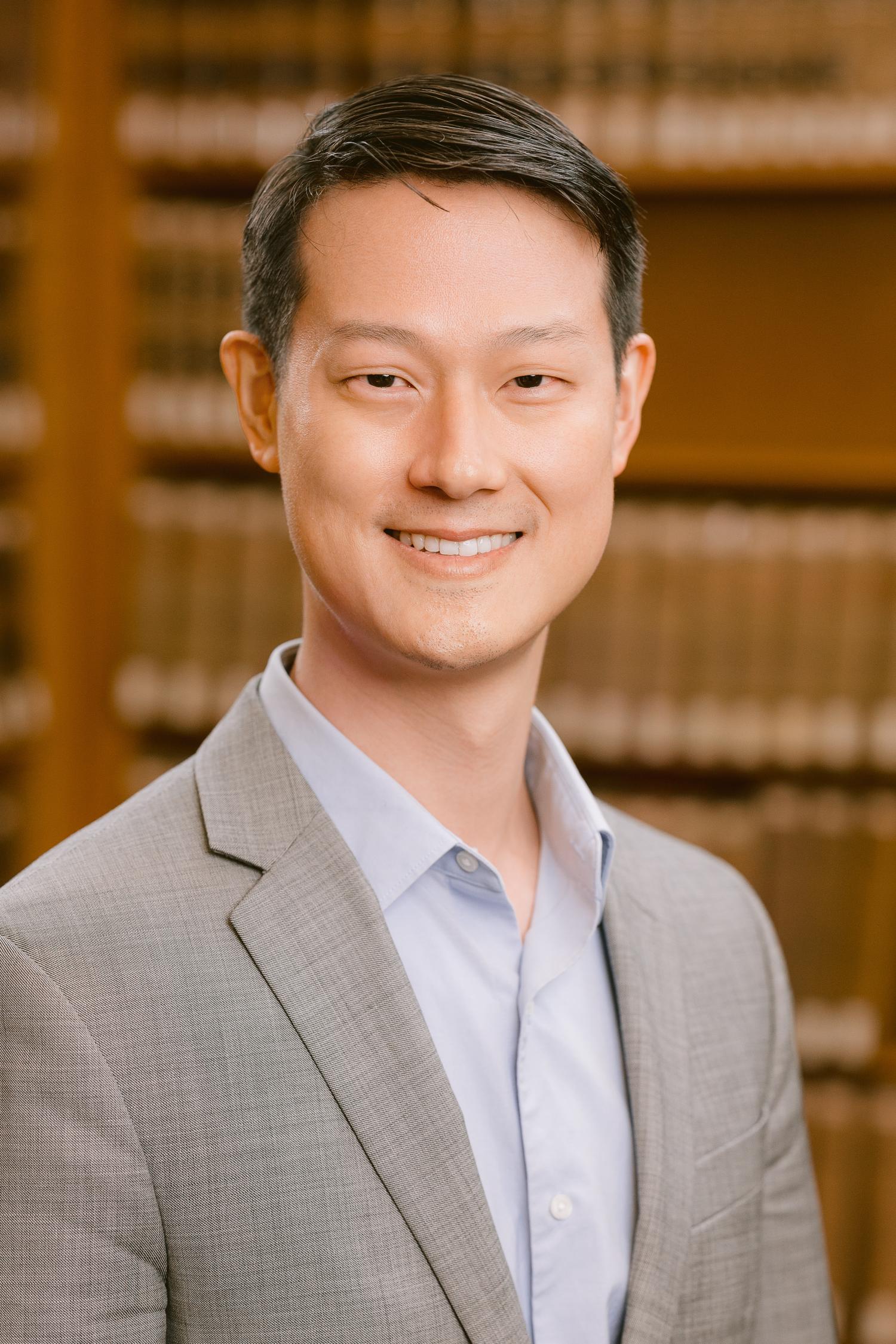
Nemit Shroff is the School of Management Distinguished Professor and Professor of Accounting at MIT Sloan School of Management. His work focuses on the impact of accounting disclosures and regulatory frameworks on corporate policies. He holds a PhD from the University of Michigan, MBA from Amrita School of Business, and undergraduate degree from University of Mumbai. Shroff's research examines how audited financial statements, management forecasts, and regulatory policies influence corporate financing and investment strategies. His studies highlight economic consequences of disclosure regulations globally. Key areas include audit market competition, PCAOB oversight, and regulatory spillover effects. His work has been featured in top journals like The Accounting Review and Journal of Accounting and Economics. Recipient of 2011 FARS Best Dissertation Award 2014 Competitive Manuscript Award winner 2016 FARS Best Paper Award honoree Co-recipient of American Tax Association award (2025) His recent media contributions include analyses on PCAOB reforms in ProMarket and Wall Street Journal commentaries on audit board independence. Shroff is affiliated with MIT's Consumer Finance Initiative, exploring intersections between financial systems and consumer protection.
Demetris Christodoulou is an Associate Professor in Accounting, Governance and Regulation at the University of Sydney. He holds a BEcon from Piraeus University, an MSc(Fin) from the University of York (UK), and a PhD from Athens University of Economics and Business (AUEB). His research focuses on applying data analytics, econometrics, and visualization techniques to financial analysis, equity valuation, life insurance, and financial advice. He co-directs the PEMA research group, specializing in productivity and performance measurement analytics, and previously led the MEAFA research group (2007–2022). He has collaborated extensively with industry partners including Deloitte and Australian insurers, and developed training programs for over 1,000 executives. His work includes open-source contributions to Stata software and the Graph Workflow platform, alongside $662k in workshop-generated funds supporting academic programs. He has advised multiple PhD students and taught at leading universities globally. Education: BEcon in Economics (Econometrics), Piraeus University MSc in Finance, University of York (UK) PhD in Accounting and Financial Analysis, Athens University of Economics and Business His research interests span financial reporting models, life insurance underwriting strategies, and behavioral finance. Recent projects address dishonesty mitigation in insurance disclosures and the adviser effect on customer disclosures. He has published widely in top journals like the Review of Accounting Studies and Stata Journal , and his work was featured in The Australian for insights on insurance fraud reduction. He maintains international collaborations, including visiting roles at Columbia Business School and the University of Cyprus, and serves on advisory boards for organizations like Behaviour.ai. Publications highlight methodological innovations in econometrics and visualization, with 2025's upcoming Stata Journal paper advancing time-series analysis techniques. His grants include partnerships with industry on longitudinal studies of insured lives, aiming to improve risk modeling and public policy insights.
Kevin Pisciotta is an Assistant Professor of Finance at the University of Kansas School of Business, specializing in empirical corporate finance, initial public offerings (IPOs), and information intermediaries. His work bridges corporate finance theory with real-world market dynamics, focusing on IPO processes, analyst behavior, and economic impacts of social issues like opioid abuse and sports betting. Education: Ph.D. in Business Administration, Pennsylvania State University M.S. in Finance, University of Delaware B.S. in Finance, University of Delaware Research Interests: His research explores how IPO bookbuilding mechanisms influence market outcomes, the role of sell-side analysts in information dissemination, and the macroeconomic consequences of phenomena like opioid abuse and sports gambling. He also investigates labor economics through the lens of corporate innovation and workforce productivity. Publications Trends: Recent work examines the interplay between sports betting and household financial stability (2024), IPO marketing strategies post-JOBS Act reforms (2018), and the spillover effects of opioid abuse on regional innovation ecosystems (2023). His studies frequently employ large-scale datasets to analyze market microstructure and policy impacts. Grants/Advising: No specific grants or advisee names are listed in available materials. Teaching experience includes undergraduate courses in investments, international finance, and corporate financial management. Labs/Teams: No dedicated lab affiliation is mentioned, though collaborations with institutions like Pennsylvania State University and the University of Delaware are implied through his educational background and co-authorships.
Professor Rainer Böhme is a prominent academic in the field of IT security and privacy at the University of Münster's School of Business and Economics, Department of Information Systems. He also holds a professorship for Security and Privacy at the University of Innsbruck's Institute of Computer Science. His research spans multiple dimensions of digital security, with particular expertise in steganography, digital forensics, privacy-enhancing technologies, and the economic aspects of cybersecurity. Dr. Böhme earned his Doctoral Degree from TU Dresden's Faculty of Computer Science in 2008, following studies in Communications, Economics and Computer Science at Technische Universität Dresden and Université Paris XII. His academic journey includes positions as Assistant Professor at the University of Münster (2010-2015), Postdoctoral Fellow at the International Computer Science Institute in Berkeley (2009-2010), and Scientific Staff at TU Dresden's Chair of Privacy and Data Security. His research interests focus on steganography and steganalysis, digital forensics, privacy-enhancing technologies, security and usability, economic and behavioral aspects of information privacy, virtual currencies, and the economics of information security. His work bridges technical security mechanisms with economic and behavioral considerations, creating a unique interdisciplinary approach to cybersecurity challenges. Analysis of his recent publications reveals a strong trend toward the economics of security, particularly regarding blockchain technologies, cryptocurrency, and privacy valuation. His work increasingly examines the intersection of technical security mechanisms with market dynamics, regulatory frameworks, and user behavior. The research spans theoretical game-theoretic models, empirical studies of user behavior, and practical applications in digital forensics and privacy protection. Program Co-Chair, Financial Cryptography and Data Security (2015) Program Co-Chair, New Security Paradigms Workshop (NSPW) (2015) General Chair, 8th International Conference on IT Security Incident Management & IT Forensics (2014) Organizer and Program Co-Chair, 1st Workshop on Bitcoin Research (2014) Associate Editor, Electronic Commerce Research (since 2013) Associate Editor, EURASIP Journal on Information Security (since 2013) Professor Böhme has supervised multiple Master's theses in Information Systems, including work on static code analysis for smart contracts, remote maintenance protocol security, and application protection requirements in retail banking. His research is supported by significant grants from the German Federal Ministry of Research, Technology and Space, the DFG, and the EU FP7 program, with projects focusing on digital forensics, privacy-enhancing technologies, and cryptocurrency crime prevention. He leads the IT Security Research Group at the University of Münster, which investigates theoretical and applied aspects of information security with particular emphasis on the economic dimensions of security decisions.
Arvind Narayanan is a Professor of Computer Science at Princeton University and Director of the Center for Information Technology Policy (CITP). His research focuses on the societal impact of digital technologies, particularly artificial intelligence, with emphasis on policy implications, fairness, and privacy. He leads interdisciplinary efforts connecting technical research with real-world policy challenges. Dr. Narayanan earned his Ph.D. from the University of Texas, Austin in 2009. His academic journey has established him as a leading voice in the critical examination of AI systems and their societal consequences. Narayanan's research spans multiple domains where technology intersects with society. His work on AI includes critical analysis of AI capabilities versus marketing claims (AI Snake Oil), fairness in machine learning systems, and the reproducibility crisis in ML-based science. In privacy research, he led the Princeton Web Transparency and Accountability Project which uncovered how companies track users online, developing the OpenWPM tool used in over 100 studies. His early work demonstrated fundamental limits of de-identification techniques and how machine learning reflects cultural stereotypes. His recent publications reveal a consistent focus on demystifying AI capabilities while identifying genuine opportunities and risks. Narayanan's work bridges technical computer science with policy relevance, emphasizing the importance of evidence-based approaches to AI governance. His research increasingly addresses the limitations of prediction systems, the challenges of evaluating AI systems, and the need for transparency in foundation models. Presidential Early Career Award for Scientists and Engineers (PECASE) Privacy Enhancing Technologies Award (twice recipient) Privacy Papers for Policy Makers Award (three-time recipient) TIME's inaugural list of 100 most influential people in AI 2025 Graduate Mentoring Award Narayanan is recognized as an exceptional mentor, receiving Princeton's Graduate Mentoring Award in 2025. His policy engagement extends to congressional testimony, advisory roles, and frequent media commentary. He has secured significant research funding supporting his work on web transparency, AI policy, and cryptocurrency analysis. His research group has produced influential tools like OpenWPM for web privacy studies and contributed to foundational textbooks on cryptocurrencies and fairness in machine learning. At Princeton, Narayanan leads the Web Transparency and Accountability Project, a major research initiative that has conducted large-scale measurements of online tracking across millions of websites. He also co-founded and directs the CITP's AI Policy Initiative, which brings together researchers from multiple disciplines to address pressing AI governance questions. His work frequently involves collaboration with social scientists, legal scholars, and policymakers to develop practical solutions to technology governance challenges.
Gary William Hecht is a Professor in the Department of Accountancy at the Gies College of Business, University of Illinois at Urbana-Champaign. He serves as Associate Dean of Professional Education Pathways and holds the Arthur Andersen Faculty Fellowship. His research focuses on performance measurement systems, management accounting, and organizational behavior. Associate Dean, Gies College of Business Arthur Andersen Faculty Fellow Professor, Department of Accountancy Hecht’s research explores the intersection of performance measurement , managerial decision-making , and organizational incentives . Key themes include strategic use of performance data, impact of reporting frequency on employee behavior, and experiential vs. vicarious learning mechanisms in accounting contexts. His recent work (2020-2025) emphasizes effort intensity metrics , transparency in promotion behavior , and noise in performance measures . Articles reveal a focus on optimizing management control systems and understanding behavioral responses to accounting frameworks. Scientific awards : Arthur Andersen Faculty Fellow
Chendi Zhang is a Professor of Finance at the University of Exeter Business School. He serves as the founding Director of the Exeter Sustainable Finance Centre and Director/Treasurer of the Global Research Alliance for Sustainable Finance and Investment. Previously, he was Associate Dean for Research & Impact (2021-2025) and Director of Research for Finance and Accounting (leading REF2021 submission). He holds affiliations with the Global Systems Institute and Environment and Sustainability Institute, contributing to UN Sustainable Development Goals including Climate Action and Responsible Consumption. Education PhD in Financial Economics from Tilburg University MRes in Finance from Tilburg University MSc in Economics from Tilburg University BSc in International Finance from Shanghai Jiao Tong University Research Focus Professor Zhang's research explores sustainable investing, corporate finance, and behavioral finance with emphasis on ESG integration, climate risk, and stakeholder governance. His work examines how environmental/social factors influence financial markets, corporate decision-making, and asset pricing through empirical and theoretical frameworks. Recent studies analyze biodiversity's financial impact, carbon pricing mechanisms, income inequality disclosures, and ESG resilience during crises (e.g., COVID-19, Ukraine conflict). His research identifies market inefficiencies related to climate sensitivity, gambling sentiment, and dividend policies while exploring corporate governance in state-owned enterprises. Funding and Recognition Research funded by UKRI Natural Environment Research Council, British Academy, BNY Mellon, Royal Bank of Canada, and World Bank. Work featured in The Economist , Wall Street Journal , and Forbes . Articles published in top journals including Management Science and Journal of Financial Economics , cited over 10,000 times. Professional Service Vice Chair of Research Committee for Chartered Association of Business Schools. External examiner for Imperial College London. Previous appointments at University of Cambridge, University of Warwick, University of Sheffield, and Tilburg University.
Hami Amiraslani serves as Assistant Professor of Accounting at ESMT Berlin, holding a PhD and MSc from the London School of Economics. Previously faculty at INSEAD and a Wharton School visiting scholar, he teaches Management Accounting and Sustainable Business Finance across master's and executive programs. His educational credentials include: PhD in Accounting, London School of Economics and Political Science MRes, City St George’s, University of London MSc in International Accounting and Finance, London School of Economics and Political Science Amiraslani's research investigates capital markets, corporate governance, and sustainability interfaces with financial contracting and regulation. His work critically examines how ESG integration, board oversight structures, and climate disclosure frameworks reshape market efficiency and investor behavior, blending theoretical rigor with empirical analysis of regulatory impacts. Recent publications (2023-2025) reveal three dominant research trajectories: 1) Board-level governance mechanisms for ESG risk management, 2) Regulatory consequences of climate disclosure mandates on capital allocation, and 3) Bond market valuation effects of sustainability performance. These studies consistently demonstrate how governance quality mediates the relationship between sustainability practices and financial outcomes across debt and equity markets. No scientific awards are documented in the provided materials. His teaching portfolio indicates active mentorship in accounting education though specific student advisees aren't listed. Research activities appear institutionally supported through ESMT's academic infrastructure without explicit grant mentions.
Professor Duc Duy (Louis) Nguyen is Professor in Finance at Durham University Business School. Previously, he was Associate Professor at King's College London and Assistant Professor at University of St Andrews. His research has been featured in Forbes, Harvard Business Review, and BBC. He holds a BSc in Computing from National University of Singapore, MSc in Accounting, Finance, and Management from University of Bristol, and PhD in Finance from University of Edinburgh. Research foci include: Climate risk integration in mortgage markets and corporate finance Impact of social policies (e.g., marriage equality) on credit access Corporate governance and misconduct prevention in banking Local information environments and fraud detection Cross-cultural dimensions of executive decision-making His publication portfolio demonstrates consistent examination of how institutional frameworks (regulation, culture, governance) shape financial behaviors and market outcomes, with recent emphasis on climate finance and social equity impacts. Awards include: David Hume Publication Prize (2015) Semi-finalist, FMA Europe Best Paper Award (2018) Finalist, FMA Asia/Pacific Best Paper Award (2019) Best Registered Report on "Politics and Corporate Power" Vietnam Symposium in Climate Transition Best Paper Award (2024) He currently supervises PhD candidates Bingzhi Zhang and Jing Wei. His externally funded research includes grants from British Academy/Leverhulme Trust and Carnegie UK Trust. He serves as Associate Editor for European Journal of Finance and British Accounting Review. As frequent speaker at central banks and policy forums (Federal Reserve Banks of New York & St. Louis), he translates research insights into regulatory practice and policy development.
Bryan H. Choi is an Associate Professor of Law at the University of Colorado Law School , where he bridges law and computer science to address software and AI safety. His work on software liability has influenced national cybersecurity strategy discussions. As an Adviser for the ALI Principles Project on Civil Liability for Artificial Intelligence , he shapes legal frameworks for emerging technologies. Education : JD and AB in Computer Science from Harvard University; clerkships with U.S. Court of Appeals judges Leonard I. Garth and William C. Bryson. Roles : Former joint appointment at Ohio State University Law School and Computer Science Department; Faculty Fellow at UPenn's CTIC; Director of Law and Media at Yale's ISP. Research Focus : Choi's scholarship examines software liability , AI accountability , and privacy law through interdisciplinary lenses. He critiques institutional approaches to software safety and advocates for empirical legal frameworks over participation-based models. Recent Articles address AI malpractice , NIST software standards , and forensic tool validation , reflecting trends in AI regulation and cyber-physical system liability . His 2021 NSF grant funded technical-legal methods for safety-critical systems. Awards & Grants : National Science Foundation (NSF) Grant (2021) Adviser, ALI Principles Project on Civil Liability for Artificial Intelligence Community Engagement : Active in Law and Computer Science communities , serving on committees for the ACM Symposium , Cybersecurity Law and Policy Scholars Conference , and co-organizing the AAAI Bridge Program on AI and Law .
Mark Aleksanyan is a Professor of Accounting and Finance at the University of Glasgow's Adam Smith Business School, serving as Associate Head of the Accounting and Finance subject group since 2004. He holds a PhD in Accounting and Finance from the University of Glasgow (2004), an MPhil in International Finance (2000), and a bachelor’s degree in Mathematical Economics from Yerevan State University (1997). Prior to academia, he worked as a financial analyst, economist at the Armenian Ministry of Finance, and assistant to the Prime Minister of Armenia (1996–1999). Research Interests Focuses on relationships between market actors (sell-side/buy-side analysts, investor relations officers), equity valuation, corporate reporting, and empirical accounting. His work explores technology’s impact (e.g., generative AI) on financial information practices and regulatory frameworks like MiFID II. Current projects include analyzing the role of state visits in cross-border M&A and media effects on insider trading. Grants & Funding Received grants totaling over £100k from bodies like the Institute of Chartered Accountants of Scotland (2019), the Foreign and Commonwealth Office (2018), and the Adam Smith Research Foundation (2010). Teaching Teaches Financial Analysis & Equity Valuation (MSc), Financial Statement Analysis & Valuation (BSc), and PhD masterclasses. Previously instructed International Corporate Finance and MBA courses. Editorial Roles Serves as Associate Editor for Qualitative Research in Financial Markets and on editorial boards of Review of Business and Economics Studies and Behavioral Research .
Dr. Ariel Lang is a Professor In Residence in the Department of Psychiatry at the University of California San Diego (UCSD) and holds an Adjunct Professor position in the Department of Family Medicine and Public Health. She serves as Co-Director of the Experimental Psychopathology Track in the SDSU/UCSD Joint Doctoral Program in Clinical Psychology, and directs the VA San Diego Healthcare System (VASDHS) Center of Excellence for Stress and Mental Health (CESAMH). She co-leads the VASDHS Advanced Fellowship in Women's Health and specializes in evidence-based psychotherapeutic approaches for anxiety and trauma-related disorders in military populations. Education: Bachelor of Arts (BA), Psychology, Stanford University (1991) Master of Arts (MA), Clinical Psychology, UCLA (1994) Doctor of Philosophy (PhD), Clinical Psychology, UCLA (1998) Master of Public Health (MPH), Public Health (Biometry), SDSU (2007) Research Interests: Dr. Lang's work centers on assessing and treating PTSD, anxiety disorders, and trauma-related conditions with a focus on complementary and integrative approaches. Her studies frequently intersect with military/veteran populations, women's health, and public health issues such as systemic racism and environmental exposures. She has pioneered interventions like Compassion Meditation , Adaptive Disclosure , and Mantram Repetition Program , often using randomized controlled trials (RCTs) to evaluate efficacy. Her research also addresses co-occurring disorders (e.g., PTSD and substance use), pregnancy/postpartum mental health, and intergenerational trauma effects. Publications Trends: Her recent articles emphasize trauma-focused treatments, integrative health modalities, and veteran-specific healthcare challenges. Over 50% of her recent work involves clinical trial methodologies, particularly RCTs evaluating novel interventions. She consistently explores interdisciplinary topics like the intersection of mindfulness and clinical psychology, and the impact of systemic stressors on mental health outcomes. Awards: In 2022, she was honored as the UCSD Dept of Psychiatry Faculty Champion of Diversity . Grants/Advising: She is Principal Investigator on NIH grants exploring compassion meditation and yoga interventions for veterans, and has led projects funded by the VA and DoD. Her role in the 2023 VA/DoD PTSD Clinical Practice Guideline underscores her influence in shaping national healthcare policies. Labs/Teams: Her work is anchored in the VASDHS CESAMH, a multidisciplinary research center focused on stress-related mental health conditions. She collaborates extensively with researchers in public health, neurology, and military medicine, evidenced by frequent co-authorships in these domains.
Karen Prager is a Professor of Psychology and Gender Studies at the University of Texas at Dallas within the School of Interdisciplinary Studies, where she has taught for over 30 years. A Board-certified couple and family psychologist, she specializes in romantic relationship dynamics with expertise in intimacy, conflict management, and emotional recovery. Dr. Prager earned her PhD in Counseling Psychology and an M.A. in Measurement and Evaluation from The University of Texas at Austin. Her academic foundation supports her dual focus on clinical practice and scholarly research. Her research investigates how couples reconcile after conflicts and restore intimate bonds, emphasizing emotional recovery processes, differentiation of self, and attachment security. The Couples Daily Lives Lab conducts real-time studies on post-conflict behavior in day-to-day relationships, revealing how reconciliation efforts impact long-term relationship health. Analysis of her publication record shows sustained focus on intimacy restoration mechanisms across 30 years, utilizing daily diary methods and experimental designs to map conflict-recovery pathways. Her work bridges theoretical frameworks with practical therapeutic applications for couples navigating relationship challenges. She holds Board Certification in Couple and Family Psychology from the American Board of Professional Psychology (ABPP), reflecting clinical excellence in the field. Dr. Prager mentors undergraduate students through the Couples Daily Lives Lab, providing hands-on research experience in relationship science. Her studies are supported by research grants though specific funding sources aren't detailed in available materials. The Couples Daily Lives Lab currently executes two major projects: one examining partner behavior during and after conflict to understand emotional recovery patterns, and another developing a classification system for reconciliation efforts to determine their effectiveness in restoring intimacy.
Professor Khaled Hussainey is a Professor of Accounting at Bangor Business School, appointed in April 2024. He previously held academic roles at Portsmouth, Plymouth, Stirling, Manchester, and Ain Shams Universities. With over 25 years of teaching experience, his research focuses on corporate narrative reporting, XBRL, and sustainability. He has published over 200 peer-reviewed articles and secured grants from ESRC, Qatar National Research Foundation, and others. His qualifications include a Ph.D. in Accounting & Finance from the University of Manchester (2004), an M.Sc. from the University of Birmingham (2000), and a B.Com. from Ain Shams University (1994). He has supervised 56 PhD and 7 DBA theses. Research interests include corporate governance, earnings management, Islamic accounting, and big data. He serves as Co-Editor of the Journal of Financial Reporting and Accounting and Editor of the International Journal of Emerging Markets . His work has been recognized in Stanford University's Top 2% Researchers list (2023). Grants include £60,000 from ESRC (2005), $120,000 from Qatar NFR (2014), and £48,412 from the British Council (2019). He has held visiting professorships at King Khalid University, Tunis University, and others. He actively participates in international conferences and serves as an external assessor for promotions and research funds globally. His recent articles address sustainability reporting, FinTech disclosure, and climate governance. He emphasizes interdisciplinary research linking accounting practices with technological and environmental trends.
Lorrie Faith Cranor is the Director and Bosch Distinguished Professor in Security and Privacy Technologies at the CyLab Security and Privacy Institute, and the FORE Systems University Professor of Computer Science and Engineering and Public Policy at Carnegie Mellon University. She also directs the CyLab Usable Privacy and Security Laboratory (CUPS) and co-directs the MSIT-Privacy Engineering master’s program. She previously served as Chief Technologist at the U.S. Federal Trade Commission and is a co-founder of Wombat Security Technologies. Carnegie Mellon University – CyLab Security and Privacy Institute School of Computer Science – Department of Computer Science College of Engineering – Department of Engineering and Public Policy PhD Program in Societal Computing Human-Computer Interaction Institute (affiliate) Heinz College (affiliate) Dr. Cranor’s research centers on usable privacy and security, privacy engineering, and technology policy. Her work spans authentication systems, privacy policies, IoT security, and human behavior in digital environments. She has pioneered research on password usability, privacy labels (e.g., 'nutrition labels' for privacy), and privacy decision-making. Her interdisciplinary approach integrates computer science, public policy, and behavioral science to create systems that are both secure and user-friendly. Her recent publications reflect a strong focus on privacy interfaces, consent mechanisms, IoT security labels, and user comprehension of digital privacy. Trends include evaluating the usability of privacy controls across platforms, designing tools for developers to generate accurate privacy disclosures, and understanding user behavior in online tracking and advertising contexts. Her work frequently appears in top venues such as CHI, SOUPS, and PETS. ACM CHI Academy inductee ACM Fellow IEEE Fellow 2018 ACM CHI Social Impact Award 2018 International Association of Privacy Professionals Privacy Leadership Award 2018 IEEE Cybersecurity Award for Practice Alumni Achievement Award, McKelvey School of Engineering Top 100 Innovator under 35, Technology Review Dr. Cranor has advised numerous PhD students in interdisciplinary programs including Societal Computing, Engineering and Public Policy, and Human-Computer Interaction. Her research has been supported by grants from the National Science Foundation, DARPA, and industry partners. She serves on the boards of the Computing Research Association, Center for Democracy and Technology, and Electronic Privacy Information Center. She is a frequent media commentator on privacy and security issues. She leads the CyLab Usable Privacy and Security Laboratory (CUPS), a multidisciplinary research group that includes faculty and students from computer science, policy, and HCI. The lab focuses on making privacy and security systems more intuitive, effective, and user-controlled. Key projects include the Usable Privacy Policy Project, privacy nutrition labels, and the Personalized Privacy Assistant Project.